
World of Warcraft: Warlords of Draenor Signature Series Strategy Guide Introduction
Guilds
Guilds are player-run organizations formed to accomplish some type of goal that is easier through cooperative efforts. They might be involved in PvP events, roleplaying, endgame raiding, leveling, or just about anything else. There are thousands and thousands of guilds throughout World of Warcraft, some with members that have been adventuring together for longer than World of Warcraft has been released!
Most players join a guild at some point, but players join guilds for many different reasons. As long as you’re playing with a full version of the game, you can join any guild that invites you. Using multiple characters, you can even be a member of many guilds!
Finding a Guild
It’s easy to find a guild. In fact, you may be asked to join guilds by total strangers. The trick is finding an active and stable guild that suits your purposes. If you meet a player that you enjoy playing with, it’s completely appropriate for you to inquire about their guild. Keep in mind that there are no rules for monitoring guilds, so guild behavior varies widely. The following covers some important things to consider when looking for a guild.
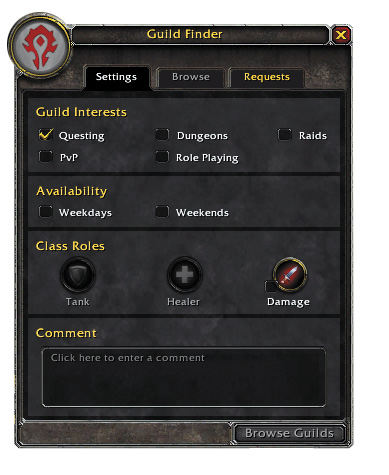
There’s a Guild Finder Tool built into the game’s interface as well. If you aren’t currently in a guild, press “j” to open the Guild Finder Tool. Check the boxes relevant to your interests and availability and browse which guilds are currently recruiting and share your interests.
Types of Guilds
Questing guilds work together to explore all the lands of World of Warcraft through the completion of quests. Many guilds of this type are also thought of as leveling guilds, since the emphasis is often working with new or low-level players to increase their character level.
PvP guilds focus on player-versus-player combat in the battlegrounds or elsewhere in the world. Due to the competitive nature of PvP, many PvP guilds aren’t prone to accept new players without a trial period.
Dungeon and Raiding guilds are typically looking for players to fill specific roles in their raiding groups. Guilds running dungeons may have characters at various levels and could have a spot available for newer players. Raiding guilds are stocked with max-level characters and focus on completing endgame content, and they are more likely to have more specific rules on playtimes and character readiness than many other guilds.
RP guilds are together for role-playing. They stay “in character” while playing World of Warcraft.
Guild Size and Membership
Guilds can be large or small, and neither is better than the other. A small guild is usually more intimate and friendly, but you have fewer players to game with. A large guild feels less personal, but there are more players on whom you can rely.
Most people feel more comfortable in a guild with members with some similar interests. If you’re new to the game, you may not be comfortable in a guild of players progressing through high-level content. On the other hand, if you want to improve your combat skills, being around more experienced players may be a benefit.
You can find guild members of varying age, gender, and life experiences. In addition, you should inquire about the playing hours of other guild members. That way, you’ll get a sense of whether this is a place where you’ll fit in.
Cooperation
A strong guild encourages cooperation among its members. This means that players will help you complete quests—even if they don’t have the same quest. But keep in mind, you will be expected to reciprocate. Guilds are also good opportunities for improving your professions. Guild members are often willing to provide the raw materials for your profession if you supply them, or the guild in general, with improved gear.
Guild Benefits
The primary benefit of joining a guild is that you are never alone in the game. Being part of a guild is like being part of a club or team. Your guild mates are there when you have questions or problems in the game or when you just want someone else to play with.
Playing with the same people also builds tremendous rapport. It’s easier to complete dungeons and raids when you can communicate well with other people, and getting to know everyone in a guild aids that process.
Guilds have their own vaults to exchange crafting materials, and they often have far more advanced crafters than people who are soloing. Because members of these Professions have multiple gatherers on their side, they raise their skills quickly and then provide their work to others on the team at a trivial rate (or free of charge).
Guild Perks
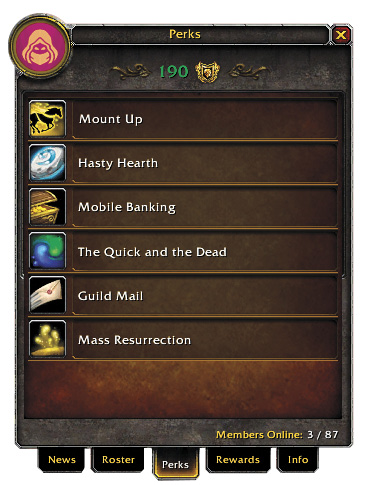
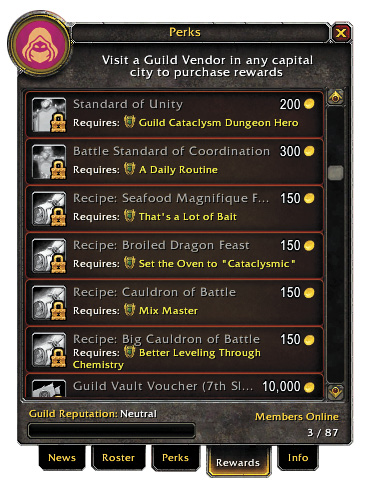
Bonuses for being part of a guild include increased experience gain for its members, faster mount speeds, and much more. These perks are available to a guild as soon as it’s formed, and to members as soon as they join.
Guild Achievements
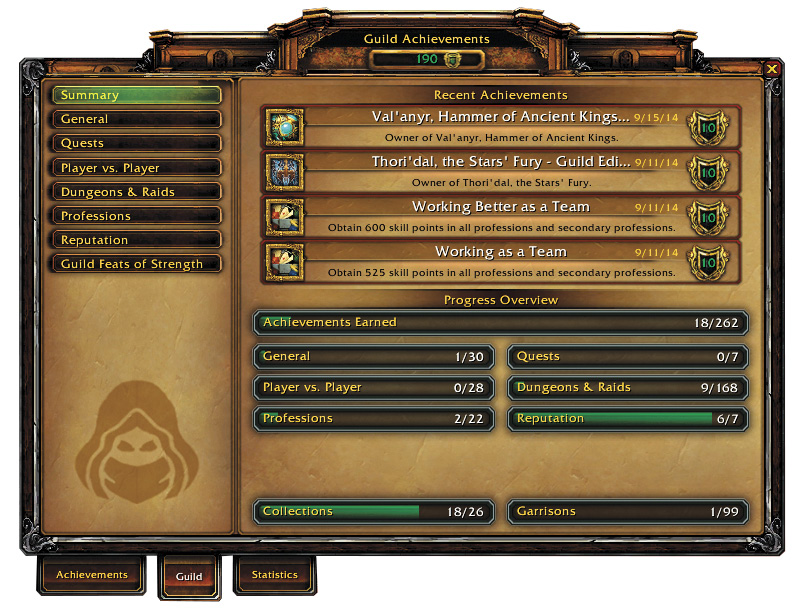
Guild Achievements appear in your Achievement pane under the Guild tab. Most of these achievements mirror your standard achievements with the added stipulation of accomplishing many of them in a group made up primarily of members of your guild.
These achievements span every facet of the game. Completion of dungeons, and participation in PVP battles are examples of achievements that must be done in a guild-heavy group. Other achievements keep track of the combined efforts of the individuals in the guild. Getting at least one of every class from each possible race to maximum level is an example of such an achievement, as is having Zen Masters in every profession.
Guild Reputation and Rewards
Guilds can’t simply add players with high-level characters or maxed-out professions. Each character must achieve a certain standing with the guild in order for their accomplishments to count. This also applies to players. You can’t join a guild and instantly gain access to everything the guild has unlocked. You must put in time and effort before you benefit from the work the guild as a whole has completed. Gaining Guild Reputation happens as you’re accomplishing the tasks that boost your guild’s level, so it’s a win/win situation!
Joining a Guild
To join a guild, you need to get an invite from a guild officer. You might get an invitation right away, or you may have to wait until a particular member is online.
Once you accept the guild invitation, you’ll be added to the guild channel and start seeing the ongoing guild chat.

Leaving a Guild
To leave, type /gquit.
Joining a guild is not like getting married. It is, however, like dating—you may need to join successive guilds before finding the one that really suits you. If you decide to leave your guild, it’s good form to tell the Guild Leader that you’re leaving and why.
Creating a Guild
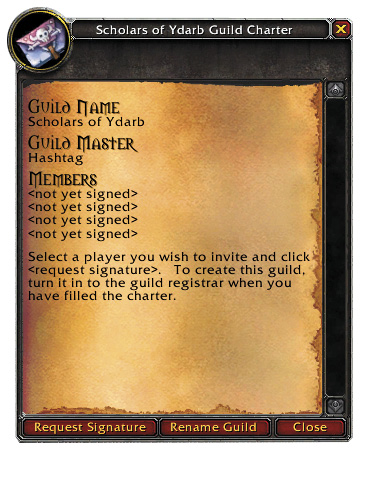
If you’d prefer to lead rather than follow, find four other people and make your own guild. This starts when you go to a major city and purchase a Guild Charter. They cost 10 silver, and you can find the Guild Master NPC that sells them with the help of the local guards.
This is the only upfront money that is needed for a guild to be put together. Use the charter to get other people to sign and, once you have all the signatures, you are ready to go. Bring the charter back to the Guild Master and turn it in.
Different characters from the same account cannot log in to sign the charter once one character from that account has already signed it. Thus, you need five different players to work together when forming a guild.
People who sign your charter don’t need to remain in the guild after it forms. They can leave instantly if they like, so even a single person can be in a guild (by themselves). If you pay others to help you put things together, this is quite doable. It’s lonely, but some people prefer things that way.
Guild Ranks
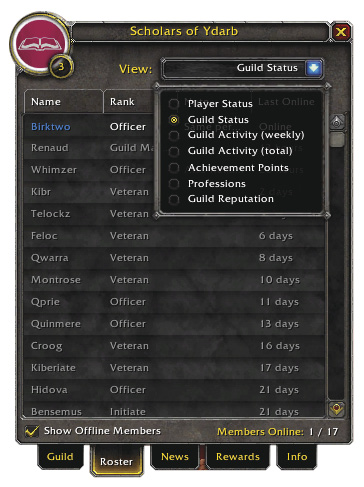
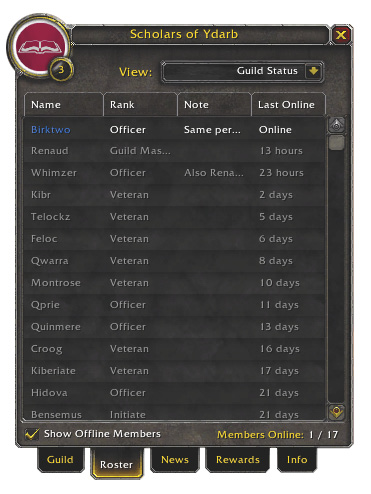
Guilds have the following ranks for their members: Initiate, Member, Veteran, Officer, and Leader. What the ranks actually indicate varies from guild to guild. Each guild has only one Leader, but Officers can do many guild management tasks.
Guild Tabard
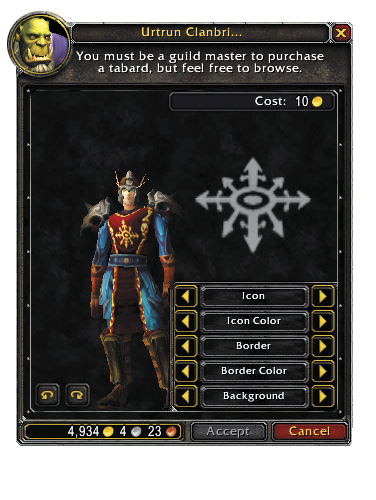
A tabard is a tunic bearing the colors and insignia of your guild. It indicates your allegiance to your guild, but there is no in-game benefit to wearing a standard guild tabard (although there are special tabards that do have benefits). Purchasing a tabard costs 1 gold. If you leave one guild and join another, the same tabard can be used (the insignia updates as you change guilds).
Guild Vault
Each guild can buy Guild Bank tabs at the Guild Vault. Some guilds are wealthy and some are poor. The vault is always managed by the Guild Leader, who decides what kind of access each member gets. Vaults can hold anything, including gold, weapons, armor, recipes, and other shared items.