World of Warcraft: Warlords of Draenor Signature Series Strategy Guide CHARACTER CLASS INTRODUCTION
Mage
 Mage
Mage


Overview
Mages are known for dealing large doses of direct damage from a distance, while also being capable of damaging multiple enemies at once with their numerous AoE spells. Mages are not without their share of utility, however, which includes teleportation spells (for the Mage and group members), reliable crowd control and conjuring temporary items that replenish health and mana.
Depending on the situation and the talents chosen, Mages can be fragile but powerful wizards (often referred to as “glass cannons”) or durable masters of snares and crowd control. Although all of a Mage’s specializations are involved in dealing damage, they’re vastly different in their purpose and the way they’re played.
Prominent Class Abilities
Out of Combat Utility
Mages are excellent damage dealers, but they have an impressive list of abilities that are a huge help at other times. They gain the ability to conjure food and water to sustain adventuring parties. Mages can learn to teleport themselves to various cities available to their faction. At higher levels, they learn how to create portals that allow anyone grouped with them to travel instantly to those same cities. Note that any damage caused to the caster will interrupt Teleport or Portal spells, so make sure to check for enemies before attempting to use these slow-casting spells.
Crowd Control
Polymorph is the main source of Mage crowd control. Mages can turn humanoid or beast targets into sheep (although there are objects around the world that let you pick other forms, such as pigs and penguins) and render them unable to act for some time, as long as the target doesn’t take any damage. If you’re in a party, it’s a good idea to tell your party members if you plan to Polymorph a target; that way, they can avoid hitting it and breaking your Polymorph early.
Specializations
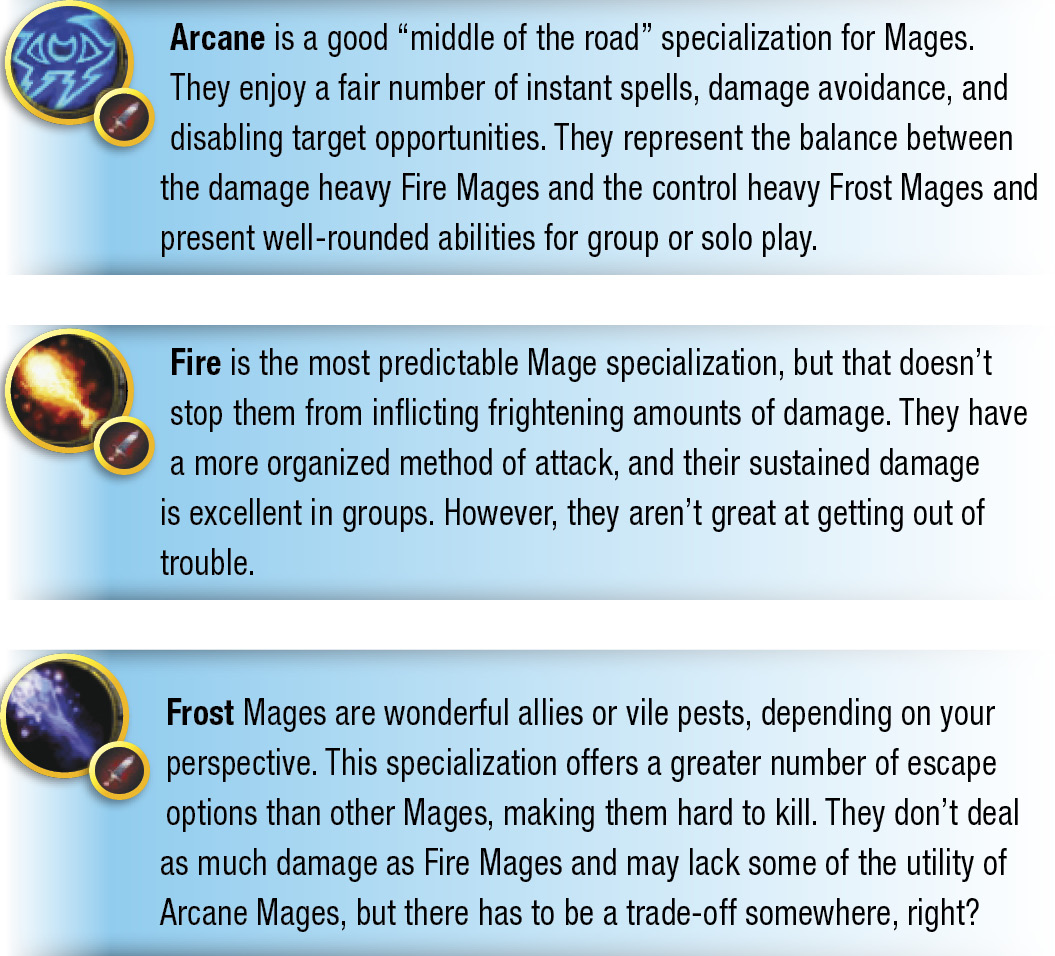
At level 10, Mages must decide on one of the following specializations: Arcane, Fire, or Frost.