
Fable Anniversary Guide The Basics Quests and Combat
Combat
Confrontation is an inevitable part of a Hero’s life, and you’re never too far from fisticuffs in Albion. Luckily, you have three main ways to deal with opponents (four if you include running away like a big girl’s blouse) in the form of Melee, Ranged, and Will combat. Even if you have a preference up-front, it pays to get familiar with all three disciplines before you consider specialisation.
A Note on Controls
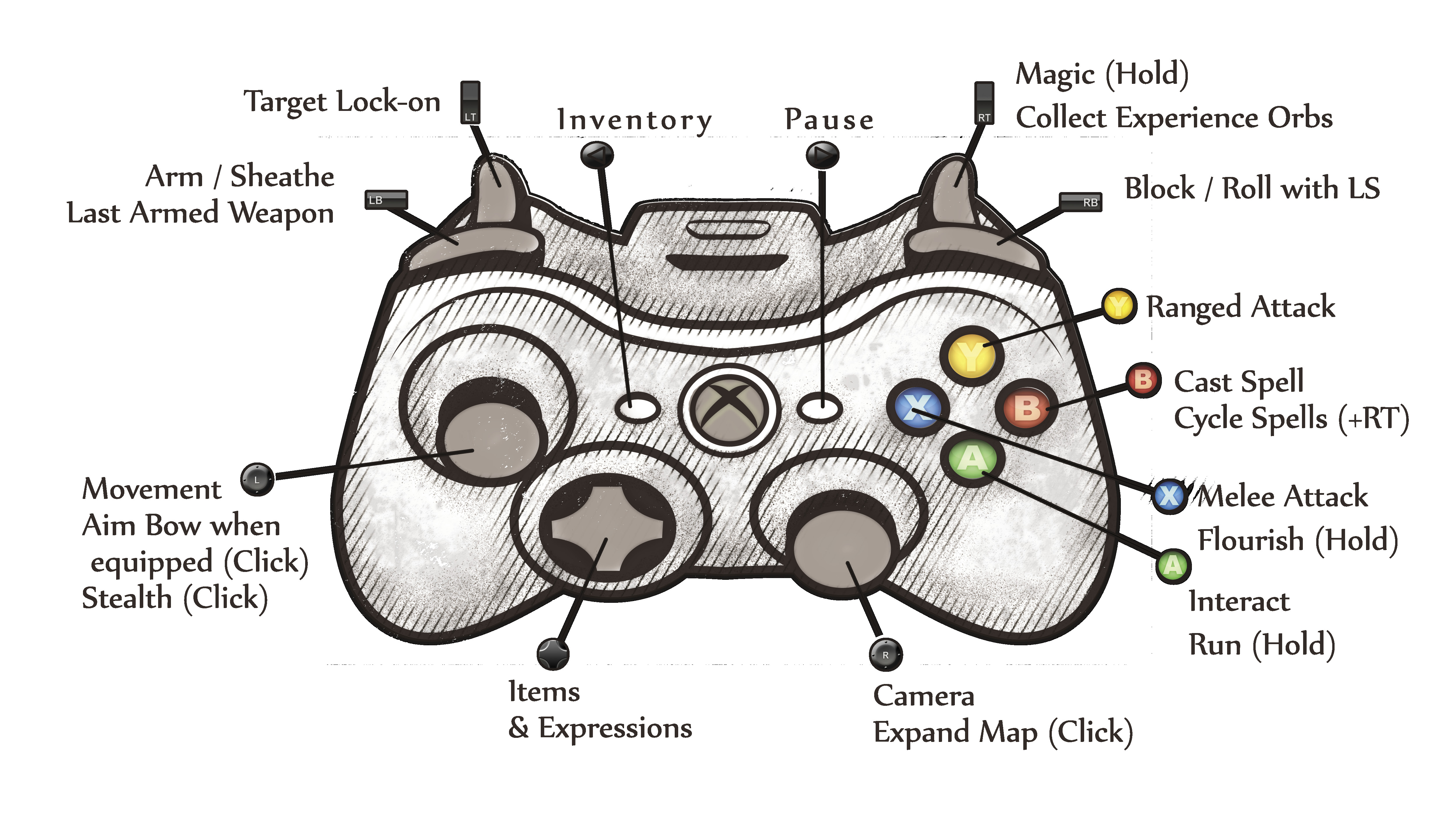
Fable Anniversary features two different control options. By default, you play using the classic Fable 2 set-up, with a few tweaks to accommodate the Xbox 360’s refined pad layout. For that authentic, nostalgic flavour, though, you can also use Fable’s original control scheme. Of course, if none of those suit, you could always press your face against the screen and try controlling the game with your mind. Good luck!
Melee Combat
If you’re the kind of Hero that likes to get up close and personal in combat, you’re what questing experts refer to as a Melee fighter. Sword-swinging types should keep a few things in mind, though—such as the things listed below.
There are ten classes of Melee weapon in Fable—the Axe, the Cleaver, the Katana, the Longsword, the Mace, the Pickhammer, the Greataxe, the Greathammer, the Greatmace, and the Greatsword—and each differs in speed, range, and damage potential.
Once you’re out on the battlefield, it shouldn’t take long to realise that a high-damage-dealing weapon isn’t automatically the most effective tool. In general, shorter, quicker weapons are best used against enemies with defensive fighting styles, while “Great”-style weapons make light work of non-blocking targets or large crowds. Experiment with different Melee weapon classes and their relative merits should soon become clear.
Melee Weapon Materials
Confusing matters further, there’s another factor to consider when choosing your Melee weapon: what it’s made from. Each Melee class contains five weapons and each weapon is crafted from a different material. From worst to best, Melee materials are as follows:
- Iron
- Steel
- Obsidian
- Master
- Legendary
As material quality increases, weapons do more damage and pack in more Augmentation slots. Augmentations are mystical gemstones that grant everything from health-regenerating abilities to special magical powers when attached to a weapon. Needless to say, the more Augmentation slots you have, the better. Legendary weapons differ slightly in that they’re pre-Augmented, but that’s not a problem, seeing as they’re the most devastating weapons in the game.
Blocking, Countering, and Rolling
Blocking is a Melee fighter’s best friend. When used correctly, it significantly reduces the amount of damage you receive from head-on attacks. Even better, successfully deflecting an incoming blow leaves most enemies (humans in particular) vulnerable for a few seconds. This is the perfect opportunity to counter with a few swift strikes of your own.
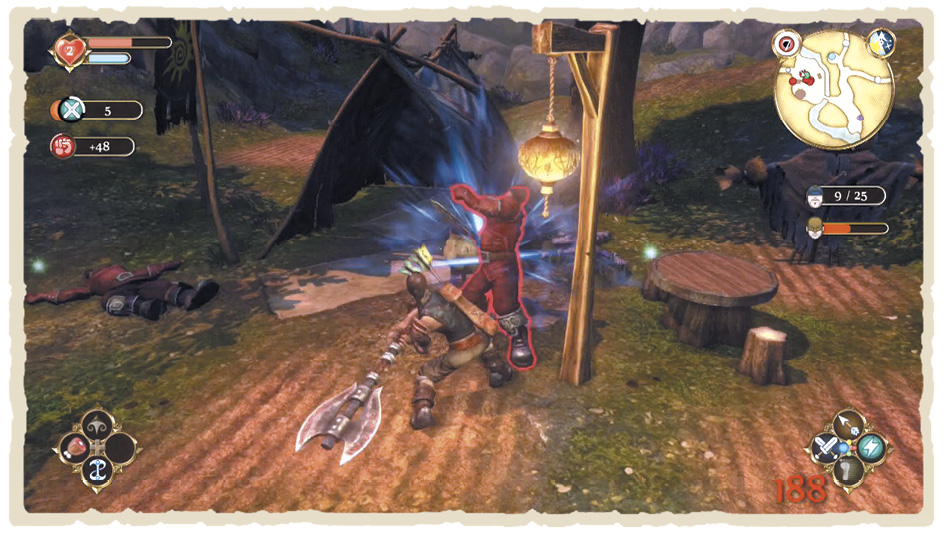
Blocking also paves the way for another nifty defensive trick: rolling. Tap the left analogue stick while blocking and you can dodge out of harm’s way entirely. Adept Melee fighters use their opponent’s next few floundering moments to land quick one-two strikes. Less-adept Melee fighters use the time to eat a sandwich or inspect their hemline.
Flourishes
Flourishes are special moves available exclusively to Melee fighters. They’re accessible once you’ve managed to land a couple of combo blows, as indicated by your weapon’s sudden, seductive glow. Flourishes might sound dainty, but they can be devastating, offering greater damage and a wider range of attack when compared to standard moves. What’s more, they’re unblockable!
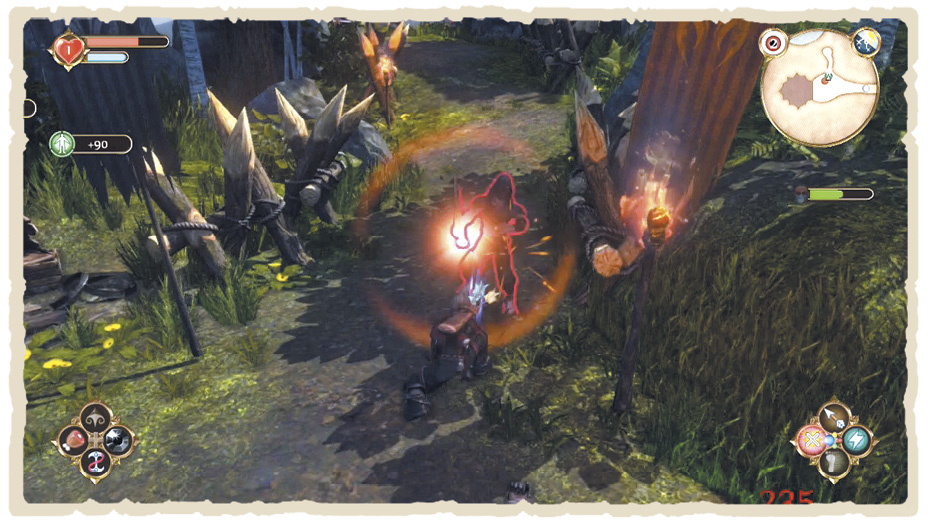
Better yet, there’s no time limit on Flourishes, meaning you can do all the swivel-bladed justice you want—until you miss an opponent or take damage, that is. As such, Flourish attacks require pin-sharp accuracy to be effective, so fat-fingered button-mashing is out of the question here.
Ranged Combat
Ranged combat—essentially, the fine art of maiming opponents from afar—can be underwhelming in the early hours of Fable. Treat yourself to a couple of discipline-specific Attribute upgrades, however, and Ranged weapons quickly prove their worth in battle. Ranged attacks typically do more damage than Melee strikes, for instance, and are unblockable to all but boss characters.
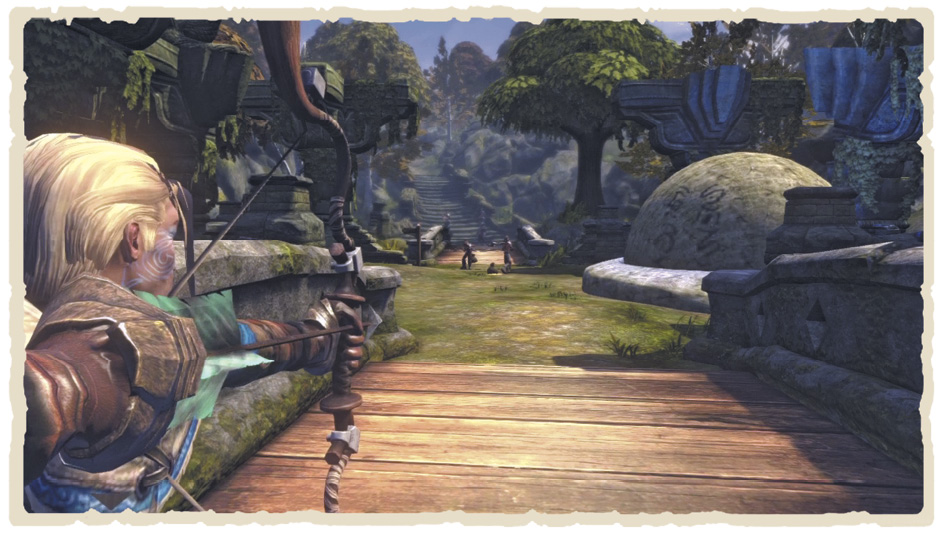
There are two Ranged-focussed weapon classes in Fable: Bows and Crossbows. Crossbows are the Ranged weapon of choice in terms of sheer power, but can’t match the quick-reloading prowess of standard bows. Crossbows are best used to deal massive, up-front damage before rushing in to finish the job with a few well-placed Melee blows. Bow users, meanwhile, can simply park in a bush and rain down death from afar, keeping their favourite frocks entrails-free.
Ranged Weapon Materials
As you might expect, the better a Ranged weapon’s material, the more effective it is in battle and the more Augmentation slots it holds. From worst to best, here are the five materials Ranged specialists should look out for:
- Yew
- Oak
- Ebony
- Master
- Legendary
Needless to say, always make sure you’re using a weapon of the highest quality material available. After all, you wouldn’t try maiming a shark with a toothbrush, would you?
Decapitations
Ranged specialists might be disappointed to learn that Flourishes aren’t possible when using Ranged weapons. On the plus side, a well-placed Ranged shot can take your opponent’s head clean off under the right circumstances. Firstly, decapitation only works on human assailants and, even then, requires a fully charged shot aimed manually at the head—try it with auto-target on and the best you’ll get is an arrow in someone’s gut. Bear in mind that your chances of a successful decapitation increase as your Accuracy Attribute improves. It’s a technique worth perfecting,though, for obvious reasons.
Will Combat
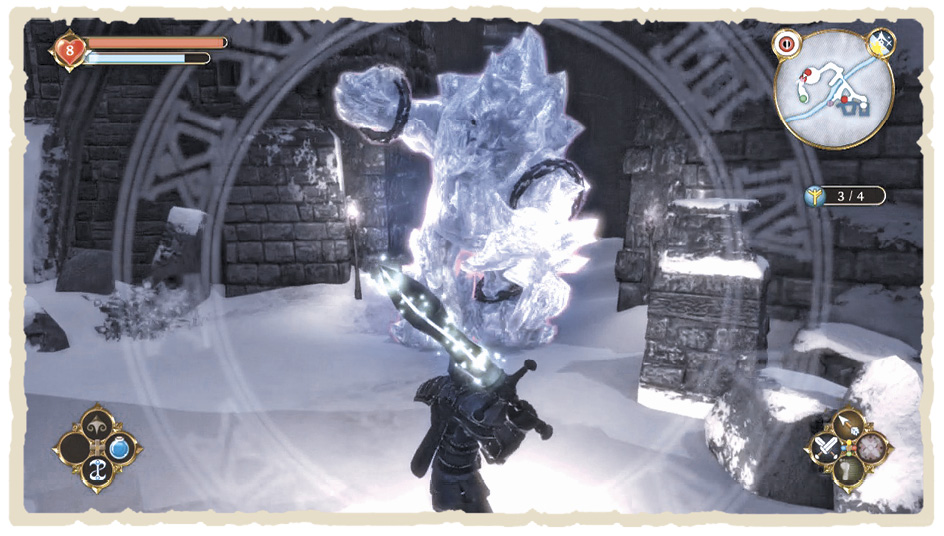
Of course, you have one final combat option in Fable: magic. In Albion, practitioners of the ancient, mystical arts are known as Will Users, and each Spell conjured during battle drains a portion of the caster’s Will. Your Will Energy bar sits below your Health gauge in the top left-hand corner of the screen and, when left untapped, slowly replenishes over time.
Be warned that magical combat requires a degree of strategy, somewhat different from the brute force approach of Melee and Ranged battling. Thankfully, a Will User’s life is made easier by the vast range of Spells at your disposal—from the restorative powers of Heal Life to the fiery oblivion of Enflame. Of course, Will, Melee, and Ranged combat aren’t mutually exclusive and real chaos can be wrought by combining each discipline on the battlefield. Whoever said that indecision doesn’t have its benefits?
Combat Multiplier
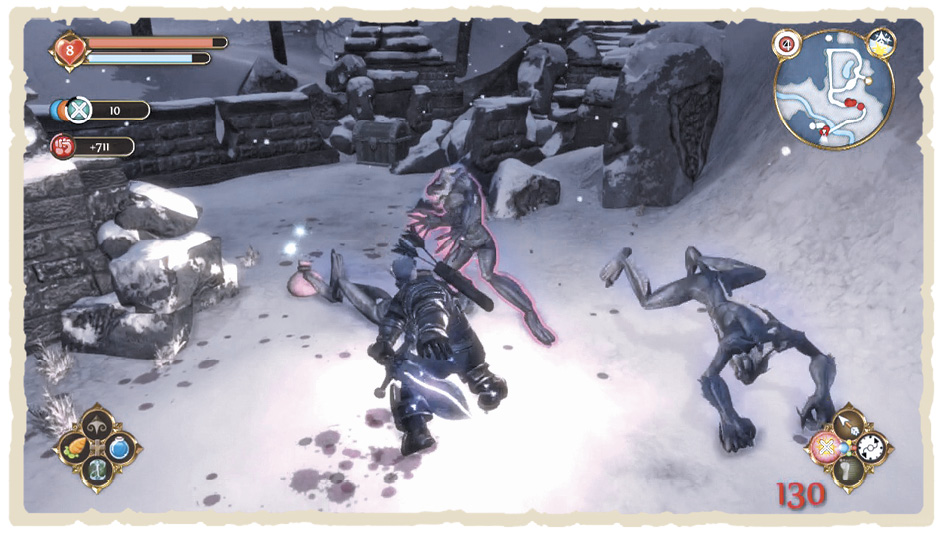
 One last thing, brave Hero; let’s talk about your Combat Multiplier. Deal any kind of damage to an enemy and your Combat Multiplier (tucked beneath your Health gauge in the upper-left corner of the screen) will rise. Any Experience earned in battle is multiplied by your Combat Multiplier’s current value and added to your Experience reserves. In other words, eke 40 Experience points from an opponent when your Combat Multiplier is at 20 and you’ll receive 800 points for your efforts.
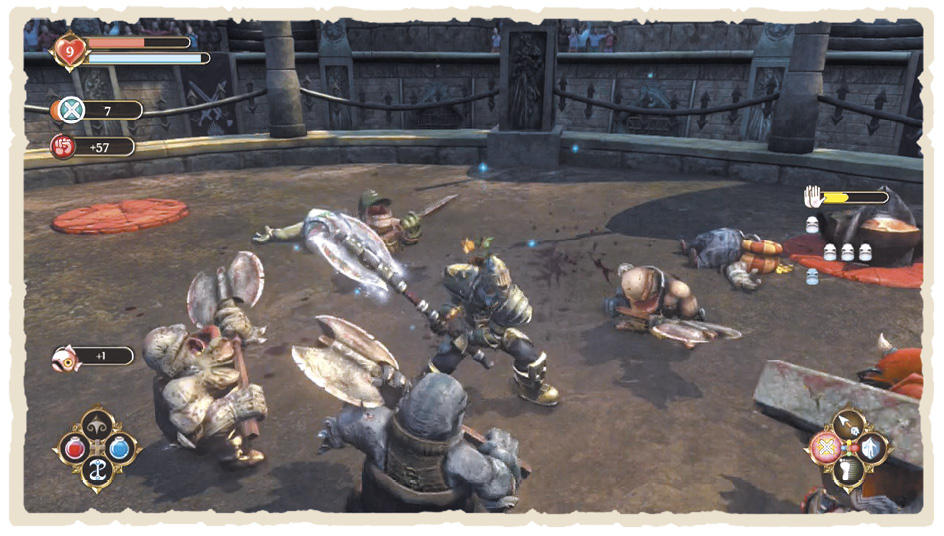
Of course, it’s not quite that simple. For starters, your Combat Multiplier steadily reduces over time, meaning it’s vital to keep on dealing damage. Furthermore, it plunges dramatically if you take a blow yourself. All is not lost as a result of your carelessness, though; your Combat Multiplier is essentially “gated” at fixed points. Get hit and it falls to its previously gated level. For instance, if you’re struck at level 39, your Combat Multiplier will drop back to 20. Finally, keep in mind that leaving an area instantly reduces your Combat Multiplier by half.
As you’ll soon learn, a steady influx of Experience is vital to your progress in Albion, so always aim to get your Combat Multiplier as high as possible.