
Dead Rising 2 Guide Walkthrough Case 4-1: The Source
Side Mission: High Rollers

With Richard and Randolph in your party, save your game at the nearby restroom on Palisades Mall’s second floor, then proceed to Atlantica Casino.
Visit the casino’s north poker room to encounter three hard-core gamblers who are looking for a fourth player for their high-stakes game of Texas Hold ’Em.

Play against these high rollers by examining the poker table.
It costs you $100,000 to buy into the game, and you should easily have this amount if you’ve followed this walk through carefully saving Janus and completing Lenny’s “The Secret of Charlie’s Gold” side mission has lined your pockets with loads of paper.

Luck of the draw plays a role in your success in poker, but it helps to understand the game. Here are the rules: Each player is dealt two “hole” cards, which only they may see. One player automatically posts the big blind (BB), a forced bet meant to stimulate action.
The player to the left of the big blind is forced to post the small blind (SB), which is always half of the big blind.
The remaining players have the option to review their hole cards before deciding whether to “call” the big blind (bet the same amount and play their hand) or “fold” (bet nothing and sit out the hand).
Players may also elect to “raise” on any turn (bet even more than the current wager); once a raise has been made, all other players must call the raise if they wish to continue playing the hand.
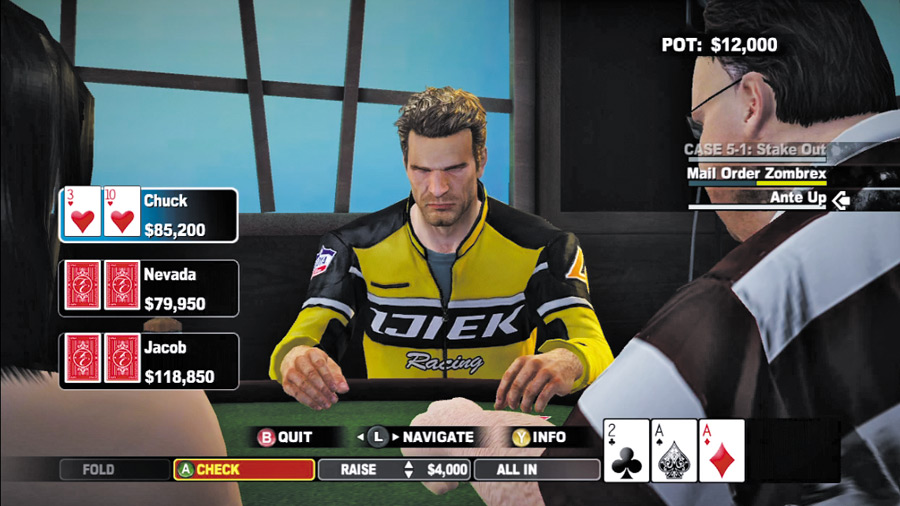
After the initial round of blinds and betting, three cards are dealt in the middle of the table. This is known as the “flop.”
Cards dealt to the center of the table are community cards; all players get to use them. The idea is to combine the central cards with your two secret hole cards to form the best five-card poker hand.
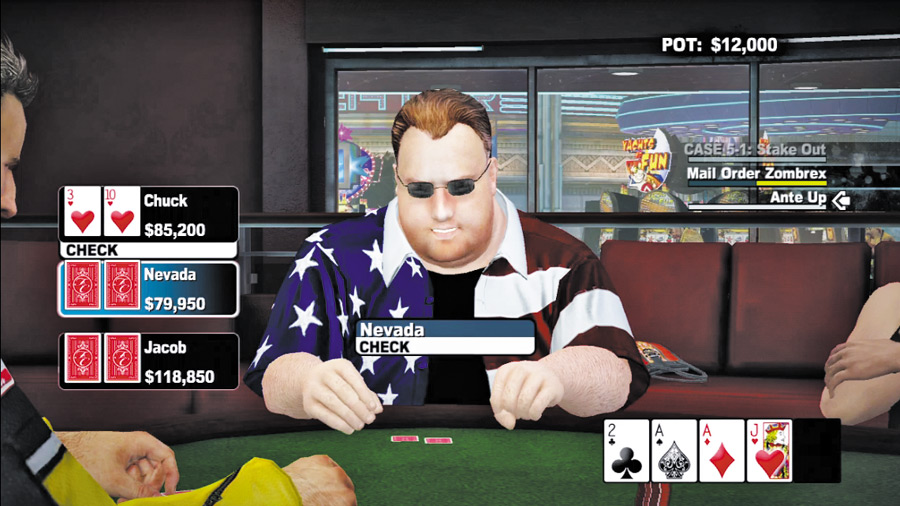
A round of betting follows the flop, in which each player may decide whether to check (take no action) or bet (raise the stakes). If all players check, no additional money is required to see the next community card, called the “turn.”
If any player bets, all other players must either call the bet to continue playing, or raise the bet, placing even more money into the pot and forcing the initial better to call.
The third option is to fold, forfeiting any money you’ve placed into the pot thus far and giving up on the hand.
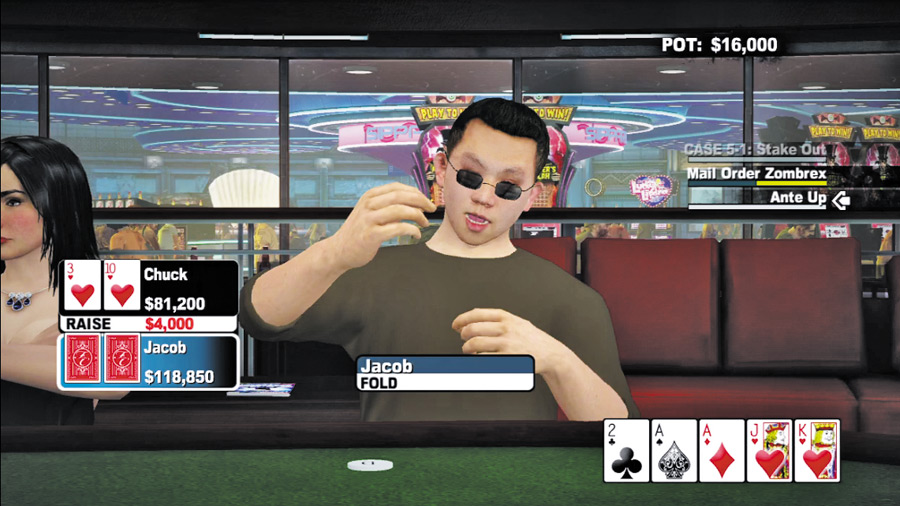
A fifth and final card is dealt after the turn; this one’s called the “river.” A final round of betting follows—afterward, all players who are still in the game must reveal their hole cards, thereby showing their hand.
The player whose hole cards help them create the best five-card poker hand wins, collecting all money in the main pot.
Here are the best Texas Hold ’Em poker hands, from 1 (rarest) to 10 (most common):
| Hand | Cards |
|---|---|
|
1. Royal Flush |
Ace, King, Queen, Jack, 10, all of the same suit |
|
2. Straight Flush |
A five-card Straight, all of the same suit |
|
3. Four of a Kind |
Four of any one card, such as four Kings or four 4s |
|
4. Full House |
Three of a Kind, plus a Pair |
|
5. Flush |
Any five cards, all of the same suit |
|
6. Straight |
Five cards in consecutive order, such as 3, 4, 5, 6, 7 |
|
7. Three of a Kind |
Three of any one card, such as three jacks or three 3s |
|
8. Two Pair |
Two separate Pairs of cards, such as two 9s and two 5s |
|
9. One Pair |
One Pair of cards, such as two aces or two 2s |
|
10. High Card |
If no player has made even one Pair, then the player with the highest hole card wins |

Obviously, the more familiar you are with the game of Texas Hold ’Em, the easier time you’ll have of winning this event. Here are some basic tips to keep in mind:
1. Know When to Fold ’Em : If you’re dealt weak hole cards, such as a 4-8 off suit (unsuited), don’t hesitate to chuck ’em away.
Your rivals can eliminate one another without your help; you don’t need to play every hand. The worst starting hand in Hold ’Em is the 7-2 off suit, because you have little chance of making a Flush or Straight, and the value of both cards is low.
2. Play Your Position : If you’ve been forced to post the small blind, you might as well call the big blind, even if you aren’t sitting on the greatest hole cards.
It’s usually only a small amount of extra cash to call, and who knows? You might draw a lucky flop and end up winning big.
3. Read Your Rivals : Consider the community cards, think of all the hands your rivals could potentially have, and then watch how they bet. If you’ve flopped a pretty good hand, such as Top Pair (the highest possible pair), place a small bet and see how your opponents react.
If someone raises you, chances are they may have something even better, such as Two Pair or Three of a Kind—consider folding unless you’re certain they’re bluffing.
4. Consider Your Kicker : Being dealt a king is great, but it’s less great when your other hole card is weak, like a 3. Even if you pair your king on the flop, a rival may have done the same, and their other hole card (known as the “kicker”) would likely be greater in this case.
Go ahead and play hands like queen-5 when it’s cheap to buy in; fold them immediately otherwise.
5. Check and Trap : Even if you’ve made a great hand, such as flopping a Two Pair or Three of a Kind, consider checking instead of betting. This can entice your rivals to bet, assuming that your hand is weak.
Call each bet until you reach the river card, then make a bold raise and see if they fall for it. Even if they somehow have you beat, you’ve risked less money by checking and calling instead of betting and raising.
6. High Hands Are Rare : It’s not very often that someone makes a Straight or Flush in a four-handed poker game—the odds are quite high against it.
If you’ve made Two Pair or Three of a Kind, feel confident that you’ve drawn the best hand, and play it accordingly. Even Top Pair can be a monster hand in a four-handed event.
7. Open Up at the End : Start playing more aggressively as players are eliminated from the game.
Lead out and bet with every hand before the flop—this works because players are far more likely to draw weak hole cards than strong ones in Texas Hold ’Em, and betting early will usually entice your rivals to fold.
However, if you’re bluffing and you’re called, expect that your rival has you beat and look for a way out. Pride has no place at the poker table.

Chuck must be the last player standing to win the “High Rollers” poker game, so be prepared to grind it out. The prize pool is well worth the effort: $1,000,000 goes into Chuck’s pocket, and he gains the company of three more survivors!