
Red Faction: Armageddon Guide Essentials Universe
The Revolutionary History of Mars
Introduction
The fourth planet of the solar system is a dead one, but in the minds of men it has always represented the potential for expansion and adventure. Gazing at Mars, sparkling in the night sky, humanity dreamed of what could be.
Then, in 2050, that dream became a reality.
This is the story of Mars. Not the dream, but what we really found there. A planet of bloodshed, anger, heartbreaking sorrow and hope; a place where the will to survive can only be surpassed by the passion to be free.
A place called home, by countless Earth-kissed settlers. And by something far more horrible, lurking in the deep
The Revolutionary History of Mars
Arrival
2003–2040 C.E.
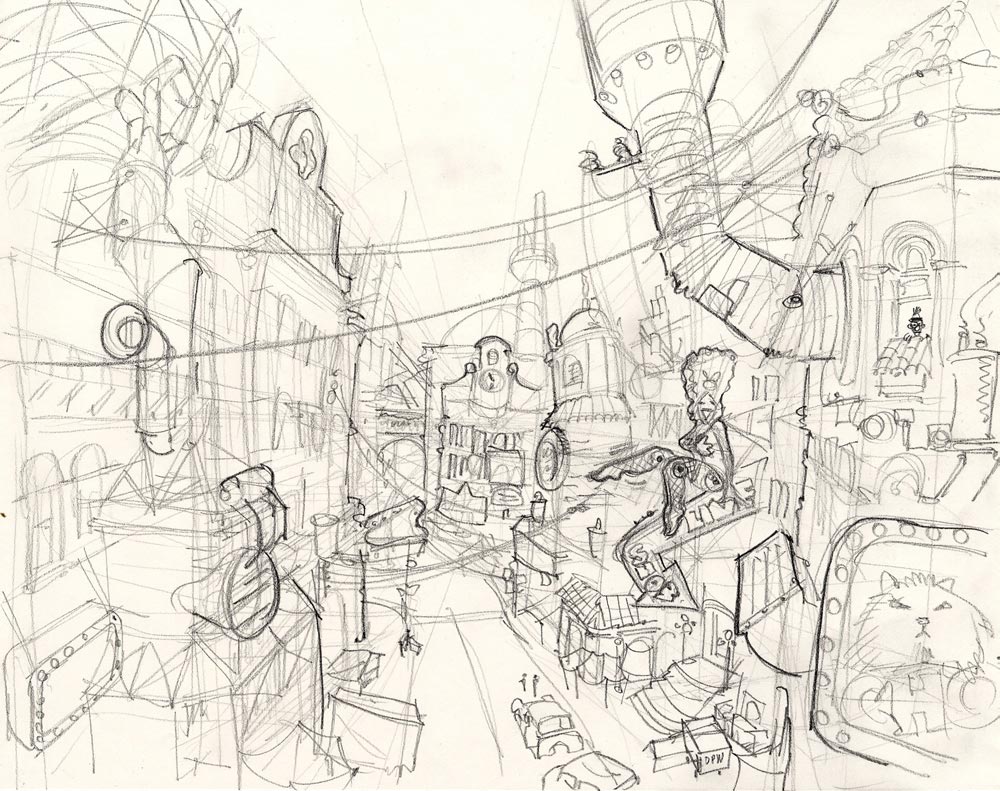
Rampant growth has left Earth with more than twelve billion inhabitants—most of them malnourished and living on top of each other, willing to do anything to survive.
After 195,000 years of human life, Earth burst at the seams. Food shortages and water problems led to large-scale riots across the planet. Wealth began to accumulate only in the hands of a few. With so few resources left to mine within the planet, governments began to look to Mars - the closest source of iron, copper, and other minerals so vital to industry on Earth. But, due to dwindling resources and rampant waste, government missions to Mars were only modestly successful, at best.
Colonization
2050–2074 C.E.
Enter the Ultor Corporation. In the early 21st century, this one-time clothing manufacturer began to expand into myriad different industries. The company saw the vast potential of Martian resources and required the raw materials abundant on Mars in order to continue growing. Through means both fair and foul, Ultor's board "convinced" the United Nations in the 2040s to confer upon the corporation a 99-year lease on all Martian territorial and mining rights. This deal was contingent on Ultor reaching the planet to establish a working colony there.
Ultor had everything to lose; any setback would have been catastrophic to both its reputation and its fiscal bottom line. But with the early navigation routes and topographical mineral scans previously mapped out by Earth's government science teams, the hard work had already been done. By 2050, Ultor had established its first colony of scientists and support staff on Mars. One year later, the first mine was opened.
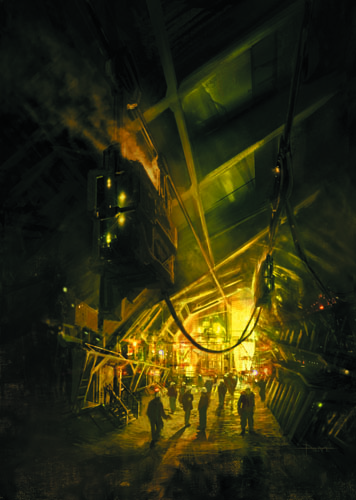
Used in practically all late-21st century technologies, including the creation of nanites, the Martian mines began producing more wealth than most of the nations of Earth combined.
Mars was blessed with tremendous mineral wealth, more so than all early reports had predicted, but the planet lacked energy resources to help acquire that wealth. Wind and solar energy could only power a fixed percentage of the burgeoning colony. Dust storms were a regular, disruptive occurrence, boosting maintenance fees to astronomic levels. Since every drop of fuel had to come from Earth, the costs of interplanetary shipping combined with the ramifications of the first Fuel Wars of Earth kept those prices prohibitively high. Investment returns increased with the first shipment of ore back to Earth, but it wasn't nearly enough to keep pace with expenditures.
Ultor controlled what costs it could. Atmospheric scrubbers were scrapped in the dead of night, while cheap workshops were established in the mines to produce as much of the necessary infrastructure to survive as possible. With little oversight from Earth, and terraforming a century away from implementation, these operations were run as badly as any Industrial Revolution sweatshop.
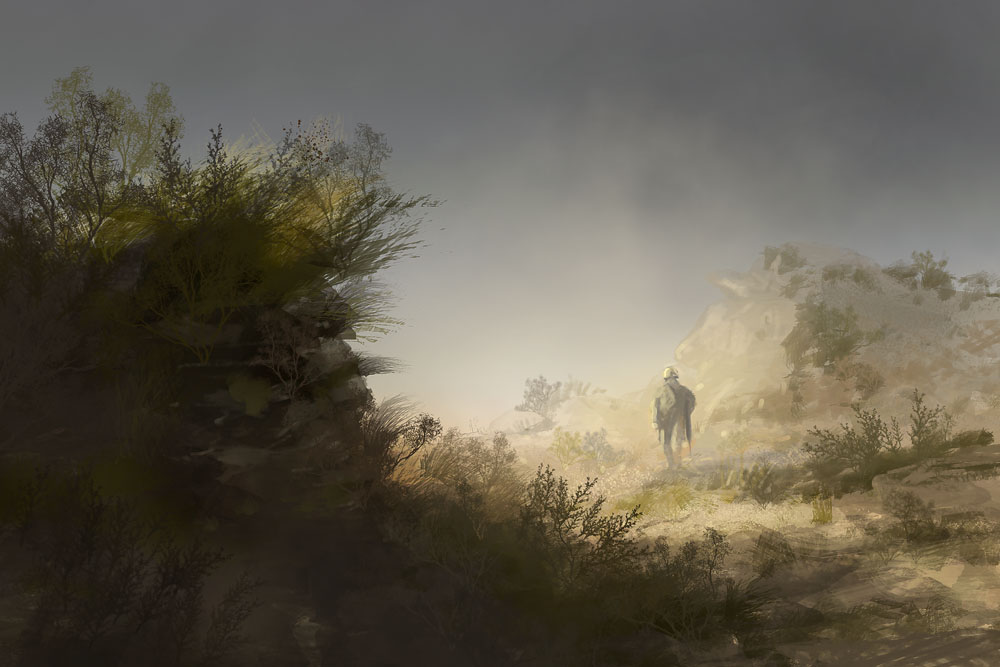
Though not the American West in the strictest sense, Red Faction's Mars is a place of bandits, harsh climate, and ready carnage around every canyon bend.
But through all the hardships of the early years, compared to life on Earth, Mars was a paradise. There were no wars, no ethnic cleansings, and no food shortages. Ultor controlled life on the planet with a methodical sense of purpose, while government supervisors monitored the one thing the miners cared for most: their pay. Since everyone expected the early years would be difficult, unrest among the workers was maintained at a minimum level.
That is, until Dr. Axel Capek arrived at the Martian Complex. A scientist who was once at the forefront of nanotechnology research, Capek had run afoul of the law when his "innocent" experiments were revealed to have breached international law. Most governments had banned human/nanite research after the first forays into nanotechnology had turned out disastrously for their human test subjects. These revelations would have been the end of Capek's career had Ultor not offered him a way out of the criminal sentence he faced.
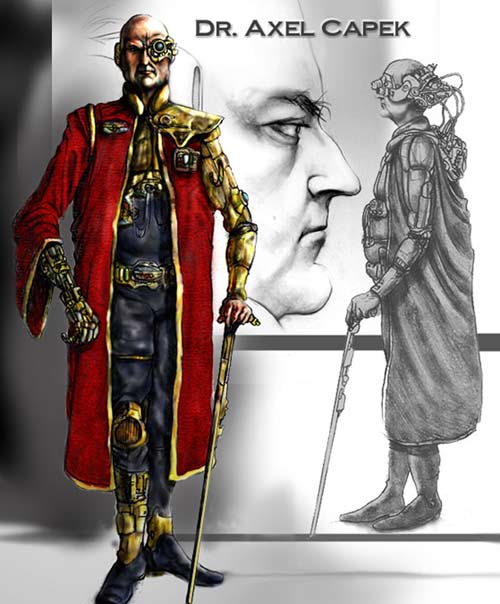
Before he was killed, Capek had created the Plague, its antidote,and dozens of other applications of nanotechnology. Because some of this intelligence escaped, there is no telling how far Capek's influence has spread since his death.
The corporation realized that in order for their operations to become a truly profitable enterprise, even further cutbacks were required. They needed a miner who wouldn't complain or, better yet, a miner that couldn't complain. Could nanotechnology be used to genetically manipulate future Colonists to require less oxygen? Or survive greater heat? Or go longer without provisions? Ultor thought the price was worth it. They paid Capek's fines and legal fees, shipping him off to Mars on the first available transport out.
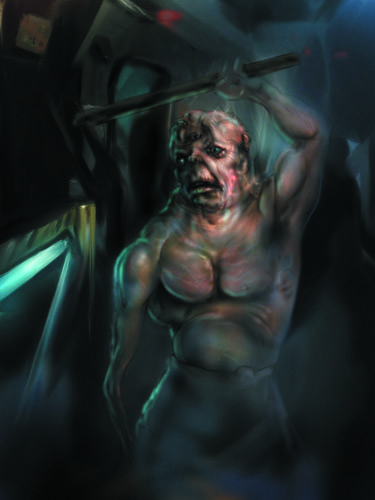
His presence on the colony would prove to be an unmitigated disaster. Freed from even the minimal constraints of Earth's laws, Capek established a laboratory that was truly borne from a mad scientist's wildest dreams. Miners with desirable traits were whisked away in broad daylight, supposedly due to contract disputes or other trivial matters that might have forced a deportation to Earth. Few of those taken were ever seen again as Capek's experiments rarely left survivors.
With his influence growing, even Ultor's Security Division was hesitant to do anything about Capek's work. They turned a blind eye, assuming (or hoping) that he and his team were hard at work creating technology that would allow miners to better adapt to Martian conditions.
Eventually, Capek released millions of nanites into the Martian population. These miniature robots injected new sequences of nucleotides into the DNA of any person they came into contact with before moving on to the next "host." Rather than eliminate unwanted genes and curing cancer, however, the nanites indiscriminately tangled a target's genetic strings. Those affected were reduced to husks of human beings in short form.
Capek's plague was born.
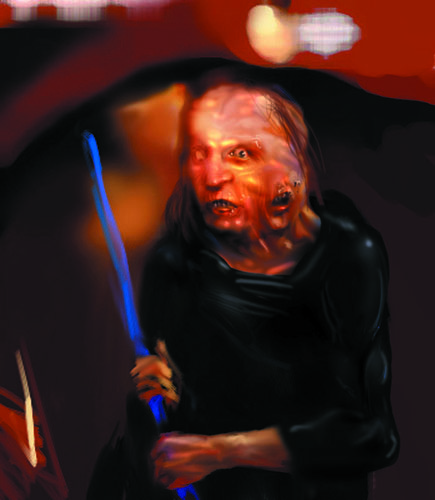
Capek released millions of nanites into the Martian population. These miniature robots injected new sequences of nucleotides into the DNA of any person they came into contact with before moving on to the next "host." Rather than eliminate unwanted genes and curing cancer, however, the nanites indiscriminately tangled a target's genetic strings. Those affected were reduced to husks of human beings in short form.
It is unknown whether this was intentional on Capek's part or a mistake. In any case, Ultor officials on Mars could not punish Capek for fear of losing access to his antidote. Capek continued his research, and miners began to die.
One such Colonist was the wife of an employee of Capek. Ravaged by tumors, her husband and daughter could only watch as the woman succumbed to the Plague in the first wave of casualties. The young girl, who later became Eos, was so traumatized by her mother's death that when she found out from her father who was responsible for the disease, she vowed revenge on Ultor and Capek.
Two years later, Eos would initiate the creation of the Red Faction. The end of Ultor had begun.
Parker's Rebellion
2075–2076 C.E.
Eos began actively recruiting from the dissident miners she knew rankled under Ultor's oppressive system. Slowly, Red Faction grew - and as it grew, so did its influence.
Aware of the bad publicity that this dissension could generate, Ultor chose to obliterate the opposition rather than work with it to address their legitimate grievances. They eradicated the first demonstrations, leading to mass arrests and more than a few executions. More miners were brought in to replace the insurgents and conditions degenerated further.
Eos managed to escape the raids, but the corporate clampdown had turned her from an aggrieved dissident to a raging radical. No longer would she be content with civil disobedience. Engaging an Ultor employee named Hendrix to relay her information, the surviving members of Red Faction began increasing their militaristic operations. These growing acts of terrorism culminated in 2075 when Eos set a bomb off in the Ultor Complex's cafeteria. Only a handful of Ultor employees were injured, but the explosion was seen as a call to arms. Parker's Rebellion had begun.
Unknown to Eos, the tipping point in Red Faction's favor arrived that very day. Having fled his boring, coddled life on Earth to find adventure on Mars, a man named Parker heeded Ultor's promise of steady work and a chance to get away from the horrors of Earth. Parker knew next to nothing about the subjugation of the planet. He simply wanted to get away from his parents and the life they had predetermined for him.

Nobody knows exactly what happened to Parker. There were rumors that Alec Mason once met a mumbling loner who answered to the name "Parker." This is a subject of much debate in the bars and backrooms of Bastion.
On that first day, however, Parker witnessed the horrors of Ultor's occupation. He quickly saw rampant brutality, the scourge of the Plague, and astonishingly unsafe working conditions. As Ultor cracked down on Red Faction, Parker witnessed the brutal murder of an innocent miner by an Ultor guard. When Parker stepped in to help, it led to a mass riot.
Thrust now into a leading role for the liberation of Mars, Parker had become enemy number one on Ultor's list. He had no idea how this would play out, but Parker had inspired the residents of Mars to overthrow their oppressors in a wave of violence. Guided by Hendrix—who renounced his employer upon seeing Parker's actions—Parker attracted the attention of Eos, kidnapped an Ultor VIP named Gryphon, and tried to unlock the secrets of Ultor's stranglehold on Mars.

Gryphon was the Deputy Administrator of Ultor until he was "convinced" to join Red Faction after Parker kidnapped him. He gave a lot of sound intelligence to Red Faction about his employer, which helped lead to the death of Axel Capek, the discovery of the Plague's antidote, and ultimately, the destruction of Ultor.
What Parker and Eos learned shocked them: hideous experiments with nanotechnology and the true source of the Plague. If Red Faction hoped to overthrow Ultor, they would need to infiltrate the deepest sectors of the corporation's hidden laboratories and find Axel Capek.
The journey was hard fought, but in the end, Parker and Eos found the good doctor tending to his experiments in his secret lab. Capek refused to surrender, but Eos managed to secure details of the antidote for the Plague and proof of Ultor's crimes. The two killed Capek and then split up: Eos headed to the surface to try and develop a cure for the Plague from Capek's notes, while Parker contacted the Earth Defense Forces.
The two killed Capek and then split up: Eos headed to the surface to try and develop a cure for the Plague from Capek's notes, while Parker contacted the Earth Defense Force - a security vanguard founded to monitor interplanetary trade. This was no simple task. Though the EDF rushed to the scene to deal with Ultor's crimes, Parker had to journey into space onboard a shuttle in order to shut down Ultor's Laser Defense System. Growing desperate, Ultor planned to use the anti-meteor laser screen to take down the EDF and establish its own nation on Mars. Parker destroyed the space station relay and cleared the way for the EDF as he crash-landed onto the Martian surface in an escape pod.
Ultor's last gasp was to hire a group of mercenaries led by the infamous Masako to "cleanse" Mars of any evidence of their mistakes, but it was too little too late. Parker killed Masako himself, Eos created an antidote, and Red Faction deactivated a bomb planted by mercenaries just as the EDF swooped down and restored order.
The citizens of Mars hoped their troubles were over, but the experiments of Ultor's scientists could not simply fade away and be forgotten. The EDF seized the most prominent of Ultor's crimes, the nanobot production, and revealed it as evidence of Ultor's wrongdoings. With Ultor effectively dissolved, the Earth Defense Force formed their own research groups and continued, surreptitiously, to harvest the benefits of Ultor's gene therapy experiments for decades to come.
Soon, the citizens of Mars began to realize that one major impediment to developing a free and fair society would soon become two: the EDF and the Marauders.
Deterioration
2077–2115 C.E.
Though Parker and Eos managed to defeat Ultor and put an end to the sick experiments of Dr. Axel Capek, his legacy would live on. In the chaos that followed the EDF occupation, Capek's Martian Advanced Science Team , or MAST, escaped into the subterranean world of Mars.
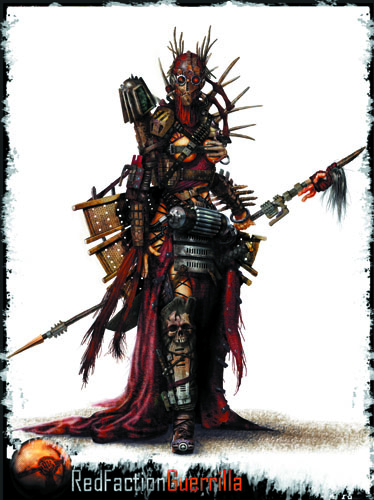
The Marauders are honor-bound, driven, cold, somewhat splintered, intelligent, and ignorant of Earth morals.
From the start, this group of troubled scientists knew they needed to hide from both the EDF and the Colonists. The sin of working with Capek to create the Plague made them pariahs among the very people they considered to be their own. They had been among the first colonists and had developed the technology that had tamed Mars—but tell that to an angry mob.
In hiding, they developed an isolationist society that was capable of sustaining and empowering its existence. Individualism was praised above all else but special care was given to impress upon the new generation – the first true sons and daughters of Mars – that they would be outcasts in the "other world" of the colonies. Instead, they would create technology out of cast-off Ultor tech, instill a warrior/honor-ethic to breed independence, ritualize scientific pursuits, and prepare for the day when they would retake Mars.
In short, they became the Marauders.
Of course, the Marauders could only remain hidden for so long. In 2110, the EDF and the Marauders first encountered each other in the Badlands of Mars. Fiercely territorial, and covetous of the EDF's vehicles and guns, the Marauders did not exactly greet their counterparts with open arms. For their part, neither did the EDF Drones. A bloodbath ensued.
Both sides escaped to nurse their wounds and recover. In the wake of the incident, the Marauders decreed that the EDF and all who supported them should be banished from Mars. The EDF retaliated, calling for the extermination of the Marauders and their strange science cult.
The stakes raised, Marauder men and women eagerly rallied to the banner of battle. Banditry increased, and the idea of isolation fell by the wayside. There was a war to be fought, and the Marauders knew they were in the right.
What they didn't know was that the EDF wasn't the peaceful, liberating force that had overthrown Ultor just four decades earlier. This Earth Defense Force was a rampaging army of oppression, run by corporations back on Earth.
Corporations desperate for the bounties of Mars. The shadows of Ultor.
Revolution
2120 C.E.
Coincidentally, another group of fighters was preparing for battle with the EDF. Hugo Davies, a veteran of Earth, had reactivated Red Faction, once dormant during the early days of EDF rule. He would not be the hero of the ensuing insurrection, however. That title would fall to the first family of Mars.
The Masons.
Though they were not the first to step foot on the Red Planet, or the smartest tacticians, or the most brilliant warriors, what the Masons stood for was what every Martian hoped to be: a family of rugged individuals who pulled themselves up and threw off their oppressors, to create a new life for themselves on the edge of existence.
The legend of the Masons began with Ray, a mechanic from Earth who emigrated to Mars with the promise of a new life. But like his eventual compatriot, Parker, Ray soon became disillusionedunder the tyrannical rule of Ultor. He abandoned his station and became one of the first recruits of Eos's Red Faction. When the revolution came, Ray fought on the front lines.

The Earth Defense Force was created by a coalition of Terran governments at the outset of Martian colonization. Its initial charter was overseen by Ultor and so had numerous "problematic" regulations removed, but the EDF's role was clear from the beginning: make sure that the minerals flow from Mars.
When Mars went under EDF control, Ray was not without trepidation. Multiple rumors had been swirling about the growing problems on Earth, including frightening news of genetic experiments, the overthrow of the Commonwealth of the Republic, hideous beasts called "The Processed," and the trial and disappearance of a warrior named "Alias." But even with the news of his home world's problems, Ray could not abandon Mars, the planet that so many of his friends had died to liberate. Because the family he had left behind, a brother and two nephews, Dan and Alec, seemed safe, Ray stayed.
The EDF's build-up back to an oppressive state that mirrored the colony under Ultor's rule happened so gradually that Ray barely saw the change. When MAST fled into the caverns of Mars, taking stolen Ultor equipment with them and forcing the EDF to heighten security restrictions, it only seemed natural for the EDF to impose harsher regulations on the populace under the guise of protecting them from "terrorist forces." When the wars on Earth grew to engulf the entire planet, it only seemed natural that the EDF would push mining production into overdrive. And when the EDF began mandating strict quotes to mine or salvage Mars, it seemed like a fair price to pay for the newly terraformed surface that the Earth governments had paid for.
But eventually, it could no longer be denied. The EDF had slowly morphedfrom liberators to oppressors and—worst of all—the Colonists had allowed them to do it. Ray helped to organize the first protests against martial rule, but was killed when the EDF suppressed them.
With this act, the EDF sewed their own destruction. For soon, another Mason arrived on Mars.
Transported to Mars to help clear his uncle's possessions, Dan Mason fell in love with the Red Planet. Despite the tyranny and the beginnings of the the Martian Revolution, Mars was a new frontier with an untamed potential for adventure. Dan had his uncle's name and possessions to help him get started, along with his skills as a mechanical engineer, which quickly made him one of the most sought-after tradesmen on the planet. Dan had found a new world where he could be a free man . . . or so he thought.
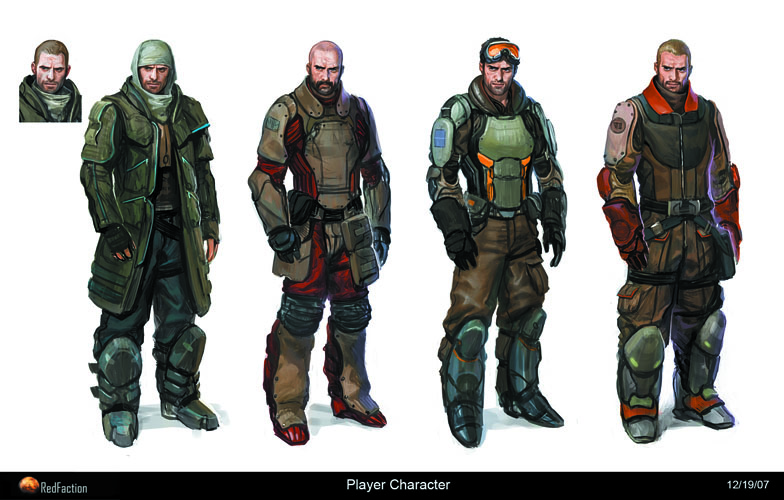
All Masons are considered heroes-but Alec and Darius rise above the rest.
The relative peace on Mars lasted only as long as war drove Earth's economy. When the governments of that planet realized they could not continue to fuel their markets with dwindling resources and blood, they joined forces and leaned on the EDF to further subjugate the Martian Colonists to provide resources for their home world. Earth needed fuel and Mars would suffer for it.
It was only a matter of time before Red Faction would reform.
Joining Hugo Davies in his effort to oppose the EDF's corruption, Dan's first act as a member of the resistance was to hack into an EDF database. There, he uncovered evidence of numerous EDF crimes--including the murder of his uncle, the very act which had brought him to Mars. With that, Dan had a new purpose: avenge his uncle's death and clear his family's name. And Davies had the information he needed to hit the EDF where it hurt.
Red Faction was back in business.
Despite the actions of Mason and his friends, the EDF used the uprising as an excuse to further suppress dissent on Mars. Along with EDF's retaliatory actions, Red Faction had to deal with the Marauders. One, Samanya, had even infiltrated their ranks, though her motives were always as mysterious as her origin. War was upon them, but without a serious change in their tactics, the future did not look bright for Red Faction.
That is, until the arrival of Alec Mason.
Tough, tall, and quiet, Alec Mason fit in alongside the people of Mars and its environment. He had come from Earth to find work but instead found his brother agitating for social reform. Picking up a sledgehammer, Mason took on a salvage mission and tried to keep his nose clean, only to find his brother killed by the EDF when he was identified as an agent of Red Faction.
Alec staggered back to his trailer, only to be similarly accused of sedition and facing summary execution. He might have died, shocked by this change of events, had Dan's friends from Red Faction not shown up and freed him. During the escape, Mason was forced to kill a Drone with the only tool at hand—his trusty sledgehammer. A symbol had been created and a hero had been born.
Over the course of the next few months, Mason's arrival sparked a gradual but powerful increase in Red Faction's morale. Citizens terrified into action suddenly found a rallying point behind the strong, dark stranger from Earth. Together with Samanya, Alec triggered a domino effect between sectors, freeing them from EDF control.
There were setbacks, of course. The EDF was not about to give up control of the planet without a fight. Gunnarsen, Broga, Kobel, and others launched an all-out campaign to wipe Red Faction from the face of the colonies. More than a few loyal Red Faction soldiers, including Davies himself, would die in the onslaught.
But just when all seemed lost, Samanya revealed her true affiliation to Mason in hopes of gaining his trust. Rumors held that one of Capek's greatest inventions, the Nano Forge, lay hidden somewhere in the old Ultor complex. Samanya's people, the Marauders, had been led by her sister on dozens of campaigns to find this priceless artifact. The Marauders could win the war with the Nano Forge's ability to create nanites from ambient atomic structures.
Samanya brokered a peace treaty between her sister, Vasha, and Mason. Mason would seek out the Nano Forge and use it to drive the EDF from Mars for good, while Vasha would gain the technology for the betterment of her people.
It was during this operation that Alec Mason became a legend. Finding the Nano Forge and combining it with a rifle created by Samanya, he stormed the EDF stronghold on Mount Vogel to reach the mass drivers held there. The device was a leftover from Ultor, designed as a last resort of destroying an Earth-based invasion but never completed. The EDF had reconstructed the mass-driver for its energy-production facilities and gone to great lengths to secure it.
Mason's thirst for justice proved to be too great for any platoon of soldiers to withstand. Laying waste to the opposition with the Nano Forge and sledgehammer, he fought his way into the heart of the structure and activated the mass driver. Mason then attached Capek's device to the core of the mass driver, super-charging it, and fired the massive weapon.
The EDF's flagship, Hydra, had no time to react. With a single blast, Alec ripped the heart of out the EDF's naval fleet. In a combined effort across the face of Mars, the citizenry revolted and overthrew the last vestiges of EDF control.
Samanya and Alec stood on the crest of Mount Vogel and watched as the Hydra's wreckage rained down on the Martian surface. It was a new day on Mars, heralded by the destruction of the EDF. As the rest of Martian citizenry threw off its shackles, Samanya and Alec climbed down the side of the mountain to join in the celebration.
Reconstruction
2150 C.E.
Stability had come to Mars by the time Alec's son, Jake, had reached his teen years . . .or so he thought. Then a group of renegade soldiers attacked his home, killed his mother, kidnapped his sister, and drove his father, Alec, into the wastes in a desperate quest to save his daughter. Jake grew up into a formidable soldier but never forgot the moment his innocence was lost.
As a Red Faction ranger, Jake's unit was tasked with pursuing a new threat to Martian peace—the mysterious paramilitary group "White Faction." Jake eventually battled his way to the White Faction compound and discovered the worst. White Faction had originated as EDF soldiers abandoned on Mars after the Revolution—the same men who had killed his mother years before. Led by Adam Hale—a charismatic young warrior and self-styled seer—the rag-tag band had become a powerful and disciplined army with plans to take back Mars. There was one more stunning discovery: Jake's sister Lyra was alive, raised by the White Faction soldiers who kidnapped her as a child.
They hadn't planned on Jake. He rescued his sister from their clutches, made peace of sorts with the Marauders, and drove White Faction back. It would be the beginning of yet another war for Martian freedom. A war that would still rage, during the life of Jake's young son.
Ultimately, Darius Mason would fight for more than just the defeat of Adam Hale. He would fight for survival. For himself, and all of Mars...