
Firefight Basics
Firefight pits you and up to two friends against increasingly difficult waves of AI enemies. This game mode features core Blitz mechanics, but the unique nature of Firefight makes it a very different experience.
Objective
In Firefight, there are no victory conditions—the objective is to survive as long as possible while earning your highest possible score. Whether you prioritize time played, waves completed, or final score is up to you.
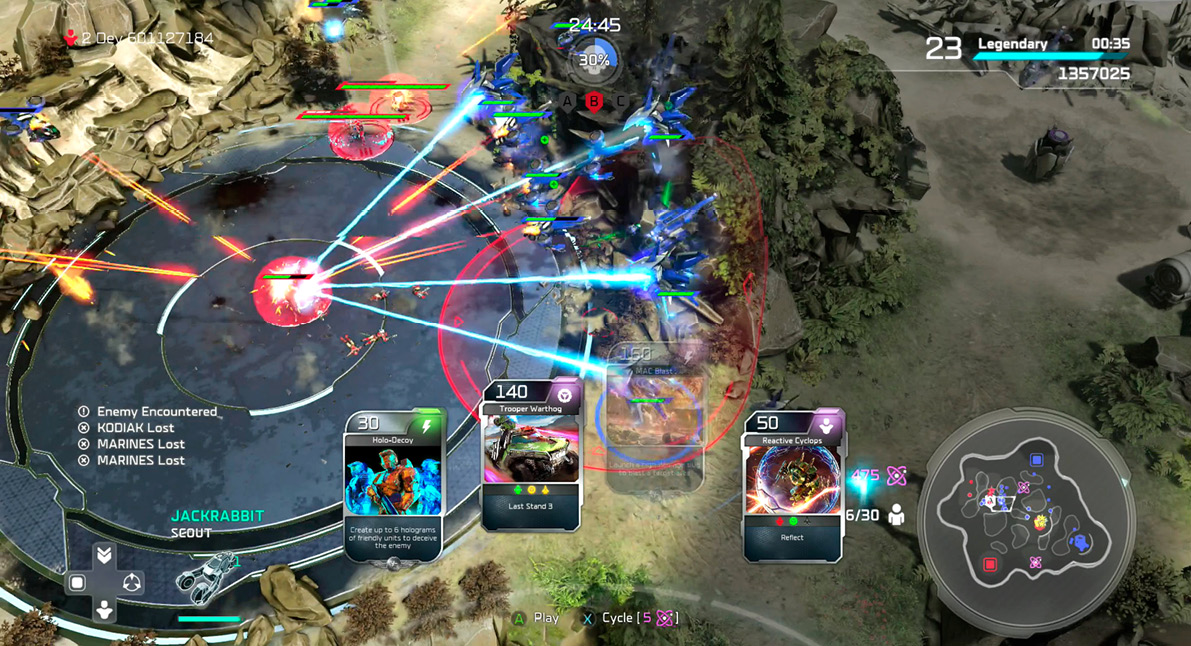
The meter at the top of the screen indicates how close you are to being defeated. The meter fills whenever your opponent holds more Control Zones than you do. Holding at least as many uncontested Control Zones as your opponent prevents the meter from moving.
While your opponent has a basic Zone advantage, it takes approximately three seconds for the meter to fill by 1 percent. It takes approximately 1.5 seconds for your meter to fill by 1 percent when your opponent holds all three Control Zones. When the meter reaches 100 percent, the game ends.
Along with stopping the meter, holding more Control Zones than your opponent adds a steady stream of points to your score. These rewards add up over time, but the bulk of your score is likely to come from defeating enemy units. Point values vary between units, and more powerful units tend to have a greater effect on your score.
You also earn bonus points by performing extended killstreaks. Starting a killstreak is simply a matter of landing two killing blows within three seconds of each other. If you fail to land a third killing blow within the next three seconds, the killstreak ends. If you succeed, the killstreak continues. The more kills you chain together, the more points you earn when the killstreak ends.
Killstreak Bonuses
| Kills | Streak Name | Bonus Points |
|---|---|---|
| 4 | Overkill | 500 |
| 6 | Killtacular | 600 |
| 8 | Killtrocity | 700 |
| 10 | Killamanjaro | 800 |
| 12 | Killtastrophe | 900 |
| 14 | Killpocalypse | 1000 |
| 16 | Killionaire | 2000 |
| 18 | Running Riot | 3000 |
| 20+ | Untouchable | 5000 |
Energy Collection
In Firefight, Energy doesn’t replenish over time. You begin each game with 200 Energy. Aside from this starting pool (and whatever refunds you receive as you lose units), all your Energy must be collected from supply drops.
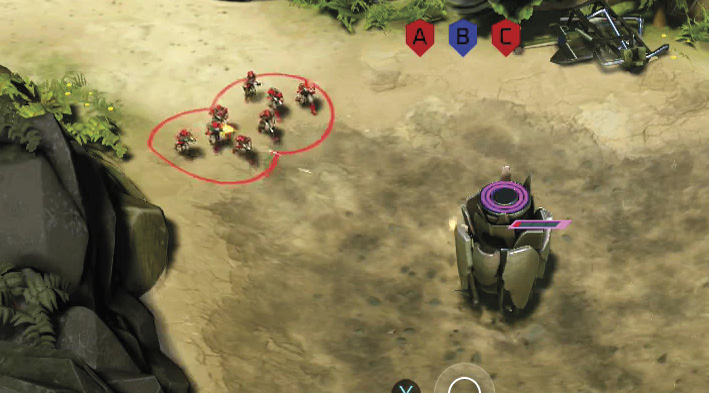
Claiming a supply drop in Firefight works just like claiming one in Blitz—you must destroy an Energy Crate and collect the revealed Energy Cells. However, collecting an Energy Cell in Firefight has a different effect. Instead of boosting your Energy tick rate, each Cell you collect adds a flat amount of Energy to your reserves.
An Energy Crate always contains three Cells. In Firefight, collecting a Cell always yields 40 Energy. However, this Energy is distributed evenly among teammates. In 2v2, collecting a Cell grants each teammate 20 Energy; in 3v3, each teammate receives 13.3 Energy. Fortunately, larger teams are awarded more substantial supply drops.
Supply drops occur at the start of each wave. The number of Energy Crates that appear is determined by the size of your team—each supply drop contains one Crate for each teammate. This means that in all Firefight modes, each player can gain up to 120 Energy per supply drop.
In Firefight, the map accommodates up to five active Energy Crates—regardless of team size. Reaching this limit prevents additional Crates from dropping, so it’s usually best to collect available Energy Cells before the next wave begins.
Wave Progression
Firefight features wave after wave of increasingly difficult enemies. At the start of a wave, a timer in the screen’s upper right corner begins counting down. Once the allotted time expires, the next wave begins—whether or not you’ve dealt with existing enemies.
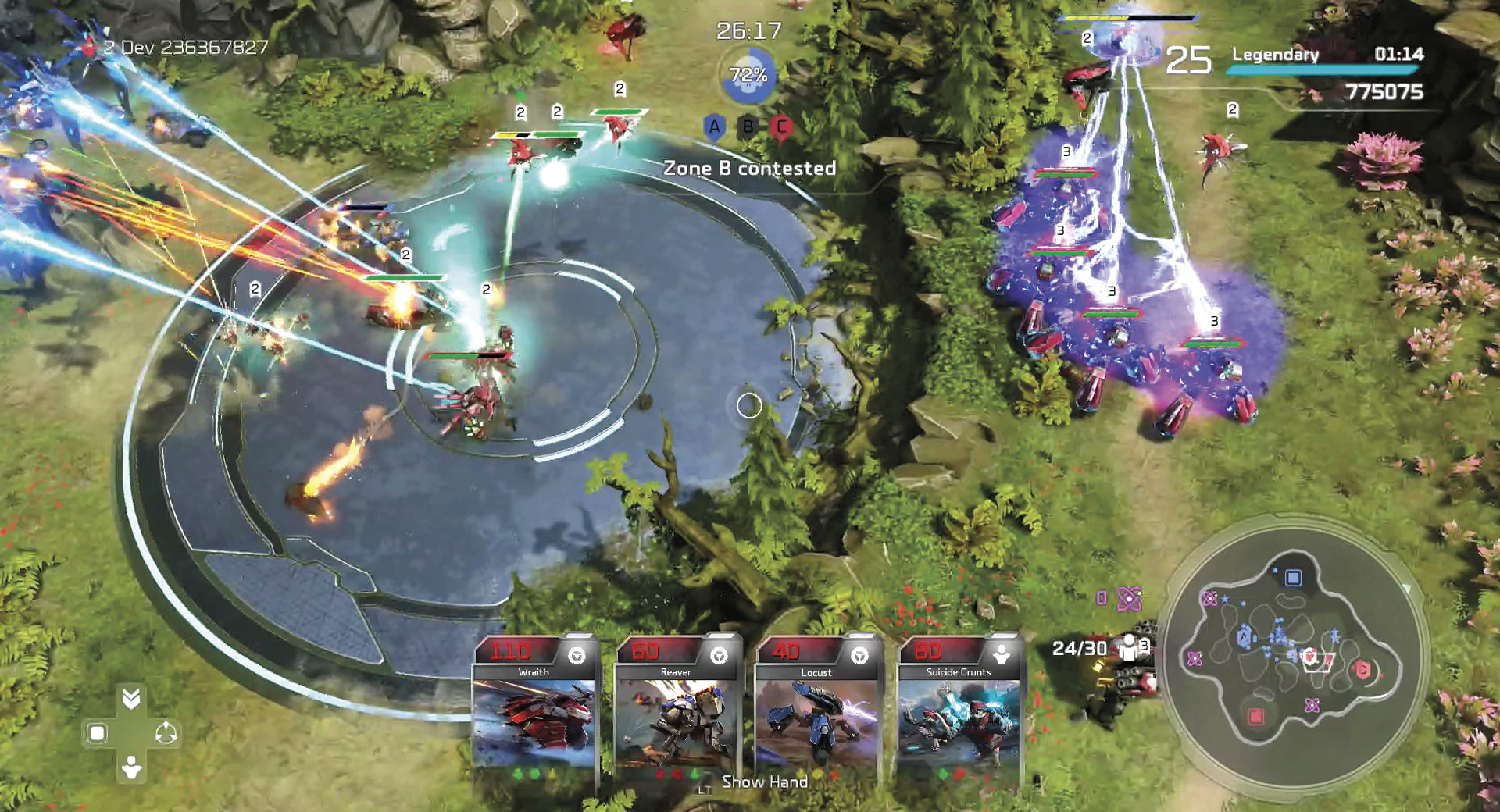
Most waves last 60 seconds. However, every fifth wave serves as something of a promotion round. During these special waves, you have 90 seconds to clear out powerful armies (led by Hero units) before the next wave begins. The game’s difficulty increases each time you survive a promotion round, resulting in greater numbers of more powerful enemies per wave.
Firefight Difficulty Levels
| Waves | Difficulty |
|---|---|
| 1-5 | Easy |
| 6-10 | Normal |
| 11-15 | Hard |
| 16-20 | Heroic |
| 21-25 | Legendary |
| 26+ | Nightmare |
Basic Firefight Tactics
Because each enemy wave is essentially a rush, defensive tactics tend to work well. Decks focused on map control or battle control can be very effective during more difficult waves.
Although surrendering a Control Zone is often necessary, it’s never wise to let your opponent hold more than one. If your army isn’t strong enough to reclaim a vital Control Zone, use fast-moving units to harass defenders—charge in to contest the Zone for as long as possible, and then head back to your home base for emergency healing. Do whatever you can to minimize the time hostile forces hold more Zones than you do.
The opposition has no interest in supply drops, but enemy ground units are still capable of collecting loose Cells. Avoid destroying Energy Crates while enemy units are close by; you can always circle back and collect a Crate’s contents when the area is clear.
It isn’t practical to hoard your Energy, but try to keep a bit in reserve as you move on to more challenging waves. You never know when a well-timed Power or unit will turn the tide of a battle.
If your standing army is in decent shape, consider waiting for the next wave of enemies to appear before you summon reinforcements. A few well-chosen counter-units usually make for the most efficient use of your limited Energy.
Remember that each time you lose a unit, you receive a refund of half its Energy cost. Because Firefight lacks the Energy income found in Blitz, sacrificing one or more of your less-important units is often the fastest way to raise funds for a much-needed Power or counter-unit.
A cliff overlooks each of the map’s Control Zones. If your army contains artillery units, place them on the high ground. Doing so makes it much easier to thin out larger waves. As your army grows, support your artillery with a few counter-units to help fend off direct attacks from hostile units.