
Deck Basics
Each leader offers three deck slots. Initially, the first slot contains that leader’s starter deck; the two remaining slots are empty. Your choice of leader determines which cards you can place in a deck and which units serve as your starting army.
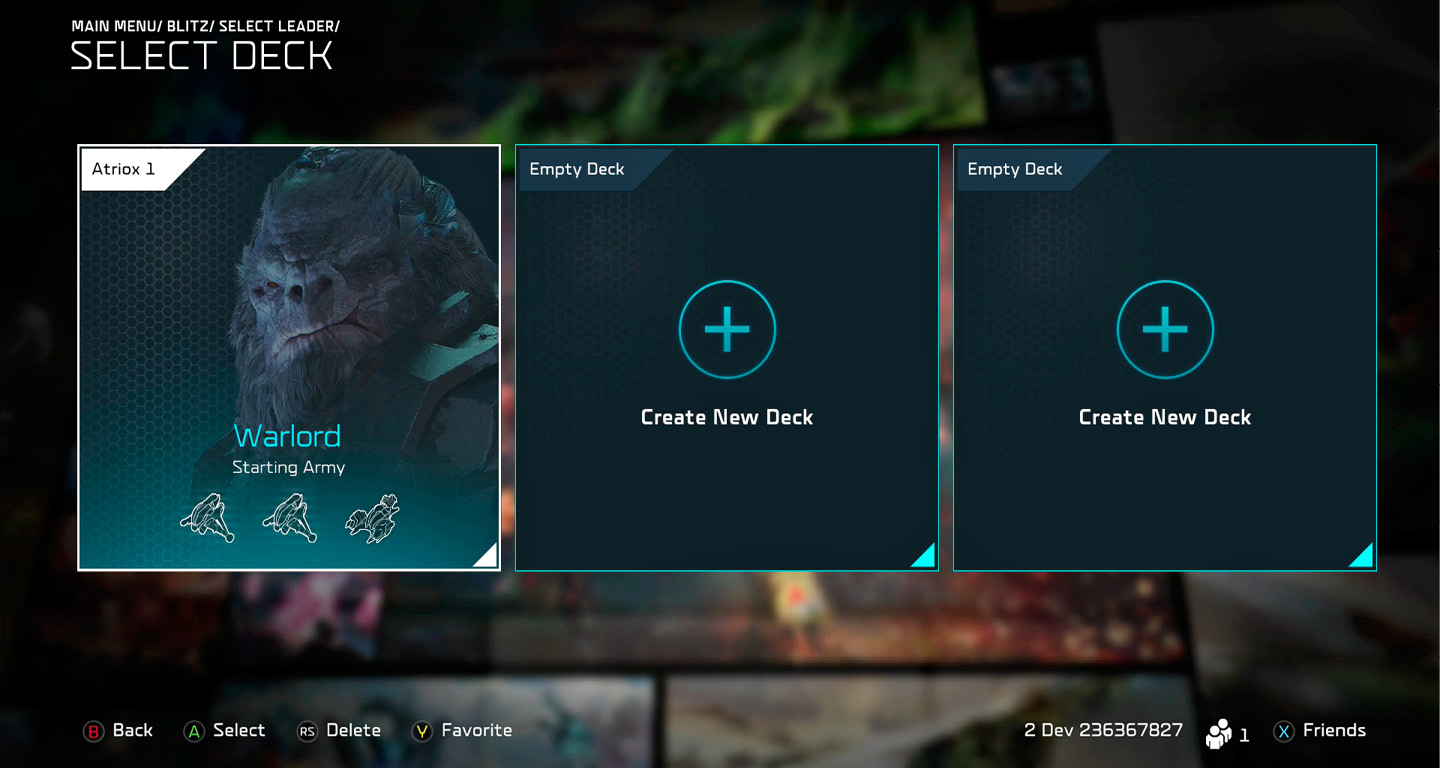
Starter decks tend to present a good balance of cards meant to highlight a leader’s strengths, but you’re free to edit them as you see fit. This means that each leader can support a total of three custom decks. Experimenting with different decks is the key to discovering your most effective Blitz tactics—especially as you acquire new and more powerful cards.
Starting Armies
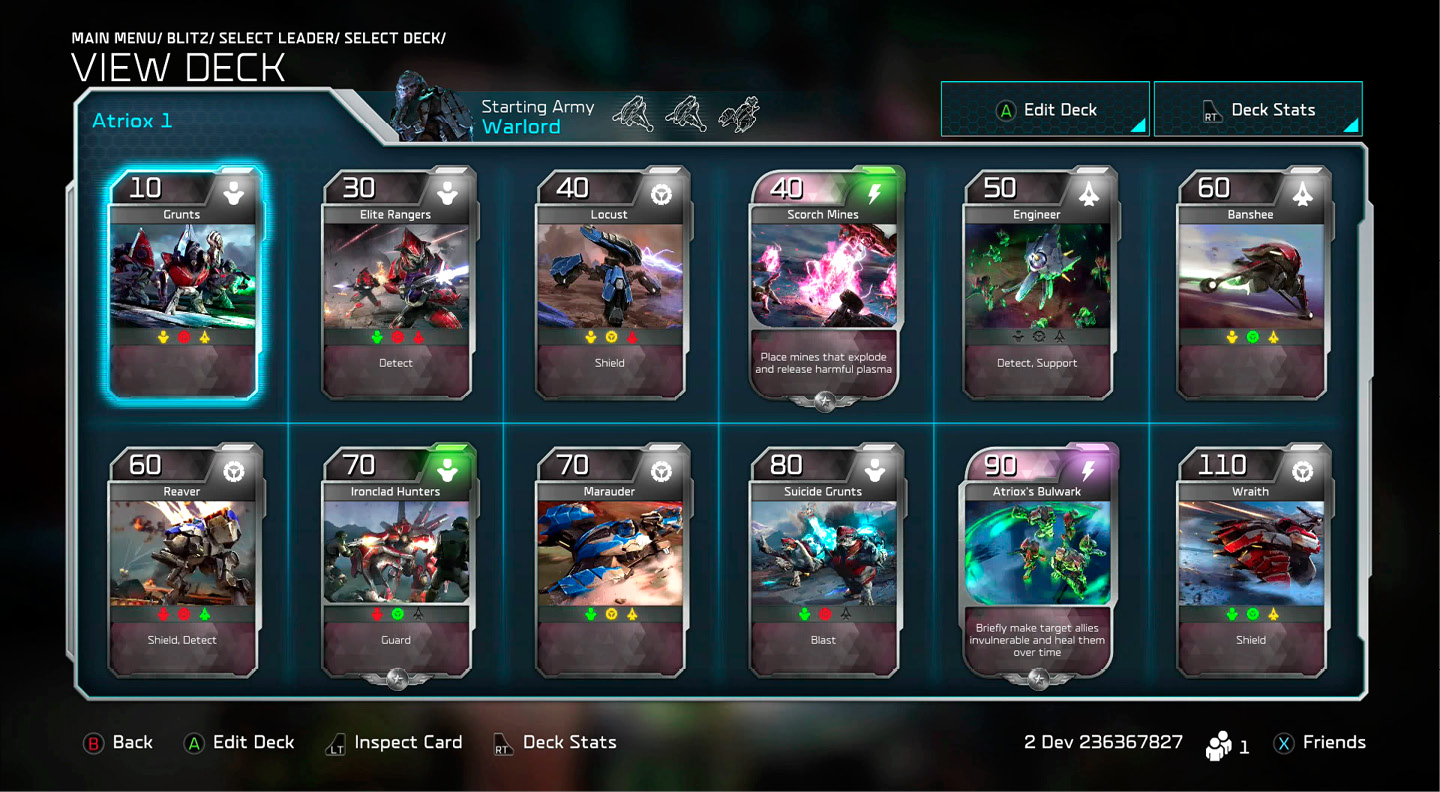
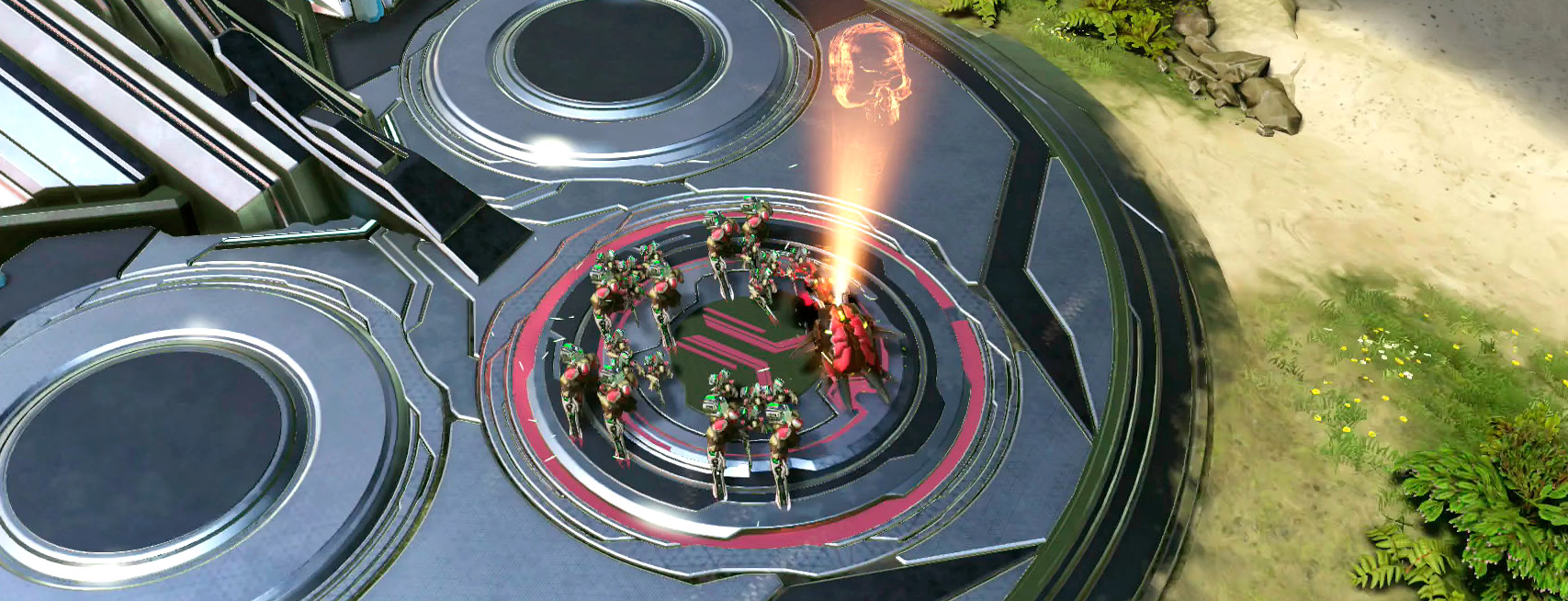
Your deck not only determines which cards you can use in Blitz and Firefight, it also determines which units are available at the start of a match. Each leader offers two different starting armies, many of which contain powerful Blitz-exclusive units. Whether you favor strength, speed, or sheer numbers, make sure you select a starting army that supports your overall strategy.
Starting Armies
| Leader | Army 1 Theme | Army 1 Units | Army 2 Theme | Army 2 Units |
|---|---|---|---|---|
| Cutter | Raider | Warthog ×3 | Phoenix | Nightingale, ODSTs ×2 |
| Isabel | Hacker | Wild Jackrabbit ×2, Hornet | Heavy Weapons | Marines ×2, Trooper Warthog |
| Anders | Tactician | Cyclops ×2, Marines ×2, Wolverine | Sentinel Swarm | Aggressor Sentinel ×3, Protector Sentinel |
| Atriox | Warlord | Banshee ×2, Marauder | Bulletproof | Ironclad Hunters, Elite Rangers, Grunts ×2 |
| Decimus | Berserker | Jump Pack Brutes ×3, Reaver | Vampire | Bloodfuel Grunts ×4, Terror Chopper |
| Shipmaster | Scout | Ghost ×3 | Assassin | Prowling Marauder ×2 |
DLC Starting Armies
| Leader | Army 1 Theme | Army 1 Units | Army 2 Theme | Army 2 Units |
|---|---|---|---|---|
| Forge | Full Metal | Marines ×2, Grizzly | Mad Dash | Reactive Marines ×2, Veteran Jackrabbit |
Deck-Building
It can take a good deal of trial and error to find a deck that suits your play style, and as you acquire new and more powerful cards, you may find yourself favoring strategies you’d previously dismissed. Whether you’re building a deck from scratch or tweaking an existing deck, we provide a few simple guidelines to help you make the most of the cards in your Library.
A Balanced Approach
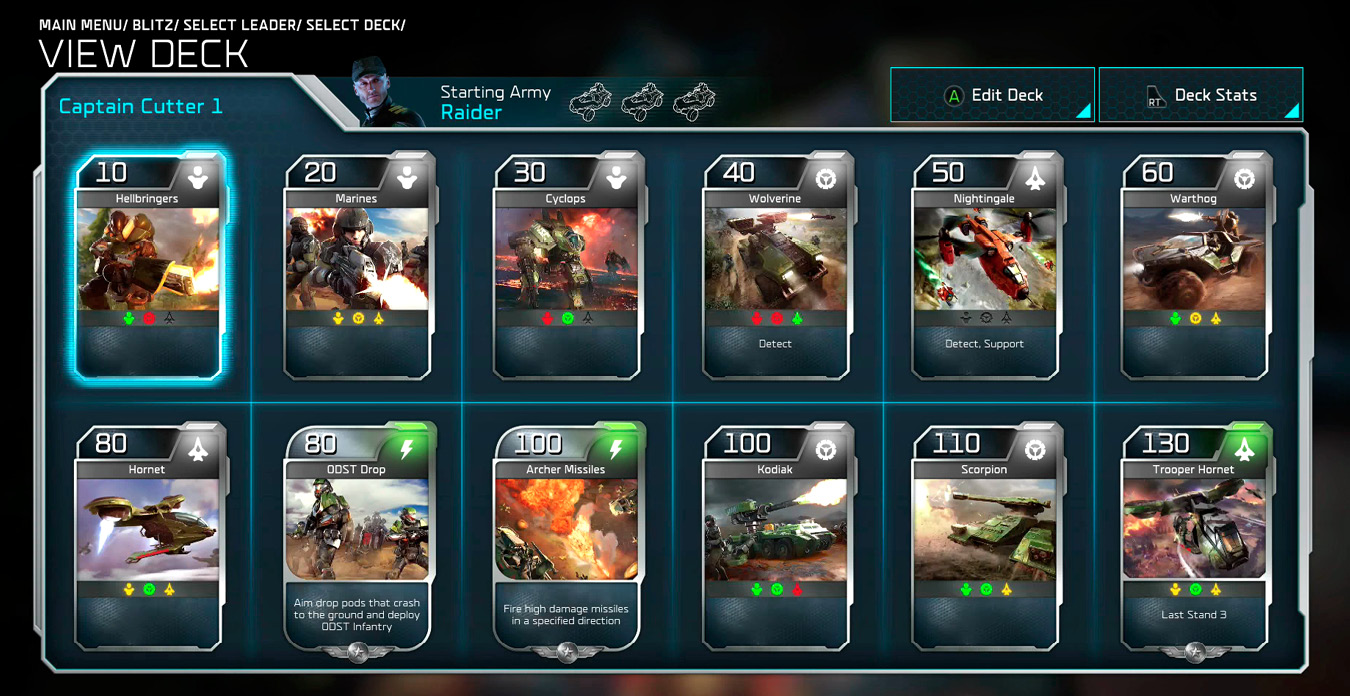
For a flexible deck that can hold up against a variety of tactics, balance is the key. As a rule of thumb, a balanced deck contains 10 unit cards and two Power cards. Other combinations can certainly be effective—particularly as you level up your cards—but when you’re building a new deck, this is a good place to start.
Typically, a balanced deck includes at least one card for each of the following unit types:
- Infantry
- Vehicle
- Air
- Anti-infantry
- Anti-vehicle
- Anti-air
- Support (healing)
The cards you select to fill these roles serve as the core of your deck—if you’re aiming for balance, avoid choosing cards that are too costly to use early in a match.
Assuming your deck has a core of seven unit cards, you still have enough space for two Powers and three additional units. All that’s left is to fill the remaining slots with the cards that best support your intended strategy. Powers, Keywords, and high-level cards can dramatically change the way your deck performs, but maintaining a balanced core helps to keep you prepared for whatever your opponents might throw at you.
Specialized Decks
Balanced decks are intended to work well in any situation—and they can be modified to support a great many strategies—but if you plan on playing with teammates, you might consider trying a more specialized deck.
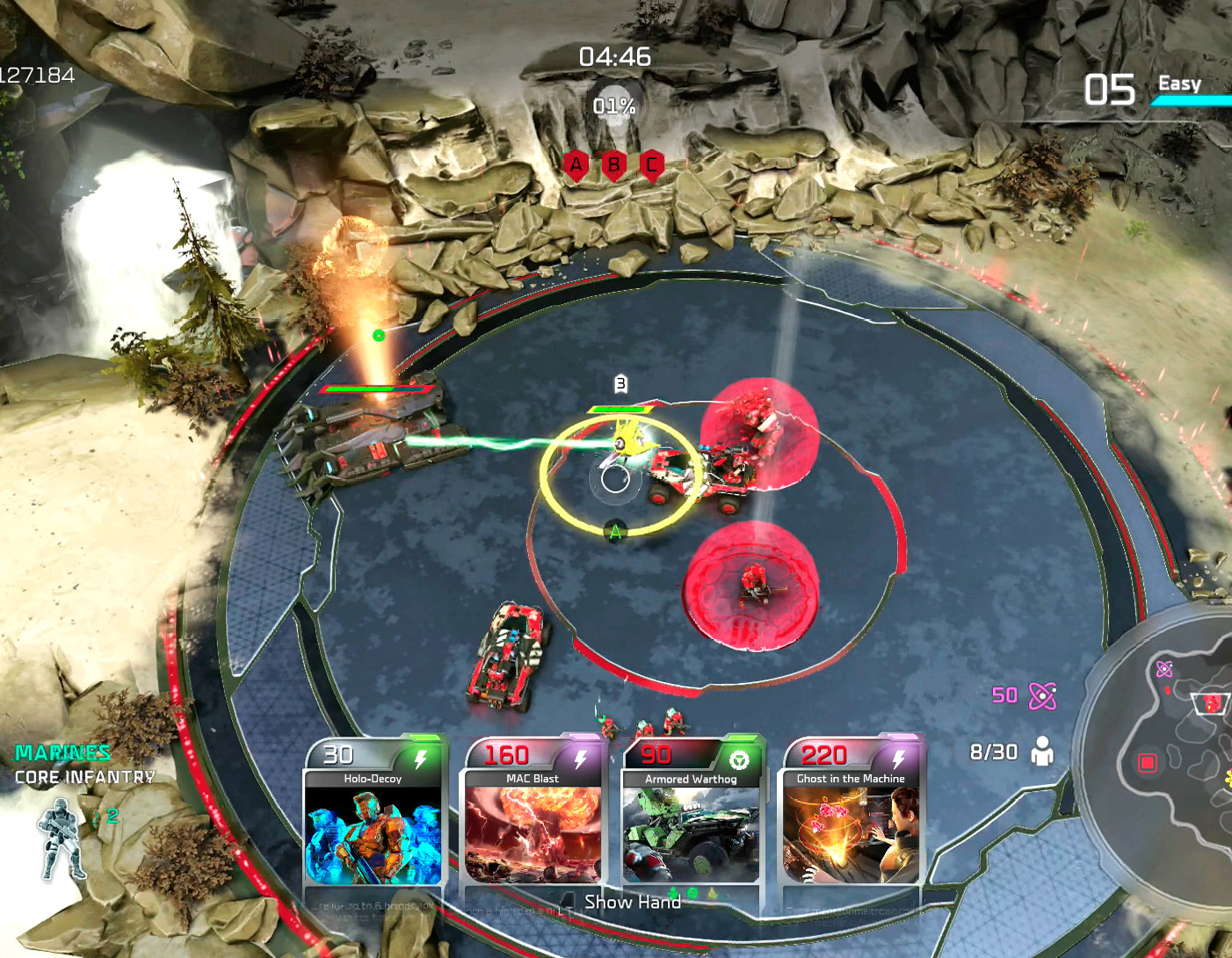
The key to specialization is to make sure your allies’ decks complement your own. For example, if a teammate favors inexpensive units, you can build a deck with a few high-cost cards—the extra units your teammate produces might buy you enough time to focus on more powerful cards. As long as you’re confident your teammates can make up for your deck’s shortcomings, you can utilize decks and strategies that aren’t viable in 1v1 matches.
Deck Stats
Whether you’re building for balance or specialization, it’s always a good idea to review the Deck Stats summary before taking a new deck into battle. The details offered here provide a good indication of your deck’s strengths and weaknesses.
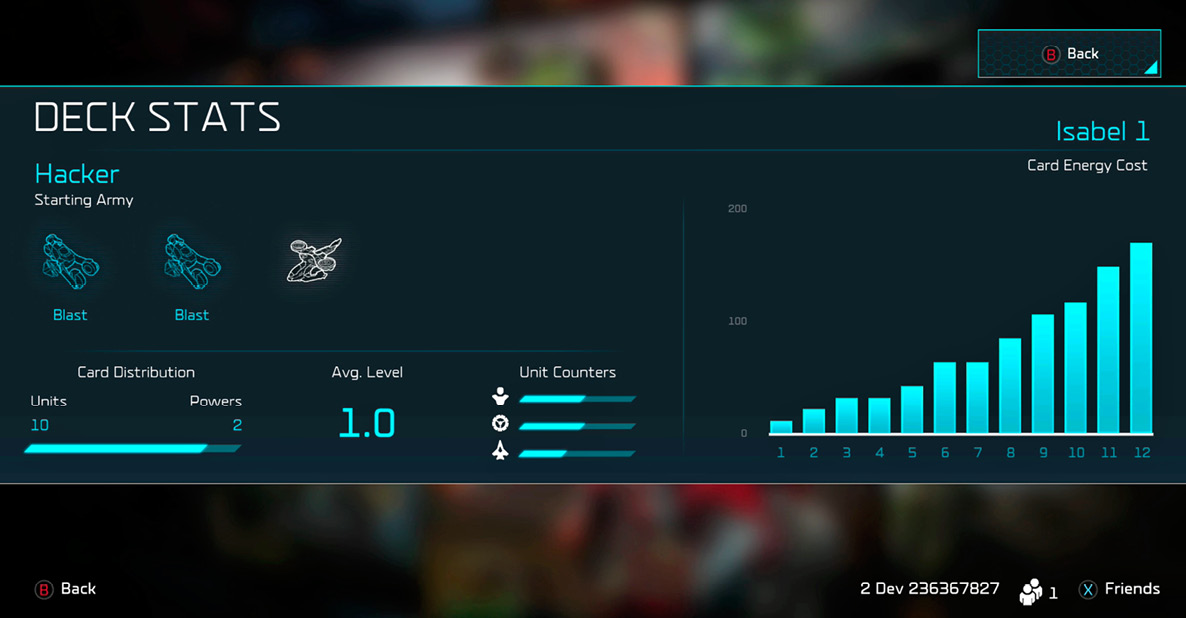
This screen is also a big help whenever a deck fails to perform as well as you’d hoped. Whether you struggled with drawing a useful hand, countering enemy units, or managing your Energy, the information here makes it much easier to adjust your deck accordingly.