
Core Concepts
Blitz does away with the base-building, research, and unit-training found in other game modes. Instead, this card-based game mode features simplified resource management and accelerated army growth. The result is a fast-paced and competitive test of skill and strategy.
Halo Wars 2’s Blitz menu also offers Firefight—a sub-mode that brings the same mechanics to a prolonged battle against wave after wave of AI-controlled enemy units.
Playing Blitz Cards
Your card hand consists of four Blitz cards drawn from a 12-card deck. Each card in your hand carries a specific Energy cost. Playing a card automatically deducts the required Energy from your reserves, after which the card summons the corresponding unit or activates the indicated Power. The played card is then placed on the bottom of your deck, and a new card is added to your hand.
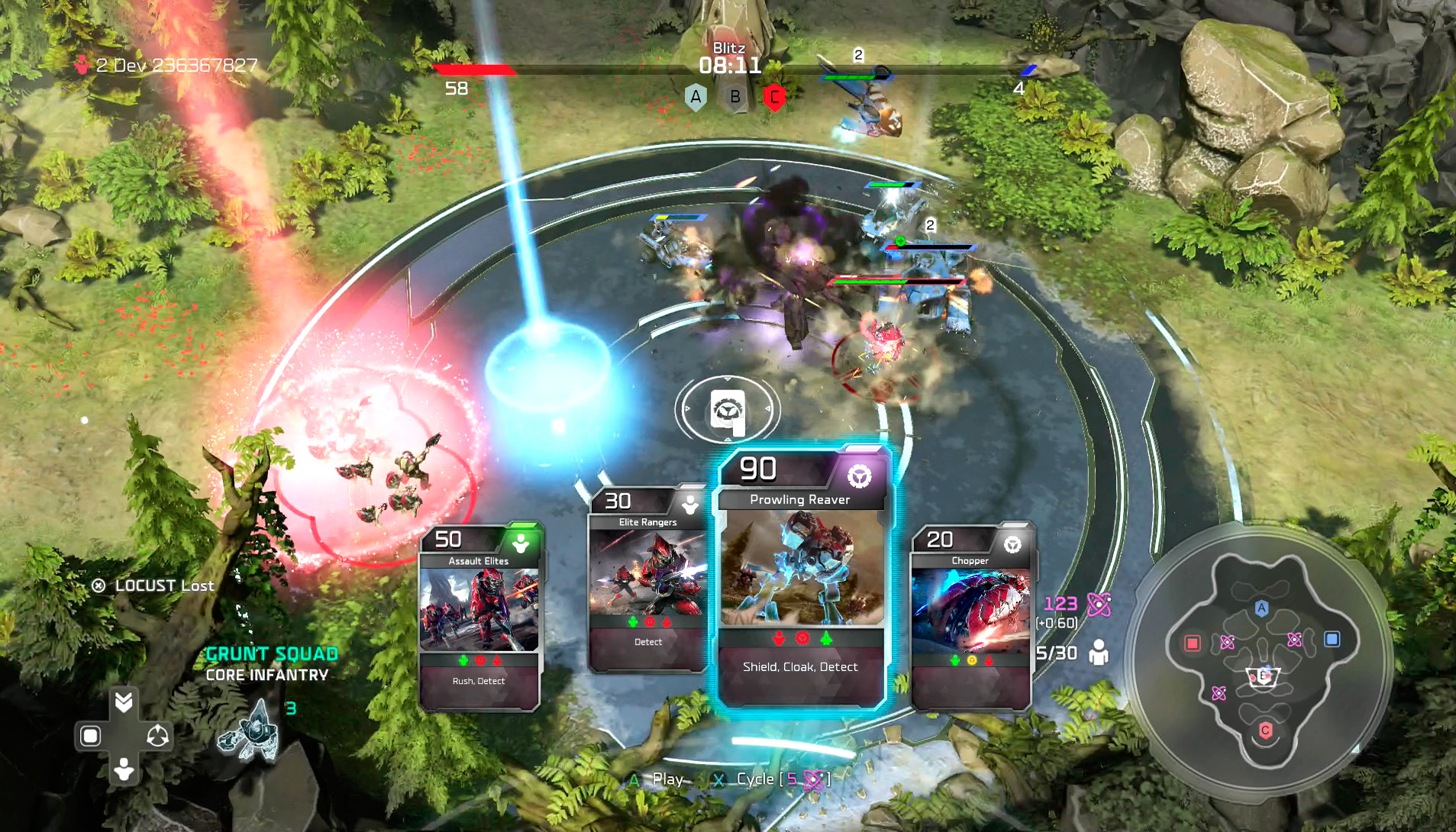
You also have the option to “cycle” cards. This process allows you to move a target card back into your deck, permitting a new card to take its place in your hand. Cycling carries a flat fee of five Energy per use, regardless of a card’s cost or rarity.
When you play a unit card, the corresponding unit instantly appears at your current location. In most cases, summoning a unit directly to the battlefield results in Deployment Fatigue. Units afflicted by Deployment Fatigue suffer a 50 percent penalty to health and damage for eight seconds. If the fatigued unit avoids taking damage during this time, it recovers all its health. If not, the unit’s health remains compromised even after the effects of Deployment Fatigue fade.
Although some units are immune to the effects of Deployment Fatigue, summoning units to your home base is the best way to ensure your reinforcements arrive at full strength.
Managing Energy
Blitz contains no Supply or Power—the only available resource comes in the form of Energy. Energy is consumed each time you play (or cycle) a card, so the more Energy you gather, the better.
Blitz and Firefight both feature Energy Crates that contain clusters of Energy Cells. In Blitz, collecting these Cells increases the rate of your Energy income. In Firefight, collecting a Cell instantly adds a set amount of Energy to your reserves.
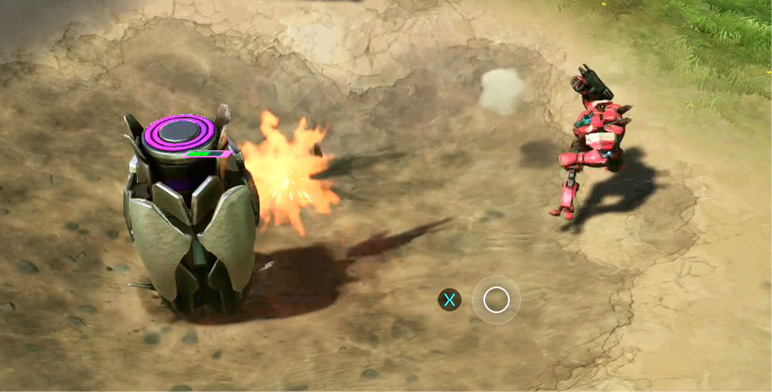
Claiming a dropped Energy Crate is a two-part process. First you must destroy the Crate; then you must collect the revealed Energy Cells. While any unit capable of attacking can destroy an Energy Crate, only ground units can collect loose Energy Cells.
Each time you lose a unit, you receive a 50 percent refund for that unit’s Energy cost. This Energy value is distributed evenly across squad-based units, granting a smaller refund each time a squad loses one of its members.
Holding Control Zones
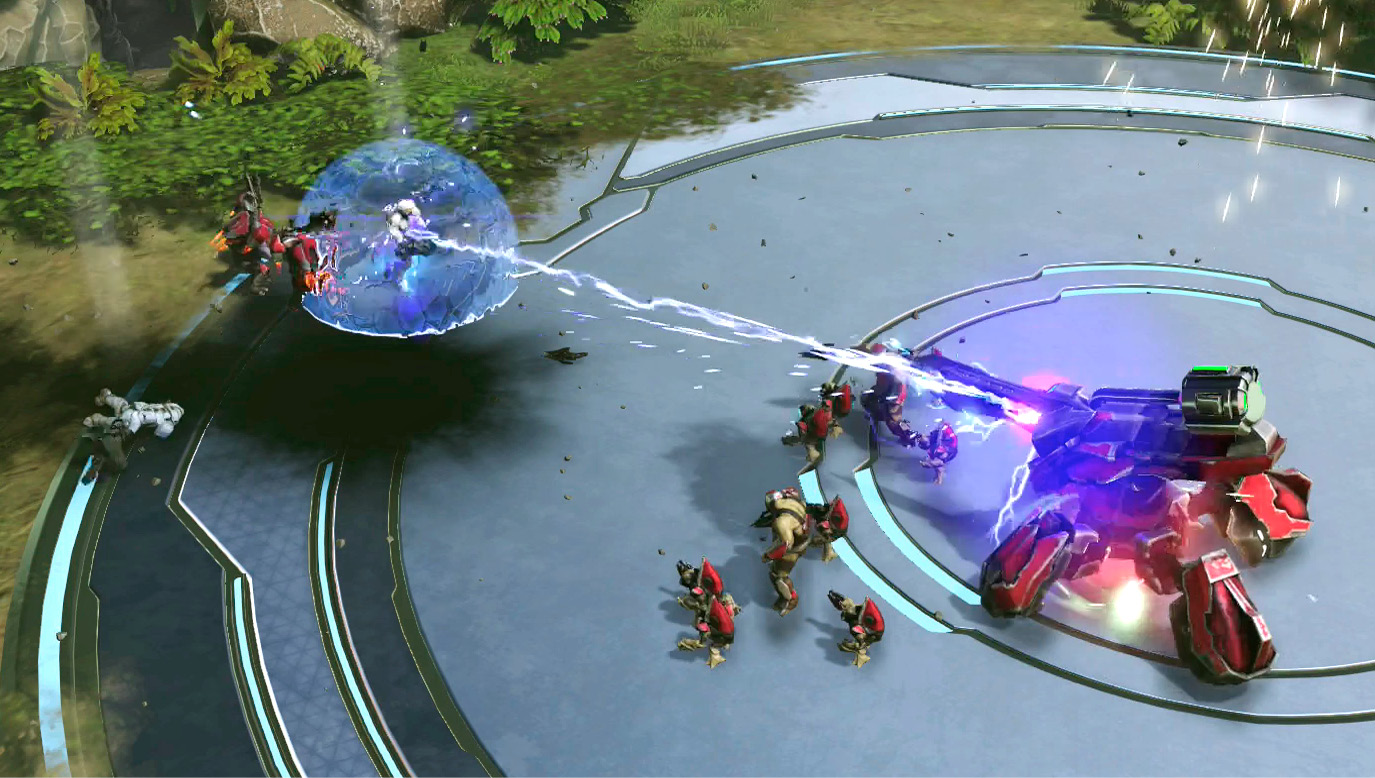
Specific objectives vary between Blitz and Firefight, but claiming and holding Control Zones should always be your priority. The units you summon, the Powers you utilize, and the strategies you employ throughout a match should all support your goal of holding more Control Zones than the opposing team.
Managing Units
Each player has a Population limit of 30 active units. In contrast to other game modes (in which different units carry different Population costs), Blitz counts each active unit as a single member of your Population.
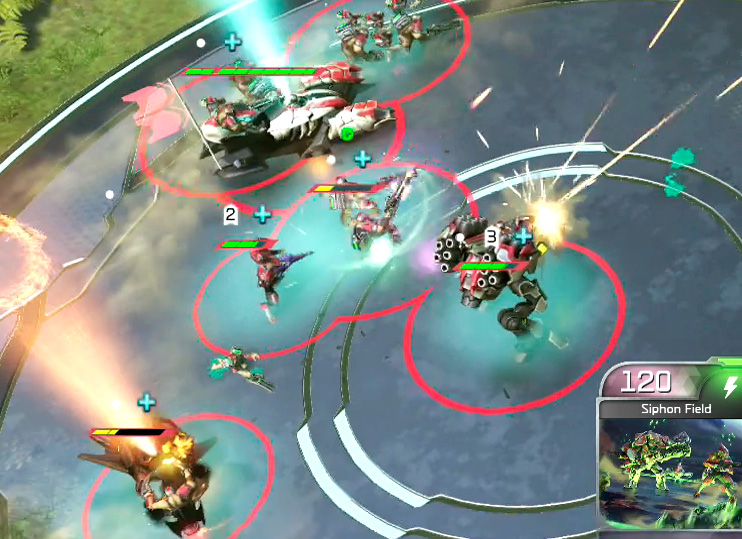
Controlling units in Blitz works just like controlling units in any other game mode—the mechanics behind selecting units, assigning control groups, and issuing basic move/attack/ability commands all remain unchanged. That being said, effectively managing your units is an essential component of succeeding in Blitz. It’s typically much more difficult to stockpile Energy in Blitz than it is to generate resources in other game modes, and a played card can take quite a while to return to your hand. In Blitz, every member of your army represents a significant investment.