
Assassin's Creed III Guide Extras
Analysis and Speculation
Many of the more tantalizing mysteries in Assassin’s Creed III will only be resolved by future games in the series. That said, there are plausible answers to be found for those who care to look closely – and, moreover, clues on potential developments in forthcoming episodes.
What did the Templars hope to achieve in the War of Independence?
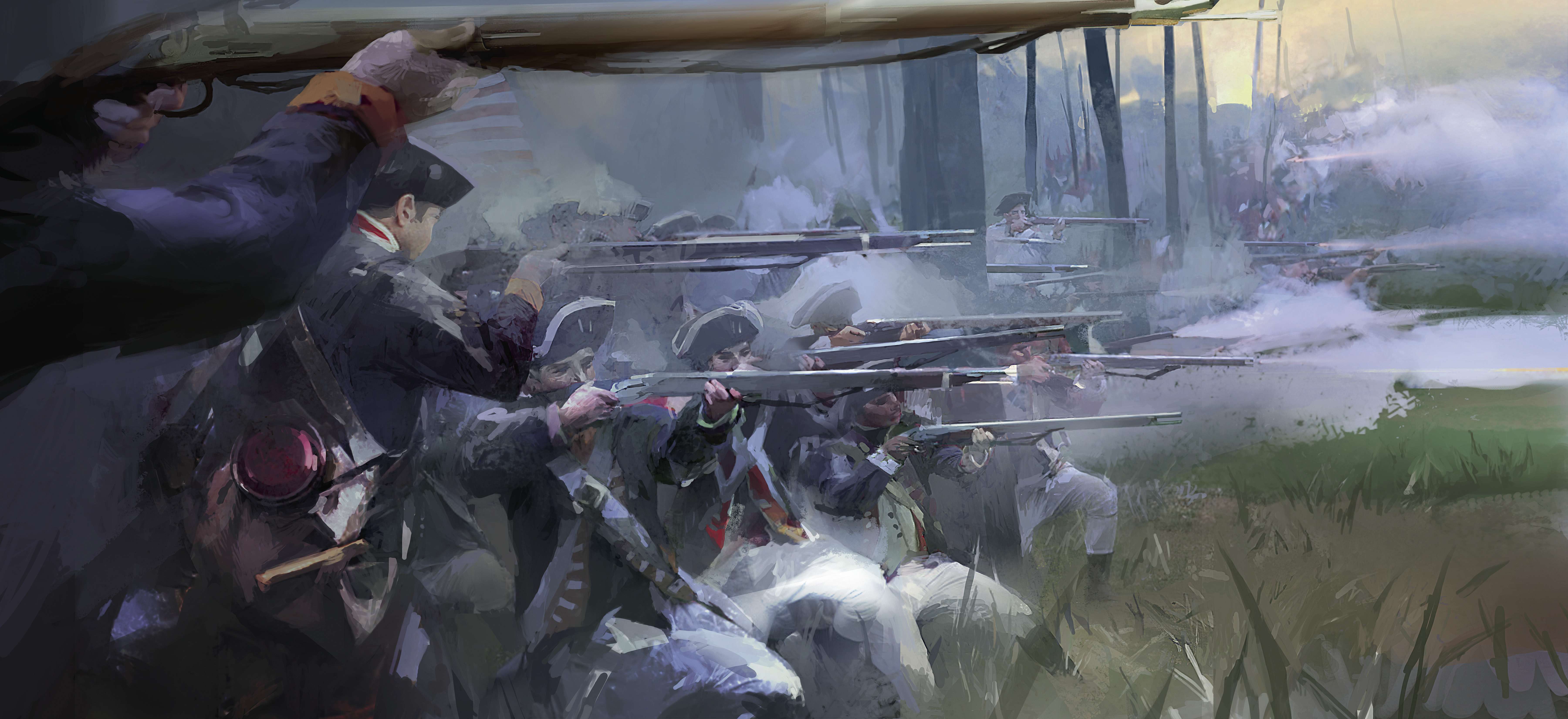
The Templars had no affection for the Tories – those who would see the nation remain a colony of Britain – nor, for that matter, the Patriots. Independence was an opportunity, little more: indeed, we see that Haytham placed agents in both camps. Their goal was to ensure that the Templars might shape and command the political landscape formed by the upheaval.
However, it is important to remember that Haytham’s original commission was to seek out a “precursor” vault unlocked by the amulet that we recognize as the key to the inner chamber of the Grand Temple. As has been revealed in previous episodes, the Templars have exploited the power of First Civilization technology (particularly the potent Pieces of Eden) throughout history to control minds in a more subtle and deceptive fashion. While the efforts of Haytham and his associates to locate the site and exploit the technology inside were fruitless, his Templar chapter laid the groundwork for their future dominance in a more conventional fashion.
How is it that Desmond, an Assassin, has an ancestor who was a Templar? Why did Haytham betray the Assassins?
We know that Haytham was, to a certain age, an Assassin: his use of the iconic Hidden Blade and certain aspects of his professional technique betray his Brotherhood training. However, people are not born with an innate affiliation to either the Assassin or Templar cause. The respective ideologies must be first taught, embraced over time, and then upheld throughout the lifetime of any given individual.
The Templars ultimately aspire, through political machinations and First Civilization technology, to elevate their hierarchy to the status of a ruling elite capable of commanding the minds of its subjects. The rationale behind this varies from one noteworthy Order figure to another. Some claim a motivation of compassion (Prince Ahmet in Revelations aspired to eliminate all racial, religious and cultural boundaries to foster lasting peace), whereas others are more inspired by the allure of power (such as Rodrigo Borgia and his venal kith and kin in Assassin’s Creed II and Brotherhood). Haytham, for his part, appears to have been seduced by a perceived pragmatism in the Order’s goals – as this exchange during his climatic fight with Connor reveals:
Haytham: The people never have the power. Only the illusion of it. And here’s the real secret: they don’t want it. The responsibility is too great to bear. It’s why they are so quick to fall in line as soon as someone takes charge. They want to be told what to do. They yearn for it. Little wonder, that, since all mankind was built to serve.
Connor: So because we are inclined by nature to be controlled, who better than the Templars? It is a poor offer.
Haytham: It is truth! Principle and practice are two very different beasts. I see the world the way it is – not as I wish it would be.
Connor: No, father... You have given up – and would have us all do the same.
Haytham views himself as a realist, and is contemptuous of his son’s (to him, naïve) idealism. We see a distinct shift in the Templar’s moral code over the course of his life. Earlier in the story, Haytham expresses disdain and disgust at the brutality of an Order peer, Braddock. He takes particular exception to his willingness to murder without qualm or reflection. Later, though, Haytham himself begins to use similar methods and – in his unwavering patronage of Charles Lee, for example – overlook such behavior in others.
That said, as Assassins and Templars alike commit murder for the sake of expediency, this cannot be where the philosophical line between the two factions – and, therefore, Connor and Haytham – is drawn.
As established in previous storylines, and as the events of Assassin’s Creed III have shown, it is simplistic to characterize the Assassin versus Templar conflict as a battle between good and evil. The true point of contention is free will. What the Templars ultimately propose, on an increasing scale over time, is to enforce a new world order: to eschew the imperfect and difficult process of gradual social engineering in favor of a form of collective submission. In the past, Pieces of Eden could only be used to bewitch minds within their immediate vicinity, limiting the most malevolent form of Templar manipulation to regions and regimes. In the present day, Abstergo aspires to expand the range of such mind control to include the entire globe.

Though the end result and methodology may differ, it could be said that the Assassins and Templars actually embrace a common goal: both aspire to protect mankind from itself. It is this, perhaps, that enables the likes of Haytham, Lucy Stillman and Daniel Cross to revise their affiliation without great compunction.
What might also be appealing for Assassins who defect is that, for the Templars, victory would be absolute: they only need to win the war. Those who envisage the creation of a better world might also hope to live in it. For the Brotherhood, each individual battle is fought to ensure that the war has no end. Haytham, shortly before his death, has a decidedly unsentimental explanation for this stark reality:

“It is because the Order is born of a realization. We require no creed. No indoctrination by desperate old men. All we need is that the world be as it is. This is why the Templars will never be destroyed!”

What is the significance of the amulet?
The amulet is a First Civilization artifact that was created as a key to an inner vault inside the Grand Temple, where Desmond and his Assassin cohorts reside during the events of Assassin’s Creed III. This location was chosen as a storage facility for the knowledge accumulated by the precursor race during their efforts to avert the Catastrophe.
While the Piece of Eden secured and stored by Ezio was enough to allow Desmond to open the Grand Temple, the contents of the inner chamber were sufficiently valuable or dangerous to require additional security. Like other First Civilization items, the amulet fell into the hands of humans and, in time, the custody of the Assassins – until stolen by Haytham in the opera assassination scene.
If we take a step back from the Assassin’s Creed III fiction for a moment, the amulet is actually an ingenious MacGuffin. Superficially a plot device that exists only to motivate the story’s principal players, its actual purpose in the narrative is to ensure that the real key that Juno seeks is delivered to her on schedule, and oblivious to her agenda…

What does Desmond mean when he says he “chose” to kill Lucy?
Prior to Assassin’s Creed III, it had been implied that Desmond stabbed Lucy Stillman against his will, compelled by an unseen force presumed to be Juno. However, in a conversation with his father in the Grand Temple, he reveals that her death was his decision – a rational, conscious, calculated choice. Juno, Desmond reveals, merely showed him a future in which Lucy stole the Apple and returned it to Abstergo. In Juno’s vision, the Templar corporation attempted to transport it on board the Eye-Abstergo satellite, the culmination of plans unveiled in the original Assassin’s Creed… and yet the launch was a failure.
The mystery here is why Desmond, in a move that seems entirely out of character, would deem a summary execution as the only resolution. If we assume that Ezio’s Piece of Eden was required to open the Grand Temple – and that Juno could not simply admit chosen visitors from inside – then we can at least understand the need for keeping it safe. But as Desmond’s father suggests, did Desmond actually make the decision, or was he merely made to feel like he did?
That Juno manipulated events in human history to serve her own ends is abundantly clear. The death of Lucy – no matter whose will plunged the blade into the triple agent’s abdomen – definitely suggests that Juno has the ability to actively control individuals, and not merely indoctrinate.


Are the First Civilization entities, such as Minerva, Juno and Tinia, alive or dead?
As physical beings, the First Civilization became extinct long ago. Though their genetic code lives on in their human creations (the product of a last desperate attempt to preserve their kind through interbreeding), they no longer exist as a distinct species.
As is currently understood, all First Civilization entities encountered so far – with the exception of Juno, who we will return to shortly – do not actually exist in the time in which they appear. They are dead. Many thousands of years ago, the individual known as Minerva led a project that attempted to forestall the Catastrophe by means of “divination”. With computational devices of almost incomprehensible processing capacity, they sought to peer into the most plausible futures in order to learn of their ultimate salvation. This failed not because time and space were defined by a stochasticity that they could not decipher – their machines were perfectly capable of interpreting time’s myriad variables – but because every line of inquiry led to the same conclusion: their civilization was doomed.
Though many abandoned this work, Minerva chose to persist, albeit with a different objective: to pass messages to the far future, to a time when their human successors might possess the technological sophistication to continue their work and avert a subsequent Catastrophe. Though the complexity of such a feat beggars belief, it is by these means that Minerva (and others of her kind) conveyed messages along Desmond’s bloodline.
Given the nature of the interactions, it is possible that Desmond is not confronted by simple recordings, but AI “constructs”, each a partial facsimile of the sender with greater functionality than a mere message. This might explain the constructs’ capacity to converse and react (as with Minerva’s terse rebuke for Ezio in Assassin’s Creed II, when she makes it clear that her words were not directed at him), and the interactions between Minerva and Juno at the close of the current story.
Though Minerva, Tinia and others are seemingly long dead, Juno’s consciousness lives on within the Grand Temple, stored and maintained by First Civilization computer hardware. When she discusses the development of this “transcendence” technology (the sixth method of potential salvation developed by her kind) with Desmond, Juno’s physical projection runs a hand over the surface of a glowing device. Juno’s mind resides within these machines.

How did Juno come to transfer her consciousness to the First Civilization machines?
Minerva’s intervention at the close of the story reveals that Juno deceived her scientific peers and, with the help of co-conspirators, attempted to foment a minor rebellion in her own time. Though the precise manner and magnitude of her betrayal is not clear, we at least know that Juno used the divination device in the Grand Temple to send the message that Desmond receives at the conclusion of Assassin’s Creed Brotherhood: a distinctly bitter address, lest we forget, that culminated in the death of Lucy.
When Minerva and Tinia discovered the conspiracy, they attacked and killed Juno and her followers. After transmitting another message across the ages (Tinia’s rather more specific address to Desmond at the climax of Revelations), they smashed the Grand Temple’s divination sphere – the interface through which the technology could be used. They then sealed the vault, leaving the bodies of the traitors inside. Unfortunately, and in much the same way that a killer for hire might not readily comprehend
the concept of a peer review, the scientists neglected to complete the classic “triple tap” – and Juno survived the attempt on her life.
Whatever Juno’s initial goals may have been in her time, the act of uploading herself into the First Civilization machines granted her the luxury of thousands of years to formulate a plan for her eventual rebirth. During the quasi-eternity that separates the death of her race from Desmond’s time, it seems that she guided individuals (such as Desmond, Subject 16, and Connor’s entire tribe) along multiple paths that ultimately converge at the point where Desmond lays his hand on the pedestal.
Minerva’s words suggest that Juno’s message to Desmond at the end of the Brotherhood episode (concerning Eve and the First Civilization’s interbreeding attempt) were essentially sabotage born of contempt for the rebellious slave race – to lead Desmond on a fool’s errand and damn humanity to endure the second Catastrophe. However, certain lines in her message, with hindsight, may reveal an incalculably elaborate plan that took her discovery, death and transcendence into account. For example:
“It is hard to stay contained. Knowing as we do. We wait for you, Desmond. You will come here. You will activate it. You will know only when it is too late.”
More pressingly, it could be that her exhortation that Desmond find Eve was, in actual fact, a veiled allusion to Juno’s resurrection by Desmond’s (literal) hand. At the end of Brotherhood, Juno talked of the full power of the First Civilization “sixth sense”, and insisted that he unlock its potential. What is interesting, though, is that Juno introduces the First Civilization devices in a specific order during her discussions with Desmond in AC3. The “transcendence” method, tellingly, is the sixth – which lends a very different weight to the final cryptic words of her address at the end of Brotherhood:
“It is done. The way lies all before you. Only she remains to be found. Awaken the sixth.”

How can Juno manifest herself outside the Grand Temple?
As Minerva cautions (and, for the purposes of this question, confirms) at the climax of AC3, Juno was effectively imprisoned in the Grand Temple after the fall of the First Civilization. The ancient computer system that acts as the vessel for her consciousness confers remarkable longevity – but rather less scope for mobility. In a physical sense, Juno has never left the underground vault.
What she could do, it seems, was use the technology within the Grand Temple “hub” to convene with Pieces of Eden throughout the world – and, by extension, those who interact with them. Though their effects may seem fantastical, the primary purpose of these First Civilization devices appears to be the transmission of data. Humans, a slave race engineered by Juno’s long-departed breed, are receptive by design to their broadcasts. As we have seen in previous episodes, they can alter human perception (individually or collectively), and transmit impulses that compel those affected to act against their will. Consider the enforced suicide of the Abstergo guards during Desmond’s confrontation with Vidic. This was not a case of the Apple seizing and moving arms and trigger fingers
by force, but a broadcast of an irresistible instruction that might be measured in trivial bytes. Why move a mountain when you can simply adjust the mind’s perception of it?

In a sense, you could liken Juno’s ability to interact with the outside world as a telephone call: she can communicate directly wherever there is a receiver (a Piece of Eden) and a suitable subject. As a puppeteer – an arch manipulator with many
millennia to perfect her craft – the strings she uses to guide those in her grasp are primarily words and visions, compelling suggestions that few appear to resist. Her influence may spread far beyond Desmond’s direct lineage. Connor’s tribe, for example, was enjoined by Juno to protect a “sanctuary” (the Grand Temple) for an indeterminate number of years prior to his birth; Subject 16 was persuaded to lay down his life to guide Desmond. There certainly are many others.

Why does Juno choose to focus so intently on Desmond?
In Assassin’s Creed Brotherhood Juno revealed that the First Civilization, in its twilight hours, committed elements of their DNA to posterity through a “union” with their more durable human creations. History remains quiet on the particulars of this interbreeding experiment, but those with a sufficient concentration of precursor genes, such as members of Desmond’s lineage, can command aspects of the Sixth Sense possessed by their distant ancestors.
If we (with a fair degree of confidence) assume that the pedestal at the heart of the Grand Temple is a First Civilization biometric device, Juno’s efforts to guide Desmond to that place and point in time make perfect sense. What makes Desmond unique, as we currently understand, is that he exists at a specific convergence of genetic stock that gives him an unusually high concentration of First Civilization genes. So it’s not Desmond that Juno wants – his death rather underlines this fact – but his DNA.
As touched upon earlier, there is a somewhat perverse irony to this. The events of Assassin’s Creed III focus on Desmond’s attempts to locate and retrieve the amulet that would allow access to the inner vault – but he, ultimately, was the key that Juno sought.
Does Desmond really have no alternative at the end of the story?
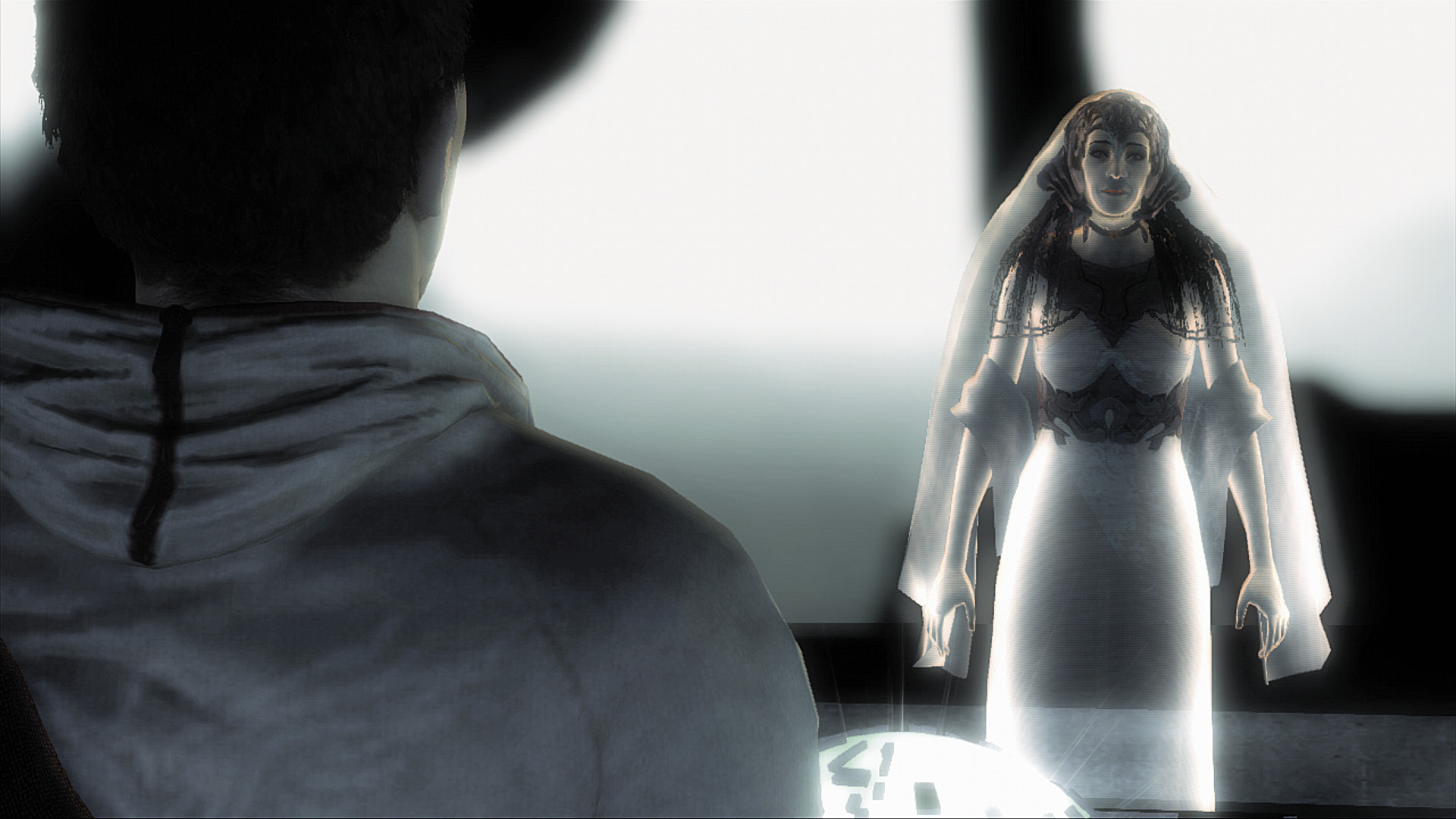
Once Desmond enters the Grand Temple’s inner vault, the myriad variables in his life to that point culminate in a stark binary decision: a yes or no; Juno’s offer accepted or refused. To recap, his choices were:
- To live – and, in doing so, allow the Catastrophe to occur, but prevent Juno from leaving her digital cell to enslave mankind. In this future, human civilization is brought to its knees by the effects of the Coronal Mass Ejection. Over 99.9% of people die, with small pockets of survivors – and their eventual offspring – reduced to a Bronze Age level of existence for many hundreds (perhaps thousands) of years.
- To sacrifice his life to free Juno and trust in her ability to deploy First Civilization technology to avert the Catastrophe, but potentially damn humanity to perpetual servitude – or, perhaps, worse.
In that moment, on December 21, 2012, Desmond and his companions have no opportunity to explore alternative actions or lines of inquiry: as the cutscenes that accompany the conclusion of the story show, the end is well and truly nigh. Juno’s
plan was not to lead Desmond to the Grand Temple, but to engineer his arrival at a very specific point in time, when the Catastrophe would represent a gun that she could hold to the head of the world.
Had mankind (whether through Desmond or another) entered the Grand Temple prior to this point, it might have found a way to separate Juno from the technology within; to secure safe passage beyond December 21, 2012 without paying her toll. In short, it may be that those subject to Juno’s manipulation throughout history have worked not to protect the vault from the Templars, but from everyone – irrespective of affiliation or intent.

Why does Desmond so readily accept Juno’s offer? Aren’t Assassins supposed to preserve free will at all costs?
The consequences of the unchecked Catastrophe are abhorrent: several billion guaranteed deaths, the immediate dissolution of society, and the threat – articulated without reserve by Minerva – that mankind might be damned to repeat the cycle. By contrast, the prospect that Juno might take a metaphorical whip to the bioengineered slave species that supplanted their First Civilization creators is infinitely less tangible. Even Minerva’s assertion that Juno is by far the greater of the two evils fails to dissuade Desmond from a decision that he appears to have already made.
Desmond’s rationale appears to be that there might be a chance, however slim, to stop Juno; that his choice means that there will at least be something more to save than bloody and beaten survivors scratching a meager existence in post-apocalyptic ashes. It is a powerfully persuasive argument – and one that Haytham Kenway, Warren Vidic and other Templar luminaries might heartily endorse.
It could be argued that free will, the capacity to make any decision – right or wrong – is the basis of individuality. The desire to preserve this, perhaps at any cost, certainly lies at the very core of the Brotherhood’s creed. With her command of First Civilization technology, and mankind’s inherent susceptibility to their devices, we might assume Juno capable of transforming all minds within her grasp into an undifferentiated gestalt, acting on her specific instructions without hesitation. This was, of course, precisely what the Templar Order sought to achieve with a Piece of Eden and the Eye-Abstergo satellite.
This is not to suggest that Desmond (or, for that matter, Juno) has a secret Templar affiliation, but rather that his final decision is one that corresponds more closely with their ideology. In his last act, Desmond may “save” humanity by potentially sacrificing the ability of every last man, woman and child to act entirely of their own volition.

Even if we imagine Juno’s part of the bargain as a form of tithe, a ten percent, with civilization permitted to function as previously – or even thrive and grow in meaningful ways – under her auspices, the fact that she might govern without protest is a terrifying prospect. For a dictator to order the execution of a dissident is an unpleasant proposition; to have the power to compel them to commit suicide from a remote location is quite terrifying; but what if dissonance itself were impossible? Juno’s apparent attitude to her society’s former slave race – irrespective of her long-term goals – suggests that she might not preside over her indentured subjects with even a fraction of the benevolence that Templars such as Haytham Kenway might have aspired to.

How does Juno stop the Catastrophe?
The precise method by which Juno holds up her part of the bargain with Desmond is in fact revealed during one of their early conversations in the story. It is the first method of salvation devised, tested but dismissed as an impossibility by the First Civilization – but, as she clearly states, never truly discarded:
“In the beginning, when we thought we could be saved, we sought to face the sun’s wrath and contain it. Four towers would be built – to pull her fury into this place, where it would be dispelled. But even with all we knew, with all we had, it would take too long. A thousand years we could labor and still the work would not be done. The first tower was never completed. The project abandoned. We moved on. But while we labored on other endeavors, a few returned. They thought they might automate the process. Metal might finish what flesh could not.”
Juno’s final line in her monologue is actually a candid admission – and the sight of the improbably deep chasm that the four towers lie in, a confirmation. Though the incredible device could not be finished in time to preserve the First Civilization, the process of building it continued long after the first Catastrophe. This lends weight to the idea that Juno sought to keep the Temple and its secrets sealed until the moment of her choosing. Had mankind gained entrance beforehand, Juno would have lost her bargaining chip: the leverage she uses to make Desmond lay down his life. And on that note…

Why does Juno need Desmond’s DNA?
The pedestal in the inner vault of the Grand Temple is clearly a biometric device, and Juno is quite explicit that Desmond be the one to lay his hand upon it. While the most obvious interpretation is that this is the activation switch for the First Civilization towers, which requires Desmond’s DNA, there is another theory. When Desmond explores the room dedicated to the sixth method of salvation – transcendence, the method behind Juno’s digital divinity – she, once again, offers a frank appraisal of the technology that might contain more than a hint of foreshadowing:
“So we forged a new vessel. One that might endure. It proved easy enough to enter. But to leave... to leave required something more. Something wrong.”

As Juno presided over (or at very least abided) the completion of the energy-absorbing towers, it could be that she in fact possessed the capacity to trigger these independent of external assistance. Though Desmond’s death may be a direct consequence of the towers and their activation, perhaps his death is… well, “something wrong”: the catalyst for Juno’s release and rebirth.

Who is the man who talks about hacking after the final credits? What could this mean?
Although we’ll have to wait for a future installment of the series to answer this question, we do understand this to be an Abstergo technician working to interpret, disassemble and upload the memories of Desmond’s ancestor Connor – and, possibly, everyone within his lineage – to “the Cloud”. We already know that, through Desmond’s enforced stay at Abstergo (and Lucy’s later treachery – see page 27), their technicians have access to a great deal of data on their erstwhile test subject. This almost certainly includes full genetic sequencing.
On one level, this plot device enables us, as players, to continue with events in Haytham and Connor’s lives after Desmond’s death. On the assumption that Desmond’s “true” performance was of the 100% Synchronization variety, we can later use an Animus to better align our success with his… or, just pick random fights, play checkers and enjoy other recreational pursuits against the striking backdrop of a birth of a nation.
Of course, this cryptic conclusion could suggest that the Templars now possess the technology to read genetic memories and package them in a format that anyone can experience – not only direct-line ancestors. The bearing that this might have on future developments in the Assassin’s Creed story is profound.
What does Juno hope to achieve?
One thing is certain: Juno is revealed to be the true villain of Desmond’s story arc, and will return to cast a broad shadow in the chapters that follow – no matter which protagonists, past or present, occupy the starring roles.
Following the activation of the towers and the aversion of the Catastrophe, the Grand Temple appears to be more brightly illuminated, more active, than before. This suggests that it has attained full power after years of relative dormancy. Prior to this, Desmond and his Assassin companions lacked the time, support and expertise to study what else may lie within its rooms and chambers (or adjoining caverns, not to mention networked vaults elsewhere in the world), so there is no theoretical limit to what Juno might attempt. We can only speculate on her intentions.
Revenge: Juno blames humanity for the extinction of the First Civilization – the war between the slave and master races is believed to have precipitated the fall of the latter after the first Catastrophe. Moreover, she may view the death of her husband Aita as a direct consequence of
that conflict. One thing is certain: charges of misanthropy would not be wildly inaccurate.
Rebirth: She may have the means to transfer her mind to another vessel, be it flesh and bone or more durable metal. Given that the events of Assassin’s Creed III cast Juno as being capable of considering far more variables than those who might seek to oppose her, it is doubtful that she would limit herself to a single (and therefore vulnerable) point of existence. As a digital being, she may have the capacity to interact with global telecommunications networks to achieve virtual omniscience. Combine such prospective feats and weapons with the First Civilization tech at her disposal (particularly Pieces of Eden), and Minerva’s final warning appears almost restrained.

Restoration: Juno utters the line “What once was shall be again” in conversations with both Connor and Desmond which, with the benefit of hindsight, might be more threat than deity-grade platitude. Could it be that she has the knowledge and means to resurrect her species? And is she actually alone within the First Civilization device where she resides?

Might the Templars and Assassins unite to fight Juno?
Juno’s rise to a potential position of global dominance, invisible to most, means that an uneasy alliance isn’t an impossibility. However, we can safely say that this would be temporary, as the differences conveyed in the story of Connor and Haytham demonstrate – not least its conclusion.
If we agree that free will is the true point of dispute in the struggle between the two factions, the respective
ideologies, in their purest form, are as distinct as black and white – and yet the manner in which they are interpreted and acted upon is often grey. Both groups claim to be humanity’s custodians, and to represent its best interests, but there is perhaps a more elementary, human component to their differences. The archetypal Assassin, in wholeheartedly embracing the Brotherhood’s cause, is prepared to sacrifice his or her self to preserve individuality and, by extension, humanity. The Templar, by contrast, would shackle individualism and preserve mankind through the sacrifice of others.
Juno, then, only represents an “enemy of my enemy” scenario – and not a tableau for epiphanies that lead to Templars expounding the formation of transparent and accountable democracies, or Assassins advocating the virtues of mind-control devices.

Of course, it could be that both have actually served, however indirectly and unknowingly, to facilitate Juno’s rebirth. The Assassin and Templar factions have both waxed and waned in terms of power and eminence throughout history. In one reading of her motives, Juno may have in part orchestrated these almost rhythmic fluctuations, playing one side against the other. The Assassins police the Templars and, in doing so, reduce their numbers and becalm their ambitions; the Templars, in turn, are periodically successful in “crusades” that force surviving members of the Brotherhood back into the shadows.
In the modern day, the dominant Templar Order controls the multinational Abstergo corporation, which might offer Juno vital resources – a head start, if you will, in a bid for global domination. The diminished Brotherhood, operating in small cells below the radar, provides the means by which Juno can transfer Desmond to a very particular place and time. After all: if Connor’s only role was to locate and store the amulet, his story might not have ended with the elimination of the Templar chapter that sought to locate and exploit the Grand Temple, but with a simple theft.
Is Desmond really dead?
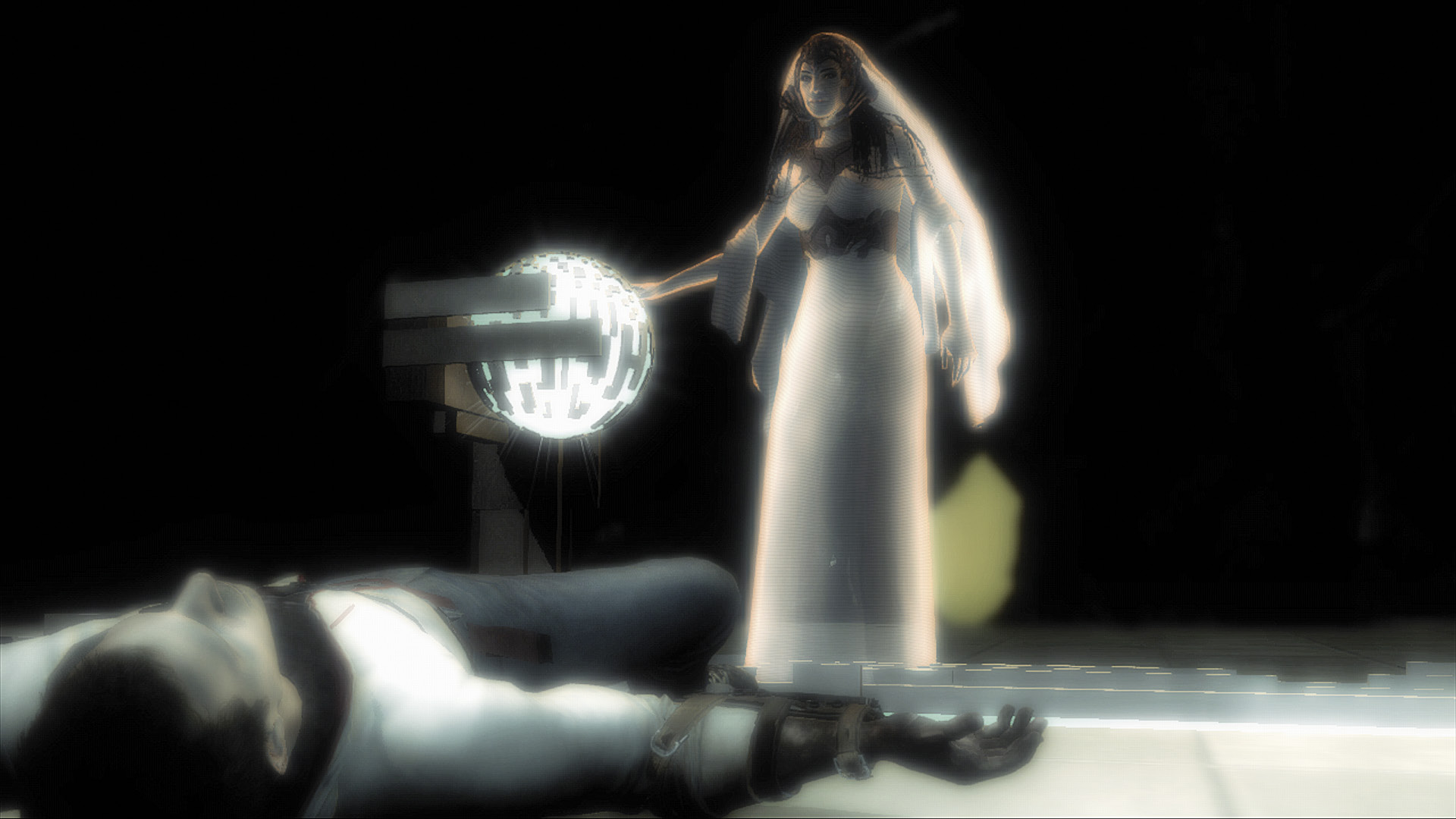
Insofar as the body of the “real” Desmond is charred, devoid of a pulse and poised to putrefy? Almost certainly. In terms of Desmond making further contributions to the story? That remains to be seen.
The continued existence of Subject 16 – or a simulation thereof – following his death prior to the events of Assassin’s Creed indicates that Desmond’s digital resurrection is not an impossibility. Both the Templars and Assassins seemingly possessed the means to scan, record and store his “data” during the tumultuous events of 2012, which means that a digital facsimile of Desmond could hypothetically play a future role.
Based on what we know of the sixth method of salvation, it could also be speculated that the biometric device in the Grand Temple’s inner chamber allowed a transfer of consciousness, and that Desmond now exists within the Temple’s walls – just as Juno did before him for thousands of years.
Who can we expect to stand out in a future installment?
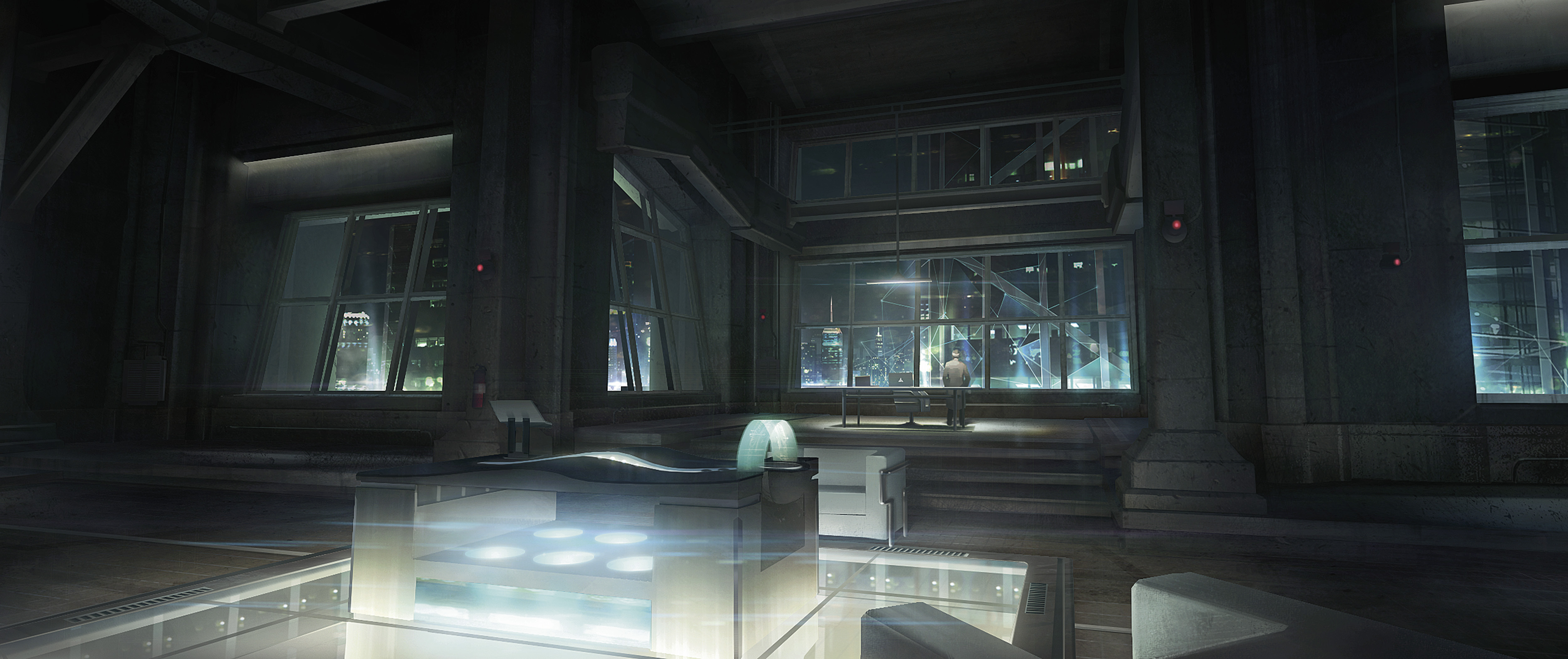
The concept of the Abstergo Entertainment division packaging and selling memories through consumer iterations of its Animus tech also offers Juno (or the Templars, if operating beyond her control) a possible means to access a wide audience – from simple propaganda and historical revisionism, to implanting secret “impulses” in the minds of each user. This would almost certainly initiate a new and distinct chapter in the Assassin versus Templar war.
If Juno is to be the primary focus, we may find both Assassins and Templars engaged in a desperate struggle to develop new weapons to combat her. As we know, Desmond (and specific ancestors) are defined by their high concentration of First Civilization DNA, which equips them to more successfully operate the ancient yet powerful devices at Juno’s disposal. Desmond’s daring attack on Abstergo’s Italian facility makes this apparent. It may be that similar individuals will need to be identified, recruited and trained via the Animus to stand at the vanguard of the fight.
A shift in focus to the Templar side of the war is also an intriguing prospect. Though the Assassins have the advantage of exclusive intelligence (the events witnessed by William, Rebecca and Shaun in the Grand Temple), it may be that the resources and influence of Abstergo could be pivotal in the battle against Juno. t
Are there other ways to interpret the story’s conclusion?
There certainly are – and we would suggest that speculation, no matter how fervent, might help to somewhat allay pangs of Assassin’s Creed cravings until the next episode is released.
All of our interpretations and speculations so far are based on the assumption that a devastating solar flare really is set to occur on December 21, triggering a mass extinction event on Earth – and, of course, compelling Desmond to accept Juno’s offer. But what if there were no such cataclysm? The whole point of the Pieces of Eden is that they empower the user to adjust the perception of others. Might it be that the apparent harbingers of the Catastrophe (global aurora borealis, electrical storms, seismic activity, et al) are mere illusions, a deception conjured by Juno to ensure that Desmond “plays his part”? The closing moments of the story clearly indicate that the effects are felt globally. If this is only a hallucination, then Juno has the power to influence the minds of billions even before Desmond accedes to her wishes. Interestingly, Juno openly reveals that the third researched method of salvation involved looking for ways to amplify the suggestive powers of the Pieces of Eden and “change the consensus”. The Grand Temple was designed specifically to house all six technologies. Though Desmond might have the ability to resist an individual Apple, how might he – and, for that matter, mankind – fare against an orchard of such devices?
Desmond himself (albeit indirectly) provides fuel for the fire of this “mass manipulation” interpretation when he explains why he stabbed Lucy. In the vision of the future presented by Juno, he claims to have witnessed the Abstergo satellite launch on schedule during the hours of December 21. Why, then, did Desmond not see any evidence of the Catastrophe – and, why for that matter, would Abstergo go ahead with the launch during a period of such unusually heightened solar activity?
Continuing with this alternative interpretation, Minerva’s intervention at the conclusion of the story is, on reflection, troubling. If we assume that Juno’s tapestry of lies is more tightly woven than Desmond suspects, then “simulating” the holographic apparition of Minerva would not be beyond Juno’s power or imagination. When you consider that Desmond faces the prospect of an immediate, irrevocable apocalypse, Juno is a banal threat compared to what refusing her wishes would entail. On considering the effect of Minerva’s words, it is almost as if she arrives to exhort: “Wait! Do not help her! She is the lesser evil!” If this is a technique to dispel all last lingering doubts, it’s an incredibly clever ploy.