
World of Final Fantasy Guide The Mechanics of Grymoire
Personal Mechanics
The Care and Feeding of Mirages
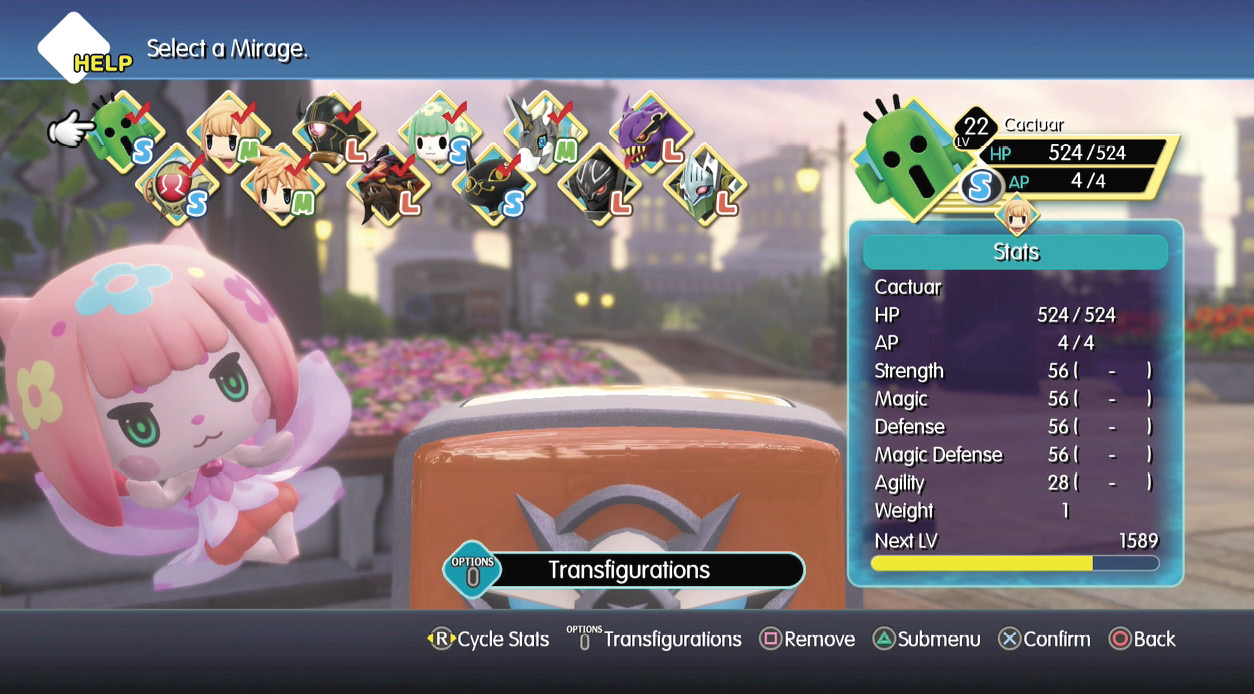
Mirages! You find them, catch them, grow them, and fight them. Life in Grymoire is all about dealing with the challenges that Mirages pose, but as Mirage Keepers, Lann and Reynn can turn them into potent allies. Every dungeon has a fresh set of Mirages for you to fight and recruit, and perhaps develop into one-of-a-kind monsters of legend.
Prismtunities
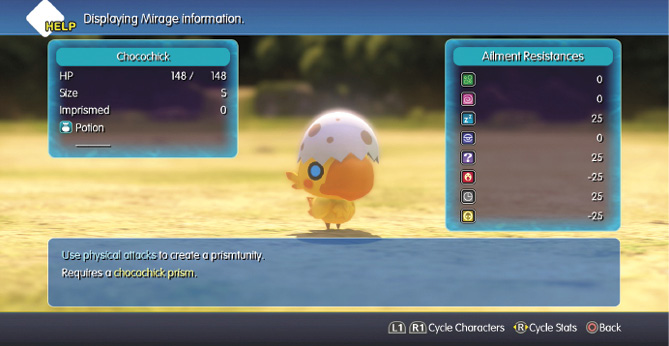
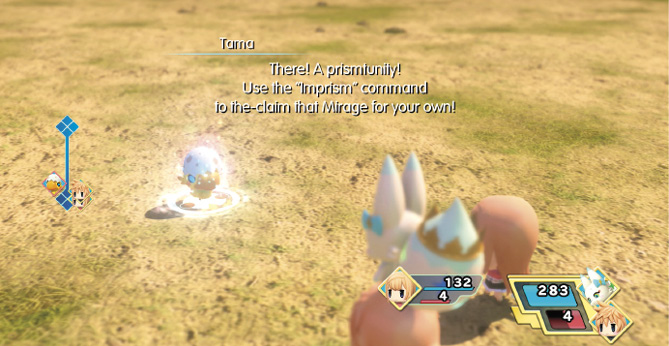
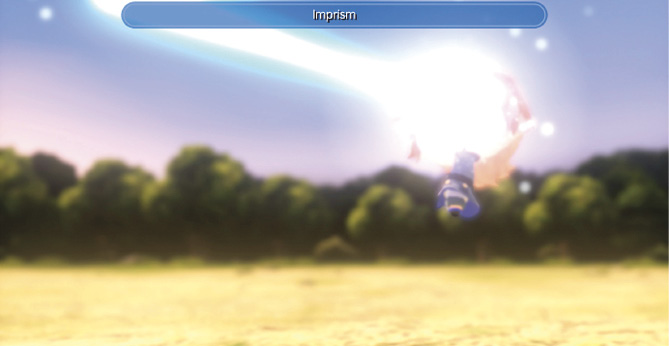
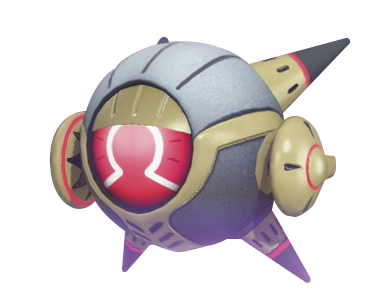
As is explained to you at length at the start of the game, most of the enemies that you face over the course of World of Final Fantasy can be caught and turned into controllable members of your team. This is done via a process called “imprisming,” where Lann or Reynn catches a weakened Mirage in a prismarium.
Players will be unable to attempt imprisming a Mirage unless you create a “prismtunity.” The process for doing so is different for every individual type of Mirage. You can learn a new enemy’s prismtunity conditions by casting a Libra spell on it, which Tama knows at the start of the game, and which you can teach to Reynn and Lann via mirajewels. This also saves the enemy’s stats and general dossier to your Mirage Manual, which you can access by going back to the Twins’ Room and inspecting their video game system.
The conditions for a prismtunity are generally self-explanatory, although it may take a bit of finesse or may not take effect immediately. A Mirage that requires you to “reduce HP,” for example, generally enters prismtunity status at around 50% of its HP, and it doesn’t matter how you get there. Specific types of attacks, such as physical or fire-based, may require several hits to work.
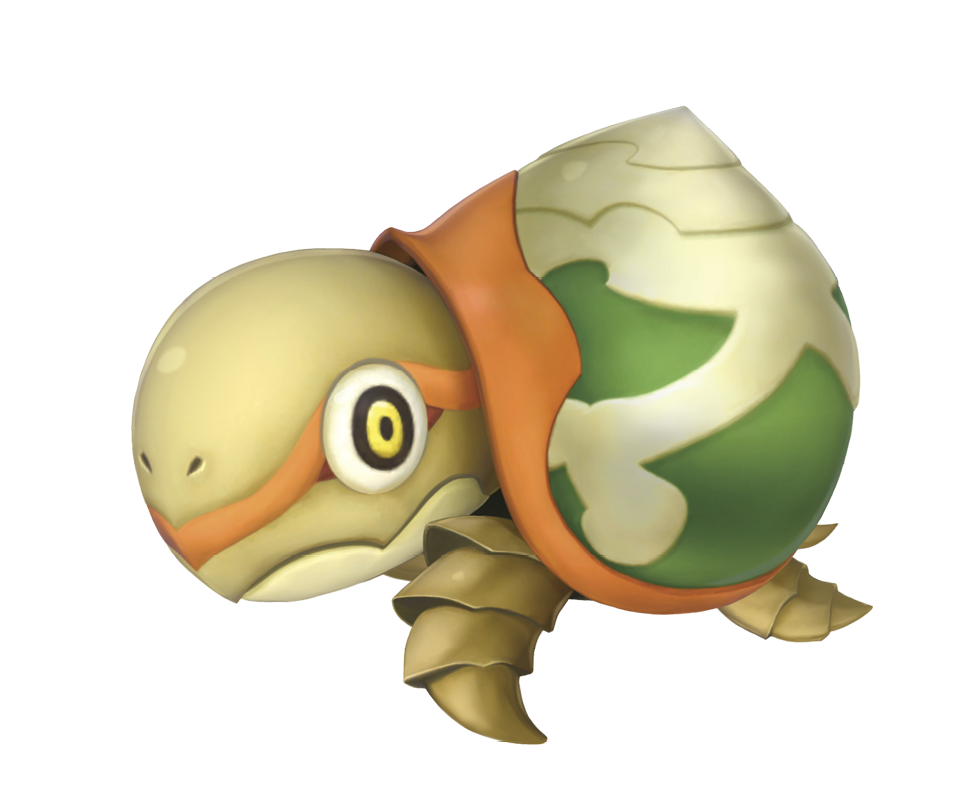
A Mirage that’s susceptible to being imprismed will be surrounded by a white aura, but it is otherwise unhindered and can still take actions. As a general rule of thumb, its prismtunity will only be active it for the next few turns, after which it wears off. Unless a given Mirage’s prismtunity conditions specifically indicate it can only be applied once per battle (e.g., the left claw or minimantoise), you can try again a second time.
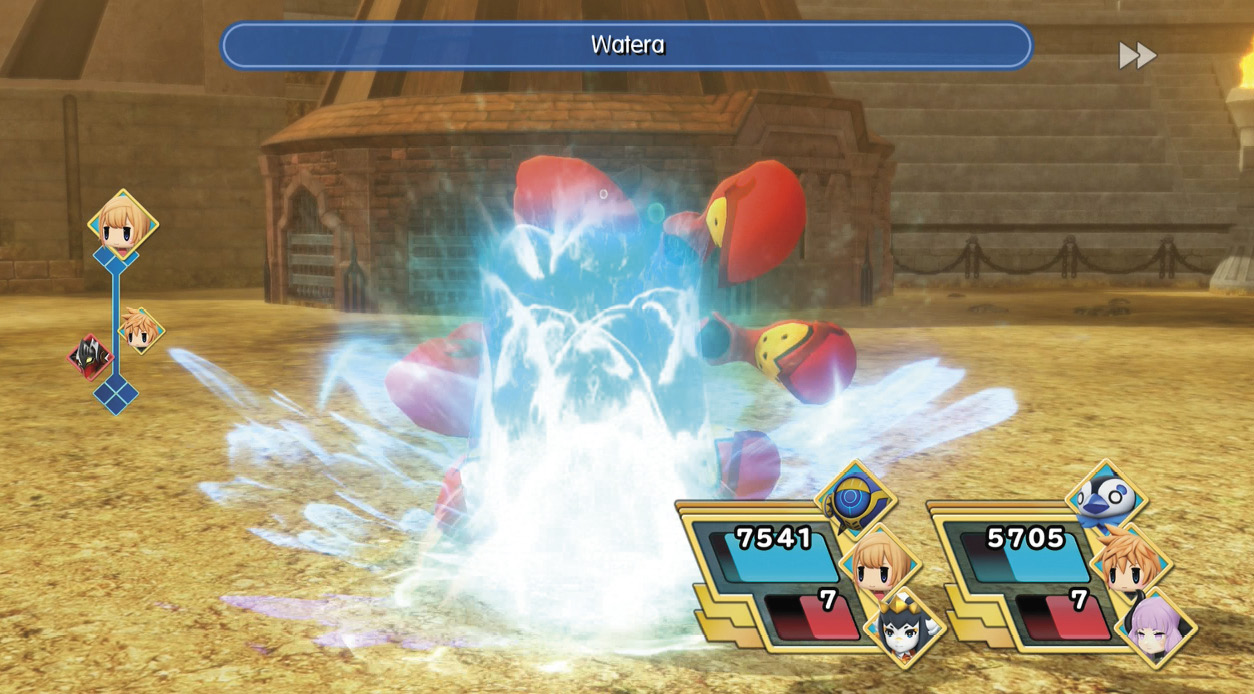
Many Mirages require you to inflict specific status ailments or hit them with particular elemental attacks before they can be imprismed. It’s difficult to have a broad enough arsenal of abilities to be prepared for any possible prismtunity, but fortunately, you can sometimes compensate for this with a stash of items. There’s a consumable item for many status ailments and types of elemental attack in the game, and you can purchase just about all of them from Chocolatte sooner or later. Check the Items section of the Encyclopedia for more details.
When you’re attempting prismtunities, remember that you can freely use beneficial spells and items on your enemy by scrolling through the targeting menu when using the Classic Battle Menu. This can come in handy if you’re trying to catch weaker Mirages, since you can heal them or even apply buffs like Shell or Protect to ensure they’ll survive. This is even required in certain cases, such as the magic pot, which requires giving it an elixir.
There is also an ability called Subdue that was pretty much designed for imprisming, as it deals damage but will never KO the enemy. The easiest place to access it is on the sylph Mirage you receive in the early stages of the game.
You receive the full standard experience value for an enemy you imprism, but none of its gil value, and it will not drop any items.
The Prism Case
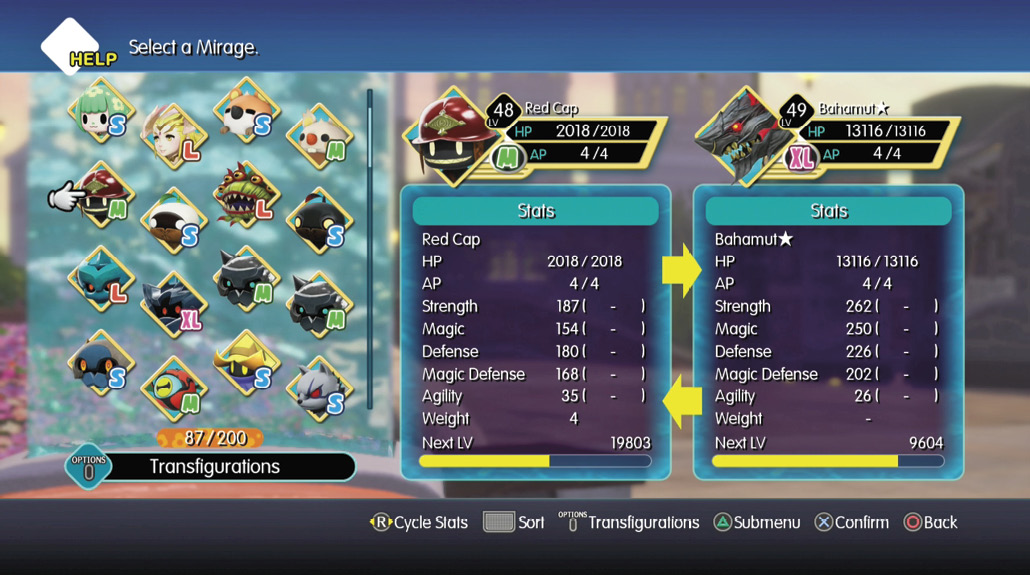
Reynn and Lann can carry a maximum of 10 Mirages with them in the field, which includes the four from your currently active stacks. Any extra Mirages you acquire that would take you over that limit will give you the option to place either your newly obtained Mirage—or an already-existing Mirage—into storage in your Prism Case, which is kept by Serafie on the North Promenade in Nine Wood Hills. You can also access the Prism Case from any Gate or Save Crystal that can take you back to the city. You can use the Seraphone to access it as well.
You can do most of the clerical work associated with Mirages from your Prism Case.
Mirage Boards
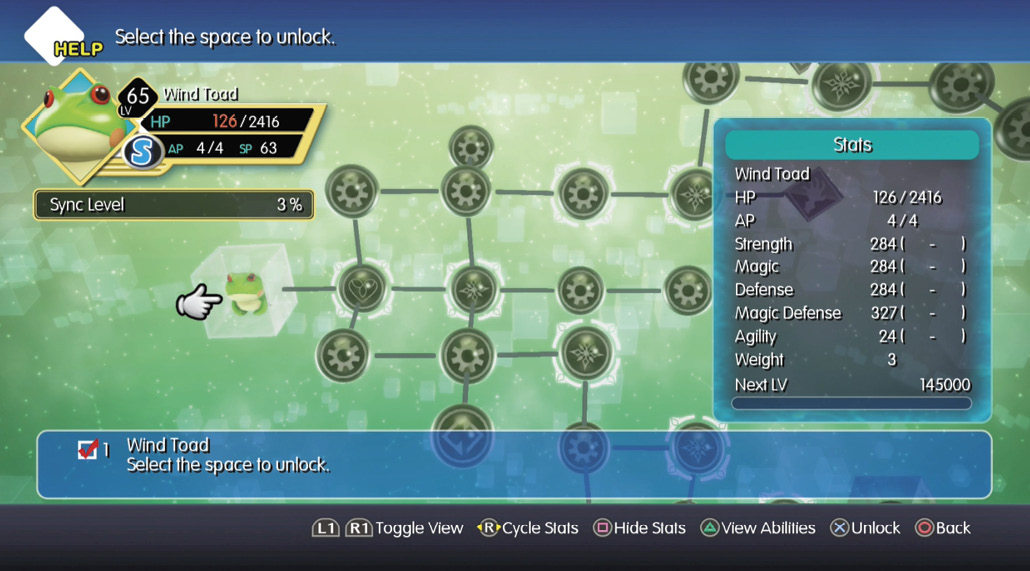
Regardless of the level or abilities it had when you fought it in the field, a fresh Mirage recruit to your team is Level 1, with 3 SP to its name. It has no abilities besides basic menu commands. To build it up, you’ll have to unlock its potential by filling out its Mirage Board.
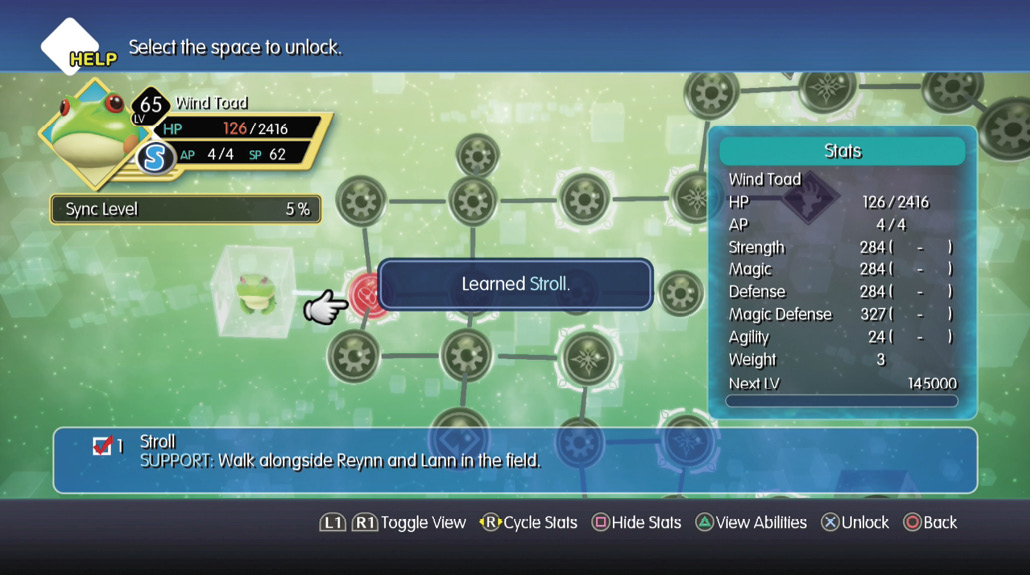
Every option on a Mirage Board costs a varying number of SP. You receive 1 SP every time a Mirage gains a level, which doesn’t sound like a lot, but it adds up quickly. As you might expect, you need to make your way through a Mirage Board by purchasing one ability node at a time, and you are limited to purchasing whatever nodes join up with what you’ve already taken.
Simply getting a Mirage is enough to fill out its Mirage Board; there are no hidden options or secret abilities.
Transfiguration
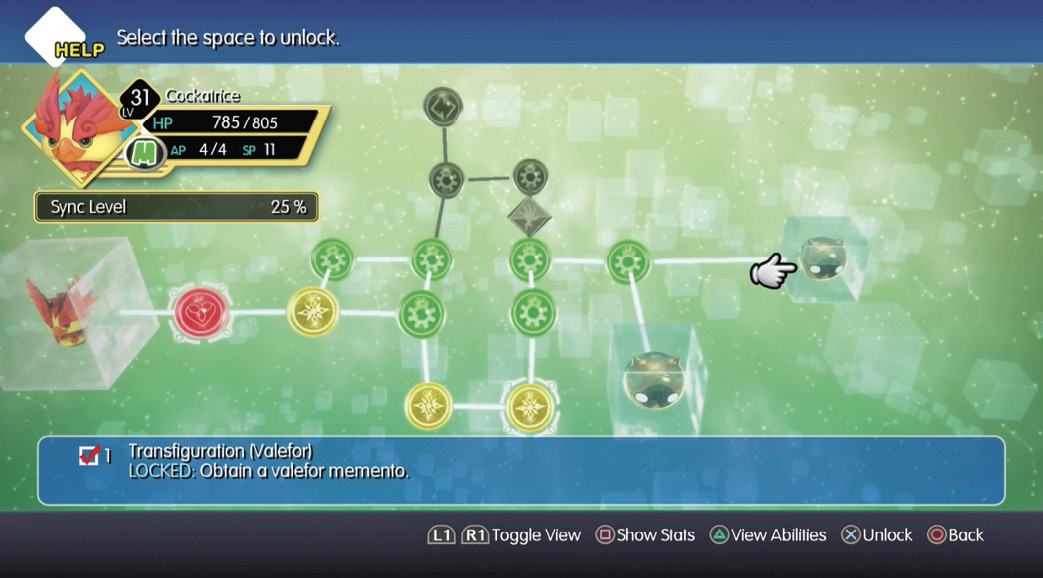
One of the most important facets of developing and growing your Mirages comes when you unlock the ability to transfigure them. Most of the imprismable Mirages in the game can be transfigured into at least one other Mirage entirely, which is an option that’s available at the far ends of their Mirage Boards.
As a rule, it takes several levels on any Mirage before you’re in any position to transfigure them; you have to work your way across the board to the option just like any other ability. Most transfigurations have an additional qualifier attached. For some, it’s as easy as getting the Mirage to a certain level first; for others, you must find a specific key item somewhere in the game’s world. The earliest example here is the valefor memento you receive after your battle with Yuna; once you have that, you can transfigure an appropriately leveled cockatrice.
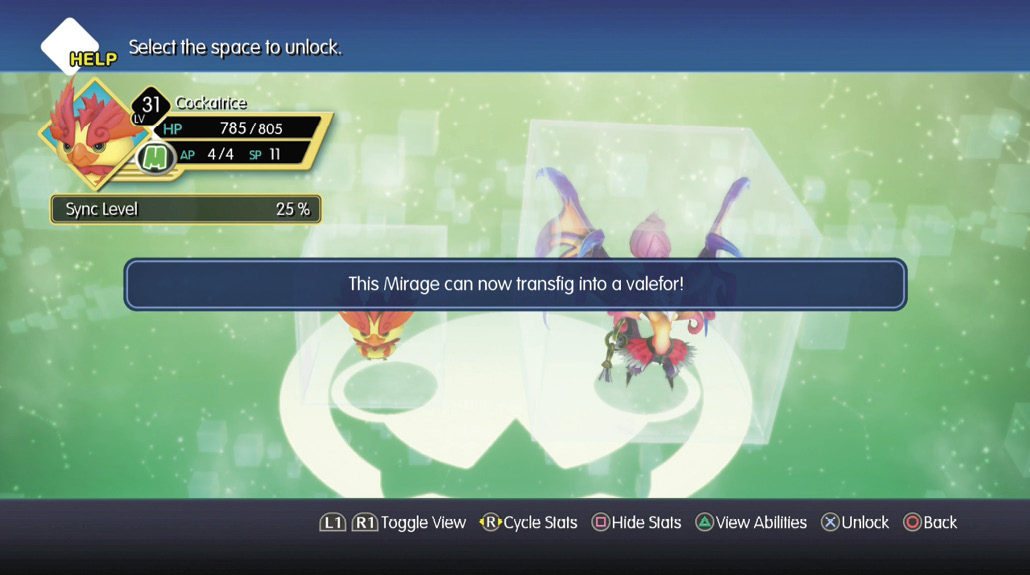
Upon transfiguration, a Mirage keeps its level, current experience, and most of its abilities. Passive boosts and common spells will almost always make the transition between forms, but many abilities are deliberately unique to a given form, and as such, cannot be used by the Mirage’s new form. They aren’t lost; they’re just deactivated, and if you decide you want them back, you can revert the Mirage back to its original form.
In fact, you can even spend SP to unlock abilities on a new transfiguration’s Mirage Board without actually transfiguring the Mirage in question. This doesn’t mean you’ll be able to use any unique abilities you might acquire, and you still have to unlock the transfiguration as an option, but you don’t have to transfigure it to start filling out the new leg of your Mirage Board.
Unique, non-transferrable abilities are generally listed in green text on the Mirage’s Abilities menu, as accessed when you’re looking at its Mirage Manual entry or Mirage Board. On Mirage Boards, the nodes for such abilities are also bordered in white.
Sync and Mastery
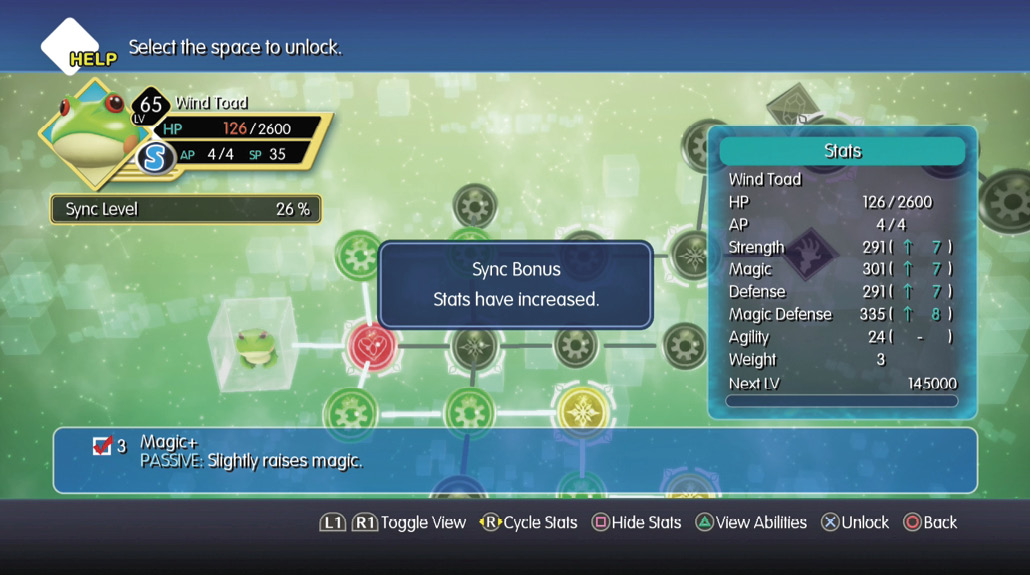
You may have noticed that every Mirage has a sync level that’s tracked on its Mirage Board, which is listed as a percentage. This increases by a slight amount every time you purchase a new node on a board, but again, as you may have noticed, simply maxing out a Mirage’s board is rarely enough to get anywhere near 100% sync.
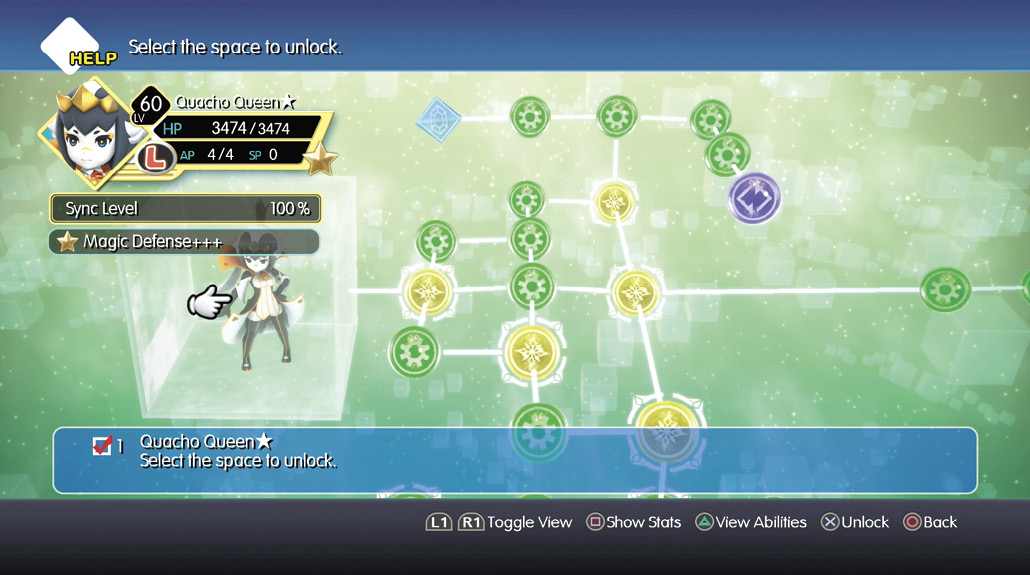
To reach 100% sync, you must completely fill out a Mirage’s Board, as well as the boards of all the Mirages linked to it via transfiguration, and all of the boards that are linked to those—in other words, a Mirage’s full genus. This is not a fast process, and many advanced transfiguration forms require you to find particular key items before they can be unlocked.
Once you do reach that 100% completion, the Mirage is considered to be mastered, which unlocks some new abilities for you to choose from. It also puts a gold star next to their name.
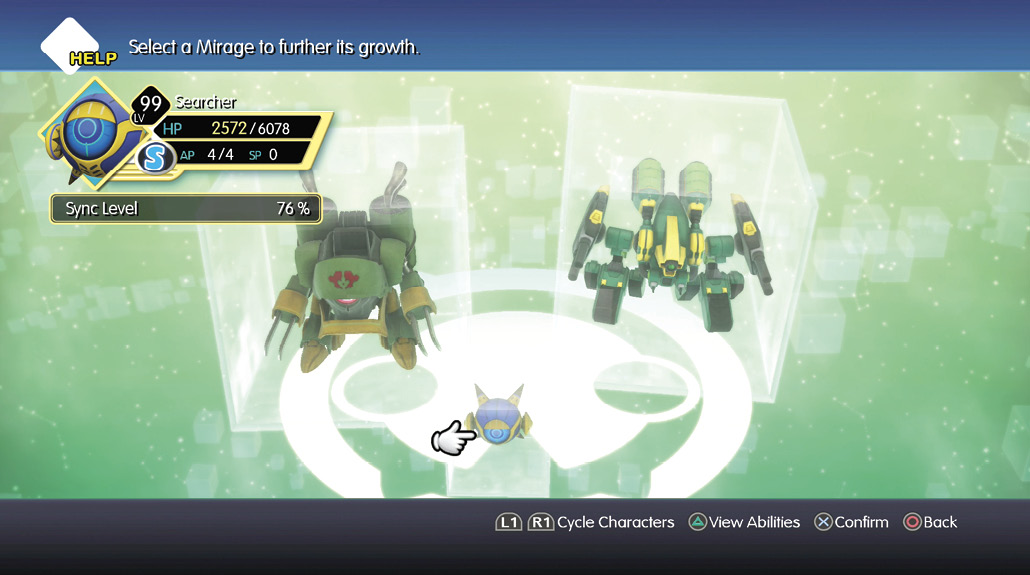
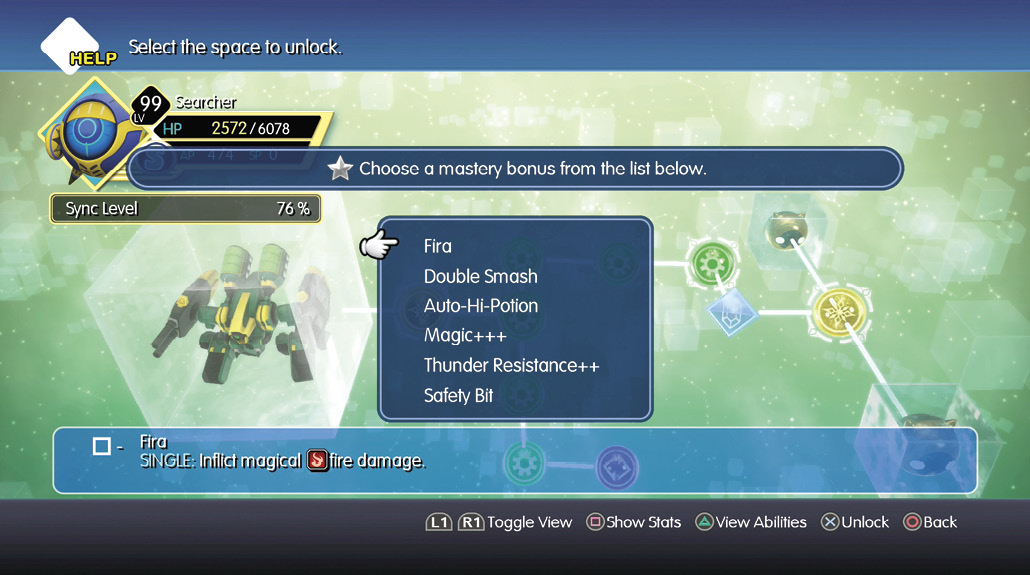
It is possible to get a silver star for completing Mirage Boards. This doesn’t require full 100% mastery of a Mirage’s genus, but simply the filling out of all of the Mirage Board nodes of their immediate family (just the Mirages you can see on a given Mirage’s Mirage Board menu). This will also give you the same set of abilities to choose from as the gold star. Use this knowledge to really power up your Mirages.
See the Mirage Manual chapter for more on the above.
Statistics and Growth
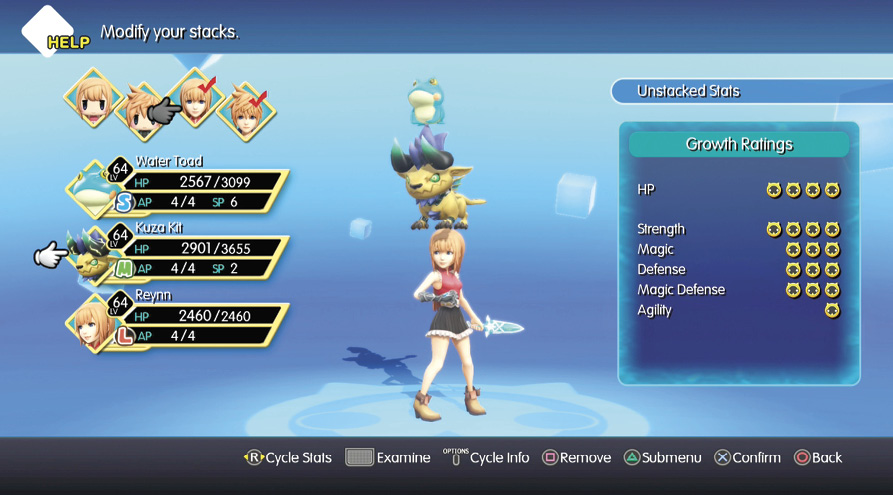
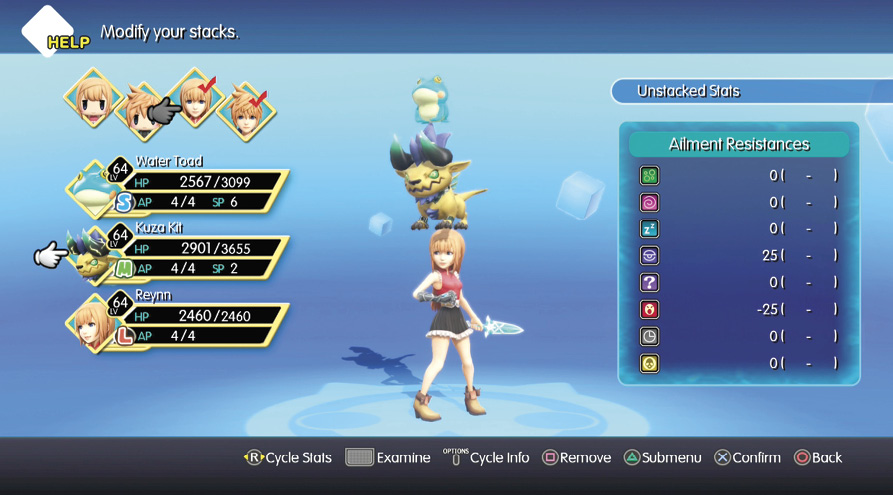
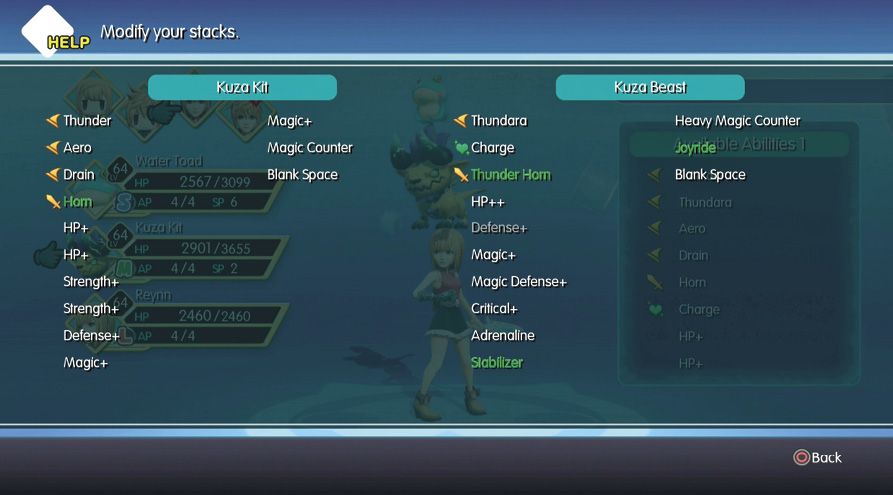
Mirages in World of Final Fantasy improve level by level in a slightly randomized process. Instead of gaining a fixed number of statistics per level, each Mirage has a preset level of Stat Growth that weights the number of points it gains. A Mirage with a stat growth of 5 will almost always gain a significant increase in the relevant statistic, whereas a growth of 1 means that stat will grow little, if at all. Note that achieving Mirage sync levels at 25%, 50%, and 75% also rewards players with multiple stat boosts.
Every Mirage in the game also has multiple abilities on its Mirage Board that simply provide an immediate and permanent boost to a given primary statistic, which will typically be weighted toward the Mirage’s favored statistics. For example, Mirages that are meant to specialize in offensive spells generally have multiple Magic+ and Magic++ nodes on their boards. As a rule, the statistical drift is relatively minor by the time a Mirage reaches its highest levels, particularly since most Mirages will do their best work as part of a stack.
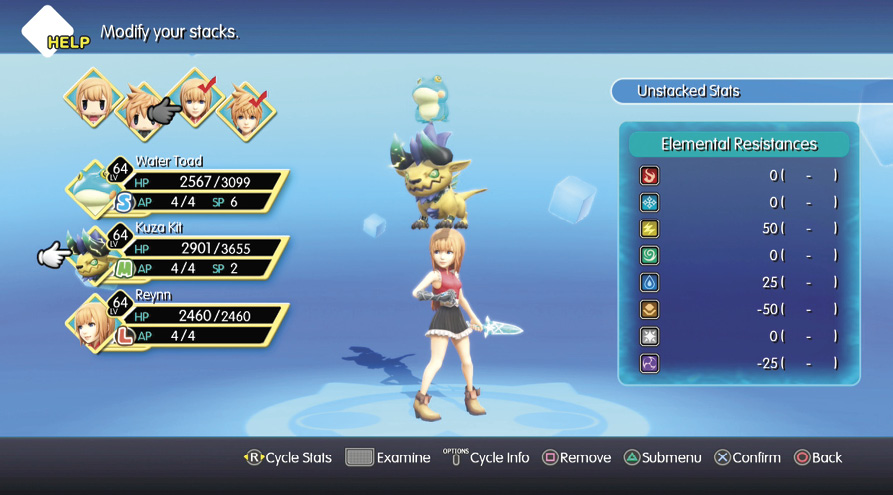
By default, Mirages’ elemental and ailment resistances will remain static and determined by their type. You can change this up a bit by equipping certain rare resistance seeds or picking certain Mastery Abilities, but most Mirages will retain their specific strengths and weaknesses throughout the game.
Ailments and resistances are represented on Mirages’ stat workups in what are effectively percentages. A negative number represents a weakness, whereas a positive number is a strength. At high numbers, a Mirage is highly resistant or immune to a given ailment, or takes limited to no damage from a type of elemental attack.
When an elemental resistance reaches 100, the Mirage is fully resistant to that element. At 150, the Mirage absorbs the element. Meanwhile, 200 is the highest elemental resistance a Mirage can achieve.
Abilities
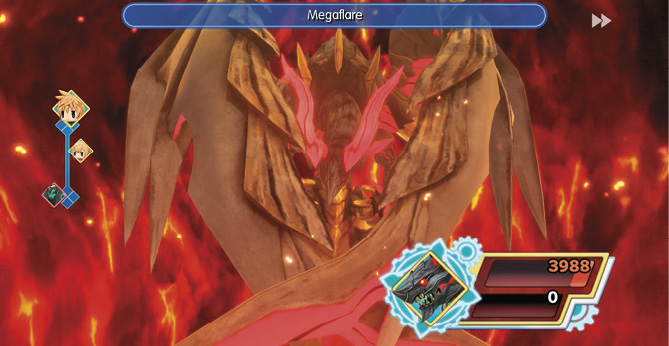
In World of Final Fantasy, your arsenal of special attacks, magic spells, and passive bonuses are all referred to under the blanket heading of abilities. Let’s talk about getting them, using them, customizing them, and listing the lot of them.
Unlocking and Using Abilities
When a Mirage enters your control, it is Level 1 with 3 SP, and it gains 1 SP per level thereafter. At this point, it knows zero abilities besides basic battle commands, and you must gradually unlock its abilities by spending SP in its Mirage Board.
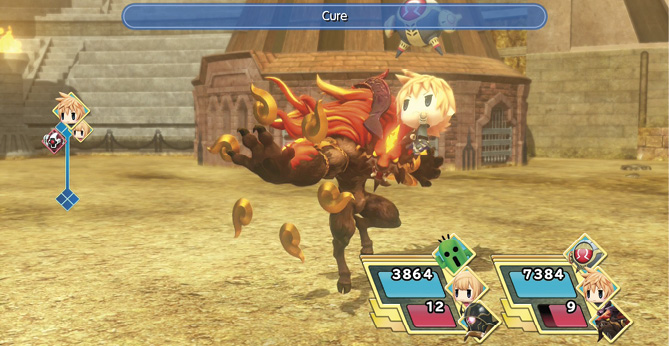
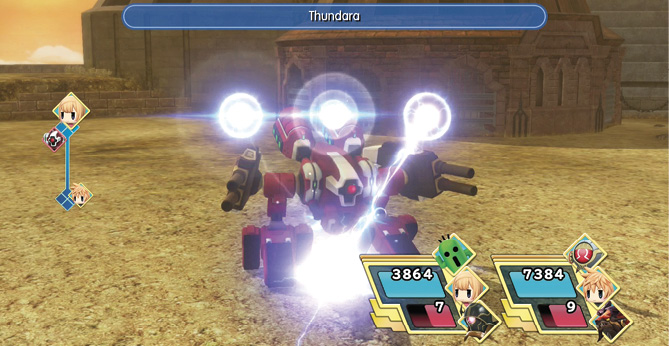
All of your active abilities cost a certain amount of AP to use in combat, and barring rare passive abilities that modify that cost (e.g., Battery Powered), each ability will always cost the same amount. AP regenerates on its own every turn, which means that it’s an effectively infinite resource. There’s no reason not to pull out the big guns early and often, even on trivial random encounters.
Conversely, items are a bit harder to come by, if only because you’re limited by their gil cost. This flips the typical RPG script, as you can use AP to save on items in the field instead of relying on items to save or replenish AP.
Mirajewels
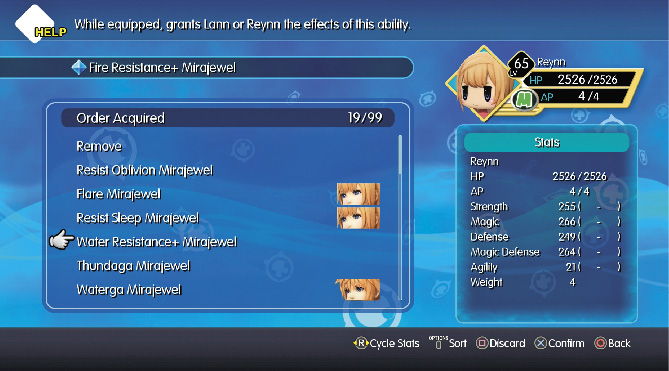
By default, Lann and Reynn have no abilities besides basic battle commands. In order for either of them to have abilities when they’re not stacked, they need to equip mirajewels.
When mirajewels initially become available, both your Keepers have two available slots for them. You can unlock up to four more by reaching levels 20, 40, 60, and 80. Finally, you can get two more by finding certain key items. Reynn must find Doga’s artifact and Unei’s mirror, and Lann needs the rat tail and the griffin’s heart.
You can gain all four of the above items in the Coliseum; see the Side Quests chapter for details.
The primary source for acquiring mirajewels in World of Final Fantasy is unlocking them in various Mirage Boards. They typically cost 2 SP and are available immediately upon purchase. You can also frequently find them in dungeon treasure chests.
Ability Seeds and Blank Spaces
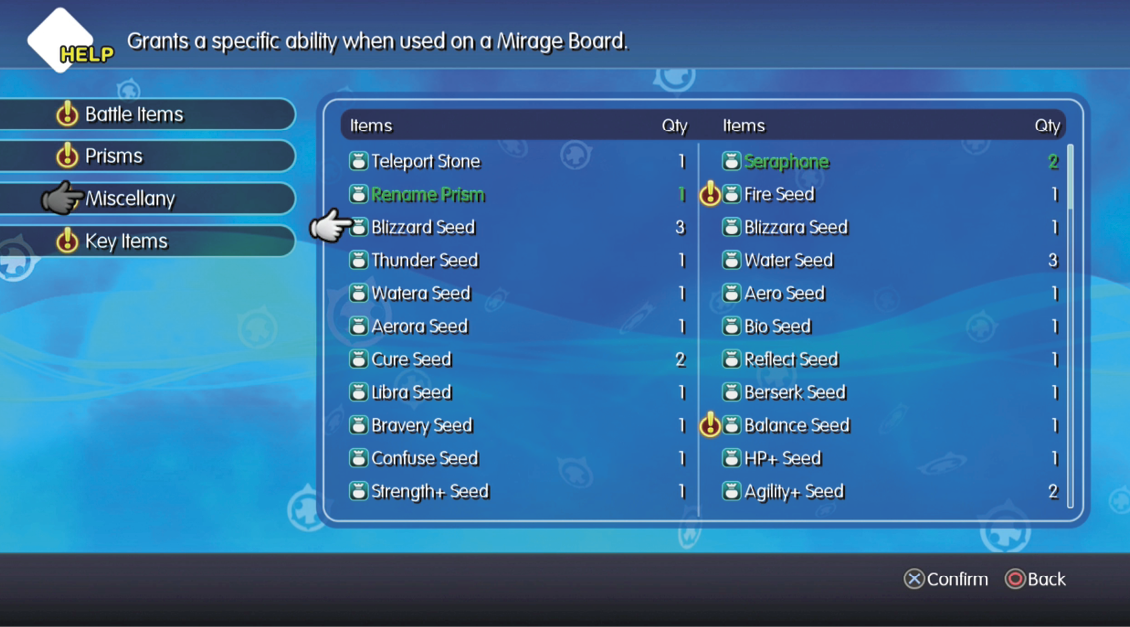
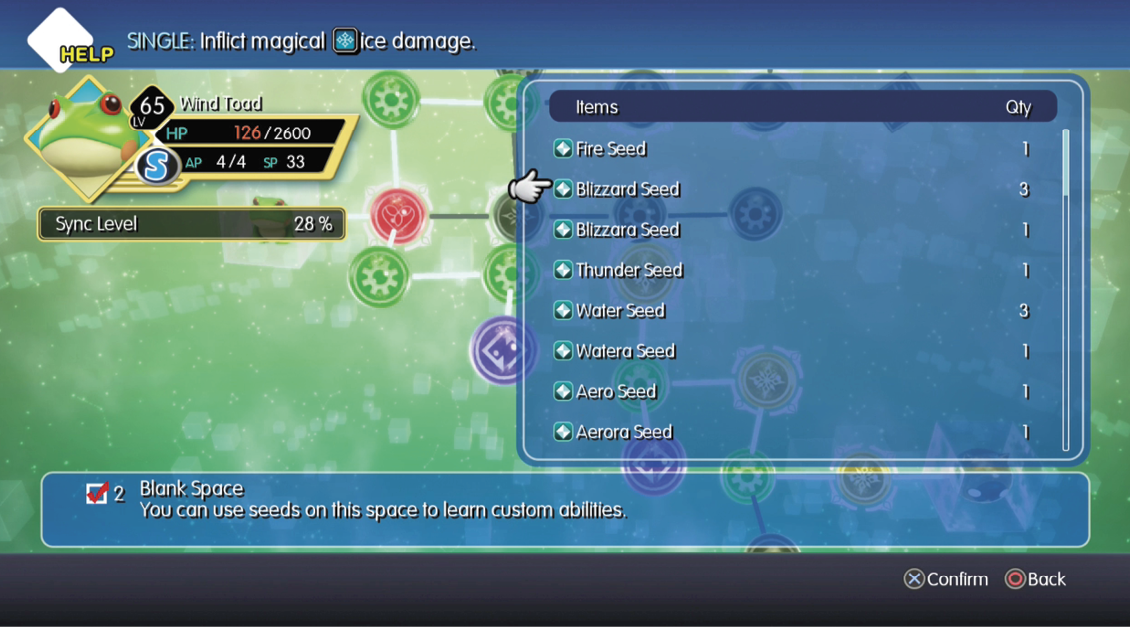
Around the time you reach the Watchplains, Tama will take a time-out to explain the concept of ability seeds to you. This is a method for customizing your Mirages’ ability loadout by using consumable items to teach them new spells.
Every Mirage has at least one slot on its Mirage Board called a Blank Space, which costs 2 SP to unlock. You can use ability seeds on Blank Spaces to permanently teach a Mirage a new ability. This will persist until such time as you place a new seed on that Blank Space, which destroys the old one, removes the old seed’s ability, and replaces it with that of the new seed.
In the opening hours of the game, seeds tend to primarily be active spells, which can limit Blank Spaces’ utility. Mirages that have no real aptitude with magic don’t get anything out of learning attack spells. You can teach those Mirages status ailments (such as Confuse or Sleep) instead to vary up your arsenal, or simply hold on to them for later. As you start to crack into the midgame and later, you can find or buy ability seeds that provide passive abilities, stat boosts, or extra ailment or elemental resistances, which enables you to close up your Mirages’ weak spots or further enhance their strengths.
Physical vs. Magical Attacks
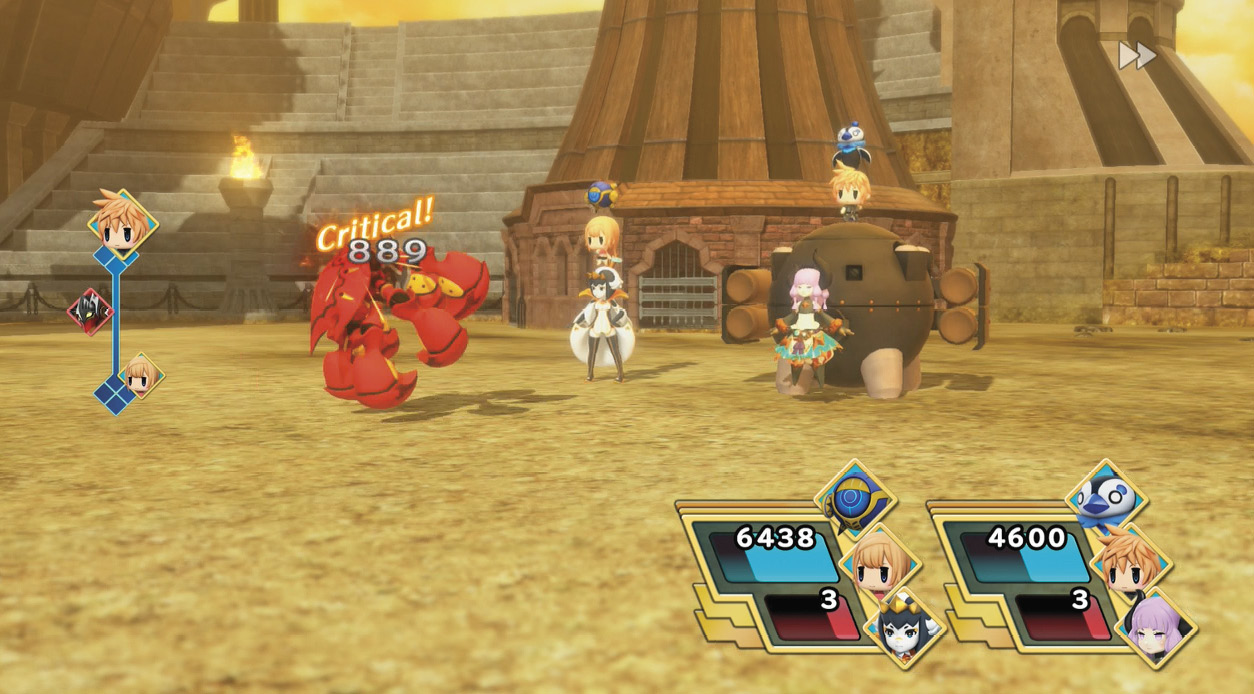
World of Final Fantasy makes an interesting distinction between physical and magical attacks, which is worth discussing briefly. Physical attacks are calculated against a target’s Defense statistic, whereas magical attacks’ effectiveness are determined by the target’s Magic Defense.
Many physical attacks inflict “neutral” damage, the same as your standard Attack command does. By contrast, most of the magical attacks in the game have an additional elemental classification, such as Fire, Blizzard, or Holy spells. However, it’s also common to learn abilities that inflict physical/elemental damage, such as Assassin’s Dagger or Heavenly Wrath, or that deal straight magic damage, such as Full Output or Missile. The most obvious examples are Reynn’s and Lann’s Channel Element abilities in Jiant form, which inflict physical/elemental damage, with the specific element subject to change based on which Mirages are stacked with them.
As a rule, World of Final Fantasy places a high value on targeting enemies’ elemental vulnerabilities, but it’s also useful to note the difference between physical and magical attacks. If you hit a weak spot but don’t deal as much damage as you’d hoped, it’s likely because you’re using a physical attack against a high-Defense target, or a magical attack against a target with high Magic Defense.
Items
Item menu
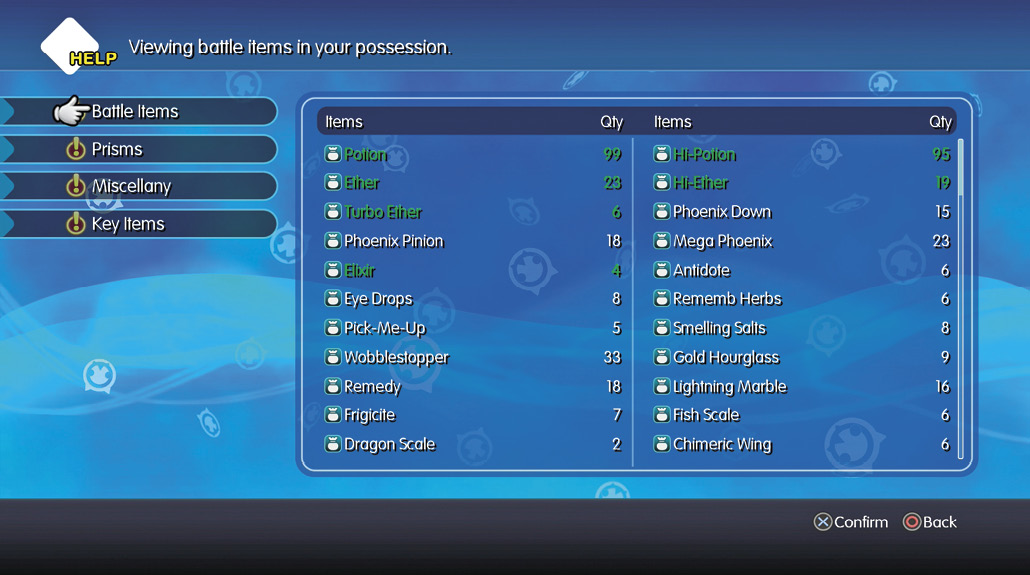
There are numerous items in World of Final Fantasy—far too many to list here. However, you can get a listing of every one in the game in the Items section of the Encyclopedia.
Each item falls under a specific type, and thus, has a specific purpose. When you go into the game menu, you’ll see the items already placed within their specific typings. You can use these typings to pick the best item for whatever situations you encounter over the course of the game.
- Battle Items: Items that can be used in battle. You’ll see things like restoratives, damage dealers, and buffers/debuffers here.
- Prisms: Used to imprism Mirages.
- Miscellany: Items that don’t fit in any other category—usually ability seeds and support items like the Teleport Stone and Seraphone.
- Key Items: Items that are key to the narrative or progression through the game. Some of these grant Reynn and Lann special powers and privileges.


Useful Support Items
Teleport Stone
The Teleport Stone warps you back to the entrance of any dungeon, even if you haven’t completed it yet. It’s a one-way get-out-of-a-jam free card, though, so be sure you want to use it before deciding to make it so you don’t needlessly take a trip through an entire dungeon all over again.
Seraphone
The Seraphone calls Serafie and her Prism Case to your location, wherever that may be—even in the middle of a dungeon! You can only carry three of these in your inventory at a time, however.
Rename Prism
As mentioned earlier, the Rename Prism allows you to rename a Mirage as many times as you want. Just don’t lose track of your newly named Mirage once you do.

Currency
Just like our world, currency in Grymoire is exchanged for goods and services.
Gil
Gil is the main currency of Grymoire, and you can spend it in Chocolatte’s Shop.
Arma Gems
As special currency, arma gems are only tradable in the Girl’s Tearoom. See the Side Quests chapter for more details.