
Dragon Age: Origins Guide Essentials Traveler's Guide
History
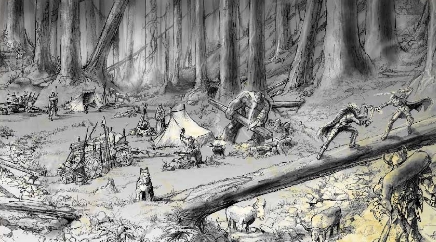
The Thedas Calendar
For most good folk, the details of our calendar have little purpose. It is useful only for telling them when the Summerday Festival will be held, when the snows are expected to begin, and when the best time to harvest will be.
The naming of the years are a matter for historians and taxmen, and few could even tell you if pressed the reason that our current age is named after dragons.
It is 9:30 Dragon Age, the 30th year of the 9th age since the first began with the crowning of the Chantry's first Divine. Each age is exactly 100 years, with the next age being named on the 99th year of the previous.
It is said that the scholars in Val Royeaux advise the Chantry of portents that have been sighted on that 99th year, portents that are sorted and pored over for months by the Chantry authorities until finally the Divine announces the name of the age to come.
The name is said to be an omen of what is to come, of what the people of Thedas will face for the next 100 years.
It is interesting to note that the current age was not originally meant to be the Dragon Age. Throughout the last months of the Blessed Age, the Chantry was fully prepared to declare the Sun Age, named after the symbol of the Orlesian Empire that sprawled over much of southern Thedas and controlled both Ferelden and what is today Nevarra. It was to be a celebration of Orlesian imperial glory.
As the rebellion in Ferelden reached a head and the decisive Battle of River Dane was about to begin, however, a peculiar event occurred: a Rampage, the rising of a dreaded high dragon, occurred.
The dragons had been thought practically extinct since the days of the Nevarran dragon hunts, and to see this great beast rise from the Frostbacks was said to be both a majestic and terrifying sight.
As the Rampage began and the high dragon began decimating the countryside in its search for food, the elderly Divine Faustine II abruptly declared the Dragon Age.
Some say that the Divine did this to declare support for Orlais in the coming battle against Ferelden, the dragon being found in the Dufayel family heraldry belonging to King Meghren of Ferelden, the so-called Usurper King.
Be that as it may, the high dragon's Rampage turned toward the Orlesian side of the Frostback Mountains, killing hundreds and sending thousands fleeing to the northern coast, and the Fereldan rebels won the Battle of River Dane, ultimately securing their independence.
It is thus thought by many that the Dragon Age may, in fact, come to represent a time of violent and dramatic change for all of Thedas. It remains to be seen whether this will be so.
Thedas History Timeline
The history of the world is told with three calendars:
- The Elven calendar: established with the formation of Arlathan. The Tevinter Imperium banned the use of this calendar shortly after Arlathan was destroyed and the elven race enslaved. According to the Imperial calendar, the years prior to the foundation of the empire are tracked in negative numbers. Modern scholars outside of Tevinter recognize the existence of the original elven calendar, although little more is known of the way elves marked the passage of time beyond a few events during their time.
- The Imperial calendar: established with the crowning of the first Archon and the official creation of the Tevinter Imperium. The calendar was not created until well into the empire's reign, but it dates from that first event. Tevinter briefly abandoned their calendar once the Chantry calendar came into use but then resumed its use shortly after the Schism.
- The Chantry calendar: dates its first year with the appointment of the Divine Justinia I and is currently accepted as the "standard" calendar throughout most of Thedas. Unlike the previous calendars, the Chantry calendar has "ages," which are each 100 years long. At the beginning of each new age, Chantry scholars watch for portents—signs sent from the Maker to tell them what the new age is to be called and thus what the character of the new age will be.
Currently, Thedas is in the 9th age of the Chantry calendar, known as the Dragon Age. It's predicted to be an age of great destruction and upheaval.
The years are marked by the age's number, the current year in the age (1 to 100), and the age's name; therefore, the current year is 9:30 Dragon. Anything prior to 1:1 Divine appears as a negative number and as the Ancient, so the year prior would have been -1 Ancient.
The ages so far
- 1st age (1–99): Divine Age
- 2nd age (100–199): Glory Age
- 3rd age (200–299): Towers Age
- 4th age (300–399): Black Age
- 5th age (400–499): Exalted Age
- 6th age (500–599): Steel Age
- 7th age (600–699): Storm Age
- 8th age (700–799): Blessed Age
- 9th age (800–present): Dragon Age
World-History Timeline Converter
|
Elven Calendar |
Imperial Calendar |
Chantry Calendar |
Anchor Event |
|---|---|---|---|
|
1 FA |
-6405 TE |
-7600 Ancient |
Founding of Arlathan |
|
3000 FA |
-3405 TE |
-4600 Ancient |
First elf–dwarf contact |
|
4500 FA |
-1905 TE |
-3100 Ancient |
Humans explore Thedas |
|
6405 FA |
1 TE |
-1195 Ancient |
Tevinter Imperium founded |
|
— |
1025 TE |
-170 Ancient |
The death of Andraste |
|
— |
1195 TE |
1:1 Divine |
Chantry founded |
|
— |
1199 TE |
1:5 Divine |
The First Blight begins |
|
— |
1481 TE |
3:87 Towers |
The Chantry Schism |
|
— |
1614 TE |
5:20 Exalted |
The Last Blight ends |
|
8430 FA |
2054 TE |
9:30 Dragon |
Present-day |
Note: In the following table FA is "Foundation of Arlathan"; TE is time as counted by the Tevinter Imperium.
1 TE
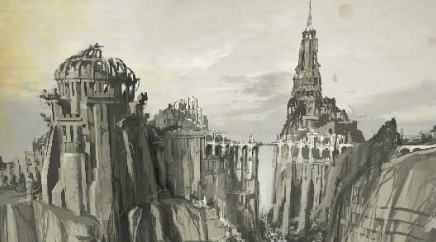
The Tevinter Imperium is created with the crowning of the first Archon. Prior to this event, only scattered fragments are known.
It is believed that Elves existed in the land first and that humans came from elsewhere - though there are many theories about from where that might be, and few historians agree.
Some suggest that humans came from across the ocean as the Qunari did, but if so, there is no record from such a time.
Humans spread across Thedas as various tribes of people known as the Ciriane, the Planacene, the Hacian, and the Alamarri - but it is the Tevinters, centered on the port city of Minrathous, who became ascendant.
History records that elves and humanity were hostile and that Tevinter led the way in aggressive retaliation against the elven city of Arlathan.
The elves responded by retreating from human contact, and Tevinter thus flourished and spread. The first "dreamers" learned the use of lyrium to enter the Fade from elven captives, and these dreamers later became the first of the Imperium's ruling magisters.
500 TE
The western part of the Tevinter rebels form the Anderfels, mainly populated by the Yothandi people.
So, too, does the Imperium prove to have great difficulty in defeating the Ciriane to the south. Internal strife results in many rebellions and a great deal of internal disorder.
620 - 640 TE
The first civil war of the Tevinter is usually cited as when it began to decline markedly from its Golden Age.
The magisters of the various noble houses wield terrible power but still seek more; their competition with each other leads to human sacrifice and demon summoning becomes a regular occurrence.
When two of the largest Tevinter houses do battle to claim the Archon's throne, the Imperium is split almost in two. The resulting war left ruins and battlefields where the magical taint continues to be felt to this day.
Peace is brokered in the Senate to prevent the dissolution of the Imperium, but the nobility continues its oppression of the masses in an effort to achieve supremacy.
780 TE
The Anderfels are reconquered by the Tevinter Imperium.
800 TE
The first effort to free the Old Gods from their underground prisons is undertaken by the most powerful magister lords, who open a gate to the Golden City at the heart of the Fade.
The result is catastrophic, destroying the Golden City and letting the taint into the world, creating the first darkspawn. The Old God Dumat is freed and transformed into the first archdemon.
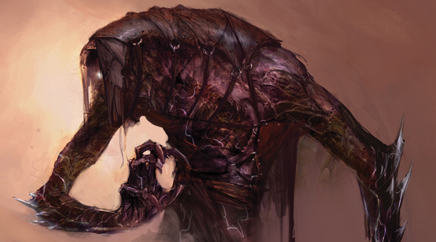
The First Blight begins. The darkspawn attack en masse, concentrating at first on the underground Deep Roads used by the dwarven kingdoms.
As the dwarven kingdoms begin to fall, the darkspawn use the Deep Roads to appear throughout the continent. All of the Imperium is under siege and in a state of chaos.
Finally, the nations of the Imperium begin to settle in for a long war as they become accustomed to the surges of the darkspawn. Communication becomes difficult across the Imperium, but cooperation is paramount.
The people of Tevinter pray to the remaining Old Gods for help against Dumat, but they receive only silence.
The people's faith waning, unrest sees many temples destroyed as the Imperial people begin to turn from the Old Gods, believing themselves betrayed. This dark period lasts for over 200 years.
890 TE
The foundation of the Grey Wardens at Weisshaupt Fortress in the Anderfels, dedicated to wiping out the darkspawn wherever they should rise. The organization is formed primarily of veterans from darkspawn battles.
They maintain communications within the Imperium and strike quickly wherever the darkspawn appear, quickly erecting fortresses everywhere and receiving tithes and supplies from all lands.
992 TE
The Grey Wardens gather the forces of men - both of the Imperium and of the Ciriane and Rivaini - and confront Dumat at the colossal Battle of the Silent Plains in the southern reaches of Tevinter.
Dumat is ultimately destroyed and the darkspawn forces routed. Though the darkspawn are still large in their number and still battle mankind, they are no longer directed by Dumat's power and become scattered. The contracts ensuring the powers and rights of the Grey Wardens date from this year.
1000 TE
Slowly, the last of the darkspawn hordes are defeated. They are forced into the Far Steppes west of the Anderfels and into the Deep Roads.
For the dwarves, the war continues underground, but for humanity, the battle is believed to be over. Weak after centuries of fighting, the Imperium is ripe to be attacked.
1020 TE
A massive horde of barbarians cross the Waking Sea from the south led by the warlord Maferath and Andraste, the Betrothed of the Maker.
Some records claim the barbarians were driven north by the darkspawn, others that Andraste was bringing freedom to the people of the Imperium who had been long oppressed by the depravities of the magisters.
Regardless of the reason, the press of the barbarians into the south is accompanied by massive rebellions that welcome their progress. The southern Imperium begins to crumble, and the Tevinter magisters are forced to unite to combat a threat to their power that is greater than that of the darkspawn.
1025 TE
After the death of Andraste, the barbarian army disperses. The southern Tevinter Imperium breaks away, forming a collection of independent city-states.
Maferath's sons form several lands such as the Kingdom of the Ciriane and the Kingdom of the Planasene. Both of these last less than a century - the Ciriane soon become the land of Orlais while the Planasene form into a loose confederation across the plains called the Free Marches.
The land between the Waking Sea and the Frostbacks is given to the free elves as a homeland and is called the Dales.
The Long Walk begins as elves from across the Imperium begin traveling to the Dales largely on foot and are preyed upon by disease and robbers, causing massive chaos.
A cult devoted to Andraste's teachings spreads rapidly in the south but is largely disorganized and is very unpopular with the temples of the Old Gods.
1040 TE
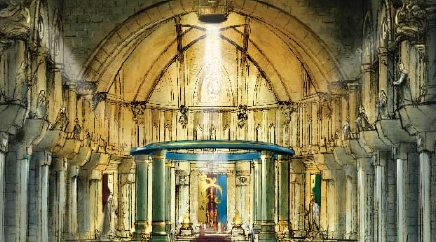
The Chant of Light is created by Andraste's disciples, collecting her tale and her teachings into hymns.
There are numerous versions of the Chant over time, with different interpretations of what Andraste taught about the Maker being prevalent in different regions. These are referred to collectively as "the cults of the Maker."
1050–1120 TE
Rebellion begins in the east as the Rivaini attempt to split off from the Imperium.
The resulting campaigns to stop the rebellion distract the Imperium from its attempts to reconquer the Free Marches and allow the south to gather its strength.
Many of the eastern cities in the Free Marches intervene on the behalf of the Rivaini, and after several losses that culminated in the disastrous Battle of Temerin in 1117 TE, the Imperium finally abandons the east.
1126 TE
Foundation of the Kingdom of Rivain.
1155 TE
The dwarves of Orzammar in the Frostback Mountains close the last of the Deep Roads leading into their kingdom. Within ten years, the dwarven kingdoms of Hormak and Gundaar have fallen to the darkspawn, leaving only Orzammar and Kal-Sharok.
The dwarves of Kal-Sharok never forgive the high king of Orzammar and cut off all contact. Kal-Sharok is thought to be lost.
1180 TE
The cults of the Maker spread quickly in the southern lands, resulting in the building of the first great temple in Val Royeaux, which becomes the major center of worship for the new faith.
One of its most fervent followers is the young king of Orlais, Kordillus Drakon. In 1184, Drakon begins a series of holy wars in the name of the Maker, quickly proving himself to be one of the greatest generals in history.
1192 TE
Having conquered several neighboring city-states and forcing the submission of others to his overlordship, Kordillus Drakon is crowned in Val Royeaux as emperor.
His ambitions to spread farther north into the Free Marches are confounded by constant pressures from the Dales to the east, so Emperor Drakon formalizes the Maker's cult into the Chantry and commands that missionaries be sent forth into the other lands.
1195 TE or 1:1 Divine (1st year of the 1st Divine Age)
The first Divine of the Chantry, Justinia I, is instated at Val Royeaux.
The free use of magic is declared illegal in Orlais except by those mages operating under the direct auspices of the Chantry.
1:5 Divine
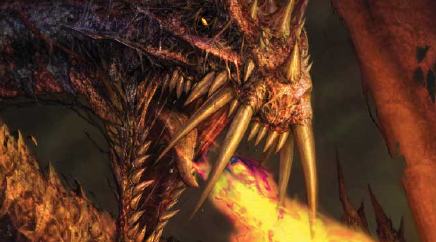
Zazikel awakens and the Second Blight begins, with darkspawn slaughtering the entire city of Nordbotten before the Grey Wardens finally get the word out.
Now, rather than the darkspawn coming primarily from the west, they come out of the mountains in all corners of the continent. Once again, humankind is launched into a desperate battle for its survival over the course of the next 100 years.
The Tevinter Imperium abandons the Anderfels and attempts to protect itself, a betrayal that is remembered by the Orth even to this day.
The Free Marches and Orlais are hard-pressed to defend themselves, but the Grey Wardens and the powerful armies under the command of the brilliant Emperor Drakon make the difference.
In several engagements, including the hard-fought victory at the Battle of Cumberland in 1:16 Divine, the Orlesians defeat several hordes of darkspawn, and numerous cities are saved.
The Orlesian Empire under Drakon's command expands quickly, as does the influence of the Chantry. Perhaps most significantly, when the Tevinter Imperium is greatly weakened by the Sacking of Minrathous in 1:31 Divine, Emperor Drakon is given the opportunity to expand northward.
Instead, he chooses to swing his armies west and relieve the siege of Weisshaupt in 1:33 Divine. The Grey Wardens are impressed enough to convert to the worship of the Chantry, and together the Grey Wardens and Drakon save the badly weakened nation of Anderfels from destruction, bringing it to a devout worship of the Maker that continues to this day.
Throughout this entire time, the elves of the Dales remain neutral and unhelpful. When the city of Montsimmard is nearly destroyed by the darkspawn in 1:25 Divine as the elven army watched from nearby, the people of Orlais bristled against the elves.
1:45 Divine
Emperor Drakon perishes from old age in Val Chevin. His empire, forming the majority of the western Free Marches and all of the Anderfels, does not survive his death.
His successor, Kordillus II, doesn't possess the political savvy of his father, and the Anderfels declare its independence 20 years after the death of Kordillus I.
Over the next 200 years, the empire of Orlais steadily loses territory until it eventually stabilizes at its modern-day borders.
However, over the next 50 years, the Chantry continues to spread rapidly, aided by the Grey Wardens as the Blight winds down.
The Chantry spreads east into the Free Marches and Antiva and even north into the Tevinter Empire, though there it is largely resisted, as the Chantry stands in direct opposition to the power (albeit waning) of the sorcery-using nobility.
1:95 Divine
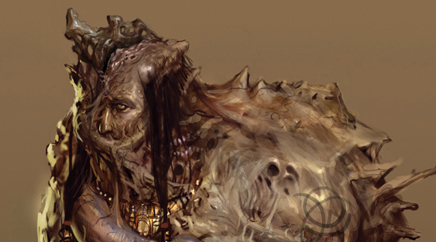
The last battle of the Second Blight is fought at Starkhaven, with the human army being led by the Grey Wardens and winning a resounding victory after Zazikel is finally destroyed and the darkspawn routed.
The period that follows is known as the Rebuilding: a time when trade, culture, and religion become paramount across most of the human lands.
1:99 Divine
The Divine Age ends, the Glory Age is named, and with it predictions of a rebirth after the end of the terrible Blight.
2:5 Glory
Increasing hostility between elves and man result in numerous border skirmishes between the Dales and Orlais.
Finally, in 2:9 Glory, elven forces attack the Orlesian town of Red Crossing and quickly take it over. The atrocities they are said to have been committed there against the humans of the town and the Chantry enraged humans across the land.
Orlais immediately went to war with the Dales but was initially surprised by the ferocity of the elven response. A quick Orlesian victory was not going to happen.
2:10 Glory
With elven forces having captured Montsimmard and marching on the doorstep of Val Royeaux, the Chantry calls for a holy war against the elves.
This becomes known as the Exalted March of the Dales. While the elves eventually sack Val Royeaux and push well into human lands, Halamshiral is conquered and the elves are completely crushed by 2:20 Glory.
The lands of the Dales come under Orlesian control, with elven settlements being uprooted and worship of the elven gods forbidden.
The elves are forced to either live with humankind and under their rules or wander as homeless vagabonds.
2:15–2:45 Glory
The rise of Starkhaven prompts its king, Fyruss, to attempt to unite the Free Marches under his banner and build his own empire.
In the end, Fyruss is betrayed by his Tevinter allies, and Starkhaven is conquered by the Tevinter Imperium until its recapture during the First Exalted March in 2:80 Glory.
Antivan cities to the north also unite under a common banner in 2:33 Glory to defend themselves against Fyruss's advance. By the time of his death, Fyruss's name is equated with that of prideful folly.
2:99 Glory
The end of the Glory Age. The Grand Cathedral in Val Royeaux is completed, its two main towers visible from everywhere in the city and from miles around. The Towers Age is named.
3:10 Towers:
The Old God Toth awakens, and the Third Blight erupts in the central lands of Thedas with darkspawn coming in greater numbers than ever before.
Darkspawn swarm the Tevinter cities of Marnas Pell and Vyrantium as well as the Orlesian cities of Arlesans and Montsimmard.
The Grey Wardens in both of these countries are able to quickly organize a defense, and despite heavy losses in the besieged cities, the darkspawn are pushed back.
3:18 Towers
Darkspawn ravage the Free Marches, attacking cities along the Minanter River. At first, the Orlesians and Tevinter do nothing, but constant pressure from the Grey Wardens in Weisshaupt convinces both nations to send aid to the beleaguered city-states.
3:25 Towers
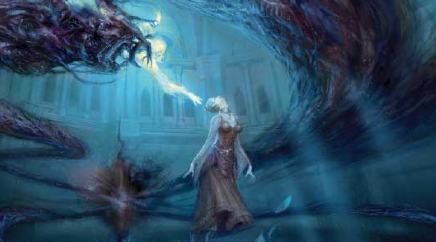
The armies of Orlais and Tevinter meet in Hunter Fell and join the Grey Wardens in the last battle of the Third Blight.
Toth is destroyed, and the darkspawn are slaughtered in one of the bloodiest battles in history. The darkspawn carcasses are piled into mounds as high as 100 feet and then burned.
The people of the Free Marches will not soon forget the image of the burning darkspawn. Their goodwill is quickly crushed by the victorious armies as they decide to occupy the territories liberated from the darkspawn.
Orlais takes Nevarra, while Tevinter takes Hunter Fell. These holdings don't last long, with Nevarra achieving independence in 3:65 Towers and Hunter Fell breaking away from Tevinter in 3:49 Towers.
3:87 Towers
After many years of argument, the Schism splits the Chantry as the Imperial Chantry within Tevinter elects their own Divine, a male mage, at the Minrathous Cathedral.
The Imperial Chantry had always taken a more moderate view on magic and argued that mages should be allowed to rule so long as blood magic remained banned.
They also argued that Andraste was not of divine origin but rather was a mortal prophet with considerable magical talent - and they argued that her ascension to the Maker's side did not make her divine, even if she is a symbol of hope.
Both these arguments did not sit well with the rest of the Chantry. As the Val Royeaux Divine took measures to restrict the power of the Circle of Magi within Tevinter, the Imperial Chantry took action.
The Minrathous Divine is referred to as the "Black Divine" by most, and Chantry propaganda stirs popular sentiment against Tevinter and the Circle of Magi.
3:99 Towers
The death of the Divine Joyous II in Val Royeaux is celebrated in Minrathous and is declared a holiday by the Imperial Divine. The Black Age is named as the Chantry calls for retribution against the false Divine of the north.
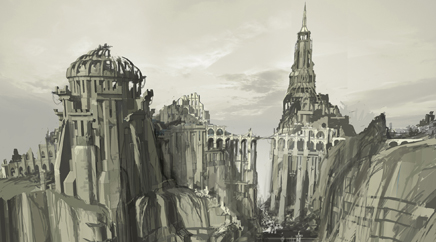
4:40 Black–5:10 Exalted
The Chantry declare a series of four Exalted Marches to destroy the "heathens" within the Tevinter Imperium.
All four times, large armies are gathered from around the Chantry's domains, and an assault is launched deep into Tevinter. Every time, however, the Exalted March falls just short of its goal of conquering Minrathous.
In the end, the Exalted Marches serve simply to cement the separation between Minrathous and Val Royeaux. The Imperial Chantry starts to form its own dogma and policies, and the groundswell of mages fleeing from southern lands into Tevinter bolsters the empire's waning power.
5:12 Exalted
The Exalted Marches come to an end with the awakening of Andoral and the rise of the Fourth Blight.
Darkspawn appear in great numbers in the northeast and northwest of the continent. The country of Antiva is overrun and its entire ruling family slaughtered.
The darkspawn then pour into the Free Marches and Rivain. The Blight rises in the Anderfels as well, and the capital city of Hossberg comes under siege. Orlais and the Tevinter Imperium are attacked by fewer numbers and are able to drive the darkspawn back into the depths of the Deep Roads.
Despite their success, Tevinter refuses to send any aid to the Free Marches or the Anderfels, while Orlais sends only a token force.
5:20 Exalted
The Grey Warden, Garahel, leads an army of Wardens and Anders to the city of Hossberg and breaks the siege. Garahel then gathers Wardens from Orlais and the Anderfels and marches to Starkhaven.
At Starkhaven, Garahel organizes an alliance between the minor kings and teyrns of the Free Marches. A united army marches north, led under the banner of the Grey Wardens.
Antiva is freed from the darkspawn during the infamous battle in 5:24 Exalted at the city of Ayesleigh, where Garahel dies after defeating the archdemon Andoral in combat.
So many darkspawn are slaughtered that it is considered certain that they will never return.
That the Blight continues to be felt underground by the dwarves of Orzammar is largely ignored by most except the Grey Wardens. Most are eager for the war to end and for regular trade to begin.
5:37 Exalted
The first Van Markham king of Nevarra, Tylus, is crowned after having claimed to be a descendant of Drakon's son, killed in Cumberland.
Being a hero of the recent Blight, Tylus is able to stir nationalistic feelings in the western Free Marches against the growing power of Orlais. He proves his military might by winning several major battles against the Orlesians, establishing Nevarra as a new, growing power.
5:42 Exalted
With the crowning of King Calenhad in Denerim, the various warring factions of Ferelden are at last united under a single banner.
What had always been considered a land of wild, nomadic barbarians was finally a nation in its own right, though considered primitive and backwater by most.
5:99 Exalted
The Exalted Age ends, and with the recent assassination of Queen Madrigal of Antiva (deep within the forest during a hunt, she is found with four steel swords plunged into her chest, the work suspected to have been done by the mysterious Crow assassins), the Steel Age is named.
6:30 Steel
The Qunari land in Par Vollen and conquer it quickly, though word of that does not reach the continent until the Qunari ships begin to land en masse in Seheron and northern Rivain in 6:32 Steel.
The First Qunari War begins and lasts for most of the century. The Qunari's initial advances are great:
6:42 Steel
The Qunari have conquered much of the Tevinter Imperium, Rivain, and Antiva and begin to assault the Free Marches. Only Minrathous itself remains besieged but unconquered in the north.
6:85 Steel
The humans have organized themselves and pushed back hard enough that massive rebellions in Tevinter manage to free the Imperium, and the Qunari lines begin to crumble.
7:23 Storm
The Qunari are pushed back to Seheron and Rivain, but they are well entrenched. The Battle of the Nocen Sea is the largest naval engagement in history and results in a stalemate and the destruction of many of the ships on both sides. Exhausted, an impasse begins.
7:25–7:85 Storm
The New Exalted Marches are declared repeatedly by both the Imperial Chantry (to retake Seheron and the eastern city of Qarinus) and the Chantry (to retake Rivain).
In total, three major Exalted Marches occur with only the second in 7:52 Storm being a total disaster (with the Qunari capturing much of Antiva). By the end of the Third New Exalted March in 7:84 Storm, the Qunari had been pushed back to only the city of Kont-aar in northern Rivain and Par Vollen.
By the end of the last Exalted March, rebuilding all the destruction that had been caused was considered more important than trying to dislodge the Qunari from Kont-aar once again. A meeting between envoys of most of the human lands (except for Tevinter) and the Qunari at Llomerryn results in the signing of the Llomerryn Accord in 7:84 Storm and peace being declared.
There is no peace between Tevinter and the Qunari, though skirmishes are few while the Qunari pull back to Par Vollen and rebuild.
7:99 Storm
With the end of the Storm Age, the birth of twin boys to Emperor Etienne I of Orlais is declared an omen by the Chantry.
A long period of childlessness and fears of a civil war on the emperor's death dissipates with the onset of the Blessed Age, heralded as an age of bounty and prosperity.
8:24 Blessed
Orlais invades and conquers Ferelden, sending a young King Brandel into hiding. Ferelden is assimilated into the Orlesian Empire, though a rebel force led by the king continues to hound Orlesian forces.
8:55 Blessed
War between the Qunari and the Tevinter Imperium continues as the Qunari land on Seheron and conquer it handily within three years.
Tevinter is left on its own to fight its war with the Qunari, though the peace between the Qunari and other lands is considered shaky. Several attempts by the Qunari to land on the continent and attack Tevinter directly are repulsed.
8:70 Blessed
A war between Nevarra and Orlais over the control of the western hills around Perendale results in Nevarran victory. However, Orlais proceeds to sow dissent and rebellion among the locals in Perendale, who resent Nevarran rule.
8:99 Blessed
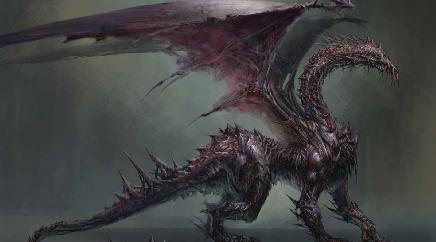
The previous several years have seen two dragon flights ranging out of the Frostback and Orkney Mountains, even though it was thought that dragons had been hunted to extinction by Nevarran dragon hunters during the Steel Age.
The dragons devastate the countrysides in Orlais and Nevarra, and all attempts to slay them end in disaster.
Despite the devastation, some see the return of dragons to Thedas as a glorious sign - Chantry scholars, however, claim that this is the worst of omens. As the Blessed Age draws to a close, they name the Dragon Age, saying that it will be an age of violence and upheaval.
9:00 Dragon
Led by the young King Maric, Ferelden successfully rebels and throws off Orlesian rule. Ferelden and Orlais officially make peace in 9:20 after the ascension of Empress Celene to the Orlesian throne.
9:12 Dragon
Thought to have been long lost to the darkspawn, the dwarven city of Kal-Sharok in the Hunterhorn Mountains is rediscovered. The dwarves there are resentful of Orzammar and refuse to bow to the dwarven king's authority.
9:30 Dragon
Modern-day.