
Dragon Age: Origins Guide Essentials The Classes
The Rogue: Specializations
Specializations
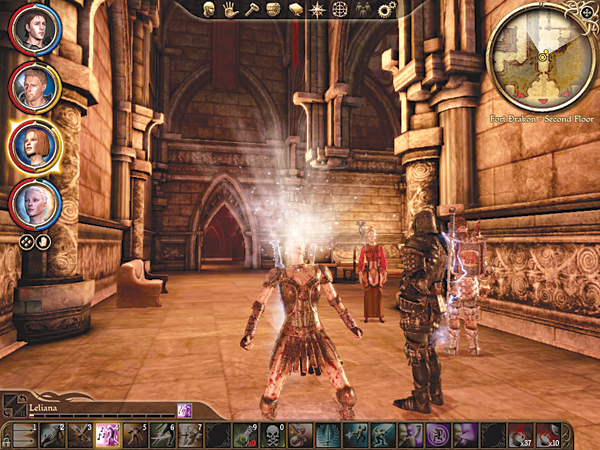
Each class has two specializations (out of four) that they can learn during the game. Your first specialization can be learned at level 7; your second at level 14.
Most companions can teach a specialization, though your approval rating must be high enough for the companion to want to teach you. Leliana, for example, can teach the rogue's bard specialization.
Specializations are difficult to achieve, but very rewarding if you gain one. As long as the specific abilities fit with your play style and character breakdown, a specialization is generally worth spending points in over regular talents.
Definitely experiment with specializations. A DPS rogue could, for example, specialize in ranger to add an extra "companion" to a fight for more support. Here are some suggested play style fits for the four specializations:
Assassin
- Primary: DPS (all-out offense to max out damage)
- Secondary: Stamina replenishment (use Feast of the Fallen to recoup lost stamina)
Bard
- Primary: Enemy control (Captivating Song can corral whole crowds)
- Secondary: Party buffer (replenish party mana/stamina or augment offense/defense)
Duelist
- Primary: Balanced DPS (excellent offense with a touch of defense)
- Secondary: Crit-happy (reach Pinpoint Strike for multiple critical successes in a row)
Ranger
- Primary: Pet lover (summon beasties for party support)
- Secondary: Off-tank (summoned creatures tank for you)
Rogue Specializations
Assassin
Learned From: Zevran (Companion), Alarith's Store (Denerim, after Landsmeet starts)
|
Talent Name |
Prerequisite Level |
Description |
Cost (mana/stamina) |
Upkeep (mana/stamina) |
Fatigue (% mana/stamina) |
Ranged |
Cooldown (sec.) |
Area of Effect Radius (ft.) |
|---|---|---|---|---|---|---|---|---|
|
Mark of Death |
7 |
The assassin marks a target, revealing weaknesses that others can exploit. All attacks against a marked target deal additional damage. |
40 |
0 |
0 |
Yes |
60 |
0 |
|
Exploit Weakness |
12 |
A keen eye and a killer instinct help the assassin exploit a target's weak points. During a successful backstab attack, the assassin gains additional damage based on cunning. |
0 |
0 |
0 |
No |
0 |
0 |
|
Lacerate |
14 |
Whenever a backstab deals enough damage, the assassin's foe is riddled with bleeding wounds that inflict additional damage for a short time. |
30 |
60 |
0 |
No |
60 |
0 |
|
Feast of the Fallen |
16 |
The assassin thrives on the moment of death. Stamina is partially restored whenever the assassin fells an opponent with a backstab. |
0 |
0 |
0 |
No |
0 |
0 |
Bard
Learned From: Leliana (Companion), Alimar (Orzammar)
|
Talent Name |
Prerequisite Level |
Description |
Cost (mana/stamina) |
Upkeep (mana/stamina) |
Fatigue (% mana/stamina) |
Ranged |
Cooldown (sec.) |
Area of Effect Radius (ft.) |
|---|---|---|---|---|---|---|---|---|
|
Song of Valor |
7 |
The bard sings an ancient tale of valorous heroes, granting the party bonuses to mana or stamina regeneration at a rate affected by the bard's cunning. The bard can only sing one song at a time. |
0 |
50 |
5 |
No |
30 |
10 |
|
Distraction |
8 |
The bard's performance, replete with dizzying flourishes, is designed to distract and confuse. The target forgets who it was fighting and becomes disoriented unless it passes a mental resistance check. |
40 |
0 |
0 |
Yes |
30 |
0 |
|
Song of Courage |
10 |
The bard launches into an epic song of the party's exploits, granting them bonuses to attack, damage, and critical chance. The size of the bonuses are affected by the bard's cunning. The bard can only sing one song at a time. |
0 |
50 |
5 |
No |
30 |
10 |
|
Captivating Song |
12 |
The bard begins an entrancing song that stuns hostile targets nearby unless they pass a mental resistance check every few seconds. Continuing the song does not drain stamina, but the bard cannot move or take any other action while singing. |
0 |
60 |
5 |
No |
30 |
4 |
Duelist
Learned From: Isabela (The Pearl in Denerim)
|
Talent Name |
Prerequisite Level |
Description |
Cost (mana/stamina) |
Upkeep (mana/stamina) |
Fatigue (% mana/stamina) |
Ranged |
Cooldown (sec.) |
Area of Effect Radius (ft.) |
|---|---|---|---|---|---|---|---|---|
|
Dueling |
7 |
The duelist focuses on proper form, gaining a bonus to attack while the mode is active. Keen Defense adds a bonus to defense while in this mode. |
0 |
30 |
5 |
No |
5 |
0 |
|
Upset Balance |
12 |
The duelist executes a quick move that throws the opponent off balance, imposing penalties to movement speed and defense unless the target passes a physical resistance check. |
25 |
0 |
0 |
No |
15 |
0 |
|
Keen Defense |
14 |
The duelist has an uncanny knack for simply not being there when the enemy attacks, receiving a bonus to defense. |
0 |
0 |
0 |
No |
0 |
0 |
|
Pinpoint Strike |
16 |
The duelist has learned to strike the vitals of an enemy with pinpoint accuracy and from any angle. For a moderate duration, all successful attacks generate automatic critical hits. |
60 |
0 |
0 |
No |
180 |
0 |
Ranger
Learned From: Bodahn's Wares (Party Camp)
|
Talent Name |
Prerequisite Level |
Description |
Cost (mana/stamina) |
Upkeep (mana/stamina) |
Fatigue (% mana/stamina) |
Ranged |
Cooldown (sec.) |
Area of Effect Radius (ft.) |
|---|---|---|---|---|---|---|---|---|
|
Summon Wolf |
7 |
The ranger calls a great forest wolf to fight alongside the party. |
0 |
50 |
5 |
No |
60 |
0 |
|
Summon Bear |
8 |
The ranger calls a powerful bear to fight alongside the party. |
0 |
50 |
5 |
No |
90 |
0 |
|
Summon Spider |
10 |
The ranger calls a large spider to fight alongside the party. |
0 |
50 |
5 |
No |
120 |
0 |
|
Master Ranger |
12 |
The ranger has learned to summon stronger companion animals. Animals summoned by a Master Ranger are significantly more powerful in combat than their normal counterparts. |
0 |
0 |
0 |
No |
0 |
0 |
Party Responsibilities
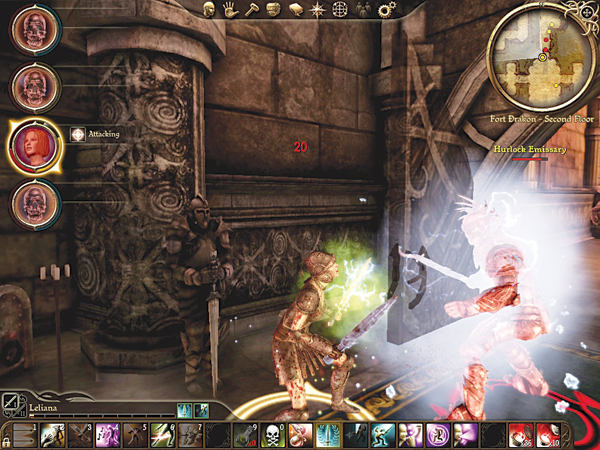
Are you the party's damage-dealer or scout? If you're DPS-focused, your primary responsibility is dealing melee or ranged damage.
That generally means stocking up on offensive talents and gear. If you're picking a lot of locks and stealthing around, spread more points to the non-combat talents; think balance over cutthroat combat expertise.
All rogues need to be aware of threat and avoid pulling too much at once. Learn to time your attacks so you don't draw too much threat but still deal significant damage to the enemy.
If your rogue is the main PC, the other three companions should fill in talents around you for a well-balanced party. If you're building up a companion rogue, look to fill in where the party is lacking. Not dealing enough damage?
Crank up the offense. Want to avoid more traps and earn more treasure? Make sure you build up those nimble-fingered talents.
In the final party configuration, your PC should play whatever role you have the most fun with while the other three companions add the components necessary to maximize your combat efficiency.
The rogue ranks very well in terms of armor, weapons, and all-purpose talents. Those talents and gear enable you to surprise your foes with killer damage, slip in and out of combat for great defense, and deal with non-combat dungeon obstacles (traps, locks) that other companions cannot.
From whirlwind flair in a sea of armor to steady precision with lockpick tools, the rogue covers everything that warriors and mages can't—all with a wink and smile.