
Dragon Age: Origins Guide Essentials Traveler's Guide
Elsewhere
Race: Dwarves
The Children of the Stone, dwarves are a stout, bearded race that are, on average, a little shorter than humans but generally much broader and thicker, and they possess a comparatively strong constitution. Sickness is almost unknown among the dwarven folk, but their proximity to the darkspawn means their population is dwindling—the huge number of deaths in battle, combined with the relatively low fertility means the population of dwarves has been falling steadily for nearly a thousand years.
As a people, the dwarves tend to have a single-minded dedication that can be both their weakness and their strength. Their ability to dedicate themselves to a cause has allowed them to survive in conditions that would kill any other race and even develop a level of technology that far surpasses anything else in Thedas (the dwarves use clockwork and limited steam power, and they have a society that is just barely preindustrial). Although, their refusal to change the traditions that have sustained them have stagnated their society into a rigid caste system, where everything a dwarf can be or expect from life is determined at birth. The worst victims of this system are the casteless, dwarves who have lost their legal standing in society by committing a crime or being the descendant of criminals, or by voluntarily abandoning their caste to live on the surface. These unfortunates are not allowed to hold any job, nor receive any legal protections, and they scrabble out a miserable existence in pathetic shanty towns on the outskirts of proper society.
Legends among humans say that dwarves can see in pitch-blackness. This is not really true, and a dwarf would be the first to scoff at such tales. They possess an ability to see better in the dark than most, but they do need some light. But dwarves have not entirely escaped the effects of living underground. The walls of the caves where they built their city are laced with lyrium, the magical ore that is the source of all magic in Thedas. This has given dwarves a natural resistance to magic, which both protects them from the harmful effects of raw lyrium and makes it impossible for them to cast spells. Dwarves who live on the surface for a long time or who are born there appear to lose their protective immunity, though their inability to use magic appears to persist (however, it may simply be that no surface dwarf has yet tried).
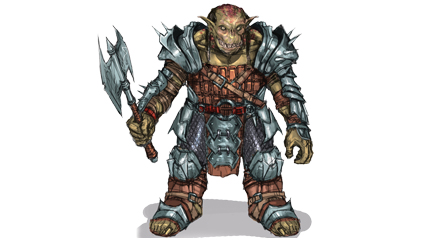
Dwarves once existed in great thaigs present under every major mountain range, their lands connected by the Deep Roads, but the relentless onslaught of the darkspawn forced the last of the dwarven thaigs under the Frostback Mountains to seal themselves off from the rest of their kind just to survive. In the city of Orzammar, the last of the dwarves fight a daily battle against the darkspawn, a battle they will inevitably lose, as the darkspawn seem limitless in their numbers and the dwarves are not.
In the meantime, the dwarves continue to proudly uphold their culture and engage in mining in their vast underground city. They worship their ancestors, and every dwarf devotes his life to the service of his caste and to achieving the same status as his ancestors through his deeds as a warrior, a merchant, or a craftsman. They trade with the surface races, and a growing number of dwarves have begun to live on the surface and play a key role in the survival of the race, even if their underground brethren think them the lesser for it.
The Memories tell us that once our lands were numerous and extended far beyond the Frostback Mountains. The thaigs were once almost beyond counting. Kal Sharok was the capital then, home to all noble houses, and Orzammar was simply home to the Miner and Smith castes.
It was with the coming of the Tevinter Imperium that things began to change. Paragon Garal moved the seat of power to Orzammar to more closely oversee the trade that began with the surface. It seemed that our people were entering a new age of prosperity. We taught such concepts as commerce and coinage to the humans, and in return they provided us with a wealth of things we had never possessed in the deep: grains and wood, to name two.
The Memories hold no explanations for the coming of the darkspawn, only questions. One moment there was no such thing as a darkspawn, and the next there was. The darkspawn poured into the Deep Roads like smoke, and the Warrior Caste struggled to hold them back. Countless thaigs were lost in that First Blight. But as ever, in our time of need, a Paragon arose. Paragon Aeducan led the defenses of Orzammar, and we were saved from utter annihilation.
The cost of victory, however, was great. The Deep Roads were sealed to hold back the darkspawn, cutting off thaigs and whole cities forever. Only Orzammar remained, the last bastion of an ancient empire that had once sprawled over all of the deep of Thedas. The dwarves had been brought low, but we had survived.
—From Orzammar as a Kingdom, as told by Shaper Vortag.
Race: Qunari
The Qunari are a large and imposing race, once having been powerful barbarians that were dominated by their berserker rages. Then came the Qun, a philosophy and religion that taught them how to control their rages and how to live and become a superior, enlightened race. They tamed their minds and turned their society into a model of efficiency and order in which no deviant beliefs are allowed and all must submit to the higher authority of the Qun.
Part 1: Arrival of the Giants
While historians often site the darkspawn as the greatest single threat to Thedas, most people outside of the dwarven lands would say they are a more remote threat than the invaders called the Qunari. There has not been a Blight in over four centuries, after all, since the hero Garahel defeated the archdemon at the Battle of Ayesleigh. Over 100 years later, in 6:30 Steel, the first Qunari ships were reported off the coast of Par Vollen in the far north, marking the beginning of a new age of warfare.
Gold-skinned giants said to hail from an eastern land across the Boeric Ocean, the Qunari are a mystery to most people. To some, they are hated conquerors whose deadly skill at combat and destructive technology nearly brought the civilized world to its knees. To others they are heathens, worshippers of a strange religion who seek to spread it to "lesser" races by force. Still to others, such as in the southern lands of Ferelden, they are a legend, strange creatures from the far north who have been seen only on rare occasion since the peace began.
Almost before the rest of Thedas had heard of the Qunari's appearance in Par Vollen, they were invading the mainland, striking first into Rivain and then Seheron. The defenders of those lands were hardly a match for Qunari discipline. Their might, the likes of which our ancestors had never seen before, brought troops to their knees. Qunari warriors in glittering steel armor carved through the defenders with ease. History calls this the First Qunari War, but it was mostly a one-sided bloodbath, with the Qunari advancing far into Tevinter within ten years.
It was a dark time for Thedas, with the nations of mankind being forced to once again unite against a common enemy—this one intending not to destroy, as the darkspawn did, but to conquer a land they saw as being in dire need of enlightenment. The Qunari proved themselves to be the most frightening sort of opponent of all: religious zealots.
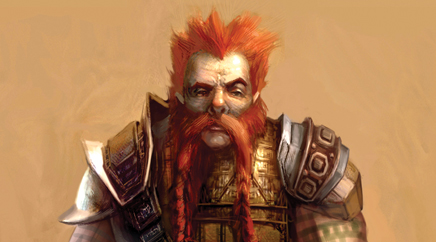
Part 2: The Golden Masters
Stories of how the Qunari treated the lands they occupied (kabethari being the term for those lands and supposedly meaning "those who need to be taught") are varied and difficult to verify.
Some claim that the Qunari were guilty of terrorizing the populace. They divided children from their families and sent adults to "learning camps" for indoctrination in their religious philosophies. Those who refused to obey were forced into indentured servitude or sent to mines or construction camps to labor, often until they perished of sheer exhaustion or starvation. Those who resisted were slain, instantly and without mercy. Many who obeyed their new masters, however, claim that they were treated well and even given a large amount of trust provided they followed the strict Qunari codes of conduct and laws.
For every tale of suffering recorded, there was another that tells of enlightenment from something called the "Qun." This is either a philosophical code or a written text, perhaps both, and some claim it may even be akin to the Qunari god. Unlike the Chant of Light, it governs all aspects of Qunari life, both secular and spiritual, and the Qunari are devoted to following its tenets strictly and without question.
Those who recorded their interactions with the golden masters tell of mighty creatures, who were a head taller than a man, with frighteningly calm demeanors and a sort of sparkling fire behind their eyes. Some even said they have a certain kindness to them or a conspicuous lack of cruelty, and one Seheran who converted reported pity for those who had not, as if the conquerors' religion led to a sort of self-discovery. "For all my life I followed the Maker wherever his path may lead me," he writes, "but in the faith of the Qun, I have found the means to travel my own path. If only all my people could understand what it is the Qunari offer us."
It is said that the most complete way to wipe out a people is not with weapons but with books. Thankfully, a world that had known and resisted four Blights would not so easily bow to a foreign aggressor. The New Exalted Marches were about to begin.
Part 3: The New Exalted Marches
Taking their names from the Exalted Marches of the past, the New Exalted Marches were declared by the Chantry in 7:25 Storm after nearly a century of internecine warfare throughout northern Thedas. The Imperial Chantry in Minrathous (the only unoccupied major Tevinter city) marched against Seheron and the occupied eastern territories of the Imperium, and the Divine in Val Royeaux commanded her templars to lead the armies of the south into Rivain. It was the grandest mobilization of martial power since the Fourth Blight.
The greatest advantage that the Chantry-led forces had against the Qunari was, in fact, the Circle of Magi. For all their technology, the Qunari appeared to harbor a great hatred for all things magical. They possessed mages, but these were little better than animals kept on leashes, and none of the Qunari mages possessed anywhere near the skill that the Circle's mages had. The Chantry responded with lightning and balls of fire, which proved effective indeed.
For all the force that the Qunari armies had brought to bear on the north, they also lacked the sheer numbers of the humans. As each year passed, the Chantry pushed farther and farther into the Qunari lines. Dealing with those of the local populace who had converted to the Qunari religion proved difficult, especially as some of these had lived under the Qun now for generations. The response by many armies was simply to exterminate all those who had converted. Officially, the Chantry denies this, claiming most converts fled north into Rivain and Par Vollen, but the mass graves at Nocen Fields and Marnas Pell indicate otherwise. Indeed, so many were slain at Marnas Pell that the Veil is said to be permanently sundered, the ruins still plagued by restless corpses to this day.
Regardless of how it was done, by 7:84 Storm, the Qunari had been pushed back. Rivain was the only human land that embraced the Qunari religion after being freed, and its rulers attempted to barter a peace. Envoys from most human lands gathered to sign the Llomerryn Accord, and peace was made between the Qunari and all human lands with the exception of the Tevinter Imperium. Even there, however, the Qunari withdrew. Humanity had, with the Maker's will, beat back the invaders and returned to its rightful place as masters of Thedas. It is a shaky peace that has lasted to this very day.
—All excerpts from Tales of the Destruction of Thedas, by Brother Genitivi, Chantry scholar.
Group: The Grey Wardens
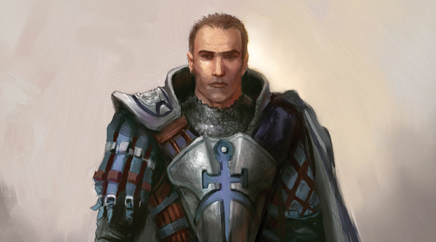
The Grey Wardens are a renowned group of scouts and fearless warriors. This was once an extremely large organization that dedicated itself to the destruction of the darkspawn and the protection of all human lands. They are the most elite and feared of warriors, said to sense the presence of darkspawn and to have greater knowledge of the tactics to fight them than anyone else in Thedas. The nations of humanity once gladly tithed to the Grey Wardens and sent them not only food and equipment, but also a steady stream of new recruits. Once they rode the great white griffons overhead and arrived in glorious numbers wherever the darkspawn threatened.
Now, however, it has been over four centuries since the last Blight, and the order has dwindled in importance. The griffons, the very symbol of the Grey Wardens, have died out, and the nations tithe only grudgingly and often far less than the old agreements say they should. The Wardens number far less than they once did, and even though they are still respected and sometimes even feared for their martial prowess, they are largely thought irrelevant in lands where the Blights have not appeared for centuries. Only in the far-off Anderfels, where the mighty Grey Warden fortress of Weisshaupt still stands, does the order still maintain a powerful political presence. For the rest of Thedas, however, they are legends and little else.
Group: Templars
Often portrayed as stoic and grim, the Order of Templars was created as the martial arm of the Chantry. Armed with the ability to dispel and resist magic in addition to their formidable combat talents, the templars are uniquely qualified to act as both a foil for apostates—mages who refuse to submit to the authority of the Circle—and a first line of defense against the dark powers of blood mages and abominations.
While mages often resent the templars as symbols of the Chantry's control over magic, the people of Thedas see them as saviors and holy warriors, champions of all that is good and armed with enough piety to protect the world from the ravages of foul magic. In reality, the Chantry's militant arm looks first for skilled warriors with unshakable faith in the Maker; a flawless moral center is a secondary concern. Templars must carry out their duty with an emotional distance, and the Order of Templars would rather have soldiers with religious fervor and absolute loyalty than paragons of virtue who might question orders when it comes time to make difficult choices.
The templars' power comes from the substance lyrium, a mineral believed to be the raw element of creation. While mages use lyrium in their arcane spells and rituals, templars ingest the primordial mineral to enhance their abilities to resist and dispel magic. Lyrium use is regulated by the Chantry, but some templars suffer from lyrium addiction, and the mineral can have side effects, including paranoia, obsession, and dementia. Templars knowingly submit themselves to this "treatment" in the service of the Order and the Maker.
It is this sense of ruthless piety that most frightens mages when they get the templars' attention: When the templars are sent to eliminate a possible blood mage, there is no reasoning with them, and if the templars are prepared, the mage's magic is often useless. Driven by their faith, the templars are one of the most feared and respected forces in Thedas.
Group: Bards
In the intrigue-filled courts of Orlais, the bard is something of a curiosity. Minstrels weave tales of spies who masquerade as musicians and troubadours, using their position as skilled entertainers to get close to their targets and extract secrets for their mysterious employers. They are trained to use music to soothe hearts and cloud minds; even in combat, their abilities to inspire allies and distract foes are legendary. Beyond their music, they are masters of dirty fighting, stealth, and larceny. More than one battle has been won through the aid of a cunning bard. Orlesian nobles welcome such entertainers into their homes with full knowledge that any one of them could be a bard. In Orlais, intrigue is a deadly game, and the thrill of outwitting a spy is a notion the Orlesian aristocracy can hardly resist. Unfortunately, when one finally realizes that a true bard has been among them, it is usually far too late.
In other parts of the world, bards are less prominent but no less dangerous. In Ferelden, bards once played fairs and graced the courts of banns and arls, listening for secrets that could be used to sway the fiercely independent nobility. In the ancient Tevinter Imperium, skilled bards find a great deal of work among the mage-led families that rule in the Senate and compete in an age-old cutthroat game for ascendancy. Bards travel any place where secrets have value or where knowledge is power, and everywhere they go, everyday minstrels benefit from their mystique.
Group: Legion of the Dead
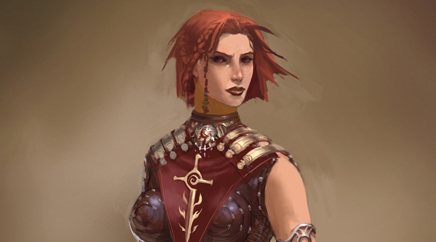
The Legion of the Dead is the most famous dwarven military unit. The Legion accepts anyone into its ranks who is willing to declare him or herself dead, giving up all possessions and ties to previous life. The ritual of their joining being very akin to a funeral, these warriors are, in essence, already dead, and the rest of society treats them as if they have died. This makes them fearless berserker warriors whose fame has extended into human lands as well. Nothing is supposedly more terrifying than the charge of the Legion. Many convicted dwarf criminals join the Legion rather than face exile or loss of their caste. Once in the Legion, all records of that dwarf's past crimes or debts are erased, and the warrior is considered to have died in heroic combat against the darkspawn.
Group: Silent Sisters
The Silent Sisters is a fighting order that exists within the dwarven warrior caste. All female warriors are accepted without question, regardless of their castes, provided they can prove themselves. (Certainly, not all female warriors become Silent Sisters, as they are considered extremists even among women.) These warriors follow in the footsteps of the first female warrior to achieve Paragon status, Astyth the Grey; like her, they cut out their tongues so they may devote themselves more fully and fanatically to the pursuit of unarmed martial prowess. Every Silent Sister keeps the dagger with which she cut out her tongue, though she never uses it as a weapon.
Group: Antivan Crows
Antivans are well known for being good at everything but fighting, so perhaps it is not surprising that Antiva possesses the largest and most infamous guild in Thedas. The House of Crows, as they are known locally, consists of spies, assassins, and thieves—all under the control of a secret council that is said to be comprised of the heads of a small collection of the wealthiest (and even royal) families in Antiva.
The Crows are almost omnipresent in their own nation and are known to appear elsewhere, all identifiable by their unique tattoos (a tradition taken from the Rivaini; some Crows display their tattoos proudly, while others keep them hidden). They are accepted in Antiva as a fact of life, though the government has tried many times to stamp them out. In a way, however, the fame of the Crows protects Antiva as well; it is often said that nations tend to avoid invading Antiva, because while their armies might find little resistance, the leader of those armies and the man who sent them will almost certainly turn up dead. If someone knows the Crows have targeted him for death, he runs; however, targets rarely get far.
Group: Chasind
The Chasind Wilders have lived in the Korcari Wilds since the first wars with the Alamarri drove them southward a millennia ago. According to their own lore, they had always been a forest-dwelling people who adapted quickly to their new home. Game and fish were plentiful in the wetlands, and the Chasind thrived.
For a time, they and the hill-dwelling Avvars were true threats to the northern lowlands. The Tevinter Imperium had arrived and was hard-pressed to keep back the waves of invasions from the south and the west. The fortress of Ostagar was built specifically to watch for Chasind hordes venturing north of the tree line. It was not until the legendary warrior Hafter soundly defeated the Chasind in the first half of the Divine Age that the question of their ability to contest the lowlands was settled permanently.
Today, the Chasind are considered largely peaceful, though their ways are still primitive compared to our own. In the Korcari Wilds, they live in strange-looking huts built on stilts or even built into the great treetops. They paint their faces and are split into small tribes ruled by shamans like those among the Avvars. There are many tales of these shamans having learned their magic from the "Witches of the Wilds," witches who inspire as much terror as they do awe and gratitude even if there is no definitive proof they exist. In particular, the tale of Flemeth, the greatest Witch of the Wilds, is celebrated among all tribes.
While there is no way to know how many Chasind exist in the Wilds today, few travelers who pass through the forests tell of Chasind eking out an existence even in the frozen wastelands of the far south. One can assume that should the Chasind ever organize themselves once more, we might have reason to fear them here in Ferelden. We ignore them at our peril.
—From Ferelden: Folklore and History, by Sister Petrine, Chantry scholar.
Enemies: Darkspawn
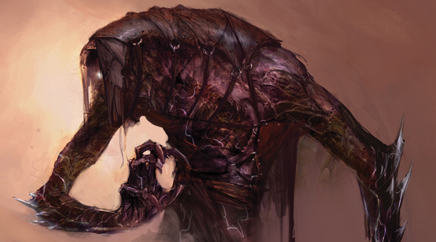
"Darkspawn" is a term that collectively refers to the tainted creatures that dwell underground and have four times spilled out to threaten the existence of all civilized races on the continent. Normally, the darkspawn are disorganized and fight with each other, seldom being seen on the surface except for during raids and small invasions that quickly exhaust themselves, leaving only disease and death in their wake. Several times in history, however, the darkspawn have uncovered one of the ancient high dragons (called "Old Gods" by the Tevinter Imperium) that slumber in the depths of the earth. The dragon is awakened and twisted into a darkspawn creature known as an "archdemon." The archdemon then marshals the darkspawn, pushing them to create a horde that spills onto the surface in a great wave of violence. When this happens, it is known as a Blight, and each of the four Blights has brought humanity to the edge of destruction before its archdemon was defeated and the darkspawn driven back down into their underground caverns.
During a Blight, the land around the center of the event is sucked of moisture, turning everything dry and brown and filling the sky with roiling, black clouds that block the sun and make the environment comfortable for the darkspawn to come forth. This wasteland spreads, and with it spreads disease.
The last Blight ended long ago with so many darkspawn being slaughtered that it seemed certain they could never return in great numbers. Darkspawn occasionally appear on the surface to raid, but this occurs mostly in remote areas and rarely at that. They have become the bogeymen who frighten the common man but often are considered more of a legend, since few people have ever seen one. The creatures are more prevalent in the far-off Anderfels and in dwarven Orzammar, where they are a very real and immediate threat. Outside of those areas, the only people who give the darkspawn threat credence are the Grey Wardens, an organization of dedicated warriors sworn to protect the human lands from darkspawn infestation. Their organization has dwindled since the fourth Blight, however, and while they valiantly prepare for the inevitable, they are no longer equipped to fight the legion of darkness that will surely come.
*** The First Blight ***
Part 1: The Second Sin
Thedas is a land filled with fierce diversity, from the assassin-princes of Antiva to the faded griffons of the Anderfels, but in my travels, I have found one tale that unites the people of this land. It is a story of pride and damnation, and though the telling differs, the essence of the tale itself remains the same.
At the height of its power, the Tevinter Imperium stretched over much of Thedas, uniting the known world under the rule of the tyrannical magisters. It is said that the magisters were given the knowledge of blood magic by the Old Gods they worshipped, and they used this forbidden power to cement their rule. The blood of elven slaves and humans alike ran down Imperial altars to fuel magister greed, the tales of their excesses so horrifying that one should be most grateful that blood magic is a practice prohibited today.
But all that stands tall must eventually fall. Perhaps they foresaw their ruin, or perhaps their pride knew no bounds, but whatever the reason, the magisters dared to open a magical portal into the Golden City at the heart of the Fade. They sought to usurp the Maker's throne, long left unattended in the Golden City after the Maker turned his back on his creations. They would storm heaven itself with their power and become as gods. This is what the Chantry, in its oft-exercised tendency to understate, refers to as the Second Sin.
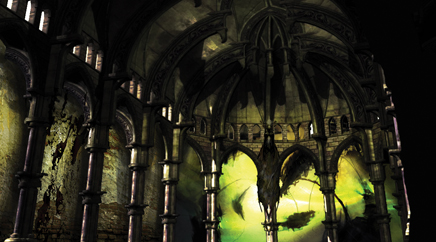
According to most versions of the tale, the magisters did indeed reach the Golden City and walked in the home of the Maker, where no living being before them had dared to tread. But humanity is not meant to walk in heaven. The magisters were wicked with pride and other sins, and their presence tainted the Golden City. What once was a perfect, holy citadel became a twisted home of darkness and nightmares. The magisters were thrown back through their gateway and cursed for their treachery. As the Golden City had been tainted, so were the magisters twisted and transformed into things of darkness—the very first of the darkspawn. The Golden City, once a shining beacon at the heart of the Fade, became the Black City, a reminder of all that man's pride has cost.
Part 2: Dumat Rises
People today have little concept of the consequences of the Second Sin. Oh, believe me when I say that when asked, pious, Chantry-going folk will curse the use of foul magic, spitting and snapping their fingers, but none live today who actually remember the horror that was unleashed so very long ago. Whatever records might have existed regrettably did not survive the chaos and ignorance that was to follow. We have only the tales of survivors handed down through the murky ages and the dogma of the Chantry to instruct us, and that is precious little indeed.
I believe I am not understating it when I say that the Second Sin unleashed the bane of all life upon Thedas. The darkspawn are more virulent than the worst plague, a heartless force of nature that came into our world like an ill wind. We know from accounts of later Blights (as these darkspawn invasions came to be called; never a more appropriate name has existed) that the darkspawn spread disease and famine wherever they tread. The earth itself is corrupted by their presence, the sky roiling with angry black clouds. I do not exaggerate, my friends, when I say that a mass gathering of darkspawn is an omen of dread cataclysm.
It is said that those cursed magisters who became the first darkspawn scratched at the very earth to find solace in the darkness of the dwarven Deep Roads, and there in the shadows they multiplied. Whether by intelligent design or by some last vestige of worship in their minds, they attempted to locate the Old Gods they had once served. They found what they sought: Dumat—first among the Old Gods, once known as the Dragon of Silence before the Maker imprisoned him and all his brethren beneath the earth for the First Sin—usurping the Maker's place in mankind's heart.
The slumbering dragon awoke, freed from the Maker's prison by his twisted followers, and became corrupted himself. Dumat was transformed into the first archdemon, his great and terrible power given will by a rotting, unholy mind. With the darkspawn horde following, Dumat rose and took wing in the skies once again, bringing destruction—no, ruin—to the world the Maker had created. The Old God had become the eye of a dark storm that would ravage the entire world.
Part 3: The Dwarves Fall
The ancient world during the First Blight was very different from the one we know today. Aside from the civilized rule of the Imperium, humans as a race were largely barbarous and splintered, divided into clans and tribes and squabbling among ourselves for resources. At the same time, deep beneath Thedas's great mountain ranges spanned a dwarven culture as organized and advanced as ours was primitive.
As the darkspawn bubbled up to the surface from their underground lairs, mankind first buckled and then fought back. The armies of Tevinter attempted to face down the multitudes of twisted creatures and the horrid rotting of the land around them, but they could not be everywhere at once. Human history remembers the First Blight as a time of terrible devastation, and those stories are accurate, but in our arrogance, we often forget the price paid by the dwarves in their isolated mountain kingdoms.
The dwarves faced far greater hordes than the humans as the darkspawn challenged them for control of the underground. Despite the might and technology the dwarves brought to bear, the savage darkspawn tore through them, first destroying the more remote thaigs before swallowing up entire kingdoms. Think of it: an entire civilization lost in the space of decades. Compared to the near-genocide that the dwarves faced, what we humans call the First Blight must have seemed a mere skirmish to them. Against the darkspawn, the dwarven lands have always taken on the brunt of the fighting and the majority of the sacrifices.
Four dwarven kingdoms finally managed to combine their might and fight back, and that cooperation saved them. But for the rest of their lands it was too late. The darkspawn had taken the Deep Roads, the majestic underground passages that linked the dwarven lands throughout Thedas. The darkspawn could now attack anywhere on the surface through these tunnels. Humanity simply was not prepared for an onslaught such as this. It was clear that the warfare we knew would not avail us. We had to find a new way to fight.
Thus came our salvation: The Grey Wardens were born.
Part 4: Griffons Take Flight
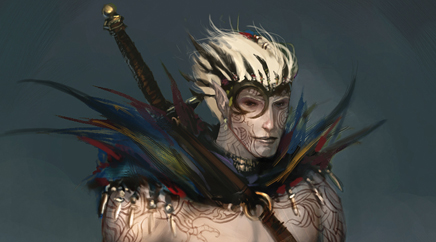
Founded at Weisshaupt Fortress in the Anderfels, the Grey Wardens offered humanity hope in its darkest hour. Veterans of decades of battles with the darkspawn came together, and the best among them pledged to do whatever was necessary to stem the tide of darkness that swept across the land. These great humans, elves, and dwarves pooled their knowledge of the enemy and formed a united front to finally put a stop to the archdemon's rampage.
And stop it they did. Ballads are still told today of the first Grey Warden charge into the waves of darkspawn at the city of Nordbotten, each Warden facing 10, 20 darkspawn at a time. Squadrons of Grey Wardens mounted on their mighty griffons, soaring through the blackened skies and battling the terrible archdemon with spear and spell. Oh, what a sight it must have been!
Incredibly, the Grey Wardens won that first battle. They raised their arms in victory, and suddenly there was hope. The Grey Wardens led the lands of men and the last stalwart defenders of the dwarven halls against the hordes of the archdemon Dumat for the next 100 years, gaining and losing ground but never backing away. They recruited whoever possessed the skill and strength to raise their banner from all over Thedas, making no distinction between elven slave or human nobleman. Finally, nearly two centuries after the first Old God rose from the earth, the Grey Wardens assembled the armies of men and dwarves at the Battle of Silent Fields. It was then that Dumat was finally slain and the First Blight ended.
The Tevinter Imperium would face a new challenge with the coming of the prophet Andraste, and thoughts of the Blight grew distant. With their defeat, the darkspawn were considered no longer a threat, but with the wisdom of hindsight, we all know that conceit proved to be hopeful and foolish indeed. The task of the Grey Wardens was far from over.
—All excerpts from Tales of the Destruction of Thedas, by Brother Genitivi, Chantry scholar.
Religion
History of the Chantry
Part 1: The Imperium in Flames
The First Blight devastated the Tevinter Imperium. Not only had the darkspawn ravaged the countryside, but also Tevinter citizens had to face the fact that their own gods had turned against them. Dumat, the Old God once known as the Dragon of Silence, had risen to silence the world, and despite the people's frenzied pleas for help, the other Old Gods did nothing. The people of the Imperium began to question their faith, punishing their gods for not assisting them by murdering priests and burning temples.
In those days, even after the devastation of the First Blight, the Imperium stretched across the known world. Fringed with barbarian tribes, the Imperium was well prepared for invasions and attacks from without. Fitting, then, that the story of its downfall begins from within. The people of the far northern and eastern reaches of the Imperium rose up against their powerful overlords in rebellion. The Tevinter magisters summoned demons to put down these small rebellions, leaving corpses to burn as examples to all who would dare revolt. The Imperium began to tear itself apart from within, throngs of angry and disillusioned citizens doing what centuries of opposing armies could not. But the magisters were confident in their power, and they could not imagine surviving a Blight only to be destroyed by their own subjects.
Even after the Blight, Tevinter commanded an army larger than that of any other organized nation in Thedas, but that army was scattered and its morale dwindling. The ruin of Tevinter was such that the Alamarri barbarians, who had spread their clans and holds over the wilderness of the Fereldan Valley at the far southeast edge of the Imperium, saw weakness in their enemy and, after an age of oppression, embarked on a campaign to free their own lands and to bring down mighty Tevinter.
The leaders of that blessed campaign were the great barbarian warlord Maferath, and his wife, Andraste. Their dreams and ambitions would change the world forever.
Part 2: A Prophet Born
When the prophet Andraste and her husband, Maferath, arrived at the head of their barbarian horde, southern Tevinter was thrown into chaos. The Imperium had defended against invasions in the past, but now they stood without the protection of their gods, their army was in tatters, and their country was devastated by the Blight. Many felt that the timing of the invasion was yet another of the Maker's miracles in Andraste's campaign to spread his divine word.
Andraste was more than simply the wife of a warlord; after all, she was also the betrothed of the Maker. Enraptured by the melodic sound of her voice as she sang to the heavens for guidance, the Maker appeared to Andraste and proposed that she come with him, leaving the flawed world of humanity. In her wisdom, Andraste pleaded with the Maker to return to his people and create paradise in the world of men. The Maker agreed, but he would do this only if all the world would turn away from the worship of their false gods and accept the Maker's divine commandments.
Armed with the knowledge of the one true god, Andraste began the Exalted March into the weakened Imperium. One of the Maker's commandments—that magic should serve man rather than rule over him—was salve to the souls of the downtrodden of Tevinter who lived under the thumbs of the magisters.
Word of Andraste's Exalted March, of her miracles and military successes, spread far and wide. Those in the Imperium who felt the Old Gods had abandoned them eagerly listened to the words of the Maker. Those throngs of restless citizens who destroyed temples now did so in the name of the Maker and his prophet, Andraste. As Maferath's armies conquered the lands of southern Tevinter, so did Andraste's words conquer hearts.
It is said that the Maker smiled on the world at the Battle of Valarian Fields, in which the forces of Maferath challenged and defeated the greatest army Tevinter could muster. The southern reaches of the mighty Imperium now lay at the mercy of barbarians. Faith in the Maker, bolstered by such miracles, threatened to shake apart the foundations of the Imperium. Of course, the human heart is more powerful than the greatest weapon, and when wounded, it is capable of the blackest of deeds.
Part 3: Andraste Betrayed
It is said that at the Battle of Valarian Fields, Maferath stood and looked out over his armies. He had conquered the southern reaches of the greatest empire the world had ever known and built splintered barbarian clans into a force to be feared. With pride in his heart, he turned to congratulate his men and found that they had turned from him.
Maferath fell to the evil of jealousy. After all that he had done, his wife was the one to receive all the glory. He saw his wife's power and influence and became tired of his place as second husband, below that of the Maker, and his heart swelled with fury. If he had conquered just to have his wife wrested from him by a forgotten god and a legion of faith-hungry rabble, then perhaps this war was not worth the trouble.
Here, history and the Chant of Light grow apart. History tells us that Maferath looked north into the central Imperium and saw nothing but more war against a rapidly regrouping army, and he despaired. The Chant of Light holds that Maferath chafed at his position as a secondary husband beneath the Maker and grew jealous of the glory that Andraste received, even though it was he who led the armies.
Maferath traveled to the Imperial capital of Minrathous to speak with the Archon Hessarian. There he offered up his wife to the Imperium in return for a truce that would end hostilities once and for all. The Archon, eager to put down the voice of the prophet who stirred his own people against him, agreed. Maferath led Andraste into an ambush where she was captured by Imperial agents, signifying an end to her Exalted March.
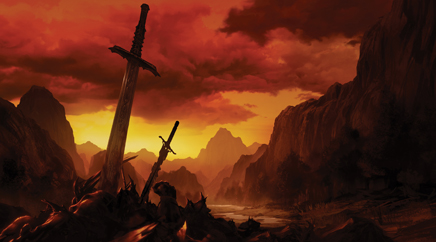
Crowds of loyalists stood in the central square of Minrathous to watch Andraste's execution. By command of the Archon, she was burned at the stake in what the Imperium believed to be the most painful punishment imaginable. According to the Chantry, however, Andraste was instead purified and made whole by the flames, ascending to her life at her Maker's side. By all accounts, there was only silence where her screams should have been. At the sight of the prophet burning, the crowds were filled with a profound guilt, as if they were participating in a great blasphemy. So moving was the moment that the Archon himself drew his sword and thrust it into the prophet's heart, ending her torment and leaving those assembled to consider the weight of what they had seen.
Whereas the execution of Andraste was meant to be a symbol of defeat for the faith of the Maker, in truth, it all but sealed the fate of the worship of the Old Gods and paved the way for the spread of the Maker's chant.
Part 4: The Birth of the Chantry
The crowds present at the death of Andraste were right to feel despair. It is believed that the prophet's execution angered the Maker, and he turned his back on humanity once more, leaving the people of Thedas to suffer in the dark.
In these dark times, mankind scrambled for a light, any light. Some found comfort in demonic cults that promised power and riches in return for worship. Others prayed to the Old Gods for forgiveness, begging the great dragons to return to the world. Still others fell so low as to worship the darkspawn, forming vile cults dedicated to the exaltation of evil in its purest form. It is said that the world wept as its people begged for a savior that would not come.
Andraste's followers, however, did not abandon her teachings after her death. The cult of Andraste rescued her sacred ashes from the courtyard in Minrathous after her execution, stealing them away to a secret temple. The location of that temple has long been lost, but the ashes of Andraste served as a symbol of the enduring nature of the faith in the Maker, that humanity could earn the Maker's forgiveness despite its grievous insult to him.
With time, the cult of Andraste spread and grew, and the Chant of Light took form. The Chant told the tale of Andraste and Maferath, their rise and fall, and it took flight in the hearts of the people. Spread this Chant to the four corners of Thedas, it was said, and it would gain the Maker's attention at last. As the Chant of Light was spread, the cult of Andraste became known as the Andrastian Chantry.
The early Chantry was a thing of both might and right. An early scribe described it as "the gleaming sight of iron blades with the warming sound of holy song." Those who converted to the Chantry's beliefs found it their mission to spread Andraste's word. Thus did the Exalted March begin anew, the Chant of Light spreading across the world—by force, if necessary.
There were many converts, including powerful people in the Imperium and in the city-states of what is now known as Orlais. Such was the power of the Maker's word that the young King Drakon undertook a series of Exalted Marches meant to unite the city-states and create an empire solely dedicated to the Maker's will. The Orlesian Empire became the seat of the Chantry's power, the Grand Cathedral in Val Royeaux the source of the movement that birthed the organized Chantry as we know it today. Drakon, now Emperor Drakon I, created the Circle of Magi, the Order of Templars, and the holy office of the Divine. Many within the Chantry consider him to be as revered a figure as Andraste herself.
The modern Chantry is a thing of reverence and beauty, but it is also a house of necessity, protecting Thedas from powerful forces that would do it harm. Where the Grey Wardens protect the world from Blight, the Chantry protects mankind from itself. Most of all, the Chantry works to earn the Maker's forgiveness, so that one day he will return and transform the world into the paradise it was always meant to be.
—All excerpts from Tales of the Destruction of Thedas by Brother Genitivi, Chantry scholar.
Chantry Dogma
The Chantry focuses on several main messages:
- Magic is a sin of pride—the magisters of the Imperium believed that they were greater than the Maker, and this is what destroyed the Golden City and unleashed the darkspawn upon the world. The darkspawn are mankind's sin made flesh.
- Magic should exist to serve mankind and never rule over him. This is the guiding principle behind the Circle of Magi.
- Andraste was the betrothed of the Maker and the one who convinced the Maker to return to mankind after turning his back on them for worshipping the Old Gods. Andraste's betrayal was what drove him away again, and mankind must regain his favor because of that great sin.
- To earn the Maker's forgiveness, the Chant must be spread to all four corners of the world. Then the Maker will finally hear mankind's call and return. Once the Maker returns to the world, he will make it a paradise. Until then, he watches over mankind, and only those who are worthy will be chosen to stand by his side along with Andraste.
The Chantry is urged by its own dogma to proselytize—forcefully, if need be. The Chantry is very much a militaristic organization and has needed its armed templars to exert control over magical corruption and to root out the heresies that were very common throughout the first centuries of its existence. The teachings of Andraste had many followers prior to the Chantry's official creation, and in many places those teachings took on slightly different forms—different interpretations on the role of magic and on exactly what were the crimes of mankind against the Maker and how (if at all) mankind could earn his forgiveness. These heresies had to be crushed if the Chant was to be one united song. So, too, did the Chantry need to battle different faiths such as the remaining worship of the Old Gods and the pagan beliefs of the elves.
Chantry Structure
The Divine is the titular head of the Chantry, although since the Schism split the Imperial Chantry into its own faction, there are now, in fact, two Divines at any one time. One Divine, informally called the White Divine, is a woman housed in the Grand Cathedral in Val Royeaux. The other, known as the Black Divine, is a man housed in the Argent Spire in Minrathous.
Neither Divine recognizes the existence of the other, and the informal names are considered sacrilegious. Regardless of gender, a Divine is addressed as "Most Holy" or "Your Perfection." Beneath the rank of Divine is the grand cleric. Each grand cleric presides over numerous chantries and represents the highest religious authority for their region. They travel to Val Royeaux when the College of Clerics convenes but otherwise remain where they are assigned. All grand clerics are addressed as "Your Grace."
Beneath the grand cleric is the mother (or, in the Imperial Chantry, the father). If a mother is in charge of a particular chantry, "revered" is appended to her title. These are the priests responsible for administering to the spiritual well-being of their flock. A mother or Revered Mother is addressed as "Your Reverence."
Brothers and sisters form the rank and file of the Chantry and consist of three main groups: affirmed, initiates, and clerics. Affirmed are the lay-brethren of the Chantry, those regular folk who have turned to the Chantry for succor. Often they are people who have led a difficult or irreligious life and have chosen to go into seclusion, or even orphans and similar unfortunates who were raised into the Chantry life. The affirmed take care of the Chantry and are in turn afforded a life of quiet contemplation, no questions asked.
Only those folk who take vows become initiates. These are men and women in training, whether in academic knowledge or the martial skills of a warrior. All initiates receive an academic education, although only those who seek to become templars learn how to fight in addition.
Clerics are the true academics of the Chantry, those men and women who have dedicated themselves to the pursuit of knowledge. They are often found in Chantry archives, sages presiding over libraries of books and arcane knowledge. The most senior of these clerics, placed in charge of such archives, are given the title "elder," although such a rank is still beneath that of mother. All other brothers and sisters are addressed simply by noting their title before their name, such as "Brother Genitivi."
Early Religion in Thedas
The Chantry maintains that the Maker was responsible for the creation of all life and the world from his throne in the Golden City within the heart of the Fade. The Maker has always existed, and the fact that the races of the world once worshipped false gods is why the Maker abandoned them to their fate long ago. It is said that the spirits of the Fade were the Maker's first creations and were flawed and thus cast out from the Maker's grace. These spirits were jealous of the living and whispered to them in their dreams, telling them that they were the true gods and that the living should bow down before them. And the living did so, summoning these spirits through the Veil into our world and worshiping them as idols that walked among them.
These were the Old Gods, spirits powerful enough that it is said they took the form of dragons. Giant, winged gods that ruled over the land. According to the Chantry, their worship was the Original Sin. The Old Gods angered the Maker by claiming to be the creators of the world, lying to the living and supplanting the Maker's true place. When the Maker furiously abandoned the Fade and his ungrateful creations, he cursed those Old Gods who existed in the world of the living, imprisoning them in tombs deep beneath the earth where they would slumber eternally. Thus were the living left to their fate with neither the Maker to watch over them nor the Old Gods to fly overhead.
The Old Gods
Dumat: the Dragon of Silence
Zazikel: the Dragon of Chaos
Toth: the Dragon of Fire
Andoral: the Dragon of Chains
Urthemial: the Dragon of Beauty
Razikale: the Dragon of Mystery
Lusacan: the Dragon of Night
Scholars assume that the Old Gods must indeed have been real at one point, but most agree that they were likely actual dragons—ancient high dragons of a magnitude not known today, and impressive enough to frighten ancient peoples into worshipping them. Some even claim that these dragons slumber as a form of hibernation, not as a result of the Maker's wrath.
Regardless of the truth, legend maintains that even from their underground prisons, the Old Gods were able to whisper into the minds of men. The Archon Thalsian, first of the magisters who claimed to have contacted the Old God Dumat, used the blood magic Dumat taught him to attain incredible power in Tevinter and declare himself the ruler of an empire. In return, he established the first temples worshipping the Old Gods, and the dragons became equated everywhere with Imperial power. Thalsian also created the magister ruling class that has existed to this day, his own pupils forming the noble houses that have ruled over Tevinter for millennia. Mages of the Imperial Chantry today claim it is more likely that blood magic was learned from the elves of Arlathan, but truly there is no direct evidence of either stance being true.
To date, four of the Old Gods are said to have risen as corrupted archdemons: Dumat, the first and most powerful, was slain at the Battle of Silent Fields. Zazikel fell at the Battle of Starkhaven; Toth died at the Battle of Hunter Fell; and Andoral was felled by Garahel, the legendary Grey Warden, at the Battle of Ayesleigh. The archdemons have been identified only after years of argument among scholars, and to this day it is unclear whether the archdemons were truly Old Gods and not simply dragons. All that is known is that the darkspawn hunt for them deep underground. If they are truly the Old Gods, as many scholars believe, then we have only three Blights remaining. When all the Old Gods have risen and been slain, however, what will happen? Will the Blights end forever and humanity earn forgiveness from the Maker at last? The scholars of the Chantry maintain that there were seven Old Gods in total and that their worship by elves and humans did not die out until after the First Blight.
It should be noted that the elves, too, had their own pantheon of gods. Even though these gods were never claimed to have walked in this world or have directly challenged the Maker, their worship is just as heretical and caused the Maker's abandonment just as much. Regardless of the truth behind the Old Gods, it is said that even from their underground prisons, they were able to whisper into the minds of men.
The organized worship of the Old Gods was at its height prior to the beginning of the First Blight when Dumat rose from his prison as the first archdemon. Ancient lore says that it was Dumat who created the first darkspawn and led them against Thedas. The believers felt betrayed that one of their deities could turn against them. However, the Chantry claims that it was the darkspawn who created the archdemon and not the other way around. The tale of the darkspawn's creation is known as the Second Sin: the magisters attempted to open a gate into the Golden City within the Fade, desiring to physically enter and take possession of the Maker's throne. They entered the Golden City successfully and thus tainted it with their sins. The city had been a flawless jewel that was cracked by the flaws of man. It was filled with evil and turned into the Black City (and it is a known fact that a blackened city sits at the heart of the Fade, and paintings indicate that it was within mankind's history that once it was golden and not black), and the magisters were ejected back into the living world as the darkspawn, cursed by the Maker for their pride. Repelled by the light, they hid underground and then searched for their old master. That they then tainted Dumat and unleashed the Blight upon the world was, as the Chantry claims, merely mankind's own sin rising to destroy him.
Worship of the Old Gods waned through to the Second Blight and the subsequent spread of the Chantry. Spots of worship continued in isolated areas even afterward, though during the Exalted March of the Dales, the Chantry actively stamped out this worship. Temples were burned down and destroyed, the cults either dispersed or driven underground. Some temples still stand (especially in Minrathous), though they have been converted to other uses. Most other temples are ruins or have been replaced, and some temples have been built in hidden places that were subsequently destroyed by the Chantry and now lie in shambles, grown over by weeds and forests. Some few cults devoted to those three Old Gods who have not risen as archdemon—primarily Urthemial, the God of Beauty—still exist today, and the dragon still remains Tevinter's most prominent symbol—even if its true original significance has been forgotten.
On Andraste
There was once a tiny fishing village on the Waking Sea that was set upon by the Tevinter Imperium, which enslaved the villagers to be sold in the markets of Minrathous, leaving behind only the old and the infirm. One of the captives was the child Andraste.
She was raised in slavery in a foreign land. She escaped, then made the long and treacherous journey back to her homeland alone. She rose from nothing to be the wife of an Alamarri warlord. Each day she sang to the gods, asking them to help her people, who remained slaves in Tevinter. The false gods of the mountains and the winds did not answer her, but the True God did.
The Maker spoke. He showed her all the works of his hands: the Fade, the world, and all the creatures therein. He showed her how men had forgotten him, lavishing devotion upon mute idols and demons, and how he had left them to their fate. But her voice had reached him and so captivated him that he offered her a place at his side, that she might rule all of creation.
But Andraste would not forsake her people. She begged the Maker to return, to save his children from the cruelty of the Imperium. Reluctantly, the Maker agreed to give man another chance.
Andraste went back to her husband, Maferath, and told him all that the Maker had revealed to her. Together, they rallied the Alamarri and marched forth against the mage-lords of the Imperium, and the Maker was with them.
The Maker's sword was creation itself: fire and flood, famine and earthquake. Everywhere they went, Andraste sang to the people of the Maker, and they heard her. The ranks of Andraste's followers grew until they were a vast tide washing over the Imperium. And when Maferath saw that the people loved Andraste and not him, a worm grew within his heart, gnawing upon it.
At last, the armies of Andraste and Maferath stood before the very gates of Minrathous, but Andraste was not with them. For Maferath had schemed in secret to hand Andraste over to the Tevinter. For this, the Archon would give Maferath all the lands to the south of the Waking Sea. And so, before all the armies of the Alamarri and of Tevinter, Andraste was tied to a stake and burned while her earthly husband turned his armies aside and did nothing, for his heart had been devoured. But as he watched the pyre, the Archon softened. He took pity on Andraste and drew his sword, and he granted her the mercy of a quick death.
The Maker wept for his beloved and cursed Maferath and mankind for their betrayal, and he turned once again from creation, taking only Andraste with him. And Our Lady sits now at his side, where she still urges him to take pity on his children.
—From "The Sermons of Justinia II"
On the Maker
There was no word
For heaven or for earth, for sea or sky.
All that existed was silence.
Then the voice of the Maker rang out,
The first Word,
And his word became all that might be:
Dream and idea, hope and fear,
Endless possibilities.
And from it made his firstborn.
And he said to them:
In my image I forge you,
To you I give dominion
Over all that exists.
By your will
May all things be done.
~~~
Then in the center of heaven
He called forth
A city with towers of gold,
Streets with music for cobblestones,
And banners that flew without wind.
There, he dwelled, waiting
To see the wonders
His children would create.
~~~
The children of the Maker gathered
Before his golden throne
And sang hymns of praise unending.
But their songs
Were the songs of the cobblestones.
They shone with the golden light
Reflected from the Maker's throne.
They held forth the banners
That flew on their own.
~~~
And the voice of the Maker shook the Fade
Saying: In my image I have wrought
My firstborn. You have been given dominion
Over all that exists. By your will
All things are done.
Yet you do nothing.
The realm I have given you
Is formless, ever-changing.
~~~
And he knew he had wrought amiss.
So the Maker turned from his firstborn
And took from the Fade
A measure of its living flesh
And placed it apart from the spirits, and spoke to it, saying:
Here, I decree
Opposition in all things:
For earth, sky
For winter, summer
For darkness, light.
By my will alone is balance sundered
And the world given new life.
~~~
And no longer was it formless, ever-changing,
But held fast, immutable,
With words for heaven and for earth, sea, and sky.
At last did the Maker
From the living world
Make men. Immutable, as the substance of the earth,
With souls made of dream and idea, hope and fear,
Endless possibilities.
~~~
Then the Maker said:
To you, my second-born, I grant this gift:
In your heart shall burn
An unquenchable flame
All-consuming, and never satisfied.
From the Fade I crafted you,
And to the Fade you shall return
Each night in dreams
That you may always remember me.
~~~
And then the Maker sealed the gates
Of the Golden City
And there he dwelled, waiting
To see the wonders
His children would create.
—from the Chant of Light, Threnodies 5:1-8.
On the Schism
There are those who would tell you that the Chantry is the same everywhere as it is here, that the Divine in Val Royeaux reigns supreme in the eyes of the Maker and that this fact is unquestioned throughout Thedas.
Do not believe it.
The Maker's second commandment, "Magic must serve man, not rule over him," never held the same meaning within the ancient Tevinter Imperium as it did elsewhere. The Chantry there interpreted the rule as meaning that mages should never control the minds of other men and that otherwise their magic should benefit the rulers of men as much as possible. When the clerics of Tevinter altered the Chant of Light to reflect this interpretation of the commandment, the Divine in Val Royeaux ordered the clerics to revert to the original Chant. They refused, claiming corruption within Val Royeaux, an argument that grew until, in 4:87 Towers, the Chantry in Tevinter elected its own "legitimate and uncorrupted" Divine Valhail—who was not only male, but was also one of the most prominent members of the Tevinter Circle of the Magi. This "Black Divine" was reviled outside Tevinter, his existence an offense to the Chantry in Val Royeaux.
After four Exalted Marches to dislodge these "rebels," all that the Chantry in Val Royeaux accomplished was to cement the separation. While most aspects of the Imperial Chantry's teachings are the same, prohibitions against magic have been weakened, and male priests have become more prevalent. The Circle of Magi today rules Tevinter directly, ever since the Archon Nomaran was elected in 7:34 Storm directly from the ranks of the enchanters, to great applause from the public. He dispensed with the old rules forbidding mages from taking part in politics, and within a century, the true rulers within the various Imperial houses—the mages—took their places openly within the government. The Imperial Divine is now always drawn from the ranks of the first enchanters and operates as Divine and Grand Enchanter both.
This is utter heresy to any member of the Chantry outside of Tevinter, a return to the days of the magisters, which brought the Blights down upon us. But it exists, and even though we have left the Tevinter Imperium to the mercies of the dread Qunari, still they have endured. Further confrontation between the Black Divine and our so-called White Divine is inevitable.
—from "Edicts of the Black Divine" by Father David of Qarinus, 8:11 Blessed.
Magic
No one really knows where magic comes from, even though it permeates the world. Some believe that it originates in the Fade, while others speculate that it emanates from the priceless mineral lyrium. Regardless of the origins of magic forces, only a rare few possess the ability to manipulate them. Mages are able to draw upon the magic around them, shaping it into fire to blast their foes or using it to dominate the minds of others.
Mana
Mana is that which defines a mage. It is potential that dwells within a person but does not always manifest itself. All men are connected to the Fade; we go there to dream. But only those with this potential may draw upon its power. Mana is, then, a measurement of one's ability to draw power from the Fade, and it is this power that is expended in magic.
As in all other things, it has limits. Just as a man has the strength to lift only so much weight and no more, a mage cannot work more magic at one time than his mana allows. If he wishes to work magic that would be beyond his strength, a mage must bolster his mana with lyrium. Without lyrium, it is possible for the reckless to expend their own life force in the working of magic; occasionally, ambitious apprentices injure or even kill themselves by overexertion.
—From the lectures of First Enchanter Wenselus
Lyrium
More than half the wealth of Orzammar comes from a single extremely rare substance: lyrium. The Chantry believes it to be the "Waters of the Fade" mentioned in the Canticle of Threnodies, the very stuff of creation itself from whence the Maker fashioned the world. Only a handful of mining caste families hazard extracting the ore; they find veins in the stone quite literally by ear, for in its raw form, lyrium sings, and the discerning can hear the sound even through solid rock.
Even though dwarves have a natural resistance, raw lyrium is dangerous for all but the most experienced of the mining caste to handle. Even for dwarves, exposure to the unprocessed mineral can cause deafness or memory loss. For humans and elves, direct contact with lyrium ore produces nausea, blistering of the skin, and dementia. Mages cannot even approach unprocessed lyrium. Doing so is invariably fatal.
Despite its dangers, lyrium is the single most valuable mineral currently known. In the Tevinter Imperium, it has been known to command a higher price than diamond. The dwarves sell very little of the processed mineral to the surface, giving the greater portion of what they mine to their own smiths, who use it in the forging of all truly superior dwarven weapons and armor. What processed lyrium is sold on the surface goes only to the Chantry, which strictly controls the supply. From the Chantry, it is dispensed both to the templars, who make use of it in tracking and fighting maleficarum, and to the Circle.
In the hands of the Circle, lyrium reaches its fullest potential. Their Formari craftsmen transform it into an array of useful items, from the practical, such as magically hardened stone for construction to the legendary silver armor of King Calenhad.
When mixed into liquid and ingested, lyrium allows mages to enter the Fade fully aware, unlike all others who reach it only while dreaming. Such potions can also be used to aid in the casting of especially taxing spells, for a short time granting a mage far greater power than he normally wields.
Lyrium has its costs, however. Prolonged use leads to addiction, the cravings unbearable. Over time, templars grow disoriented, incapable of distinguishing memory from present or dream from waking. They frequently become paranoid, as their worst memories and nightmares haunt their waking hours. Mages have additionally been known to suffer physical mutation: The magister lords of the Tevinter Imperium were widely reputed to have been so affected by their years of lyrium use that they could not be recognized by their own kin, nor even as creatures that had once been human.
—From In Pursuit of Knowledge: The Travels of a Chantry Scholar, by Brother Genitivi.
The Dangers of Magic
*** Demonic Possession ***
We reached the village of Koten in the dead of night. We had been tracking the foul maleficar for days, and the trail had led to this village. There he had taken command of the minds of the villagers to avail himself of supplies and to raise a force against us. Armed with hatchets and pitchforks, these poor taken men watched like hawks the entrances into the village, protecting a master who cared nothing for their lives.
As we approached, a home on the edge of the village exploded with magical force, sending splinters of wood and fist-sized chunks of rocks into our ranks. We had but moments to regroup before fire rained from the sky, the sounds of destruction wrapped in a hideous laughter from the center of the village.
And there, perched atop the spire of the village chantry, stood the mage. But he was human no longer. He had become an abomination. We shouted prayers to the Maker and deflected what magic we could, but as we fought, the creature fought harder. I stood in horror as my comrades died, burned by the flaming sky or crushed by debris. The monstrous creature, looking as if a demon were wearing a man like a twisted suit of skin, spotted me in my panic and grinned. We had forced it to this, I realized; the mage had made this pact, given himself over to the demon to survive our assault. And there, in the eyes of that mad thing, I found oblivion.
That I live to tell you this story is a mystery to me. But I cannot return to the Order and vow service to a Maker that turns his back while a thing like that exists.
—Transcribed from a tale told by a former templar in Cumberland, 8:84 Blessed.
It is not known why mages attract the attention of spirits as they do. Unlike other living beings who enter the Fade only when they dream, a mage is able to enter the Fade and remain awake and aware of his surroundings. Perhaps it is this crucial difference that makes mages so fascinating to the spirits of the dream realm. Malevolent spirits—who we call demons—that wish to enter the world of the living are drawn to mages like beacons. Once a mage encounters such a demon in the Fade, the demon will attempt to possess him. Often demons will do this by force, and many mages simply do not have the strength to resist such an assault. Other, more intelligent demons may try to cajole or trick the mage, distracting him with offers of power, wealth, and, in some cases, even love in an attempt to make him drop his guard.
The result is inevitably the same: An abomination is created. This is the name given to mages who have been possessed by demons. This is not a physical possession—the demon is still in the Fade, but so is the mage's spirit, and the demon twists and controls the mage's body through that captive spirit. The demon sees through the body's eyes, channels its power through it and is able to use that body's magic in ways the mage would never have imagined. However, the experience of entering the physical realm is overwhelming to the demon, and it is driven mad by the sudden torrent of unfamiliar sights, sounds, and sensations. Now utterly insane, the abomination violently assaults the world around it. The more powerful the demon, the worse the abomination, and historical records occasionally tell of abominations that have ravaged entire settlements or even gone on to tyrannize a countryside for years after their creation.
This constant possibility of possession is the greatest threat to a mage and to the rest of the world. No mage can say it will never happen, because even the strongest mages are susceptible. So it is that the Chantry created the Circle of Magi long ago. Mages must be allowed to exist so their power can be wielded against the darkspawn and other foes, but they must be watched carefully—and those not strong enough to fight the demons that assault them must be dealt with.
*** Blood Magic ***
The most efficient and powerful way for a mage to gain power is to draw directly from the life blood of a living being. Blood mages usually begin by drawing from themselves, thus exposing their blood, gaining access directly to their power. Obviously, this use weakens them physically—if they draw on too much of their own life force, they risk death. Thus, as their demands for power grow, they must begin to use the life's blood of other living beings. This usually involves sacrifices, but some blood-magic spells can drain the life's blood directly from an opponent during battle.
Blood magic was primarily used by the Tevinter Imperium magisters, who gained enormous power through the unscrupulous use of blood sacrifice and the widespread use of lyrium. The magisters also learned to control the minds of other men and summon demons from the Fade to do their bidding—both made possible through the use of blood magic. When the Circle of Magi was created, blood magic was made illegal, with Chantry decreeing that no magic should be used to dominate the mind of another. The Circle protected the world from abominations and watched carefully for those mages who would turn to blood magic. According to the common wisdom, there is no way for one to use blood magic with good intentions. It harms both the mage and the one from whom he draws his power, it destroys the will of the victim, and the summoning of demons often results in rampant destruction. Thus the Chantry has named a practitioner of these forbidden magics a "maleficar"—one who does harm.
Apostates
Mages who refuse to join the Circle—or who flee the Circle after joining—are referred to as "apostates." It is assumed that a mage who does not wish to be part of the Circle has rejected the teachings of the Chantry and renounced the Maker. To a lesser extent, it is assumed that the mage wishes to be free to practice blood magic. Even if that were not true, a mage outside the Circle's careful watch risks falling prey to demons and becoming an abomination. If that were to happen without the Chantry templars' knowledge, such an abomination could wreck great havoc before anything could be done. For this reason, apostates are hunted by the templars.
However, there are still many remote places where traditions that predate the Circle's creation thrive. The barbarian shamans of the Avvar tribes, the lorekeepers of the Dalish elves, and even hedge witches who brew simple love potions are all mages who have developed their magical talent without training from the Circle. Some do not see their minor abilities as anything special, while others live so far from civilization that they may have no knowledge of the Circle.
The Limitations of Magic
You must not be under the impression that magic is all-powerful. There are limits, and not even the greatest mages may overcome them. No one, for instance, has found any means of traveling beyond putting one foot in front of the other. The immutable nature of the physical world prevents this. So, no, you may not simply pop over to Minrathous to borrow a cup of sugar, nor may you magic the essay you "forgot" in the apprentice dormitory to your desk. You will simply have to be prepared.
Similarly, even when you send your mind into the Fade, your body remains behind. Only once has this barrier been overcome, and reputedly the spell required two-thirds of the lyrium in the Tevinter Imperium and the lifeblood of several hundred slaves. The results were utterly disastrous.
Finally, life is finite. A truly great healer may bring someone back from the very precipice of death, when breath and heartbeat have ceased but the spirit still clings to life. But once the spirit has fled the body, it cannot be recalled. That is no failing of your skills or power; it is simple reality.
—From the Lectures of First Enchanter Wenselus
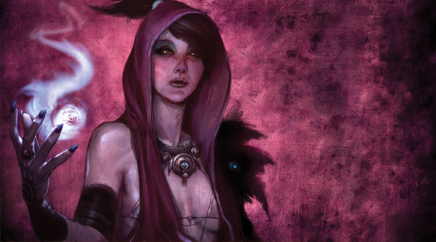
The Circle of Magi
Before the creation of the first Circle of Magi, those with magical talent outside of the Tevinter Imperium went through a dark time in which they suffered persecution and even death should anyone suspect their abilities. The spread of the Chantry only served to increase this persecution—the tyrannical magister lords had used blood magic and demons to hold their empire in an iron grip, and now the new religion spoke out against magic as corruptive and evil. It claimed that in their pride, the mages believed they could seize the Maker's throne but succeeded only in corrupting it and themselves, creating the darkspawn. The Andrastian Chantry was a direct challenge to mages everywhere.
Emperor Drakon of Orlais was the first to realize that some way of legitimately and safely using magic as a tool was needed, so the first legitimate mages were ordained in the city of Val Royeaux. These men and women were under the Chantry's control and closely supervised them to make sure that magic was being used appropriately. Even though the mages were permitted to serve the ruling classes, two important limitations became mandatory:
1. Blood magic was strictly forbidden.
2. Mages could not unduly influence rulers or become rulers themselves.
Mages were not allowed to use their magic to influence the rule of men, which meant they were required to be politically neutral. Most mages restricted their arts to such things as healing, foretelling, communication, and economic matters. The other concern was that the Chantry needed to prevent the creation of abominations, which gave their control some legitimacy beyond the needs of the ruling classes. Naturally, the first mages were put under incredible scrutiny in the chantries where they served, their templar watchers going to excess in their vigilance. This caused the mages to chafe under the control and crave some form of independence.
That opportunity came quickly: At the close of the Divine Age, the Second Blight began, and Emperor Drakon was at the center of humanity's struggle for survival. The mages could unleash their full power against the darkspawn, and they proved so useful that it was not long before they were able to break away from the Chantry's direct control. The first Circle of Magi was created. Mages who excelled at warfare grew powerful; over subsequent years, many became involved in the wars between nations, removing the restriction requiring political neutrality. So long as the mages served the will of a ruler rather than attempting to control him, this was permitted.
Today, the Circle keeps close tabs on those with magical ability. Affinity for magic usually surfaces by adolescence, and all people found to have magical ability are required to join the nearest Circle of Magi and act under its supervision. To practice magic and not join a Circle is a capital offense—mages who insist on doing so are hunted as apostates. The mages who are in the Circle of Magi, however, do their best to avoid the appearance of corruption as the fear of going back to the days when mages were actively persecuted is a strong one. The Chantry templars are still stationed in every Circle tower, ostensibly there at the invitation of the Circle. They act as watchdogs and begin inquiries should they get any whiff of "evil" magic use. The Circles suffer this indignity as a necessity.
Since the Schism with the Imperial Chantry, it has become increasingly difficult for the Circles to work with the Chantry. The Chantry priests have become more and more suspicious that the Circles sympathize with the Imperium and would likewise attempt to throw off the restrictions that have been placed on them. The templars have once again become incredibly draconian in their interpretation of those restrictions, and the new restrictiveness could lead to a battle between the Circles and the Chantry. Already, many mages within the Circle are calling for an end to their association with the Chantry, figuring that their usefulness and wealth will override any backlash they might suffer.
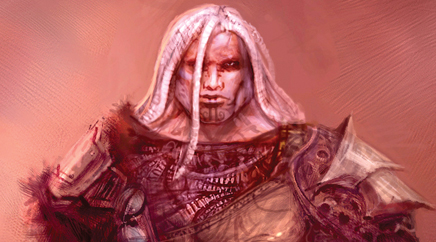
Circle of Magi Hierarchy
It is no simple matter, safeguarding ordinary men from mages, and mages from themselves. Each Circle tower must have some measure of self-government, for it is ever the Maker's will that men be given the power to take responsibility for our own actions: To sin and fail, as well as to achieve the highest grace and glory on our own strength.
You, who will be tasked with the protection of the Circle, must be aware of its workings. The first enchanter is the heart of any tower. He will determine the course his Circle will take and will choose which apprentices may be tested and made full mages, and you will work most closely with him.
Assisting the first enchanter will be the senior enchanters, a small council of the most trusted and experienced magi in the tower. From this group, the next first enchanter is always chosen. Beneath the council are the enchanters. These are the teachers and mentors of the tower, and you must get to know them to keep your finger on the pulse of the Circle, for the enchanters will always know what is happening among the children.
All those who have passed their Harrowing but have not taken apprentices are mages. This is where most trouble in a Circle lies, in the idleness and inexperience of youth. The untested apprentices are the most numerous denizens of any tower, but they more often pose threats to themselves, due to their lack of training, than to anyone else.
—Knight-Commander Serain of the Chantry templars, in a letter to his successor
*** Fraternities ***
Another aspect of Circle life is the fraternity. When a mage becomes an enchanter, he may ally himself with a fraternity. These are cliques that cross Circle boundaries, mages of common interests and goals who band together to ensure that their voice is heard within the College of Magi in Cumberland. The largest fraternities currently are the Loyalists, who advocate loyalty and obedience to the Chantry;
- The Aequitarians, who advocate temperance and follow a distinct code of conduct that they believe all mages should hold themselves to;
- The Libertarians, a growing fraternity, publicly maintaining greater power for the Circles but secretly advocating a complete split from the Chantry—a dangerous opinion, naturally;
- The Isolationists, a small group that advocates withdrawing to remote territories to avoid conflicts with the general populace;
- The Lucrosians, who maintain that the Circle must do what is profitable first and foremost. They prioritize the accumulation of wealth, with the gaining of political influence a close second.
So far, an alliance between the Loyalists and Aequitarians has prevented the Libertarians from gaining much headway, but there are signs that the Aequitarians may throw their support in with the Libertarians. If that happens, many mages predict it will come to civil war among the Circles.
*** The Harrowing ***
Among apprentices of the Circle, nothing is regarded with more fear than the Harrowing. Little is known about this rite of passage, and that alone would be cause for dread. But it is well understood that only those apprentices who pass this trial are ever seen again. They return as full members of the Circle of Magi. Of those who fail, nothing is known. Perhaps they are sent away in disgrace. Perhaps they are killed on the spot.
*** The Tranquil ***
Although apprentices do not know the nature of the Harrowing, all of them understand its consequences: They either pass and become full mages, or they are never seen again. Those who fear to undertake this rite of passage, or those who are deemed too weak or unstable, are given the Rite of Tranquility instead.
The actual procedure, like the Harrowing, is secret, but the results are just as well known. The rite severs connection to the Fade. The Tranquil, therefore, do not dream. This removes the greatest danger that threatens a weak or unprepared mage, the potential to attract demons across the Veil. But this is the least of the Rite of Tranquility's effects. For the absence of dreams brings with it the end of all magical ability—and all emotion.
The Tranquil, ironically, resemble sleepwalkers, never entirely awake nor asleep. They are still part of the Circle, however, and some might say they are the most critical part. They have incredible powers of concentration, for it is simply impossible to distract tranquil mages. This makes them capable of becoming craftsmen of such skill that they rival even the adeptness of the dwarves. The Formari, the branch of the Circle devoted to item enchantment, is made up exclusively of the Tranquil, and is the source of all the wealth that sustains our towers.
Some laugh at me. I no longer mind. Once upon a time, I studied as they did. I learned under the tutelage of an enchanter and attempted to master the art of bending magic to my will, and while I did well enough, I know that I struggled. I saw the way the enchanter looked at me, the sidelong glances of worry and disappointment. While other apprentices were conjuring fire, I could barely light a candle.
I was frightened of magic. When I was a boy, my grandmother regaled me with tales of the terrible Flemeth, the Witch of the Wilds. She told me of the magisters and how their evil magic infected the world with the darkspawn. She told me of demons and how they were drawn to the dreams of those who possessed magic like moths to a flame. She told me all these things, because, she said, the talent ran in our family's blood.
And so it ran in mine. All my young life I had dreaded the thought, prayed to the Maker that I was not so cursed...but I knew otherwise. Deep in my heart, I knew. When the templars came to our home, I knew.
The mages' tower was terrifying, full of secrets and danger. The templars glared at me as if I could spring full into an abomination before their very eyes. My enchanter patiently attempted to teach me to marshal my willpower, my only defense should a demon attempt to enslave me, but it was no use. How many nights did I cry myself to sleep in that dark and lonely place?
Then my Harrowing came at last, my final test. Face a demon, they said, or submit to the Rite of Tranquility. They would sever my connection to the Fade, and thus I would never dream and no demon could ever touch me...but I would also be unable to do magic, and I would never feel an emotion ever again. Facing the demon was certain death, so my choice was an easy one.
It was not so painful.
Now I serve in other ways. We Tranquil manage the archives. We run the tower, purchase the supplies, and maintain the accounts. Our condition also allows us to use the magical element lyrium without ill effect, and thus we are the ones who enchant the magical items. We are the merchants who sell these items to those the Circle permits, and the coin from those sales provides the Circle's wealth.
Thus, we Tranquil are vital. The young and old may stare at me, ill at ease, but they would be worse off without me. They may think me a failure, but there is no horror for me now. I feel no fear of what I am. The shadows are merely shadows, and I am content.
—Eddin the Meek, Tranquil of the Circle of Magi of Starkhaven, the Free Marches
The Fade
Exactly what the Fade is will depend largely on whom you ask. The Chantry's opinion takes a far more religious tone than that of the Circle of Magi, whose attempts to explore and catalogue the realms of the Fade fly in the face of Chantry doctrine. Still, too, do the other races have their own legends of the dream realm—the elven legends predate those of men but have been largely lost since the fall of Arlathan. Dwarves take a different view of the Fade, since they do not enter it; therefore, it features far less in their mythology than it does with the elves and humans.
According to the Chantry, the Fade is a realm of primeval matter from which the Maker formed our world and all living beings. When the living die, their souls pass through what is called the Veil and into this realm. Those who have lived good lives and have earned the Maker's forgiveness move beyond the Fade and from there journey to join the Maker. Those who remain out of the Maker's sight, however, enter the Fade and are lost, returning to the ether from which they were formed. The mages declare that there is no proof to substantiate the Chantry's claim, as no dead soul has ever been witnessed to enter the Fade. It is an eternal debate between the Chantry and the Circle of Magi, made all the more difficult because the Chantry requires that its position be accepted as a matter of faith.
Requiring less faith is the fact that those who sleep actually do send their consciousness into the Fade. The benign spirits native to the Fade anticipate this, and they have shaped the Fade into various realms that cater to the unconscious desires of the living, providing experiences to the sleeping that become their "dreams." Only those mages who have learned to enter the Fade through the use of lyrium remain lucid in this state, able to separate dream from reality. When the souls of the dreaming are harmed or "killed," they return immediately to their sleeping bodies and awaken before the moment of death. Only mages using lyrium are truly at danger in the Fade, for the lyrium that keeps their conscious mind in the Fade also prevents them from returning to their bodies at the moment of death.
The various realms ruled by the spirits fluctuate according to the movement of the dreamers. Those realms that the dreamers flock to become very powerful and in turn rise in the spiritual hierarchy to rule great portions of the Fade, while other memories and concepts, things that in the real world have been forgotten, slowly ebb in power until they drift away back into the ether forever, the spirits who ruled them losing all potency. The only constant part of the Fade lies at its heart—a black city with twisted spires that can be seen from any point in the Fade. This city—so Chantry lore goes—was once a beautiful golden city that was home to the Maker and the spirits, his first creations. When the Maker abandoned the great city, he expelled his spirits from it, and it sat locked and empty until the Tevinter magisters entered it and corrupted it with their sin. The magisters were turned into the first darkspawn, and the city became what it is today: a ruin of darkness and shadow that taints those spirits foolish enough to draw too close. It remains locked, awaiting the day the Maker forgives mankind and returns, removing the sin in the Black City and thereby destroying the darkspawn forever.
The Black City
No traveler to the Fade can fail to spot the Black City. It is one of the few constants of that ever-changing place. No matter where one might be, the city is visible. (Always far off, for it seems that the only rule of geography in the Fade is that all points are equidistant from the Black City.)
The Chant teaches that the Black City was once the seat of the Maker, from whence he ruled the Fade, left empty when men turned away from him. Dreamers do not go there, nor do spirits. Even the most powerful demons seem to avoid the place.
It was golden and beautiful once, so the story goes, until a group of powerful magister lords from the Tevinter Imperium devised a means of breaking in. When they did so, their presence defiled the city, turning it black. This was, perhaps, the least of their worries.
—From Beyond the Veil: Spirits and Demons, by Enchanter Mirdromel.
Spirits
It is challenging enough for the casual observer to tell the difference between the Fade and the creatures that live within it, let alone between one type of spirit and another. In truth, there is little that distinguishes them, even for the most astute mages. Since spirits are not physical entities and are therefore not restricted to recognizable forms (or even having a form at all), one can never tell for certain what is alive and what is merely part of the scenery. It is therefore advisable for the inexperienced researcher to greet all objects he encounters.
Typically, we misuse the term "spirit" to refer only to the benign, or at least less malevolent, creatures of the Fade, but in truth, all the denizens of the realm beyond the Veil are spirits. As the Chant of Light notes, everything within the Fade is a mimicry of our world—a poor imitation, for the spirits do not remotely understand what they are copying. (It is no surprise that much of the Fade appears like a manuscript translated from Tevinter into Orlesian and back again by drunken initiates.)
In general, spirits are not complex. Or, rather, they are not complex as we understand such things. Each one seizes upon a single facet of human experience: rage, hunger, compassion, hope, and so on. This one idea becomes their identity. We classify as demons those spirits that identify themselves with darker human emotions and ideas.
The most common and weakest form of demon one encounters in the Fade is the rage demon. They are much like perpetually boiling kettles, for they exist only to vent hatred but rarely have an object to hate. Somewhat above these are the hunger demons, which do little but eat or attempt to eat everything they encounter, including other demons (this is rarely successful). Then there are the sloth demons. These are the first intelligent creatures one typically finds in the Fade. They are dangerous only on those rare occasions that they can be induced to get up and do harm. Desire demons are cleverer and far more powerful, using all forms of bribery to induce mortals into their realms: wealth, love, vengeance, whatever lies closest to your heart. The most powerful demons yet encountered are the pride demons, perhaps because they, among all their kind, most resemble men.
—From Beyond the Veil: Spirits and Demons, by Enchanter Mirdromel.
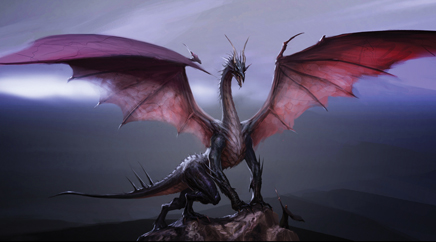
*** Demons ***
The Maker's first creations were the spirits, beings whose very bodies were formed from the ether and who most closely resembled the Maker in every way. They were glorious beings that populated the many spires of the Golden City, and the Chant of Light says that they revered the Maker with unquestioning devotion. The Maker, however, was dissatisfied. Though the spirits were like him in that they could manipulate the ether and create from it, they did not do so. They had no urge to create, and even when instructed to do so possessed no imagination to give their creations ingenuity or life.
The Maker realized his own folly: He had created the spirits to resemble him in all but the one and most important way: They did not have a spark of the divine within them and thus would never be the children he desired. He expelled all the spirits out of the Golden City and into the Fade and proceeded to his next creation: life.
The Maker created the world and the living beings upon it, separated them from the Fade by the Veil. His new children would be unable to shape the world around them and thus would need to struggle to survive. In return for their struggle, the Maker gifted them with the spark of the divine, a soul, and he watched with pleasure as his creations flourished and showed all the ingenuity that he had hoped for.
The spirits grew jealous of the living and coaxed them back into the Fade when they slept. They wished to know more of them, hoping to find a way to regain the Maker's favor. Through the eyes of the living, they experienced new concepts: love, fear, pain, and hope. The spirits reshaped the Fade to resemble the lives and concepts that they saw, each spirit desperately trying to bring the most dreamers to their own realm so they could vicariously possess the spark of the divine through them.
As the spirits grew in power, however, some of them became contemptuous of the living. These were the spirits that saw the darkest parts of the dreamers. Their lands were places of torment and horror, and they knew that the living were strongly drawn to these places that mirrored those dark parts of themselves. These spirits questioned the Maker's wisdom and proclaimed the living inferior. They learned from the darkness they saw and became the first demons.
Rage, hunger, sloth, desire, and pride, these are the dark parts of the soul that give demons their power, the hooks they use to claw their way into the world of the living. It was demons that whispered into the minds of men, convincing them to turn from the Maker and worship false gods. They seek to possess all life as their due, forging kingdoms of nightmare in the Fade in the hopes of one day storming the walls of heaven itself.
And the Maker despaired once again, for he had given the power of creation to his new children—and in return they had created sin.