
Dragon Age: Origins Guide Essentials The Classes
Skills
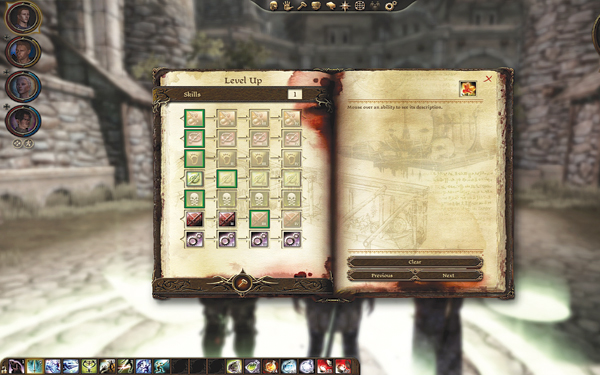
All characters have the same set of skills from which to choose (not to be confused with talents/spells, which are unique for each class).
Skills range from Coercion, which influences how well you can change NPCs' points of view, to Combat Tactics, which gives you more options in battles.
For the most part, your cunning score and level affect how far you can advance in a skill. Raise your cunning to 16 to access all of Coercion, Stealing, Survival, and Combat Tactics.
Gaining level 10 opens up all of Trap-Making, Herbalism, and Poison-Making. Combat Training has no restrictions on it.
When you purchase a skill for the first time, you start at its basic effect, and with each upgrade your ability grows and more options open up.
For example, a basic herbalist can create lesser potions, while an improved herbalist can craft normal lyrium and health potions, and so on up the ladder to expert and master Herbalism.
With only one skill point available every three levels (or every two if you're a rogue), make your skill choices count. At most you will max out two skills during the game, or you may master one skill and dabble in two others.
To aid in choosing the best skill for you, here are some pointers on the various skills.
Coercion
You can access more game areas and information, bargain for better rewards or terms, and talk your way out of many difficult situations with this skill.
While all classes can intimidate effectively (given a high Coercion skill and some fearsome party memebers), warriors can use their strength score (instead of cunning) to gain a bit of an edge in their intimidations.
For the origin stories, you will likely gain the most use out of this skill. When in doubt, put your points into Coercion.
Stealing
You are quick enough to pilfer small items from others, whether friendly or hostile, as long as they aren't too alert. Of course, you may have to pay the price later on.
For example, if you steal from the Dalish elves in the Dalish camp, even if you don't get caught in the act, they may hunt you down elsewhere later on and try to make you pay for your crimes.
Trap-Making
Learning how to make traps and lures seems like a good rogue talent, but this can be very useful for mages as well.
If you're not all that strong in melee range, use traps and lure to draw in enemies and deal some preliminary damage while you cast a barrage of spells from afar. Even a warrior can throw a trap around once in a while to root extra enemies.
Survival
The more you advance this skill, the better chance you have to detect creatures on your mini-map before they surprise you.
This skill can save you from more than a few ambushes. In addition, you get a bonus to nature resistance, which protects against poison attacks of all sorts as well as spells such as Stonefist, Walking Bomb, and Virulent Walking Bomb.
Herbalism
Gain the ability to make your own potions, poultices, and salves with this skill. These are invaluable items, and you'll always want at least five in any difficult fight.
In addition, if you plan on concentrating your mage in the Spirit school (healing and such), this can be a nice complement.
Even if your mage is concentrated on dealing damage or shapeshifting, you can use this skill to make up for your lack of healing spells.
Poison-Making
The ability to create poison works best for rogues, or warriors who want a boost to damage.
You need at least one point in Poison-Making to use poisons and bombs. If you already have a character crafting health and mana potions, it never hurts to increase your offensive potential as well, even with just one level in this skill.
Combat Training
The more points you spend here, the better your warrior or rogue performs in combat. It's essential for any melee-based character.
Warriors and rogues gain access to new weapon talents, stamina regeneration, attack bonuses, and armor upgrades. Mages can take more damage before it interrupts spellcasting.
Combat Tactics
Spending points in this skill gives you more tactics slots for your character. If you make all the decisions yourself, it's not that important; if you allow the characters to act on their own in combat, it's a big deal to get more tactics slots to better customize your combat strategies.
NPC Crafters
Not every skill has to come from you or your party; some NPCs around the world can craft items for you.
You might not have the hands of a blacksmith, for example, but if you gather drake scales and speak to the proprietors of Wade's Emporium in the Denerim Market District, they will craft you some superior armor. Look for help wherever you go.
Choosing Skills
You should choose skills that appeal to your play style, and vary it from character to character.
A rogue may enjoy Stealing, while Herbalism is a natural fit for a mage because it benefits from a high magic score.
That doesn't mean a rogue shouldn't learn Herbalism or a mage learn Stealing. Always have fun with your choices, and remember that between the four characters in your party, you can play with most, if not all, of the game's skills.
However, some skills influence the game directly more than others. Coercion is the most important. It can give you options in dialogue to avoid fights or open up new areas of play that you might not have received without the art of persuasion.
Survival points out enemies on the mini-map, which helps you set up your party for fights and avoid deadly ambushes.
Herbalism creates super-useful health poultices and lyrium potions. Unless you want to spend tons of coin on these essential accessories, invest in Herbalism to make your own at a fraction of the price.
Without a doubt, Combat Training is vital to warriors and rogues who want access to top-tier weapon talents.
Warrior Combat Skills
A high-level warrior primarily concerned about combat and dialogue options with eight points to spend on skills might lean toward this configuration:
Combat Training +4
Coercion +3
Survival +1
Mage Healing and Persuasion Skills
A high-level mage primarily concerned about dialogue options and healing and with eight points to spend on skills might lean toward this configuration:
Coercion +4
Herbalism +4
Rogue Combat Skills
A high-level rogue primarily concerned about combat and Poison-Making with ten points to spend on skills might lean toward this configuration:
Combat Training +4
Poison-Making +4
Stealing +1
Coercion +1
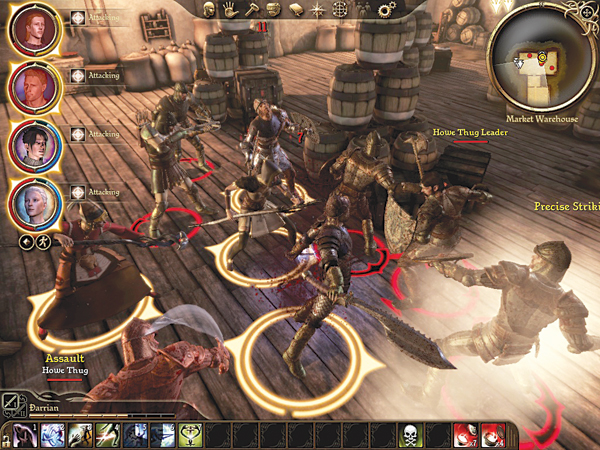
The biggest choice of your early career comes next: Do you play a warrior, mage, or rogue? All experiences are rewarding, but each is unique in the origin story you play through, the talents/spells you gain, and your ability to affect combat and influence the storyline. Which type of Grey Warden will you be?