
Dragon Age: Origins Guide Essentials The Party
Group Dynamics
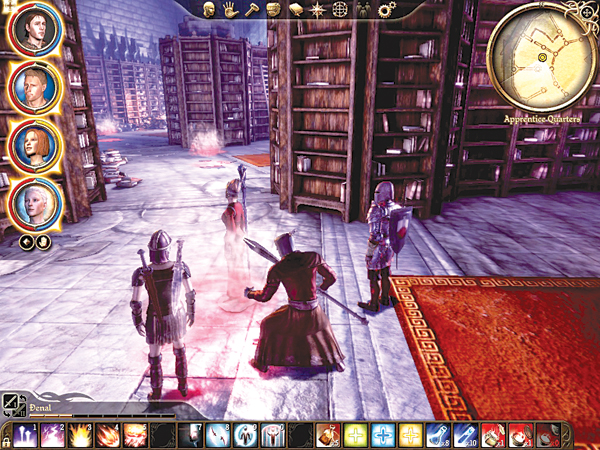
Each of the three classes has a distinct role in the party. In general, class roles fall into categories that take best advantage of class talents. However, be prepared to improvise at any given moment.
For example, if you're a rogue bard intent on keeping a second monster away from the party and you see the first enemy about to defeat your tank, you may want to switch to offense and help out with the first enemy.
The party's main tank responsibilities fall on the shoulders of a warrior. His superior defense and ability to hold the mob's threat safeguard the group in the heat of battle.
If the tank falls, it generally spells doom for the rest of the party as the enemies split and attack the more vulnerable companions.
The warrior's primary job is to the hold the line and keep the enemy's attention on him at all times so that others can do their thing.
Every party needs a healer, and the mage provides the health-pumping spells to excel at that. The mage's single and party heals keep companions alive.
When not healing, the mage can augment the party with stat-enhancing buffs. A mage can also concentrate almost completely on DPS, stacking up on single-target and AoE damage spells to obliterate whole enemy groups.
A rogue acts as the scout for the fellowship. He slips into the shadows with stealth and recons the area for enemy positions, traps, treasure locations, and quest objectives.
When going up against enemies, a rogue can hide until the opportune moment to dart in for a backstab. In the heat of battle, the rogue adds extra DPS to the fight with superior Dual Weapon talents and bonuses to critical hit chances.
As you adventure with the same team, you gain experience, loot, and better skills. Develop your team as a whole and not just individuals.
For example, you don't need four party members with Herbalism. One person who's mastered Herbalism can supply all the potions, leaving the others free to spread out their points to other valuable skills.
It's fine to have two party members with Poison-Making so they can both enhance their weapon DPS, but also try out Trap-Making, and leave crucial skill points open for your PC to put into Coercion and possibly Survival.
After a successful quest run, distribute your gear to the most appropriate characters. Don't always give the best items to your PC (though he or she should certainly get great loot whenever possible).
It's much better to hand the top-notch armor to your tank than your rogue PC, and it makes little sense to give an accessory with magic bonus to your melee DPS character.