
Hidden Landmarks
 Grauman’s Theater
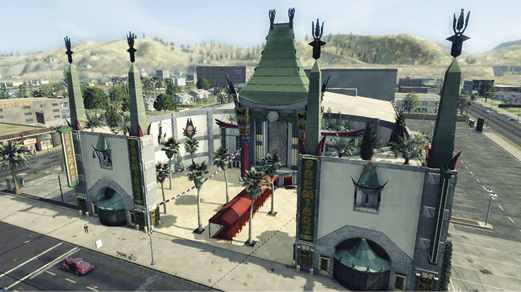
The result of a partnership between showman Sid Grauman and backer C.E. Toberman, Grauman’s Chinese Theater opened with the premiere of Cecil B. DeMille’s “The King of Kings” and has been hosting gala ceremonies ever since.
 Hotel Roosevelt
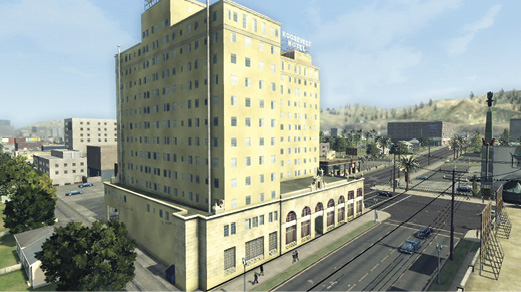
The Hollywood Roosevelt was built in 1927 at a cost of $2.5 million. Its “Blossom Room” hosted the first ever Academy Awards ceremony on May 19, 1929, where “Wings”, a silent film about fighter pilots in WWI, won the inaugural award for Best Picture.
 Max Factor Building
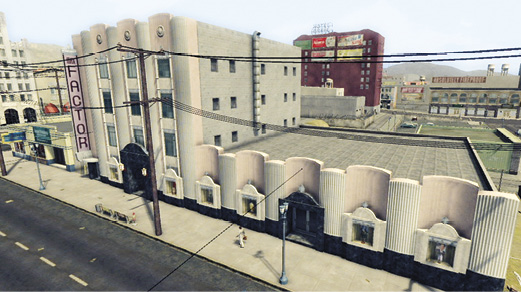
Max Factor acquired this building in 1928, and renovated it with the help of theater architect S. Charles Lee. The remodeled studio included four special, color coordinated makeup rooms, one each for blondes, redheads, brunettes, and “brownettes.”
 Musso & Frank
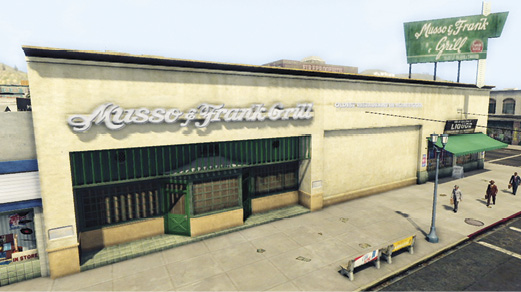
Musso & Frank Grill opened in 1919. Though frequented by Hollywood stars, it’s better known as the haunt of screenwriters. Raymond Chandler spent time at the bar, as did his hero Philip Marlowe in the 1939 novel “The Big Sleep.”
 Crossroads of the World
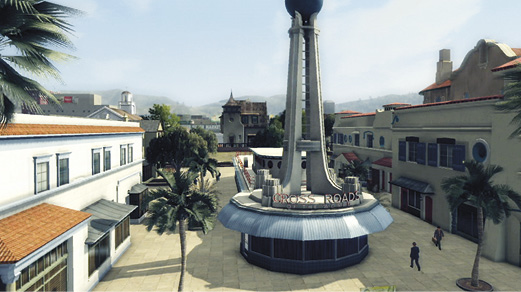
Ella Crawford, widow of murdered underworld boss Charlie Crawford, funded the construction of this lavish outdoor shopping mall in 1936. It is designed to look like an ocean liner, and the 30-foot tower is topped with a revolving world globe.
 Brown Derby
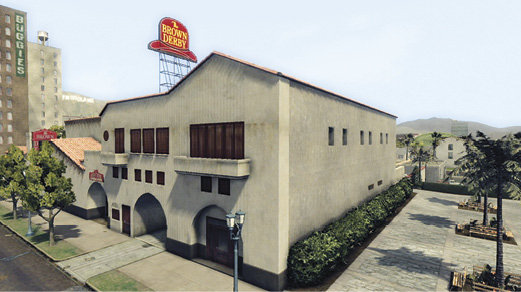
The original Brown Derby on Wilshire Boulevard was opened in 1926 by Robert Cobb and Herbert Somborn. There are many theories about the building’s appearance, including Somborn being told “if you know anything about food, you can sell it out of a hat”.
 Bullocks Wilshire
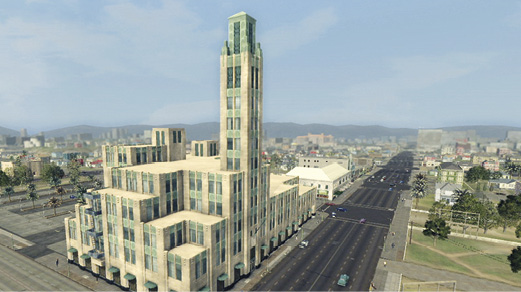
John and Donald Parkinson designed an art-deco monument to house this upmarket department store, which opened in 1929. The 241-foot tower was paneled with green-tinted copper. Notable customers included Greta Garbo, John Wayne and Clark Gable.
 L.A. County Art Museum
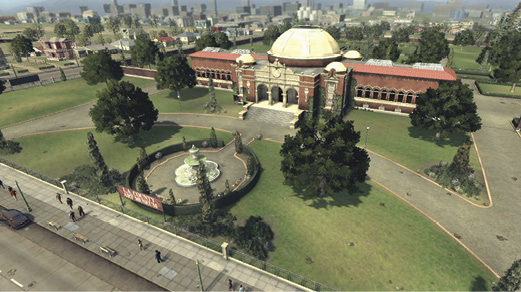
This site hosted racing and gambling until 1909, when concerned citizens had it recreated as a “cultural center”. The museum kept fine art, while the rose garden hid wonders such as a sphere-within-a sphere celestial model, or “armillary sphere”.
 Westlake Tar Pits
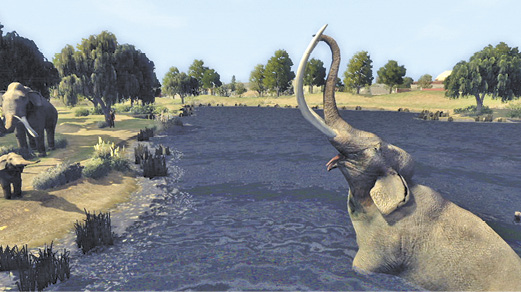
Father Juan Crespi wrote of Los Volcanoes da Brea in 1769. By 1901, archaeological specimens were emerging, including the skeleton of a human female in 1914. Trauma to her skull suggests that she may have been LA’s first recorded Homicide.
 Park Plaza
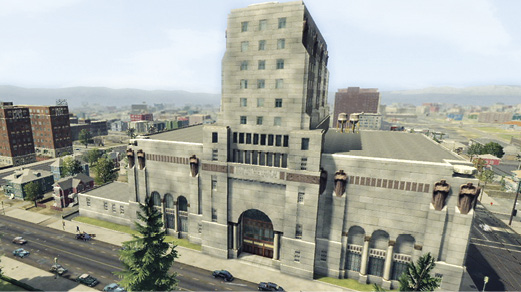
Built in 1925, architect Claud Beelman designed the Park Plaza as a lodge for the Benevolent and Protective Order of Elks. A passage of scripture is carved above the entranceway, and sculpted angels look down from the façade.
 MacArthur Park (Westlake Park)
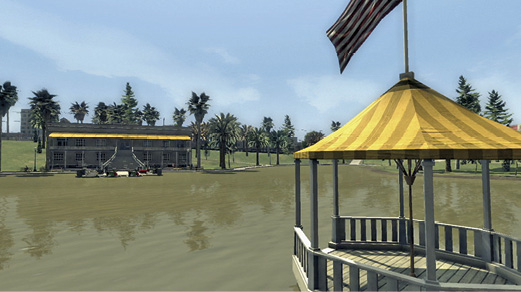
Westlake Park was established in 1863, with the idea of beautifying the city and providing a “democratic” space that would be available to people from all walks of life. On May 7, 1942, the park took the name of General Douglas MacArthur.
 The Good Samaritan Hospital
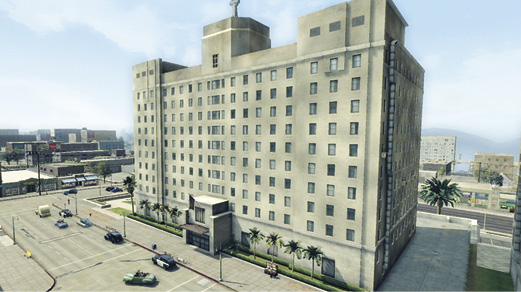
In 1885, Sister Mary Wood opened a care facility with just nine beds. Briefly known as the Los Angeles Hospital and Home for Invalids, the center was renamed when a good Samaritan donated funding for new property and larger quarters.
 The Mayfair Hotel
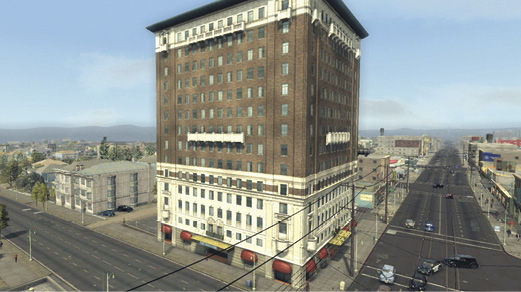
The Mayfair was built in 1926, and its architecture and styling are typical of the roaring ‘20s—glass etchings, brass fixtures, and grand columns in its lobby. Raymond Chandler lived at the Mayfair briefly before he found success as an author.
 Intolerance Set
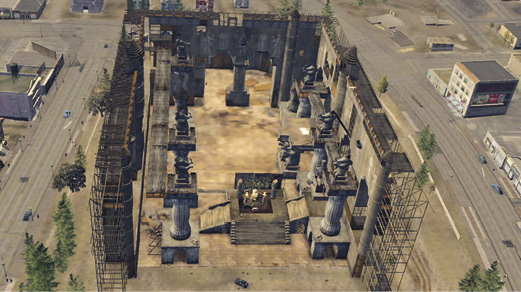
The Great Wall of Babylon set was built for D.W. Griffiths’ silent epic “Intolerance”. More than 3,000 extras paraded past the altar and throne, beneath eight giant plaster elephants. The film—the most expensive ever produced at the time—flopped at the box office.
 Christ Crown of Thorns
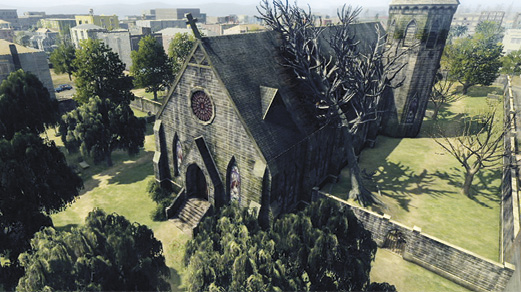
Built in 1858, Christ Crown of Thorns was a Gothic Revival masterpiece, but fell into disrepair after a tree collapsed the roof in the storm of September 1939. A work of leadlight rises above the abandoned altar, depicting the crucifixion and a weeping Virgin.
 Chinatown
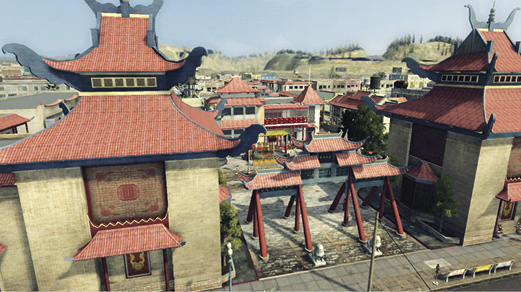
The first so-called “China City” was built by American filmmakers, fitted out as a movie set complete with a miniature “Great Wall”. It burned down in 1939, and construction of New Chinatown was coordinated and financed by the Chinese American Association.
 El Pueblo de Los Angeles
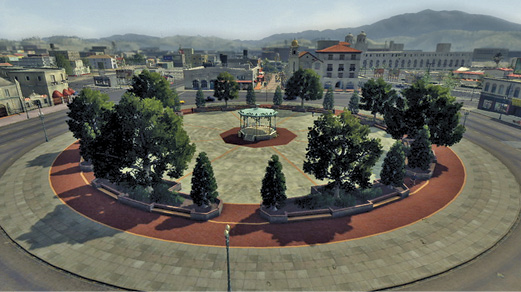
The El Pueblo de Los Angeles monument marks the spot where the city of Los Angeles was founded. A site was chosen by missionary Father Juan Crespi, and a settlement party of just 11 families established the pueblo (town) on September 4, 1781.
 Union Station
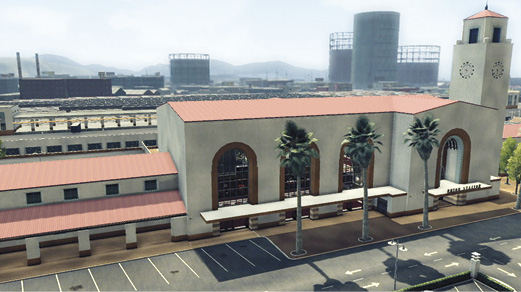
Designed in part by John and Donald Parkinson, Union Station was opened in 1939, and cost 11 million dollars to build. Its grand tile and marble waiting room and outdoor garden patios have led to it being called the “Last of the Great Railway Stations”.
 Civic Square (Hall of Records)
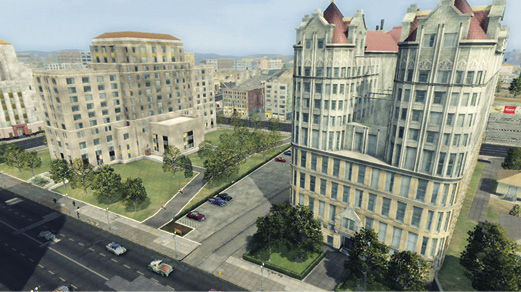
The distinctive twin Gothic towers of the Hall of Records rise above a domed skylight some 50 feet across. The glasswork depicts a mountain cave overgrown with plants and wildflowers, and a waterfall chandelier hangs over the lobby.
 Angel’s Flight
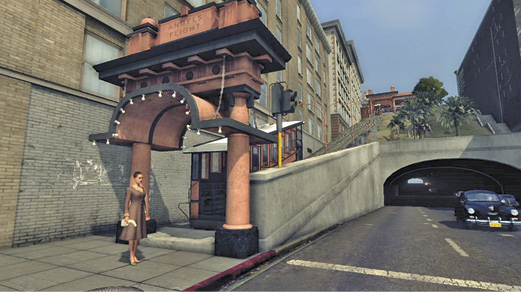
The Los Angeles Incline Railway was built in 1901, earning the title of “world’s shortest railroad”. Renamed “Angel’s Flight” in 1912.
 Bradbury Building
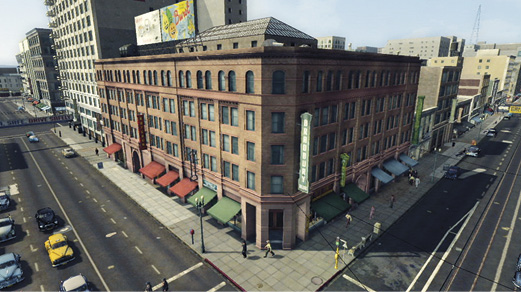
The Bradbury was commissioned by Lewis L. Bradbury. It is most remarkable for its interior—a sky lit Victorian court with cage elevators, marble staircases, and ornate ironwork railings, all inspired by the futurist writings of Edward Bellamy.
 L.A. Public Library
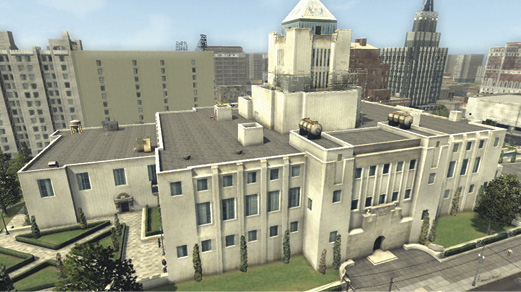
Bertram Grosvenor Goodhue drew on Ancient Egypt to create his high temple-like Central Library. The building is roofed over with a mosaic pyramid and a sculptured torch-bearing hand stands at the apex, representing the scientific “Light of Learning”.
 Pershing Square
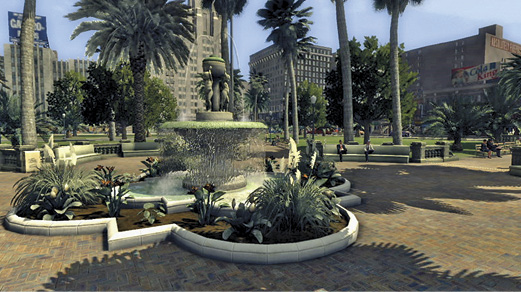
LA’s most famous architect, John Parkinson, redesigned this site in 1910, adding a grand fountain supported by concrete cherubs. In 1918, the park was renamed after General John J. Pershing, and it played host to recruitment rallies throughout WWII.
 RKO Theatre
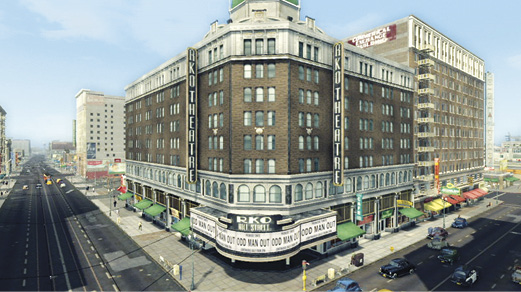
The Hillstreet Theatre opened in March 1922. When a high-level merger created the Radio-Keith-Orpheum Picture Company in 1928, it was renamed the RKO Theatre. It seated nearly 3,000 and hosted live vaudeville shows, as well as films.
 Los Angeles Examiner
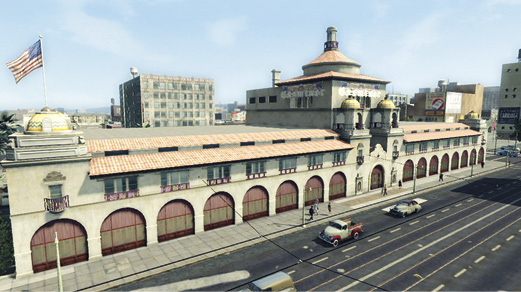
This building, opened in 1914, served as headquarters for the Los Angeles Examiner. On January 15, 1947, the Examiner was first to break the story of a young woman found butchered in Leimert Park—an Examiner reporter christened her “the Black Dahlia”.
 Main St Terminal
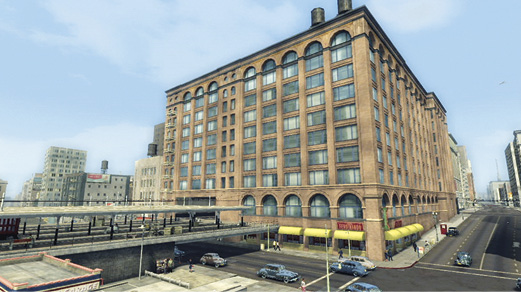
Also known as the Pacific Electric Building, the Huntington Building, or simply 6th and Main, this rail and bus terminal was completed in 1905. For more than four decades, the nine-story structure was regarded as the largest west of the Mississippi.
 LA Cold Storage Co.
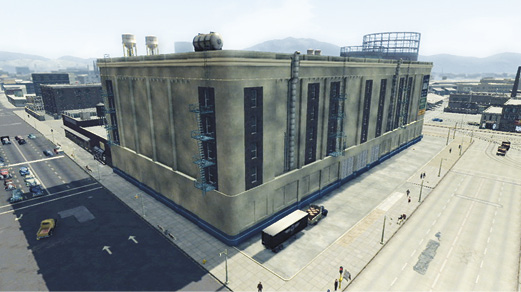
The Los Angeles Cold Storage Company built its first ice production plant in 1895. Feeding the growing city meant keeping produce fresh, and the six-story 4th Street warehouse was constructed, with more than a million cubic feet of freezer space.
 4th Street Viaduct
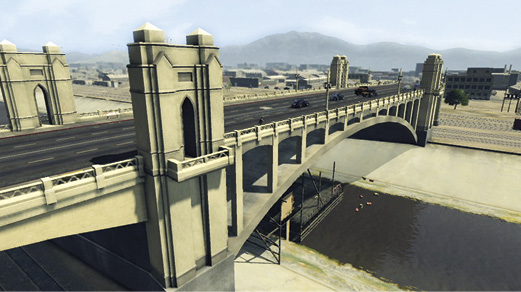
Built in 1931, the 4th Street Bridge replaced the last remaining wooden bridge over the LA River. It exhibits a range of architectural styles, from Beaux Arts in its four concrete towers to Gothic Revival in its porticos, lighting standards and railings.
 6th Street Viaduct
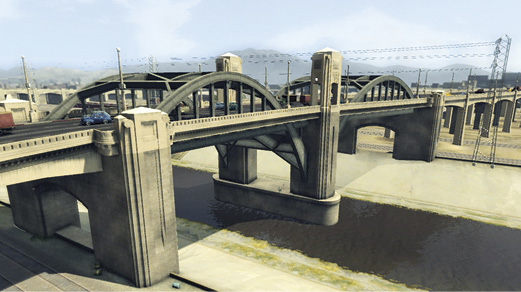
The 6th Street Viaduct was the last of LA’s grand river bridges to be built, connecting the Downtown and Boyle Heights areas when it opened in 1932. Two thirds of a mile long, its twin steel arch design comes from the Classical Moderne School of architecture.
 National Biscuit Company
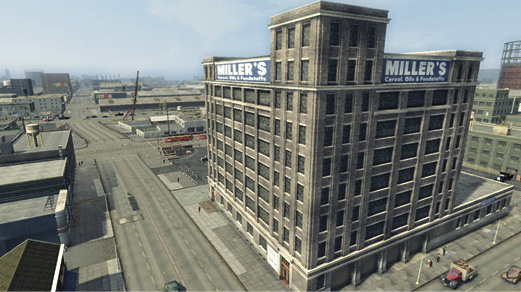
Edmond Jacques Eckel was commissioned by the National Biscuit Company to design their New Cracker Bakery in 1924. The building was completed the following year, standing seven stories tall and coming in at a cost of two million dollars.