
Dragon Age: Origins — Awakening Guide Essentials The Party
Combat Roles
Combat Roles
Each companion's role in a party will be different based on their spells, talents, and what you expect them to accomplish during the fight. As you level, choose the talents and spells that best fit your party configuration, and gear up appropriately. The following general strategies should work well for a tank, healer, mage DPS, general melee DPS, and general ranged DPS.
Tank
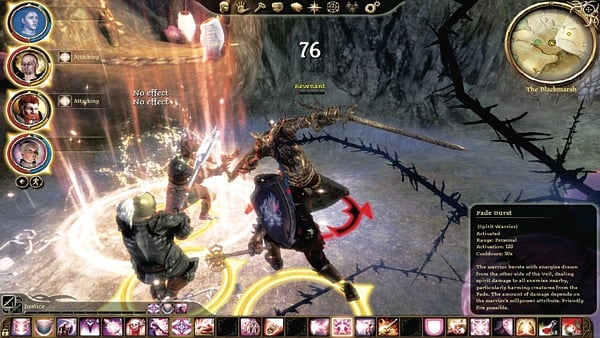
A tank doesn't muck around with fancy spells or dainty arrows; he charges at a foe and hacks at it with his weapon of choice. It's the tank's job to engage all enemies and direct their attention on him. Taunt abilities, such as Threaten and Taunt (of course!), increase threat against a target and force that target to become more hostile toward the tank; you can never get a foe mad enough as a tank, so load up the threat and keep those enemies foaming at the mouth!
Also, keep aware of the ever-changing battlefield, because it only takes one stray mob to veer toward one of your fellow DPSers (even worse, a healer) to turn an otherwise controlled fight into a free-for-all. Make sure you rope in all the enemies so others are free to aid the party as they should.
Because all the damage is focused on you, carry a lot of health poultices and the best gear you can scrounge up. Good gear will mitigate damage, making the healer's job easier and allowing you to go longer in fights, especially boss fights and ones where you handle several foes at once.
Healer
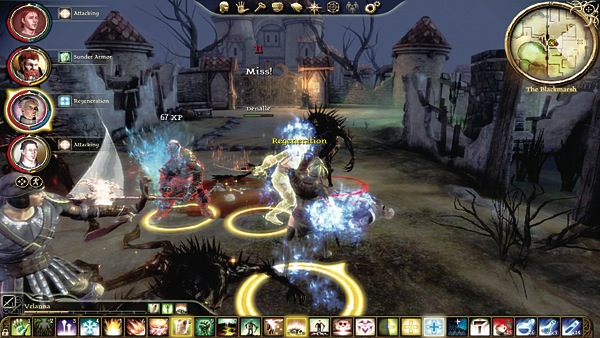
Harnessing great magical powers, a mage healer's primary role is that of savior in a group. They can deal some damage to enemies, but their focus is keeping the party members, and primarily the tank, alive. The tank is the first priority because he is the keystone of your assault—without him, the group quickly falls apart. The healer may also apply buffs (bonuses) to their party that help them do more damage or defend better.
One skill a healer needs to master is where to stand and when to move. Most of their magic requires them to remain motionless, yet on some fights, the party can be spread out so the healer needs to move to get within range. The healer has to balance running around and leaving enough time to heal everyone who needs it, while keeping the tank alive.
Anyone can stand in one spot and heal. A truly skilled healer can move, heal, and buff with ease. Remember to watch your mana, and if you have to make tough choices, keep the tank alive first and yourself second. A dead healer is no use to the party.
Mage DPS
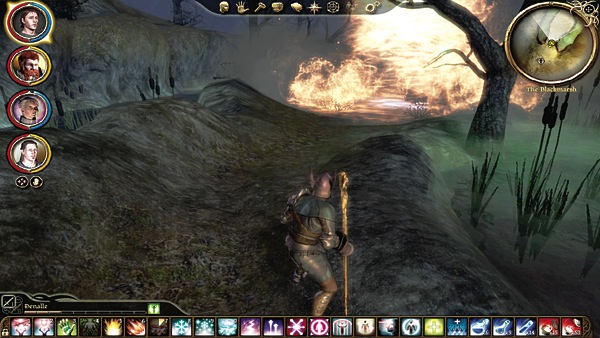
Some mages incinerate their enemies from afar, others freeze them solid or crumble the earth down around them. The end result is always the same: mass destruction. Their damage makes them extremely valuable in a party, but they also need to control their power, allowing the tank enough time to build up threat before they unleash their destruction.
DPS mages do so much damage in such a spectacular way that they often attract unwanted attention. If an opponent gets too close, the mage, wearing only basic robes, could be done for. Mage spells also have decent range. If a mage stands far from the tank and draws the monster's threat, it becomes harder for fellow companions to save the mage. So the mage needs to stand in the right spot and learn the right spell timing. It often is not about how fast one can cast, but knowing when to cast.
Melee DPS
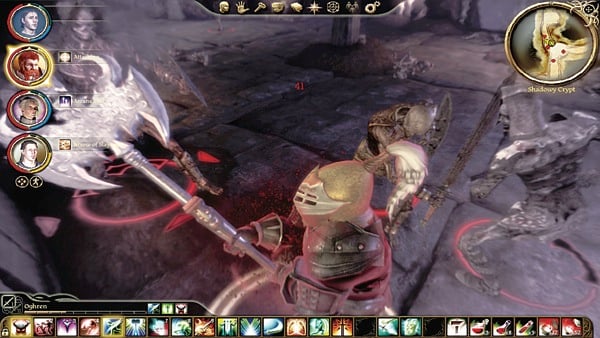
The rogue DPS character, or the non-tank warrior DPSer, relies on cunning and savagery to take down his target as quickly as possible. Melee DPSers are not built for long one-on-one fights like a tank, nor can they usually handle large groups of foes; however, they are excellent damage-dealers who offer support DPS in a party.
After the tank engages and holds threat, a rogue DPSer can prowl unseen behind the enemy, then unleash crippling backstab blows to stagger the opponent. A warrior DPSer can dish out damage on the tank's target, then grab threat on a stray creature if it breaks from the pack. Because melee DPS characters have the talents to deal huge damage very quickly (especially critical strikes), they must be extremely careful not to pull threat away from the party's tank.
This usually means holding back and not running through the best regimen of combos, except on boss fights or with one creature left standing. You may also choose to slow down your combos so you don't trigger them as quickly. Depending on your skill choices, a melee DPSer can add even more support damage through Runecrafting, Poison-Making, Trap-Making, or certain usable items. A competent and poised melee DPSer can be the difference in your party between a long, drawn-out fight that teeters on the edge of failure and a quick, efficient boss execution.
Ranged DPS
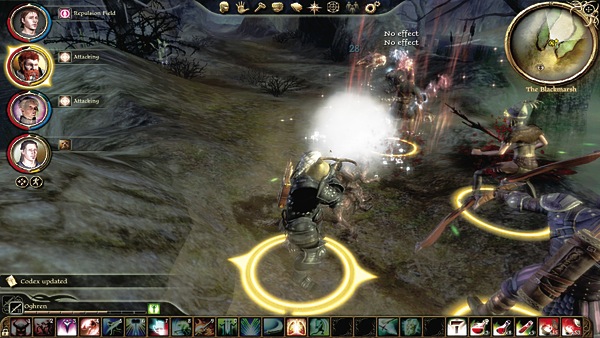
Lightly armored but fast, the ranged DPS character adds similar firepower to the party as a mage DPS character. They can close and deal melee damage, but they are at their best when firing a barrage of arrows from afar. In addition to dealing out damage, the ranged DPSer can snare (slow down movement), stun opponents, and set up defensive fire.
Because ranged DPSers have few ways to eliminate the threat they generate, they need to remain focused on when to attack and how hard to attack any given opponent. It is critical to their survival and group success that the monster stays focused on the tank. Make sure to bring health poultices to heal yourself and avoid getting the attention of the mobs.