Pilot Fundamentals
Completing the campaign is a good way to get your feet wet, but there’s still more to learn about being a Pilot. Here we take a look at some of the most fundamental aspects of playing as a Pilot, complete with some helpful tips from the developers at Respawn Entertainment.
Mobility
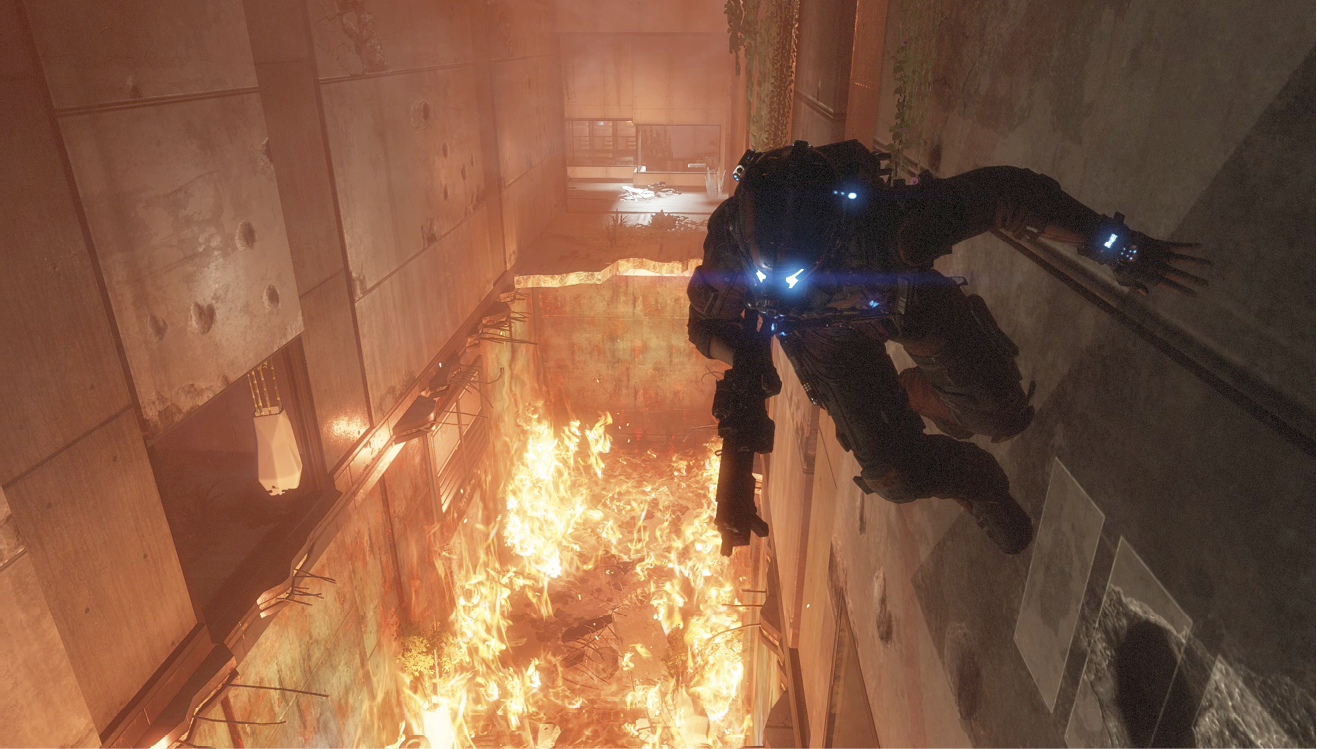
Utilizing Jump Kits, Pilots have a distinct advantage on the battlefield, making them capable of wallrunning, wallhanging, and double jumping. While the basics of movement are covered during the campaign, putting these moves into practice during combat takes some getting used to. For starters, look for opportunities to take the high ground. Advance to rooftops and other elevated positions to gain a better perspective of your environment. If you stay on the ground, you’ll be at a serious disadvantage as enemy Pilots (and Titans) attack from above. Furthermore, moving on the ground (even when sprinting) is much slower than utilizing wallruns and other Jump Kit-assisted techniques.
Crouching/Sliding
Crouching is helpful for squeezing into tight spots. It also offers greater stability when firing a weapon. The reticle constricts while you’re crouching, improving accuracy. So when accuracy counts, make a habit of dropping to a knee before firing. If you initiate a crouch while running, your Pilot will slide along the ground for a few meters. Sliding is an excellent way to maintain momentum upon landing from a jump or wallrun. You can initiate a slide even before landing: as you drop, press the crouch button/key to automatically transition into a slide upon landing.
Weapons
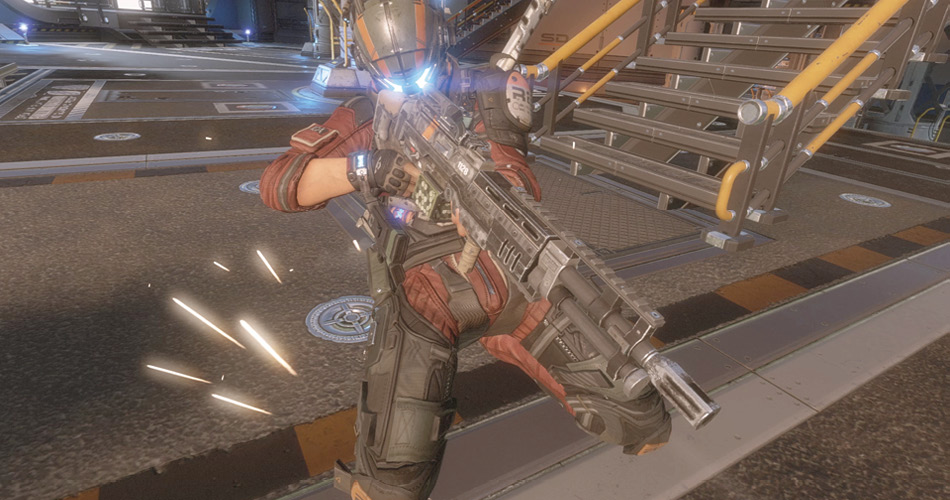
Each Pilot has an impressive arsenal of weapons at their disposal. After selecting a primary weapon, Pilots can now choose a pistol or anti-Titan weapon as their secondary. When combined with ordnance, such as grenades and explosive charges, Pilots have greater flexibility when creating loadouts.
Firearms
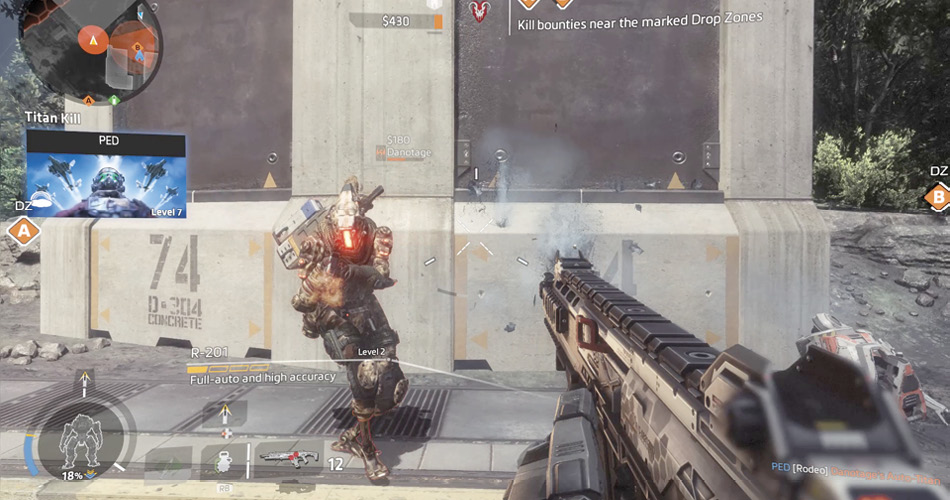
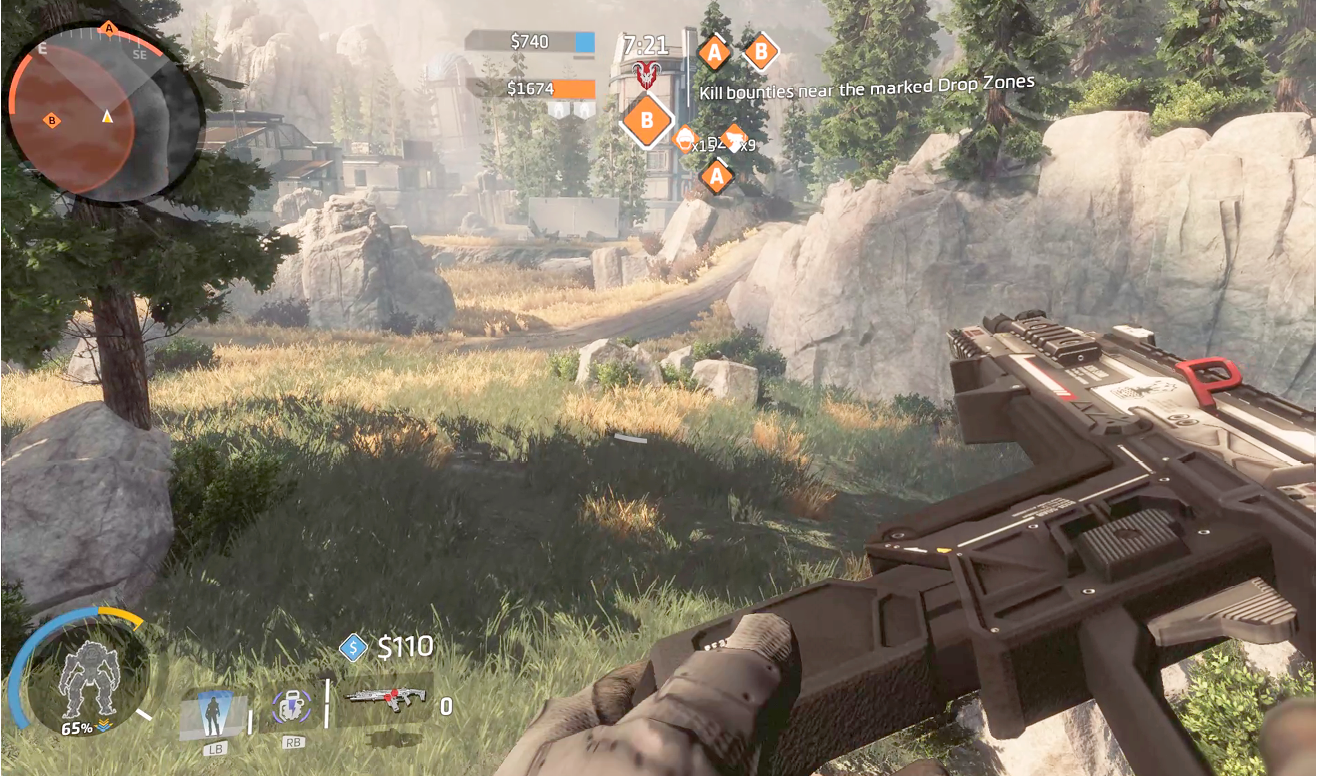
Although distinct, Titanfall 2’s firearms all function similarly, mostly firing cartridge-based projectiles. If you’re familiar with other FPS titles, the gunplay in Titanfall 2 should feel very familiar. For best results, always take aim before firing, using the weapon’s iron sights or optical attachment to acquire your target. Headshots inflict the most damage. Aimed fire is always more precise than shooting from the hip, greatly increasing your odds of hitting a target. However, there may be some instances where hip fire is preferred. Hip fire is less accurate, but allows for better tracking of moving targets in close-quarters firefights. Automatic weapons with high rates of fire and large magazine capacities are most effective when hip firing. Fire modes differ from firearm to firearm, with automatic, semiautomatic, and burst-fire weapons available. Experiment with different firearms until you find a combination that works for you.
Reloading
Eventually all firearms must be reloaded. Reloading should always be a conscious decision and not a reaction. In these chaotic battles, you can’t afford to reload after each kill. This is a bad habit that will get you killed. Instead, keep an eye on your magazine status and consider reloading once its capacity dips below 50 percent. The frequency of your reloads are largely determined by your magazine capacity. But that shouldn’t be the only consideration. Only reload when you’ve reached cover and can safely swap out magazines. Also, overcome the urge to reload during heated close-quarters firefights. Instead, switch to a pistol and finish the fight. It’s always faster to draw a pistol than it is to reload your primary weapon.
Ordnance
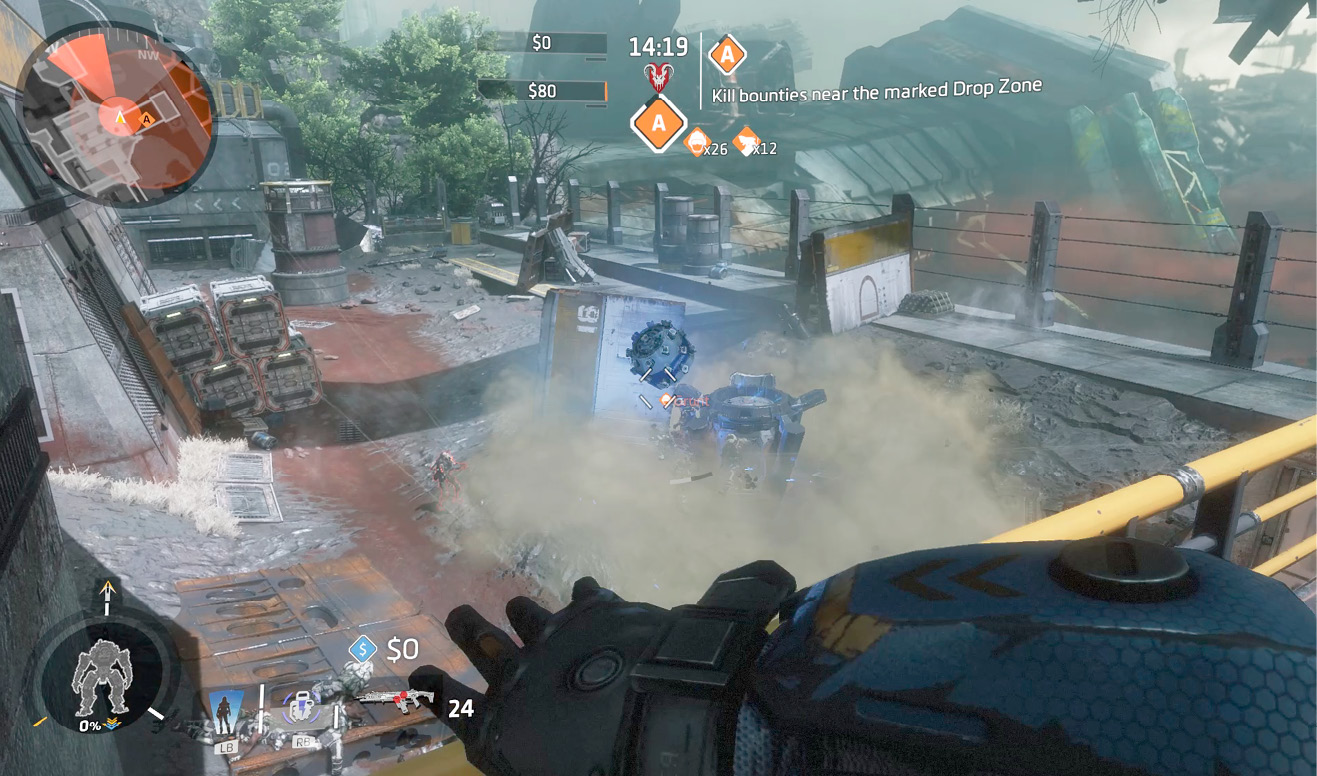
Starting out, you have access to three different grenades: the Frag Grenade, the Arc Grenade, and the Firestar Grenade. The Gravity Star, Electric Smoke Grenade, and Satchel are unlocked later. Although these grenades perform different functions, they’re all deployed by being thrown. Use your weapon’s reticle on the HUD to best judge where you want to throw a grenade. One press of the grenade button/key causes the grenade to be thrown. But grenades have limited range, so you may need to aim high to get them near your intended target. The farther your target, the higher you should aim your throw. Most grenades detonate upon impact. But the Frag Grenade utilizes a time-delayed fuse. As a result, you can bounce Frag Grenades around corners or roll them down inclines. Satchels rely on manual wireless detonation, allowing you to set booby traps for unsuspecting Pilots. The presence of enemy ordnance appear as orange icons on the HUD. So if you see one of these icons nearby, sprint in the opposite direction before it explodes.
Anti-Titan Weapons
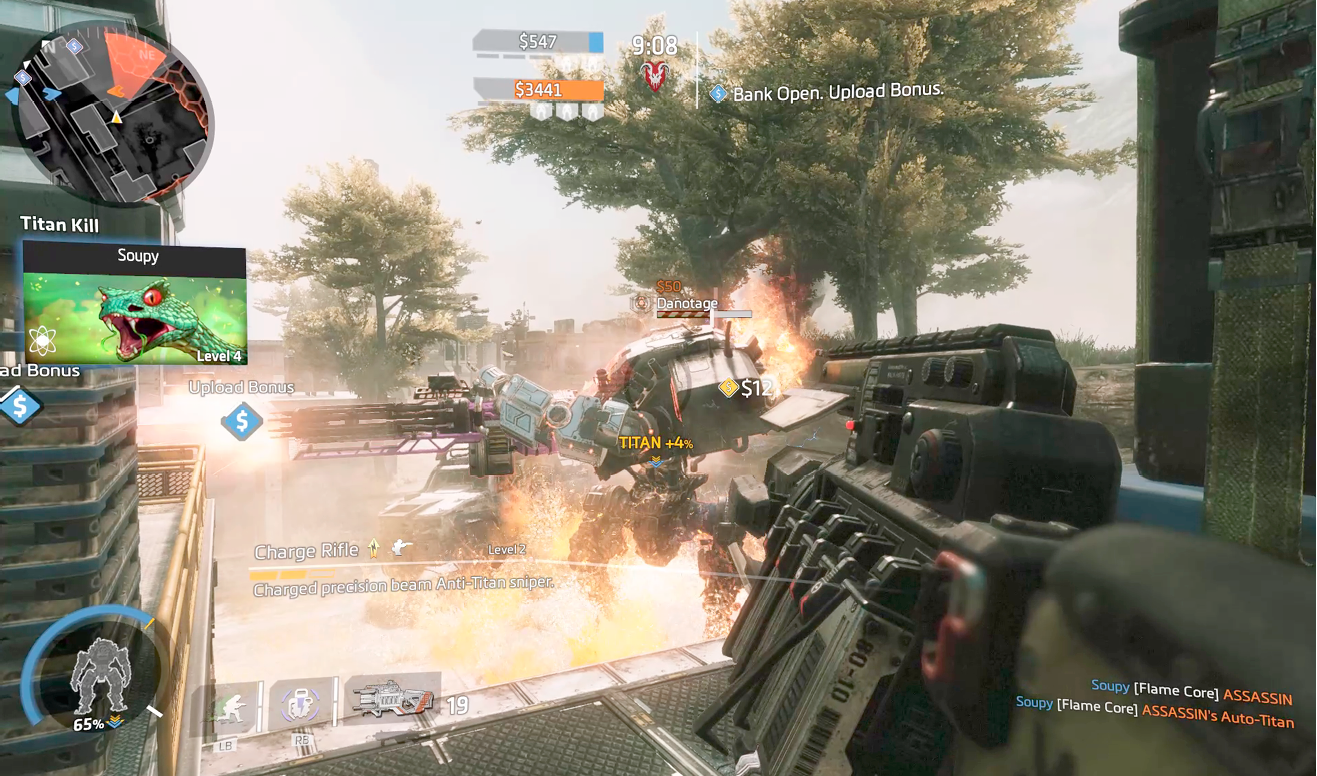
Even when enemy Titans come raining down, Pilots have a way to directly counter this threat. There are four anti-Titan weapons to choose from, each with their own characteristics and functionality. But they’re all designed to inflict heavy damage against enemy Titans. Unlike the Titan-wielded weapons, anti-Titan weapons inflict damage to a Titan’s shield and armor simultaneously. If a Titan is equipped with a shield, the bulk of the anti-Titan weapon’s damage is dealt to the shield, while a small percentage bleeds through and deals permanent damage to the Titan’s armor. So no matter what condition a Titan is in, all hits by anti-Titan weapons inflict permanent damage. But don’t expect to drop a Titan with one of these weapons. Instead, these weapons function best when deployed in a supporting role. So while a friendly Titan is engaging an enemy Titan, consider scoring a few hits with your anti-Titan weapon to tilt the odds in your teammate’s favor. Attacking and damaging enemy Titans is a great way to quickly earn your Titan.
Tactical Abilities
Each Pilot can choose from one of seven different tactical abilities. When activated, these abilities remain active for a few seconds, giving the Pilot a temporary tactical advantage. Initially, three tactical abilities are available to new Pilots:
- Stim: The Stim ability boosts the Pilot’s speed and health regeneration for a few seconds, aiding in fight-or-flight situations. While Stim is active, a fast-moving Pilot can jump farther, allowing for greater parkour skills, perfect for retreating or chasing down enemy Pilots.
- Phase Shift: This ability allows Pilots to temporarily shift into an alternate space, seemingly disappearing from the battlefield, only to reappear in another location. Activate Phase Shift to confuse and flank your opponents during firefights.
- Cloak: The Cloak ability renders a Pilot nearly invisible, allowing them to sneak around the battlefield. Titans and minions have a hard time detecting cloaked Pilots, but other Pilots can see a slight silhouette.
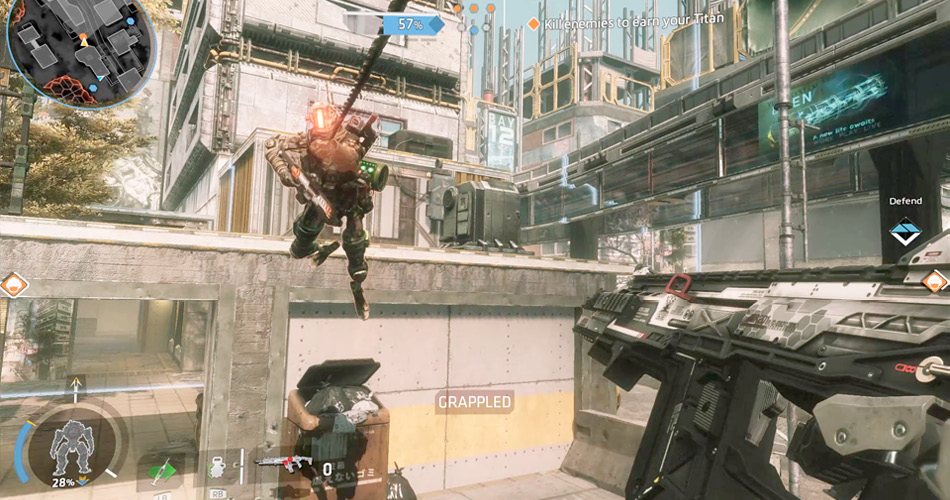
The Pulse Blade, Grapple, A-Wall, and Holo Pilot abilities are unlocked later, as you level up. For more details on each tactical ability, reference the Pilots section.
Rodeo
Pilots show no fear when facing down enemy Titans, sometimes resorting to risky rodeo attacks. So how do you get on top of a Titan in the first place? The easiest way is to drop from above, leaping down from a nearby rooftop or other elevated position. But even if you’re on the ground, you can perform a rodeo attack. Double jump toward an enemy Titan to initiate a grapple, causing your Pilot to automatically assume a position atop the Titan.
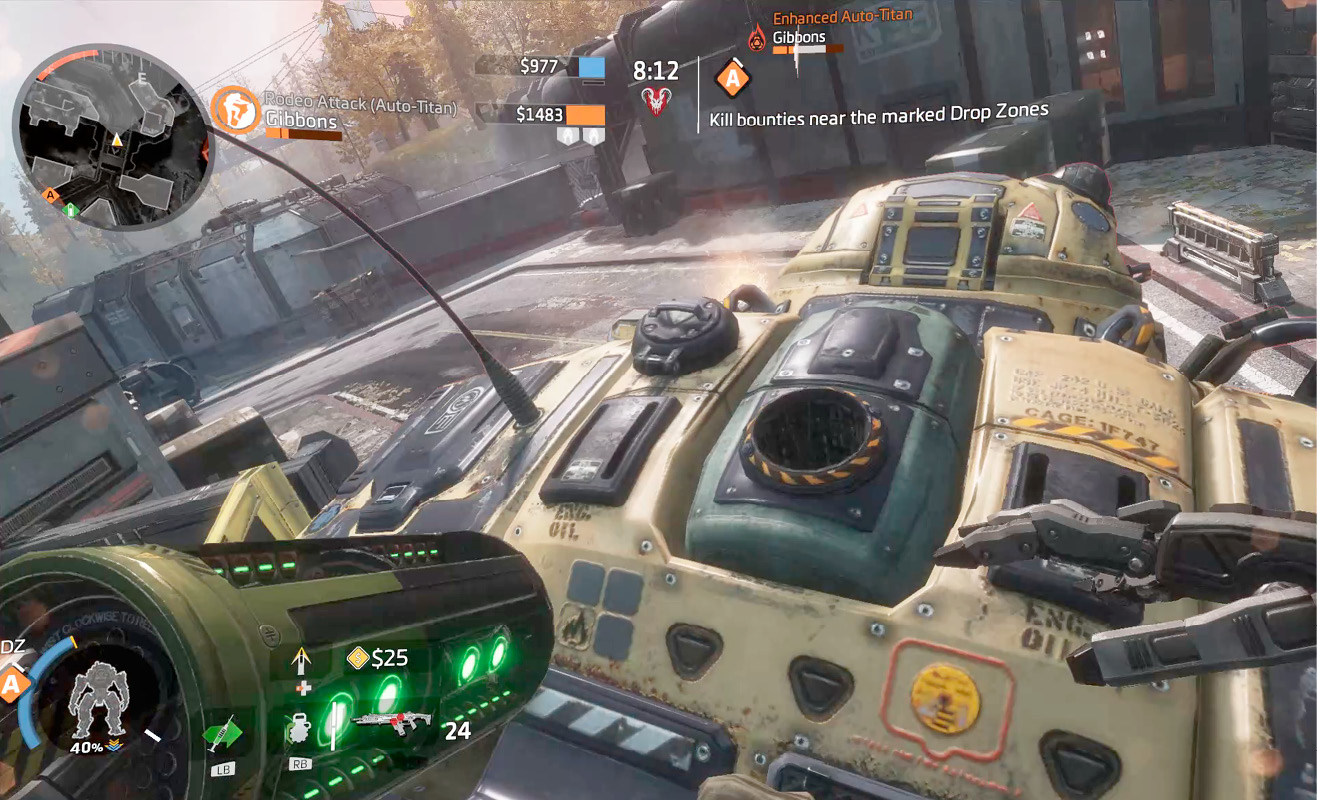
Rodeo has changed significantly since Titanfall. Now when you jump onto an enemy Titan, you automatically remove the Titan’s battery, dealing permanent damage to its armor. Take the stolen battery and install it into a friendly Titan. If the Titan’s battery has already been removed, grenades are automatically dropped into the empty battery chamber, dealing even more damage. Rodeo attacking a doomed Titan results in its destruction. While riding atop a Titan you’re exposed to incoming fire, making this a particularly hazardous maneuver. Some Titans can also deploy Electric Smoke as a countermeasure, inflicting continuous damage to Pilots. A rodeo attack can be canceled at any time by simply having your Pilot jump free of the enemy Titan.
In addition to climbing atop enemy Titans, you can also rodeo friendly Titans. Riding atop a friendly Titan provides an easy way to get around. If you’ve managed to retrieve a battery, rodeo a friendly Titan and install the battery to give it some health and a shield. Unlike the previous installment, Titans now deploy without a shield. While these shields don’t regenerate, they act like a second layer of armor, significantly increasing a Titan’s durability. So constantly search for batteries and install them into your own Titan or those of your teammates.
Earning Titans
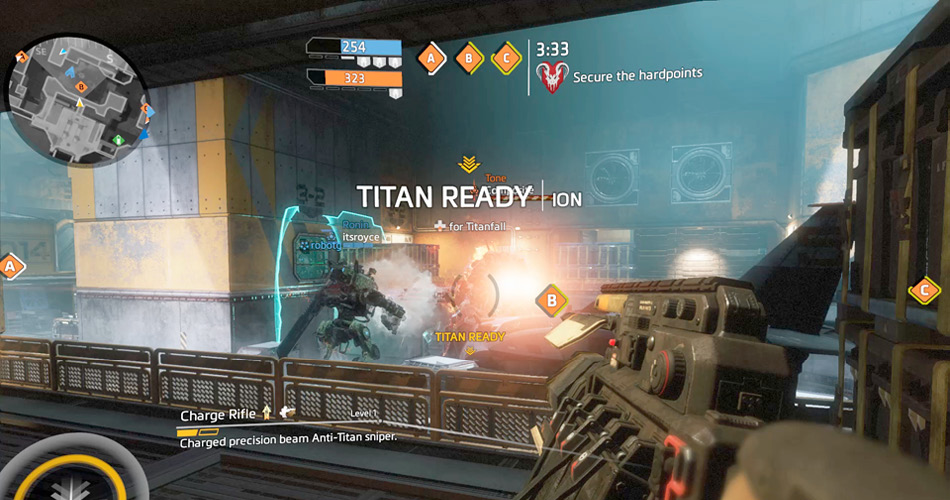
Pilots always deploy to the battlefield first, while their customized Titan waits on a ship, high above the planet’s surface. As you fight on a planet’s surface, your Titan is prepared for deployment. The progress is tracked on the Titan meter in the bottom left corner of the HUD. However, you can get your Titan sooner by helping your team. Each time you score a kill or secure an objective, you earn progress toward earning your Titan. In addition to scoring kills and playing the objective, look for opportunities to attack enemy Titans. Damaging enemy Titans (or stealing their battery) is a great way to quickly build progress toward earning your Titan. Likewise, installing batteries in friendly Titans puts you on the fast track to Titan deployment.
Boosts
Boosts have replaced the Burn Cards from Titanfall, offering Pilots a unique tactical advantage, like Amped Weapons. This boost significantly increases the damage output of your primary and secondary weapons. There are a total of twelve different boosts, but only five are available to new Pilots; the others are unlocked throughout the course of your career.
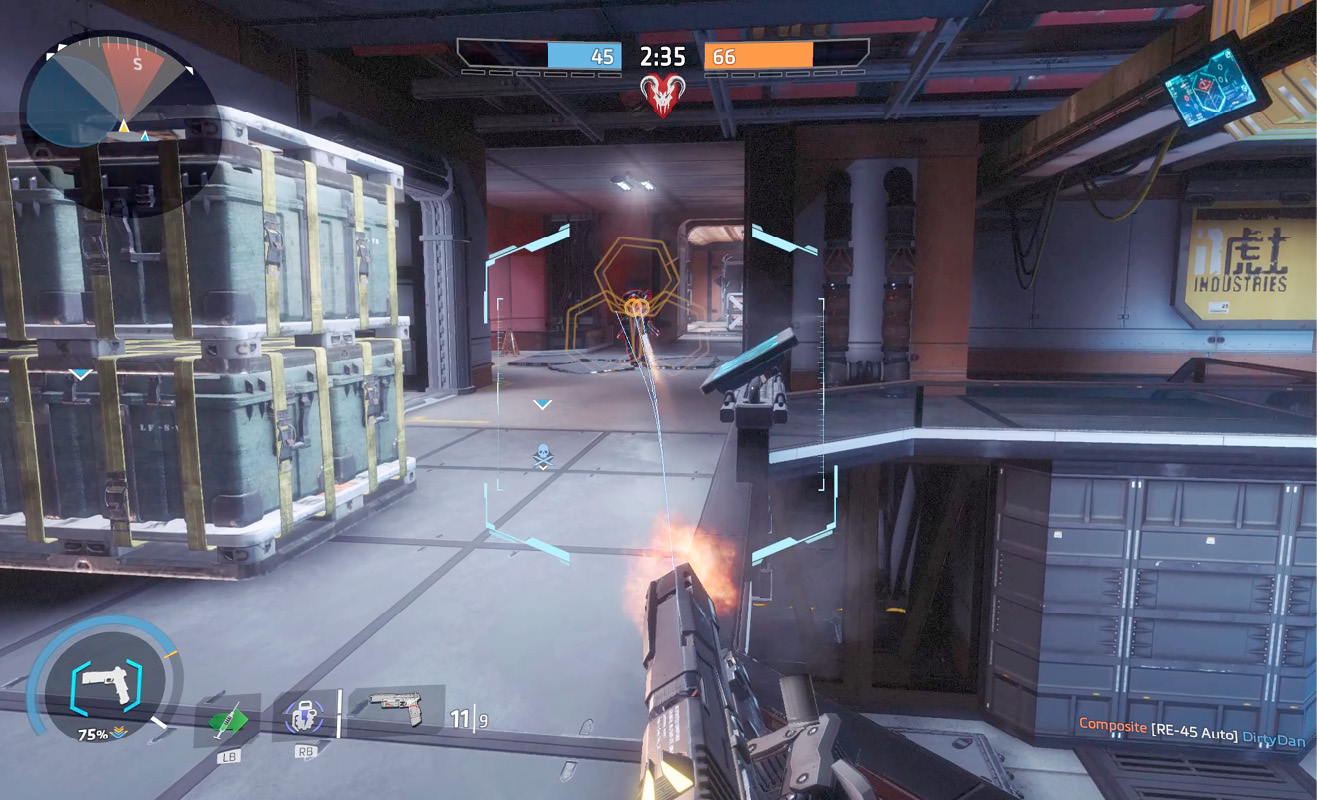
The progress toward earning your selected boost is tracked on the Titan meter in the bottom left corner of the HUD. Look for an icon somewhere along the midpoint of the meter to see when your boost is awarded. The point at which the boost is available varies, depending on which boost you have selected. For example, Amped Weapons is awarded at 50 percent, while Titan Sentry is available at 35 percent.
Take careful consideration as to when you activate your boost. For instance, if you’re about to die, don’t waste your boost; wait until you respawn. After you’ve deployed and lost your Titan, the Titan meter resets, giving you the chance to earn another boost. So there’s a strong chance you can activate a boost multiple times throughout the course of a match. For more information on boosts, continue to the Pilots section.
Titanfall
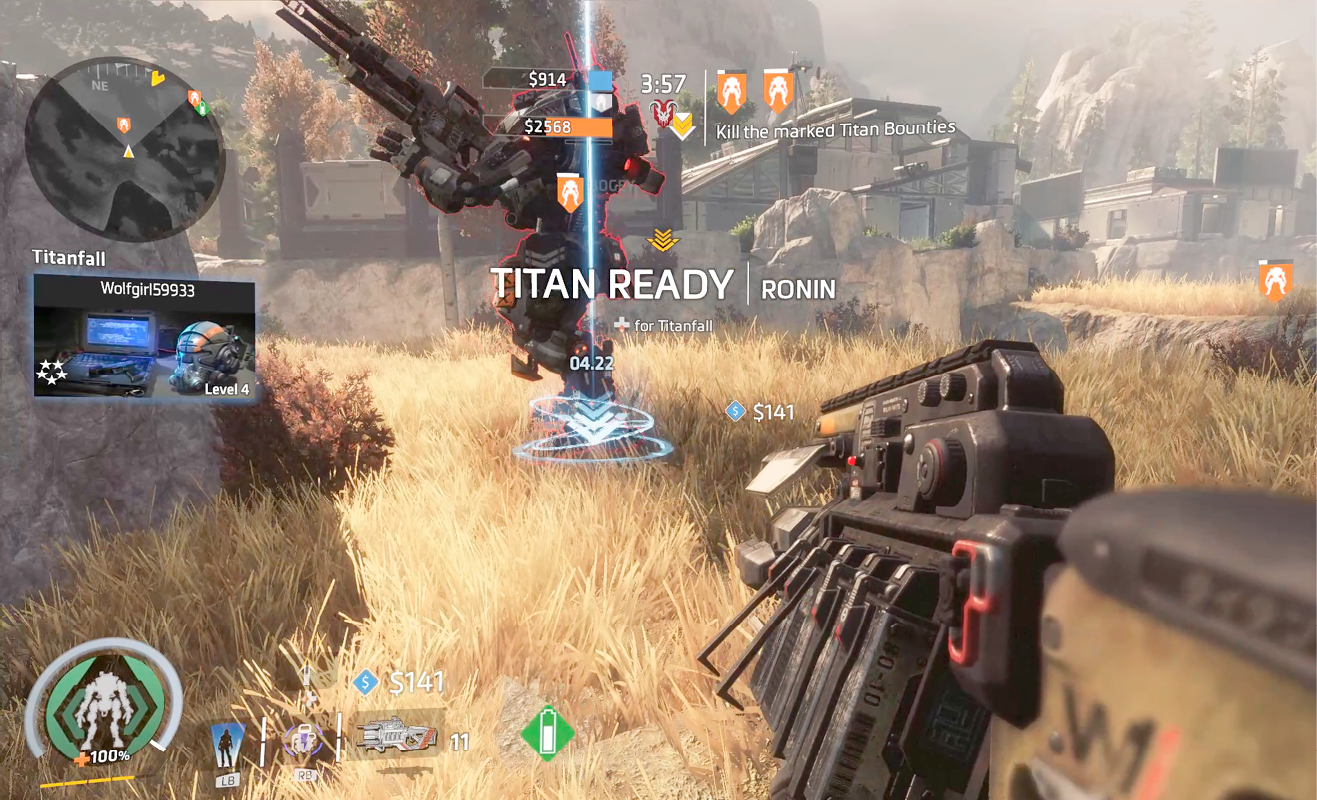
Titanfall isn’t just the name of the game. It’s the name of the iconic event when your Titan comes rocketing down to a planet’s surface. Once the Titan meter reaches 100 percent, your Titan is ready for deployment. Titans can be deployed at any exterior spot on the map, as long as there are no overhead obstructions. Simply aim where you want your Titan to land, and it will come crashing down within a few seconds. But before initiating Titanfall, look for tactical opportunities. An incoming Titan can crush your opponents, including enemy Titans. Try dropping your Titan on unsuspecting enemies. Also, choose your deployment area carefully. It’s best to deploy your Titan in a relatively safe spot of the map, allowing you to embark without incident. Or you can drop your Titan in unison with other friendly Pilots, allowing you to roam the map together. When it comes to Titan-on-Titan combat, it’s best to outnumber and overwhelm your opponents.