Far Cry 4 Guide Pagan Min: Birth of a Tyrant
Shangri-La
By: Navid Khavari / Narrative Designer for Shangri-La Matt West / Level Design Director for Shangri-La Joshua Cook / Art Director for Shangri-La
“When you’re dealing with paradise, it really means all bets are off.”
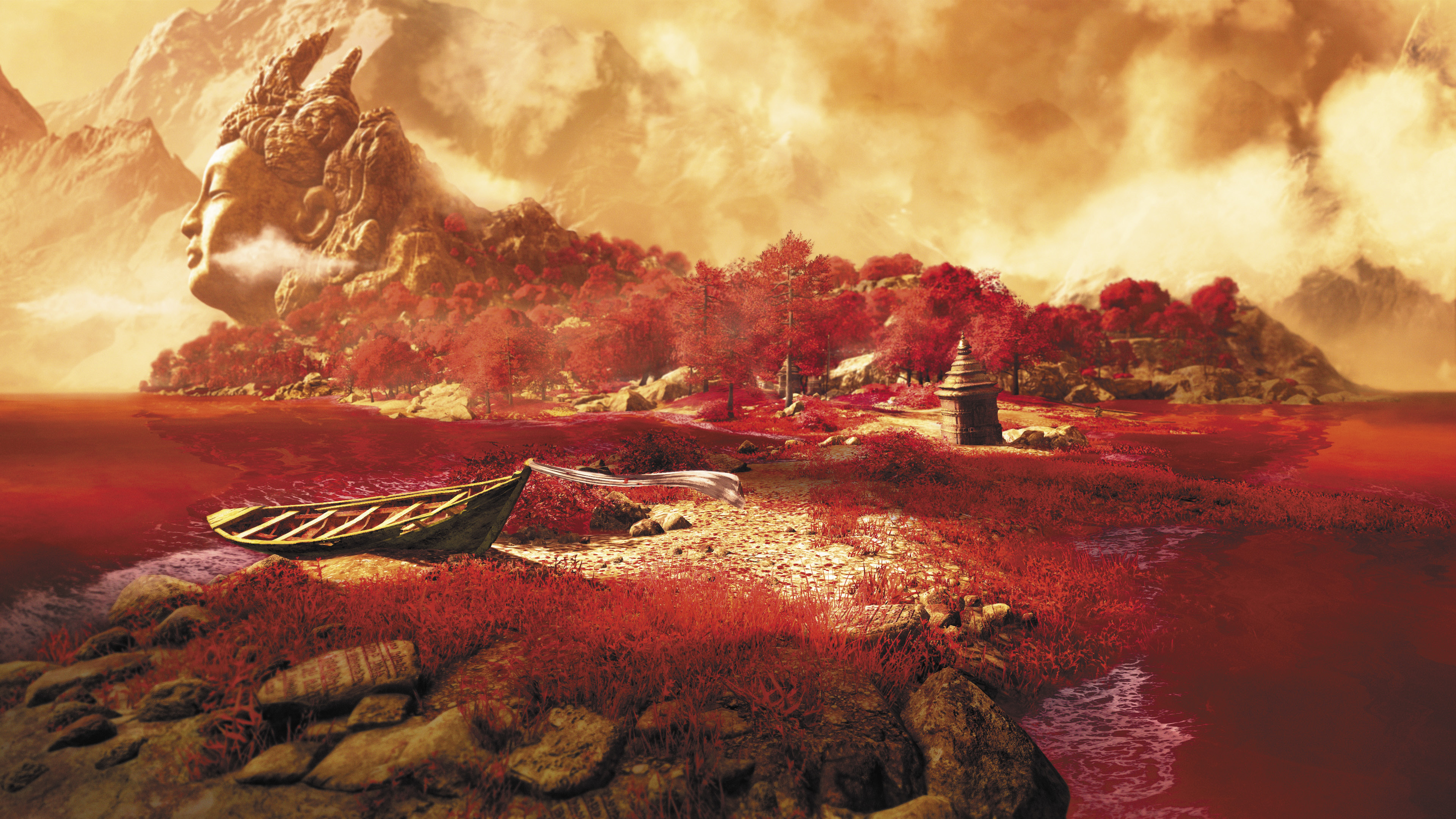
What was really exciting about Shangri-La, particularly from a narrative and world-building perspective, was that it provided a blank slate. Everyone has a different concept, understanding, or idea in their mind of what Shangri-La represents.
Ask five people what their concept of paradise is and you’ll get five different answers. This was both a blessing and a curse, in that it’s great to have so much freedom, but it’s incredibly difficult to create limits and logic to nail down a playable world from scratch. It was an incredible world-building experience at a highly-focused level.
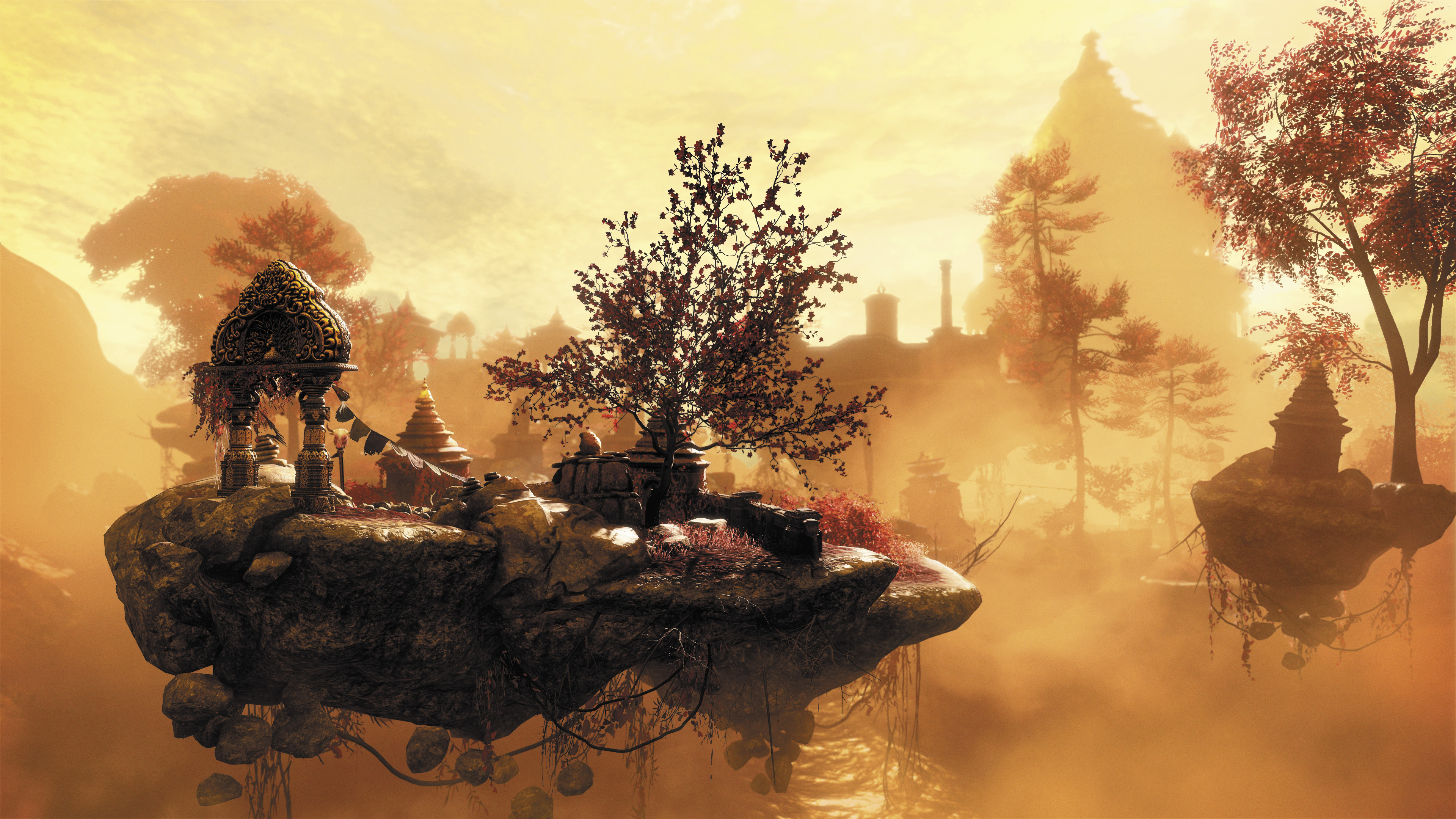
We tried not to limit ourselves in terms of what had come before, such as the Tibetan Buddhist myth of Shambala or James Hilton’s novel Lost Horizon from the early 1930s. We wanted to create something unique to Far Cry, and became inspired by a few specific elements: the concept of Enlightenment being tied to the ring of a bell, a hidden paradise in the Himalayas, and the trials a Kyrati must endure to become a warrior. With this in mind, the net of influences then grew wide, from legendary folklore to recorded history. Everything from the Twelve Labors of Hercules to the legendary stories of the Gurkha warriors in Nepal. To aid in creating our own unique vision of Shangri-La and formulate a living, breathing legend we created a narrative world bible. This put a story and gave meaning to every symbol, demon, statue, and fantastical element players will see in Shangri-La.
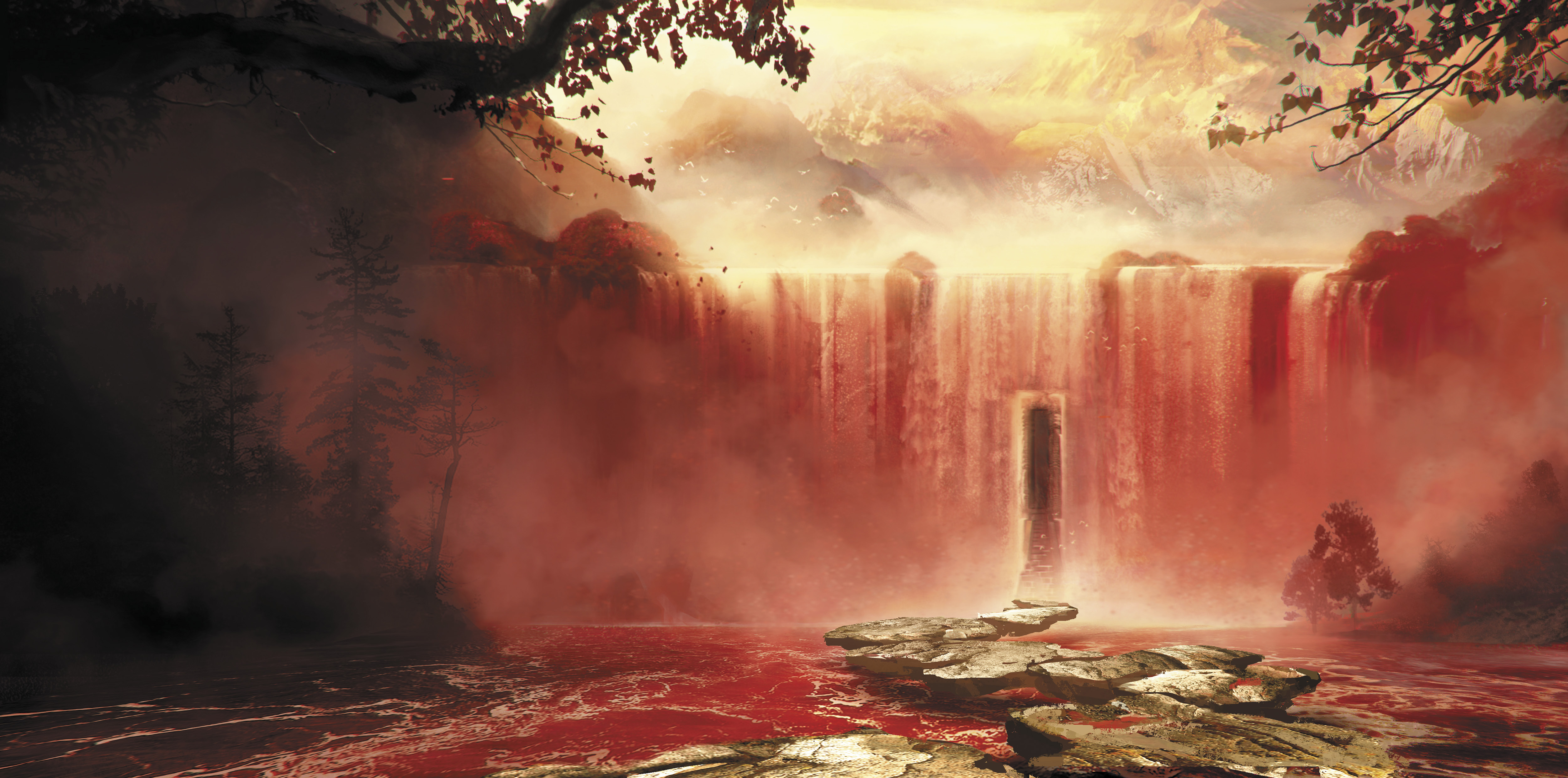
Even the red rivers and lakes have a corresponding myth associated to them. Now, not all of these meanings are immediately evident to players, nor were they ever meant to be. It was much more important to us that the player feels as though the world of Shangri-La is alive and has a hidden, mysterious logic that drives its inner workings.
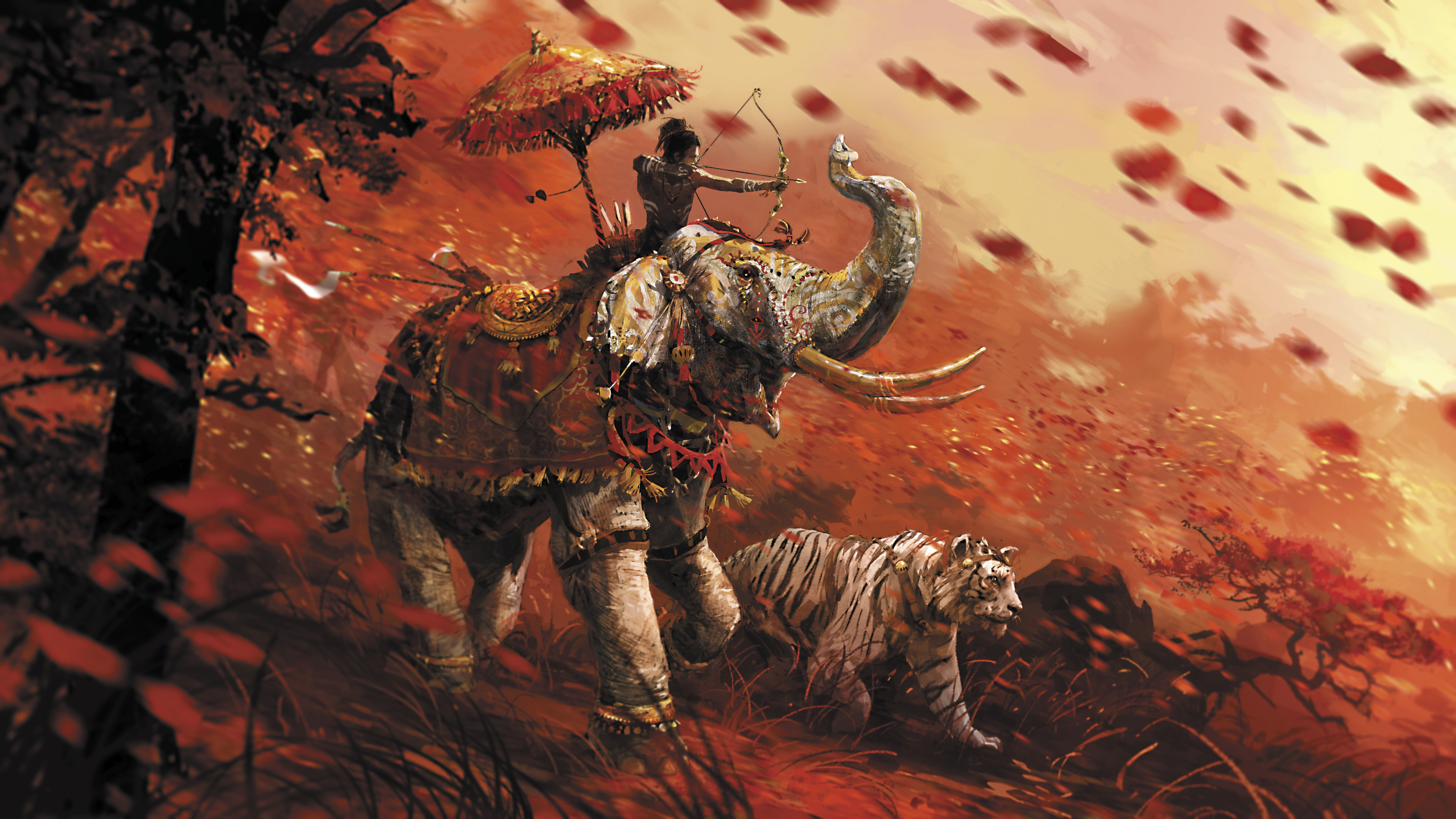
Kalinag is an invention—one that we wanted to embody the ancient warrior traditions of the region, but that would have a distinct Kyrati representation that would befit a legend being told in present-day Kyrat.
The gameplay evolved through several iterations, just as the visuals and narrative did. The starting-off point was that, really, we couldn’t imagine a version where the player had a gun—it didn’t fit with the world logic we were wrapping our heads around. So right off the top, we discarded a big piece of the Far Cry puzzle. For the rest, though, we had such strong gameplay genes—we didn’t need to look far for inspiration.
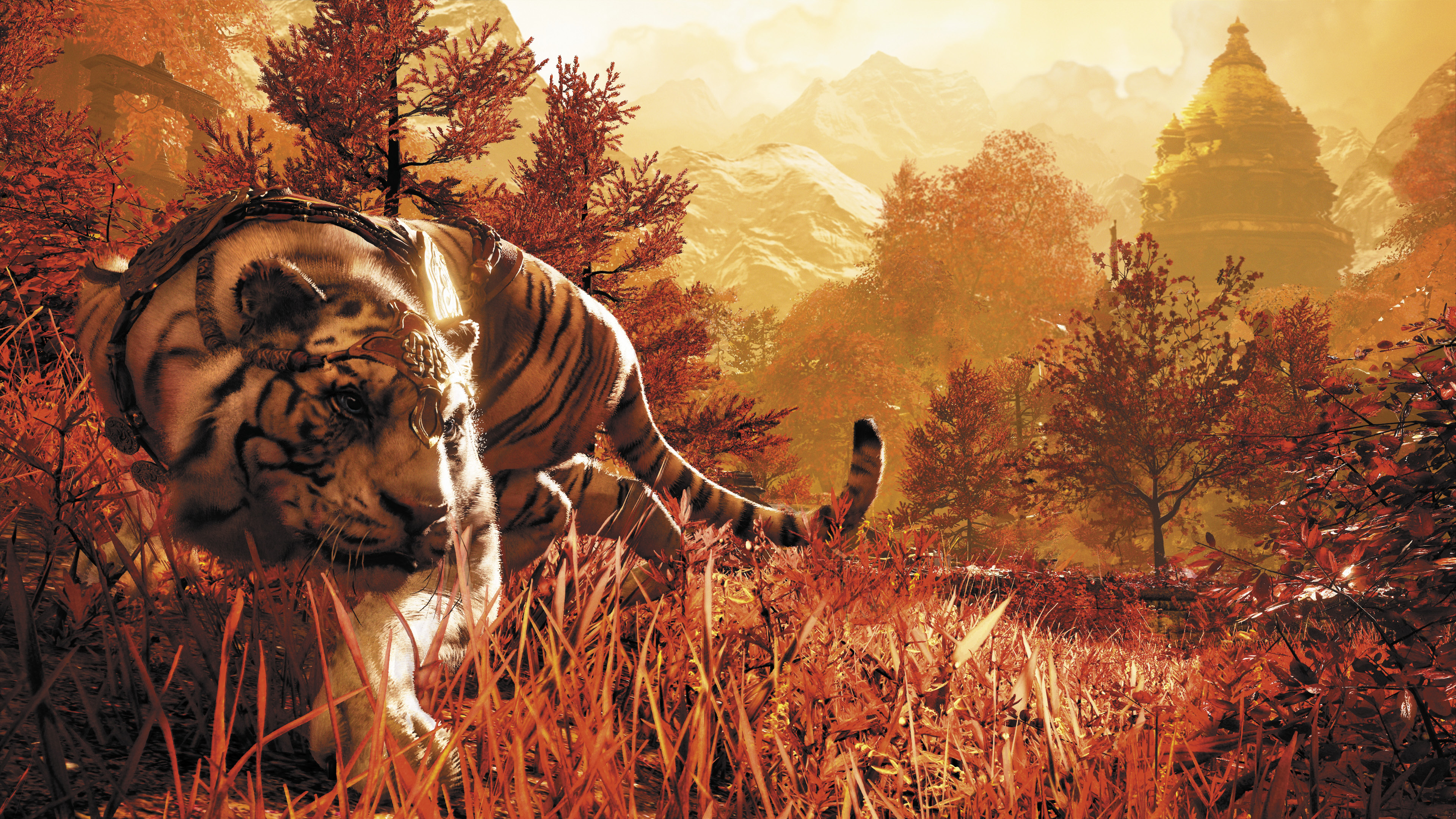
The tiger, on the other hand, was a long journey. It was on the whiteboard at our first brainstorm, but then it was cut, because we weren’t sure we could do it at the required quality level within our timeframe. It came back, though, really because it had to—I can’t imagine a Shangri-La without its Protector.
The big theme we used for the demons’ behaviors was “sacred under attack”. The reasoning was that what makes Shangri-La so special is that it is the land where the mythical god Kyra meditated to achieve Enlightenment—thus forming a beautiful and sacred paradise, a place where others can attempt to achieve the same level of consciousness.
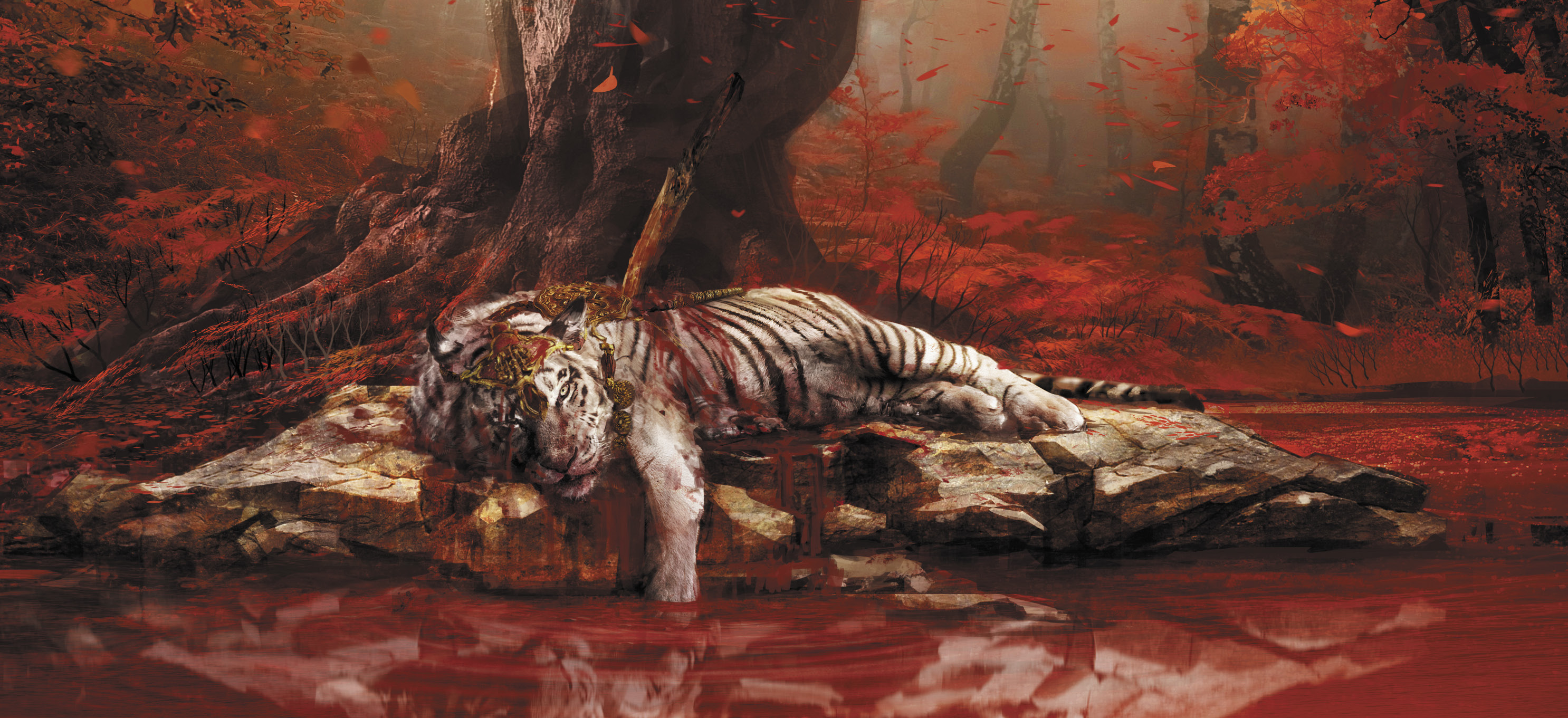
The worst that could happen to such a land is that it would be defiled.
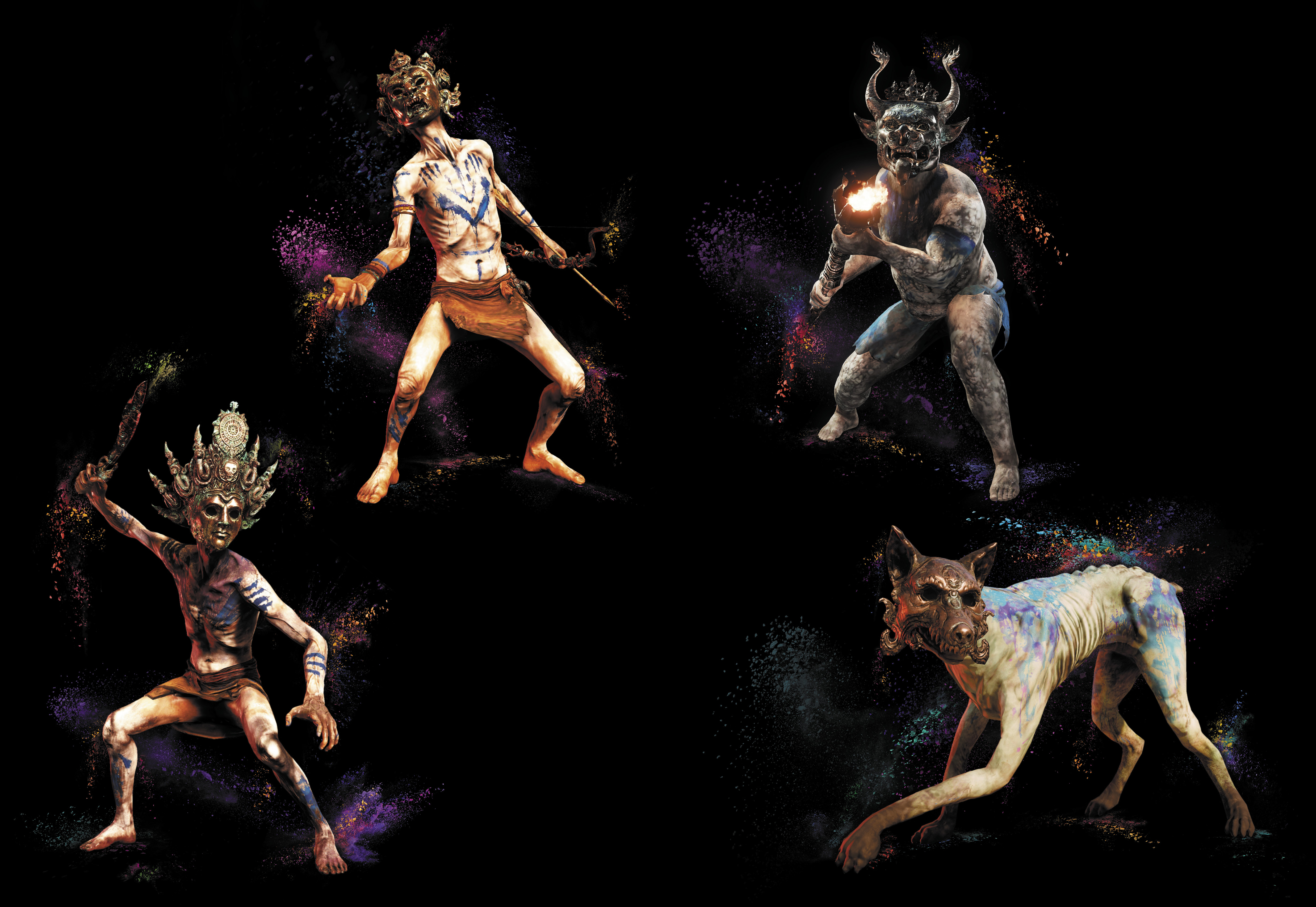
It was important for us that these demons wouldn’t just be mindless drones, so we further developed the concept of the Unknown, a plane of existence where all our demons and the Rakshasa come from.
Good villains, despite however evil they might be, will draw some level of empathy from the player. So I ran with the idea that Rakshasa has brought all these demons with him into Shangri-La, and they simply don’t understand the world they are in; thus the demons are compelled to destroy it and rebuild the land to something that makes sense to them.
You’ll often hear the demons say Rakshasa’s name, namely because he’s all they understand.
Moreover, sacred traditions under threat is a consistent theme throughout the game and it’s something that we felt was important to parallel in the Shangri-La missions.
To ensure diversity in the demons’ characteristics we had four classes with very distinct personalities . . . .
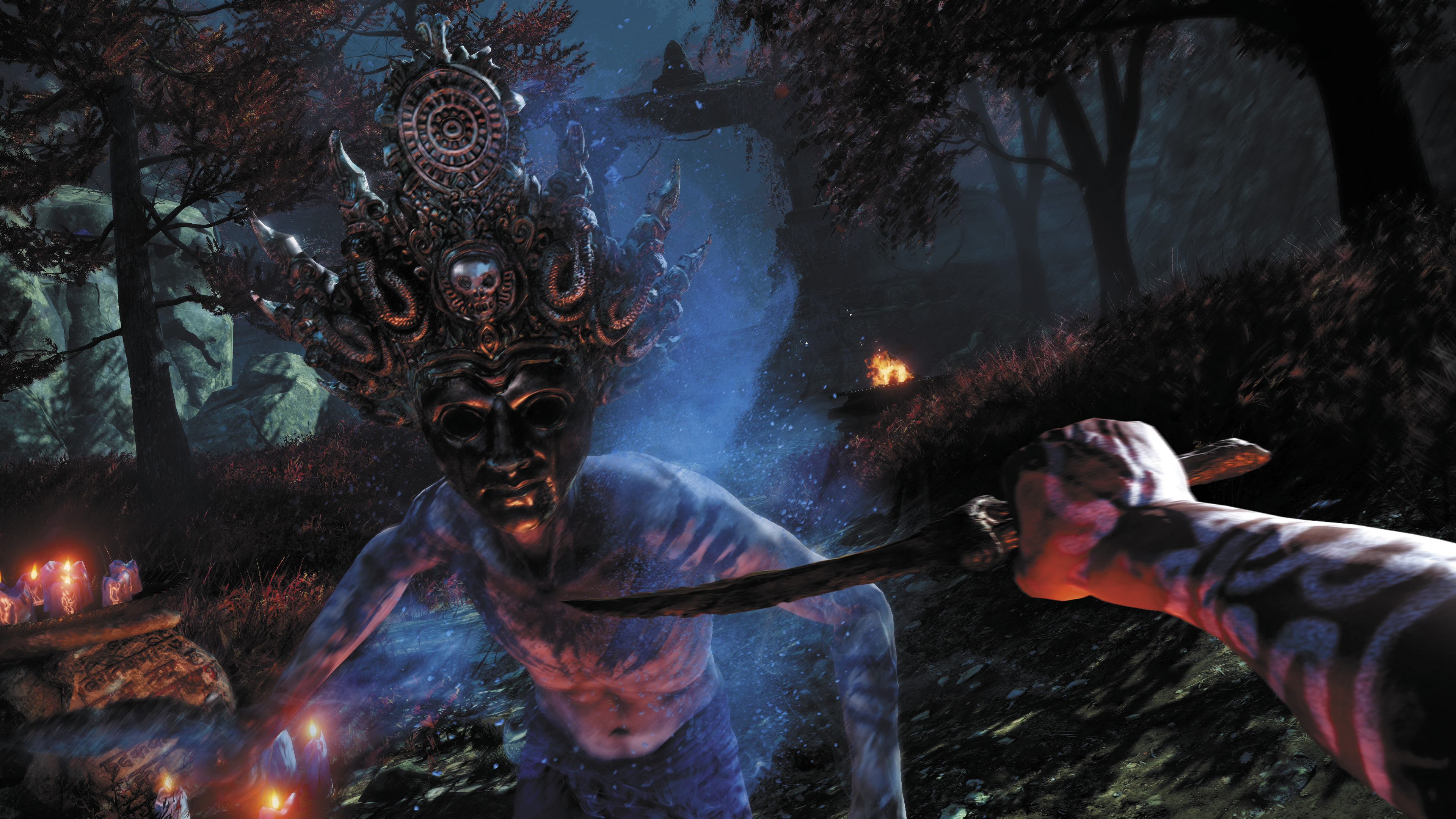
The Butchers have a maniacal, petty, twitchy, single-minded behavior—they want to destroy, plain and simple.
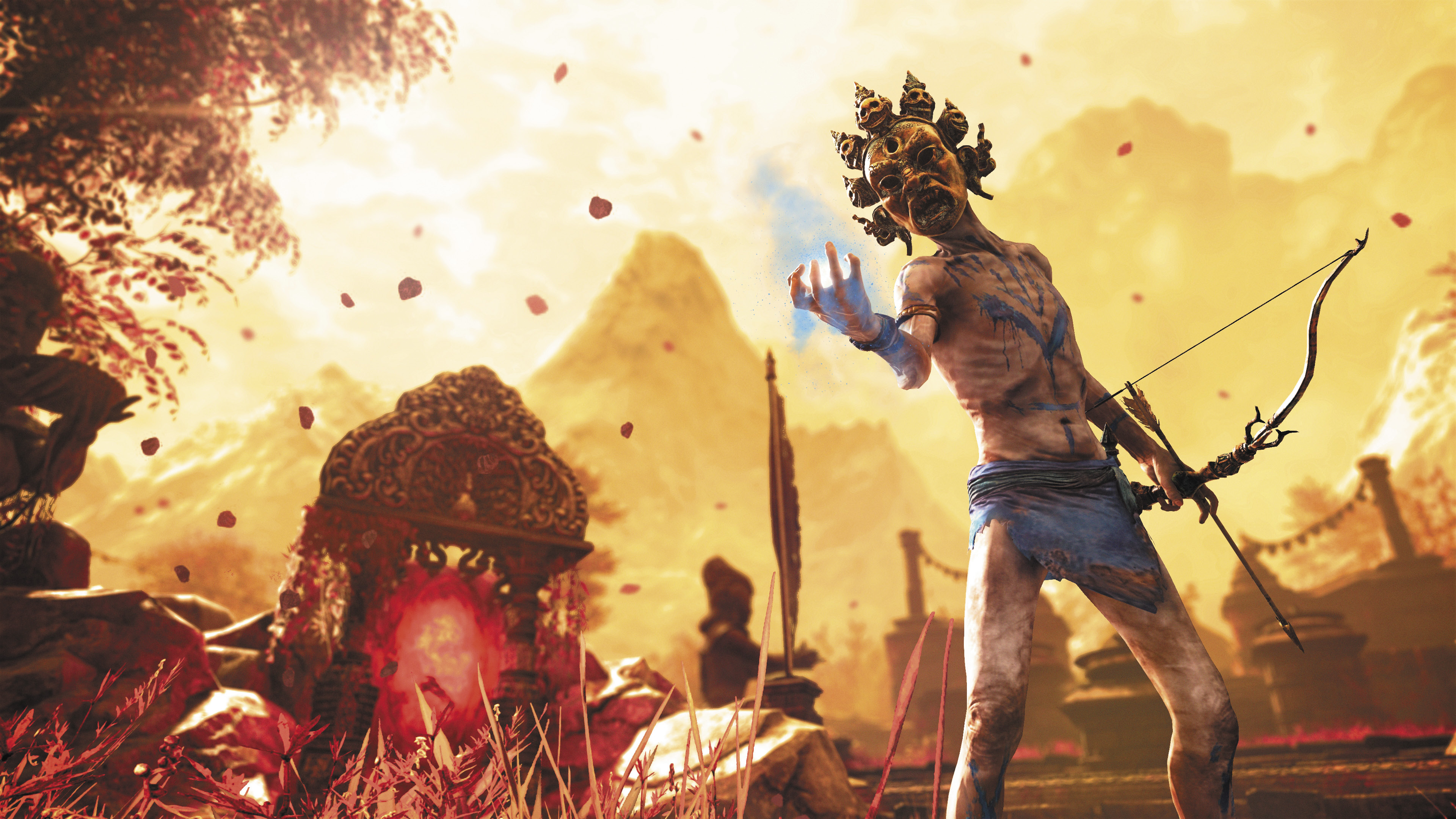
The Lurkers, our hunter class, are more sophisticated, intelligent, patient, and attuned to the land, with the ability to summon powerful beasts from the Unknown.
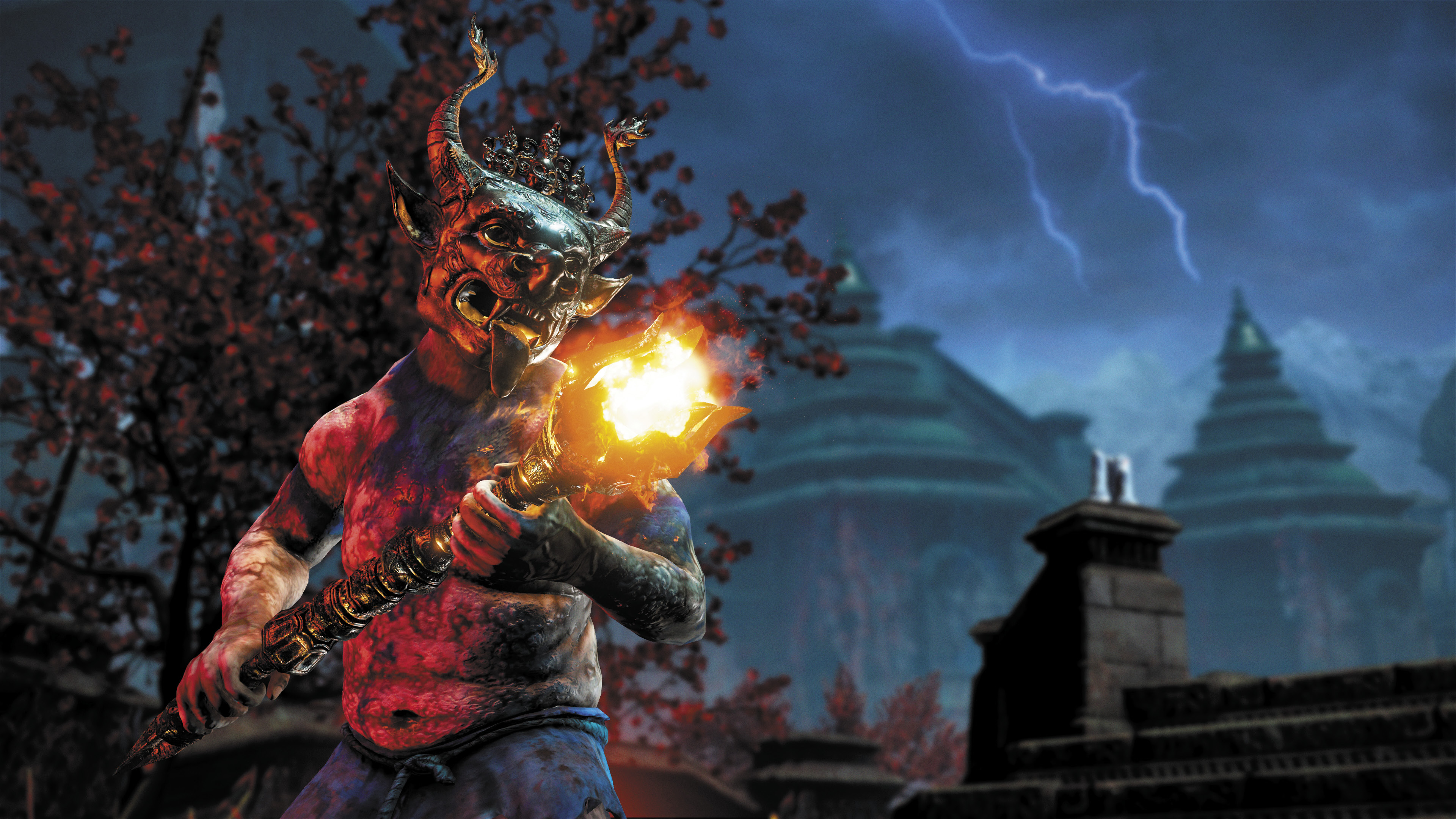
The Scorcher is the most dominant of all the demons, and orders all of its kind to follow or be burned alive.
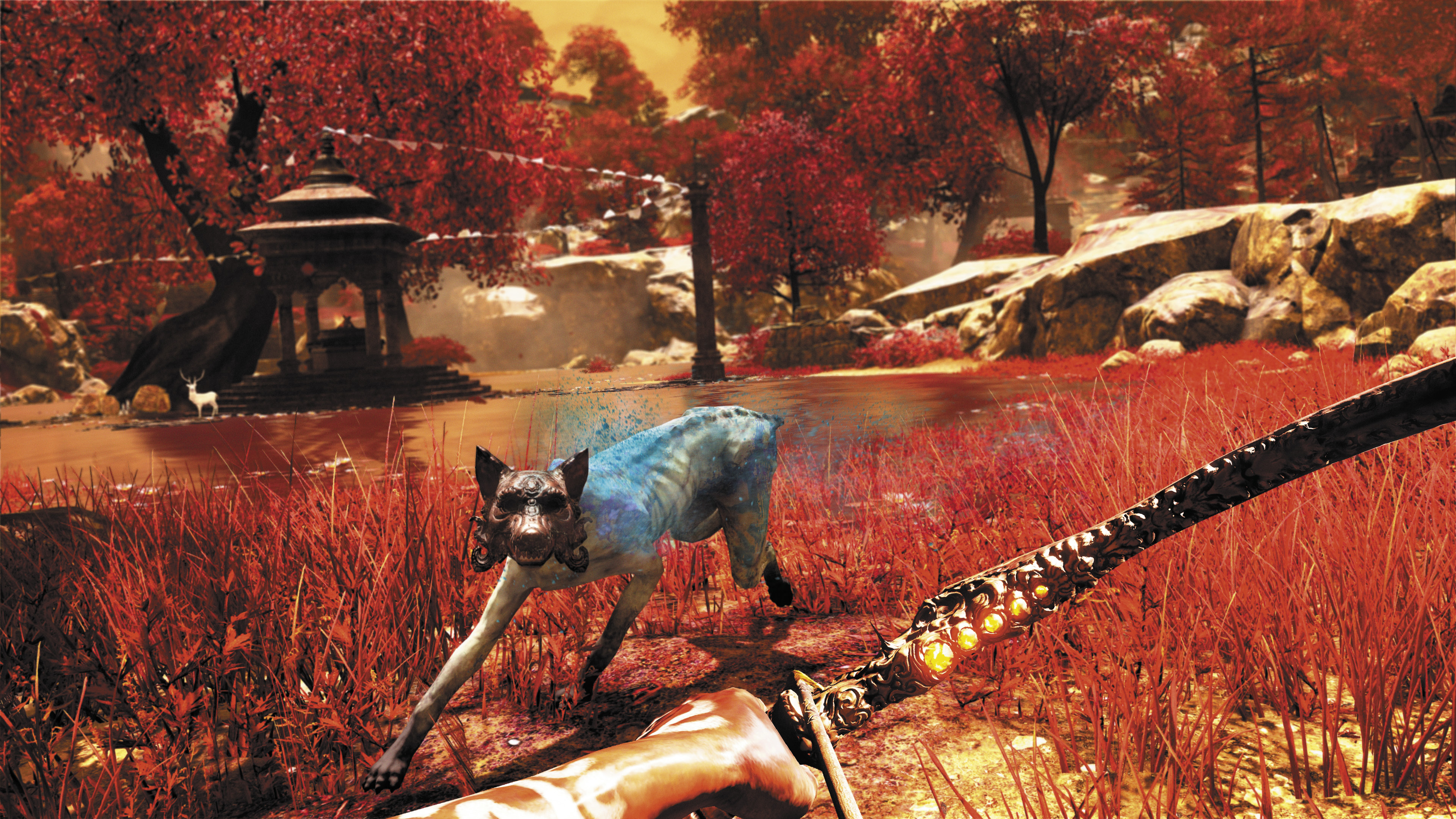
The goal was to create distinct personalities that would be identifiable for gameplay, but dynamic and consistent with the universe we were building. The goal was for this dynamism to cascade to the voice casting, design, performance, and animation.
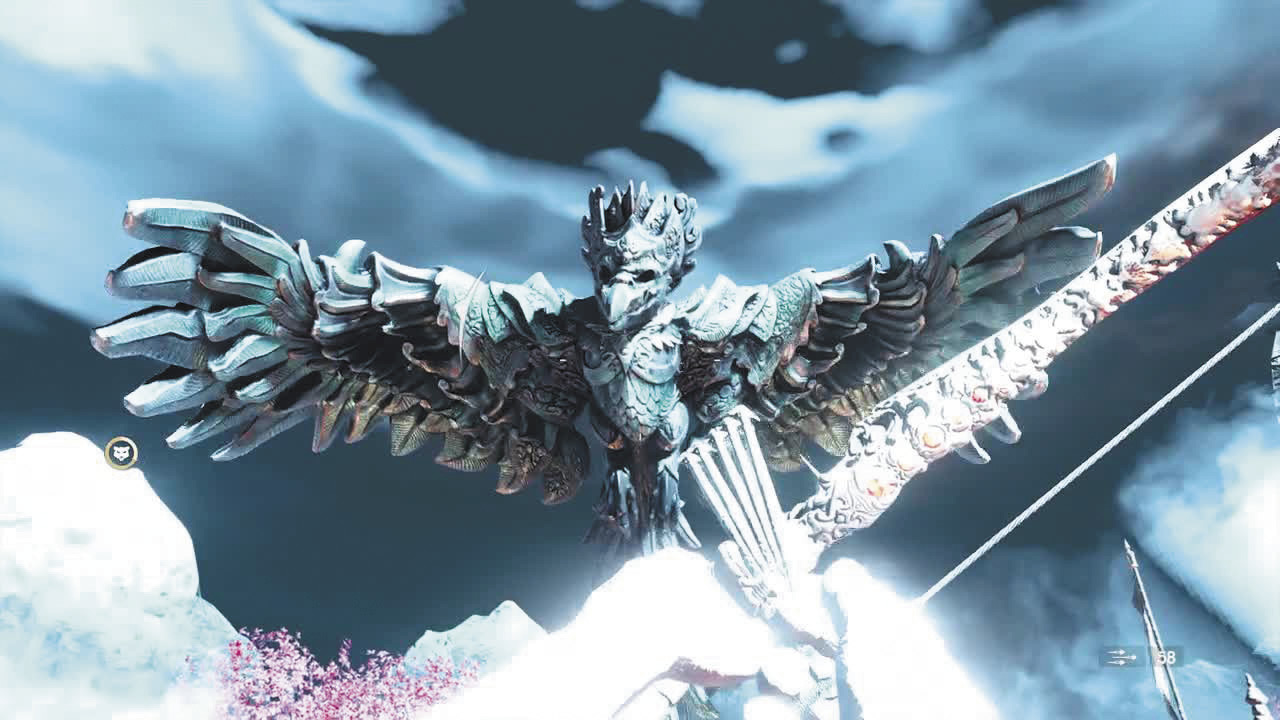
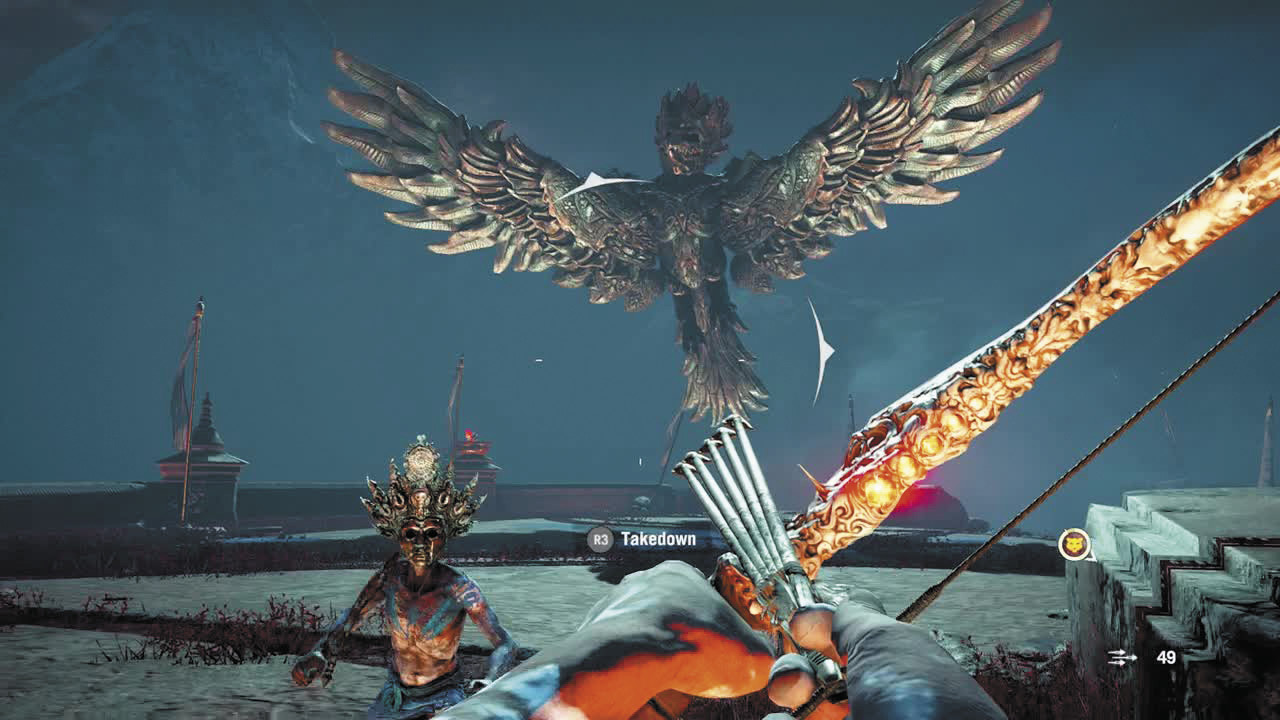
The Rakshasa is also an invention, as winged creatures in many Asian and South-Asian cultures, such as the Hamsa or Garuda, are symbols of purity. That’s not what we were really looking for with Shangri-La’s villain. So we came up with the idea of a demon from another plane of existence, what we called the Unknown, entering the world of Shangri-La and taking possession of one of its winged statues, subverting it for its own purposes. This is why the Rakshasa is made of bronze and so powerful.