
Far Cry 4 Guide Pagan Min: Birth of a Tyrant
Kyrat
By: Mark Thompson, Narrative Director, Far Cry 4
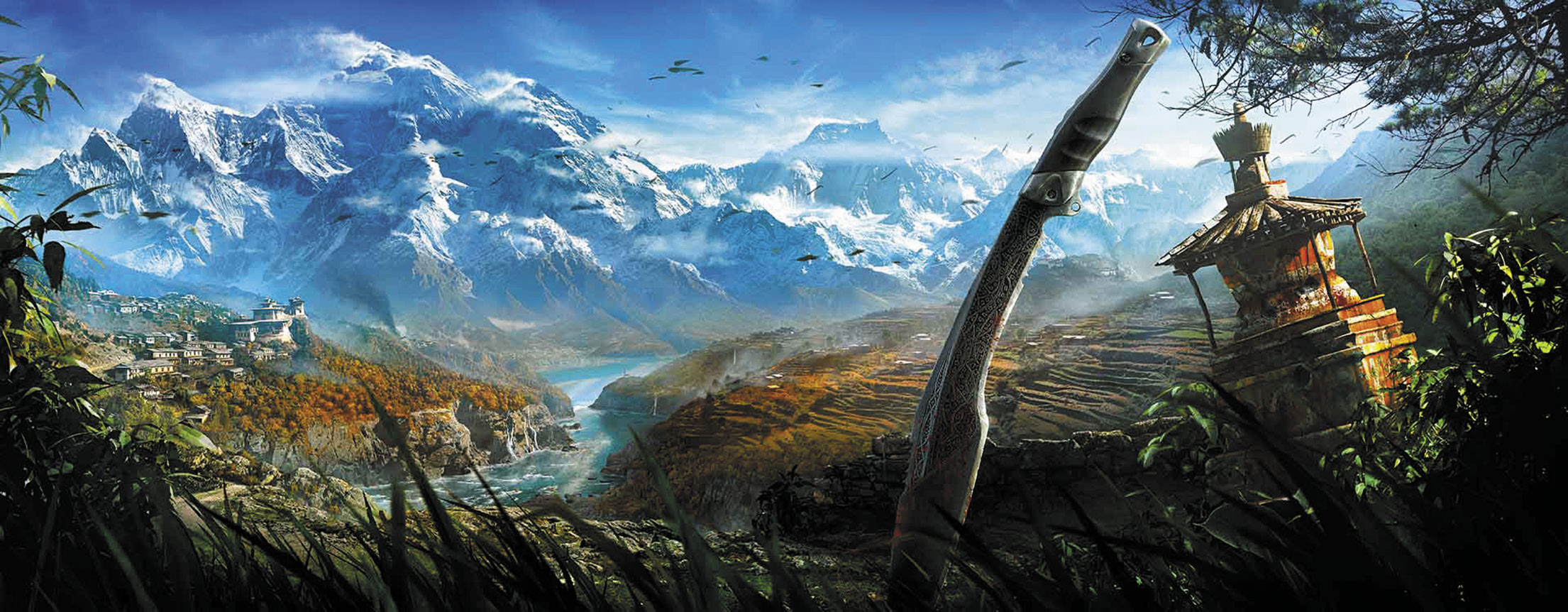
We had three goals for the environment of Far Cry 4. The first was to create a location that was visually different from the tropical islands of Far Cry 3. The second was to have a wide variety of locations in the same game, so that, as you progress, the world changes around you.
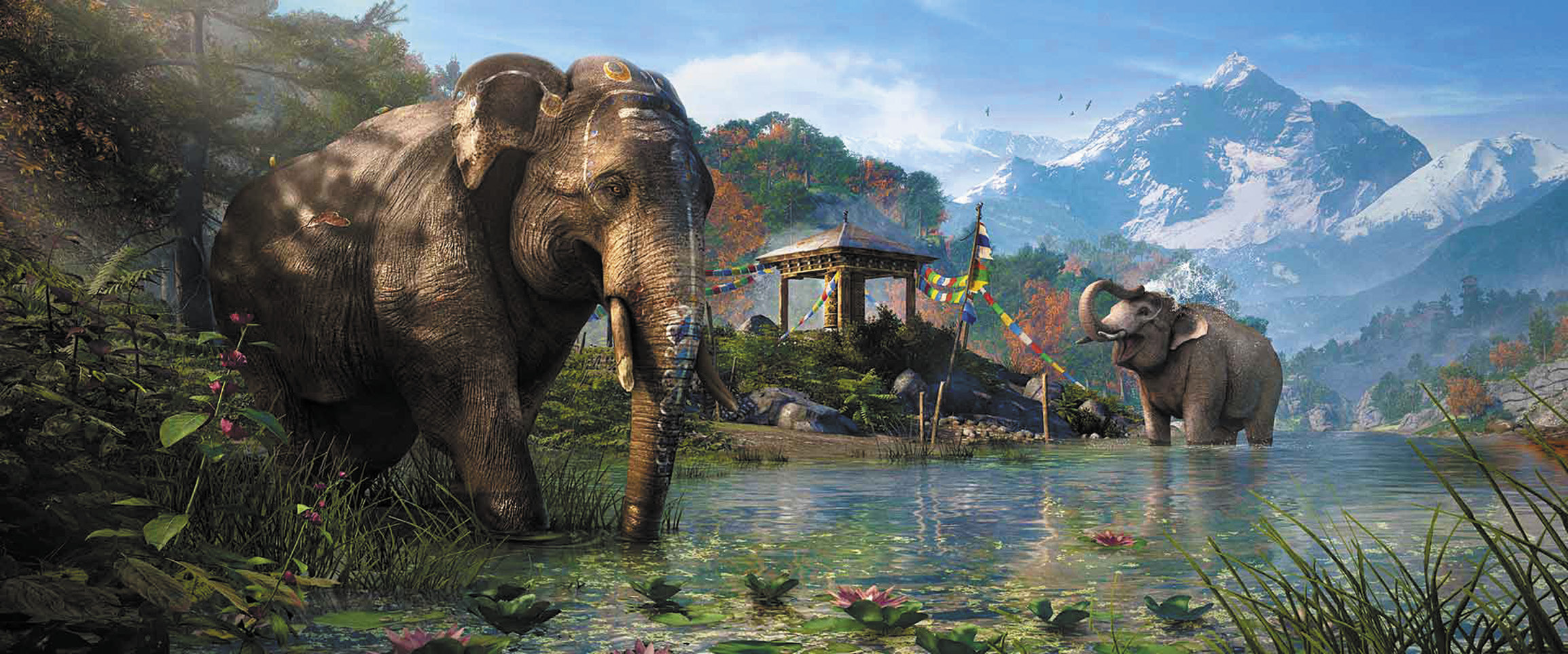
Finally we wanted to have an interesting mix of animals, building on the strength of Far Cry 3. More specifically, we wanted to have elephants. These three considerations led us to the Himalayas where we found an incredible range of flora and fauna that seemed the perfect fit for the next Far Cry adventure.
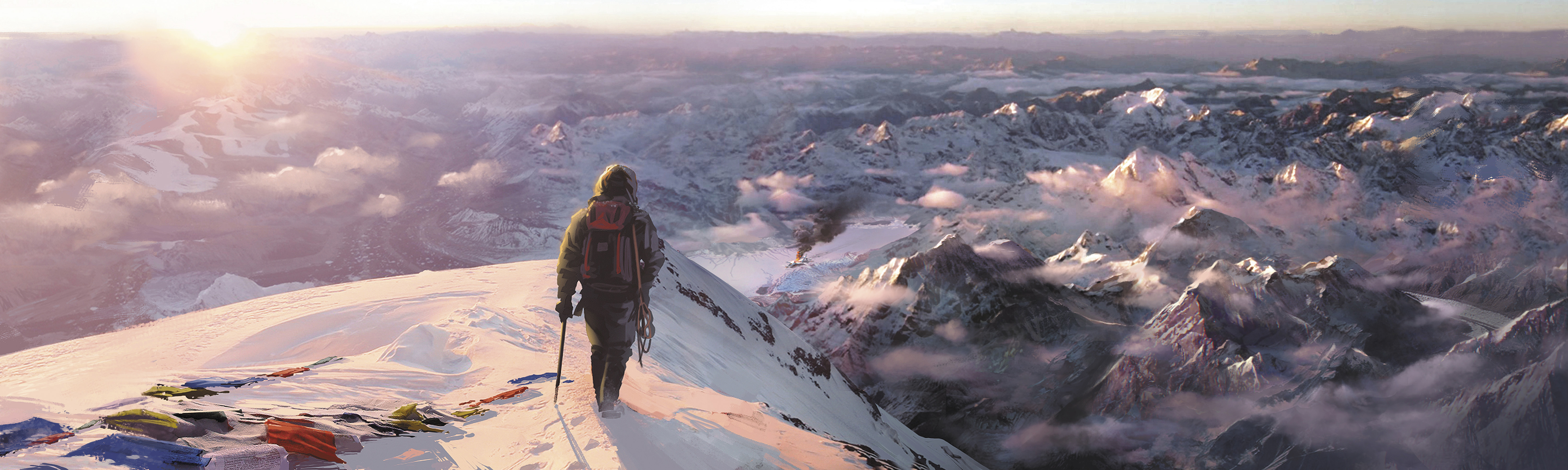
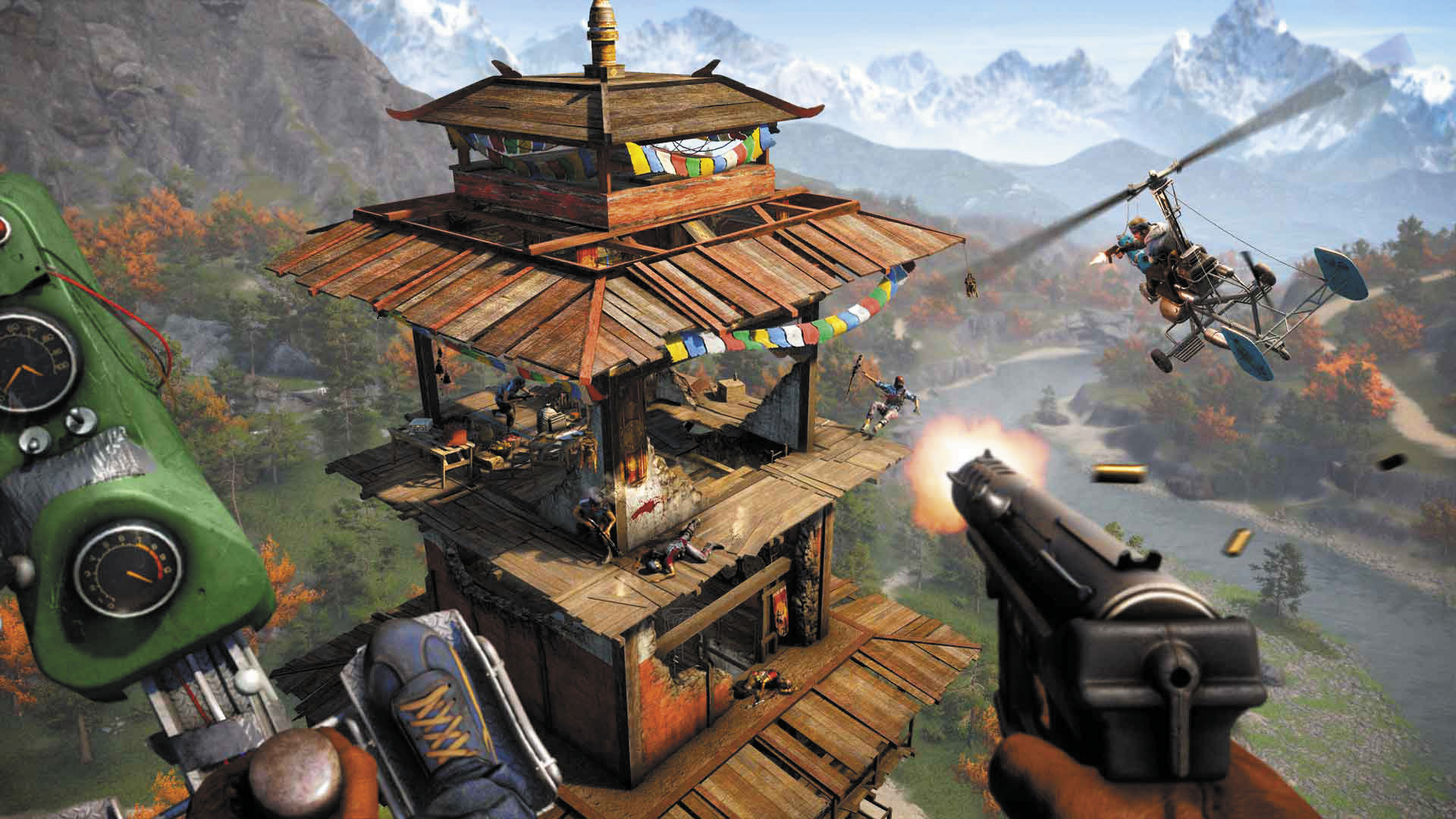
The change from relatively flat islands to the peaks and valleys of the Himalayas brought some pretty immediate navigation challenges, specifically vertical navigation. We looked at these challenges as a game design opportunity and created some new mechanics and tools for players to use to tackle the new cliffs and mountains. Far Cry 3 had a ledge climbing system, but it was fairly limited, so we expanded on this to create a grappling system to allow faster navigation. We also created new vehicles, especially the buzzer, a small low-altitude gyrocopter. With these new player abilities we also needed to improve the AI systems so our NPCs could keep up with players. We implemented 3D navigation for NPCs so they can now climb ledges and use ziplines, and of course they have their own helicopters.
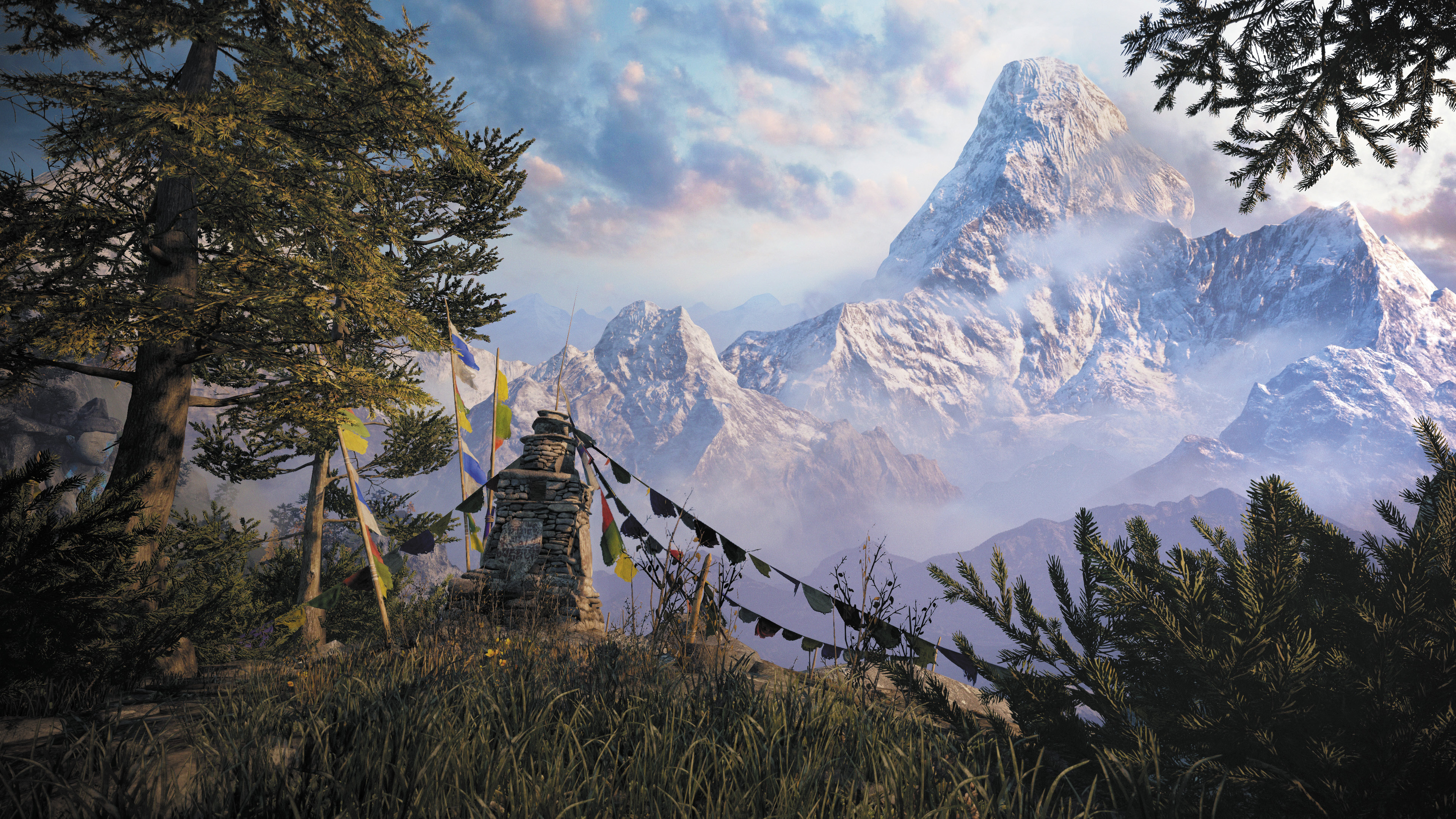
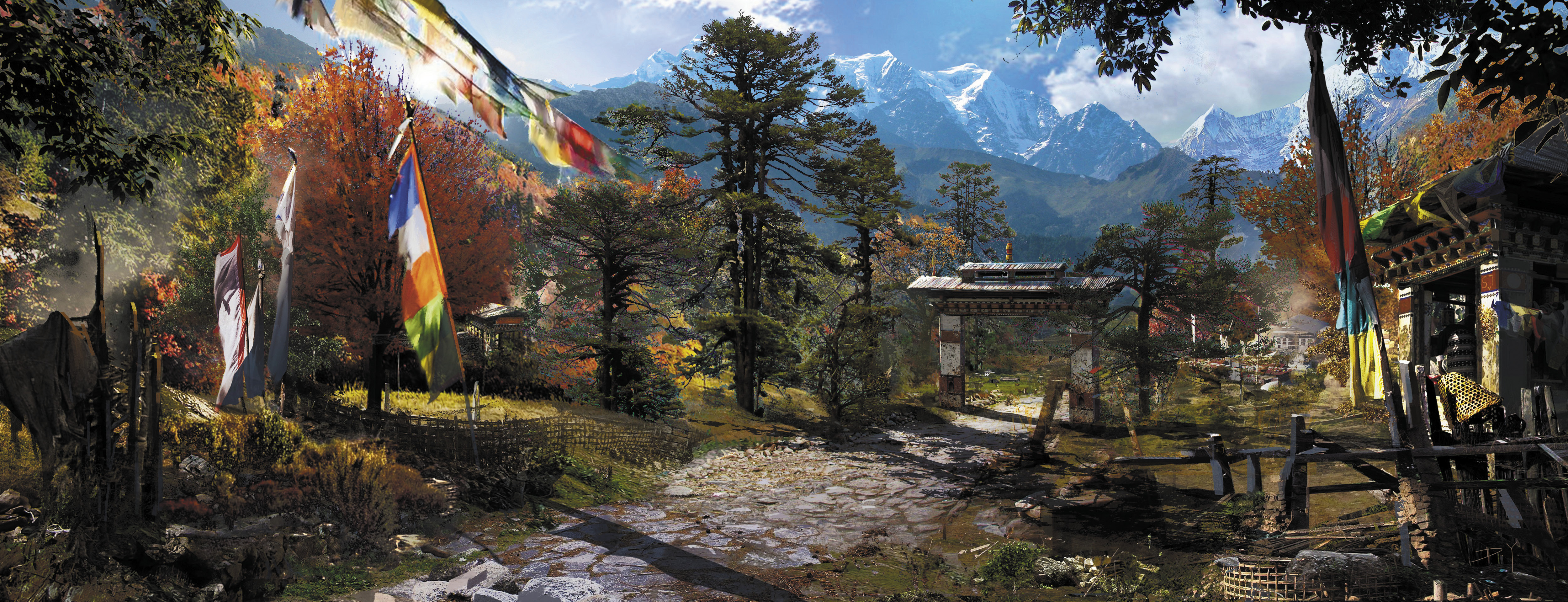
Far Cry is always in a place that looks and feels real, but isn’t an actual location in the world. We carry on that tradition by creating Kyrat. It is influenced by places like Nepal and Bhutan, and in building Kyrat we have been influenced by the culture and history of the Himalayan region as well as the physical environment.
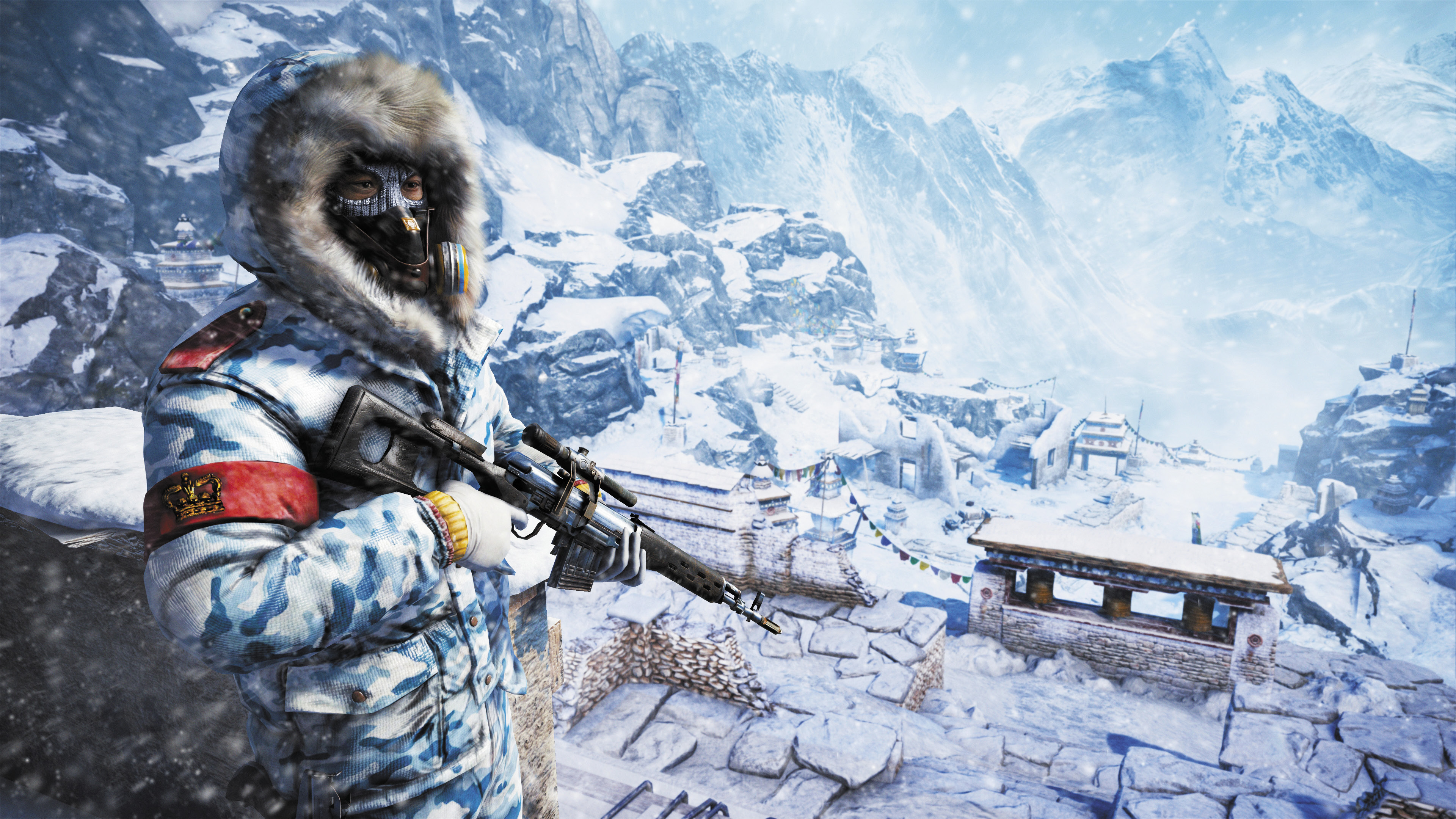
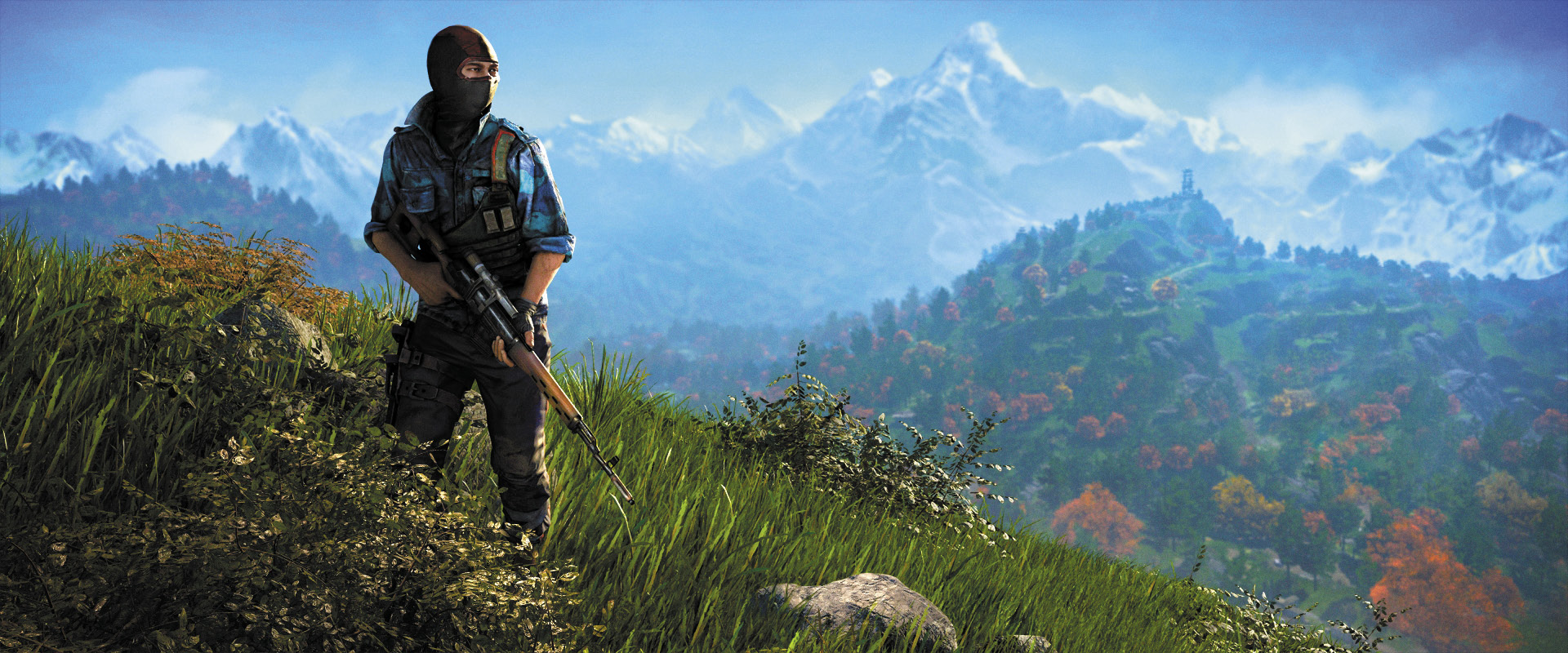
Our goal is to create a credible location that you can believe could exist somewhere in the world today and at the same time retain creative control over what we can change to create the perfect canvas for gameplay, which is the most important function of the places we create for Far Cry.
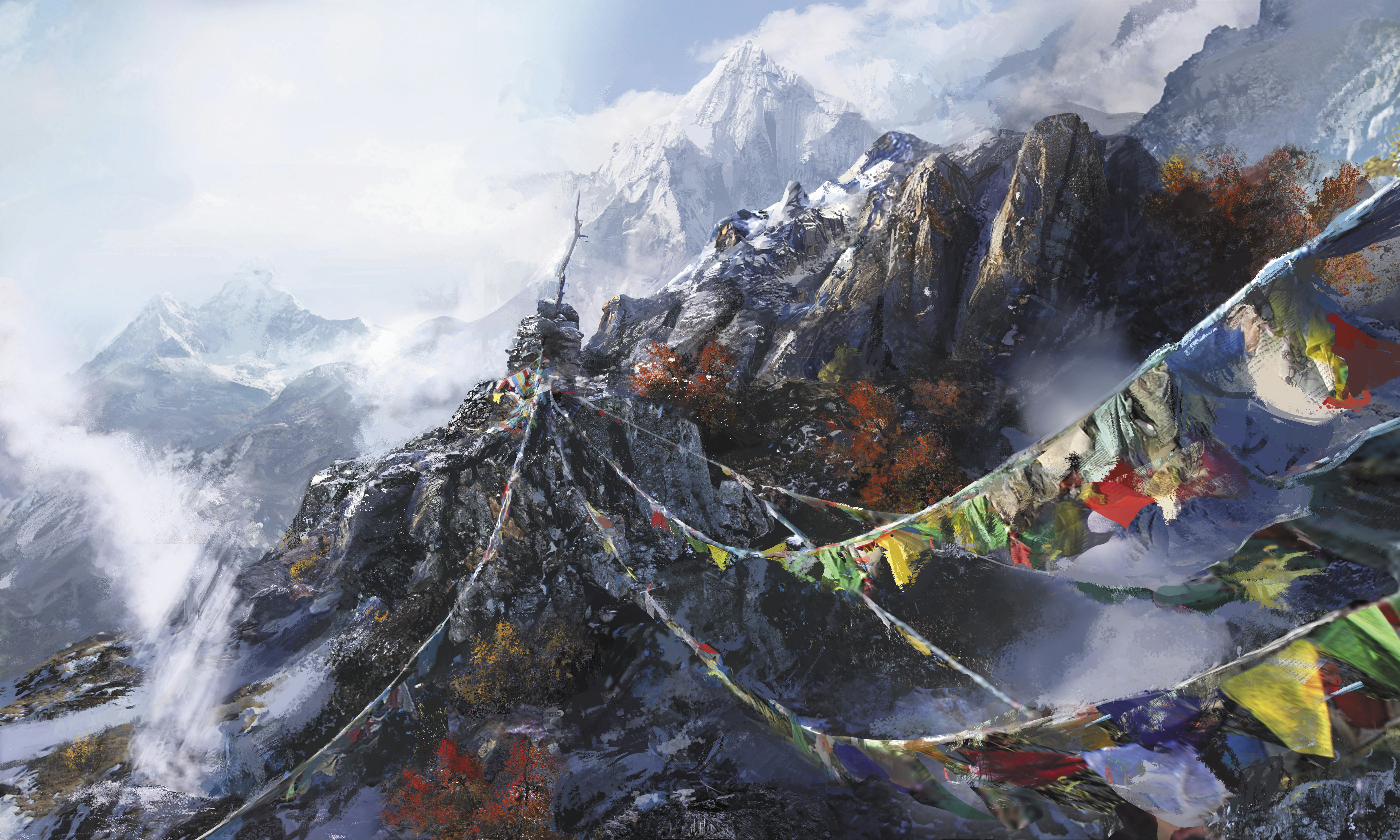
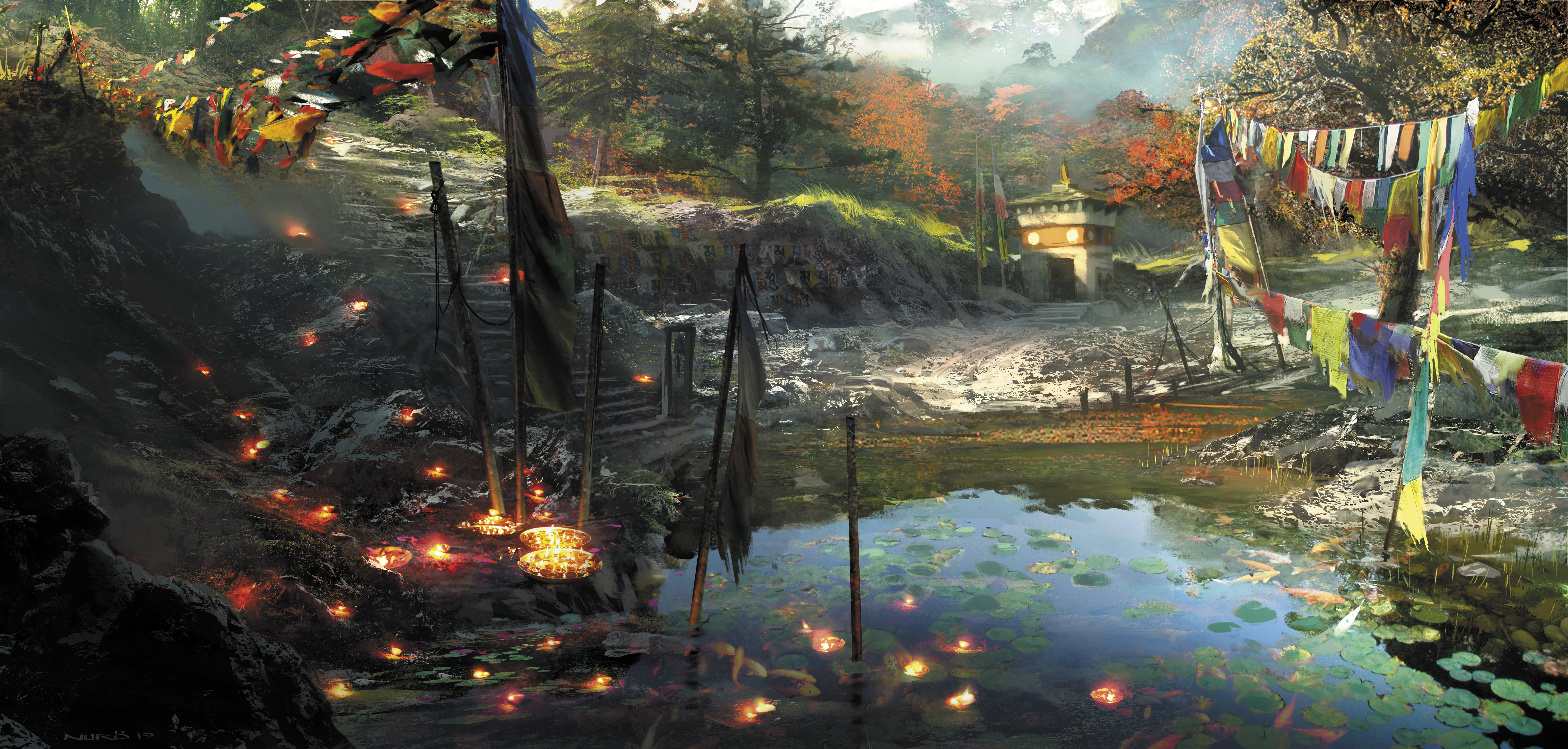
A supporting goal is to create an environment that tells its own story, so without cinematic scenes or characters, players can experience narrative and learn about the world they are in. This requires a lot of background work creating a historical timeline—myths and legends through to present-day economic and sociocultural situations. The information is then used to give context to locations, characters, stories, conversations overheard, and generally to create a living, breathing world built on credible foundations.