
Atari Flashback: The Essential Companion Guide Introduction
Atari 2600 History
Although the Atari Video Computer System, a.k.a. VCS, or, as its now more commonly known, the Atari 2600, was released in late summer of 1977, eventually becoming the industry’s first blockbuster system, the story of home videogames actually began much earlier. The industry’s slow burn began in the early 1950s when an engineer by the name of Ralph Baer was trying to figure out how to take advantage of the growing number of household TVs for something other than watching standard broadcasts.
Unfortunately for Baer, despite success creating lines and checkerboard patterns on a TV screen, neither the technology nor the vision of those around him were sufficient to make additional progress on his astounding idea of playing games on a television. It would take Baer several career changes over more than a decade to finally make the breakthroughs needed in both technology and getting a corporate partner to understand the possibilities of his revolutionary concept.
There were earlier games that used video displays of some type, of course, including OXO (1952), Tennis for Two (1958), and Spacewar! (1962), but they were all impractical for mass market consumption for one reason or another, although no less historically important.
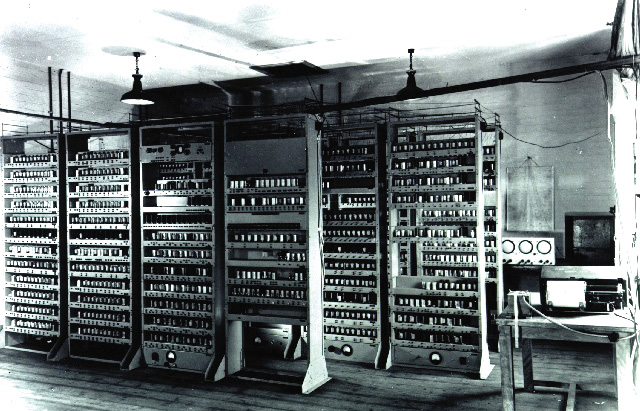
Alexander Douglas’s OXO was a simple graphical single player versus the computer tic-tac-toe game on the Electronic Delay Storage Automatic Computer (EDSAC) mainframe at the University of Cambridge. Although more proof of concept than a compelling gameplay experience, OXO nevertheless set the precedent of using a computer to create an immediately accessible virtual representation of a real-world activity. OXO’s evolution can be seen in the Atari 2600’s 3-D Tic-Tac-Toe (1980).
For a visitors’ day at the Brookhaven National Laboratory in Upton, New York, William Higinbotham and Robert Dvorak created Tennis for Two, a small analog computer game that used an oscilloscope for its display. Tennis for Two rendered a moving ball in a simplified side view of a tennis court. Each player could rotate a knob to change the angle of the ball, while the press of a button sent the ball toward the opposite side of the court. As with OXO, few people got to experience Tennis for Two but, in many ways, it can be considered the first dedicated videogame system, which—essentially—are just simplified personal computers.
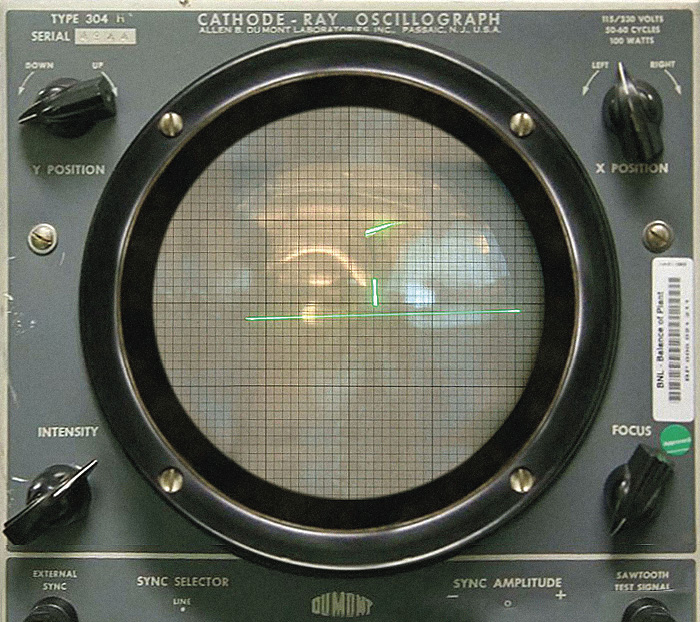
Without the benefit of hindsight, though, this milestone was even lost on the game’s creators, who, after a second visitors’ day one year later, disassembled the machine’s components for use in other projects.
Although this was historically tragic, it was intrinsic of the hacker mindset of forward progress that would eventually guide the videogame and personal computing revolutions in the years to come. As will be shown, Tennis for Two’s evolution can be seen in both Baer’s work and in Atari’s earliest arcade and home products. Of course, the Atari 2600 itself has Video Olympics (1977), which contains a wide variety of paddle and ball games, including the iconic Pong.
Spacewar!, initially designed by Steve Russell, Martin Graetz, and Wayne Wiitanen, with later contributions from Alan Kotok, Dan Edwards, and Peter Samson, was the result of inspired engineering and hundreds of hours of hard work. Developed on the DEC PDP-1 mainframe at MIT, Spacewar!’s gameplay was surprisingly sophisticated and ambitious, pitting two spaceships against each other in an armed duel around a star that created gravitational effects on the two craft.
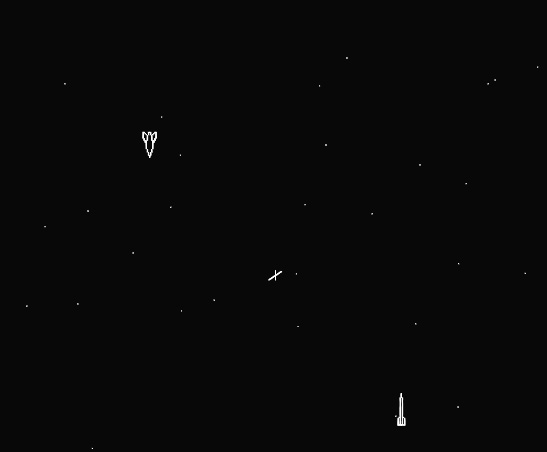
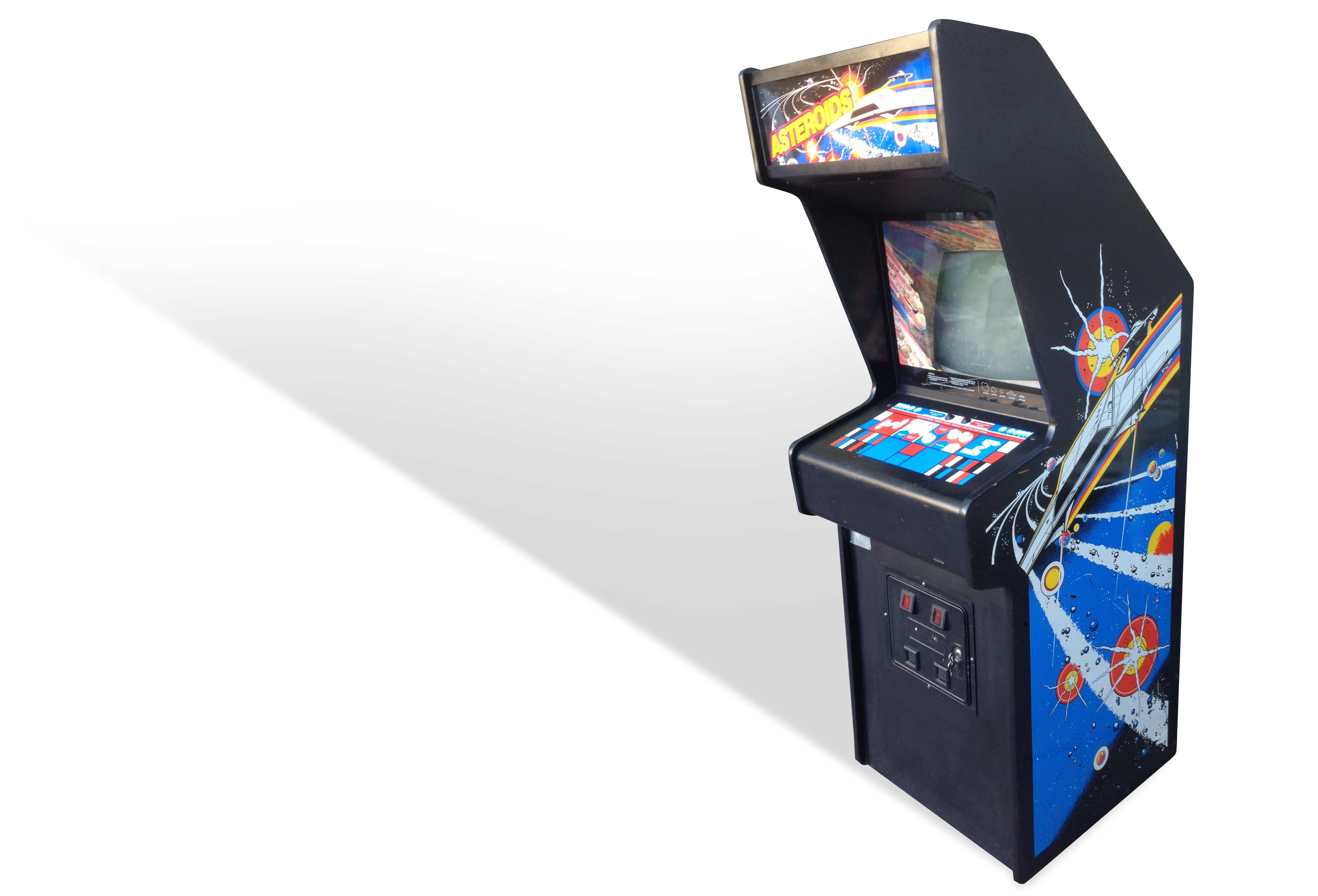
Each player controlled a ship via the mainframe’s front-panel test switches or optional external control boxes, adjusting each respective craft’s rotation, thrust, fire, and hyperspace, which was a random, evasive screen jump that may cause the user’s ship to explode. Over the years, the game was improved and inspired many clones and spiritual successors, including the first commercially sold arcade videogame in 1971, Computer Space, which was designed by Nolan Bushnell and Ted Dabney, who would go on to found Atari just one year later. Other notable clones and games that made use of key Spacewar! elements include the Atari 2600’s own Space War (1977) and the arcade and Atari 2600 smash hit, Asteroids (1979).
It was this ability to inspire and influence that was perhaps Spacewar!’s greatest contribution to the future of computing and videogames. Even with still privileged access to the host computing hardware limiting the game’s wider exposure, enough of the industry’s key future movers and shakers got to see first-hand that these machines could be used for something more than serving the often sober computational needs of businesses, universities, and the government. In short, they could also delight and entertain anyone lucky enough to try. This concept of entertainment for everyone brings us back to Baer.
His first true attempt at building a home videogame console in the mid-1960s was a simple game of tag featuring two squares (“Chase”), which soon morphed into his legendary “Brown Box” prototype. The prototype included several additional diversions, including paddle and ball and target shooting games. After getting rejected by several TV manufacturers, Baer finally signed an agreement in 1971 with Magnavox, who released a refined version of the prototype the following year, renaming it the Odyssey Home Entertainment System.
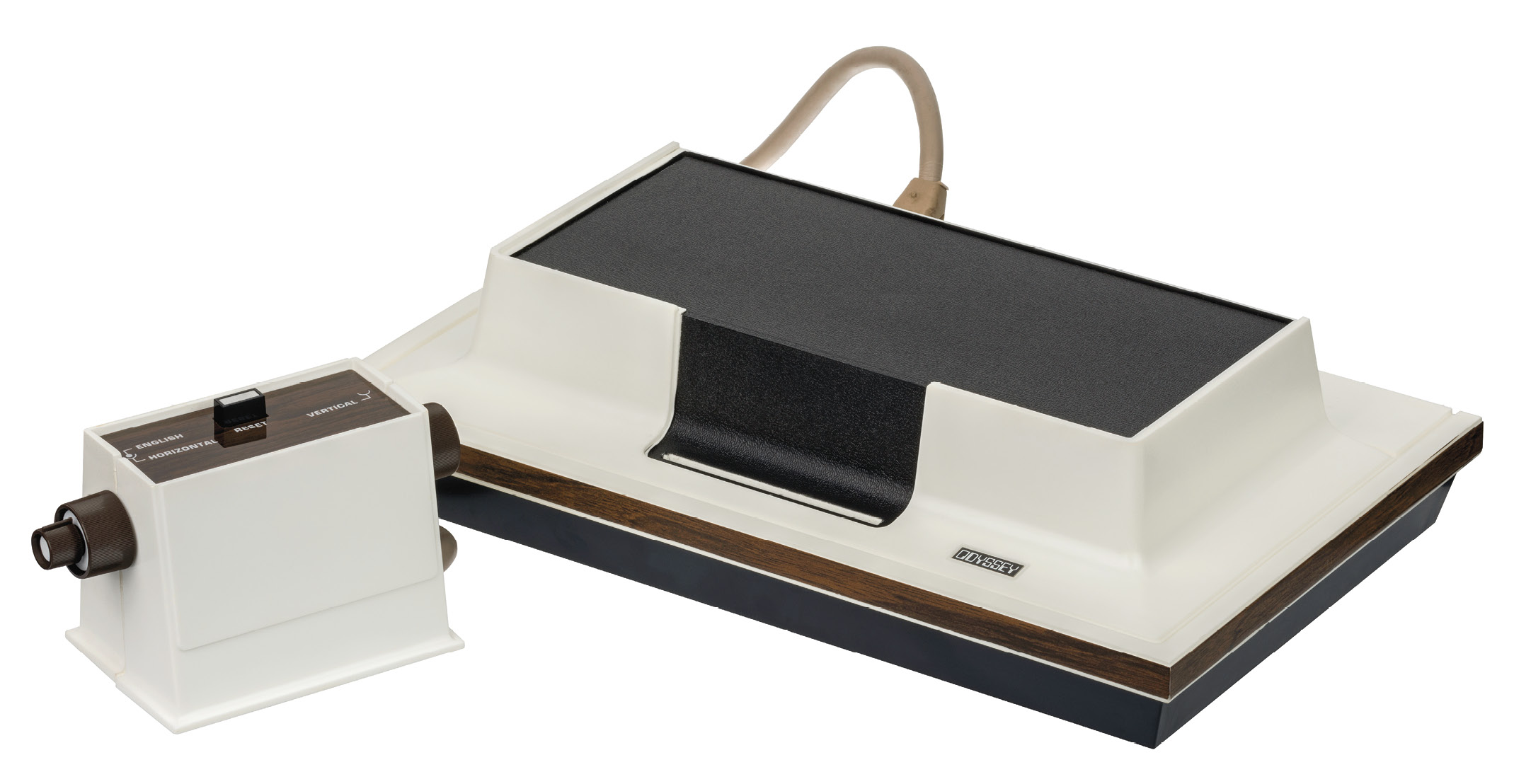
Although relatively limited in its capabilities, requiring considerable setup and imagination from its players, the Odyssey nevertheless boasted several features that became industry standards. These features included detachable controllers, additional controller options (a light rifle/gun), and interchangeable game cartridges. These cartridges appeared to offer players an assortment of different games to play, but were really just plug-in cards that turned the console’s built-in features on or off like a streamlined selector switch. Twelve games were included with the system, with an additional 10 eventually released separately. The Odyssey could display only white squares and lines on a black background, so two different sizes of color overlays were provided to enhance game play and accommodate different televisions. Many games also included external enhancements such as playing cards, maps, dice, and game boards.
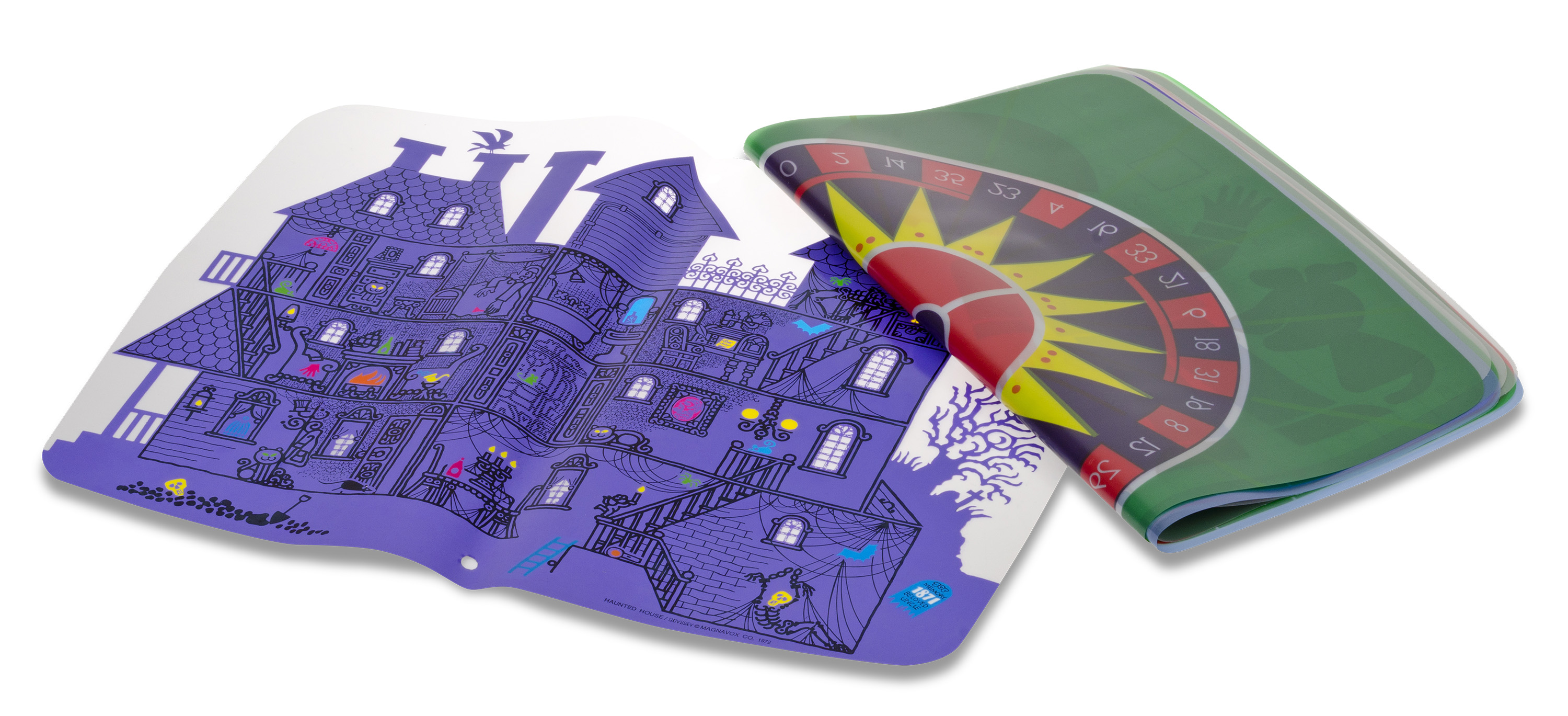
Much of the system’s playability came from these accessories, since the on-screen interaction was so limited. The system only registered object collisions, and there was no sound or score tracking.
Perhaps the Odyssey’s most enduring legacy was inspiring Nolan Bushnell at a Magnavox product demonstration in 1972. Later that same year, Bushnell founded Atari and, with the help of engineer Al Alcorn, developed Pong for the arcade. Pong had simple instructions, “Avoid missing ball for high score.” A smash hit was born.
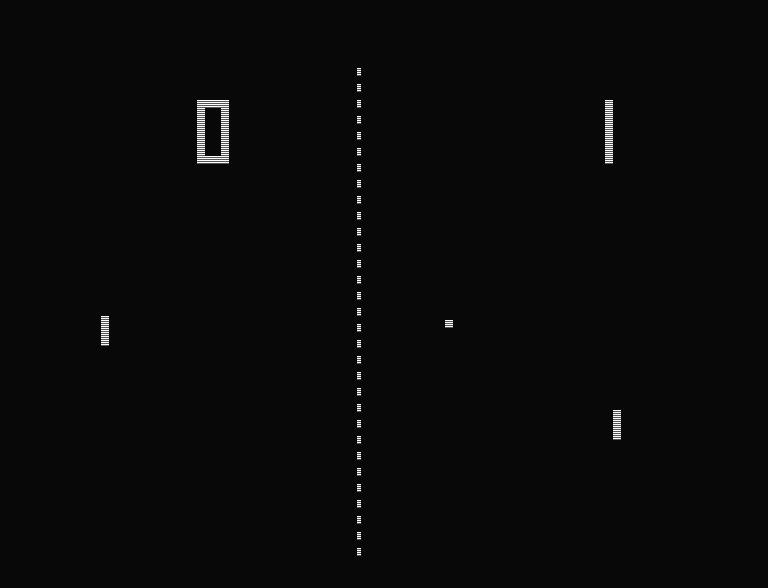
Pong itself was clearly derivative of one of the Odyssey’s paddle and ball (“Tennis”) games and Atari’s success with Pong led several other companies to also copy the game’s concept. Magnavox eventually filed a successful lawsuit against Atari for copyright infringement, forcing the fledgling company to settle for a lump sum and other manufacturers to pay hefty licensing fees.
Pong’s simple but compelling game play was in stark contrast to Bushnell’s and Dabney’s earlier Computer Space for Nutting Associates.
Despite its striking cabinet design, relatively large and inviting screen, and four straightforward action buttons (Fire Missile, Thrust, Rotate Left, and Rotate Right), Computer Space was too complex for the general public’s first exposure to videogames. Bushnell later admitted that the game appealed mostly to his engineering friends who had enjoyed its inspiration, Spacewar!. Although less impressive in nearly every way than Computer Space, it was Pong’s emphasis on approachability and fast-paced fun that would first define and then later establish an entire industry. This lesson would come to serve the Atari 2600 well.
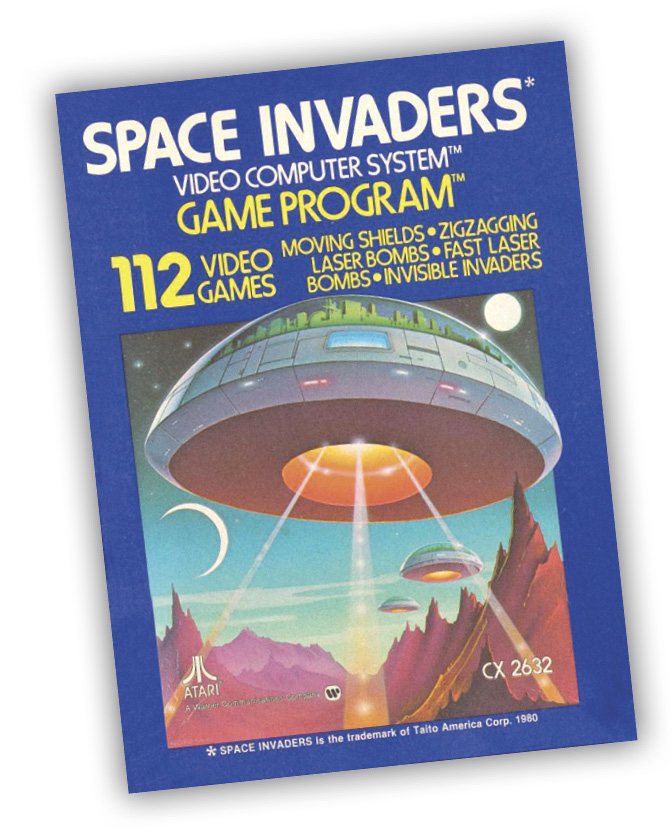
Although the Odyssey received a small sales boost from the popularity of Pong and the various clones that sprung up in the arcade, the console never achieved critical mass success in American homes, selling a few hundred thousand units before it was discontinued in 1975. Instead, that success occurred when Atari created a home version of Pong that same year, complete with automatic scoring and sound. Then-dominant retailer Sears agreed to distribute Pong under their own brand name, Tele-Games, to great success, legitimizing the viability of Baer’s plan to market videogame systems for home use. Atari released its own branded version of the console starting in 1976, just as an explosion of Pong clones saturated the home videogame market.
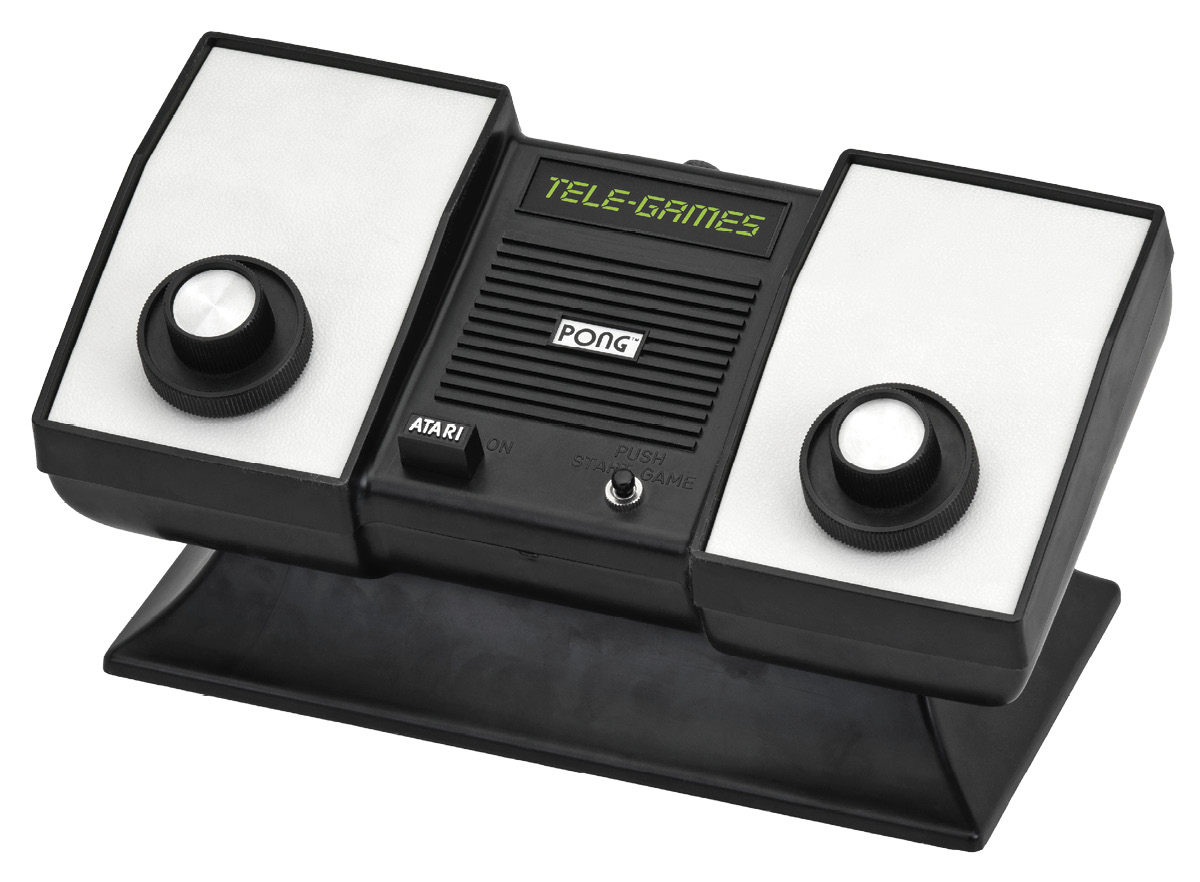
Although these machines were extremely popular for a time, and offered increasingly sophisticated feature-sets, there were simply too many systems for the market to sustain them all for long. This was particularly the case in light of the rise of fully programmable consoles that used interchangeable cartridges for more diverse gameplay possibilities, starting with Fairchild’s Video Entertainment System (VES) in 1976. This home videogame breakthrough was followed one year later on the home computer side with the release of the preassembled and relatively user-friendly Apple II, Commodore PET, and Tandy TRS-80 systems, each of which featured its own interchangeable software, first on cassette tapes and, later on, disks.
Although the Fairchild Channel F’s use of interchangeable, programmable cartridges meant that new types of games could be developed and released on a regular basis, including games that weren’t simple paddle and ball variations, its technology was a still a bit limited and none of its games particularly inspiring. After the release in 1977 of RCA’s primitive black-and-white, cartridge-based console, Studio II, the third offering from Atari—now effectively an industry veteran at five years old—proved the charm. Of course, the release of the Atari 2600 was not an immediate success, selling only a few hundred thousand units in its early months. Instead, it built momentum slowly through to the end of the decade when its fortune’s finally exploded.
All three of the early cartridge-based consoles suffered from competition from bargain bins full of Pong clones, which had oversaturated the market after the introduction of General Instruments’ AY-3-8500 “Pong-on-a-chip.”
These systems often advertised four to six games that were usually just subtle variations of the same basic ball and paddle game — all for $100 or less. The VCS’s initial price of $199
(around $800 in today’s dollars) was a substantial investment and the modest library of game cartridges certainly didn’t distinguish the launch. However, an influx of funds from parent company Warner Communications supported Atari during these years and a growing supply of quality game cartridges, advertisements, and positive press helped Atari sell millions of VCS consoles by 1980.
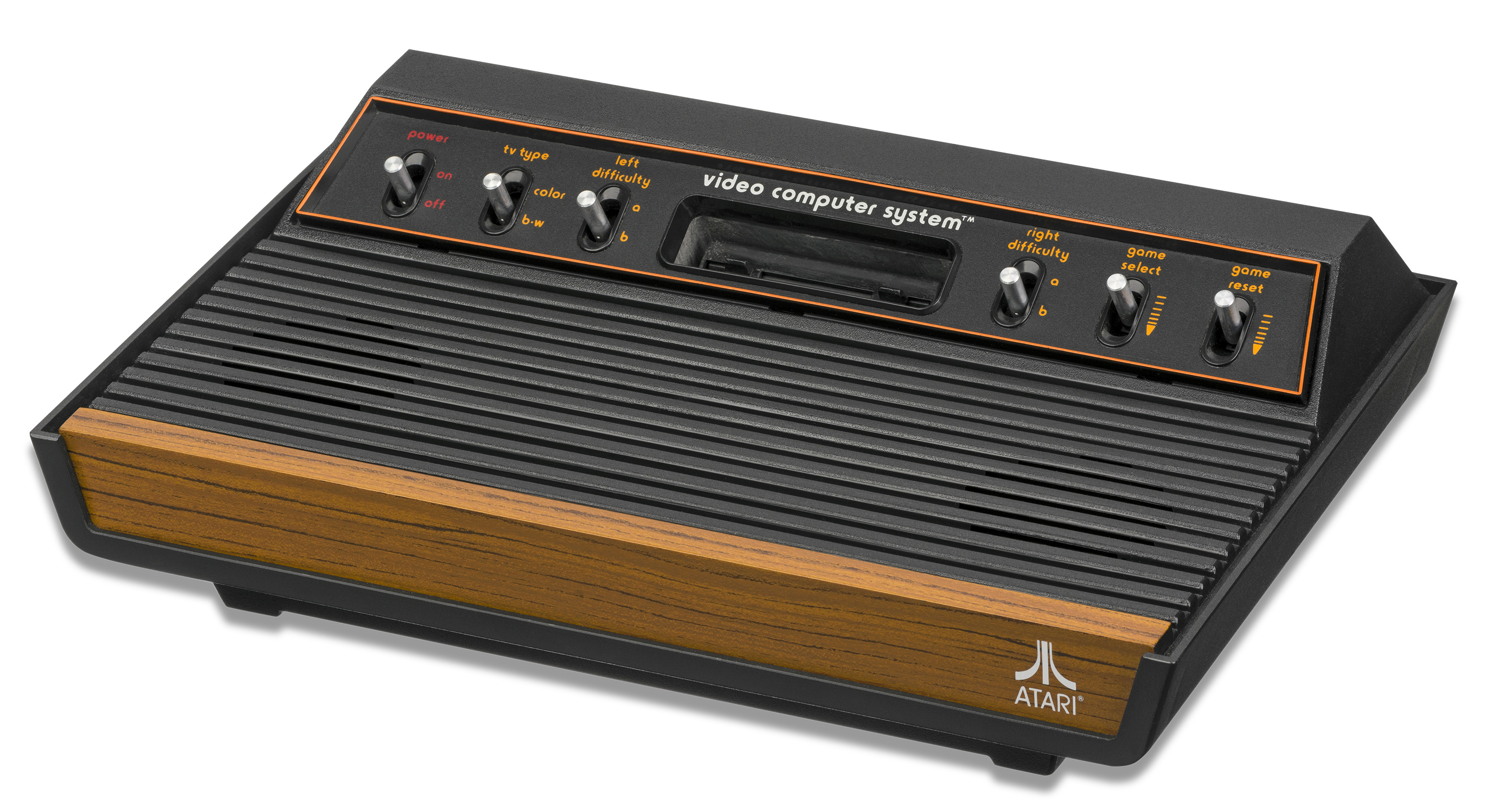
The first system, known today as the “heavy sixer,” featured dense internal RF shielding (giving it its considerable weight) and six chrome selector switches for power on/off, color/black-and-white, player A difficulty, player B difficulty, select, and reset. The design featured sharp angles with black plastic and wood-grain styling that gives it a distinctive—and now iconic—1970s aesthetic.
With miniscule system memory of 128 bytes of RAM (literally 128 characters of text) and Motorola’s 8-bit 6507 microprocessor running just over 1 MHz, the Atari 2600 seems at first glance anything but a powerhouse. Sound is limited to two channels, but, if thoughtfully programmed, could support decent sound effects and music. Graphics, while displayed at a fairly low resolution and with limitations on the number of flicker-free objects per line, could draw from an impressive 128-color palette. In fact, the platform’s use of colors and color cycling became the Atari 2600’s signature feature, enabling interesting effects that helped extend the effective life of the console far beyond what could have ever been imagined during its development.
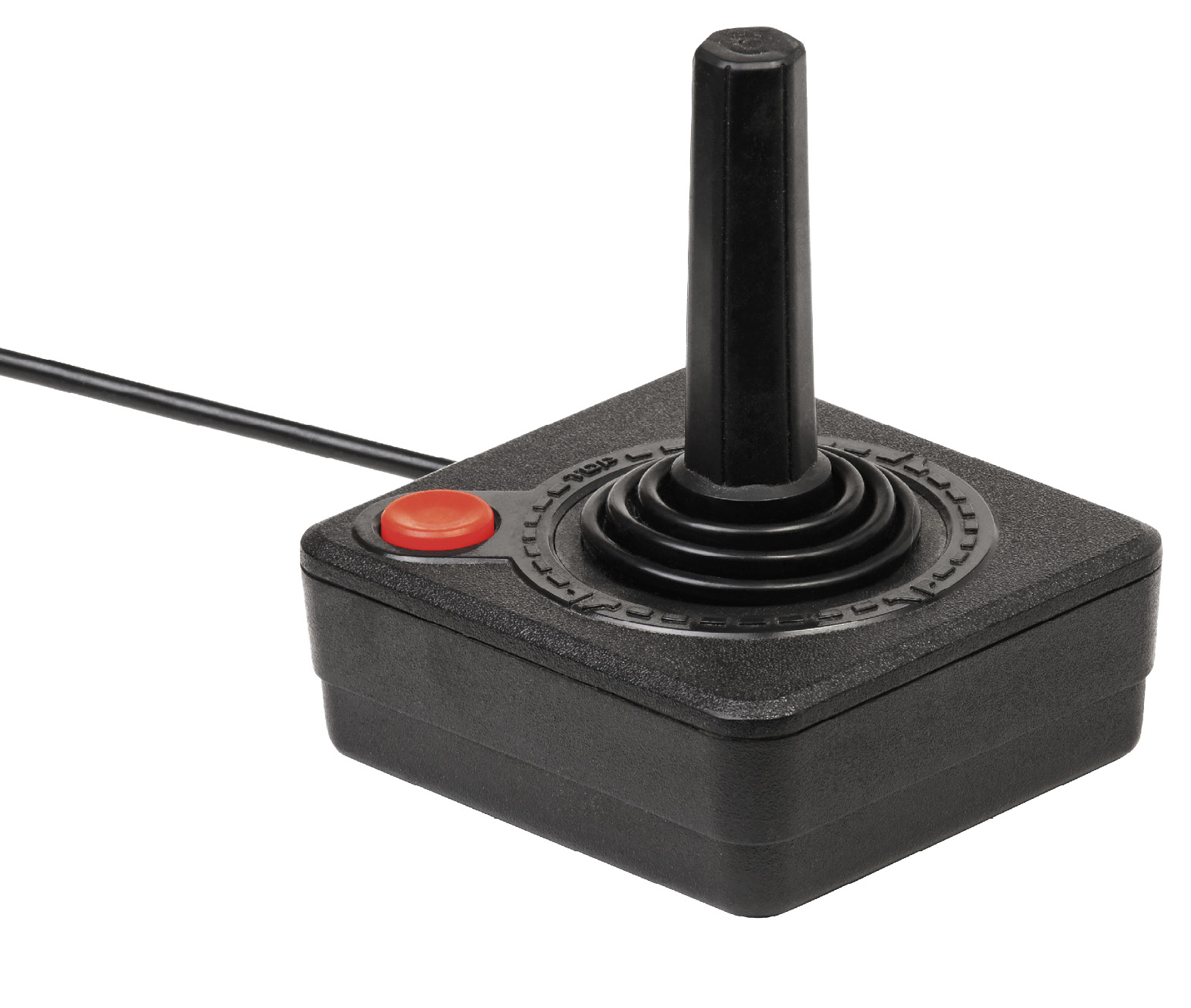
The first Atari 2600 units shipped with two joysticks, a single pair of paddles, and the two-player Combat cartridge, which contained several tank and plane action games inspired by individual Atari arcade games. The eight other launch titles, several of which were also interpretations of popular Atari arcade games, were Air-Sea Battle, Basic Math, Blackjack, Indy 500, Star Ship, Street Racer, Surround, and Video Olympics (each of these are, of course, found on the Atari Flashback hardware). Although these games were relatively simplistic and not much better than games for rival systems, their variety hinted at what was to come. As an increasing number of competing manufacturers would come to tout their systems’ technological superiority, Atari could boast of a substantially larger variety of games and ways to play them.
As celebrated Atari designer Howard Scott Warshaw and others have pointed out, despite the massive research and development budget in comparison to its peers, the VCS was primarily built to play two games—Pong and Tank (a popular Atari arcade game that was incorporated into Combat): “That was it. You had two players, two missiles, one ball, and a playfield.” It definitely didn’t seem like a huge leap from the aforementioned Pong consoles. All this started to change in 1980, but it wasn’t one of Atari’s own games that made the initial difference.
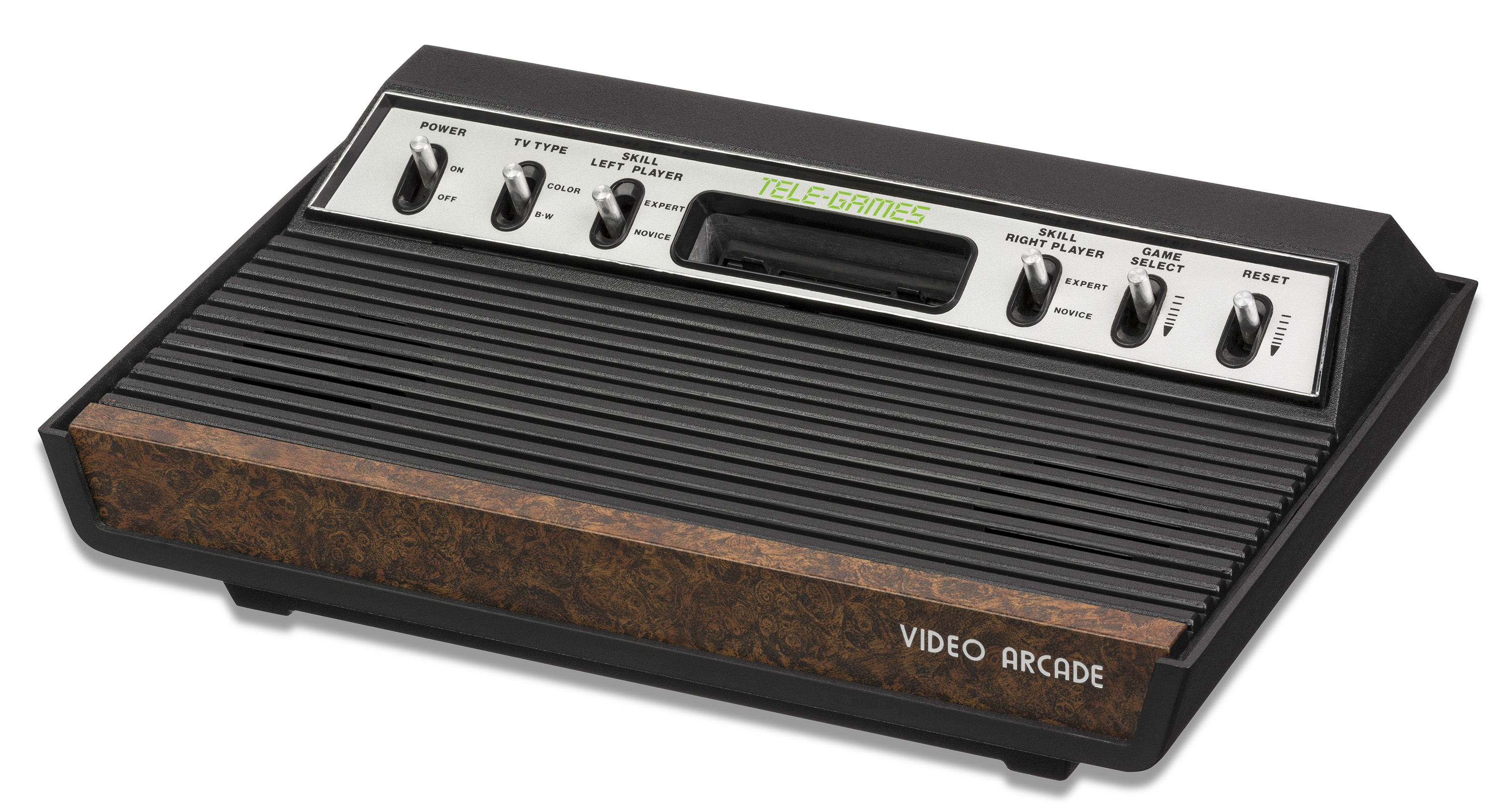
Instead, it was a licensed conversion of a game that had swept across Japan and was now taking over America: Taito’s arcade blockbuster, Space Invaders, which has a unique port on the two Atari Flashback consoles (the Atari Flashback Portable does not feature this port, but can play the original Atari 2600 version via its SD card slot!). Designed by Tomohiro Nishikado and adapted for the Atari 2600 by ex-Fairchild employee Rick Mauer, Space Invaders was the first non-Atari licensed game. The game grossed over $100 million and caused a tremendous surge in system sales that left the competition in the dust.
Mauer wasn’t the only programmer at Atari gifted at adapting high-end arcade games to the relatively limited capabilities of the 2600. Asteroids, ported to the VCS by Brad Stewart, introduced bank-switching, a technique invented by Carl Nielsen that allowed access to cartridge memory beyond the prior 4KB limit. Although the earliest VCS cartridges were generally 2KB - 4KB in size, greater memory sizes (including modern homebrew creations at 32KB and beyond) allowed for increased depth and complexity, contributing to the system’s impressive longevity. Asteroids was another big hit for the VCS.
Another blockbuster early title was Warren Robinett’s Adventure (1979), a pioneering graphical action adventure game. It was also among the first games with a notable “Easter Egg.” Gamers who found or knew the secret could find the name of the game’s programmer.
Robinett included the Easter Egg to protest Atari’s then policy of keeping a game’s programmer anonymous. The policy might have made sense to Atari’s management at the time, but it ultimately led to an exodus of top star talent and subsequent rise of third-party software houses whose often excellent products would compete directly with Atari’s own lineup.
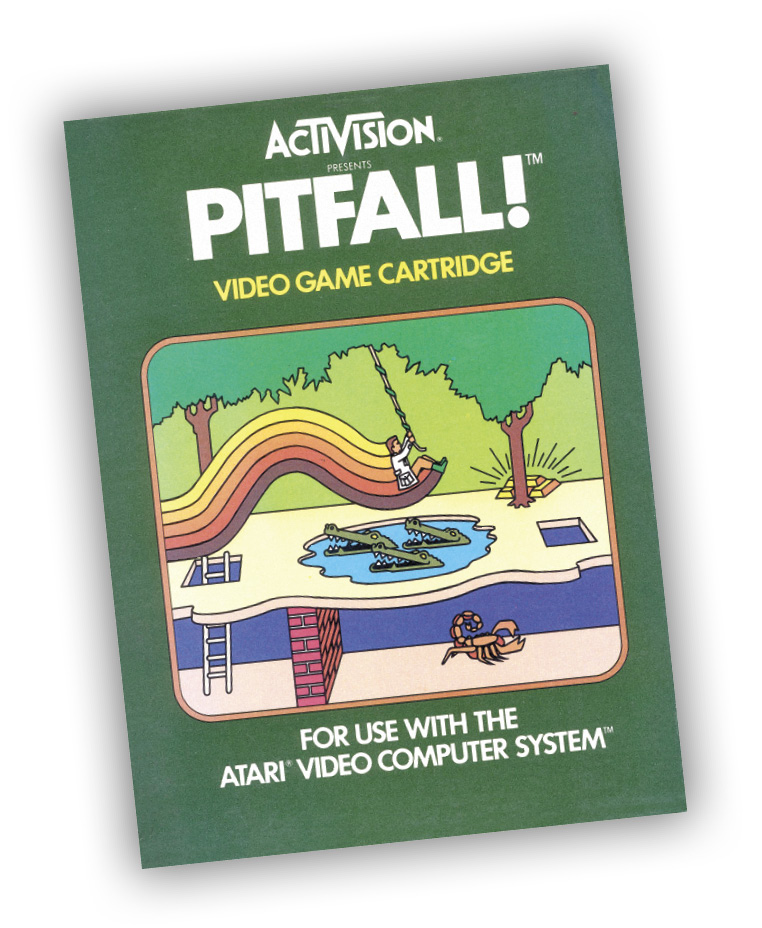
It all began with the departure of four prolific and talented programmers—David Crane, Larry Kaplan, Alan Miller, and Bob Whitehead. They later founded Activision in 1979, one of the earliest and often considered best of the platform’s third-party software developers. Activision raised the bar on Atari 2600 game quality. Their landmark titles included Pitfall! (1982), one of the first running and jumping multi-screen games, Space Shuttle - A Journey into Space (1983), a surprisingly sophisticated flight and mission simulator, and Private Eye (1984), a multi-screen action adventure game. Grossing over $70 million in their first year, the founders of Activision were the first outsiders to benefit from—and directly influence—the Atari 2600’s growing popularity.
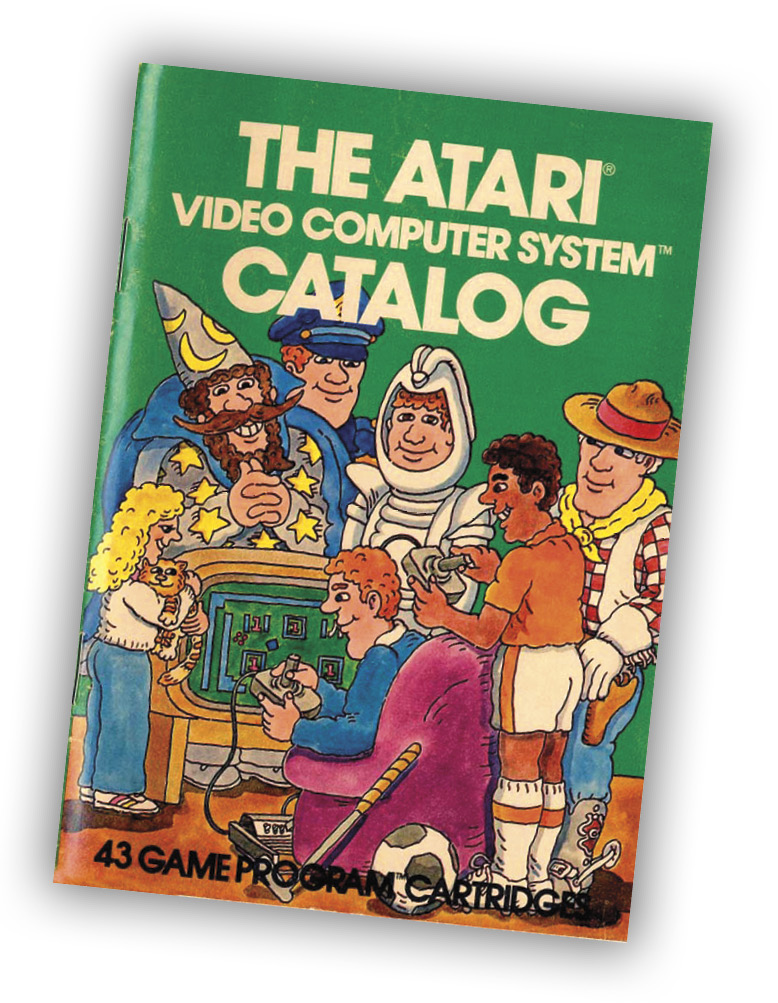
Atari was no stranger to litigation, though courts seldom ruled in its favor. They did score a minor victory in 1972, however, by settling a dispute with Magnavox over arcade Pong by paying a small, one-time licensing fee. This arrangement was much more favorable than those Magnavox reached with Atari’s rivals. Magnavox, with the engineering expertise of Baer, won videogame patent court cases for many years to come. However, when Atari tried to shut down Activision, their complaint was eventually thrown out. This did lead, however, to a licensing arrangement in which Atari would receive a royalty for each VCS cartridge sold. Other companies took Activision’s lead, which eventually brought us to the industry-standard licensing model between console maker and software houses still in use today.
The success of third-party software companies, especially those composed of their own ex-employees, was bittersweet for Atari. While companies like Imagic made small fortunes with well-crafted games like Demon Attack (1982) and Cosmic Ark (1982)—fortunes that former would have flowed directly to Atari and Warner —there’s no denying that they also contributed to greater system sales and market penetration, keeping the VCS dominant even in the face of technologically superior competition.
Of course, not every third-party game maker was an Activision or Imagic. There were also companies like Ultravision, whose clunky one-on-one fighting game Karate (1983) and copycat shooter Condor Attack (1983) are rightfully forgotten. Interestingly, Condor Attack was a clone of Demon Attack, which itself was inspired by yet another game, Centuri’s 1980 arcade game Phoenix. Atari officially converted that game in 1982 and tried to force Imagic to remove their version
from the shelf. Atari lost yet again. Eventually, their inability to prevent third-party companies from saturating the market with cheaply-made “shovelware” (low-budget and poorly made games) would damage not just Atari’s reputation, but also that of stellar publishers like Activision and Imagic.
Of course, rival system manufacturers went to great lengths to knock Atari off its throne. Competing systems such as Coleco’s ColecoVision and Mattel’s Intellivision II offered external expansion modules that allowed their systems to play Atari 2600 cartridges. Naturally, Atari sued, but Coleco countered that they were protected by antitrust laws. Again, Atari settled out of court, getting instead a royalty for each adapter unit and clone console sold.
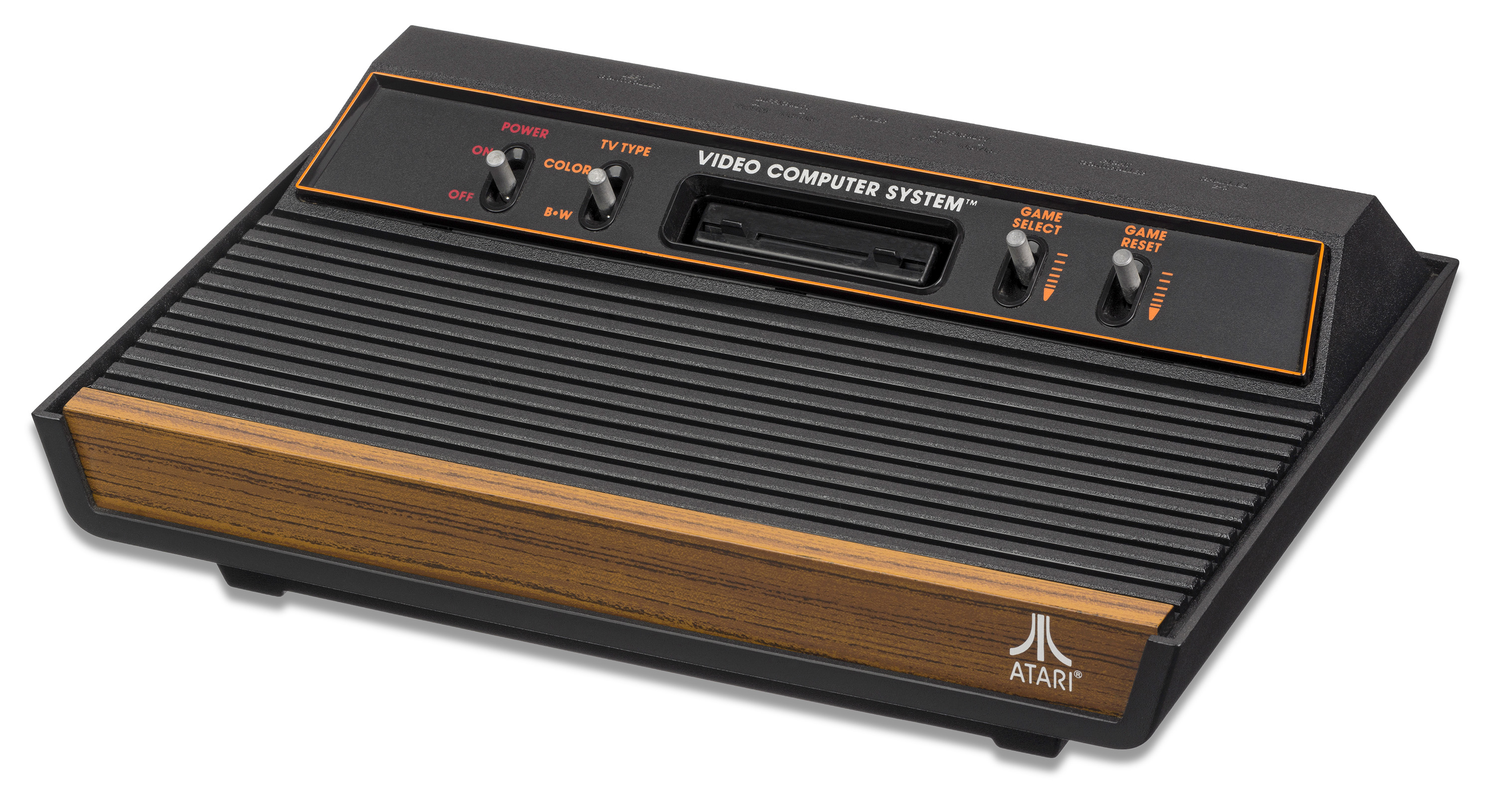
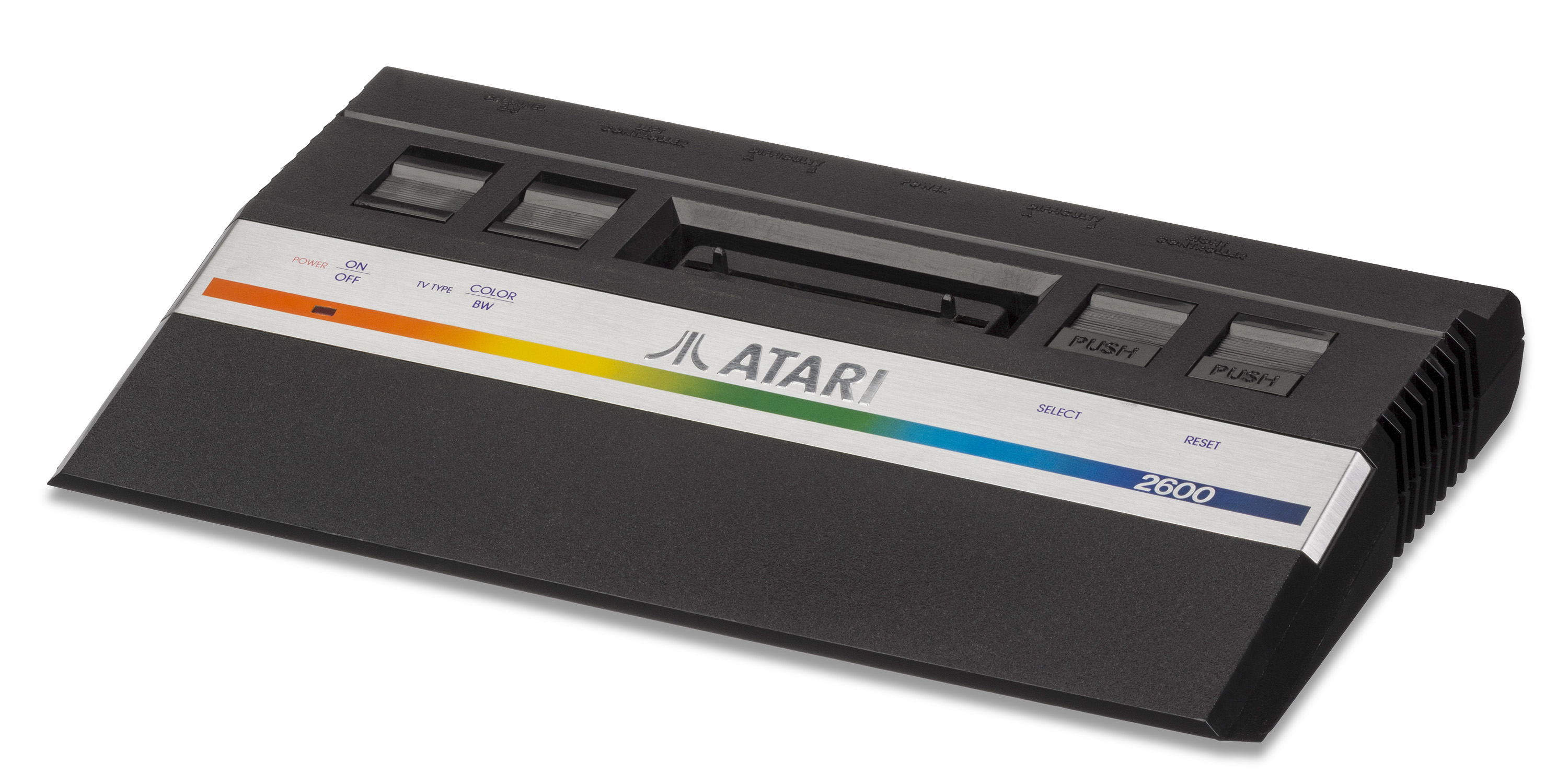
In 1978, Atari released a revised console model with lighter RF shielding and a slightly streamlined case. The last Atari 2600 revision with VCS branding, released in 1980, moved two of the six switches to the top of the unit.
In 1982, Atari released the Atari 5200 SuperSystem. To standardize the product line, the VCS officially became the Atari 2600 Video Computer System, or simply Atari 2600. This design was streamlined like the previous revision, but with an entirely black exterior.
Interestingly, when Atari released the 5200, no backward compatibility option was offered, confusing some consumers and hurting system sales. Atari tried making amends with a smaller 5200 system redesign and an awkward, outsized add-on module that enabled the backwards-compatibility gamers demanded.
Unfortunately, this add-on was incompatible with the earlier, larger 5200 consoles without modification at a service center.
Atari’s console sales peaked in 1982, after which a glut of poor third-party game titles and bad licensing decisions caused heavy losses throughout the industry. Product dumping, with high volumes of poor-quality games sold at or below cost, caused full-priced, high-quality game sales to suffer. However, two games in particular released that year are always brought up when discussing the fall of the Atari 2600 and videogames in general: Pac-Man and E.T. The Extra-Terrestrial.
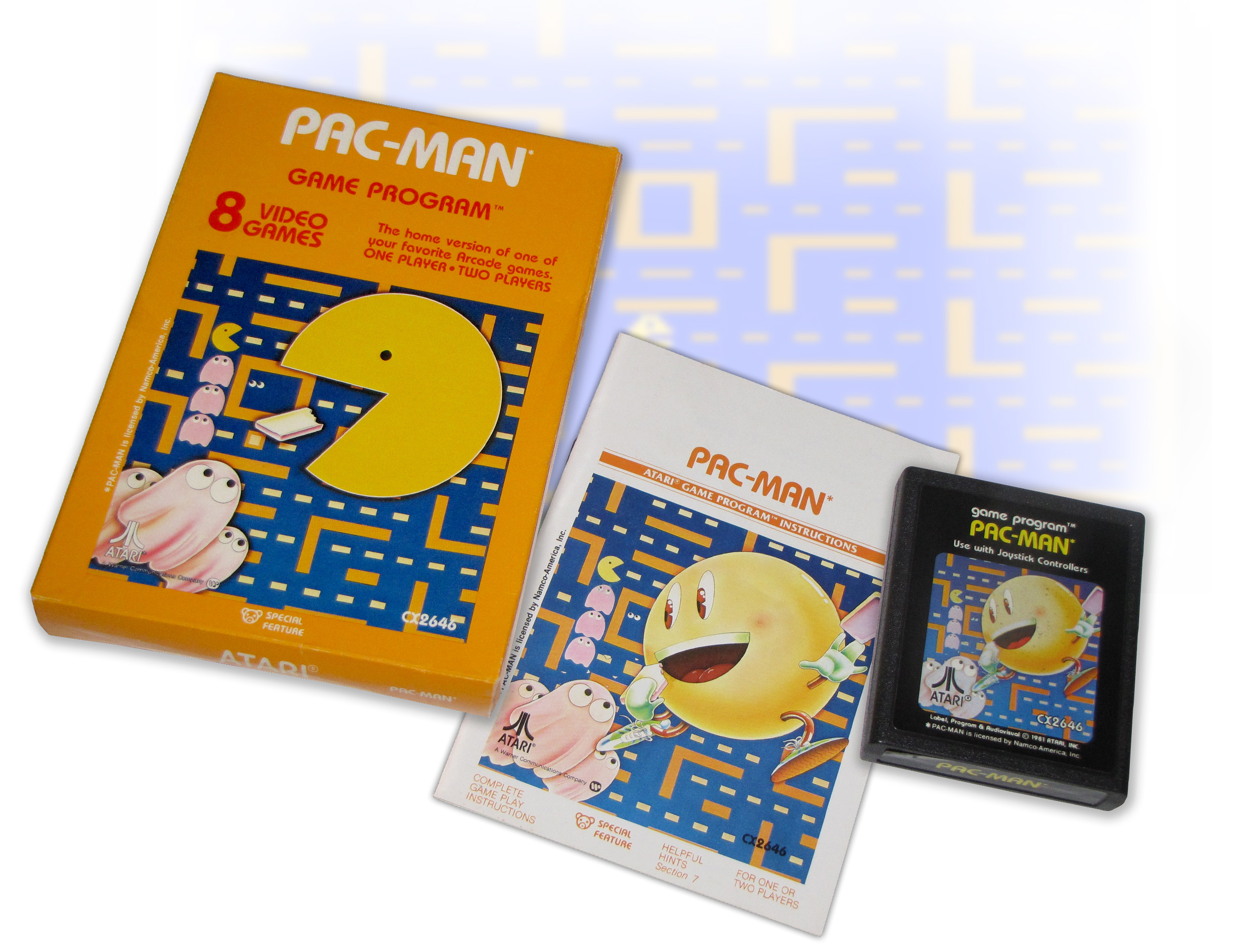
In what should have been the deal of the year, if not the decade, Atari obtained sole rights to Namco’s arcade smash-hit Pac-Man (1980). While Atari aggressively promoted and protected their exclusive right to produce Pac-Man and any derivative works, they apparently didn’t bother to give programmer Todd Frye the time and resources needed to do a good job. With poor graphics, bad sound, and awkward controls, Pac-Man for the VCS was a devastating blow to Atari’s reputation. It seemed to prove that the Atari 2600 paled in comparison to the thrills of a newer generation of arcade games.
Atari wrongly guessed that the name alone would generate enough interest to sell the dismal product.
Their hubris was so great that they actually famously produced more Pac-Man cartridges than there were Atari 2600 systems sold at the time! Fortunately, a newer—and superior— Atari 2600 homebrew port of the arcade game is included on the Atari Flashback Portable.
As for E.T. The Extra-Terrestrial, lead programmer Howard Scott Warshaw seemed like a logical choice for the project. He had impressed Steven Spielberg with his work on the translation of another popular film by the famous director, Raiders of the Lost Ark, which, in 1982, was successfully released as a sophisticated, two-joystick action-adventure. He was also the developer behind Yars’ Revenge (1981), an action game widely considered among the best games on the platform, and one of Atari’s best sellers.
The story goes that then Atari CEO Ray Kassar paid $20 million for the E.T. license, but the negotiations took so long that in order to make a holiday release, the entire game had to be programmed in six weeks, several months short of a typical development cycle at that time. Warshaw liked both the programming challenge and the money he was able to negotiate for the task, so he began the project in earnest.
Although Spielberg would have been happy with a copycat of Pac-Man, Warshaw insisted on something more original. Miraculously, he managed to meet the deadline and Atari rushed the cartridge into production with a blitz of advertising. Unfortunately, the end result confused and frustrated many players; guiding the slow E.T. alien through a seemingly endless series of nearly inescapable pits did not have wide appeal.
Although the popularity of the license alone resulted in over one million units sold, Atari suffered another huge financial loss because of returns and millions more unsold cartridges. According to an urban legend, Atari buried most of the unsold inventory in a New Mexico landfill. A documented excavation on April 26, 2014 revealed this to be a half-truth. E.T. was one of a mix of titles among the roughly 700,000 cartridges buried.
By 1984, The Great Videogame Crash had taken a lot of companies out of business, due in no small part to Atari’s own inflexible inventory requirements at retail outlets the year before. These requirements demanded that retail outlets had to stock more product than consumer demand could support. In that same year, Warner Communications sold a large portion of their interests in Atari to ex-Commodore executive and founder, Jack Tramiel, who seemed to have little desire to aggressively pursue the stagnant console market.
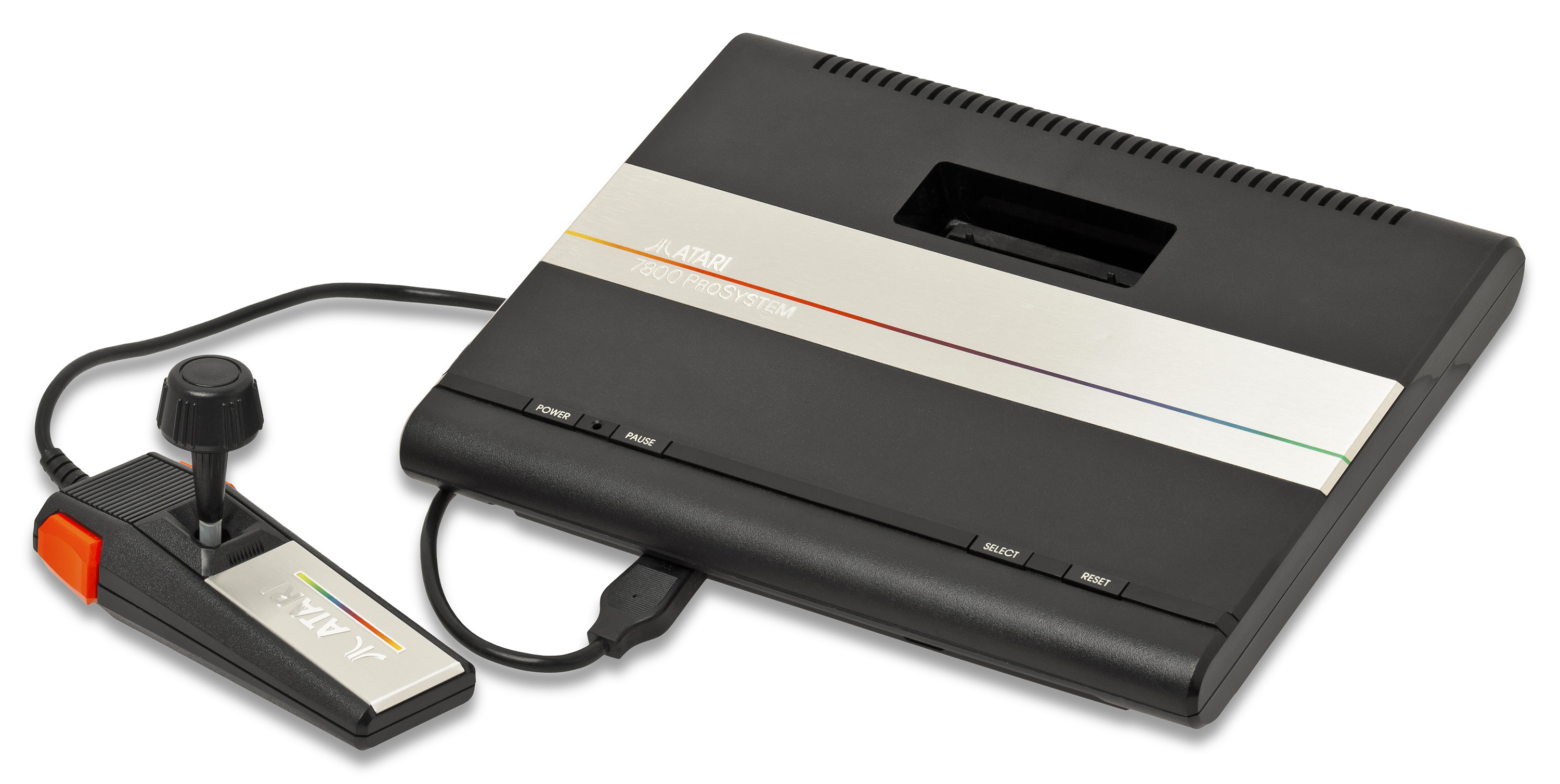
While trying to get a grip on the state-of-the-company, Tramiel shelved both the unreleased 2600 redesign and its backward-compatible, next-generation successor, the 7800 ProSystem, in favor of new Atari computers. While a few new 2600 cartridges were made available in 1985 by Activision and other companies, there were no new Atari systems to go with them.
Existing 2600 and 5200 inventory remained in the various sales channels and continued to sell, but almost two years passed before Atari attempted to reclaim their dominance in the home videogame market. By this time, the Nintendo Entertainment System (NES) had started to establish itself in America and Atari was left playing catch-up.
Ironically, in 1983 Atari had turned down a chance to distribute an early version of the NES. Once established in the United States, Nintendo would prove a masterful adversary, quickly cornering the market with a series of high high-profile, in combination with price fixing and monopolistic retail policies.
After the NES revived America’s passion for videogames, Atari reestablished its presence in 1986 with the long-awaited, wide releases of a mothballed Atari 2600 redesign, which was unofficially referred to as the Jr., and 7800, which, in addition to playing its own advanced games that could utilize its extra memory, higher resolution, and greater color palette, was almost completely compatible with its older sibling’s games and accessories. The Jr. was Atari’s most significant design departure from the original heavy sixer, featuring a small and thin, black and silver enclosure that mimicked the styling of the larger 7800. Pushed as a budget-friendly option in comparison with other systems, the 2600 continued to sell fairly well in what had become a very different market nearly a decade after its original release. The Jr., with cosmetic revisions, continued to represent the VCS line until production was stopped completely in the early 1990s with an impressive 30 million units sold across all console variations.
Atari itself ceased to exist as a company in 1996, with the name and intellectual assets having been sold and bought countless times since. Naturally, it’s been a brand worth saving. Atari was the first to revolutionize the arcade and then the home market twice. The only market that they wouldn’t dominate for a time was the computer market, but it wasn’t for lack of trying with an impressive line of 8- and 16-bit computers dating back to 1979 and lasting into the early 1990s. Today’s version of Atari continues the fight to bring back much of the original’s grand vision, including partnering with AtGames on the popular Atari Flashback systems.
The original games that first defined the company were always a unifying force. There’s a timeless nature to the games and the modest technology of the Atari 2600 platform, which rather than being a limitation, has proven to be one of its strengths. These constraints helped focus developers on the essentials of simple fun, a spirit that survives today in homebrew creations for the Atari 2600.
Starting in the mid-1990s, homebrew authors emerged to produce a wide range of often high-quality hacks, conversions, and new original games. Some of these homebrew games are present on the Atari Flashback systems, including Adventure II (2005), Atari Climber (2005), Chase It! (2010), Escape It! (2010), Miss It! (2010), Return to Haunted House (2005), Shield Shifter (2009), StripOff! (2009), and Yars’ Return (2005).
Despite its long journey of ups, downs, and ups again over the past four decades, it’s clear that the Atari 2600 platform still has a lot of life left in it. Wherever and whenever there is someone looking for a fun way to play, the Atari 2600—and now the Atari Flashbacks—will be there to deliver.