
Atari Flashback: The Essential Companion Guide 1977
Pong

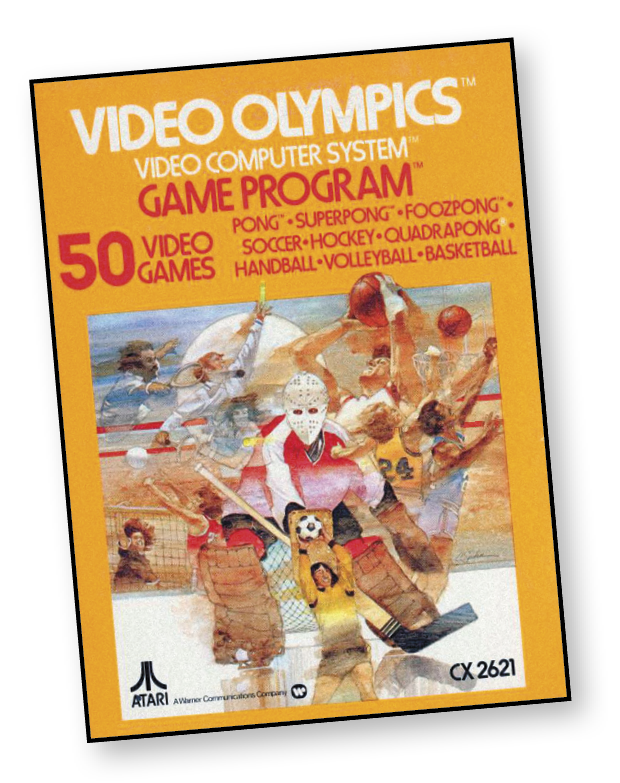
Don’t wait four years for the Olympics. They can happen every day, right at home. With the Video Olympics Game Program, you compete in 50 games and variations in eight main events. From Soccer to Volleyball to Basketball. Play against the computer or against up to three of your toughest opponents.
About the Game
With the twin 1976 successes of the Winter Olympics in Innsbruck, Austria, and the Summer Olympics in Montreal, Canada, it seemed like a natural for Atari to leverage some of that interest with one of their Atari 2600 launch titles. Similar to many of the Pong clone systems from the mid-1970s that the Atari 2600 helped to drive out of the marketplace, Joe Decuir’s Video Olympics—referred to in the AtGames Flashback products by its marquee game option, Pong—features practically every ball and paddle variation you can imagine. This was a great way for Atari to both put one last stamp on the Pong era that they helped bring about in the early 1970s and was eventually over-run by clones, and also end the era once and for all with a definitive cartridge compilation on a system that could play an infinite number of other games.
How to Play
Turn the knob to move the paddles. Press the red controller button to speed hit, whammy, catch the ball, or jump the paddle depending on the game variation. Some games have a particular game feature to use in competition. Activate the following game features with the red controller button:
- Speed: To add some speed to the return ball, press the red controller button as the ball makes contact with your paddle.
- Whammy: Put sharper angles on your return hits. Press the red controller button as the ball makes contact with the paddle. The angle will continue on your return hit as long as you press the red controller button, or until your opponent returns the ball.
- Catch: Press the red controller button as the ball hits the paddle and the ball sticks to the paddle. Use this time to plan strategy, aim a shot, or pass to a team paddle. Move slowly and carefully, though, as the ball will fly off the paddle if you make fast or sudden movements.
- Jump: Make the paddle “jump up” to hit or spike the ball during certain games. Press the red controller button and the paddle will “jump” from the bottom of the playfield to the playfield center. Make sure to activate the jump before the ball passes through the playfield center or the ball will travel through the paddle instead of bouncing off the paddle.
Pong
Pong is played much like tennis. Using a controller, each player rallies the ball by moving the paddles on the playfield. The paddles only move vertically on the playfield. When one player controls more than one paddle, all the paddles move together in unison. If there are two players on one team, the second player’s paddle will be striped. Each team’s paddles are color coordinated with the scores at the top of the screen. The right-hand score refers to the right controller player or team; the left number shows the left controller player or team score.
A player or team scores one point when the opponent hits the ball out of bounds or misses a hit. The first player or team to score 21 points wins the game.
The last player (or team) to score always serves the ball. Serve by pressing the red controller button after waiting at least one second after the point is made. If there are two players on one team, either player can serve. In Robot Pong, the computer always serves the ball to the player who lost the point.
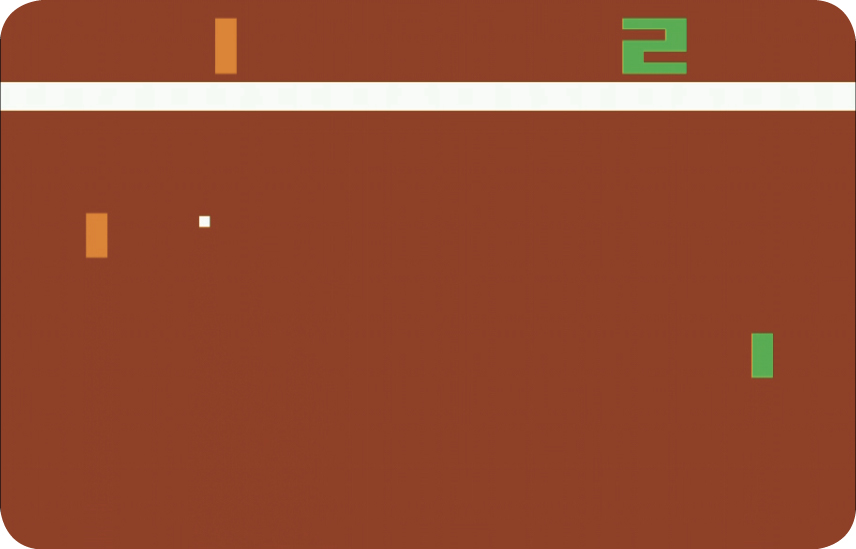
Robot Pong (One player game)
One player controls the right paddle and competes against the left paddle controlled by the computer.
Pong (Two-Player Game)
Two opposing players each control one paddle.
Pong 4 (Four-Player Game)
It’s a double game of Pong with two players on each team! Each player controls one paddle. Try playing zones with your partner; you cover the upper half of the playfield, while your partner plays the bottom playfield half.
Pong 4-I (Four-Player Game)
Four players can play this game variation. It’s as simple as a doubles game of tennis. Two players are on each team. One team player controls the paddle at the net; the other team player covers the back court.
Super Pong (Two-Player Game)
It’s a doubles game of Super Pong! With two players on each team, each player controls two paddles.
Soccer
Get ready to kick that ball into the goal! Each player uses a controller to move the kickers on the playfield. By turning the controller knob, your kickers move together in unison.
A player (or team) scores one point when the ball is kicked into the goal. The first player (or team) to score 21 points wins the game.
Each team’s soccer kickers are color coordinated with the score at the top of the screen. The right-hand score refers to the right controller team or player; the left score shows the left controller player or team score. If there are two players on one team, the second player’s kicker will be striped.
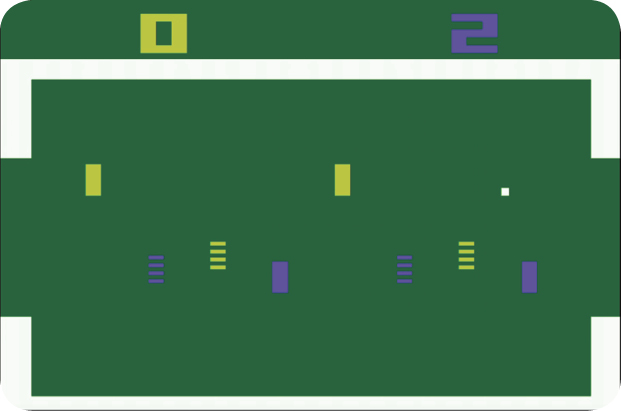
Soccer (Two-Player Game)
Two opposing players each control two kickers.
Soccer 4-I (Four-player Game)
Double your soccer fun with a soccer doubles game. Two players are on each team; each player controls one kicker.
Soccer 4-II (Four-Player Game)
Two players are on each team; each player controls two kickers.
Foozpong
Each player or team controls two vertical rows of paddles that move simultaneously. The object? To knock the ball into the goal. A player or team scores one point for every goal. The first player or team to score 21 points wins the game.
If there are two players on one team, the second player’s paddle is striped. Each team’s paddles are color coordinated with the score that appears at the top of the screen. The right-hand score refers to the right controller player; the left number shows the left controller player’s score.
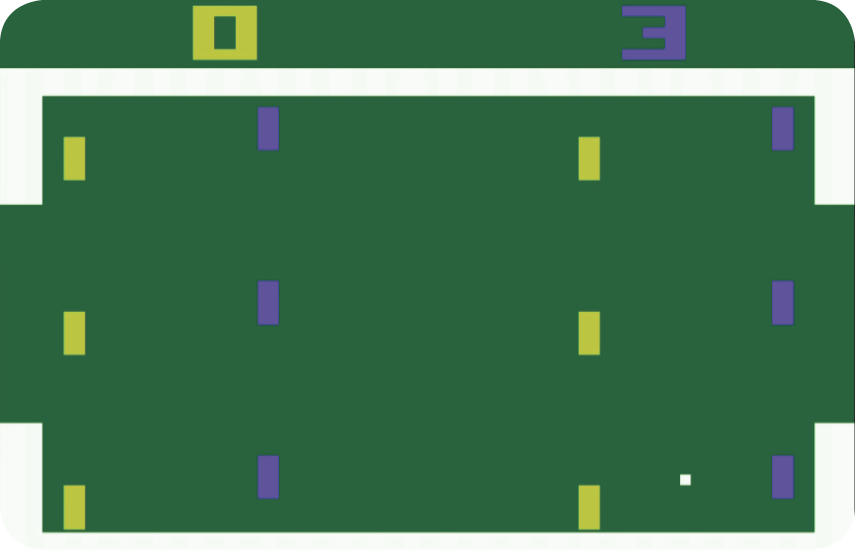
Note that the vertical movement of each row is restricted; each paddle can move across only half the playfield. There are four paddles per row, but only three paddles on the row appear on the playfield at one time.
Foozpong (Two-Player Game)
Two opposing players each control two rows of paddles.
Foozpong (Four-Player Game)
A doubles game of Foozpong! Two players are on each team and each player controls two rows of paddles.
Hockey
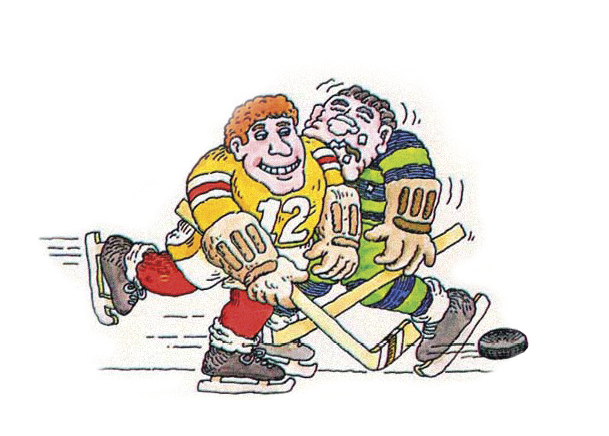
You’re scrambling to hit the hockey puck into the goal. Hockey games include variations on the number of hockey sticks you control, the playfield, and the game features such as Speed, Whammy, or Catch.
A player or team scores one point when a goal is made. The first team or player to score 21 points wins the game.
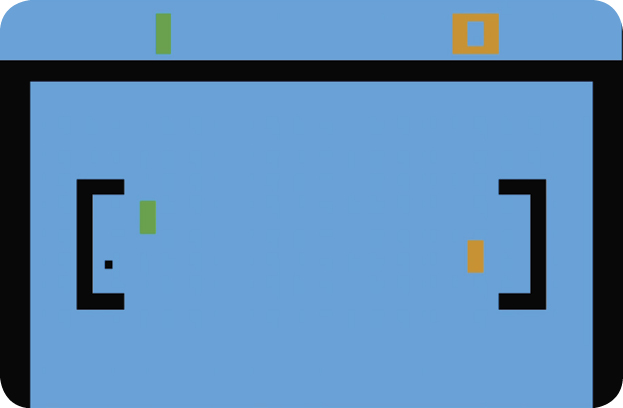
Hockey sticks move only vertically on the playfield. When one player controls more than one stick, all the sticks move together in unison. Each player or team’s hockey sticks are color coordinated with the score at the top of the screen. The right-hand score refers to the right controller player; the left score shows the left controller player’s score. If there are two players on one team, the second player’s stick will be striped.
Hockey I (Two-Player Game)
Each player controls one stick and tries to hit the puck into the goal.
Hockey II (Two-Player Game)
Two opposing players each control two hockey sticks; shoot with the forward stick and defend the goal with the second stick.
Hockey III (Two-Player Game)
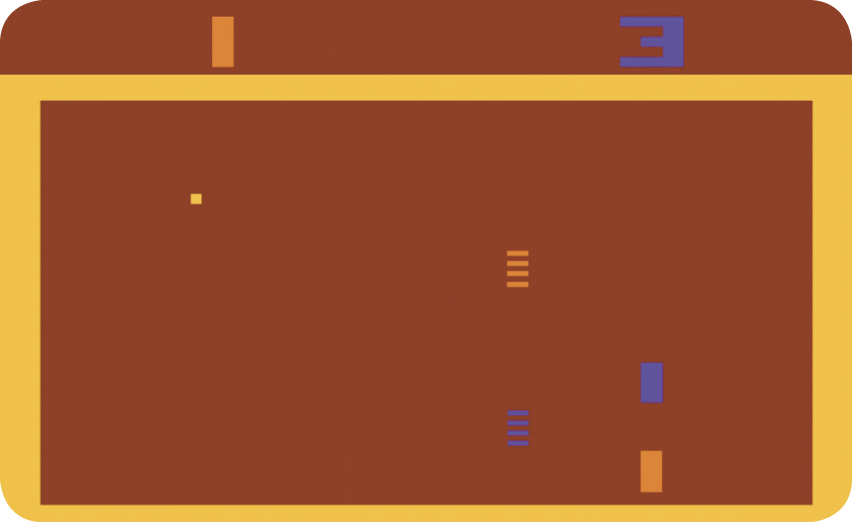
Each player controls three paddles in this game variation. Two opposing players attempt to score with one paddle that guards the goal and two paddles that cover the playfield.
Hockey 4-I (Four-Player Game)
Four players scramble on the icy playfield to make goals. Each player controls one paddle and there are two players on each team: one forward and one goalie.
Hockey 4-II (Four-Player Game)
Double your hockey fun with two players on each team. Each player controls a row of hockey sticks with the controller. Any one stick can move across half the playfield. There are four paddles per row, but only three paddles appear on the playfield at one time.
Quadrapong

The king of Pong games! Four players play this Pong game. Two players are on each team and each player controls one paddle.
Team paddles are color coordinated with the score at the top of the playfield. The right-hand score refers to the right controller player; the left score shows the left controller player’s score.
The movement of each player’s paddle is restricted to one side of the rectangular playfield. Each side of the rectangle has a goal. Each paddle guards a goal.
To score one point, a player must hit the ball into either goal guarded by the opposing players. (Don’t score against your teammate!) The first team to score 21 points wins the game.
Quadrapong (Four-Player Game)
Each player controls his paddle with a controller and attempts to make goals. The first team to score 21 goals wins the game.
Handball
Play Handball just as you would a regular game of handball. Two or four players each control one paddle. Paddles are located on the same side of the playfield and are color coordinated with the score at the top of the screen. The right-hand scores refer to the right controller player or team; the left number shows the left controller player or team score.
When your paddle is solid, it is your turn to hit the ball. After doing so, your paddle will start to blink. If you hit the ball out of turn (when your paddle is blinking), your opponent scores one point.
You score one point when your
opponent misses the ball or hits it out of turn. The first player to reach 21 points wins the game.
The second player on a two-player team will have a striped paddle and play forward.
Handball (Two-Player Game)
Each player controls one paddle and competes for points.
Handball II (Four-Player Game)
It’s a doubles game of handball! Two players are on one team. Each player controls one paddle. Either player on one team can hit the ball.
Volleyball
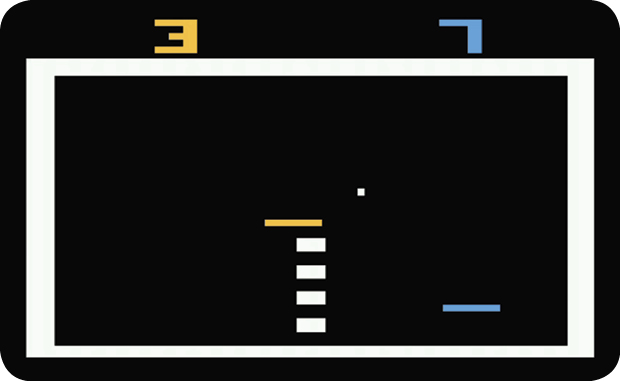
Two or four players can play volleyball. The object? To successfully return the ball over the net in the center of the playfield.
Each player controls one paddle that moves in a horizontal line at the bottom of the screen. Paddles are color coordinated with the score at the top of the playfield. The right-hand score refers to the right controller player or team; the left number shows the left controller player or team score.
A player or team scores one point when the opponent misses the ball or hits it into the net. The first player (or team) to score 21 points wins the game.
During doubles games, the second player on each team will cover the upper portion of the playfield with a smaller paddle.
Volleyball (Two-Player Game)
Two competing players each control one paddle and volley for points.
Volleyball 4 (Four-Player Game)
With two players on each team, you can set up and spike the ball.
Basketball
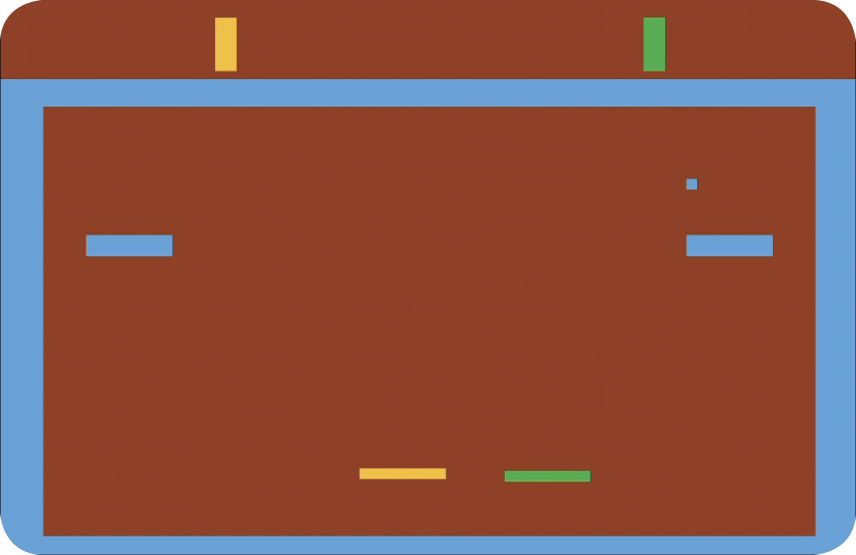
Get ready to shoot some hoops! Two or four players can play basketball. Each player controls one paddle that moves in a horizontal line across one half of the bottom playfield. Each player or team has a basket. The player on the left side of the playfield must shoot at the basket on the right side of the playfield. The player on the right shoots at the left basket.
Paddles are color coordinated with the score at the top of the playfield.
A player or team scores one point when the ball goes through the basket. The first player to score 21 points wins the game.
The team who scores the last point inbounds the ball onto the court by pressing the red controller button after waiting at least one second after the last point is made. Either player on a two-player team can put the ball into play.
Where you dribble the ball on your paddle determines the direction the ball will travel. For example, dribble the ball off the right side of your paddle and the ball will shoot to the right. The second player on a two player team will control a small paddle located higher on the playfield.
Basketball (Two-Player Game)
Using the paddles, each player tries to make shots and score. The first player to score 21 points wins the game.
Basketball (Four-Player Game)
Two players are on each team. Each team tries to make shots and score. The first team to reach 21 points wins the game.
Difficulty Options
Slide the difficulty switch from the B to A position to reduce the paddle size by half.
Game Options
To select a Video Olympics game, press down the game select switch. There are 50 game variations for one to four players.
|
Game Type |
Game # |
# Players |
Features |
|
Pong |
1 |
1 |
SP |
|
2 |
1 |
WH |
|
|
3 |
2 |
SP |
|
|
4 |
2 |
WH |
|
|
Pong 4 |
5 |
4 |
SP |
|
6 |
4 |
WH |
|
|
Pong 4-I |
7 |
4 |
SP |
|
8 |
4 |
WH |
|
|
Super Pong |
9 |
2 |
SP |
|
10 |
2 |
WH |
|
|
Super Pong 4 |
11 |
4 |
SP |
|
12 |
4 |
WH |
|
|
Soccer |
13 |
2 |
SP |
|
14 |
2 |
WH |
|
|
Soccer 4-I |
15 |
4 |
SP |
|
16 |
4 |
WH |
|
|
Soccer 4-II |
17 |
4 |
SP |
|
18 |
4 |
CT |
|
|
Foozpong |
19 |
2 |
SP |
|
20 |
2 |
CT |
|
|
Foozpong 4 |
21 |
4 |
SP |
|
22 |
4 |
CT |
|
|
Hockey I |
23 |
2 |
SP |
|
20 |
2 |
WH |
|
|
Hockey II |
25 |
2 |
SP |
|
20 |
2 |
WH |
|
|
Hockey III |
27 |
2 |
SP |
|
28 |
2 |
CT |
|
|
Hockey 4-I |
29 |
4 |
SP |
|
30 |
4 |
WH |
|
|
Hockey 4-II |
31 |
4 |
SP |
|
32 |
4 |
CT |
|
|
Quadrapong |
33 |
4 |
SP |
|
34 |
4 |
CT |
|
|
Handball |
35 |
2 |
SP |
|
36 |
2 |
WH |
|
|
Handball II |
37 |
4 |
SP |
|
38 |
4 |
WH |
|
|
Volleyball |
39 |
2 |
JM |
|
40 |
2 |
||
|
Volleyball 4 |
41 |
4 |
JM |
|
42 |
4 |
||
|
43 |
2 |
||
|
44 |
2 |
WH |
|
|
45 |
2 |
JM |
|
|
46 |
2 |
CT |
|
|
47 |
4 |
||
|
48 |
4 |
WH |
|
|
49 |
4 |
JM |
|
|
50 |
4 |
CT |
Features
Speed (SP)
Press the red controller button when the ball makes contact with your paddle to add speed to a return hit.
Whammy (WH)
Press the red controller button when the ball makes contact with your paddle to put a sharper angle on return hits. The angle will continue as you press the button.
Catch (CT)
Press the red controller button when the ball makes contact with your paddle to catch and hold it, even while your paddle is moving. Release the button to release the ball.
Jump (JM)
Press the red controller button to make your paddle jump from the bottom of the playfield to the playfield center. Activate jump before the ball passes through the playfield center, otherwise the ball will travel through the paddle instead of bouncing off of it.