Atari Flashback: The Essential Companion Guide 1981-82
Swordquest:

The Ultimate Search for the Ultimate Treasure
About the Series
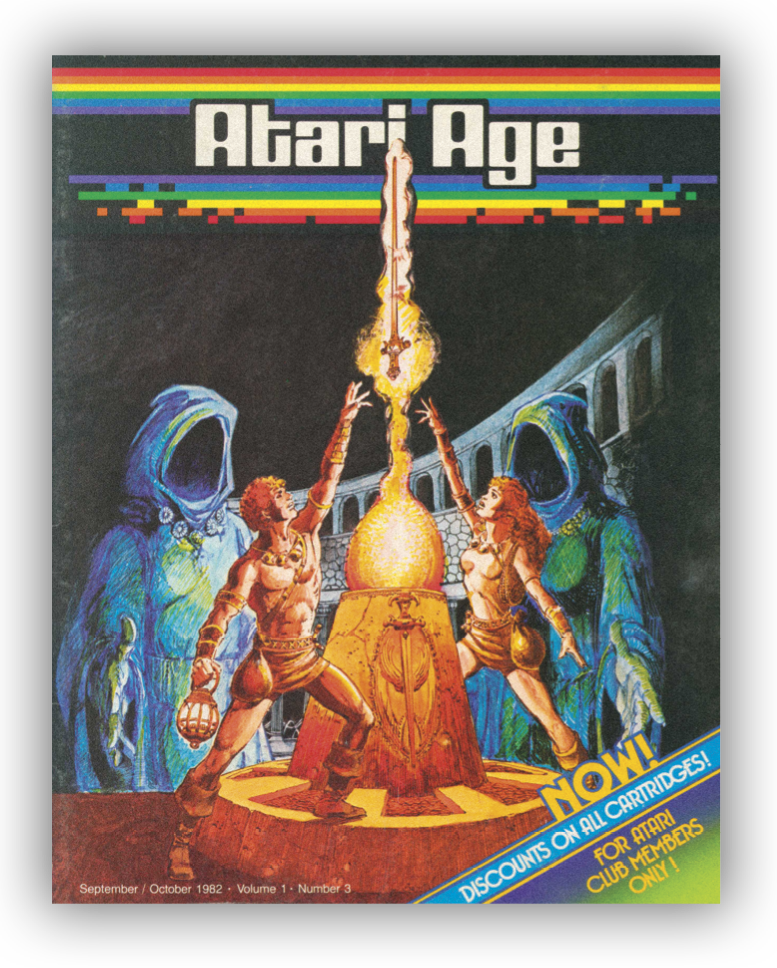
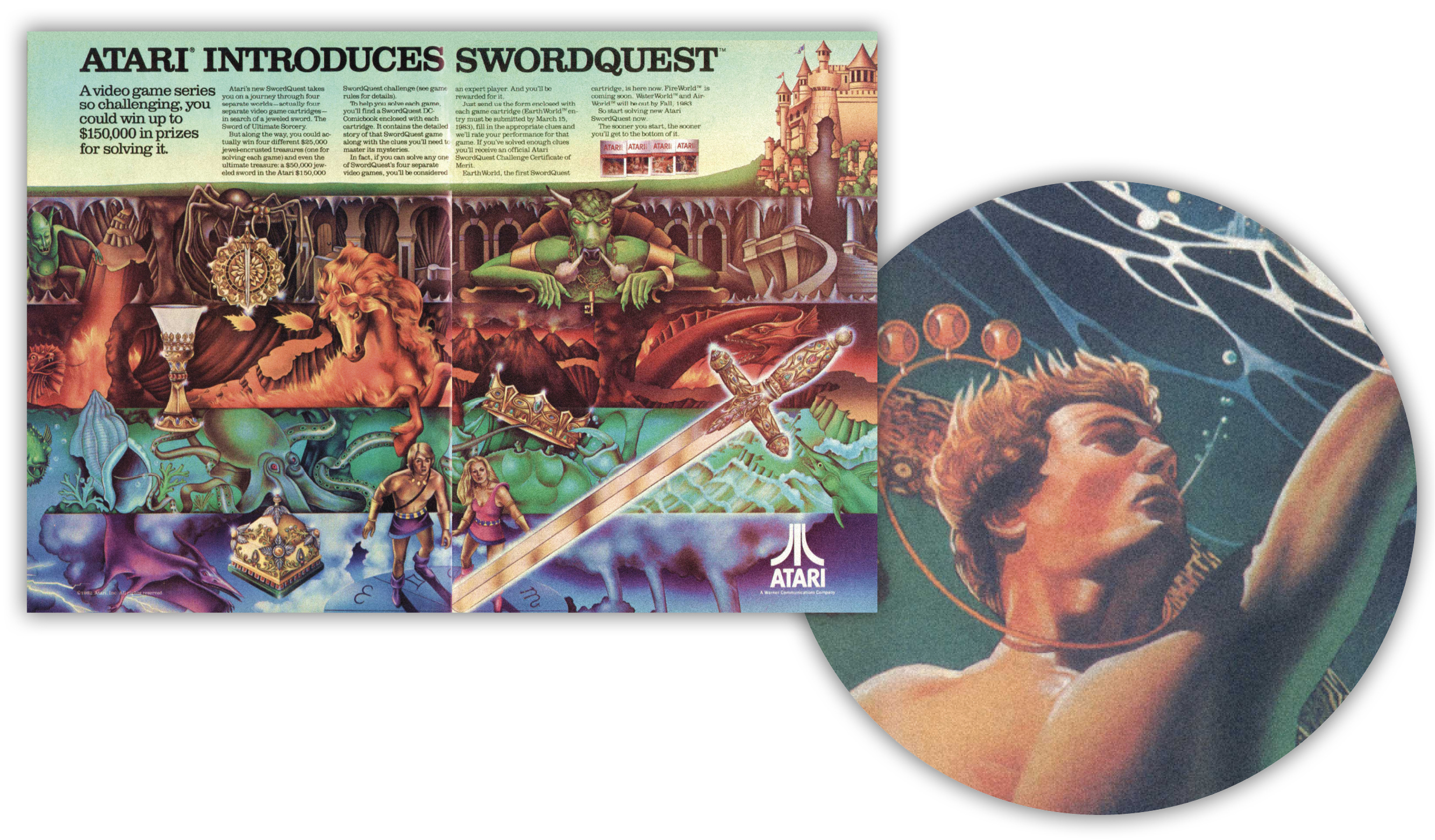
The cover of the September/October 1982 issue of Atari Age introduced the world to SwordQuest. SwordQuest began as a sequel to the popular game Adventure, then morphed into a planned series of four games. It quickly became much more.
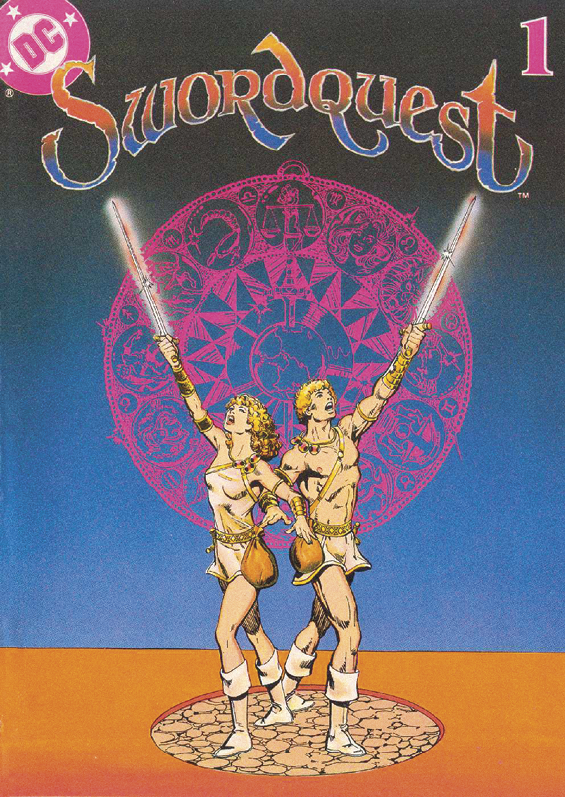
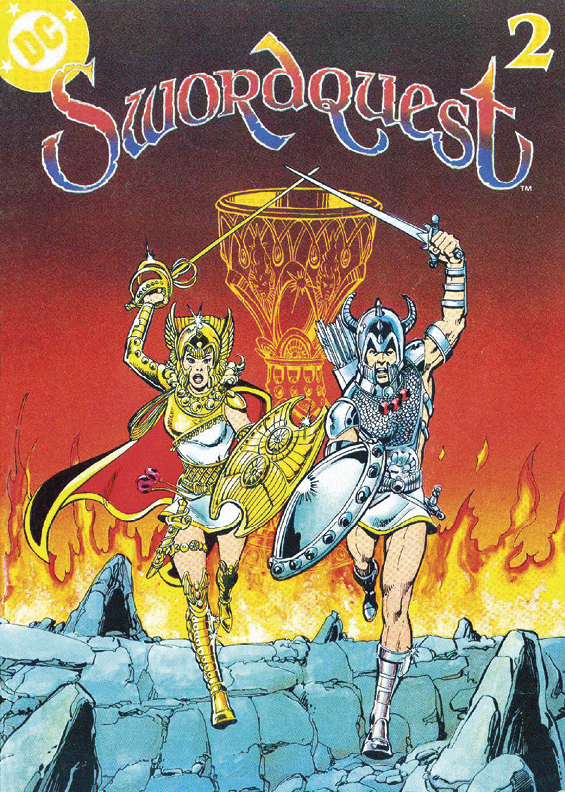
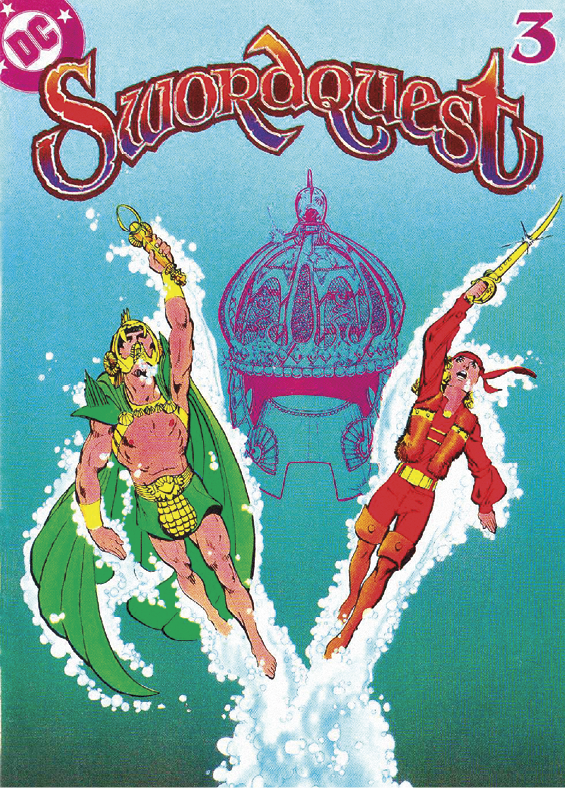
Each game would include a comic book created by an all-star crew from DC Comics. The comics would tell the story of Tarra and Torr, twins whose destiny was to visit four worlds to recover the Sword of Ultimate Sorcery and the Talisman of Truth.
Of course, the biggest revelation was the five prizes that players could win if they were up to the challenge. Using contests to drum up interest in upcoming games was nothing new in the industry, but the value of the prizes caught everyone’s attention.
The Contests
The plan was to hold four contests, one for each game, capped off by a clash of champions. Each game included an entry form that players filled out and returned in order to qualify for a final showdown to win a $25,000 prize. For Earthworld, the prize was a gold talisman. Fireworld’s prize was a chalice made from gold and platinum. And that’s where things ended.
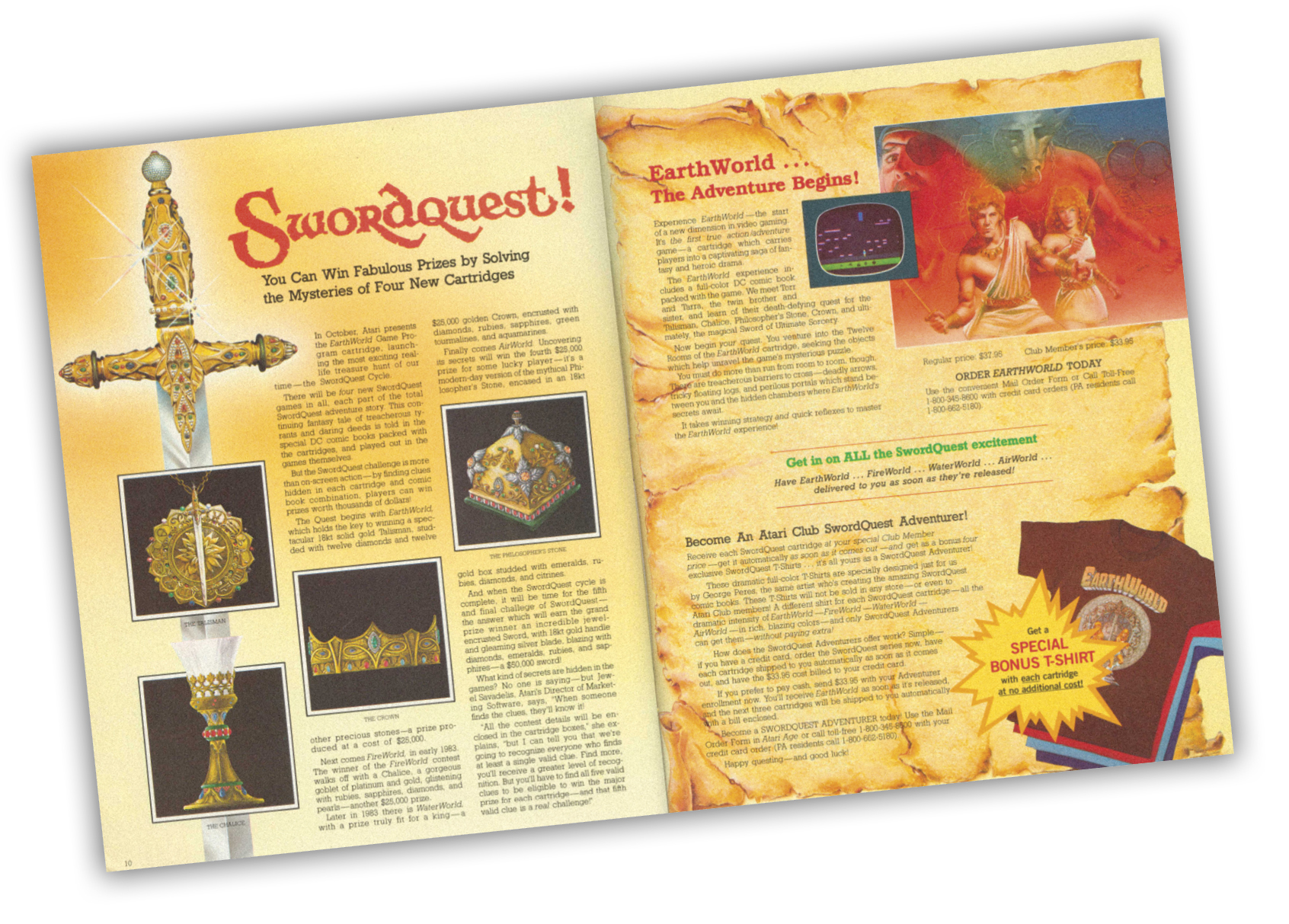
Despite four contests being planned, only the contests for EarthWorld and FireWorld took place. Players completed the games, found the correct pages in the comic book, then sent in their entries and were selected for a playoff.
The EarthWorld contest took place in Sunnyvale, California on May 2, 1983. The eight finalists played a special version of the game and were given up to 90 minutes to complete it. Steven Bell won the contest by being the first person to reach the twelfth level in 46 minutes. In November 1983, 50 finalists arrived in Sunnyvale for FireWorld’s contest, which was won by Michael Rideout.
The videogame crash of 1983 and subsequent sale of Atari ended the contests.
WaterWorld was initially sold only through an Atari club, although cartridges appeared in stores after the deadline for contest entries (despite an extension to April 15, 1984) had passed. The game AirWorld was never released. The remaining prizes (a crown, philosopher’s stone, and a $50,000 sword) were never awarded.