
Fallout 76 Guide Reclamation Begins!
Welcome to West Virginia!
Appalachia: The Regions of West Virginia
Region 1: The Forest

The region surrounding Vault 76 was known as “the Forest” to the survivors of Appalachia. Still rich in plant and animal life, it is an ideal place to scrounge for food and water. Although relatively untouched by the bombs, the Forest is still home to the mutated beasts that now roam the countryside. Survivors even reported finding mutated plants with unusual properties...Near the Vault 76 construction site is the small town of Flatwoods, which was home to a local motel, tavern, and church. Vault-Tec projections for the survivability of the area’s residents were not optimistic. Farther to the northeast is the larger settlement of Morgantown, which was home to Vault-Tec University and experienced something of a revitalization before the war. The townspeople all knew the harsh truth: that Vault entrance was not guaranteed. To the south is the old West Virginia capital of Charleston, one of the largest cities in the area. Prior to the Great War, it was a hotbed of political dissent and saw countless protests for workers’ rights.
Region 2: Toxic Valley

The region known to survivors as “Toxic Valley” is covered by industrial white powder and polluted water sources. The lake and other deadly waters of the Toxic Valley region are home to all manner of mutated, aquatic beasts. Above the fetid lake, Grafton Steel Mill was the center of economic development for the town of Grafton, and its large, industrial machines remain relatively intact. Grafton was built on the shores of the Tygart Valley River. It was a hub for shipping prior to the Great War, thanks to having both water and railroad access. Now it seems deserted and inhospitable. Straddling the boundary between Toxic Valley and the Forest is Grafton Dam. Built to provide power to the Steel Mill, the dam is now filled with the polluted waters of Toxic Valley.
Region 3: The Ash Heap
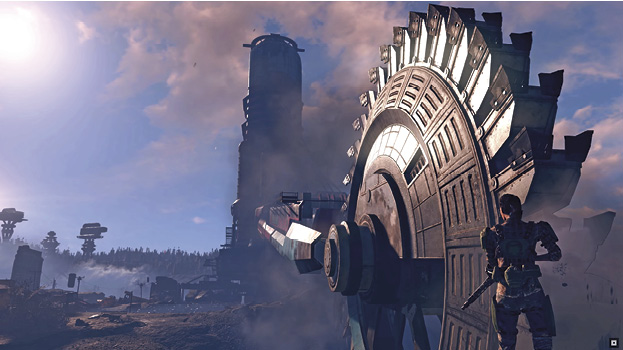
Smoke and cinders constantly bellow up from the mines in the Ash Heap. Survivors believed this was caused by fires in the tunnels below, raging unceasingly for some unknown reason. As the winds blow and the wind changes, it is common for thick layers of filthy smoke to blanket the area, providing cover for friend and foe alike. But there are reasons to venture into this choking nightmare; the mines deep within Appalachia’s mountains still hold riches for those brave enough to venture below....Top of the Heap, Mount Blair, was a large-scale coal mining site before the War, where gigantic digging machines removed entire portions of the mountaintop at once. The Garrahans and Hornwrights were the two major families in charge of Appalachia’s mining industry. They owned lavish estates in the mountains overlooking their precious mines.
Region 4: Savage Divide

The region of Appalachia known to survivors as the “Savage Divide” is a mountainous area whose rocky landscape is difficult to cross and easy to get lost in. Before the Great War, these high mountains of Appalachia were home to ski resorts, bed-and-breakfasts, and cabins available to rent by eager tourists. Among the most popular was Top of the World, originally an enormous ski lift station, complete with shops and restaurants at its peak. Farther north and nestled in the mountains is a spiritual retreat center known as the Palace of the Winding Path. Its unique architecture stands in stark contrast to the rest of Appalachia. Elsewhere, government facilities dot the landscape of Appalachia’s mountains. Trading rumors of the goings-on inside those fenced-in walls was a popular prewar pastime.
Region 5: The Mire

Known as the “Mire” by the survivors of Appalachia, this swampy region is home to twisting vines, large tree canopies, and tall grass. All easy places for things to hide...Tread deeper into the dark swamp, and you may find mutated plants known as “strangler vines” that infest the Mire. They attach to living things, notably the large trees in the area. The Mire is also home to the Dyer Chemical plant, which originally produced animal feed and other phosphates used for nearby farms. Another place to check for signs of life is Harpers Ferry, a small town that depended on tourism: This put them at odds with the growing “Free States” movement, whose conspiracy theories put off patriotic visitors. Don’t leave the Mire without visiting the Survival Training Center, a survival skills training facility, open to tourists who want to learn how to rough it out in the wilderness. Hopefully, those lessons came in handy.
Region 6: Cranbe rry Bog

The colorful red floras of Cranberry Bog were originally West Virginia’s naturally occurring cranberry, pitcher, and sundew plants. The survivors of Appalachia avoided the Cranberry Bog more than any other region, and only the most well-equipped dared to travel here, not least because of the stories told about the Allegheny Asylum, which was originally built in the mid-1800s as a treatment facility for the mentally ill. Farther into the Bog, Watoga was built as a joint effort between the federal government, RobCo, and Atomic Mining Services to build a “city of the future.” All public services in Watoga were designed to be completely automated, including a full staff of security robots.
The Factions of West Virginia
Brotherhood of Steel

Taggerdy’s Thunder was a US Army Ranger unit led by Lieutenant Elizabeth Taggerdy. She continued to lead her troops—as a Paladin—after they all joined the Brotherhood of Steel. Paladin Taggerdy was known for only recruiting from those who had military experience and found it difficult to coordinate with the other, more “civilian” factions in Appalachia. Fort Defiance served as headquarters for the newly established Appalachian branch of the Brotherhood of Steel.
The Free States

The Free States were a group of Appalachian anarchists who seceded from the United States shortly before the bombs fell. Paranoid that the government was lying to its people about the Vault program, the Free States movement built their own concrete bunkers to survive in case of nuclear devastation. While Raleigh Clay was the public face of the Free States, his arrest would reveal US Senator Sam Blackwell to also be a driving force behind the movement. Most of Appalachia considered the Free States movement to be nothing but political agitators and traitors. After the war, many of these same people would turn to the Free States for help.
Raiders
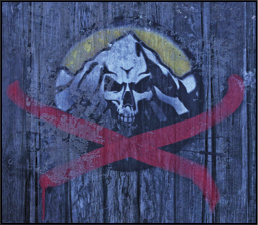
The Raider groups of Appalachia were bloodthirsty psychopaths who terrorized the other survivors, taking whatever they wanted from them. Expert scavengers, the Raider groups of Appalachia were surprisingly ingenuous when it came to salvaging old world technology. After the bombs fell, several wealthy tourists on Appalachian ski holidays reverted to their baser instincts. Selfishness turned to violence, and these entitled elitists became vicious Raiders.
The Responders

After the Great War, Appalachia’s emergency personnel mobilized to help their fellow citizens. These Responders became part government, part crisis relief. The Responders provided automated survival training to anyone in need. And it was needed quite a bit. Survival and security became paramount after the devastation of the Great War, and the Responders desperately tried to help as many of their neighbors as they could.
The Whitespring Resort

Built in 1858, The Whitespring was famous for its southern style and sulfur springs. The Whitespring Resort had a long history of business with the federal government and counted sitting US presidents among its guests. Under great financial strain before the war, The Whitespring was forced to sell much of its surrounding land and replace the resort staff with more cost-effective robots.