
Halo 4 Guide Infinity Infinity Multiplayer
War Games
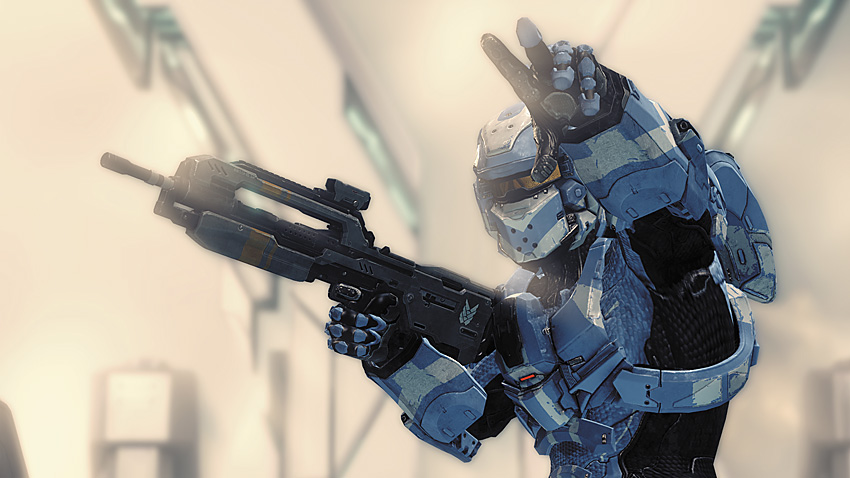
Welcome to War Games
Whether you’ve mastered the Campaign on Legendary difficulty and are craving some Spartan vs. Spartan combat or you’re anxious to begin your multiplayer experience immediately, in War Games you can expect a plethora of new features, game types, and maps to continuously hone your battle tactics aboard the UNSC Infinity .
The following information is presented to ensure you receive the maximum tactical advantage in the combat zone. After reading the overview and the advice regarding your career path and weapon loadouts, choose a controller setting. Every weapon is covered as well as every armor ability, tactical package, and support upgrade. We provide copious details on every game type and offer a full debriefing on all of the War Games maps.
Tips and Strategies – Straight from the MLG Pros
The War Games portion of this guide was produced in collaboration with Major League Gaming (MLG), the world’s largest eSports organization. MLG sent four of the most talented Halo players in MLG history to 343 Industries to deliver in-depth tips and strategies on every map and game type. By following the advice in this guide, direct from MLG and the world’s best players, you’ll be a hometown hero in no time.
More About the MLG Pros
The four players who provided the information for this guide don’t just play Halo – they live Halo. Between them, they’ve spent more than 20 years competing in professional Halo tournaments, winning thousands of dollars in prize money along the way. If you want to know exactly how to dominate the competition, these guys have got you covered. Before you dive into the wealth of strategies contained in this guide, get to know the guys who wrote them:
Strongside
- Name: Michael “StrongSide” Cavanaugh
- Age: 24
- From: Kentucky
- Professional Player since: 2006
- Favorite Game Type: Team Oddball
- Favorite Map: Haven
- Favorite Starting Weapon: DMR
- Favorite Power Weapon: Binary Rifle
Favorite Loadout:
- Primary Weapon: DMR
- Secondary Weapon: Battle Rifle
- Grenade: Frag Grenade
- Armor Ability: Promethean Vision
- Tactical Package: Firepower
- Support Upgrade: Stability/AA efficiency
Controller Settings:
- Buttons: Bumper Jumper
- Sticks: Regular
- Inversion: Not Inverted
- Sensitivity: 3
- Crouch: Hold to crouch
- Vibration: On
- Claw or Not: Not
Notable Gaming Accomplishments:
- 1st place MLG 2007 National Championship(Halo2). Team did not lose a single game in the tournament.
- 1st place BIC Pro FFA MLG 2011
- 29 top 4 finishes at MLG tournaments
- 8 First Place finishes at MLG Championships
- 14 First Place finishes at major tournaments around the world
- Invented the “StrongSide” move
Bio:
Michael “StrongSide” Cavanaugh has been a professional Major League Gaming Halo player since July 2005. He has won 8 MLG tournaments including a National Championship where his team (Final Boss) did not lose a single game. Cavanaugh was the 13th player to be signed to a $250,000 contract by MLG. He has won countless other gaming events over the years throughout the US, Canada, Mexico, and the United Kingdom. StrongSide has had an extremely successful professional gaming career. He is a fan favorite and has emerged as one of the most dominant players in Major League Gaming and the Halo series. Cavanaugh made a name for himself in the Free For All (FFA) and 1v1 competitions. Within his first year of making an appearance in the Major League Gaming community he took first place in FFA and 1v1 at MLG Chicago 2005. He had a move named after him because he is so good at getting away and staying alive.
Flamesword
- Name: Michael (Mike) “Flamesword” Chaves
- Age: 22
- From: New Jersey
- Professional Player since: 2009
- Favorite Game Type: Team Regicide
- Favorite Map: Haven
- Favorite Starting Weapon: Battle Rifle
- Favorite Power Weapon: Railgun
Favorite Loadout
- Primary Weapon: Battle Rifle
- Secondary Weapon: DMR
- Grenade: Frag Grenade
- Armor Ability: Jet Pack
- Tactical Package: Firepower
- Support Upgrade: Ammo
Controller Settings
- Buttons: Recon
- Sticks: Default
- Inversion: Default
- Sensitivity: 4
- Crouch: Hold to crouch
- Vibration: No vibration
- Claw or Not: Claw
Notable Gaming Accomplishments
- 2nd Place at 2010 MLG Dallas National Championships ( Halo 3 )
- 1st Place at 2011 MLG Dallas Championships ( Halo: Reach )
- 1st Place at 2012 MLG Columbus Winter Championships ( Halo: Reach )
- 1st Place at 2012 Arena Gaming Chicago ( Halo: Reach )
- Voted 2010 Strides Pros’ Choice Award for Best Leader
- Voted 2011 Strides Pros’ Choice Award for Best Strategist
Bio:
After more than three years of working his way up the pro ranks, Mike Chaves is one of Major League Gaming’s hottest players. A natural leader, after founding the Status Quo team in 2008, the player known as “Flamesword” steadily honed his own skills and put together a roster of teammates that gelled to capture Halo 3 runner-up honors at the 2010 MLG Nationals. Then SQ elevated that momentum – and showed their versatility – by winning the first tournament of the 2011 season, which was also MLG’s first-ever Halo: Reach event and the first tournament of the 2012 season with the new implementation of Zero Bloom to Halo: Reach .
Mike’s story proves that a nice guy really can finish first –he believes in hard work and pursues excellence in everything he does. Winner of the 2010 Stride Pro Choice Best Team Leader Award, he’s in the sport for the long haul and hopes that someday his name and reputation will be almost synonymous with Major League Gaming itself. Status Quo’s organizer, top communicator, and all-around “big brother,” Mike/Flamesword is taking a lead role not only for his team, but for the popularity of this fast-growing professional sport. In the meantime, Flamesword and “the Quo” have a hunger to win, and to prove that their initial successes are only a harbinger of greatness to come.
Elumnite
- Name: Marcus “Elumnite” Lovejoy

- Age: 24
- From: Atlanta, GA
- Professional Player since: 2008
- Favorite Game Type: FFA Regicide
- Favorite Map: Haven
- Favorite Starting Weapon: Battle Rifle
- Favorite Power Weapon: Sniper Rifle
Favorite Loadout:
- Primary Weapon: Battle Rifle
- Secondary Weapon: Plasma Pistol
- Grenade: Frag Grenade
- Armor Ability: Thruster Pack
- Tactical Package: Mobility
- Support Upgrade: Dexterity
Controller Settings
- Buttons: Bumper Jumper
- Sticks: Default
- Inversion: Not Inverted
- Sensitivity: 4 Sens
- Crouch: Hold to Crouch
- Vibration: No Vibe
- Claw or Not: Claw
Notable Gaming Accomplishments:
- Held MLG Pro Status for 4 years
- Only pro player from Atlanta for two years. ( Halo 3 )
- 22nd Place at MLG Orlando 2007 Pro FFA ( Halo 2 )
- Won the MLG Boost Mobile 1v1 Halo 2 Sponsorship to go to Las Vegas
- Placed top 16 in 2007 MLG Vegas Nationals 4v4 ( Halo 2 )
- Multi top 16, and top 12 placings at MLG tournaments.( Halo 3 )
- Back to Back top 8 placings at MLG tournaments Halo: Reach
Bio:
Marcus started gaming back when Sega Genesis was first released in 1989 and has been hooked ever since. Marcus realized that his individual playing skills were superior in comparison to friends and family.
Marcus found his love of first-person shooters when GoldenEye 007 was released in 1997. As the years passed, Marcus took his gaming skills to a more competitive level. He had to be better than people he played against and it wasn’t limited to first person shooters, it was in fighting games too! Like Mortal Kombat, SoulCalibur, Marvel vs Capcom, just to name a few. His favorite of all the arcade games was Soul Calibur and his dad would have to drag him out of the arcade!
Naded
- Name: Brett “Naded” Leonard
- Age: 22
- From: Bay Area of California
- Professional Player since: 2005
- Favorite Game Type: Team Oddball
- Favorite Map: Abandon
- Favorite Starting Weapon: Battle Rifle
- Favorite Power Weapon: Sniper Rifle
Favorite Loadout:
- Primary Weapon: Battle Rifle
- Secondary Weapon: Boltshot
- Grenade: Frag Grenade
- Armor Ability: Promethean Vision
- Tactical Package: Mobility
- Support Upgrade: Drop Recon
Controller Settings:
- Buttons: Recon
- Sticks: Default
- Inversion: Not Inverted
- Sensitivity: 3-4 sensitivity
- Crouch: Hold to Crouch
- Vibration: No Vibration
- Claw or Not: Claw
Notable Halo Accomplishments:
- 9 top 3 4v4 placings in MLG tournaments for all Halo games
- 23 top 8 4v4 placings in MLG tournaments for all Halo games
- Top FFA/1v1 Halo 2 player
- Stride Gum 2009 Player of the Year
Bio:
Brett “Naded” Leonard broke into the Halo scene in 2005 competing at his first MLG tournament for Halo 2 . Ever since then he has competed in over 40 events placing in the top 3 numerous times in 4v4, free for all, and 1v1 tournaments in Halo 2 , Halo 3 , and Halo: Reach . Naded has been one of the top matchmaking players, having a level 50 in 2 playlists in Halo 2 and a level 50 in every playlist in Halo 3 while racking up countless hours of playtime. Naded is regarded as one of the most passionate Halo players of all time, playing with extreme intensity and emotion, especially during tournament play. He is known for his incredible slaying ability with all weapons, top of the line communication, as well as great leadership and teamwork skills.
More About MLG
Major League Gaming (MLG) (www.majorleaguegaming.com) is the world’s largest eSports organization with millions of LIVE viewers, fans and competitors around the globe. MLG enables gamers to compete, improve their skills, and socialize through Gamebattles.com (www.gamebattles.com), the largest online destination for competitive console and PC gaming featuring more than 8 million registered gamers, and the annual MLG Pro Circuit featuring LIVE, in-person tournaments in cities nationwide. MLG broadcasts competitive play, analysis and more via online streaming to hundreds of thousands of fans in an average of more than 170 countries. The 2012 MLG Pro Circuit Spring Championship shattered records reaching more than 4.7 million unique online viewers over the weekend and 2.2 million unique viewers on Championship Sunday with more male 18-24 year old viewers than the 2012 Rose Bowl.
The first Halo game, Halo: Combat Evolved , was the inspiration for the league and the Halo franchise has been featured on the MLG Pro Circuit since the first tournaments in 2003. More than 1500 Halo players competed at the MLG Winter Championship in March 2012. Throughout the history of the league, pro players and amateurs alike have competed playing Halo games at MLG events for more than $4.2 Million in prize money.
Looking to take your game to the next level?
MLG’s GameBattles.com is the ultimate place to play competitive Halo. Set up a team with your friends and compete in meaningful matches against opponents from all over the country from the comfort of your living room. There are ladders, tournaments, and more! As you get better as a player, you’ll take on better and better competition in official MLG game types, allowing you to steadily improve as a player.
Matchmaking and Custom Games
The entirety of the Halo 4 War Games experience is basically divided into two types of matches: Matchmaking and Custom Games. We guide you through them both.
Matchmaking
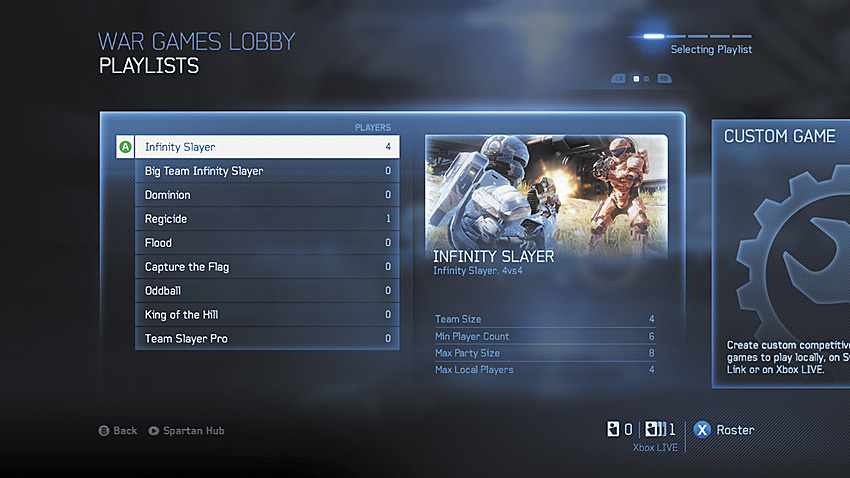
Locate your fellow Spartans and join (or fight against) them as part of the Matchmaking system.
For those with previous Halo experience, the Matchmaking system follows the same concept (it functions very similarly to how it did in Halo: Reach ). However, it is important to note several distinct changes.
The basic idea of Matchmaking is to partner players up into games using skill and network quality information to try and provide consistently entertaining and challenging game matches.
Halo 4 does away with the idea of splitting Matchmaking between ranked and social playlists. All play in Matchmaking contributes behind-the-scenes to your skill rating, and all gameplay contributes to ranking up your Spartan and unlocking new weapons, abilities, and more.
One key difference between Halo 4 and previous games is that playlists are now much more focused on individual game types and less packed with poorly understood variants. Voting centers around map choices only. A few playlists still contain multiple game types for variety, but the majority are composed of single gameplay experiences across many maps.
Voting has been changed slightly, in that player votes now lock in. You cannot change your vote after you cast it. This reduces the amount of “gaming the vote” that takes place in the lobbies of previous games, as people quickly switch votes at the last minute.
“Join in Progress” is arguably the biggest Matchmaking update. You can now get matched into games that are already under way and that have open slots. You can also directly join friends and jump right into their game without waiting, if there’s an open slot.
There are many different playlists, which are being constantly updated after the game’s launch. Consult your Matchmaking menu in-game to see what the latest available options are.
For more information on upcoming playlists and other Matchmaking adjustments, go to halowaypoint.com.
Custom Games
Creating custom matches is a key part of War Games, and it works in precisely the same way as it did in previous Halo games. Play custom games with your friends, and make your own rules! There are loads of options, all listed below. Gained experience is reduced in Custom Games to keep players from trying to gain experience to the detriment of skill.
Custom Game Settings: A Brief Synopsis
- All game types include the score to win the game, a time limit, lives per round, number of rounds, and if teams are on/off.
- Depending on which game type you are editing, there are special options for that specific game type.
- General settings include friendly fire, betrayal booting, team changing, map loadouts, loadout usage, vehicle set, and indestructible vehicles.
- Respawn settings allow you to change the respawn time, suicide penalty, betrayal penalty, and death camp and allow you to synchronize with the team.
- Ordnance settings let you change the initial ordnance, random ordnance, ordnance substitutions, personal ordnance, point requirement, point increase multiplier, and objective ordnance.
- Last are the traits of the base player, respawn, and leader. Here you have so many more options; you can customize shields and health, weapons and damage, equipment, movement, and appearance of all players.
Be sure to play around with all the settings, creating your own amazing game type variants to put in your file share!
War Games: A Tactical Primer
You may be eager to show your prowess among your fellow Spartan-IVs and rank up as swiftly as possible. You may have only limited knowledge of Halo and feel intimidated about facing off against others in a cruel and fast-paced training simulation. Whatever your level of skill, you’ll find this overview of general tactics to be invaluable in improving your abilities.
Introduction: Lexicon
Throughout this guide, you’ll likely run into some terms you may not be familiar with. Here’s a quick rundown of some of these phrases and how to accomplish the maneuvers listed.
Peek Shooting
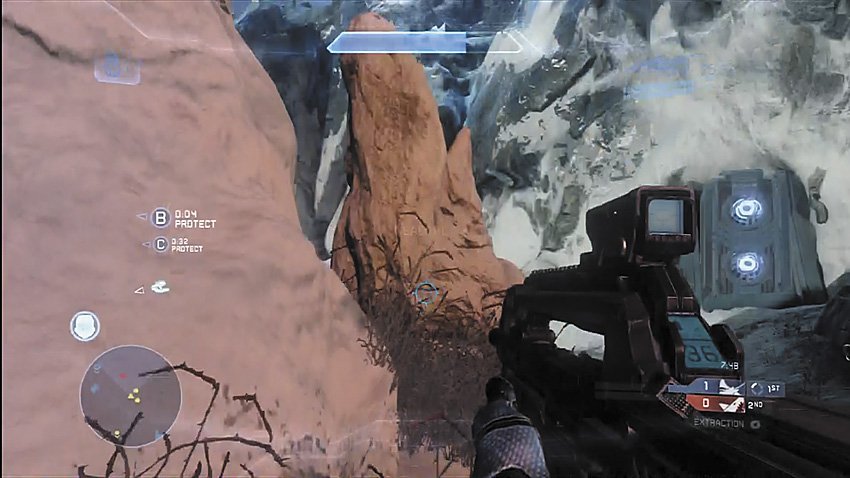
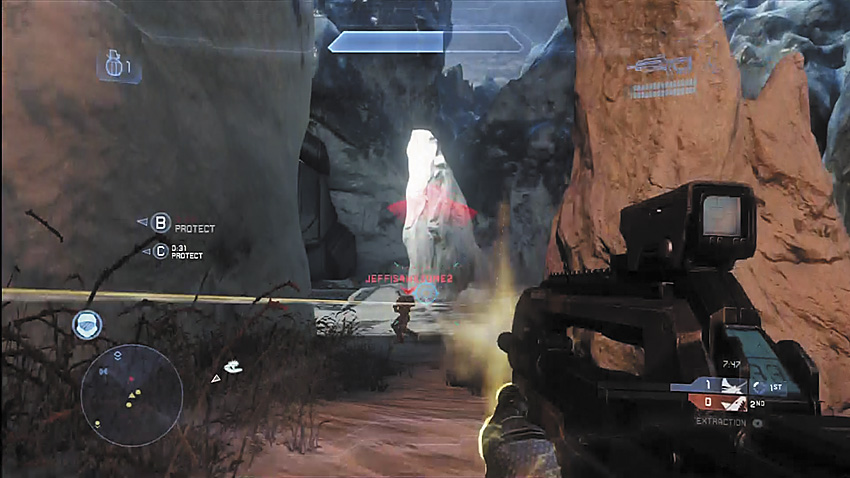
This technique is when a player uses a wall to peek in and out while shooting and timing those shots. It makes it difficult for an opponent to get solid hits on you. Timing the movement and shooting at the right time is the key; don’t make the timing easy for the person shooting you.
Pushing
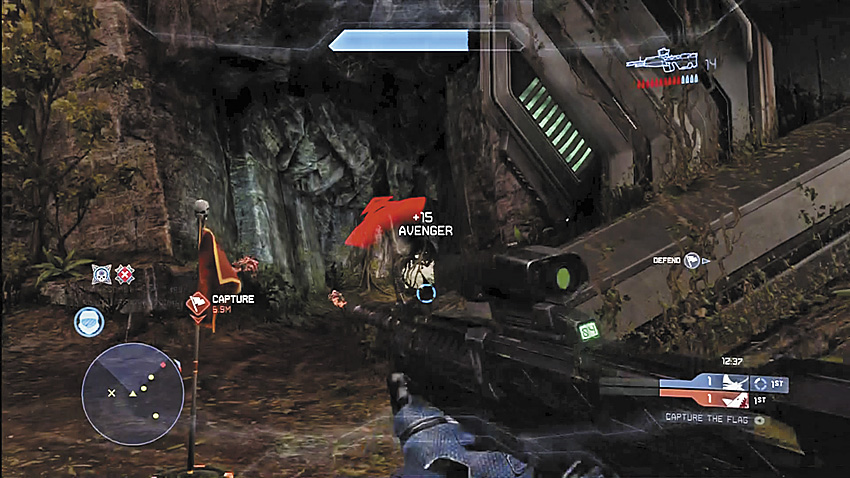
This is the action of moving forward to secure a map position or an objective, usually as a team. Do this only when a member of the other team is down/dead and you are trying to get power positions or set up around a map. You normally want to push with a teammate to ensure control of an area.
Juking
A juke is a movement that surprises the opponent, whether it’s getting behind them, popping out where they don’t expect you, or getting away by using a tricky route. This happens when one player loses the other in a 1v1 battle. The player with the weaker shield outsmarts the other player to buy himself time to recover shield and then kill his opponent, or he has a teammate come help him. During the juking, he ether kills his opponent or stays alive. Juking can also refer to a sudden side-to-side movement similar to strafing that is used to trick your opponent and give you a moment to recuperate from an attack.
Flanking
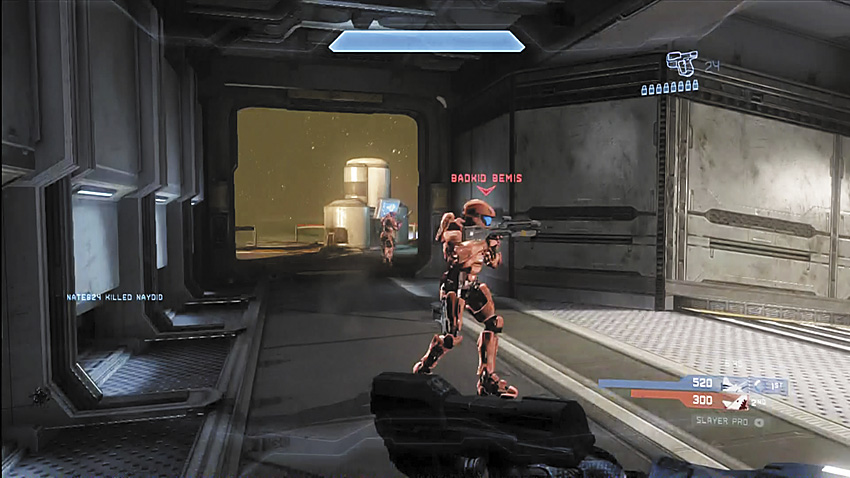
A flank occurs when a player moves in on a preoccupied enemy from the side or the rear, while his teammates engage from the front. One player from a team gets behind the team that has control of his base: He then comes around from the base of the other team, just as his own team is spawning, and cleans up weakened players who are fighting against his teammates.
Getting the Jump
Getting the jump is anything that gives you an advantage in a fight. This is typically done by getting the first shot on your opponent or approaching from an advantageous position.
Baiting
Think of this maneuver like fishing. You want to tempt the opponent with a lure, whether it’s a seemingly free kill, a weapon, or even a vehicle. Once the opponent takes the bait, you (and hopefully other members of your team) swoop in for the kill.
Execute a bait when two or more team members don’t know exactly where enemies are in an area. Instead of the whole team pushing in the same area, one player engages the enemy first while the others stay back but not too far away. The second player follows the first, staying just close enough to pop out and help at any time. When executed correctly, this can be extremely helpful, as both players tend to stay alive and know where the enemy is.
Hot Spots
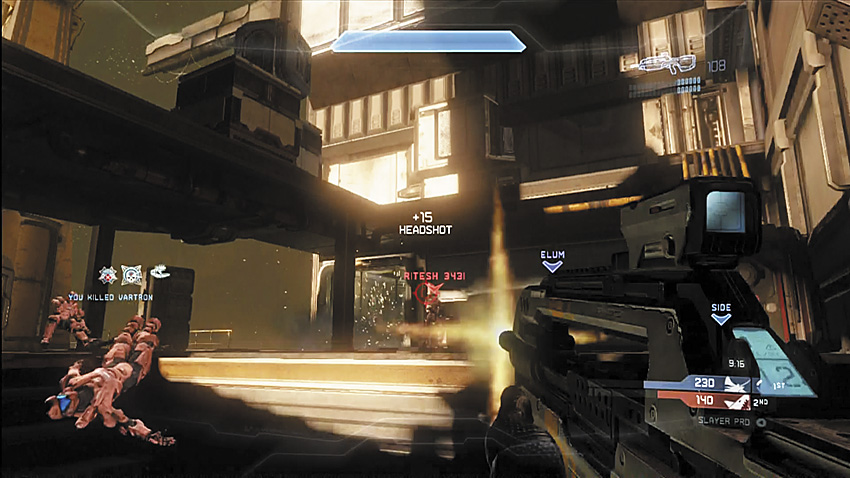
Hot spots, also known as choke points, are locations on maps where there’s a lot of traffic from players and enemies. Players around these areas need to remain in control, both of the physical location and of any weapons in the area. Setting up different angles of fire to cover hot spots is also recommended. The Maps section of this guide details every hot spot to help you understand how a map breaks down. Each hot spot has a nickname as well, so experienced teams can call out hot spots out and quickly know what’s going on across an entire map without even looking.
Power Positions
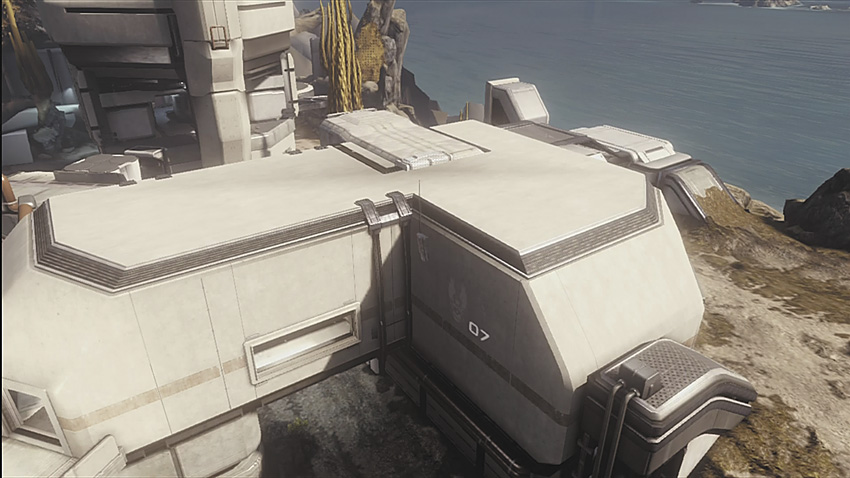
These refer to high ground or otherwise advantageous positions where, once you have control, it becomes extremely difficult for the other team to regain. These locations are usually great places for a sniper because of the excellent vantage points. Use power positions to pick off enemies when they’re spawning at their base. Knowing how to guard a power position and take one back from the enemy is one of the most important keys to improving as a Halo player.
Nading
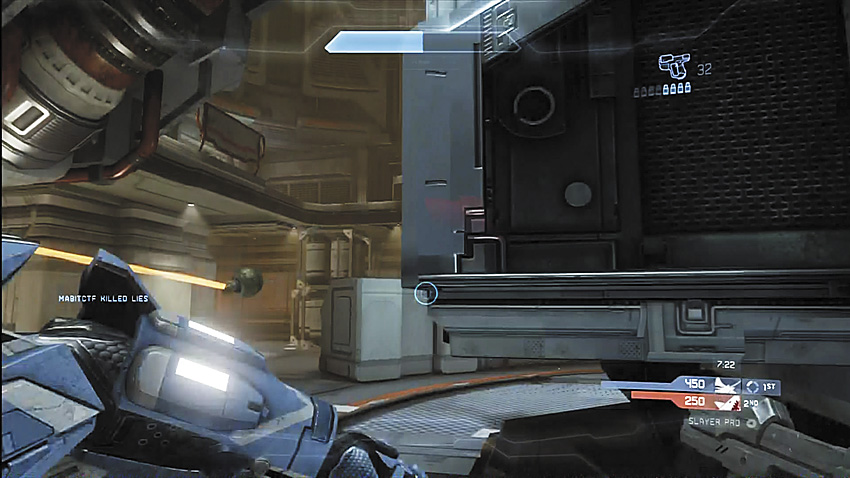
Short for “grenading,” this technique involves lobbing a grenade and can be used offensively or defensively. You can nade a spawn point to ensure that the opposition does not spawn in that particular area. You can also nade to keep a player from pushing up from their base or buy some time for your shields to recover.
Wall Shooting
This is the technique of using cover to protect as much of your body while shooting as possible. Use the wall to increase the accuracy of your shots and make it hard for the other player to get a good angle on you. This is advantageous for sniping; visualize a mental “box” of the area where you should be aiming, making it easier to get a hit on your foe, preferably a headshot.
Turtling Up
When teams get an early lead they may try to focus entirely on defense, ‘turtling up’ in their base or fortified location in an effort to minimize losses (like a turtle recoiling into its shell for protection). This can happen in Slayer game types, but it is most common in objective-based game types like Capture the Flag or Oddball, where teams get points based on maintaining an objective. Turtling up is extremely effective when done properly.
Part 1: Teamwork
Teamwork is essential in Halo . Of course, there are Free For All game types such as Regicide and Rumble Pit, but even these game types are designed to increase your individual skills to help you prepare for team games: These are at the core of Halo , the famous rivalry between Red vs. Blue. Teamwork isn’t that hard to put into practice and synchronize with your teammates; you just have to follow certain plans, and in no time you’ll be competing with the best.
Now that we’ve established that your game improves when your teamwork is more proficient, it’s time to learn two of the most important team skills to possess: the ability to communicate properly and the ability to roam the map with one or more teammates.
Proper Communication: Cut the Chatter!
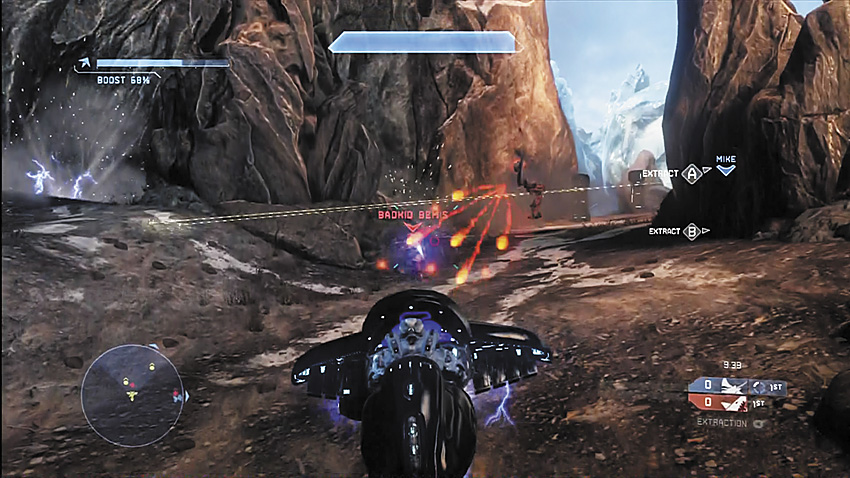
Yelling anything except quick and precise information lessens the impact of your teamwork.
Arguably the most important aspect of teamwork is communicating with one another. Just because you talk a lot while you play doesn’t make you a great communicator; in fact, you actually might be causing a lot of sound clutter. Being a good team communicator means knowing how to be precise with everything you say and knowing the callouts (or “hot spots” or “choke points”) of the maps. When playing team games, you always want to remind your teammates to stay alive by literally saying “stay alive.” This may seem obvious, but reminding your friends to give you or your other teammates a chance to help them keeps your team intact and stronger for longer.
Callouts in a competetive environment should be as terse as possible, while communicating important information such as, “No shields, on my X!”
Two other key phrases to use in team games are “I got your help” and “you got no help.” Just like when you tell your teammate to “stay alive,” these phrases give them a better understanding of their situations. If you tell your teammate that “he has no help,” he should then avoid getting into a dangerous battle and should concentrate on using his surroundings to distract foes until the team comes to help him.
Saying “you got help” lets your teammate know he can try an aggressive move, because you or another teammate will cover his back. Utilizing these (or similar) phrases helps you communicate correctly. In short, try to have a friendly (but minimal) conversation with the people you are playing with once the match starts.
Roaming the Map: The Buddy System
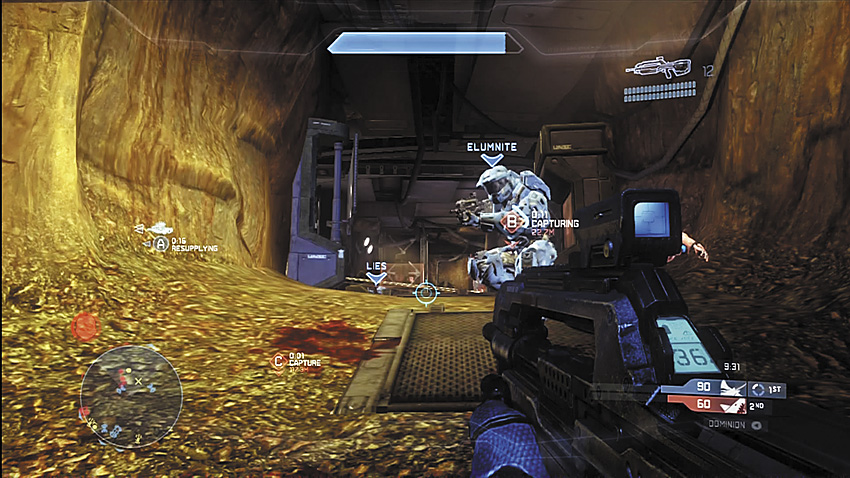
Running around with a teammate is the quickest way to improve your kill/death ratio.
Once you have your communication down, you must be able to proficiently and effectively roam around every map with a teammate or two. Many pro gamers call this the “buddy system.” Communication is important in the buddy system, because in a lot of team games, you want to approach many situations with a teammate. Communication plays a big part in the buddy system, as the player at the back of the pack informs the players at the front to stay alive, tells them if they have help or not, and plans “bait-and-switch” plays.
Bait-and-switch plays or moves usually occur when the player at the front of the group engages the enemy in battle and then attempts to traverse an escape route. The lead player’s job is to distract the enemies into shooting and chasing them down. As this occurs, your teammate(s) either jump the enemy chasers from behind or leap from a location along the escape route (sometimes before the lead player reaches his location). Jumping in from where the lead player is escaping to is a great way to confuse the enemy, as they aren’t usually expecting opposing teammates (or the lead player) to attack them when running away. Naturally, the lead player’s teammate(s) are waiting along the escape route and have planned this ambush!
The buddy system doesn’t only involve moving side by side with a teammate: Working together at opposite ends of a map is beneficial to your team games, too. If one of your teammates has a long-range (sniping) weapon, you (as lead player) need to sync up with him and enable your sniper to focus on watching your back. The lead player’s job in this case is to prepare for the enemy to jump out into the open and possibly damage you as you engage them, coaxing your foe(s) into an open area where your sniper can take a clean (or easier) shot on a foe you’re already weakening. Expect to take damage as you wait for your sniper to finish the job.
Being selfless is the key to successful teamwork. Don’t worry if you die: This is the norm, especially if you’re the lead player, out in the open, preparing to sacrifice yourself in a worst-case scenario so that (hopefully) your team can earn multiple kills in exchange for your life, which ends up benefiting the team rather than simply yourself. Even if you’re taken down, it’s worth it if your death results in an objective achieved for your team.
To perfect your communications and roaming, you want to know the callouts of the different parts of each map so you can use precise communication with your team. Additionally, when you are communicating with your team, try to speak naturally, like you’re having a normal and friendly conversation. Once you learn the map and general callouts and communication, slowly apply it to the buddy system as you roam the map with your teammates.
In short, everyone on your team needs to know where everyone else is (both friends and foes), with minimum chatter.
Part 2: Movement
It may seem obvious, but movement is defined as how you maneuver around a map. The way you move leads you to win more games if you’re in the right places at the right times. This section focuses on how to reach these locations, and when.
Offensive and Defensive Moves
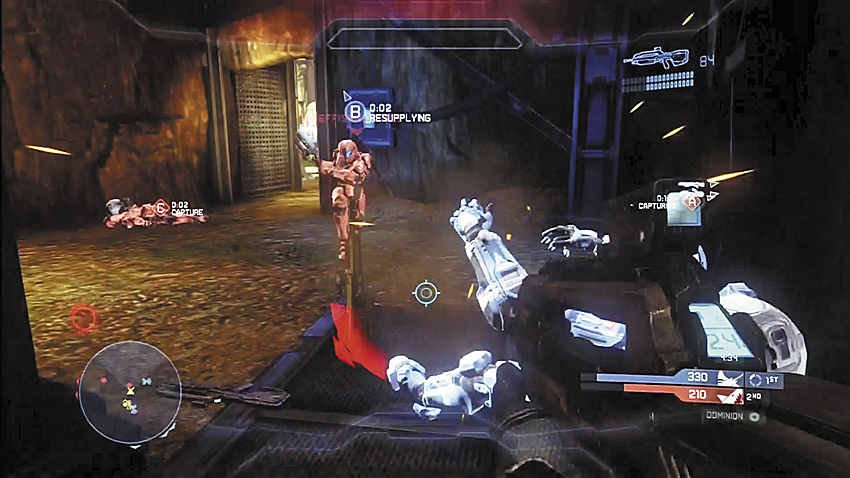
If you’re trained in strafing, crouching, and jumping, your movement becomes more elusive and cunning.
Movement can be used as an offensive or a defensive tactic. Types of movement, such as strafing, crouching, and jumping, are offensive maneuvers or tactics, as they all help you win 1v1 battles. Combining these movements causes your foe to miss shots and lets you get kills. Types of movement such as looking downward while running away, making difficult jumps, and sprinting are more defensive in nature, as they help you flee from foes shooting you in the back; this takes away kills from your enemy and helps you stay alive.
Movement in Halo 4 is much different than it was in Halo: Reach . The movement in Halo 4 is geared toward Halo 2 and 3 style maneuvering, such as higher and “floatier” jumping. However, added elements like sprint and the upgrades detailed in this guide also change how you move around a map too. This results in an excellent blend of balanced gameplay with an updated feel.
Movement and Firing
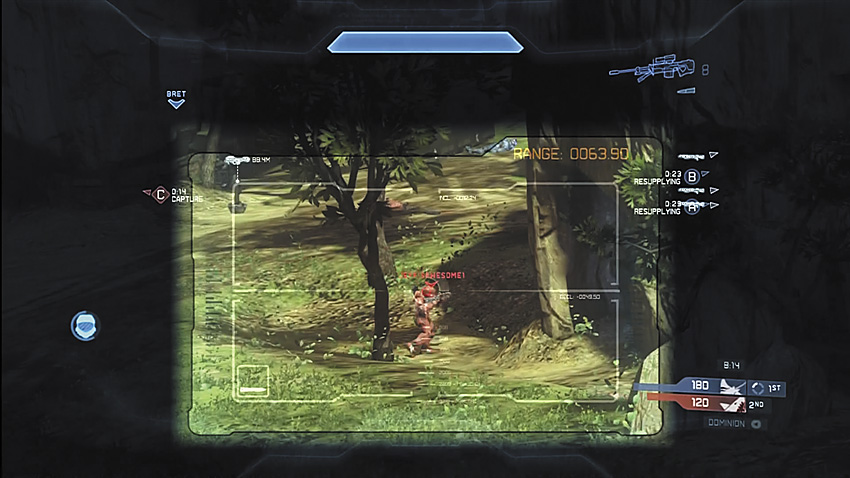
Can you move and aim properly with your controller thumbsticks? Then stay away from play!
Movement helps you improve your aim, which in turn leads to more kills. Aiming your shots with your left and right thumbstick makes it easier to hit, rather than just using your right thumbstick. By moving with your opponent, you can keep your shot lined up horizontally, enabling you to fine-tune your aim with your right thumbstick.
Making adept movements while you shoot is key to connecting on every shot you can. Bad movement can lead to uncomfortable situations and allow you to take much harder shots than necessary. The more you play, the more you will understand how important movement is: It is the key to connecting with as many shots as you can with any of the weapons.
Aiming
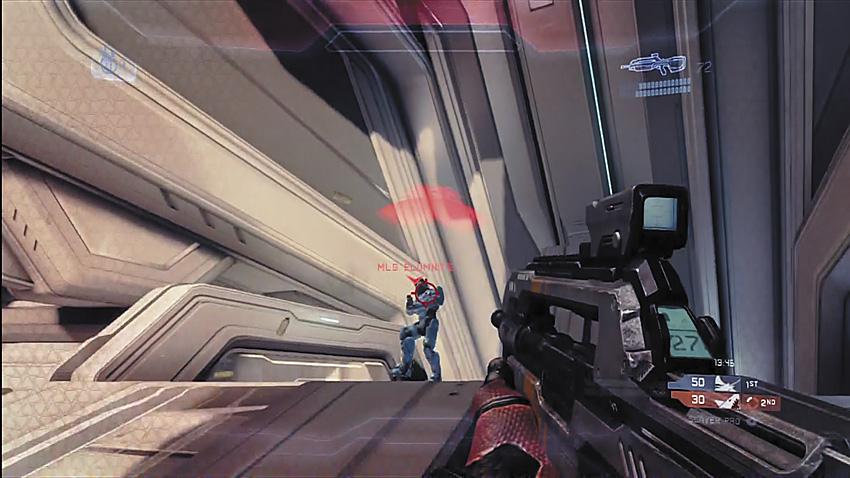
When aiming at your opponent, target his chest/body and work your way to his head to finish him off with a headshot. However, every Spartan in Halo 4 has a hit box (an invisible box that inflicts damage when struck by a projectile) set up slightly differently than in past Halo games. The hit box for a Spartan’s head/helmet is bigger and goes above and around the helmet, so even if your aim is just a bit above the helmet, it usually still counts as a headshot. This changes the way you can aim/shoot at your enemy: You have a bigger hit box to shoot your opponent in the head. Once you get a feel for this “invisible box” and how much extra area you have to aim at, shooting your enemy in the head and sniping becomes much easier.
Strafing
Strafing is an important basic skill to learn. Strafing can be as simple as moving to the side while keeping your weapon trained on the enemy. More advanced techniques involve jumping, or repeatedly crouching and standing while you strafe. This affects your movement speed and your overall target profile, which can help you survive a firefight that might otherwise end poorly for you. Strafing is a technique that requires practice: The more you attempt to strafe, the more you’ll understand which directions you need to move so your opponent misses shots. Being really unpredictable is the most effective strategy, so using all the options you have (i.e., jumping, crouching, moving) makes it more difficult for your opponent to kill you. This is the entire reason for strafing.
Jumping
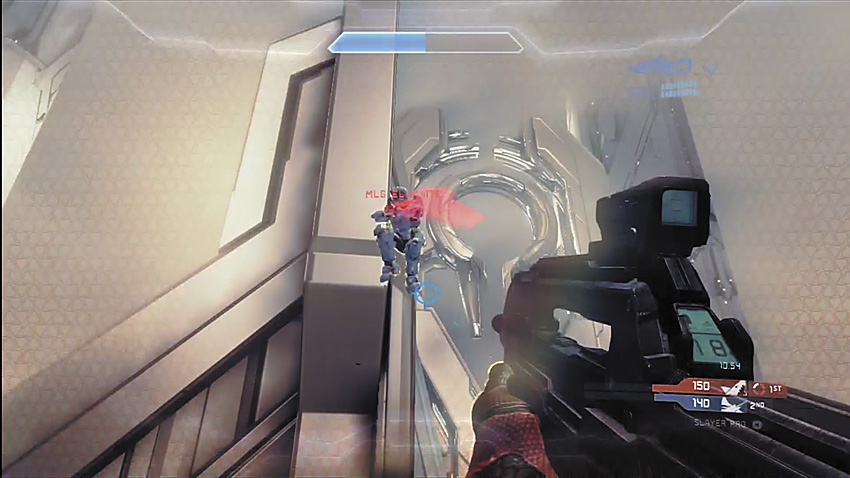
Jump to reach vantage points and make yourself more difficult to hit.
Completing difficult jumps allows for some impressive escapes and enables you to travel around a map more quickly. Start up a custom game on your own and locate all of the routes and jumps on every map: This tremendously improves your map movement and general dexterity. Every map usually has a few key jumps and secret spots you can hide in; knowing them all allows you more options or routes to take, enabling faster travel around the area. You can reach teammates faster to assist them or use jumps to get away from danger once you’ve mastered where and when to jump.
Crouching
Crouch walking—the technique of moving while crouching—is imperative when you’re playing game types that have Motion Sensor, as you don’t appear while in this position. This increases the frequency at which you fire first on your enemy. You can also use crouching to try and make opponents miss shots. For example, if you are fighting a sniper and you’re predicting he is about to try for a headshot on you, hitting the Crouch button sometimes makes him miss the shot. In another example, you can mash the Crouch button while jumping into the air; this causes your Spartan to make more of a “bobbing” motion rather than a smooth jump. Try this and your foe sometimes misses shots.
As previously mentioned, strafing and crouching at the same time allows for some unorthodox movements: Strafe left and right while simultaneously mashing Crouch. Your Spartan bobs his head up and down while moving quickly left and right. This can really throw off your foe’s aim if you use it at the right time! Also use crouch to duck behind low cover that normally exposes you if you were standing up, and you can use it to peek up and down behind walls (while taking down foes); this is a great way to surprise opponents.
Sprinting
Sprinting has seen some changes in Halo 4 that are important to recognize. For starters, every player starts with the ability to sprint. Previously in Halo: Reach , you needed to equip a specific item to be able to sprint. Another change is that being shot while sprinting causes you to slow down, while previously you were able to sprint through incoming fire without missing a step. Naturally, these changes may take some getting used to!
Sprinting remains a good way to evade enemy fire, or help extend jump distances to take shortcuts to help attack from unexpected positions, or escape enemy pursuers through routes they are unwilling to take. You are able to sprint for five seconds before needing to take a three second break to catch your breath.
Movement-Related Upgrades
The Tactical Package “Mobility” and the Support Upgrade “Gunner” are the two perks that affect player movement. Mobility allows you to sprint forever, and Gunner allows you to move quicker when holding a detached turret. Mobility is definitely a recommended perk to try because you never have to worry about running out of sprint.
Running Away
.jpg)
It’s important to know when to run away, and this was one of those times.
There is true artistry in running from combat and actually making a successful escape. Using this defensive tactic makes it harder for your foes to kill you. Assuming you know the layout of a map while escaping, look straight down while running (not sprinting). This allows you to duck your head if you’re getting shot in the back, making it more difficult for your enemy to inflict the final headshot; it can mean the difference between getting around a corner and into cover or dying before you reach the corner. While walking with your head down, moving in a left to right motion while walking forward also makes it more difficult for your enemy to successfully hit you. Your head comes back up when you sprint, so make sure you’re running if you are trying to dodge that last incoming headshot.
One more getaway plan is to sprint and execute difficult jumps into areas your opponent won’t be able to target you. As previously noted, most maps have a few jumps that benefit you while you’re trying to flee from your enemy, and these can keep you from dying if you know where and when to jump! Instead of using the usual routes, run around the maps and find the potential jumps and where they lead to. This cuts down on your route times and allows faster movement around a map.
Part 3: Choosing Your Engagements
Picking the correct time to fight is one of the most important decisions you make. When you choose when to engage, make sure you have the upper hand. It isn’t about winning every fight you’re involved in. It’s about staying alive when you know you’re going to lose a fight and putting yourself in a power position using objects, structures, rocks or other scenery to your advantage. It’s also extremely important to work properly with your teammates when playing team games.Even a less-skilled player who gives themselves these advantages prior to an engagement can beat players who have more raw talent.
.jpg)
Starting combat against a distracted or badly wounded foe can tilt the odds in your favor.
Gaining the Advantage
When choosing which fights to be involved in, you want to know that you have the advantage. For example, in a 1v1 match, an advantage would be having already hit your enemy twice with two shots without your foe having struck you once. At this point, push at them knowing you can still miss a shot and win the fight. Conversely, if your foe has hit you more times than you’ve hit him, retreat from combat, backing down to wait for your shields to replenish. Every life and death counts! Another way to score an advantage is using grenades. This is a big part in your decision-making when gauging a time to engage in a fight. Use grenades to remove your opponent’s shields and then finish with a headshot.
Getting Greedy
You may have completed an excellent shot with your weapon, but sometimes you need to back down and wait for a better time to battle instead of going in “hot” and trying to mow down everyone. At some point, you’re going to encounter someone at your skill level or better, and they’ll be able to shoot just as well as you. When this happens, combat becomes all about playing it smart, figuring out the correct time and place to fight, and backing down when necessary. There are times when you have to leave a one-shot kill and let a teammate pick off your foe in team matches, or give up the kill and move on in Free For All matches.
Gaining the High Ground
.jpg)
Raining death on a foe down below is better than battling an enemy who is located at a high vantage point.
Scrambling to higher ground is a great way to gain the advantage on your opponents. For example, from the top of a building or tower, you have a bird’s-eye view over more of the map than your foes. You can put shots into your opponent while keeping your own body hidden. This is the power position that is perfect for sniping.
Great Teamwork
It is rewarding—and imperative—that you work well with a teammate and move around together on a map team-shooting everyone in your path. Be sure you find the enemies on the other team who are running around by themselves (the “lone wolves”) and take them out in a 2v1 confrontation, with you and a teammate emerging victorious. These fights are a gift; it is easy to pick these foes off before moving on to more tricky enemies. Great teamwork isn’t only about being an offensive powerhouse with backup. If you’re in a situation where you have a comfortable lead, turtling up in a safe spot with your allies is a better move than just running around on your own.
Weapons and Power-ups
When you grab a power weapon to make sure your opponent doesn’t get control of it upon your death, you want to stay as safe as possible. Don’t rush your actions when you have the weapon advantage, and don’t be afraid to “waste” ammo.
Checklist of Advantages
Look out for the following advantages during your matches:
- Cover opportunities, such as walls, structures, and natural scenery, are particularly useful because they let you choose when to fight and when to back down and let your shields recharge.
- Stay alive and let your shields recharge; this gives you another chance to restart a fight or wait for a teammate to help you in a team game.
- Find a structure or piece of scenery (such as a rock) that covers your body and exposes only a section of your Spartan’s form. This makes it more difficult for your foe to hit you, as they have just your head to shoot at, whereas you have their entire body to aim for. If you find the right scenery in the best place, firing from this location can be deadly for your enemies. Consult the Maps section of this guide for many examples of such locations.
- It isn’t wise to place yourself in an open area, as you’re obviously more vulnerable to being shot at from multiple angles. Furthermore, you’re unable to see a foe’s entire body when you’re looking up, trying to find where the shots are coming from. The lower ground is a death trap!
- If you can master the technique of “peeking and shooting,” timing your shots and movement correctly, you can peer out, fire at your foe, and drop back into cover before the enemy can return fire.
Exercising Patience
Patience is a large part of your success. You have a lot to learn about this game, and it won’t happen in one day. Aside from reading this guide from cover to cover and learning every location on every map, it takes many gaming sessions to become a great player. Waiting for your foe to come to you instead of simply running out into the open is a better bet in almost every situation. As indicated earlier, patience can be executed in actions such as retreat or simply avoiding a conflict where you’re certainly outgunned. In team games, turtling up is the most clear-cut form of patience, forcing the enemy to come to your defended position which ultimately puts them at a disadvantage.
Free-For-All Fighting
Knowing when to let a kill go and when to charge and pick up a few one-shot kills is very important. Try stepping into fights that are already going on so you can easily pick off a kill or two (or three) while not becoming the main target. Initiating battles most of the time simply hinders your ability to get kills; you usually whittle a foe down to a weakened spot, and then someone else picks them off with a headshot. Work smarter, not harder!
Grenades are incredibly valuable in a Free For All. One well placed toss can strip the shields off multiple enemies. Any time you can restock on grenades, do so.
Pay attention to ordnance drops! During some rule sets, random ordnance continues to fall onto the battlefield throughout the match. You can use this to your advantage. Rather than running over the power weapon to be the first one to it, you could always hang back and let other players exhaust eachother before you step in to finish them off. They can’t take a power weapon or a grenade restock if they’re all dead!
Weapon Proficiency
If you’re exceptionally gifted with your weapon, you can play more freely throughout the maps, as you’ll be confident that you’ll likely emerge victorious in any battle. However, there are times when even the most impressive crack-shot might not have a target locked; this forces you to play with more intelligence and use the map to your advantage, going for the high ground and knowing the areas that are very effective when picking foes off or surprising them with a fight.
Opponent Prediction
If you already know how your opponent plays, it makes it easier for you to decide where the battle will be and when to catch your enemy off guard or in a weak state. When you begin a game, it should take around five minutes to ascertain what the opposing players are likely to attempt (and their bad habits you can prey on). Learn where your foes like to travel to and how aggressive or passive they are. After you figure this out, you can predict their movements and drop them with a greater degree of certainty.
Plan “B”: It’s fine for you to engage in combat where you might not have the advantage or you’re fighting at a disadvantage, as long as you know you have an “out.” This means retreating from the fight when the battle turns against you. Your escape plan could be as simple as retreating to a section of cover or as complex as knowing that a teammate is on his way with a timely flanking maneuver.
Target Priority
Having an idea as to who or what is a priority target during battle may take some experience before you finally get it down, but it is important to understand. If you’re behind on points during a Slayer match, team up with allies to guarantee kills, or pick off weaker players more often. If you see multiple enemies, perhaps you should take out the one with the power weapon first. Look for hostile Spartans with their shields down, and put them away with a headshot.
War Games: Tactical Advice
With the basics down, it’s time to learn a host of tips to further improve your game. Use these additional tactics when you can. There tips are from all four MLG Spartans and include the best loadouts to begin your games with, the best weapons to use, and other advice to increase your gaming prowess!
Tips for Improving Your Play
.jpg)
No help when you’ve got the flag? Don’t be afraid to defend yourself.
1. Jumping: This is very important when you’re entering fights or disengaging from them. Use rocks, crates, and other scenery to reach higher ground. This can help in all types of objective games to cut off routes, complete shortcuts, or run in a flag faster so you can score.
2. Capturing the Flag: If you’re holding power weapons and you’re by the enemy flag, then it is better to provide supporting fire, guard the flag, and let a teammate without such a great weapon run with the flag. You can’t drop the flag once you walk over it, so having rockets or a sniper rifle is useless. Instead, it’s simply smarter to slay and chaperone a teammate once they take the flag.
3. Oddball: If you’re in trouble during Oddball matches, and you know you’re about to be taken down while holding the ball, look out for any teammates near your position and throw them the ball. It is much better to keep it out of the other team’s hands.
4. King of the Hill: It is wise to sometimes simply skip a hill if it will be changing soon and set up for the next one, or you may risk rushing aimlessly to a hill that’s too well defended and dying over and over again.
Try to control a point that’s close to where the next hill moves to, and set up there. Now when the hill moves, you’re in the location already and your opposition is likely to be farther away at the previous hill’s position and also in a weakened state. This allows you to accrue time easily and relatively safely.
When playing properly on a team, there should be only one player in the hill so the remaining teammates can cover the other angles to help keep the hill dweller alive. The only time two teammates should be on a hill is toward the end of a game when you need to keep the hill at all costs for the points. So, if one teammate dies in the hill, there’s a second to keep the time continuous.
5. Rushing: Never try to randomly run flags or rush an objective by charging in without help from your teammates.
6. Ordnance Discretion: When calling in Ordnance Drops it’s important to remember a few things. First, don’t always call in a drop as soon as you get one. Instead, wait for your current provisions to run dry, especially if they’re doing the trick (which they likely are, as you just got an option for a drop!) Second, call in drops inside enclosed areas. If you do it in the open, the drop will be deployed from above the map and will be loud and noticeable. Instead, head to an interior or a location with an overhang and the ordnance will discretely materialize instead of dropping. And finally, don’t always select a power weapon which is often a player’s first reaction. If you’ve got a sweet weapon, selecting a power-up can sometimes make it even sweeter. There’s nothing quite like using a SAW to cut down a handful of enemies only to be rewarded by an Overshield, allowing you to cut down the same enemies all over again almost immediately after.
Spartans of MLG: Tips from Elumnite
.jpg)
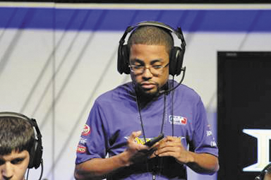
Drop in an Overshield when you’re going in for a kill. Effective use of ordnance is key.
1. Ability Combinations: Learn to combine the right type of armor abilities to help enhance yourself in the battle. Once you’ve chosen a couple of abilities, you’ll probably stay with that setup. The abilities you choose influence the role you need to play on your team in future games, depending on the playlist.
2. Ability Weaknesses: Find out what armor abilities are weak against one another. Discovering these can be key to victory in games. Before a game begins, talk to your teammates about the abilities they are using, and make sure your entire team has a combined mixture of different weapons, Tactical Upgrades, and Support Packages.
3. Ordnance-Wrangling: Be smart about when and where you use your ordnance. Don’t fill up your meter and call for a drop as soon as you can, especially if you’re in danger of being killed before you can claim the drop. Usually, if the enemy teams see this, they’re likely to pounce on you and attempt to secure the ordnance for themselves. The correct way to play is to ensure you have a clear area to drop your ordnance in the most proficient and safest manner possible. Expert players may even drop ordnance close to a group of enemies because they figure they’ll be finding these foes anyway and can get a jump on them in the confusion. For example, drop an Overshield into the battle area just as you’re about to fight, and employ it immediately.
4. Small Talking: Good communication in team games is the easiest way to win the game. Work on not just calling out where enemies are and how weak they are, but focus more on “small talking” to each other. Without constantly chattering (which is a bad plan), be more succinct in your verbal callouts, using phrases like “I have your help” or “I don’t have your help,” “stay alive” (if you can’t immediately provide help), and “push here with me” (if you need to take an objective). These phrases let your teammates know what you need them to do if they’re alone and determine whether it’s wise for them to fight battles or simply wait until another teammate arrives.
5. Accuracy Above All: Work on strengthening the accuracy of both your shots and your map knowledge! Hone your talents on every weapon you normally use in loadouts. Playing on your own won’t help you with your weapon techniques, but you can focus on learning routes throughout every map and finding the angles from which to overpower your enemy. Knowing what’s around every corner at all times can affect a fight, and realizing you need to jump or escape ahead of time keeps your movements smooth.
6. Just a Heads-Up: Do you think of yourself as a master sniper? Well, there are occasions when you don’t always need to automatically try for a headshot: for example, if you can hit the body and assist a teammate in finishing the job, especially if your friend was being attacked by the foe in question. Ultimately, preventing a teammate’s death and giving them the kill is better than going for a pointless headshot at the expense of your teammate’s life.
Spartans of MLG: Tips from Flamesword
.jpg)
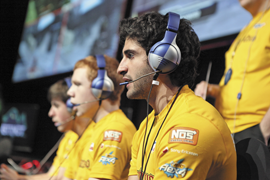
Fly over structures and make yourself harder to hit with the Jet Pack.
1. Hot Spots and Choke Points: Get a good grasp of the overview layouts of every map. It doesn’t matter what game type you’re playing; you must know the topography and the locations on a map where all the action occurs. Knowing every hot spot helps you in any game type, and knowing the callouts of the maps helps in every team-oriented game type.
2. Packing a Punch: Figure out what armor abilities work best for you and the subtleties of each. For example, the Jet Pack is a great armor ability, as it allows you to travel the greatest distances and you can fly over structures with ease. It also helps you in 1v1 matches because you can launch the Jet Pack just before you die, making it harder for your enemy to land a headshot on you.
3. Getting Skilled in the Kill: Individual skill is important, and there are many ways to increase it with playlists such as Rumble Pit, Regicide, and Team Snipers. Be sure to play these so you understand how to handle situations where you might be fighting more than one enemy at a time.
4. Passive or Aggressive? Find out what kind of player you are. If you are a passive player, you might want to use Firepower (check the Tactical Package) so you can have mid- to long-range weapons with which to provide as much support fire as possible. If you are an aggressive player, go for the Assault Rifle, Storm Rifle, or Suppressor so when you rush the enemy in close quarters, you can execute them quickly.
5. Exercise More Than Your Thumbs: Outside of Halo 4 , be sure to stay physically active. A lot of my success in the pro gaming scene is due to my active and healthy lifestyle. Because of everything I do outside of the game, I am always calm and relaxed when it’s time to game. Being calm helps you understand the scenarios you go through when playing and allows you to think more clearly on how to come out on top from them.
6. Jumping: Practice jumping! Jumping is effective in every Halo title, and in Halo 4 your Spartan movement is the best to date, so you can really use some of the enhanced jumps to your advantage. This guide covers jumping techniques, so be sure to practice them over and over until you perfect them.
Spartans of MLG: Tips from Naded
.jpg)
The team that controls a power weapon controls the game.
1. Don’t Lose Focus: When playing online, it is very easy to lose focus when bad things happen. Complaining to your team instead of calling out enemy locations is doing nothing but losing you the game more quickly. If you train yourself to control your less desirable emotions, you’ll not only improve individually, but also win more team games.
2. Preplanning: Starting custom games with your team and going over strategies for what everyone wants to do for specific maps/game types will allow your team to be more on the same page. Talking about the goals for each map/game type and then making minor adjustments as you practice will help your team get better every day.
3. Chatterbox: Using small talk while playing is a different form of communication. Calling out enemy locations is one way to communicate to your team, but when you want to be more personal with your callouts, talk to a teammate directly and plan on shooting the same area together. Talking with teammates is very important in helping them stay alive and being aware of the current situation. Working together with one member of your team at all times will help you improve your small talk, because then you will know who exactly you are working with and can directly communicate to them throughout the game. Always try to connect with the teammate closest to you.
4. Matchmaking: Playing Matchmaking is one way to improve your individual skills with weapons. The more games you play in any playlist, the more familiar you will be with properly hitting shots with each weapon. With enough practice and play time, you should reach a point where you have a good shot with all weapons and understand which weapons are better for each situation.
5. Power and Glory: Controlling power weapons will win you games. Always try to put a team effort into controlling weapons like the Sniper Rifle and Rocket Launcher. Typically, the team that better controls the power weapons throughout the game will win if they use them well enough.
6. Patience Is a Virtue: Being patient and calm while playing can help you realize that the game might not be as chaotic as you think. If you are getting too intense, take deep breaths while playing to calm down. Also, staying positive while playing and encouraging teammates in-game will go a long way toward getting more victories under your belt.
Spartans of MLG: Tips from Strongside
.jpg)
Know exactly where you are on every map? Then you’re already halfway to victory.
1. Mapping It Out: Practice on the maps until you are familiar with them and learn all the callouts. This will allow you to get—and give—help. Find the best routes to run the flag, the best spots to snipe from, the preferred positions to hold and/or move the oddball, the best spots to lock and area down, the power positions, and the areas where you can be sneaky. You can also find some very useful jumps that will get you around the map more efficiently and that are incredibly sneaky and will have your opponent completely confused.
2. Bringing the Firepower: Become familiar with all the armor abilities, Tactical Packages, and Support Upgrades. Make multiple loadouts and practice with all of the armor abilities to become competent with them. Find the counters and combinations that have good synergy. Firepower is my favorite, so I can carry two mid-range weapons: the Battle Rifle and DMR.
3. Weapons Detail: Practice with all the weapons. Go into a custom game and play against your friends, using only one weapon to increase your proficiency with it. Set up a custom game with Overshields and a bottomless clip to practice aiming and shooting with the weapons at different angles and situations. The only way to get better with a weapon is to use it! Practice and become adept with every weapon. You want to win most of your individual fights. This makes you a great player who has the flexibility to play different roles.
4. Know When and Where to Nade: Learn and test out grenade points to get a surprise nade on your opponent. Grenade points are places on the map where you can bounce a grenade to a hot spot (where your opponent is) and weaken your opponent. There are many walls, windows, staircases, rocks, and structures you can use to make your grenade hit a spot you normally wouldn’t be able to throw a grenade to.
5. A Night at the Theater: Save some of the gameplay footage of you losing and winning and watch them in-theater later on. Find out what you were doing correctly and what you were doing wrong.
With the game you lost, see what mistakes you made and what you could have done differently. With the games you won, see what you were specifically doing to win. Also watch what your enemy or enemy team is doing during a game you lost, and see what you could have done to stop them. You can always find many tips, tricks, jumps, grenade points, and strategies by watching gameplay in-theater. You also learn to predict your opponents’ moves throughout the game, seeing where they are more prone to go and learning the particular routes they take. Mimic what other players are doing if it is working well; you can even make it better and make it your own.
6. Stay Unpredictable: Switch it up sometimes. You don’t want to become predictable. You can run different routes and be more aggressive or passive in certain situations. Leave your opponent guessing at your every move. Sometimes doing something your opponent may think is stupid is the best way to get a jump on them. For example, doubling back to a fight when you normally would let your shields recharge will throw your enemies off, especially if they’re in the middle of throwing a grenade or reloading.
7. Patience and Practice: You should be benefiting from your gaming session. Always try to learn something new every time. Back down and wait for your shields to recharge. Your patience may make your opponent restless and more aggressive, putting him in a bad position. If you want to be the best, you have to put the time in and practice! And always remember to have fun: It doesn’t hurt to kick back and relax and play some Flood or other entertaining modes that aren’t “serious.”
8. Embrace the Outside: Stay healthy outside of gaming. Take a break sometimes and step outside! Do something other than gaming. Your mind will be fresh when you come back. Also, be active and exercise: Your reactions will improve and you’ll make your snap decisions more competently if you keep your body and mind in good health.
Top 5 Loadout Packages
Learning the loadouts that are right for your particular game type is very important, as is having predetermined loadouts so you can quickly get into the action. After hundreds of hours of testing, the following loadouts are some of the best specific packages we could come up with. The name of the loadout gives you an idea of the play style that goes with each one.
1. Speed

2. Spy

3. Air Strike

4. Iron Wall

5. First Aid

Top 7: New Additions to Halo 4
.jpg)
The Flood is back and more infectious than ever.
1. Limited Grenades: Unlike the previous Halo games, Halo 4 doesn’t allow grenade pick-ups unless you have the Tactical Package Resupply equipped. This changes the game, because you can’t “waste” grenades like you used to; it now isn’t wise to throw out your grenades as quickly as you want to. Each grenade is important now, so make each throw count.
2. Loadouts: Loadouts are a new feature to the Halo series. Tactical Packages and Support Upgrades are perks that make your Spartan much more proficient, and you’re allowed one of each per loadout. Along with the perks, armor abilities makes a return with a few new abilities as well. Be sure to test all the combinations to find what suits you best.
3. Flag Waving: Flag tossing—which has been the most effective way to run flags in previous Halo games—has been removed. However, when you pick up the flag, you receive a pistol with unlimited ammo to defend yourself. This makes grabbing flags more appealing because you have one melee strike with the flag and the pistol in your right hand for ranged attacks. This combination of pole and pistol can lead to numerous epic kills!
4. Oddball Overhaul: The game of Oddball has been revamped! Pressing the Grenade Throw button, usually your left trigger, now lobs the Oddball like a football. This changes the way you play Oddball, because if you are about to die, you can throw the ball in the direction of your teammates or off the map to prevent the enemy from gaining the ball.
5. New Game Types: The new game types are Dominion, Extraction, Flood, and Regicide. Flood is similar to the zombie playlists you loved in Halo 3 and Halo: Reach , but now when you’re killed you take the form of the shambling Flood itself! Dominion and Extraction are modes that play like Territories from previous Halo games but have their own new fun flavor. Regicide is a new game type that puts a bounty over the king, who is usually the player in the lead.
6. Guns! Be sure to inspect the new arsenal of weapons, including the mighty and powerful Forerunner guns! These weapons pretty much stop everything in their path; this is Firepower you should never pass up. Each weapon has its own unique style; become comfortable with these weapons, as you can turn the tide of the game if you get the chance to grab them.
7. Ordnance Drops: This is a new feature of Halo 4 . Certain game types give you the option of your own personal ordnance drop, which you get by accumulating points through kills, assists, EMP charges, multi-kills, and so on. Your own drop gives you the option of three items. These can be weapons, grenades, or even power-ups. Also, if you’re (extremely) lucky, you can kill your opponent with your drop if you land it directly on their head!