
Medal of Honor: Warfighter Guide Essentials Behind-the-Scenes
Multiplayer Community Event
Multiplayer Community Event
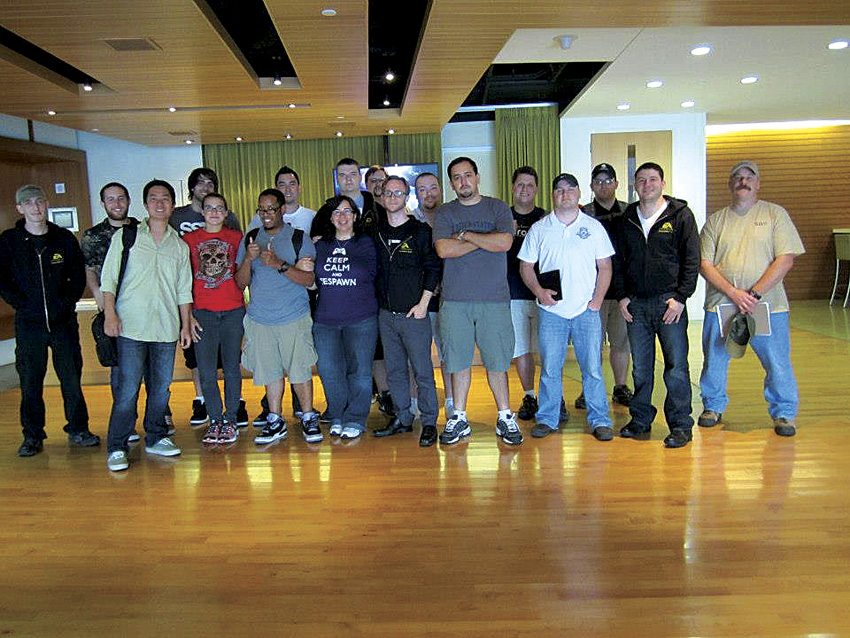
A group shot of the community members who made this event a smashing success.
Early in September of 2012, Danger Close held a community event at their offices in Los Angeles. This event gave community members a chance to mingle with the developers while previewing Medal of Honor Warfighter’s multiplayer maps and game modes. Prima was lucky enough to attend the event, giving us our first in-depth experience with this game’s multiplayer gameplay. Here’s multiplayer author David Knight’s first-hand account of what transpired over those fun-filled days in sunny Southern California—not that he saw the sun much.
Day 1: Mouse/Keyboard vs. Gamepad
I wasted no time making my way to EALA’s office, where Danger Close is based. This wasn’t my first visit to this studio, so I was able to navigate my cab driver from LAX to the office’s somewhat obscured entrance in Playa Vista. Upon meeting with Daniel Chin (the event organizer) in the lobby, he guided me back to a large (and noticeably warm) room filled with twenty high-end PCs where the community members were just getting started. I stowed my luggage on the side of the room and hopped on the last vacant system, joining a game already in progress.
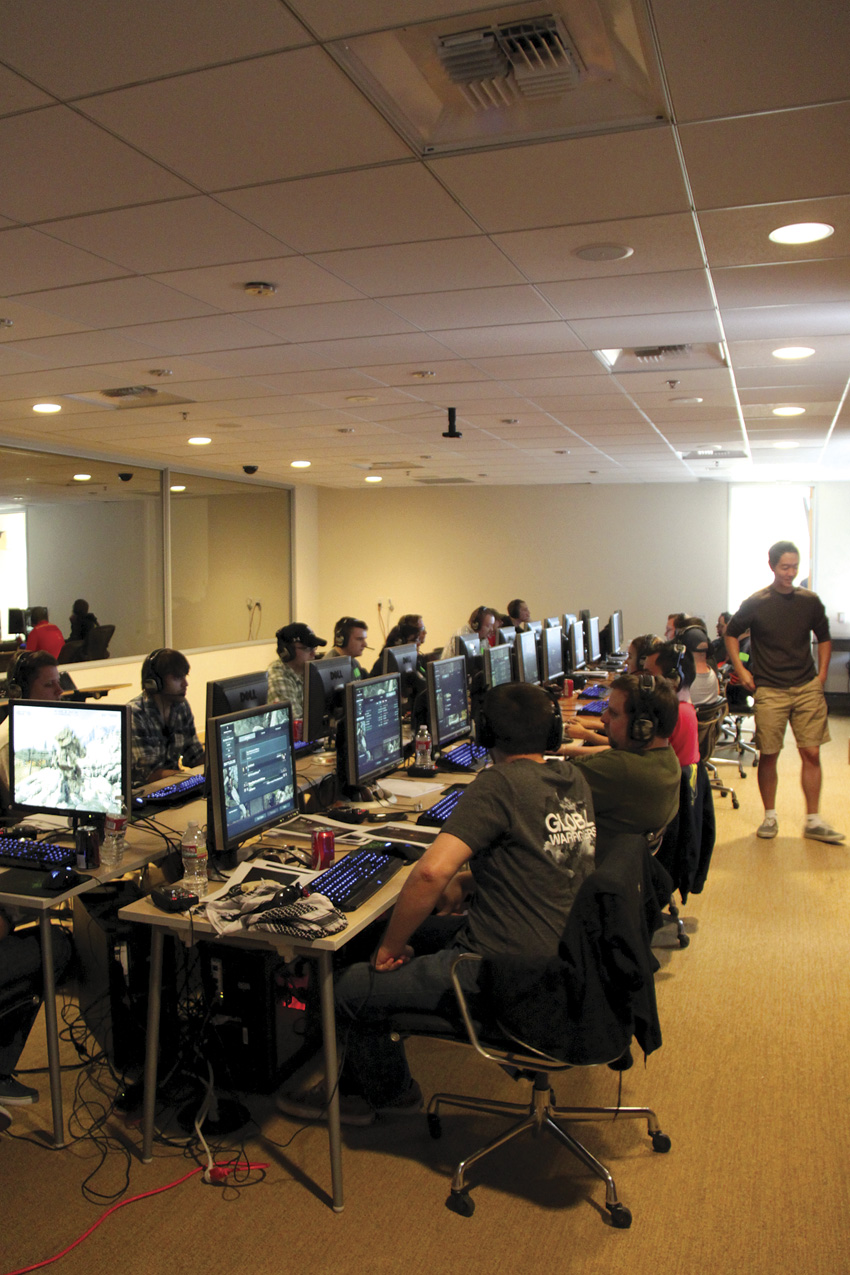
This is where the magic happened. And yes, twenty high-end PCs made the room temperature a bit toasty. But it added to the immersion when playing on Tungawan Jungle.
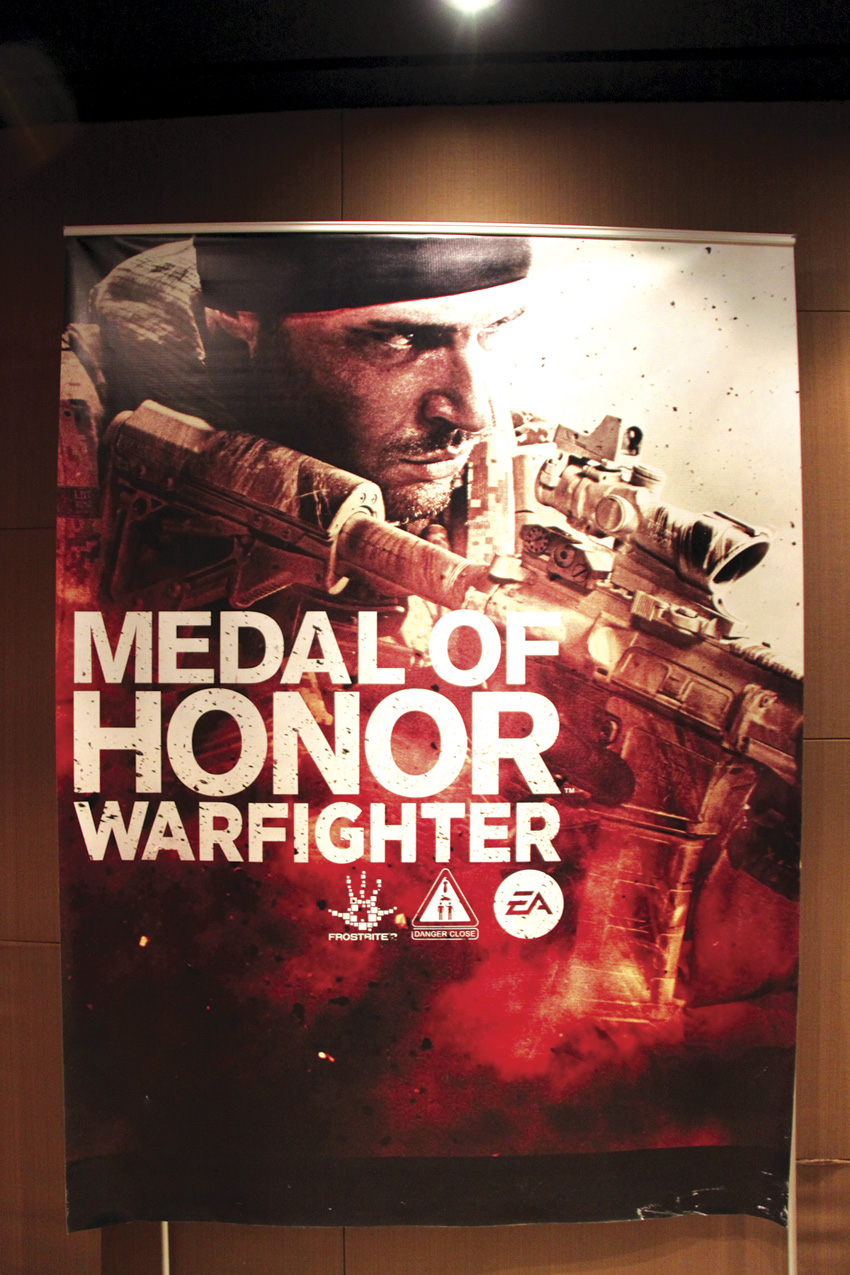
The game's branding was hard to miss. We even had Medal of Honor Warfighter branded gamepads and headsets.
The first hour of gameplay was a blur, as I tried to adjust to fast-paced gameplay and compact map design. It soon became clear that my fellow community members were more than just journalists—they were very competent gamers. I’m used to going to press events and rising to the top of the scoreboard, often because I have much more experience with the genre and game. But this time I had a hard time keeping up. After years of console gaming, my mouse and keyboard skills were extremely rusty. But as I looked around the room, I noticed most of the community members were playing with custom Medal of Honor Warfighter gamepads, complementing the high-end Medal of Honor Warfighter headsets attached to each system. Really? They were beating me with gamepads? I had a gamepad plugged into my system too, but I resisted the urge for several rounds. But when my kill/death ratio failed to improve, I finally grabbed the gamepad and never looked back. Suddenly I was holding my own, effortlessly staging ambushes and frontal assaults with my fireteam buddy. The frustration quickly melted away and I soon began unlocking more national units and weapons, giving me more options to customize my multiplayer persona.
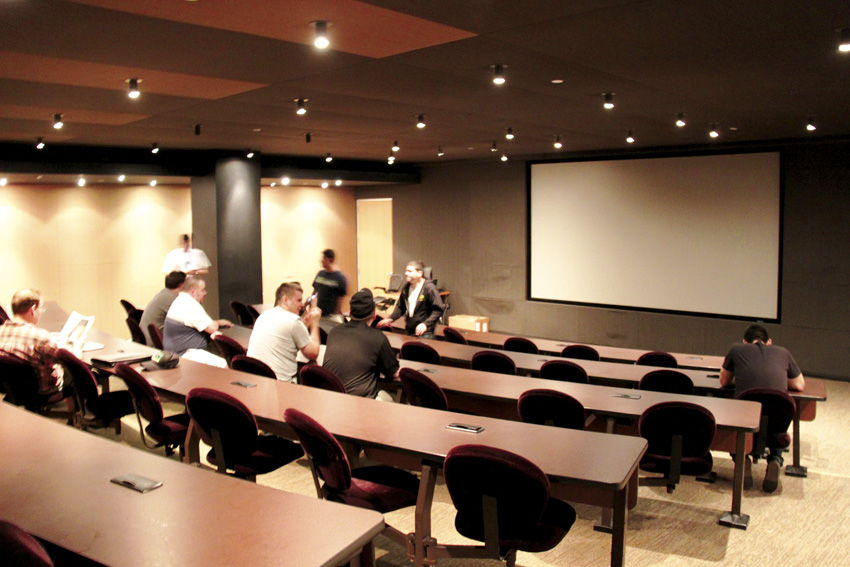
This is the auditorium where we met frequently with the developers to provide feedback and debate different aspects of gameplay. The large projection screen came in handy when discussing specific areas on maps.
Following a full day of gameplay, interrupted only by a brief pizza break, all of us were ushered into a large auditorium. Here developer Thad Sasser moderated a lengthy discussion where the community members were urged to provide feedback on everything from the maps to the classes and to the weapons. The group didn’t hold back, pointing out potential bugs while offering suggestions for improvements. On this particular day, there was a debate about the sniper class’s secondary automatic G18 pistol being overpowered. The point man’s 870 shotgun was the topic of a similar discussion, though I felt it worked perfectly. But one thing everyone agreed on was that the assault rifles just didn’t have enough stopping power. Given the enthusiasm and broad FPS knowledge of the group, the discussion could have gone on for several more hours. However, Daniel had something else scheduled—a dinner at Medieval Times in Buena Park!
Day 2: Hara Dunes FTW!
A late night of feasting, 11th-century-style entertainment, and even a mild earthquake didn’t seem to phase the group as they took to their stations early in the morning for another long day of multiplayer action. And to my surprise, much of the feedback we provided the day before was implemented in the latest build. While the community members were busy eating and sleeping, the development team worked through the night to make improvements to the game. The first thing we all noticed was the improved effectiveness of the assault rifles. Suddenly these weapons felt just right. In fact, the day before I avoided using the assaulter class entirely due to this issue. But now the assaulter class quickly became my go-to soldier, particularly when trying out a new map or game mode, when I didn’t quite know what to expect.
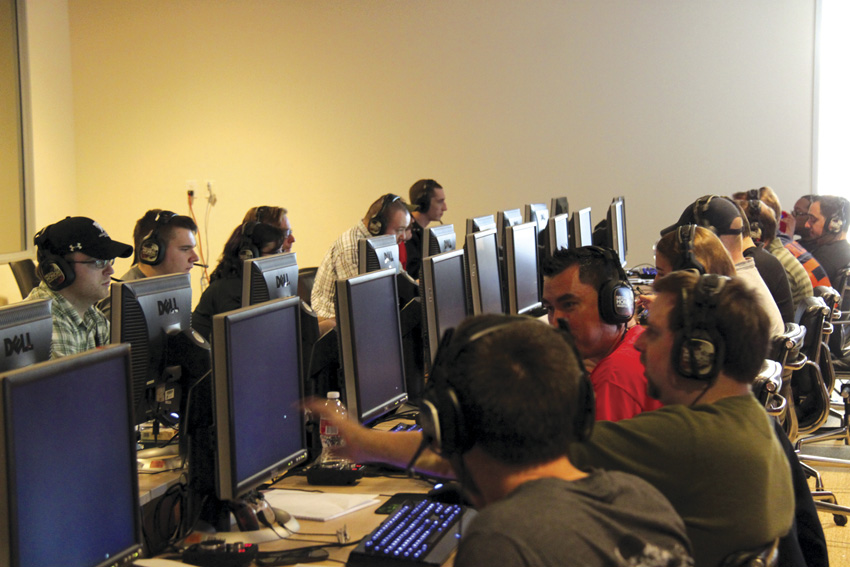
Between rounds and during breaks, the group had time to discuss tactics and take notes.
On this day, we were introduced to a mix of game modes on Basilan Aftermath, Hara Dunes, Sarajevo Stadium, and Tunganan Jungle. Playing Sector Control on Hara Dunes was the highlight of the day for me. This dusty desert-themed map offers great visibility in a compact urban setting, lending itself to intense close-quarters firefights. This is when I discovered the point man’s heavy hitters class ability is most effective when firing the weapon on single shot, otherwise the recoil makes it difficult to control the weapon. I also had the chance to experiment with a variety of support actions, including the sniper’s Switchblade. This cool weapon performs like a miniature cruise missile, ideal for dive bombing opponents grouped in narrow choke points.
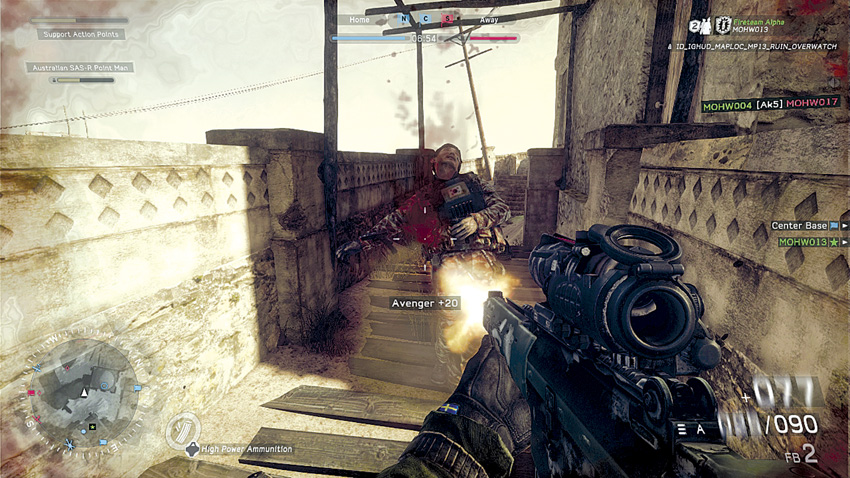
The compact design and cramped alleys quickly made Hara Dunes my favorite map of the day. Sorry MOHOW017, but I had to avenge the death of my Fireteam Buddy.
Realizing the benefits of the previous day’s discussion, Thad conducted two feedback sessions in the auditorium: one before lunch and another at the end of the day. During these break-out discussions, we were introduced to more developers, including most of the map designers. In both sessions, the discussion focused mostly around the maps and support actions. Beyond providing the developers with feedback, I found these discussions to be extremely enlightening as various members of the group revealed unique tactics they found helpful on each map or when playing with a specific class. The final discussion lasted nearly two hours, after which we retired to the hotel for some much needed down time.
Day 3: Shogore Shenanigans
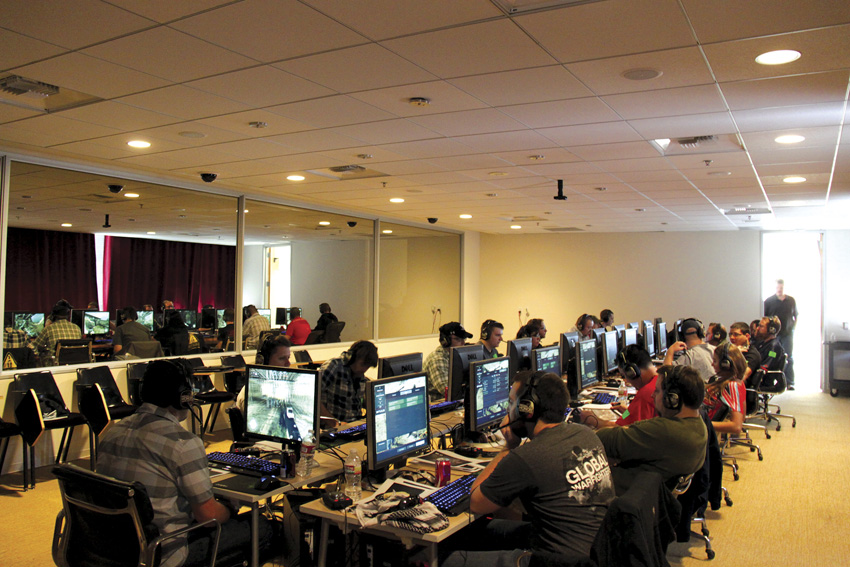
Developers like Thad Sasser were never far away to offer technical assistance and answer our gameplay questions.
After two solid days of gameplay, everybody in the community was now familiar with the daily routine. We’d get into the “lab” early for a few warm-up rounds, have a quick bite to eat for breakfast, and then dive in for some more intense rounds of gameplay. While everyone played their best and tried to win, we were also focused on trying out the different classes and weapons. During the previous day’s discussion, several people talked about the demolitions class and the powerful support actions associated with it. I decided to give this class a try, especially where I hadn’t fully experimented with its tank stance ability. While I found the demolitions class to be a bit too slow for my taste, I could definitely understand the appeal, especially when I activated the M32 grenade launcher offensive support action during a Sector Control match on Novi Grad Warzone. This grants the class access to a semi-automatic grenade launcher capable of blasting opponents at various ranges. Combined with the tank stance class ability, which enforces the character with a layer of armor, the M32 support action makes the demolition class an absolute killing machine—slow, but very lethal.
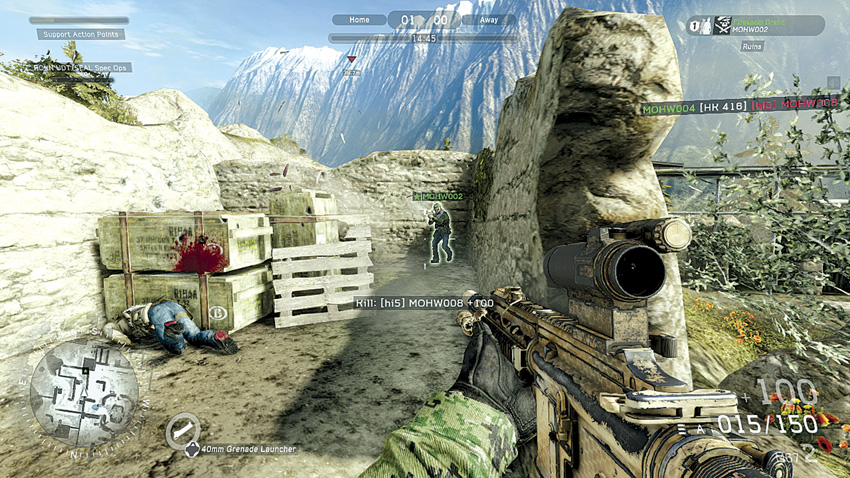
A good Fireteam Buddy can make all the difference, as I found out during Team Deathmatch on Shogore Valley. Thanks MOHW002!
Apart from my experimentation with the different classes, we were also introduced to a few new maps, including Al Fara Cliffside and Shogore Valley. Shogore Valley quickly became a favorite of everyone as we played multiple rounds of Team Deathmatch and Hotspot among the ruins of a deserted hillside village. The stone buildings (including an ancient temple) and snow-capped peaks made this map really stand out from the rest. It soon became affectionately known as the Skyrim map before the group became familiar with its real name. I enjoyed several good rounds of Team Deathmatch here, working closely with my fireteam buddy and teammates to gain the upper hand. This is where I realized how important it is to stay close to your fireteam buddy so you can heal and resupply each other—if you run out of ammo, your fireteam buddy is the only one who can hand over fresh magazines. Later during Hotspot on Shogore Valley, I experimented with the sniper class’s wicked proximity mines while testing the newly balanced G18 automatic pistol.
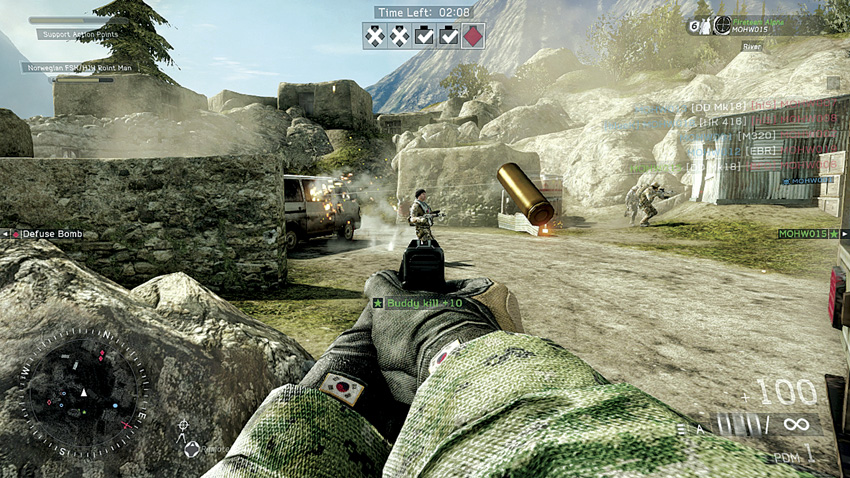
I admit it. I love the sniper's G18 automatic pistol. However, the weapon's performance was a frequent topic of debate.
As we did the previous day, we broke out of our gameplay sessions for a couple of feedback discussions with Thad and several developers. The information flowed freely once again as the group and developers talked about the day’s maps and game modes. By now we each had printouts of all the maps so we could compile our notes and share them directly with the developers. The discussion was aided by the projection of these maps on a large screen, allowing all parties to easily identify potential problem areas. The evening’s discussion lasted nearly two hours, after which Daniel rounded us up and took us out to Barney’s Beanery is Santa Monica for an evening of drinks, food, and…shuffleboard!
Day 4: Tournament Finale
To my surprise, the late night revelry had little impact on the group, as everyone showed up on time to begin the final day of gameplay. The morning was spent going through some now familiar maps, such as Al Fara Cliffside and Basilan Aftermath. We even played a quick round of Sector Control on Somalia Stronghold, a map and mode most of us were familiar with from the game’s multiplayer Alpha. Knowing this was my last day, I spent plenty of time taking notes on the various classes as well as the progression system.
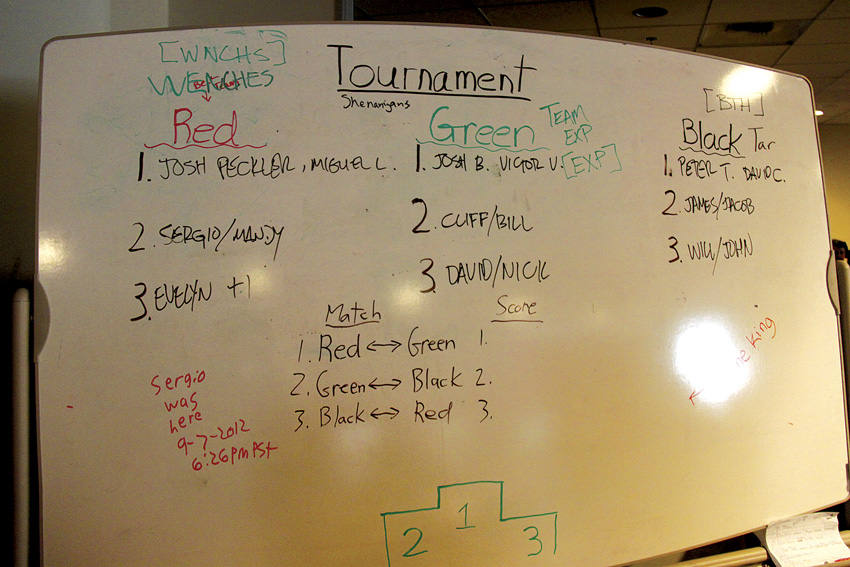
Prior to the tournament, Fireteams were selected and squads were formed.
The main event of the day was a tournament, scheduled for the afternoon. Earlier three teams were created from a list of two-player fireteams organized by the community members. Unfortunately I had a flight to catch so I couldn’t participate in the tournament, but I stayed around as long as possible and watched the teams duke it out. It was good to take a step back and just observe for a change. Studying how these teams worked together really showed that they had grasped the teamplay aspects of multiplayer as intended by the developers.
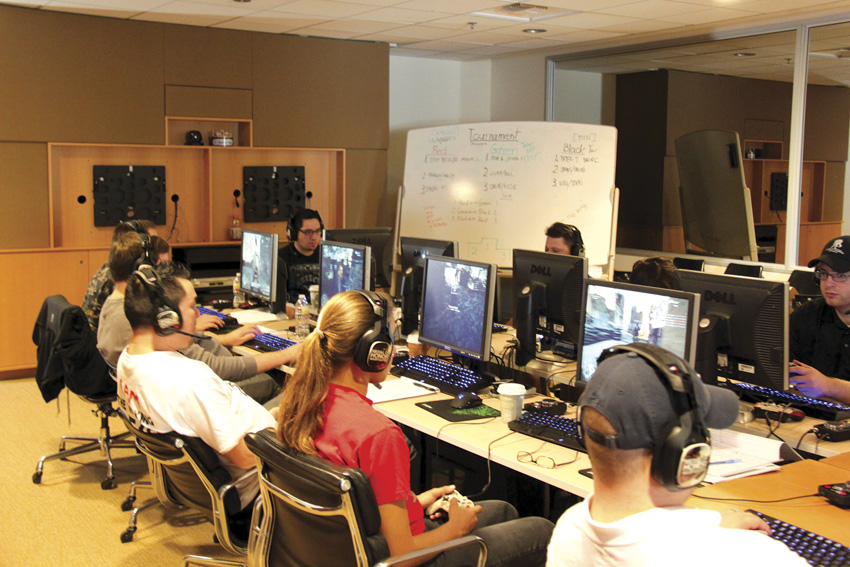
The squads competed against each other in a round of Team Deathmatch to determine the finalists.
Since I had to leave early, I missed the tournament as well as a night out in Hollywood with the other community members, but in the time I spent with this group and the developers I came away with a greater appreciation of what it takes to fine-tune, tweak, and balance a complex game like this. The development team literally works night and day to try and get everything just right before the game ships. Sometimes things work and sometimes they don’t. It’s a constant back and forth between the developers and play testers, all with the common goal of making the best game possible. In the years I’ve been doing this I’ve been to many community and press events, but I’ve never attended one so lengthy and abundantly insightful as this one. I came away with nearly forty hours of gameplay under my belt as well as the opportunity to meet some very kind and passionate people who truly love what they do. I would like to extend my sincere gratitude to the Danger Close team as well as all the community members who made this event such a memorable one.