
Company of Heroes 2 Guide Essentials Units
Soviets
 Headquarters (HQ)
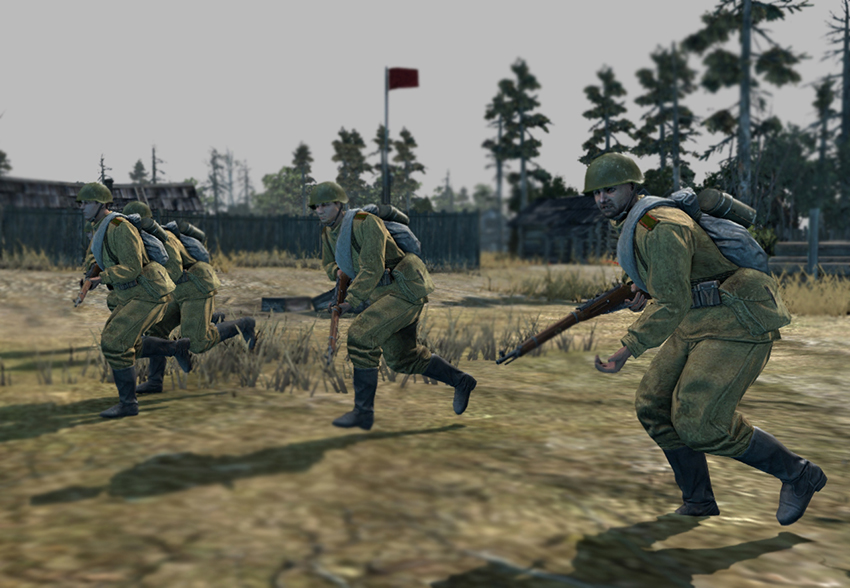
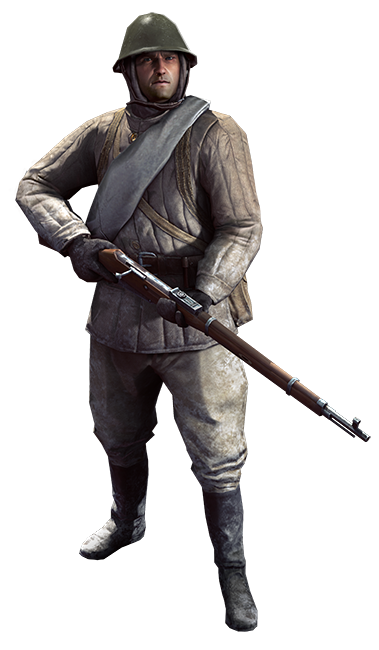
 Conscript Infantry Squad
Conscripts are the main fighting force for the Soviet army. With rifles, basic armor, and a low cost, this squad is great for capturing territory and taking enemy fire. Conscripts can also be upgraded for anti-garrison and anti-vehicle roles by purchasing Molotovs and Anti-tank Grenades at the Headquarters, making them a great utility squad that is useful in every match. When coupled with a Commander that provides Conscript bonuses, this squad can stand up against the hardiest of foes. As compared to the German Grenadiers, Conscripts deal more damage at short range and less damage at long range, although they have much greater utility with upgrades and doctrinal abilities.
Role: Mainline; Anti-Vehicle (Anti-Tank Grenades); Anti-Garrison (Molotovs)
Squad Size: 6
Veterancy Ability: Trip Wire Flares (plants a small non-damaging mine that will reveal the nearby area when it is detonated—10-second plant time, 8-second reveal, 10 Munitions).
Base Abilities: Oorah! (increases movement speed to maximum for 15 seconds—5 Munitions); Throw Molotov Cocktail (throws a Molotov that lights an area on fire, effective against infantry and building, requires upgrade at Headquarters—15 Munitions); RPG-43 Anti-Tank Grenade (tosses an anti-tank grenade at the targeted vehicle, causing light damage and destroying its engine, requires upgrade at Headquarters—25 Munitions).
Upgrades: None
Molotov cocktails have an interesting and murky past. Allegedly developed in the Spanish Civil War, and encountered in Finland by Soviet troops, this often improvised, but frequently manufactured device was derisively named after the Soviet Foreign Minister by Finnish troops. The measure of the incendiary’s success was how rapidly it spread to almost all armies involved in World War II.
The cry of “Oorah!” from Soviet infantry caused fear in German soldiers. A Russian writer said: “There was something terrible but also something sad and melancholy in this long cry … You could hear the sadness of a soul parting with everything it had loved, calling on its nearest and dearest … to lift their heads and hear for the last time the voice of a father, a husband, a son or a brother.”
 Combat Engineers Squad
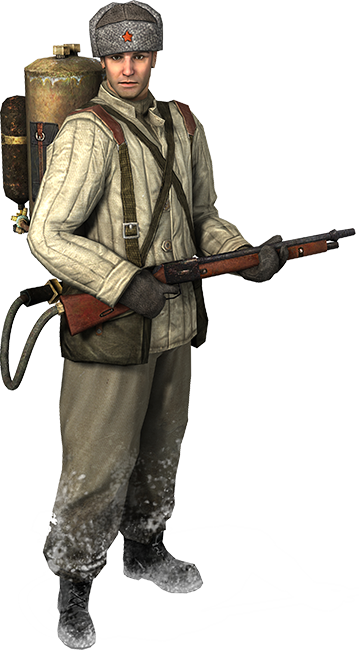
The Soviet builder unit, Combat Engineers have decent combat capabilities yet are weaker than the average infantry squad. The ability to build mines and barbed wire allows them to punish enemies that assault your territory, and an upgradeable flamethrower turns the squad into a powerful anti-garrison and anti-infantry unit. At the cost of firepower, the squad can acquire a wire cutter and mine defusal package, which allows the squad to cut barbed wire as well as detect and remove mines. As compared to German Pioneers, Engineers are stronger but have an increased resource cost.
Role: Support; Anti-Garrison (Flamethrower Upgrade)
Squad Size: 4
Veterancy Ability: Trip Wire Flares (plants a small non-damaging mine that will reveal the nearby area when it is detonated—10-second plant time, 8-second reveal, 10 Munitions).
Base Abilities: Repair (repairs buildings and vehicles, restoring them to full health over time).
Upgrades: ROKS 3 Flamethrower (increased damage against infantry and light vehicles, especially against garrisoned buildings—60 Munitions) and Mine Defusal Package (cut barbed wire, identity and defuse mines—50 Munitions).
Combat engineers were tasked with a challenging array of battlefield tasks. They would build or dismantle defenses, plant minefields, and force crossings, regularly under fire of all kinds. Small groups of combat engineers were often formed into assault squads to provide infantry companies with the organic capability to tackle battlefield obstacles or assault enemy buildings and defended positions with flamethrowers or explosives.
Combat engineers have a simple task: to ensure their comrades can live, fight, and maneuver effectively on the battlefield, and to deny the same luxuries to the enemy. An amazing amount of preparation went into a typical battlefield of World War II—fields of barbed wire or mines could funnel movement of enemy forces—or they could act as force multipliers; a minefield could take the place of a rifle company in protecting a flank or avenue of advance.
 Special Rifle Command (Tier 1)
 Scout Sniper Squad
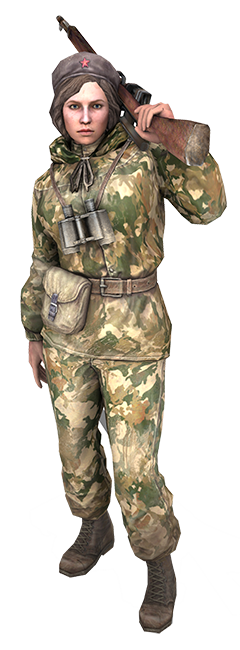
Snipers are experts at killing infantry; with its incredible accuracy and long range, each shot will kill a unit instantly. In addition, while in cover and not firing, the squad will cloak, rendering itself invisible unless an enemy squad is nearby. Its long range and instant kill shots make it powerful against protected weapon teams and infantry caught in a firefight. However, the sniper squad is incredibly weak and easily killed by any attack; it must be kept in a safe location or far from the enemy’s units. As compared to the German Sniper squad, the Soviet Sniper fires slower and cloaks less quickly, while its two-man (or two-woman) squad size makes it less vulnerable to counter-sniping and a bit more forgiving when caught in a bad position.
Role: Fire Support
Squad Size: 2
Veterancy Ability: Sprint (squad will move at maximum speed—10 seconds, 6 Munitions).
Base Abilities: Hold Fire (only fires when given an order to target a unit—Toggle).
Upgrades: None
Snipers were effective counters to static weapons. At the very least, if weapon crew members could not be killed, they could be effectively pinned. Even the weapons themselves became valid targets as sniper rounds—sometimes armor-piercing ones—could smash the barrels and actions of heavy machine guns or penetrate the tube of a mortar. However, if the sniper was revealed to an astute machine gun or mortar team, chances were a brief exchange of fire would result in a dead sniper.
 M3A1 Light Scout Car
The lightest of the Soviet vehicles, the M3A1 Light Scout Car is incredibly mobile and can load an infantry squad that is able to shoot out of the back. Although it has weak armor and is susceptible to small arms fire, the Scout Car can flank weapon teams and keep infantry from being suppressed by HMG fire as well as kite (see Kiting in the “Advanced Tactics” chapter) enemy infantry squads. The German Army does not have any vehicle similar to the M3A1.
Role: Assault
Veterancy Ability: Overdrive (vehicle moves faster and becomes harder to hit while moving—20 seconds).
Base Abilities: None
Upgrades: None
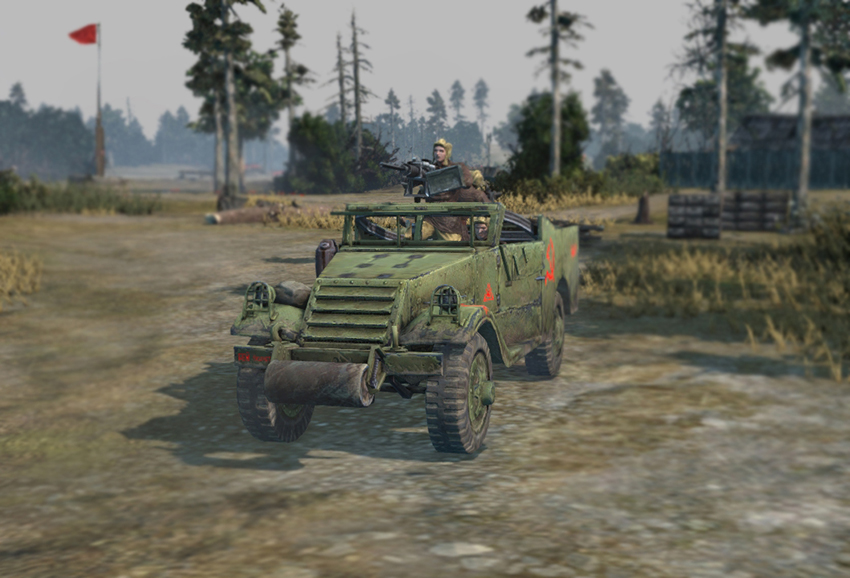
M3A1 Scout Cars were used in a variety of roles as command cars, reconnaissance vehicles, and prime movers for light artillery. Over 3,000 of these lightly armored, four-wheel drive vehicles were delivered to the USSR. The scout car could be armed with three or more machine guns and could carry a small squad of infantry.
 Penal Battalion
An improved version of the Conscript squad, the Penal Battalion has access to a timed satchel charge that can be thrown for extreme damage and an upgradeable flamethrower. The squad’s value comes its ability to have a flamethrower, which typically is only available to Combat Engineers, along with the increased durability of an infantry squad. The German Army does not have a squad that is similar to the Penal Battalion.
Role: Mainline; Anti-Garrison (Flamethrower Upgrade)
Squad Size: 6
Veterancy Ability: Trip Wire Flares (plants a small non-damaging mine that will reveal the nearby area when it is detonated—10-second plant time, 8-second reveal, 10 Munitions).
Base Abilities: Throw Satchel Charge (a high damaging explosive that explodes after a longer duration than grenades, and causing much more damage—45 Munitions).
Upgrades: ROKS 3 Flamethrower (increased damage against infantry and light vehicles, especially against garrisoned buildings—60 Munitions).
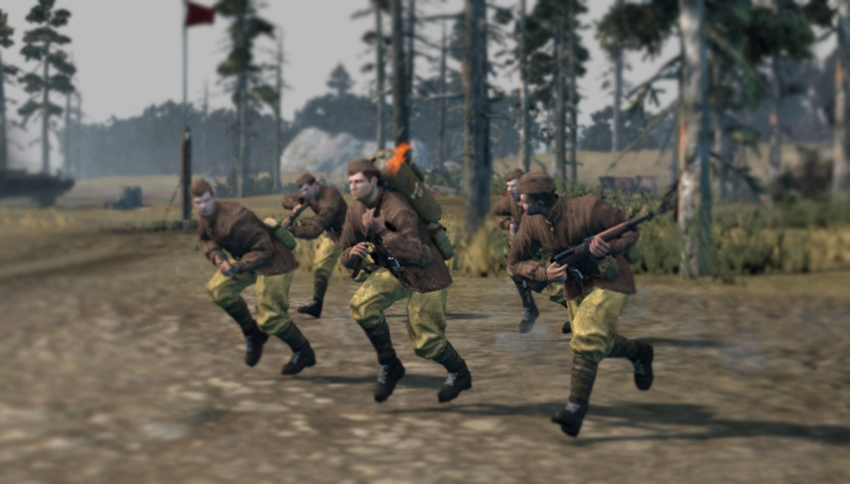
Soldiers in penal battalion squads, especially very poorly trained individuals or particularly loathsome criminals, were placed into “trampler” squads and ordered across minefields. The standard Soviet ration of 100 grams of vodka a day was rarely enough to convince a sane man to walk into a minefield, but several rations, consumed consecutively, might induce a certain level of stupid bravery.
Penal Battalions—called Shtrafbats—were created by Stalin’s infamous, “not one step back” Order 227. Soldiers, or “shtrafniki,” often convicted of battlefield offenses such as “cowardice,” were led by disgraced officers. Contrary to belief, these penal troops were often ably led and effective. Because few of the men in these squads had anything to lose they were given very challenging assignments.
 Support Weapon Kampaneya (Tier 2)
 M1910 Maxim Heavy Machine Gun
The Heavy Machine Gun weapon team provides suppressive fire over a long range and a medium-sized arc. When enemy infantry is suppressed, their movement and damage is reduced; if the infantry is close to the Heavy Machine Gun team, they will become pinned, rendering them incapable of any action besides retreating. Great for defending territory and buildings, the team is only useful against infantry. To use the Heavy Machine Gun , the squad must take time to set it up; the squad must also take time to pack up the gun before it can move again. As compared to the German Machine Gun team, the Maxim has a smaller fire arc but packs up quicker and has a larger squad size.
Role: Fire Support
Squad Size: 6
Veterancy Ability: Sprint (squad will move at maximum speed—10 seconds, 6 Munitions).
Base Abilities: None
Upgrades: None
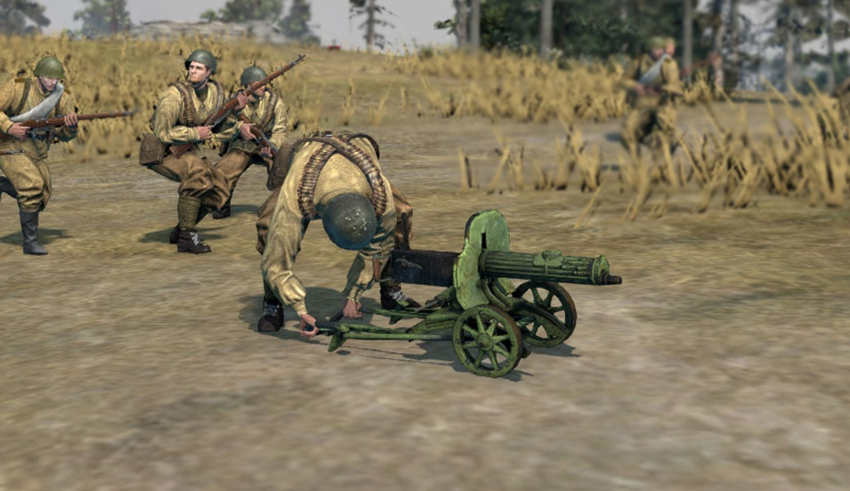
The venerable M1910 Maxim machine gun was little changed from the guns that fought in the Great War or the Russian Civil War of 1917. In homage to the phrase “if it ain’t broke, don’t fix it,” the M1910 fought through the Great Patriotic War as well. Lugged around on an iconic Sokolov mount, the 65kg weapon could quickly engage targets with about 600 of its effective 7.62mm rounds.
Countless M1910 Maxims were produced during World War II, and their crews loved their rugged reliability. The water-cooled barrel was heavy, but could be used in sustained fire roles to severely inhibit movement of enemy forces. Veteran crews often removed the cumbersome gun shield, which was of little benefit except to occasionally deter less skilled snipers from attempting a headshot on the gunner.
A poem from the late 19th century noted the already potent effect of modern machine guns. “Whatever happens, we have got the Maxim gun, and they have not.” What was true in 1898 remained true in 1941 when the robust Soviet version of the design was used against invading German forces. The M1910 Maxim would happily chew through countless 250-round belts of ammunition, hour after hour.
 PM-41 82mm Mortar Squad
The mortar weapon team fires slow, long-range explosive shells that cause high damage to infantry, although shots are inaccurate. The long range, slow firing speed, and inaccurate shells make the mortar powerful against stationary targets such as enemy heavy machine guns, mortars, and garrisoned squads. Similar to a heavy machine gun, it must be set up to shoot and packed up to move. The mortar requires at least two men in order to fire; when reduced to a single man, the squad automatically runs away, removing the unit from the game. As compared to the german mortar team, the PM-41 has a slower firing speed and an increased squad size, making it more durable at the cost of firepower.
Role: Fire Support
Squad Size: 6
Veterancy Ability: Precision Strike (fires a single Mortar round on the designated area, extremely accurate—30 Munitions).
Base Abilities: Mortar Barrage (fires four Mortar rounds into the target area); Smoke Barrage (fires three smoke bombs into the target area); Hold Fire (the Mortar will not automatically fire at enemies that come into range—Toggle).
Upgrades: None
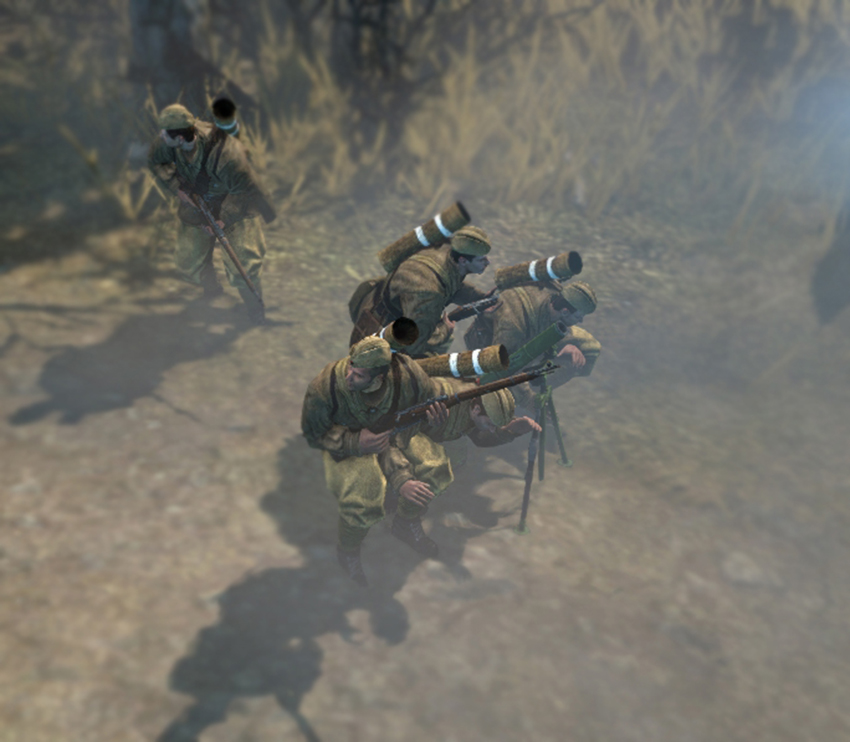
Mortars could be effective weapons even against light vehicles. The Soviet 82mm mortar fired a bomb weighing approximately 3.5kg that would easily crush a light vehicle from above, and could possibly even penetrate the top hull armor of a tank. Pinpoint accuracy is not a strong point of mortars, but barrage fire was intended to fill an area of about two football fields with lethal shards of lead.
81mm or 8cm was a standard mortar caliber in World War II. The Soviets chose 82mm, allegedly so that any stocks of ammunition captured by enemy forces could not be used. Mortar tactics matter more than a 1mm change in caliber, though, and Soviet artillery tactics were relatively sophisticated, relying on good intelligence, an effective fire plan, and aggressive displacement of their tubes to maintain supporting fire.
 ZiS-3 76mm Divisional Field Gun
This weapon team fires long-range armor-penetrating rounds best suited for use against enemy vehicles. Its high damage is coupled with poor mobility and the inability to retreat; when safely positioned near your forces, the field gun will prove invaluable against all Soviet armor. Similar to the Mortar, the squad will automatically run away when reduced to one man. In addition to its armor-penetrating rounds, the ZiS-3 Field Gun can fire artillery that is powerful against infantry squads and weapon teams at a targeted location. As compared to the German anti-tank gun, the ZiS-3 fires slower, yet has an increased squad size and the artillery ability, making it more durability and an answer to infantry and weapon teams.
Role: Anti-Vehicle/Fire Support
Squad Size: 6
Veterancy Ability: Tracking (increases sight radius and infantry can be tracked, appearing on the minimap—20 seconds, 20 Munitions).
Base Abilities: Light Artillery Barrage (fires six rounds at a targeted area, effective against infantry—60 Munitions).
Upgrades: None
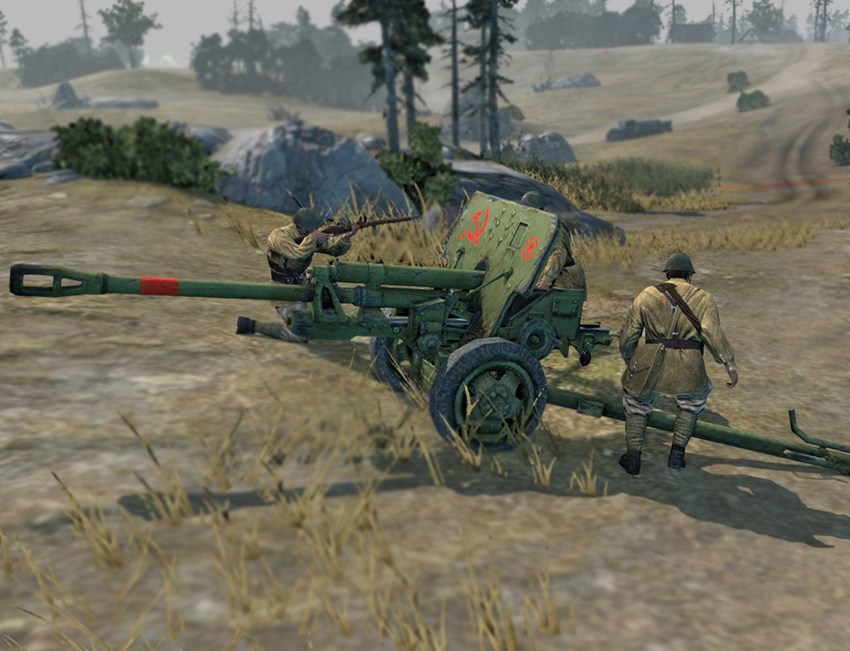
The ZiS-3 76mm Divisional Field Gun had unequaled flexibility, and over 103,000 were produced. Loved for its light weight, accuracy, and variety of HE and AP shells, debate about its primary use is indicative of its versatility: Soviet doctrine states that any gun on the battlefield is a de facto anti-tank gun, but is the ZiS-3 an AT gun that can fire like an artillery piece or vice versa?
Germans on the receiving end of the fire from the ZiS-3 76mm gun called it the “Ratsch-Bum” or “Crash-Boom.” It had a high-velocity shot, and at 76mm was one of the most powerful weapons on the battlefield of the time, so when its shells arrived, they arrived hard. This versatile weapon was capable of destroying medium tanks frontally and heavy tanks from the side.
Until the advent of the 100mm BS-3, the Soviets really had no towed anti-tank gun that could offer penetration to match the German 75mm Pak 40. Therefore, they had to make do with a variety of guns in the 45, 57, and 76mm calibers. 23,000 Pak 40s were produced and were extremely effective weapons, but the Soviets produced over 43,000 53-K and M-42s in 45mm, and over 100,000 76.2mm guns.
An experienced anti-tank gun crew could deploy their fearsome weapon to great effect. Firing from defilade, these guns could often destroy dozens of targets at long range before they were ever spotted. One famous Soviet ZiS-3 gun destroyed 33 tanks, 21 armored vehicles, 74 machine guns and killed hundreds of enemies all while traveling 6,200km during the course of the war.
 Tankoviy Battalion Command (Tier 3)
 M5 Half-track
The soviet half-track provides support to infantry squads by allowing two squads to garrison the vehicle, shooting out from the back of the half-track, as well as letting nearby squads reinforce as if they were near the headquarters. With upgradeable anti-air machine guns, the half-track can turn into a mobile base that provides support against infantry and light vehicles while also shooting down german aircraft, although at the cost of garrisoning infantry. As compared to the german half-track, the M5 has a higher resource cost due to its greater value as a mainline unit and the powerful anti-air machine guns.
Role: Support; Mainline (Anti-Air Machine Guns Upgrade)
Veterancy Ability: Overdrive (vehicle moves faster and becomes harder to hit while moving—20 seconds).
Base Abilities: None
Upgrades: Anti-Air Package (loads four machine guns on to the Half-track for better anti-infantry and anti-aircraft support, cannot transport units—90 Munitions).
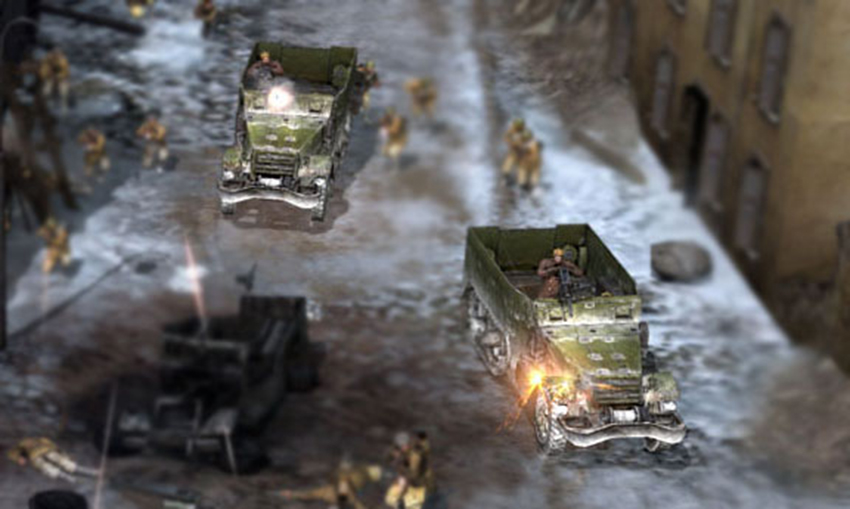
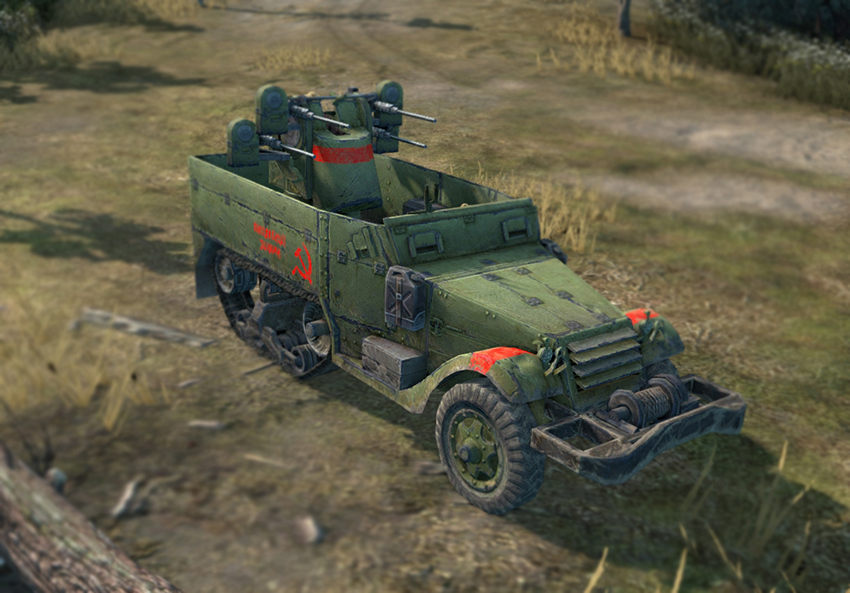
The M5 half-track was built almost exclusively for Lend-Lease to the Soviet Union and other Allied nations. The Soviet army had no domestic armored personnel carriers, so the M5 was loved for its versatility, powerful engines, and the punch of the heavy .50cal machine gun. Ten soldiers could be carried into battle with decent protection against light weapons and fragmentation.
1,000 M17 half-tracks were delivered to the USSR via Lend-Lease. Anti-aircraft vehicles were required, and this need was addressed by mounting four M2 .50cal machine guns into a powered turret on the M5 half-track. Later in the war, as the Luftwaffe essentially disappeared from the Eastern skies, these vehicles were frequently trained against ground targets and were affectionately called “Meat Choppers.”
 T-70M Light Tank
Tougher than light vehicles yet weaker than other tanks, the T-70 is highly mobile and has a gun that can kill infantry and vehicles alike. The light tank’s usefulness comes from its ability to deal with all types of units combined with its small arms-resistant armor, which is great for assaulting poorly defended positions and eliminating lone infantry squads. When out of combat, the T-70 can repair itself by turning off the main gun for a time. Additionally, the tank can also gain increased sight by deactivating the main gun. As compared to the German Scout Car with an autocannon, the T-70 is much tougher and more powerful at the cost of extra resources.
Role: Assault
Veterancy Ability: Secure Mode (allows the vehicle to capture sectors, disabling the main gun—Toggle).
Base Abilities: Field Repair (repairs the tank over 15 seconds while disabling its main gun—60 Munitions); Recon Mode (disables main gun and increases line of sight—Toggle).
Upgrades: None
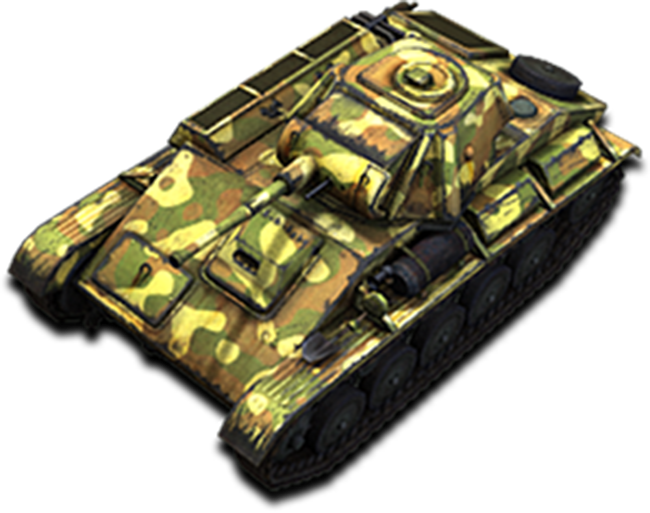
The T-70 was built in large numbers during 1942 and 1943 and it was used as a reconnaissance tank and to support infantry. Its failing: The tank commander was very busy in his one-man turret having to acquire targets, load and fire the gun, man the machine gun, and direct the driver. The 45mm gun was effective though, especially against lightly armored vehicles.
T-70s and other light vehicles were used for raiding and flanking enemy gun emplacements along with the frequent using of cavalry units! The T-70s had combined mobility, a reasonably effective gun, and decent armor protection for their size. But, by 1943 the light tank had fallen out of favor in the Soviet Army as production of the T-34 reached a rate of some 1,300 tanks a month.
 T-34/76 Medium Tank
The standard Soviet tank, the T-34 is an all-around great vehicle at a cheap price. High mobility allows the tank to respond to threats quickly, infantry are decimated by its great accuracy and machine gun gunner, and decent armor penetration destroys light vehicles and damages medium tanks. However, with weaker armor than other German tanks, the T-34 must rely on its mobility to eliminate enemy armor and anti-vehicle squads. As compared to the German StuG, the T-34 has greater mobility and anti-infantry capabilities at the cost of armor and a weaker main gun; as compared to the Ostwind, the T-34 has a more powerful main gun for use against vehicles.
Role: Mainline/Assault/Anti-Vehicle
Veterancy Ability: Secure Mode (allows the vehicle to capture sectors, disabling the main gun—Toggle).
Base Abilities: Ramming Maneuver (orders the tank to move quickly toward the target tank, destroying the target’s main gun and causing damage while immobilizing and destroying the T-34’s main gun—single target).
Upgrades: None
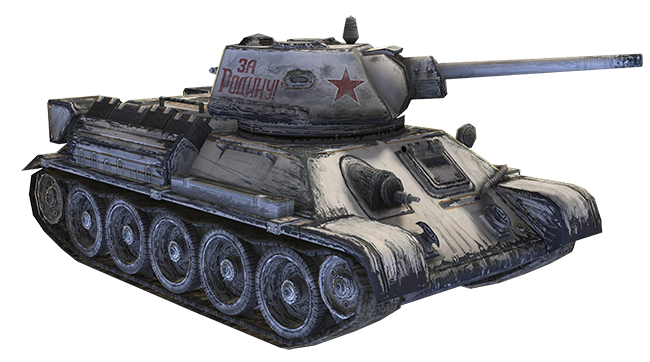
A number of German tanks were rammed by T-34s at the Battle of Kursk. In addition, artillery pieces and even anti-tank guns can be crushed by courageous, if occasionally suicidal, Soviet tank crews. Ramming a 30 ton vehicle at 30 km/h into another tank would generate a fantastic amount of force, able to knock off treads or even stun or disable a crew.
No statistic is so telling as a comparison of production numbers between Soviet and German industry. There is no doubting the tactical superiority of the Panther—it was a better version of the T-34 that the Germans had encountered in 1941. But 6,000 Panthers could never defeat over 55,000 T-34s. Even at an oft-quoted kill ratio of nearly three to one the math doesn’t add up.
When the T-34/76 was first encountered by the Germans after the start of Barbarossa in 1941, its revolutionary design came as a shock. Sloped armor offered great protection at a lighter weight, and the F-34 76mm gun was very versatile, offering good penetration and a high-explosive round for infantry and defenses. When properly commanded, the T-34/76 was extremely capable.
 Mechanized Armor Kampaneya (Tier 4)
 BM-13 Katyusha Rocket Truck
This rocket-loaded truck provides long-range artillery support, shooting rockets over a large area for decent damage. Although it is not the most reliable in terms of accuracy, its range and damage make the Katyusha exceptional at countering defensive positions. In comparison with the German Panzerwerfer, the Katyusha fires more rockets but is less accurate.
Role: Fire Support
Veterancy Ability: Concentrated Barrage (fires an accurate rocket barrage into a smaller targeted area—60 Munitions).
Base Abilities: 132mm Rocket Barrage (fires 16 rockets at the targeted area, causing medium damage to units hit by the explosion).
Upgrades: None
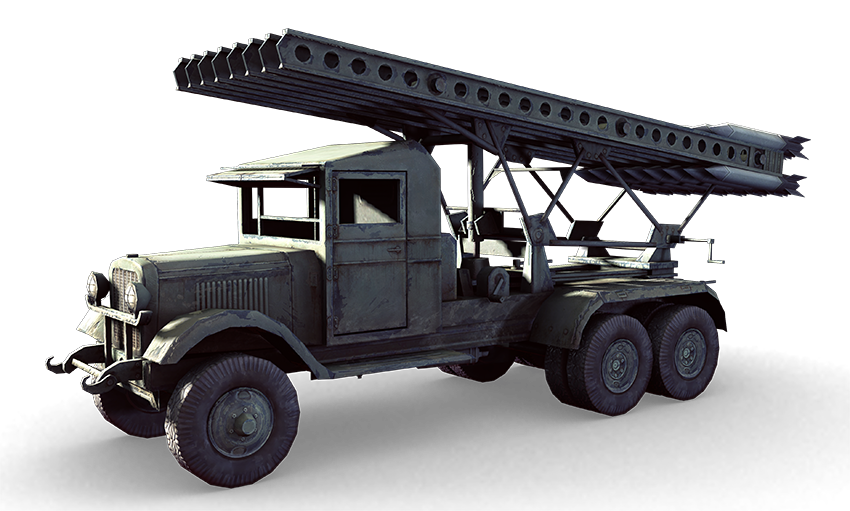
As the war progressed, more and more variants of the Katyusha were created. The launcher assembly was easy to produce and very modular and it was applied to Soviet and Lend-Lease trucks, light tanks, tractors, and even small four-wheel drive vehicles. Special Guards Mortar regiments were formed and trained to fire barrages from their four launch vehicles and quickly reposition to avoid counterbattery fire.
Katyushas are really emblematic of the type of design ingenuity practiced by the Russians during World War II. They created a weapon that was practical and effective, could be produced in light factories by unskilled labor, and could be mounted on anything from Lend-Lease Studebakers to KV-1 tanks. Apart from firing rockets, the Panzerwerfer had little in common with the rough and ready Katyushas.
Katyusha, or more appropriately, the BM-13, was considered a secret weapon during the first years of the war and only allocated to politically reliable NKVD regiments. The weapon’s ability to completely saturate almost two football fields with 132mm high-explosive rockets and the fearsome sound it made caused deep psychological distress on its targets.
 SU-76M Assault Gun
A mobile artillery gun, the SU-76 can shoot mostly accurate artillery rounds at a long range at no cost. In exchange for its artillery ability, its main gun is not as strong as other tanks and it has low armor and mobility. The Assault Gun is powerful when used to destroy incoming infantry squads and remove machine guns and Mortars from their defence positions. The German army does not have a similar unit.
Role: Fire Support
Veterancy Ability: Tracking (increases sight radius and infantry can be tracked, appearing on the minimap—20 seconds, 20 Munitions).
Base Abilities: Light Artillery Barrage (fires explosive shells at a target location or unit at long range, effective against all but heavy tanks).
Upgrades: None
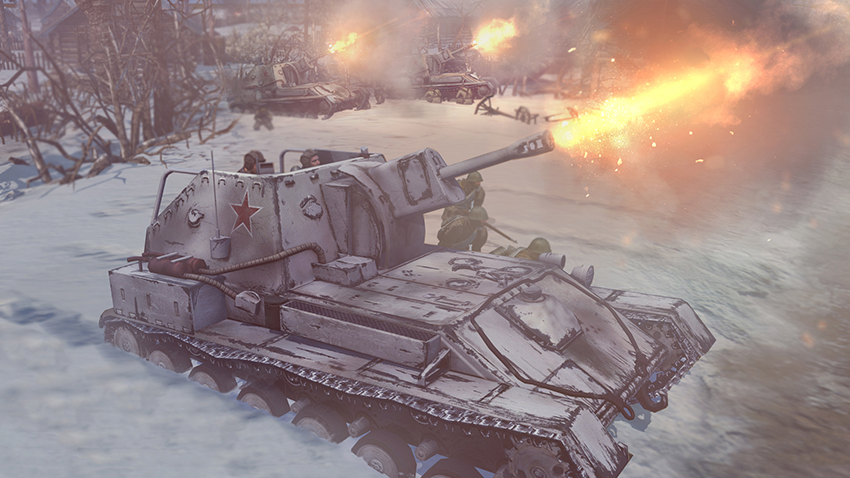
14,000 of the 10 ton SU-76M were produced during World War II. The vehicle was compact, quiet, maneuverable, and armed with a powerful dual-role ZiS-3 76.2mm gun. The “Suchka” was a true assault gun, supporting attacking infantry against a variety of targets. The open fighting position made the tank vulnerable to grenades or mortars, but allowed the crew to better communicate with nearby infantry units.
Basic gunnery is an obvious prerequisite for success on the battlefield. German weapons, ammunition, and optics were of generally higher quality than Soviet equivalents, but Soviet crews were nonetheless appreciative of the firepower of their little SU-76s.
Crew members of assault guns and other armored vehicles received at least a modicum of training before departing for far-flung battlefields. Germans received more training that their Soviet counterparts, but many Soviet crews had experience driving heavy farm machinery on collective farms.
The SU-76M had a high angle of fire that enabled it to throw its relatively small shells out to almost 17km. What it lacked in power was made up for in numbers. Assault guns were grouped into flexible batteries of two or more vehicles, where their fire could be effectively coordinated, or they could provide mutual support when attacking enemy armor or supporting infantry.
 SU-85 Medium Tank Destroyer
The SU-85 has incredibly high armor penetration coupled with good health and armor, designed specifically for engaging enemy vehicles at medium to long range. Low mobility and the inability to deal well with infantry requires that the SU-85 be positioned with units that can deal with AT guns and incoming anti-vehicle infantry. As compared to the German Elefant Heavy Tank Destroyer, the SU-85 has lower damage, health, and armor, but has a much lower resource cost as well.
Role: Anti-Vehicle
Veterancy Ability: Tracking (increases sight radius and infantry can be tracked, appearing on the minimap—20 seconds, 20 Munitions).
Base Abilities: Focused Sight (extends forward sight at the cost of sight near the tank—Toggle).
Upgrades: None
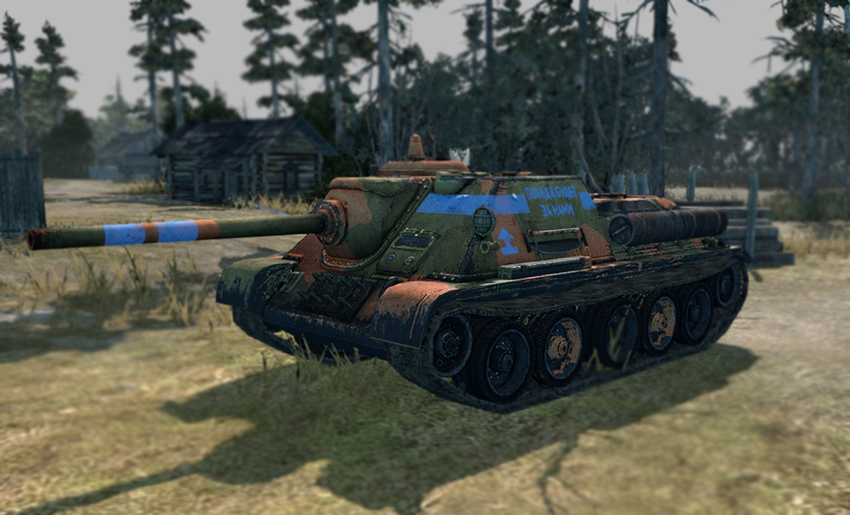
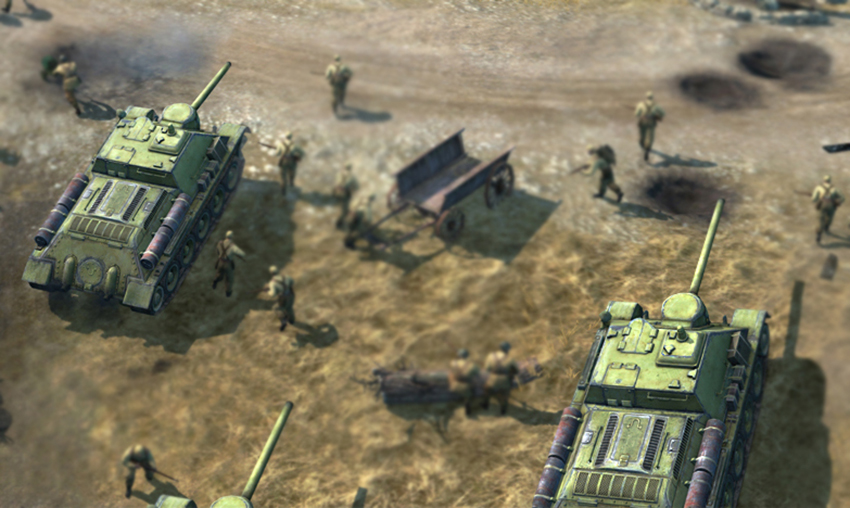
The Tiger and Panther tanks they faced in 1943 spurred new Soviet weapon development. The SU-122’s Howitzer was replaced with a potent D-5 gun. Over 2,000 SU-85s were built. The T-34/85 armed with the same gun relegated the tank destroyers to obsolescence, despite its effectiveness. The later SU-100, delightfully nicknamed the “Pizdets vsemu” or “F-ing end to everything,” replaced the SU-85 after 1944.
Commander Units
 Guards Rifle Infantry
The Soviet’s primary anti-vehicle infantry, the elite Guards Rifle Infantry have long-range, armor-penetrating PTRS guns that cause high damage to vehicles. Especially powerful against light and medium vehicles yet suffering from a lack of anti-infantry firepower, this squad can throw a grenade at medium range and can be even upgraded with two LMGs for increased damage against infantry. As compared to German Panzergrenadiers with Panzerschreks, Guards Rifle Infantry have less damage overall, although they are better against infantry and have more sustained damage than the burst damage from the Panzerschreks.
Role: Anti-Vehicle; Mainline (LMG Upgrade)
Squad Size: 6
Veterancy Ability: Trip Wire Flares (plants a small non-damaging mine that will reveal the nearby area when it is detonated—10-second plant time, 8-second reveal, 10 Munitions).
Base Abilities: RGD-33 Fragmentation Grenade (tosses a grenade that explodes after a short time, causing heavy damage to units caught near the blast—30 Munitions); Button Vehicle (disables target vehicle and removes its sight for a short time, requires the DP LMG upgrade—40 Munitions).
Upgrades: DP Light Machine Guns (equips the squad with two DP LMGs that increase the squad’s damage against infantry and unlocks the Button Vehicle ability—60 Munitions).
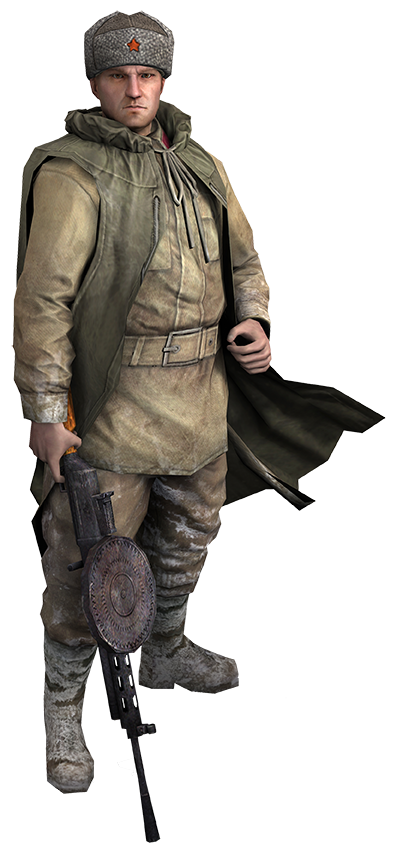
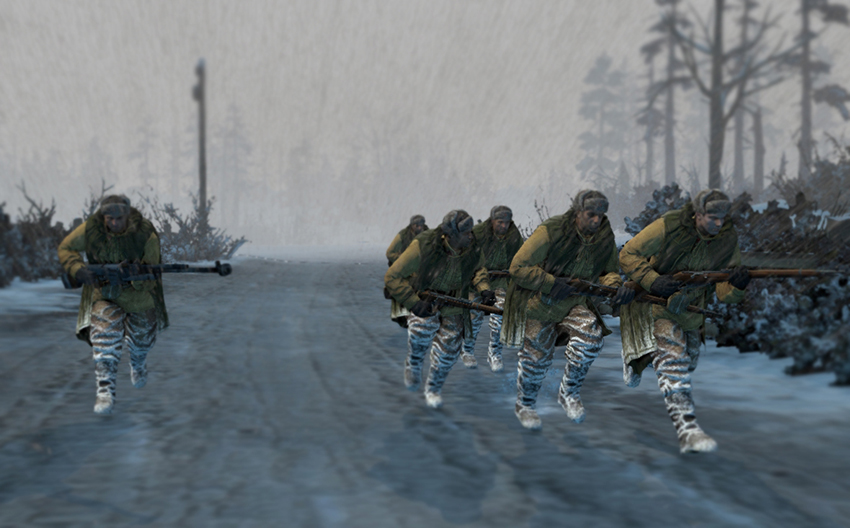
The “Guards” designation was an honorific applied to units in the Soviet Army who had proven themselves through distinguished action. Special banners and badges were issued to the soldiers to build pride and camaraderie. Guards Rifle units were considered elite amongst the infantry with excellent marksmanship skills, and they were issued equipment befitting experienced frontline soldiers.
More elite forces could be considered force multipliers, either because of training, better equipment, specialization, or in the case of the Penal troops—nothing to lose. Man for man, the higher caliber of training for Guards units would have a bigger impact on the battlefield because they could hit a bit harder, hold out longer, and slow down the enemy just that little bit more.
The PTRS-41 was a semi-automatic rifle that fired a 14.5mm armor-piercing round at over 1000m per second. Its high penetration could disable components of heavy vehicles, and knock out light tanks, half-tracks, and scout cars. The PTRS proved to be versatile, and was effective against emplaced weapons and even low-flying aircraft. In urban areas, its heavy round could smash brick walls with ease.
 Shock Troops
The elite Shock Troops come with powerful bullet-resistant armor and cause high damage at short range. Their arsenal includes damaging explosive grenades and smoke grenades used for flanking weapon teams and protecting units from enemy fire. The extreme durability of their armor and short-range firepower makes them the ideal unit for taking enemy territory and fighting infantry one-on-one. As compared to the German Panzergrenadiers, Shock Troops have better anti-infantry capabilities and combat utility, yet they are weak against German vehicles.
Role: Assault
Squad Size: 6
Veterancy Ability: Trip Wire Flares (plants a small non-damaging mine that will reveal the nearby area when it is detonated—10-second plant time, 8-second reveal, 10 Munitions).
Base Abilities: RG-42 Anti-Personnel Grenade (tosses a grenade that explodes after a short time, causing heavy damage to units caught near the blast—30 Munitions); RGD-1 Smoke Grenade (tosses a grenade that will explode with smoke, blocking line of sight through it—15 Munitions).
Upgrades: PPsH-41 Submachine Gun Package (equips the squad with submachine guns, increasing their damage against infantry at short range—60 Munitions).
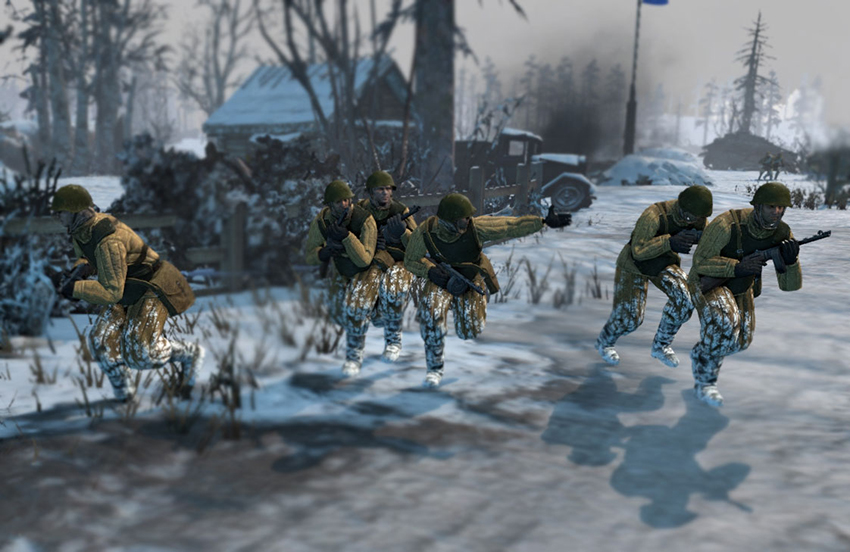
The Soviet Command employed a number of “Shock Armies” which were specifically created to smash through enemy defensive lines. Large numbers of artillery and self-propelled guns were allocated and Shock infantry were a critical part of the equation, as were their weapons. Infantry divisions in these armies had a 70 percent ratio of “avtomat,” or some 7,000 submachine guns to 3,000 rifles.
Lt. General Vasily Chuikov, Red Army: “Carry your Tommy Gun (SMG) on your shoulder; take ten to twelve grenades. Timing and surprise will then be on your side. Go in grenade first, you after; always with a grenade first and you after. At every step danger lurks. Act more ruthlessly with your grenade, your Tommy Gun, your dagger, your spade! Always be prepared for the unexpected. Look Sharp!...”
 HM-38 120mm Mortar Squad
A more powerful version of the PM-41 mortar, the HM-38 120mm has greatly increased range and firepower with an increased resource cost. While other mortar teams must be relatively close to their targets, a 120mm Mortar Squad can cover a large amount of the map from a safe location far from the enemy. The German Army does not have a Mortar nearly as powerful.
Role: Fire Support
Squad Size: 6
Veterancy Ability: Precision Strike (fires a single mortar round on the designated area, extremely accurate—30 Munitions).
Base Abilities: Mortar Barrage (fires four mortar rounds into the target area); Smoke Barrage (fires three smoke bombs into the target area), Hold Fire (the Mortar will not automatically fire at enemies that come into range—Toggle).
Upgrades: None
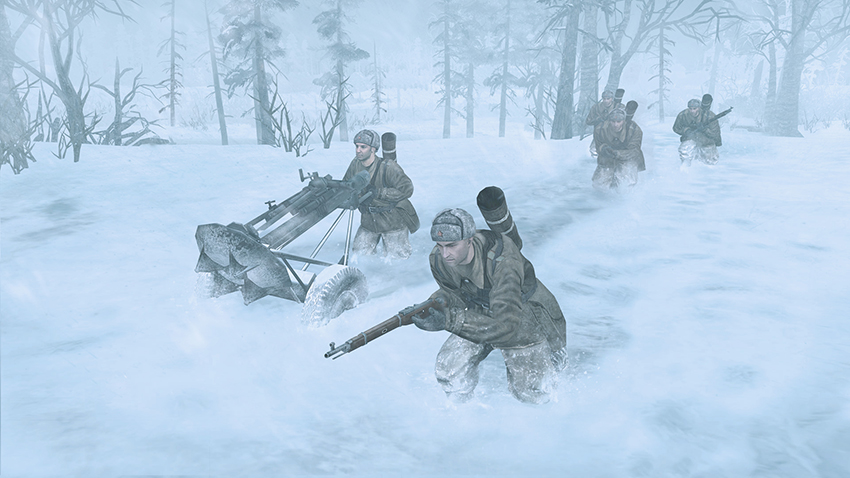
Crews of the 120mm Soviet mortars could stay far behind the lines and still cover a considerable area of the front. More importantly, the fact that they were far back and mobile meant a better chance of survival than a frontoviki facing a German MG42 at 100m. The 120mm bomb could deliver considerable destruction, especially when plunging through the roof of a building harboring the enemy.
After the Germans had been on the receiving end of the Soviet HM-38 120mm mortar they immediately copied it. The 120mm fired a 16kg bomb over 5,500m and had the firepower of a 12mm Howitzer in a uniquely mobile package at one tenth the weight of a conventional gun. As Soviet propaganda once stated: “One out of two German soldiers has the Iron Cross. One out of two Soviet soldiers has a mortar.”
 ML-20 Howitzer
This Soviet Howitzer can fire high-explosive rounds at extremely long range, damaging even the heaviest of targets. Although it is immobile, the artillery’s range is high enough to be useful even in your base.
Role: Fire Support
Squad size: 3
Veterancy Ability: Precision Strike (fires a single artillery round at the designated area, extremely accurate—60 Munitions).
Base Abilities: Heavy Artillery Barrage (barrages the target area with Howitzer rounds).
Upgrades: None.
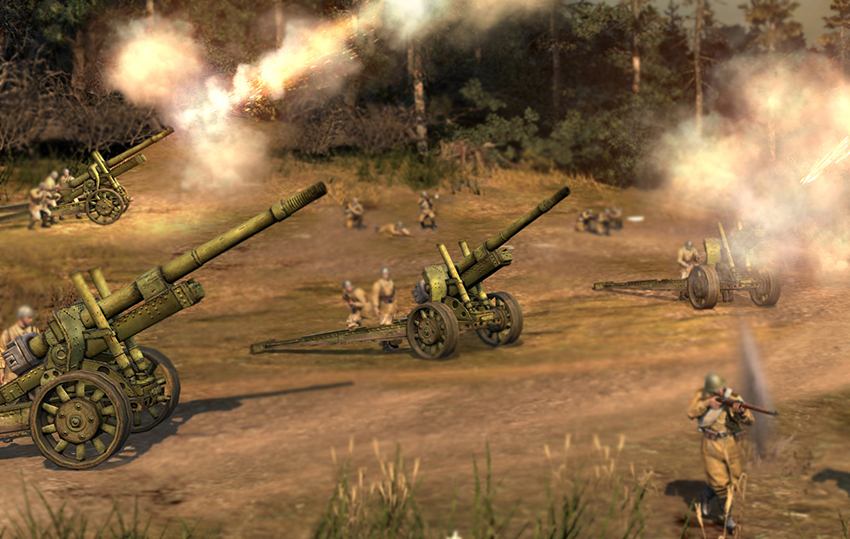
Counterbattery fire was critical to the success of an attack. The ML-20 had two things that the standard German field artillery did not have: 17km of range and a high-explosive shell that weighed almost 45kg. The Soviets could regularly muster a massive disparity of medium and heavy artillery. In battles like Bagration and Seelow Heights, Soviet weapons were arranged at a density of 300 per km.
Soviet doctrine affirmed that any gun on the battlefield that could engage an enemy tank became a de facto anti-tank gun. The ML-20 152mm gun-Howitzer was called on frequently to engage even heavy German armor with direct and indirect fire. In fact, some batteries were issued armor-piercing shells. The same weapon was mounted on the ISU-152, where it became known as the “Zveroboy” or “Beast Killer.”
The Soviet Army valued artillery—large weapons in huge numbers delivering massive weights of fire. Mortars, medium artillery, and heavy divisional or corps artillery in 122mm, 152mm, and 203mm calibers were brought to bear on their unfortunate targets, usually the poor infantrymen huddled in a hole. A single 152mm shell was equivalent to almost four British 25 pounders.
 ISU-152 Heavy Assault Gun
The Soviet’s heavy tank destroyer, the ISU-152 fires a highly explosive round at incredibly long range that pummels enemy tanks and blows up enemy infantry. The Heavy Assault Gun is inaccurate against small targets such as infantry squads, has low mobility, and does not have quite as much armor as other heavy tanks, yet its firepower and range make up for its weaknesses. As compared to the German Elefant Heavy Tank Destroyer, the ISU-152 is stronger against infantry, although it does slightly less damage against vehicles..
Role: Anti-Vehicle/Fire Support
Veterancy Ability: Tracking (increases sight radius and infantry can be tracked, appearing on the minimap—20 seconds, 20 Munitions).
Base Abilities: Focused Sight (extends forward sight at the cost of sight near the tank—Toggle); G530 Concrete Piercing Round (shoots through objects at the targeted area—90 Munitions).
Upgrades: DShK 38 12.7mm Heavy Machine Gun (damages nearby enemy infantry with constant machine gun fire—30 Munitions).
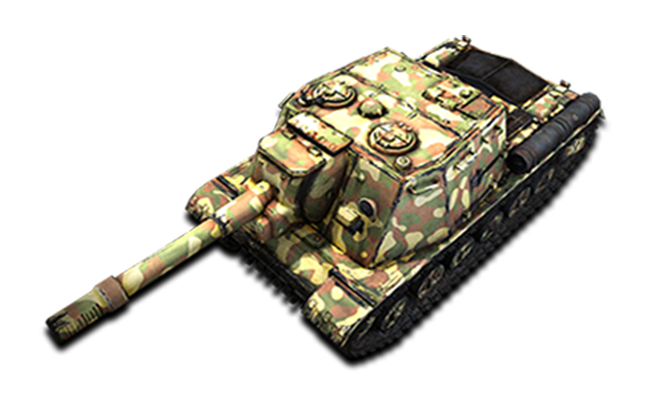
Big guns are satisfying. The 152mm and 15cm guns on the ISU-152 and Sturmpanzer IV had only twice the muzzle diameter of the Soviet 76.2mm ZiS-3 or German 7.5cm guns, but fired a shell that was up to seven times heavier. That’s a tremendous amount of kinetic energy, which in combination with high explosive chemical energy, can turn almost any number of tons of concrete or steel into microfine particles of dust.
Soviet assault guns tended toward the massive, mounting guns of 122mm or more. Based on the same chassis as the IS-2 but mounting a 152mm gun Howitzer, the big ISU was a true multirole vehicle. Most targets were engaged with direct fire using massive shells. Armor-piercing, high-explosive, and special heavy rounds of 56kg that could smash through more than 1m of concrete were all employed.
On paper, the 152.4mm main gun of the ISU-152 could not penetrate the armor of the heaviest German tanks encountered on the Eastern Front—at least at normal combat ranges. However, paper rarely matters on the battlefield were steel and explosives rule. The ISU-152 quickly earned the name “Beast Killer” for its ability to literally shatter Panthers and Tigers.
 IS-2 Heavy Tank
The pinnacle of Soviet armor, the IS-2 Heavy Tank wields a high-damage, high-penetration gun on a heavily armored chassis that still provides decent mobility. An adequate late-game vehicle, the IS-2 can be used for a variety of roles due to its ability to deal with all types of units. As compared to the German Tiger tank, the IS-2 has greater armor penetration with less armor.
Role: Mainline/Assault/Anti-Vehicle
Veterancy Ability: Secure Mode (allows the vehicle to capture sectors, disabling the main gun—Toggle).
Base Abilities: None.
Upgrades: DShK 38 12.7mm Heavy Machine Gun (damages nearby enemy infantry with constant machine gun fire—30 Munitions).
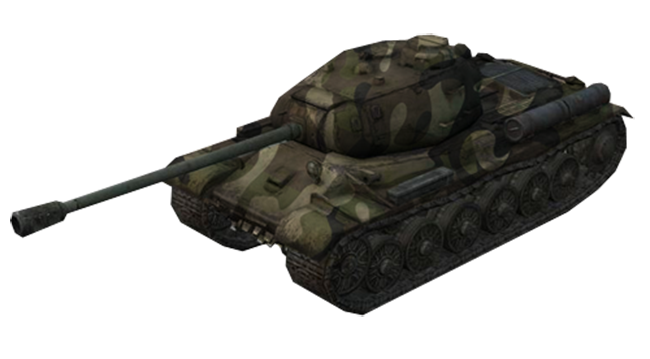
Two-part ammunition for the 122mm main gun of the IS-2 made for a very slow rate of fire compared to the heavy German tanks. A trained IS-2 crew might fire two to three rounds per minute—maybe one quarter of the rate of fire of a Tiger. The armor-piercing BR-471 from the powerful 122mm gun could smash through well over 120mm of steel plate at 500m, so a single hit would often be enough.
The IS-2s A-19 and later D-25 122 main guns fired a very effective high-explosive round that was excellent against infantry and field positions. For close-range protection, the IS-2 relied on two DT machine guns and the fearsome DShK 12.7mm heavy machine gun. The crew could also lob F1 grenades from the open turret hatches.
Soviet heavy tanks were effective but generally crude vehicles delivered in numbers that proved overwhelming to the German enemy. Over 3,500 “Iosef Stalin” tanks were produced, three times the number of the vaunted German Tiger. IS-2 crews who could survive their initial battlefield exposure learned to use the powerful 120mm gun and heavy armor of their tank to great effect.
 T-34/85 Medium Tank
The improved version of the T-34/76, the T-34/85 has improved damage and armor penetration, although it is identical in all other ways. This improvement comes with an increased resource cost.
Role: Mainline/Assault/Anti-Vehicle
Veterancy Ability: Secure Mode (allows the vehicle to capture sectors, disabling the main gun—Toggle).
Base Abilities: Ramming Maneuver (orders the tank to move quickly toward the target tank, destroying the target’s main gun and causing damage while also immobilizing and destroying the T-34’s main gun—single target).
Upgrades: None.
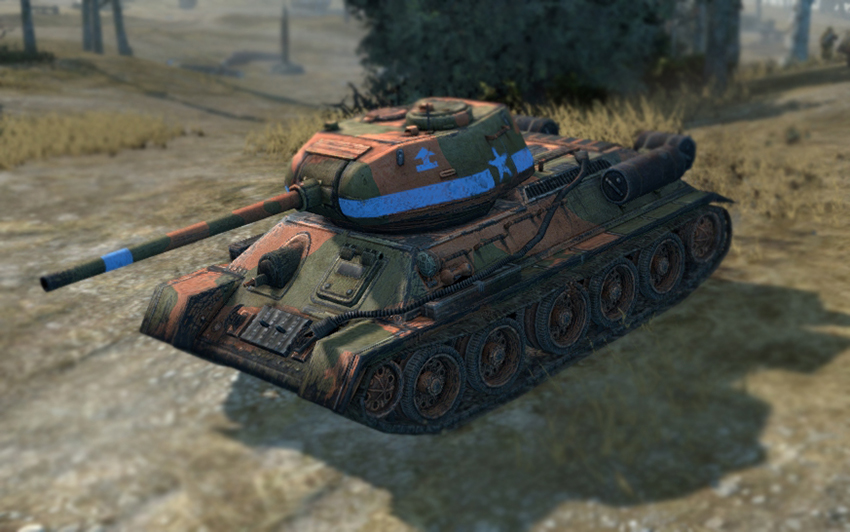
The T-34/85 differed from earlier tanks by adopting a larger turret ring and a redesigned turret carrying the 85mm ZiS-S-53 or D-5 gun, each capable of over 100mm of armor penetration at 500m. More importantly, the larger turret led directly to tactical improvements: The commander could then command the tank instead of also loading the gun, and radios were added to all vehicles.
 KV-8 Flamethrower Tank
A combination of two specializations, the KV-8 can toggle between its main gun for armor penetration against vehicles and a flamethrower to burn nearby infantry and garrisoned buildings. This tank is tougher than the T-34 and has greater firepower, yet has decreased mobility. Due to its dual specializations, the KV-8 is not spectacular at either anti-vehicle or anti-infantry, yet its versatility allows it to deal well against enemies of both types. The German Army does not have a vehicle that is similar to the KV-8.
Role: Mainline/Assault
Veterancy Ability: Secure Mode (allows the vehicle to capture sectors, disabling the main gun—Toggle).
Base Abilities: Use 45mm Main Gun/Use Flame Projector (switches between the tank’s main gun and its flamethrower—Toggle).
Upgrades: None.
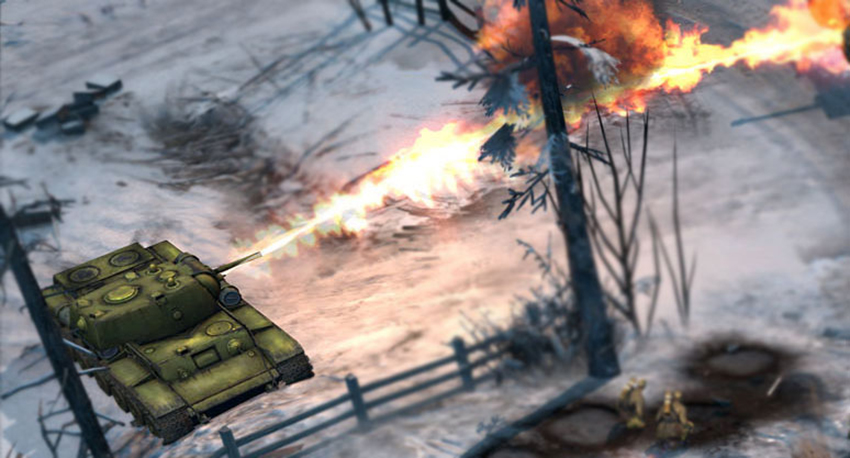
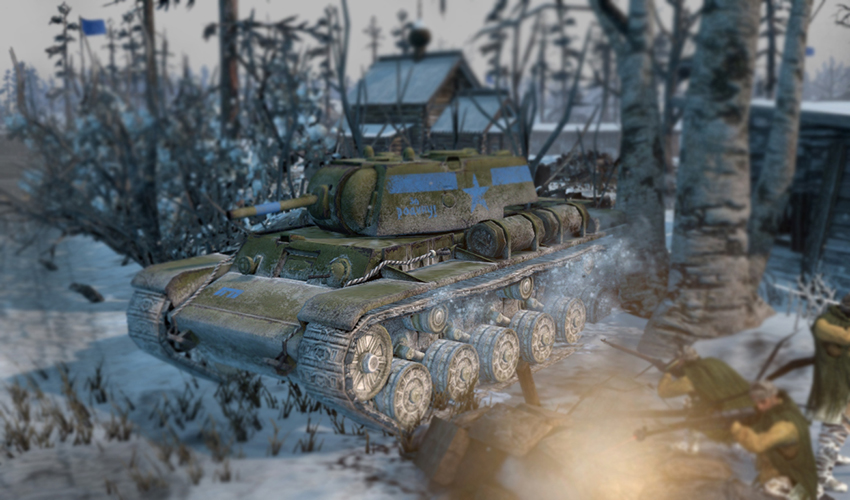
The KV-8s were variants of the heavily armored KV-1 (Kliment Voroshilov) armed with an ATO flamethrower and a 45mm main gun in place of the 76mm. The KV-8 was a fearsome weapon with massive psychological effect against infantry. Compressed air or engine exhaust would be used to project bursts of thickened fuel that was ignited out to 120m.