Quantum Break Guide Unused Materials
Kill Your Darlings
Overview
When you look back on a long, complex game project, the end result rarely resembles your original plans and concepts. There are a thousand reasons to make changes during production—there are aesthetic choices, design changes, technical issues and story rewrites—and sometimes you just change your mind because you realize you can make it work better.
The phrase “kill your darlings” is something that’s often thrown around flippantly, almost as a joke, but it describes a deep truth: often you’re dealing with concepts or even finished pieces of content that are the result of dedication and passion, and having to let go of them is hard. But in the end, you look at them, and you look at what the game needs, and you look at the resources at your disposal, and then you make some hard choices.
Here are some of the concepts and ideas we cut from the finished game at various points in development. Some of them we lost because we just couldn’t make them work, others because they didn’t fit in with the rest of the game. Some of them we cut just because we had to cut scope in order to finish the game on time. None of them were particularly easy.
Roads Not Taken
When Quantum Break was originally conceived, the standards for what is now the current generation of console gaming were still very much up in the air—we didn’t even know what the actual hardware specs for the Xbox One were. We also didn’t realize how high we would raise the bar on our graphics—to be blunt, we assumed that we would certainly improve on what we did with Alan Wake, but nobody expected the level of improvement to be as extensive as it eventually ended up being.
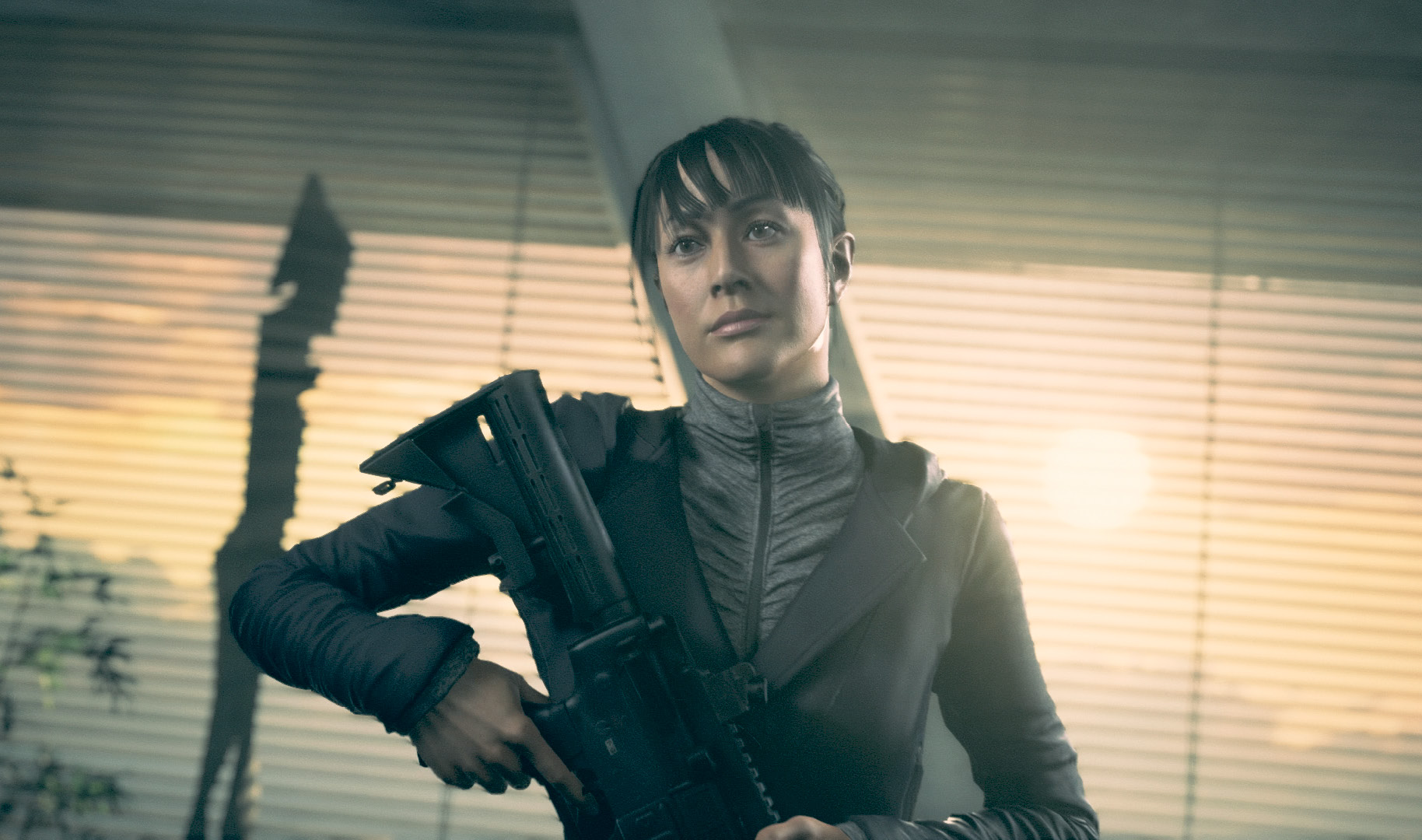
Accordingly, we originally had an ambitious plan that involved four playable characters, all of whom would have been superpowered like Jack is, and the story would have featured an ensemble cast of characters opposing Paul Serene. Jack was still the main character, but the others were very much in key roles.
However, once we actually started to look at resourcing, it became obvious this was much more than we could do if we intended to actually get everything done. So we had to cut scope, and eventually ended up with just two playable characters—Jack and Serene. It was a hard decision, but it allowed us to really focus the story.
At the same time, we also made some other major structural changes, and most of the characters were utterly different from what they ended up as—in many cases, they only retained their names and a couple of key elements. The relationships were also entirely different. For example, at one point, Serene was actually William’s contemporary and best friend, and something of an unofficial uncle to Jack. At one point, the idea was that William and Serene discovered Time Travel together, and ended up in a bitter, secret conflict.
Dr. Amaral used to be William’s research assistant and Jack’s ex-girlfriend. Beth was a college student in a role quite similar to Amy’s. Jack was William’s slacker brother, who worked as a janitor at the university. The university experiment in 2016 was actually run by Will, not by Serene. There was even a version where Jack and Beth were in a rock band together. In one version, Serene sent three assassins back in time to murder Jack and Beth when they were still children (one of those assassins, Gibson, made it onto the show—or at least his name did). In another, Jack got shot in the head when he refused to talk during an interrogation, and Beth had to travel back in time to prevent it. And so forth, and so on…
A huge difference was that at first, we didn’t have the concept of closed loops as a part of our Time Travel rules. Time travel happened constantly, and whenever somebody travelled back in time and changed things, those changes were immediately seen on their return to the future. However, this was extremely complicated. We constantly had to deal with questions like “what if character A goes back in time and makes a change, but then you play as character B—are they aware of things having changed or not, and how do you reconcile with that either way?”
Worse, it was a huge problem for the show, because none of those characters had any connection to the changes being made, but they would still have to be affected by them—which essentially meant that whatever you saw in a previous episode would always be invalidated by player actions. That made keeping track of everything incredibly complicated.
Perhaps most importantly, though, our Time Travel didn’t make a lot of sense. Classic paradoxes like “if you go back and kill your earlier self, do you also die, and if you do, then who killed that earlier self, because you couldn’t do that because you were already dead” popped up left and right. It got very complicated.
The single biggest story change that led to a lot of other changes was when we decided to just bite the bullet and say that nothing ever changes. It wasn’t an easy decision; it meant that a lot of the dramatic choices that were available to us before were no longer possible. But it was the right choice.
The Joyce Farm
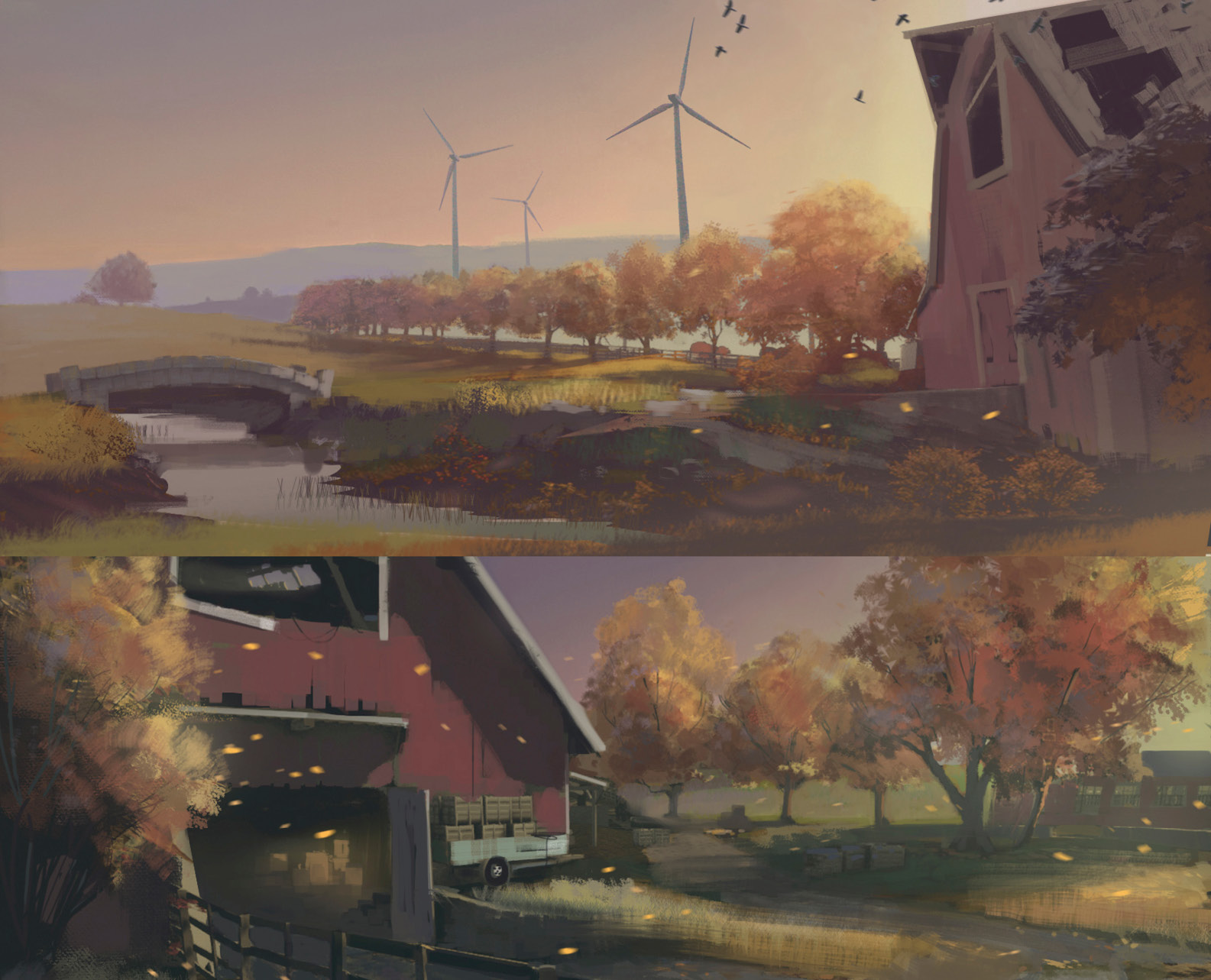
Originally, much of what now takes place in William’s workshop in Act 2 happened in the Joyce family home outside of Riverport proper. It was an opportunity to explore more of Jack’s background, his relationship with his brother, and their family. Going through the house where he grew up would have been an interesting sequence, and a nearby barn would have been where William originally constructed his first Time Machine.
Not only that, but we also intended to have Monarch assault the location and blow up the house, adding to Jack’s resentment of Serene—not only did he take away Jack’s brother, his men destroyed the place that held all of his childhood memories. Furthermore, this was to take place while Jack was still inside the building, but a stutter was to hit at the last moment, causing Jack to make his way through the house even as it explodes, rewinds and fast forwards in slow motion.
It would have been an impressive sequence, but it would also have been extremely expensive to produce. In the end, other story changes made the entire location superfluous.
The End of Time
Originally, we had a sequence planned for the End of Time, where both Paul Serene and Beth Wilder end up. We had to cut it simply because it was far too ambitious for us to actually pull off in the time we had—it was a situation where we could’ve done a crappy version of it, or we could use that time to polish the rest of the game.
It was the right choice, but from a story perspective, it was a real loss, because it has such a huge impact on Serene and Beth both, albeit in different ways. We would have seen the world in its final, frozen instant, a chaotic and confusing mess of broken timelines, which would have been haunted by the Shifters.
Escape From the Mansion
Originally, the escape from the Monarch mansion was a much more complex sequence. In a very early version of it, instead of Beth and Dr. Amaral, Jack was accompanied by Dr. Amaral and Kate Ogawa (Serene’s ex-wife, in those early days, and a traitor to Monarch—her role eventually went through enormous changes and morphed into Clarice Ogawa, who commands Monarch troops over the radio and interviews Jack throughout Quantum Break).
They escaped the mansion in a car while pursued by Monarch, and eventually crashed the car into a Monarch roadblock as they approached the bridge. Then they fought their way through a nearby construction site on foot and made to cross the bridge, only to have the ship crash into it in mid-escape.
In the end, numerous story changes rendered the entire sequence invalid.
The Missle Silo
One scrapped level involved a secret Monarch R&D facility built into an old missile silo. Jack and other characters had to infiltrate it in order to steal vital technology from Monarch.
This was a complicated sequence, and while we ended up not using it due to numerous story changes and scoping decisions, conceptually, much of the R&D facility on Gull Island draws from the silo.
The Convention Center
An idea that never quite made it into the game on any real level, the Riverport Convention Center was a bit of a popular favorite within the studio. The idea was that a train was derailed by a stutter (a concept that we recycled into the opening of Act 5) and smashed its way into a convention center in the middle of a big game event. In addition to people fleeing the destruction, we could have essentially turned the whole place into a love letter to geekdom even as a stuttering train smashed its way into the place.
With Microsoft as our publisher, we could have secured Master Chief statues or Minecraft stands, and generally made it seem like an actual game event.
It would have been fun, but, it must be admitted, entirely self-indulgent—it added nothing to the story, and really just distracted us from the main goal.
The World Fair
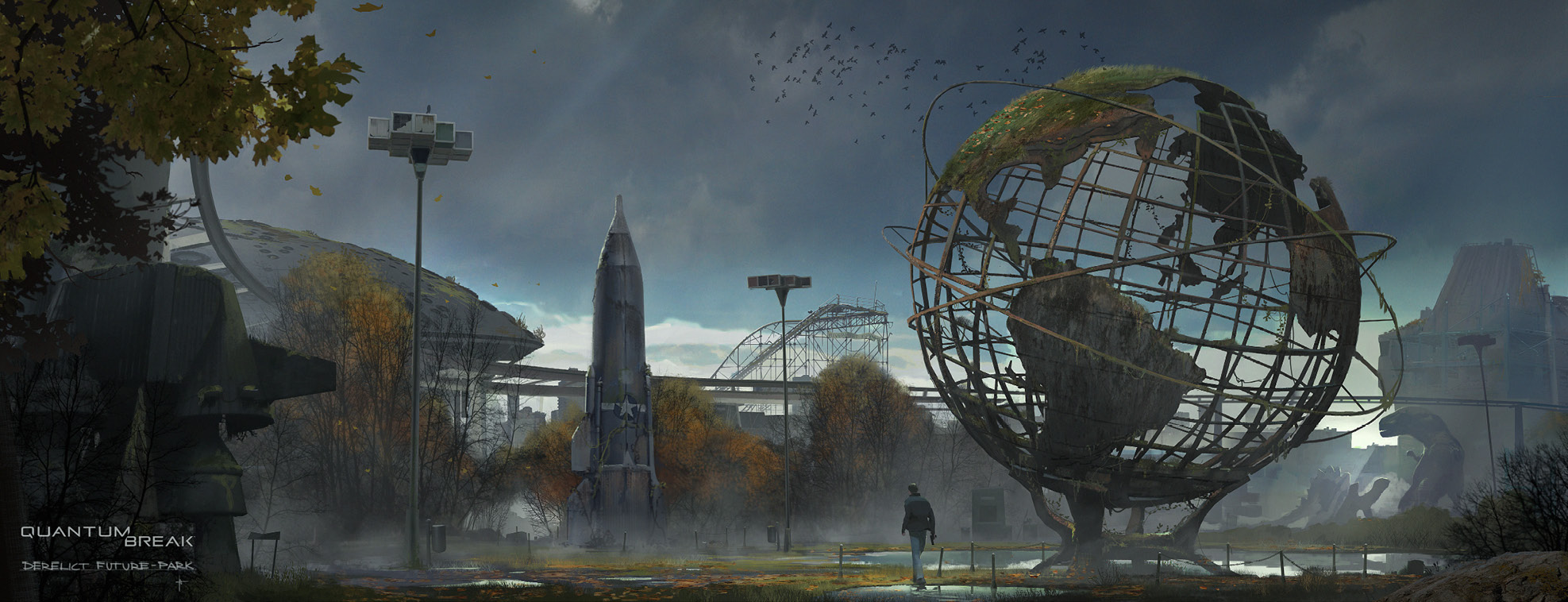
At one point, there was the idea of having a huge firefight near the Bradbury Swimming Pool. For that, we needed an interesting space that the fight could move to, because the pool building itself had limited use as a combat space, and the actual pool area was something we knew we had to reserve for the finale. So we had to come up with something nearby.
In keeping with the Bradbury area’s semi-abandoned and run-down nature, we wanted something that had the weight of time on it, and we hit on the idea of an old World Fair, left to rot for decades. Visually, it was striking and fit our themes. But as is so often the case, in the end, we had no use for it either in the story or in the actual level flow, so we dropped it.
The Steel Mill
In our earlier story flow, there was a sequence that took place after the kidnapping of Dr. Amaral at the Monarch gala. Originally, Dr. Amaral declared that the Time Machine itself was in perfect operating condition, but in order to use it, they needed a supply of Chronon particles. Those particles would have been obtained at the abandoned steel mill, located a good distance away from the city of Riverport—the idea was that there was a natural time anomaly there, which gave the place a reputation as a haunted location.
This anomaly produced great quantities of Chronon particles, but it also made even normal people sometimes sense strange things—disembodied voices, glimpses of figures where there shouldn’t be any. They would have been echoes from the past or the future, made detectable by the overabundance of Chronon particles in the area. Monarch would have already set up a harvesting operation, and Jack and Beth would have had to work together locate the operation and steal containers of Chronon particles from it.
Ultimately, we scrapped this location. It would have been cool, but changes to our overall story made it redundant: conceptually, the Ground Zero served much of the same purpose, but it was tied far more closely to our actual core story. Also, once we established that the Countermeasure caused the Ground Zero to happen, the need for a naturally occurring anomalous zone wasn’t there anymore. Still, even though we don’t address this in the game, we still consider those to be out there, and they’re responsible for many of the stories about supposedly haunted locations.
Lost Powers
Just nailing down the abilities Jack has was a big challenge. In the beginning of the combat design process, we knew we wanted his powers to be based on the manipulation of time, but narrowing that down to actual usable powers took quite a bit of experimentation.
In the beginning, Quantum Break was conceived more as a cover shooter, with a more tactical approach to combat. This was reflected in the nature of the Time Powers—they were based around the idea that from cover, you could aim and launch Time Powers, such as the Time Stop, and a version of the Dash that actually had you select a target before triggering the power, so you could zip from cover to cover, for instance.
But nobody was very happy with that design. It was very slow-paced and defensive, and it didn’t feel tense in the way we wanted. So over time, we kept on increasing the pace, and eventually, we ended up with the powers you can now see in the game.
Along the way, there were a few casualties, powers that Jack had once upon a time, but which didn’t make the cut. Two of these, the Split and the Rewind, were conceptually interesting, but it was hard to make them work.
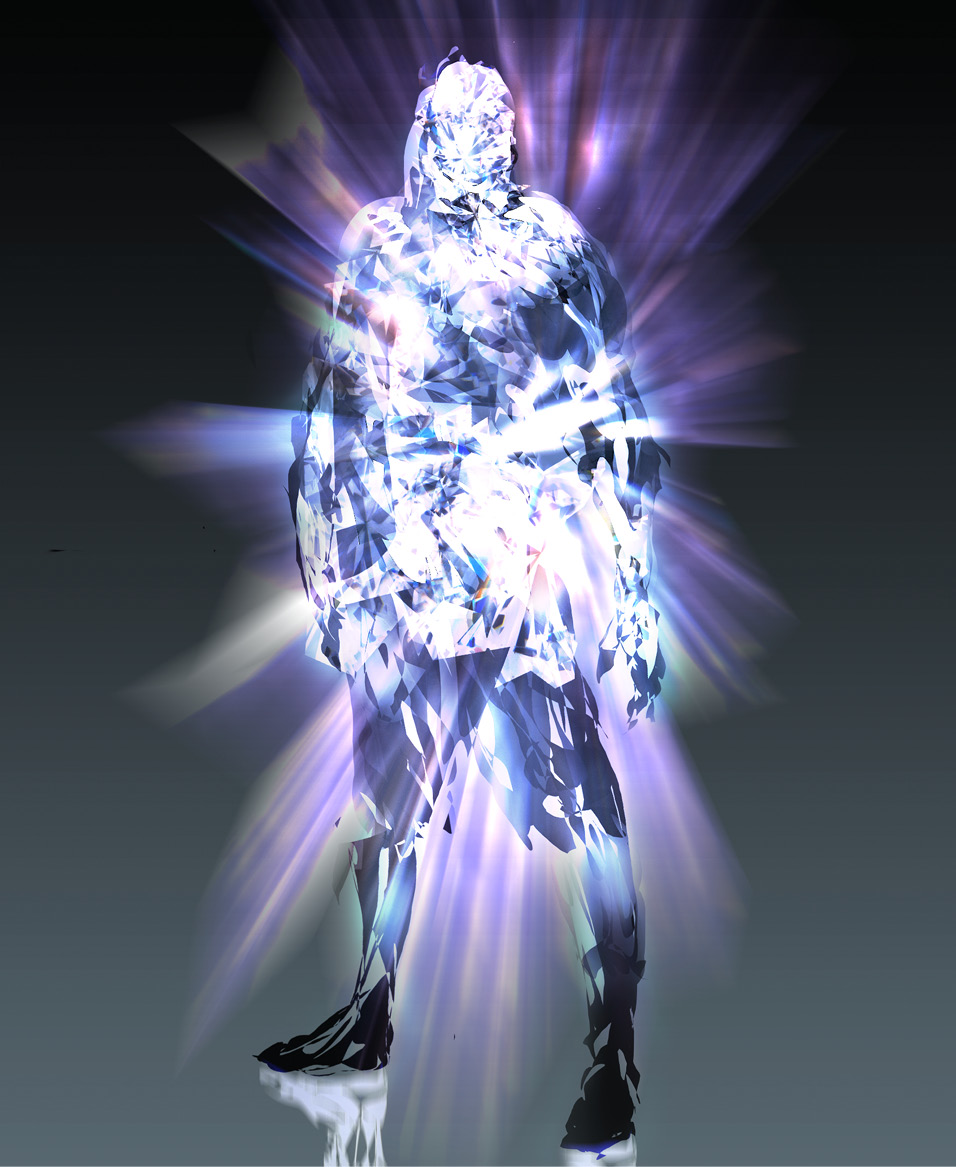
The Split involved Jack suddenly turning into two Jacks. Conceptually, the idea was that Jack somehow could pull in a version of himself from an alternate timeline, and for a brief while, there’d be two of him fighting the enemy. After a while, the other Jack would vanish again. Unfortunately, we never managed to make it feel like it was fun. Making it feel like this truly gave you an advantage without being too useful was a very hard balance to strike, and the various technical challenges involved didn’t help. Still, the concept was great, and we toyed with the idea of creating a wide variety of Jacks, some of whom were more competent than others, and some utterly unprepared to suddenly find themselves in the middle of a firefight. The idea of a Jack wearing nothing but a towel, holding a rubber ducky, sometimes appearing in the battlefield is fun—but the production realities involved with all this made it us drop it. Possibly, some common sense was involved as well.
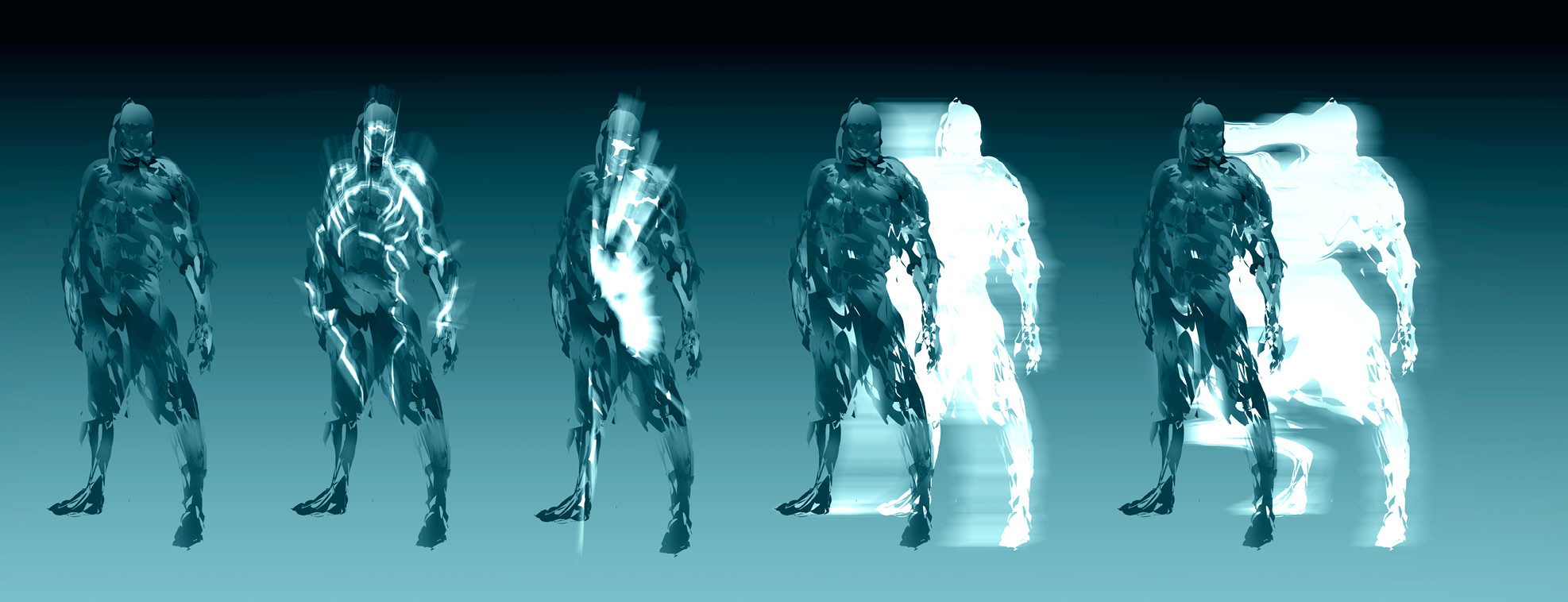
As for the Rewind power, it allowed the player to rewind the gameplay situation by some seconds. This in itself is not a new concept in games, but we added a twist: it would actually be Jack travelling back in time a few seconds. At that point, the “original” Jack would still follow the path the player took under AI control until he hit the point where he decided to travel back, at which point he would vanish, but the player-controlled Jack would be free to act in a different way. This allowed for maneuvers like making a two-pronged attack on an enemy all by yourself. It was fun, but it was also quite confusing, as well as another complicated technical challenge. Furthermore, as we settled on the concept of closed loops in our Time Travel logic, it just didn’t fit.
Shifters
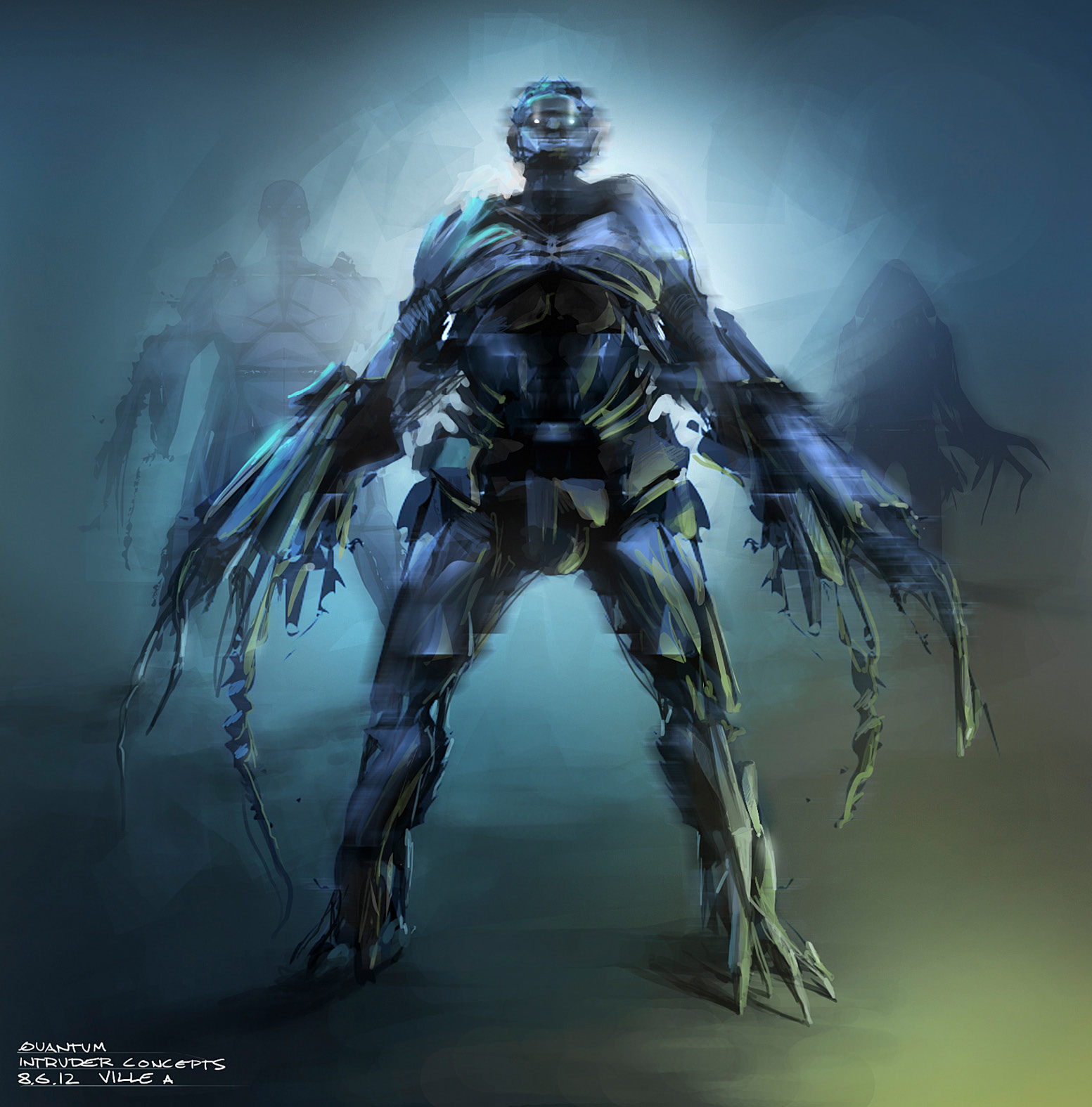
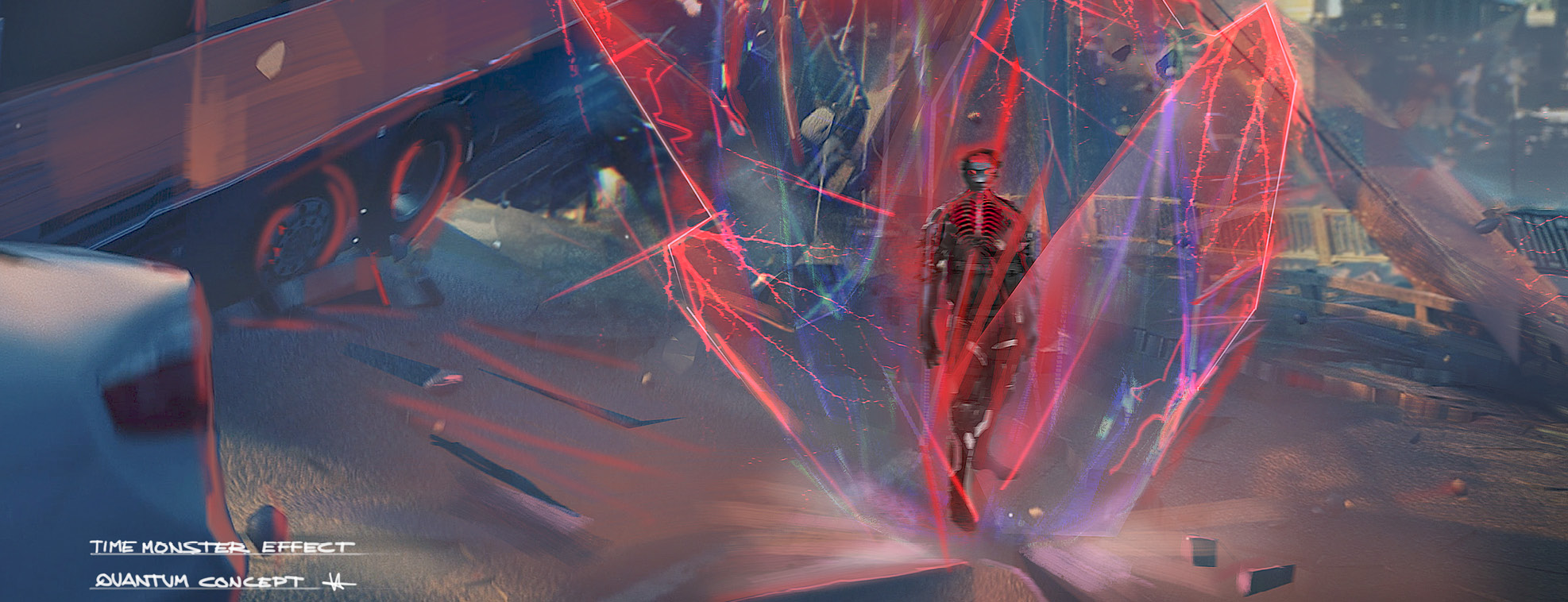
The concept of Shifters—at first, known internally simply as “Time Monsters”—was with us for a long time. The idea of these beings that lived somewhere beyond time was an engaging one, and presented an interesting counterpoint to the human enemies from Monarch. Indeed, at one point, they were supposed to be another, very different enemy type for you to fight. Then they were conceived as more of an environmental hazard, something that would kill you if you let it touch you, and you’d have to manage your distance from them.
The idea was always that they would only show up in stutters, being unable to exist in normal time.
But once we cut the End of Time sequence, it became obvious that we didn’t really have proper space for them anymore—before, we were building up to that moment; now, they felt like a distraction. So we had to adjust our plans. In the end, all that remains of them is their connection to the Chronon Syndrome—and to Martin Hatch. Something to explore in more detail at a later date, perhaps.