
Quantum Break Guide The Digital Show
The Final Form
You could also tell that not everybody involved in the process was necessarily familiar with how games and stories in games worked—the idea of the Junction moment threw many people for a loop. The challenge wasn’t just to come up with story branches, but branches that didn’t branch too far—and ones that that still fit in with the game story. Working them out was a very complicated task.
The final rewrite for the show happened about a month before shooting started, and it was vital—structurally, it remained much the same as before, but almost every scene was rewritten to make them flow better, and much of the actual characters really didn’t find their voices and personalities until then. It was a tremendous push, and it improved the show in innumerable ways.
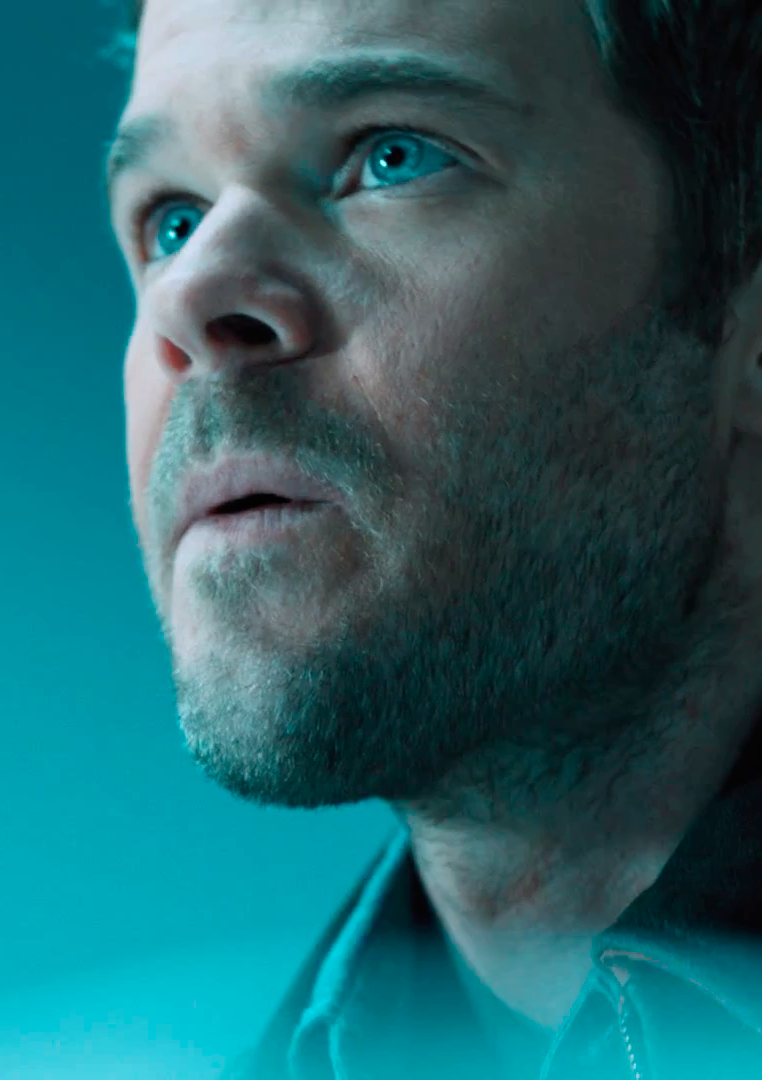
Despite the obvious importance of the branching content and the Junction moments, it can be argued that the most important connective tissue between the game and the show is the characters. Much of it comes down to the facial capture technology we have at Remedy—thanks to it, it’s obvious to the audience that Paul Serene, for example, is always played by Aidan Gillan. Whether you see Serene in the game or the show, he feels like the same character—he’s got the voice, the mannerisms, the kind of subtle facial movements that are unique to Aidan. There have certainly been video game characters that have been modeled after their actors before, but we have reached a point where it feels like that actors are truly inhabiting their digital doubles.
We’ve used to seeing that in film, but in video games, that kind of consistency is unprecedented. It suggests exciting things for the future: despite the high quality we’ve achieved on Quantum Break, this is only the first time we’ve truly done this, and we’re only getting started with the technology. It’ll be interesting how far we can take this kind of storytelling in the future.