Quantum Break Guide Before Quantum
Before Quantum
After Alan Wake, we had a plan to create a sequel to it. We worked on the concept and pitched it to several potential partners, including Microsoft Studios, the publisher of the first game. At the time they were looking for something else, and came back to us with a counter pitch, asking us to create a game that would have an element of Interactive narrative in it, to give the player the power to affect the story of the game in some way.
We returned back home to Finland from Redmond. The idea of pushing our storytelling more into Interactive direction felt exciting. First, I tried to make it fit into Alan Wake, in a draft-like concept that we had been planning for Alan Wake 3. It revolved around an idea of a mysterious agency that investigates the supernatural forces in Alan Wake’s world, but after a while I started to feel that it would be better to create a totally new IP for this for multiple reasons. First and foremost, I wanted the Alan Wake franchise to remain true to itself, and not to be molded to serve another purpose. I also felt that we could come up with a new concept that would work better for what we were talking about.
In the meantime, we had other partners who were interested in creating a sequel to Alan Wake with us, but none of them was prepared to fund it to the extent we felt the concept we had in mind required to be fully realized. We decided to set Alan Wake aside for time being and focus on creating a new IP.
There are always multiple, exciting ideas and concepts floating around at Remedy, it’s something that’s hard to avoid in a creative environment. I had one concept—with a working title of Quantum—that dealt with parallel realities and Time Travel. This concept had been inspired by early ideas in Alan Wake. At one point there had been a draft of a scenario that was inspired by the many-world theory of quantum physics. The scenario included a particle accelerator outside the town of Bright Falls, and Wake’s writings briefly seemed to be echoes of events taking place in a parallel reality. That was left out of Alan Wake in later drafts, but it did inspire an idea for a TV-show episode inside the game, written by my esteemed colleague Mikko Rautalahti (like all the Night Springs episodes were).
In the final version of Alan Wake, you can find a TV that features the episode entitled “The Quantum Suicide,” and down the line it made me think about a new concept that was Quantum.
More and more to me, the ambition is and has been to make all the numerous components that make a AAA
game to talk to and echo each other, to click into place to form something that’s more than the sum of its parts. I very much wanted to find a theme and suitable story genre to go with the concept of Interactive narrative, and that led me to Quantum, not the parallel reality part of it, but rather the idea of Time Travel. In a classic Time Travel story, something goes wrong and the hero wishes he could go back and fix it, change the past to save the future. We created a pitch presentation out of this idea with a slogan “If you could go back in time, what would you change?” We pitched this to Microsoft and the rest is history.
Making a AAA game, creating a new game IP, is a prototype project, which means that ideas must be tested and proven before you can commit to them. This is a huge endeavor.
It takes many years of work for dozens, hundreds of people, and tens of millions of dollars of money to make. No one will give you that money on trust alone. You have to prove that what you want to build will work.
Looking back at the initial concept documents of Quantum Break, I feel that in its heart and soul the final experience still retains a lot of the early thinking and themes, but many things changed and shifted around along the way.
In the initial concept, the grand plan included three layers of Time Travel, which goes to show that on the concept level the symmetry that feels attractive might not work so well once you dig into it.
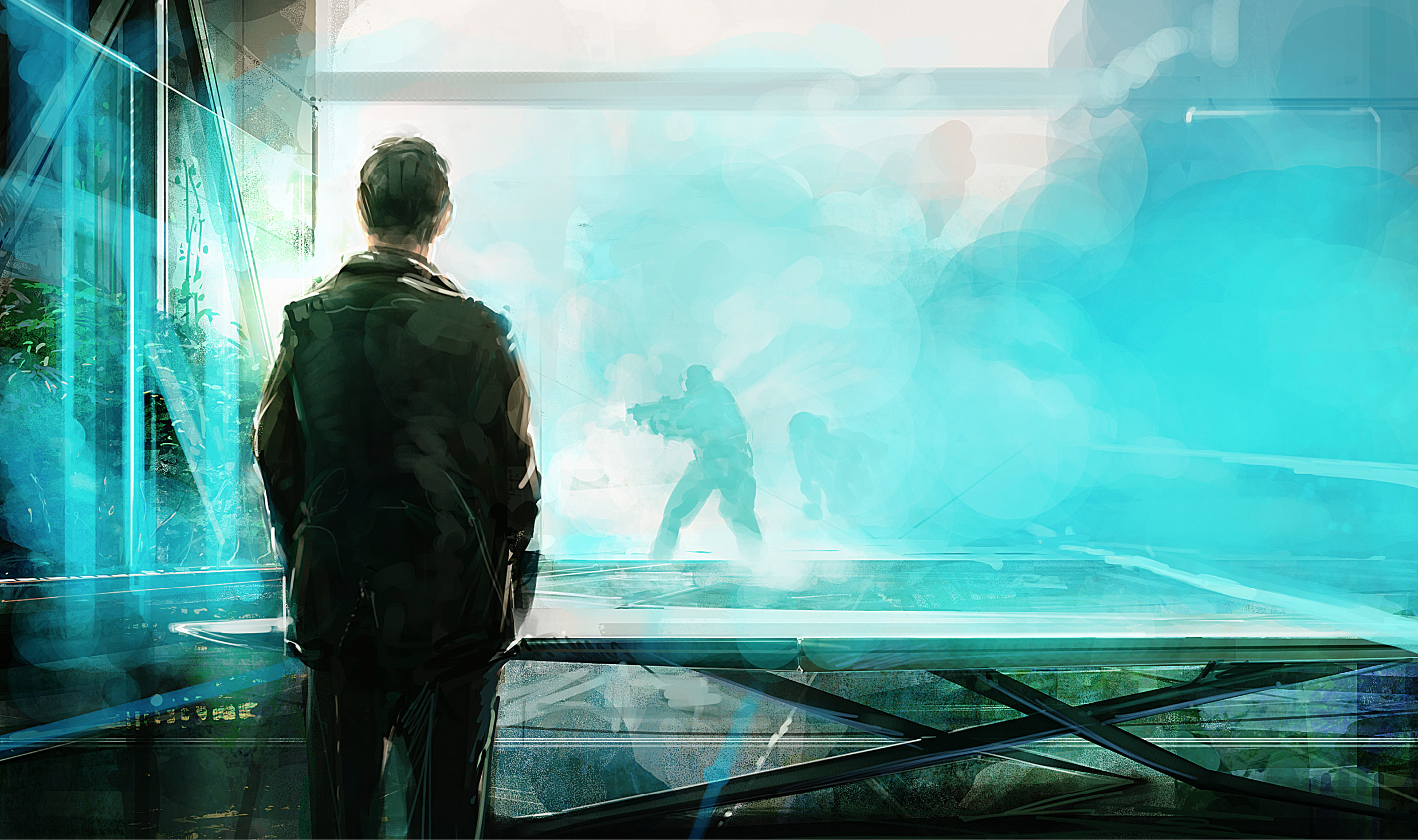
First, there was the second-to-second gameplay. The initial concept, the thing we set out to prototype first, was the idea that the player can rewind time, and then have another version of himself replaying the things he did on his side while he’s a free agent to do whatever he wants. The idea was that with upgrades, there could be multiple versions of the character fighting side by side. We had the tech for this up and running. But it led to a gameplay loop that was a bit repetitive and very strategy-oriented. It wasn’t what we were looking for; we wanted the action to feel fast-paced and aggressive. Along the way, the action gameplay changed the most. We kept prototyping different time power concepts until we felt we had what we were after. In the early principles document we created together with Chris Novak from Microsoft Studios, we had the slogan: “Time turns things up, not back.” In the final version, the rewind gameplay is present in the simple puzzle mechanics of the game.
The second layer of Time Travel was the Interactive narrative part: the Junctions in time. Originally, Junctions happened in the past. The initial idea was that in each episode of the game the characters would travel back in time, and a Junction in time would happen. Then, returning back to the present, there would be consequences, things would have changed depending on the choice you made, and you’d have an option to go back and choose differently. Early on, we didn’t have clear rules of what was possible to achieve with Time Travel and what was not.
We realized that we desperately needed those rules so that our Time Travel story would make sense. After several iterations, to clarify things, we changed it so that the Junctions happened in the present and dealt with the future.
The third layer of Time Travel was the story layer. We had a lot more Time Travel in the story early on. David Holmes, our first executive producer on the MS side, felt it was confusing—a valid argument. In some cases our Time Travel was a closed loop, nothing could be changed, but sometimes you could change things, which ended up creating a risk of paradox. We realized that to create an effective Time Travel story we needed a strict set of rules, the science of it, and no matter what must stick to those rules. There were many times in the writing room with Mikko Rautalahti, Tyler Smith, Cam Rogers, and myself, when one of us would look at the mad scribbling on the whiteboards we had produced breaking down the story and go white in the face and groan: there was a plot hole that would make it all come crashing down, and we’d need to go back to figure it out yet again. Eventually we did figure it out, and even though I still have nightmares of it being broken, I’m happy and proud with the end result.
The story is always just one part of it and many production realities come in along the way forcing us to tweak things. Game production is a complex system, and afterwards the end result is judged not by the circumstances that made it the way it ended up being, but by its own merit. Everything else is an excuse.
When you think about Time Travel, you likely conjure thoughts of dinosaurs and going back in time to kill Hitler. That was never the plan with Quantum Break. I always wanted Quantum Break to be a modern cutting-edge techno-thriller.
From the very first initial concept on, there was always the idea that you could never travel back beyond the moment of invention that makes Time Travel possible. In the game, that’s in 1999. That never changed along the way.
From Alan Wake on, I’ve been a firm believer in the idea that the episodic storytelling we see in the best TV shows is a perfect model for stories in the games we are building. I wanted to push that forward in Quantum Break. Not only the episodic structure, but other aspects, as well, such as the main characters.
Remedy’s previous games have been named after the main character, Max Payne and Alan Wake. Quantum Break is different. Quantum Break is not called Jack Joyce. I wanted to create an experience with an ensemble cast. Yes, this game is and always was Jack Joyce’s story, the story of Jack dealing with his brother’s death, but the idea was that going forward there would be other characters, as well, characters who could step in and take the lead role. In the initial concept we had four playable characters—Jack Joyce, Beth Wilder, Kate Ogawa, and Nick Marsters—but we soon realized that it was too much, the story felt too fragmented. We decided to focus on Jack’s story. Beth remained a very important character with a complex backstory, but much of it is in the background, potentially to be told in the future.
Kate Ogawa started out as Paul Serene’s ex-wife, a hard core security professional (glimpsed in this role in the first public Quantum Break demo), but finally turned into Clarice Ogawa, Martin Hatch’s assistance, who interviews Jack in the framing story of the game. Nick started out as an ex-hockey player turned a con man who ends up in the wrong place at the wrong time, and finally became the comic relief cab driver you get to enjoy, depending on your choice in the first Junction moment (it’s either him or Amy).
All four playable characters also had the Junction power in the initial concept. At this stage Paul Serene wasn’t a playable character at all. We had to rethink the concept of Junctions when we scaled back the number of playable characters to just Jack. This is a good example of the nature of a creative process. You need to roll with the punches, be ready to catch the next wave. No plan will ever survive the contact with the enemy, the enemy in this case—maybe in all the cases—being the reality. This can be a huge source of anxiety, frustration, and stress—it always is.
But at the same time it’s an opportunity, a brilliantly glorious opportunity for something even better and cooler, a constant source of new ideas. There’s madness to it, but as a creator you must embrace it. When the creation in your hands keeps shifting and changing shape, new and (in some cases) better avenues will present themselves. I’m extremely proud of the idea to make the bad guy of the story, Paul Serene, a playable character, to give him the Junction power, and with that make him the conduit between the game and the show. This would never have happened if we’d gone forward with initial plan of four playable characters.
There were clear misadventures along the way. Microsoft wanted us to include the use of Kinect into the experience. We explored the idea of a Kinect co-op mode, where one player has the controller while the other co-pilots with Kinect, affecting the story, making the Junction choices. More and more it started to feel that we were creating two separate experiences. A traditional game, and something else—an Interactive Kinect-driven story experience.
Even one new experience in itself can be a huge challenge, but two separate ones is sheer insanity. Luckily, we came to an agreement to drop the Kinect experience early on.
We always begin with a bunch of ideas. Ideas are easy, they are cool, they are seductive. It’s easy to fall in love with an idea, make it your darling. With a big team of creative people, there is never a shortage of ideas. When the team starts working on them, they will lead to new ideas, and then even more ideas. Quite often when you dig in, start working on an idea, it will start growing into something bigger. You end up with all these ideas ballooning beyond control, and what started out as too many ideas soon becomes way too much content to be feasible for any team, schedule, or budget. And that’s when you need to start killing your darlings—focus is essential. Finding the parts that work together, leaning on them, and cutting out the distractions and the things that do not make the whole stronger, no matter how cool they are individually.
Some of it will be left on the editing room floor, some will be saved for the sequel and some will live on to inspire a completely different concept, as the idea of quantum physics in Alan Wake lived on to become Quantum Break.
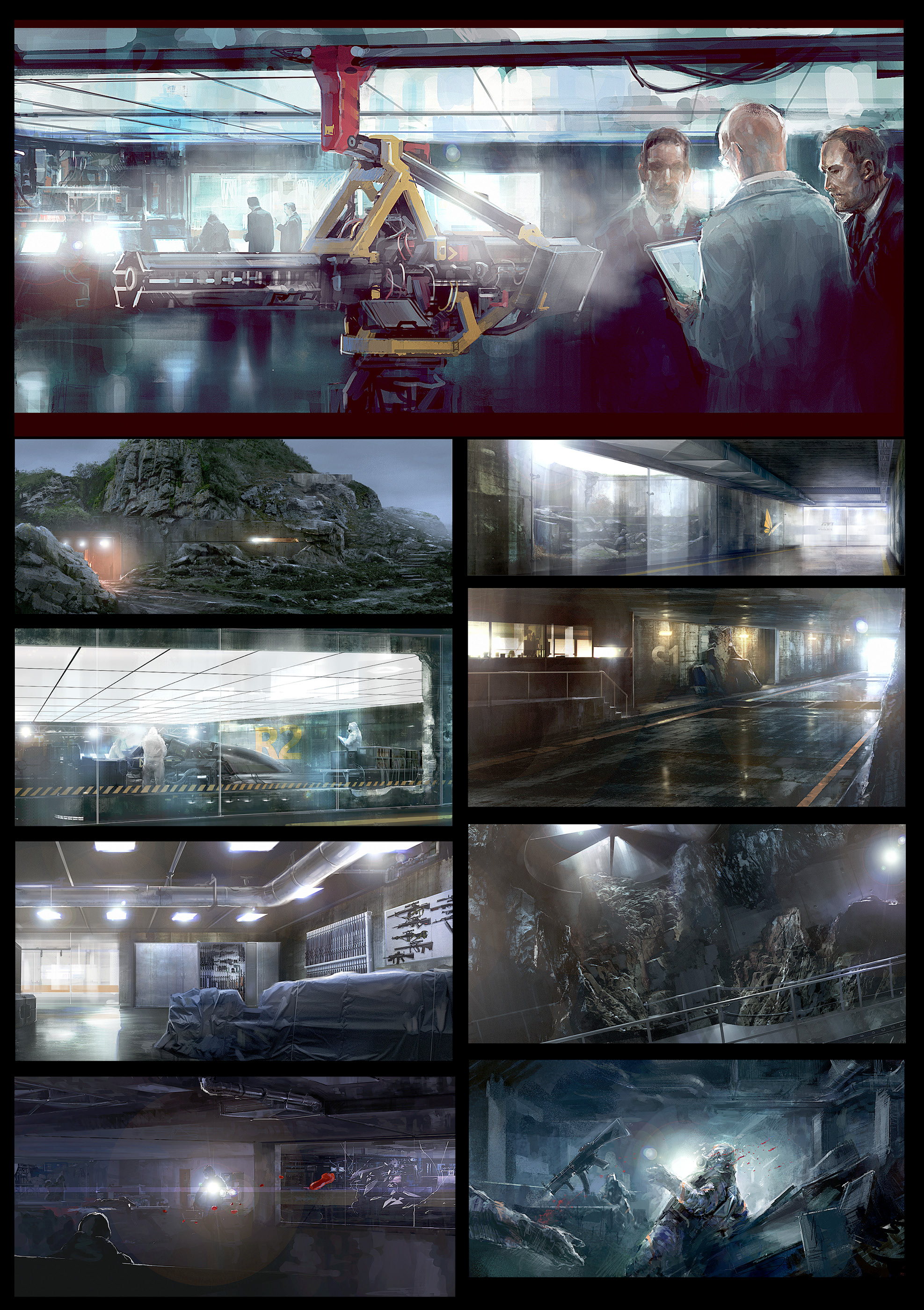
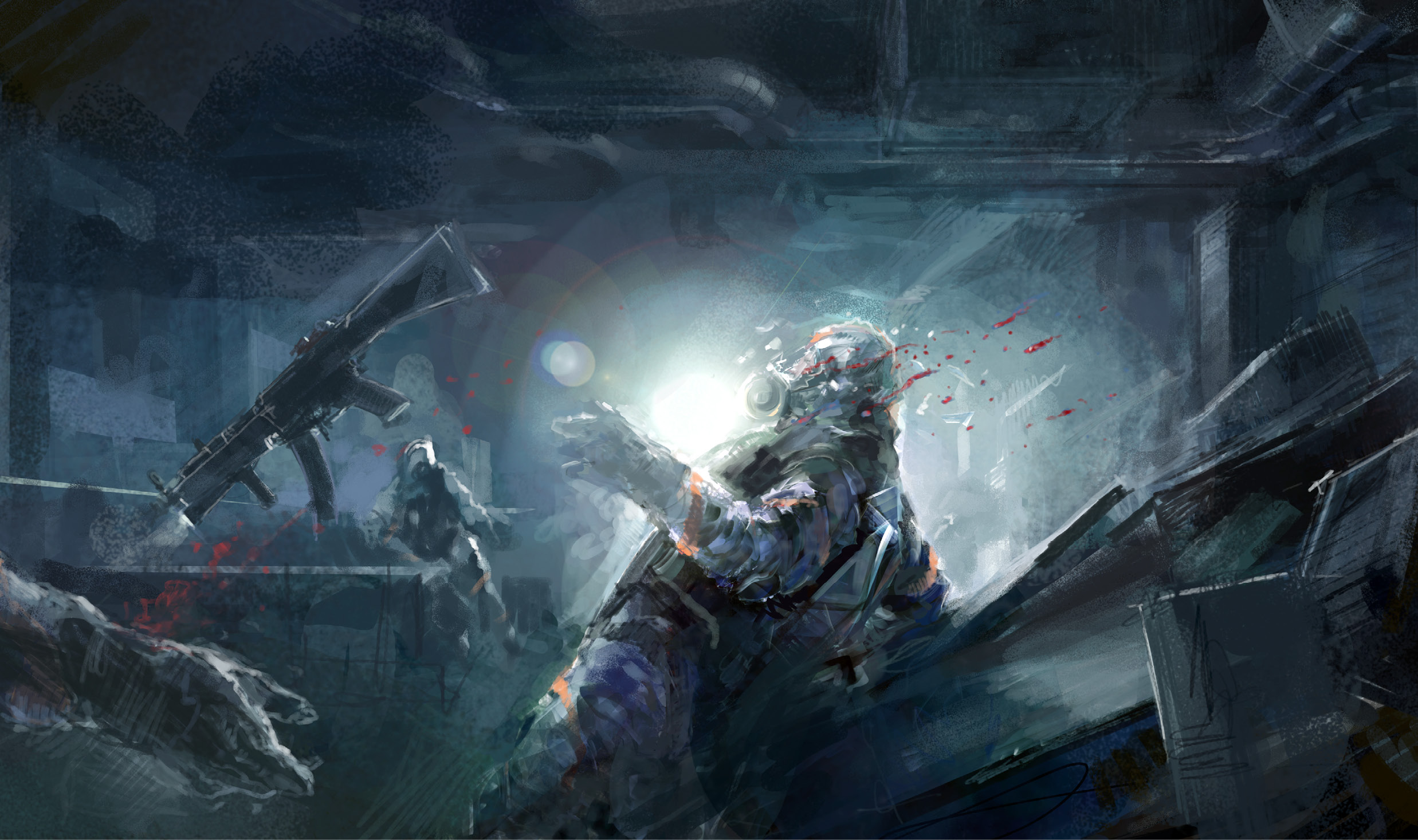
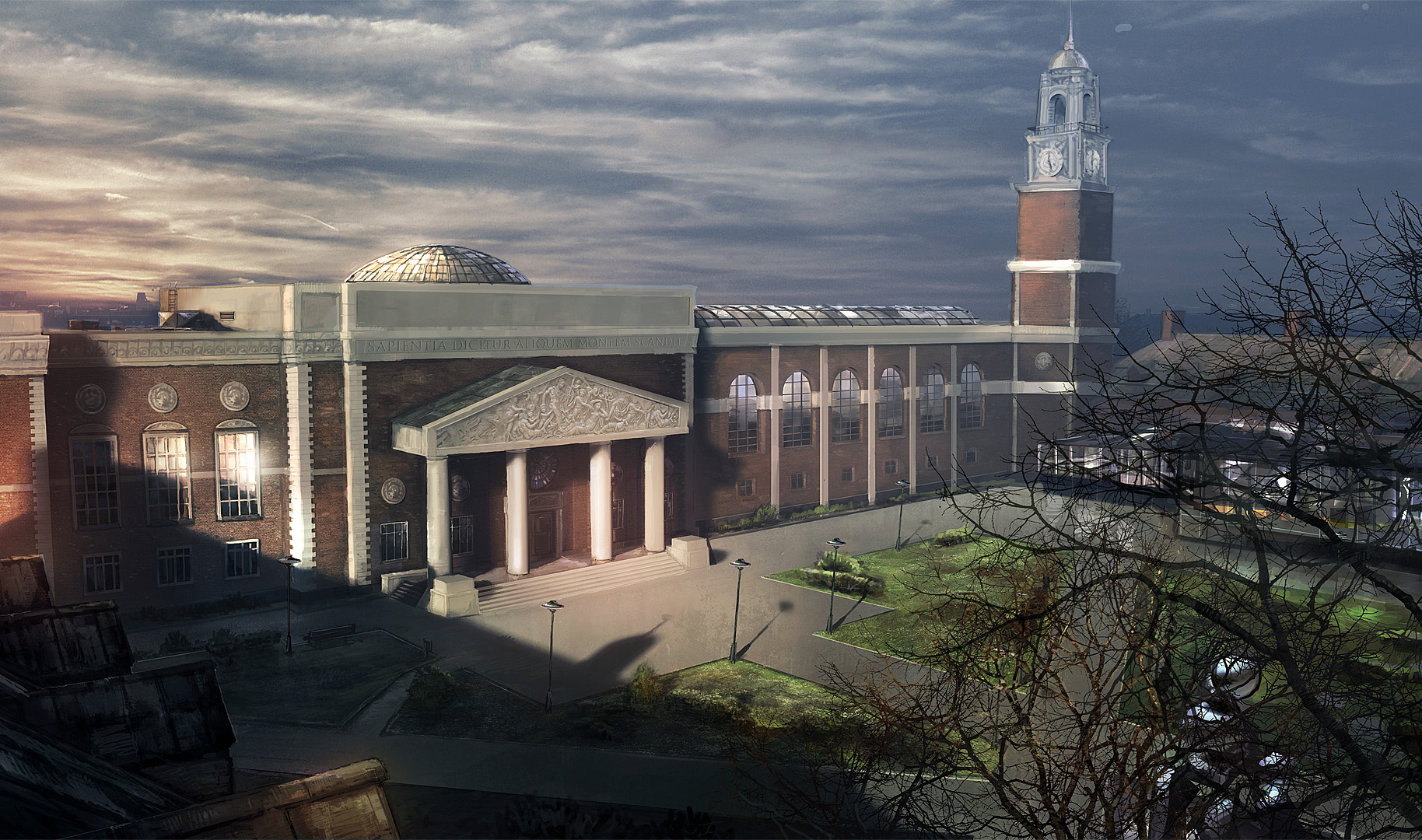
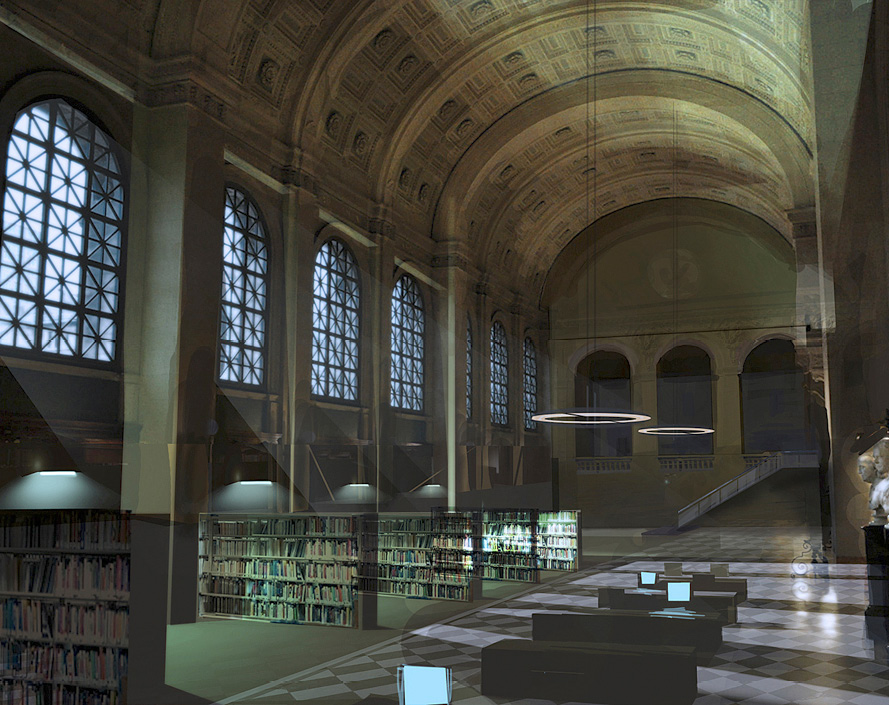
We started out Quantum Break with a prototype deal. Microsoft would fund the project for a few months, and we would create a demo to prove that the concept would work. We created what we called a “Guided Experience.” This included a little bit of action, a Junction moment, story and characters. Very little of this has even been shown publicly. The location was the Riverport University library, the same one as is in the final game, although this library was in perfect condition and in active use until Monarch blows it up. Gethin Anthony was our Jack, and Erin Richards was Beth. Saku Lehtinen, our Art Director from Alan Wake, directed the cinematics and the actors. The “Guided Experience” was a success and led to the full production deal of Quantum Break.
What followed was the first public demo, what we called the “Sofia Scene.” The purpose of this was to prove our new character technology in propriety engine Northlight, as well as the concept of a Stutter in time, a moment of broken time. For the pre-production phase, Sean Durrie assumed the role of Jack, to be replaced by Shawn Ashmore in the final game. We still wanted to keep Durrie as part of the ensemble, so he was recast for the part of Nick. Saku Lehtinen had already moved to another project, and Stobe Harju assumed the role of Drama Director.
The idea of the live action show had always been there from our very first pitch on. Actually it was already there in our pitch of Alan Wake 2. The show always had a separate production crew. The original concept of the show was not as tightly connected to the game; it was following a different story in the same location and time, in the city of Riverport. Microsoft commissioned and created a 10-minute prototype show to prove the concept and get an internal funding for the full show.
Bits of this, with the little girl, were shown as part of the initial reveal of Quantum Break. The prototype got us the green light for the full show. From the beginning I felt that the show should be about the enemy, Monarch Solutions, and tightly connected to the events of the game. This was a long debate, and bit-by-bit we got to the idea of game being Jack’s hero’s journey and the show being about the villains of the experience. The show was written by a few different writers along the way. Josh Corbin came in at the end and performed miracles on the screenplay, rewriting and editing it to its final shape.
My ambition was always to make Quantum Break the Remedy game version of a Hollywood summer blockbuster sci-fi action spectacle. Only time (ha!) will tell whether or not we succeeded.
The line from a poem by Delmore Shwartz we used in the early marketing materials perfectly captures the essence of Quantum Break, both as an experience, as well as our journey getting there: “Time is the fire in which we burn.”