Quantum Break Guide The Digital Show
Concept
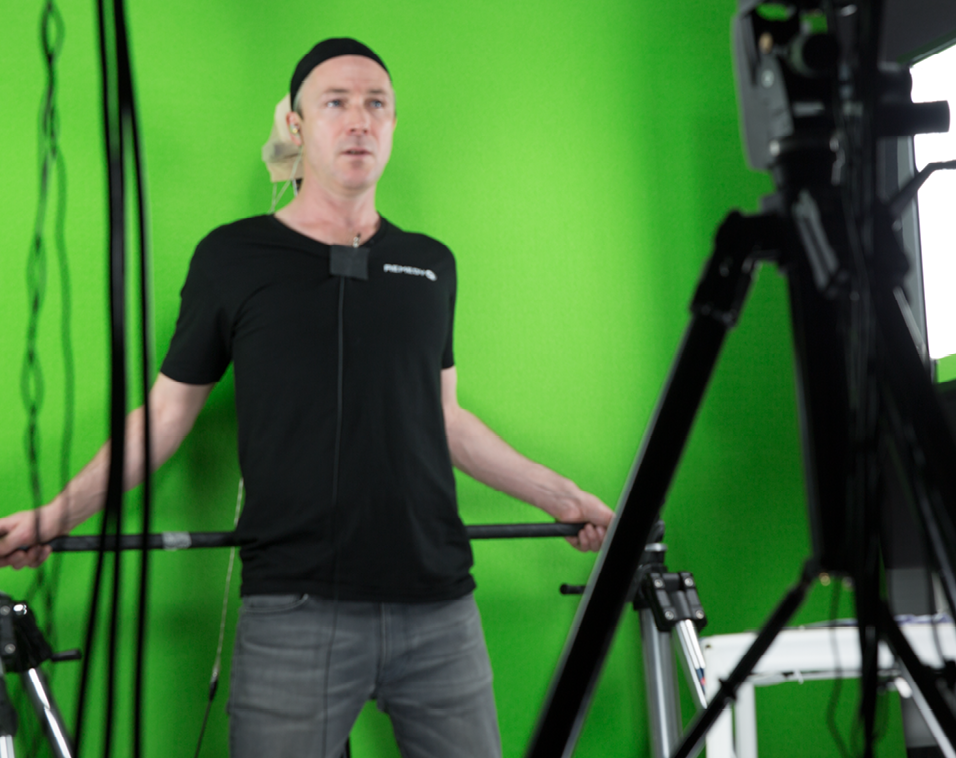
It took a long time to settle on what the basic concept of the show should be. At first, even its format wasn’t clear—there was talk of doing a season or a miniseries of an actual TV show that would’ve been either broadcast or made available digitally, but separately from the game. There were certain advantages to this approach—it would’ve been very accessible to even the non-gamer mainstream audience, for one thing. There were some ambitions of having it be a standalone thing that could’ve enjoyed success on its own.
However, there was no guarantee that a person watching the show under those circumstances would play the game, or even have access to it. That meant the game/show connection would have to be tenuous at best. It was clear that to continue along those lines would’ve meant really creating two very different products, both of which might be of good quality, but which wouldn’t feel like they are happening at the same time.
While there was nothing wrong with that, it didn’t feel particularly groundbreaking. It was clear that the ambition was for something more involved—and more Interactive. It soon became apparent that whatever the show would be, it would have to be something that was presented as a vital part of the overall Quantum Break experience. This meant it had to be delivered as a part of the game itself.
Many of the initial discussions held in early 2012 about the nature and direction of the show proved that even nailing down the show’s actual subject matter was easier said than done. The only thing that really seemed clear was that it should involve the city of Riverport and Monarch Solutions somehow, but even who the main characters should be was a source of much debate. The idea of Federal agents investigating Monarch Solutions was often brought up, and while their actual occupation and identity kept shifting, the job description did not.
An added complication was that during these early talks, the game story was still very fluid. The original concepts for Quantum Break were quite different from what we eventually went with, and as we refined our own vision, it also had a constant impact on the show vision.
There was a ten-minute prototype episode, produced under the code name “QUEST,” designed to demonstrate not only the production values for the show, but also how the branching content, determined by Junction choices, would work. It was intended more as a technical demonstration than an actual piece of final content.