
Firebase Buildings
Turret
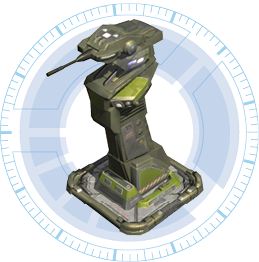
Turret defenses are available for Stations and Fortresses, while battlefield commanders must defend their Firebases with their military units. Turrets are assembled belowground and then elevated into one of four available slots. A virtually unlimited supply of ammunition flows to the turret from below the base, allowing it to keep firing as long as its exposed tower and weapon remains intact. The base turret mount supports the very versatile M202 XP Machine Gun.
Turret: Basic
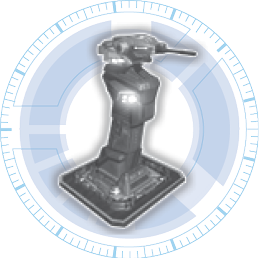

Weapon Type: M202 XP Machine Gun
Building Class: Base Defense
Turrets are good at defending bases against all enemy targets. You can have up to four Turrets for each base (one on each corner), which allows a slightly farther line of sight. It is usually wise to build the two Turrets at the front of the base first, but this depends on where the enemy usually attacks from. Simply build the Turret and leave it to fire at enemy forces; you cannot control the Turret’s aiming.
Turret: Flame Mortar


Weapon Type: Antipersonnel Flame Mortar (KG Mk 34)
Adds bonus Anti-infantry attack to the Turret.
Turret: Rail Gun


Weapon Type: 8MJ LRG Rail Cannon
Adds bonus antivehicle attack to the Turret.
Turret: Missile Launcher


Weapon Type: Anaconda SAM
Adds bonus antiair attack to the Turret.
Turrets have three unique “add-on” augmentations that allow you to swap out different armament types for a battle’s duration. Only one add-on can be added at a time, but each can be changed whenever you want, and every Turret can have one of the three options. These are well worth the small Supply Points it takes to fit them, and you should use them once you see what type of troops an enemy is building or are sending your way. If you can correctly predict (usually via Warthog reconnaissance) the troops, it is easier to defend your base.
Supply Pad
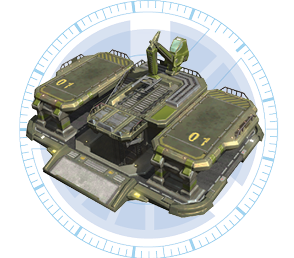
The UNSC Supply Pad allows a base to receive shipments from orbiting cargo craft. The supplies are drop-shipped onto the pads, where they are gathered by robot cranes and brought into the base. These crates contain the resources needed to build units and research upgrades. Supply Pads are the economy behind the war machine of the UNSC and can be upgraded to produce more resources faster.
Supply Pad: Basic


Building Class: Produces Resources
The UNSC Supply Pad produces the resources needed to train units, build buildings, and buy technology upgrades. Bases that have great economic production might have six Supply Pads. Only Captain Cutter and Professor Anders can build these.
Heavy Supply Pad


Supply production massively increased for this Supply Pad. Sergeant Forge builds these from the start; Cutter and Anders must build a Basic Supply Pad first.
Reactor
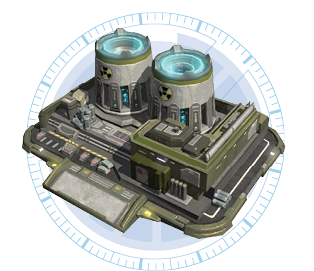
Power is everything. A UNSC Firebase is powered by a small hydrogen reactor that allows it to operate some pretty sophisticated systems. In order to set up a base quickly, it has to be small, but these power plants are modular. As you expand your base of operations and field more complicated weapon systems, you are going to need more power. Base sockets can facilitate the addition of larger hydrogen reactor units, which provide the juice to allow you to field more and more sophisticated weaponry. These additional Reactors built into your base sockets are even modular and can be upgraded, at great expense, to double their output.
Reactor: Basic
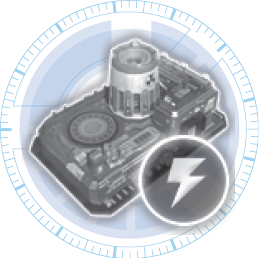

Building Class: Increases Tech Level
UNSC Reactors provide the energy needed to access advanced buildings, units, and technology upgrades. High-tech bases may have as many as four or five Reactors.
Reactor: Advanced
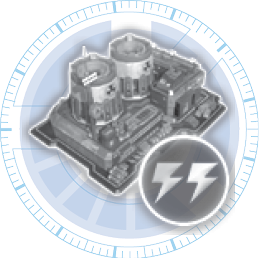

This Reactor provides enough energy to match the output of two Reactors. Advanced Reactors can only be built as an upgrade to an existing Reactor.
Planning the number of Reactors and how many places they take up inside your base is crucial to winning a battle. The following table shows the number of pads and Supply Points it costs to reach Tech Level 4 in a variety of ways:
As you can see from the table, the payoff of creating more Advanced Reactors is that you free up base pads for other buildings; this is useful if you’re having trouble locating an additional base. The payoff for creating more Basic Reactors is that it costs less and takes less time, as you don’t have to wait for your Supply Points to reach 1,250.
| Tech Level | Reactor (Number) | Supply Point Cost | Base Pads Utilized |
|---|---|---|---|
| 1 | Reactor (1) | 250 | 1 |
| 2 | Advanced Reactor (1) | 1,450 | 1 |
| 2 | Reactor (2) | 750 | 2 |
| 3 | Reactor (3) | 1,500 | 3 |
| 3 | Reactor (1) + Advanced Reactor (1) | 1,950 | 2 |
| 4 | Reactor (4) | 2,500 | 4 |
| 4 | Reactor (2) + Advanced Reactor (1) | 2,700 | 3 |
| 4 | Advanced Reactor (2) | 3,150 | 2 |
Field Armory
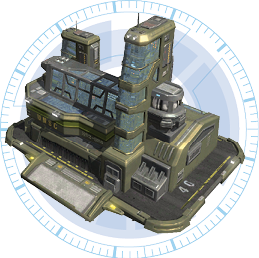
The UNSC’s Field Armory is where dedicated engineers and scientists create the most advanced technology for the UNSC. The UNSC can increase its population cap here, as well as improve the turrets and boost the speed of its infantry. There is also special technology that can only be researched by individual leaders. Don’t underestimate the usefulness of this structure!
Field Armory (Building)

Building Class: Special Upgrades
The UNSC Field Armory is a combination machine shop and high-tech laboratory. Many advanced technology upgrades can be found here.
The Field Armory is usually overlooked, as it doesn’t provide any “instant” gratification (i.e., troops to defend your base). Usually, it is created in the middle of a confrontation once you’ve established a base (many players put one on a second base). The following upgrades are available and augment a wide variety of troops and armaments.
Reserves


Train times for all units are drastically reduced. Basically, in half the time you would normally train a squad of Marines or build a Wolverine, you receive the chosen unit if you complete this upgrade. This is pricey but helpful if you’re planning a late Rush or wish to quickly bolster your troops to patrol or defend (if you have enough Supply Points amassed to handle the quicker training). If you need an army quickly and you have the Supply reserves, take this upgrade.
Medium Turret
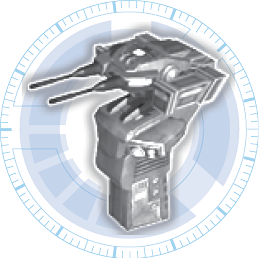

Upgrades all Turrets to Medium Turrets, increasing their Hit Points and damage.
Large Turret


Upgrades all Turrets to Large Turrets, increasing their Hit Points and damage.
These two upgrades instantly bulk up every Turret you’ve already built (or intend to build), granting an extra M202 XP Machine Gun and adding about a third more armor (Medium Turret) or two M202s and one and a half as much armor again (Large Turret). If foes are constantly hassling you at your base, this makes enemy incursions more difficult. It also sends a visual signal to your foe that your base is now much stronger and well defended. Naturally, the more Turrets you already have, the more useful these two upgrades are.
Reinforcements


Adds +10 to your army’s Population cap. Aside from the 2v2 Beaseley’s Plateau Map that features a Life Support Pod, this is the only way you can increase the total Population of your army from 30 to 40. For example, this means three extra Scorpions (and a Spartan to ride in one of them) or five more Hornets. Additional units are always useful, and this is a thoroughly recommended upgrade, as long as you’re already nearing your 30 Population limit; if you’re scrabbling around at 10 to 15 Population and under constant enemy attacks, gain a tactically stronger position and more troops first.
Adrenaline


Booster shots enable all infantry units to run at significantly increased speeds. If you want to employ an infantry Rush or take Hooks early in battle, this offers a significant advantage once you’ve built a Barracks and the Field Armory: This should be your first upgrade if you’re focusing on an infantry-heavy army. Troops run at 1.5 times the normal speed, effectively shortening the distances they travel. Even if you’re only using Spartans, this is useful, as you can run and Jack a vehicle in a shorter time and thus avoid more damage.
Medium MAC Blast (Cutter Only)


MAC Blast ammo capacity upgrade to provide two shots.
Large MAC Blast (Cutter Only)


MAC Blast ammo capacity upgrade to provide three shots.
Super MAC Blast (Cutter Only)

MAC Blast ammo capacity upgrade to provide four shots.
Medium Carpet Bomb (Forge Only)

Carpet Bomb strafe distance and damage increased.
Large Carpet Bomb (Forge Only)


Carpet Bomb strafe distance and damage increased.
Super Carpet Bomb (Forge Only)


Carpet Bomb strafe distance and damage increased.
Medium Cryo (Anders Only)

Increases the duration of the freeze effect and instantly kills more air units.
Large Cryo (Anders Only)
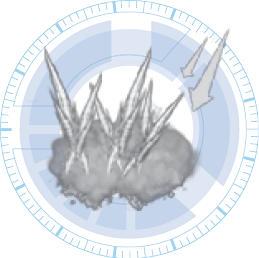

Increases the duration of the freeze effect and instantly kills more air units.
Super Cryo (Anders Only)
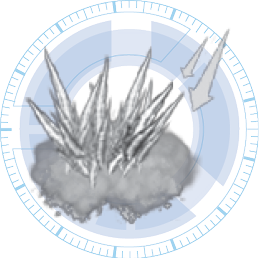

Increases the duration of the freeze effect and instantly kills more air units.
Although the exact specifications aren’t available, each of the three Leader Powers (accessed via the Spirit of Fire menu, or  ) can be further upgraded, and the Field Armory is the building that provides this function. Often overlooked because these attacks are less tangible than constructing a platoon of tanks, Leader Power upgrades should be seriously considered, especially when playing as Anders (as hers are effectively half the cost of Forge’s and Cutter’s). The general rule here is that if you can afford to upgrade powers without your second-by-second game suffering, then go for it; Leader Powers are the perfect way to augment an attack. For specifics on Leader Powers, see the “Spirit of Fire” section earlier in this chapter.
Barracks
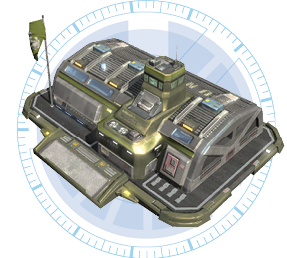
This is no UNSC academy; the Barracks is a rustic shack compared to the comforts of a real training center, but then again, a Marine in the field isn’t thinking about creature comforts: They make you soft. The Barracks simply houses the raw recruits and equipment needed by field squads of UNSC Marines. A quick briefing and a visit to the armory, and you’ve got boots on the ground.
Barracks (Building)


Building Class: Trains Infantry
Units Trained: Marine (and upgrades), ODST (fully upgraded Marines; Cutter only), Flamethrower (and upgrades), Spartan (and upgrades)
The Barracks trains the bulk of the UNSC infantry units. Infantry technology upgrades can also be found here. Barracks are usually built early rather than later into a battle, because infantry are less and less useful as more powerful troops become available. The Barracks has many advantages, providing quick and cheap units to instantly nullify early enemy Rushes. It also doesn’t need a Tech level to be built, enabling you to set up a Barracks as soon as you wish. In addition, it trains three types of units (detailed later in this chapter). Spartans are by far the most useful of the three, as they can board your own vehicles or Jack an enemy’s. Consider recycling this when ground and air vehicles become more prevalent. Finally, consider a mixture of light vehicles from your Firebase and infantry for a good combination of units at the beginning of a war.
Vehicle Depot
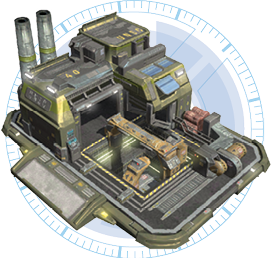
A Vehicle Depot contains the heavy equipment and crew to assemble vehicle kits. Hydraulic cranes serve as the muscle to move everything from Cobra chassis, Scorpion armored plates, and the impressive selection of weaponry that these vehicles can bring to bear. The parts may take a while to arrive, but when the engine from a new Scorpion fires up in the Vehicle Depot, the rumble is felt all across the base.
Vehicle Depot (Building)
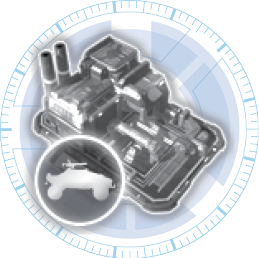

Building Class: Trains Vehicles
Units Trained: Scorpions (and upgrades), Grizzly Tanks (fully upgraded Scorpions; Forge only), Cobra (and upgrades), Wolverine (and upgrades)
The UNSC Vehicle Depot constructs the ground vehicles for the UNSC army. Vehicle technology upgrades can also be found here. Usually a player opts for either a land or air-based contingent during the middle stages of battle, although you can take a chance and ignore the Barracks and leave your base prone early on to create the two Reactors necessary to build this structure. However, once you do, your options are much more varied, as you now have access to three very impressive vehicles (which are detailed later into this chapter). A Vehicle Depot is usually placed in a base, but judge your opponent’s actions to deem whether one is necessary. Naturally, many other factors should be considered, too, such as if you’re playing as Forge and want to upgrade to Grizzlies, and whether your foe is Turtling and you have time to spend upgrading vehicles.
Air Pad
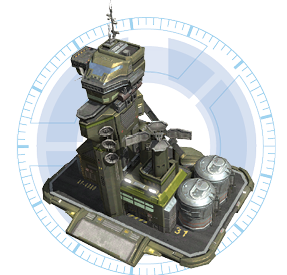
Air superiority can be of vital importance, not only for intelligence gathering but also for tactical strikes at your enemy’s weak points. A UNSC Air Pad is a surprisingly sophisticated structure that houses the maintenance crews required to refit, repair, and rearm Hornets, and it houses banks of simulation pods to train pilots in everything from the basics to advanced tactical maneuvers. Desperate times can call for desperate measures, and on more than a few occasions, Firebase commanders have thrown any able bodies they’ve had at their disposal into the simulators for a crash course in operating the Attack VTOL-14. With the Spirit of Fire at your disposal to provide trained air crews, chances are you won’t have to resort to these kinds of unorthodox procedures.
Air Pad (Building)

Building Class: Trains Aircraft
Units Trained: Hornet (and upgrades), Hawk (fully upgraded Hornets; Anders only), Vulture (and upgrade)
The Air Pad creates the various UNSC air units. Air-unit technology upgrades can also be found here. Opting for air superiority depends on your chosen leader (it is always recommended for Anders); on whether your foe has antiair weaponry (such as Anders’s Cryo Bombs); and whether you wish to use Hornets, as Vultures are exceedingly difficult to manufacture early on due to their Tech level and Supply costs. Both vehicles are showcased later in this chapter. Another way to decide whether Air Pads are useful sooner rather than later is the topography of your map; if there are numerous gullies, narrow roads, and rocky terrain, opt for aircraft that can easily navigate over these obstacles.