
Air Pad Units
Hornet
Hit Points:

Damage Caused:

Movement:

Hornets are the main UNSC air unit. They come armed with Gatling Cannons and explosive rockets, which give them more-than-adequate offense against most enemies.
Base Unit
Upgrade #1: Wingmen

Weapon Type: M19 SSM Rocket Launcher (x2)
Adds a couple of Marines riding shotgun to augment damage capabilities.
Upgrade #2: Chaff Pod

Weapon Type: Class-2 Guided Munition Launch System (x2)
Hornets gain the passive Chaff ability, which is used to distract and divert incoming missiles.
Upgrade #3: Hawk Super Unit (Anders Only)

Weapon Type: Side- mounted Tri-Barreled Chain Gun (GUA-23/A linkless feed .50 BMG rounds), H6 Spartan Hawk Laser
Upgrades Hornets to Hawk super units. Equipped with laser beams, Hawks are fearsome combat units.
Hornet Overview
|
Unit Class: Main Air Strengths: Excellent at attacking all unit types and ignoring terrain difficulties. Weaknesses: Light armor, and susceptible to attack from a wide variety of foes. Accessed via: Airpad |
The Attack VTOL-14, or “Hornet,” is a tremendously versatile, single-seat support aircraft. The Hornet is often used as close air support to UNSC forces and can also be seen flying alongside larger craft such as the Pelican. This fast attack vehicle is a versatile antiair unit, but it can also take the fight directly to the enemy’s ground units. Having a few Hornets in a battle can really turn the tide in the UNSC’s favor.
Tactics
The mainstay of UNSC air combat, and much easier to construct than a Vulture, the Hornet moves fast through the skies, naturally avoiding terrain that can bog down ground units.
Due to their impressive mobility, Hornets are especially useful to raid bases or to face foes with a teammate; you can send them quickly to help bolster forces or attack enemies before they realize they’re exposed.
Unfortunately, Hornets suffer when attacked by a large number of other units, such as Marines, Grunts, Warthogs, Ghosts, and Wolverines. Expect heavy casualties if the enemy constructs these troop types.
Hornets have a passive Rocket ability as a special weapon, and this inflicts the largest portion of the Hornet’s attack damage against vehicles and buildings. Therefore, it is important to employ hit-and-run tactics, launching a barrage and retreating to recharge.
Professor Anders can upgrade her Hornets a stage further into fearsome flying machines called Hawks, which are stronger than Hornets and have amazing offensive capabilities; they are exceptional for raiding enemy bases or quickly darting in, raking a couple of tanks and fleeing before the foe can get a shot off.
Hornets are most commonly used when playing in a defensive role; create and upgrade your Turrets to protect your base while you simultaneously mass Hornets. Once you have a small group of Hornets, chart a path to an enemy base and concentrate your firepower on their Turrets and buildings. Once the enemy begins to retaliate, retreat at speed with minimal damage to your forces.
If the enemy has multiple bases, or you’re playing a team game, try flying from base to base to keep your foe guessing. While the foes are occupied blasting your Hornets, your team can increase Tech levels and build harder-hitting units.
Vulture
Hit Points:

Damage Caused:

Movement:

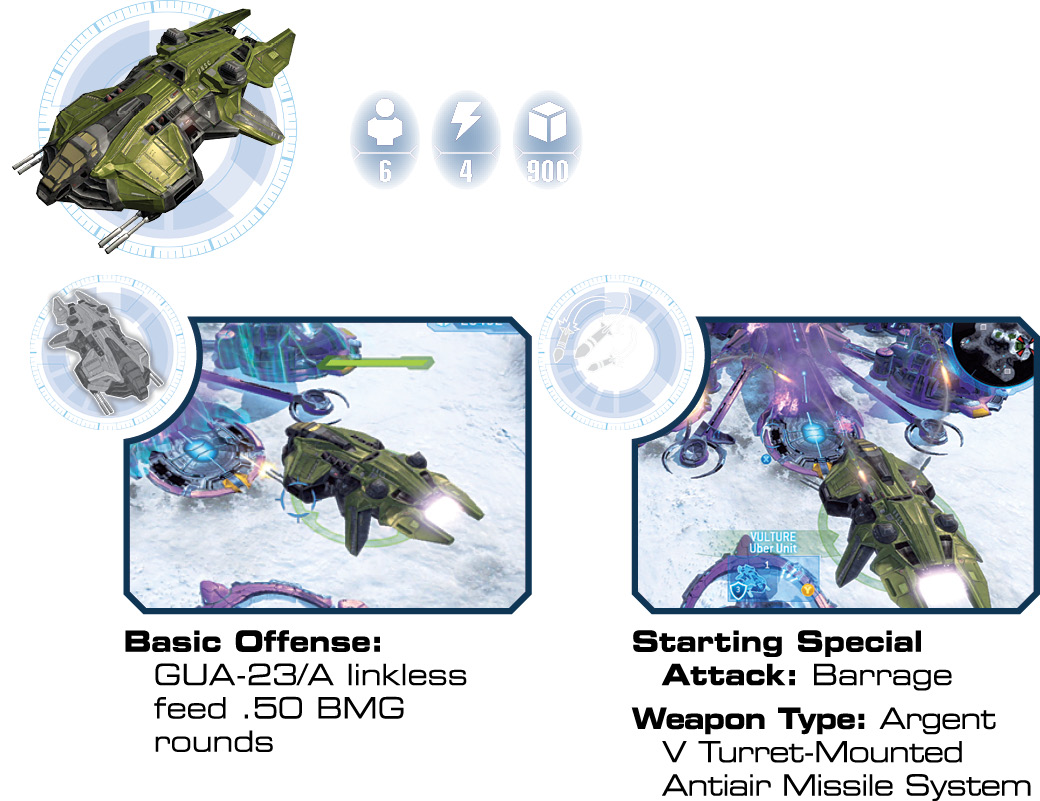
Vultures are the most advanced UNSC war machine. Though costly to produce, Vultures dish out damage at an alarming rate.
Base Unit
Upgrade #1: Mega Barrage

Weapon Type: A74 Sylver Vertical Missile Launcher with Anvil IV ASM Missiles
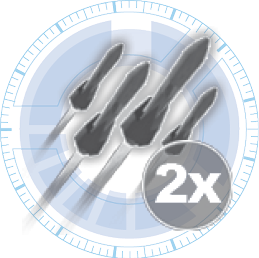
Doubles the number of missiles in each salvo of the active Barrage ability.
Vulture Overview
|
Unit Class: Uber Unit Strengths: Well-armored, devastating salvos, and fearsome reputation Weaknesses: Quite slow-moving, susceptible to the Cryo Bomb Accessed via: Air Pad |
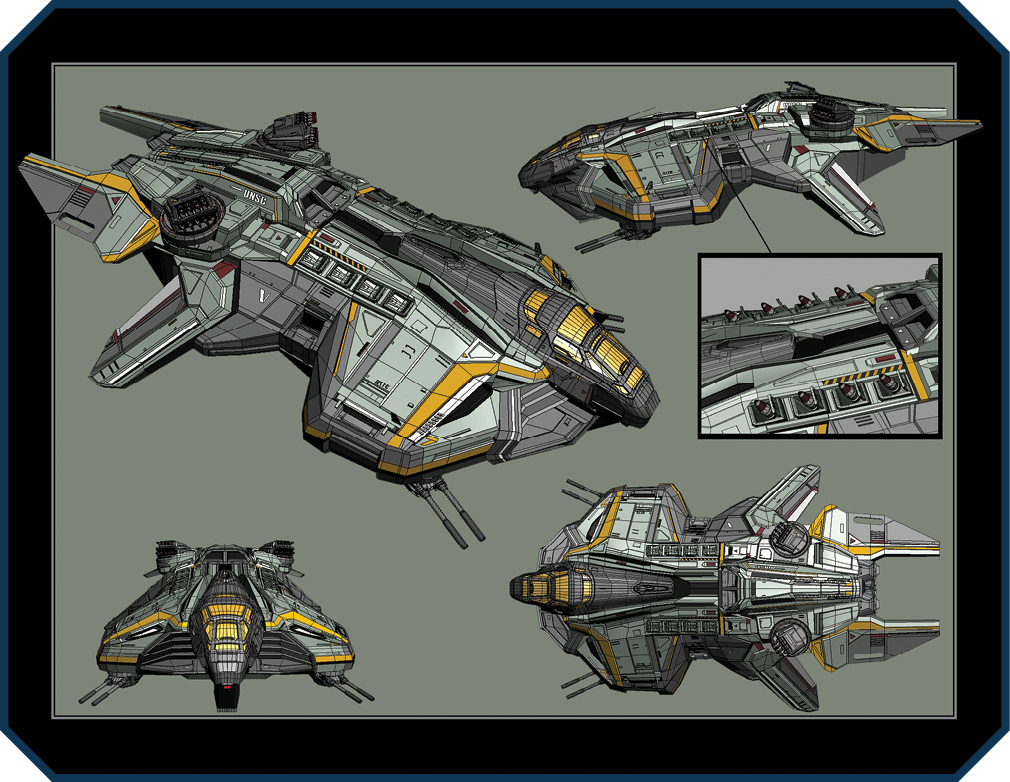
The Vulture is one of the UNSC’s most powerful units; it is a highly armed flying assault tank packed to the brim with weapons. The Vulture is the largest aircraft fielded by the UNSC and is designed to deliver massive damage to enemy ground troops after air superiority has been achieved. It is slow-moving but carries an impressive armament of two twin autocannons and rocket silos that can be used to deliver a devastating barrage to enemies in a wide area. Crewed by a highly trained UNSC pilot and gunners, the Vulture is an expensive unit and is usually reserved for difficult or lengthy battles. Being slow, it is vulnerable to antiaircraft fire and enemy aircraft, but it is surprisingly resilient.
Tactics
These flying tanks are large and slow-moving, but no more so than a Scorpion. Think of the Vulture as the UNSC’s powerful end-game unit. It isn’t advisable to create Vultures instead of other troop types, as the Tech level required means you’ll be swarmed by all but the most timid of foes before you have a chance to use them.
Be aware of the large costs involved in Vulture creation; don’t try to create one if you don’t have at least six free Population!
If your foe hasn’t figured out what you’re doing (which is a lot easier if you’re playing a map with Reactor Hooks), Vultures are a very nasty surprise and are usually hard to deal with. If you see enemy Vultures, you’ve let your foe build up his forces for too long!
Spartans cannot Jack Vultures, making them a good choice if you’re having difficulty countering them otherwise.
Once you utilize the Vulture’s Barrage ability, you’ll find it excellent and effective against all ground troops and buildings, and you can employ the hit-and-run tactics favored by airborne forces.
Vultures are very slow, but this is tempered by a huge amount of armor, allowing it to last longer than any other UNSC unit under bombardment. In fact, you can lure your foe into turning all their attention to a Vulture, then using faster and sneakier units to outflank and bewilder your foe.
If you manage to acquire a complement of Vultures, they are exceptionally useful when supported by Wolverines if you’re fighting the Covenant or when supported by Scorpions if you’re battling the UNSC. The reason is simple: The two units complement each other and counter any combination of attacks from the opposition, allowing you to blast away the remaining units with impunity.