
SimCity Guide Essentials Zoning
Zoning
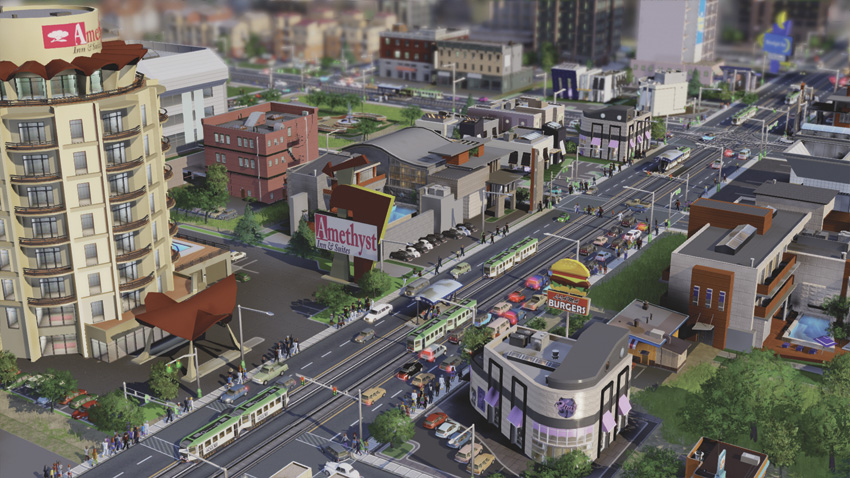
Ready to populate your city and make some money?
Designating residential, commercial, and industrial zones spurs the construction of houses, shops, and factories, instantly creating multiple sources of tax revenue for your city. After plopping down all your utilities, you’ll need plenty of income to offset those hourly operational costs. But there’s more to zoning than setting aside plots of land for development. In this chapter we take a detailed look at how residential, commercial, and industrial zones function as well as offer some advice to help optimize happiness and profitability throughout your city.
RCI Overview
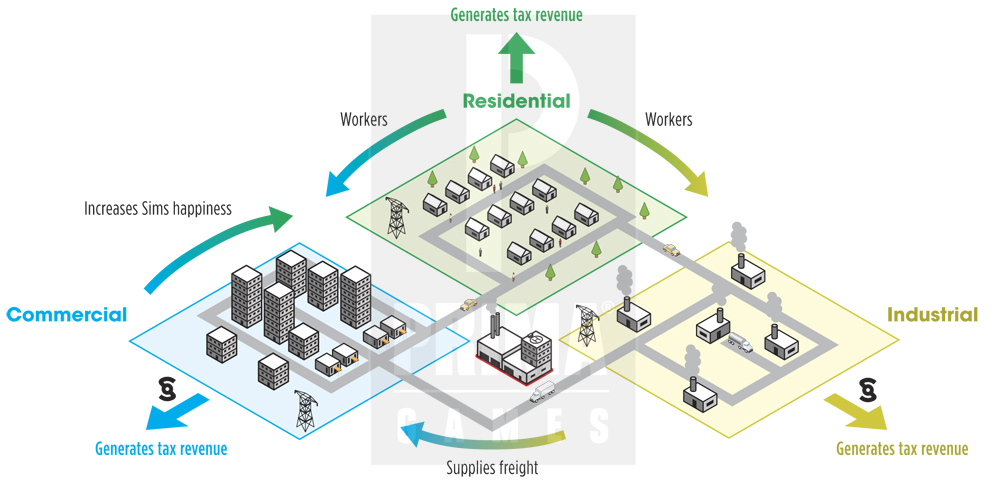
So how does zoning work? The accompanying diagram illustrates the basic symbiotic relationship between residential, commercial, and industrial zones. All Sims live in residential zones and they can work in commercial or industrial zones.
The factories in industrial zones produce goods, called freight. The freight is shipped to shops in commercial zones where Sims can purchase these manufactured goods with money. By purchasing goods in shops, Sims gain happiness.
Commercial and industrial zones also earn their own form of happiness, called profit. In turn, all zones pay taxes, supplying the city with vital revenue necessary to build infrastructure and supply utilities and services. Sims who have no job also have no money and cannot buy happiness—the same is true if there are no shops where they can spend their money. Industrial factories lose profit if they don’t have an adequate outlet for their produced freight.
Likewise, commercial shops have reduced profits if they don’t receive enough freight from factories or shoppers from residential zones and tourism. As happiness and profits drop, so does tax revenue. It’s all a very delicate balancing act. As Mayor, it’s your job to provide the proper balance of zoning to ensure all Sims are happy and all shops and factories are profitable.
Residential Flow
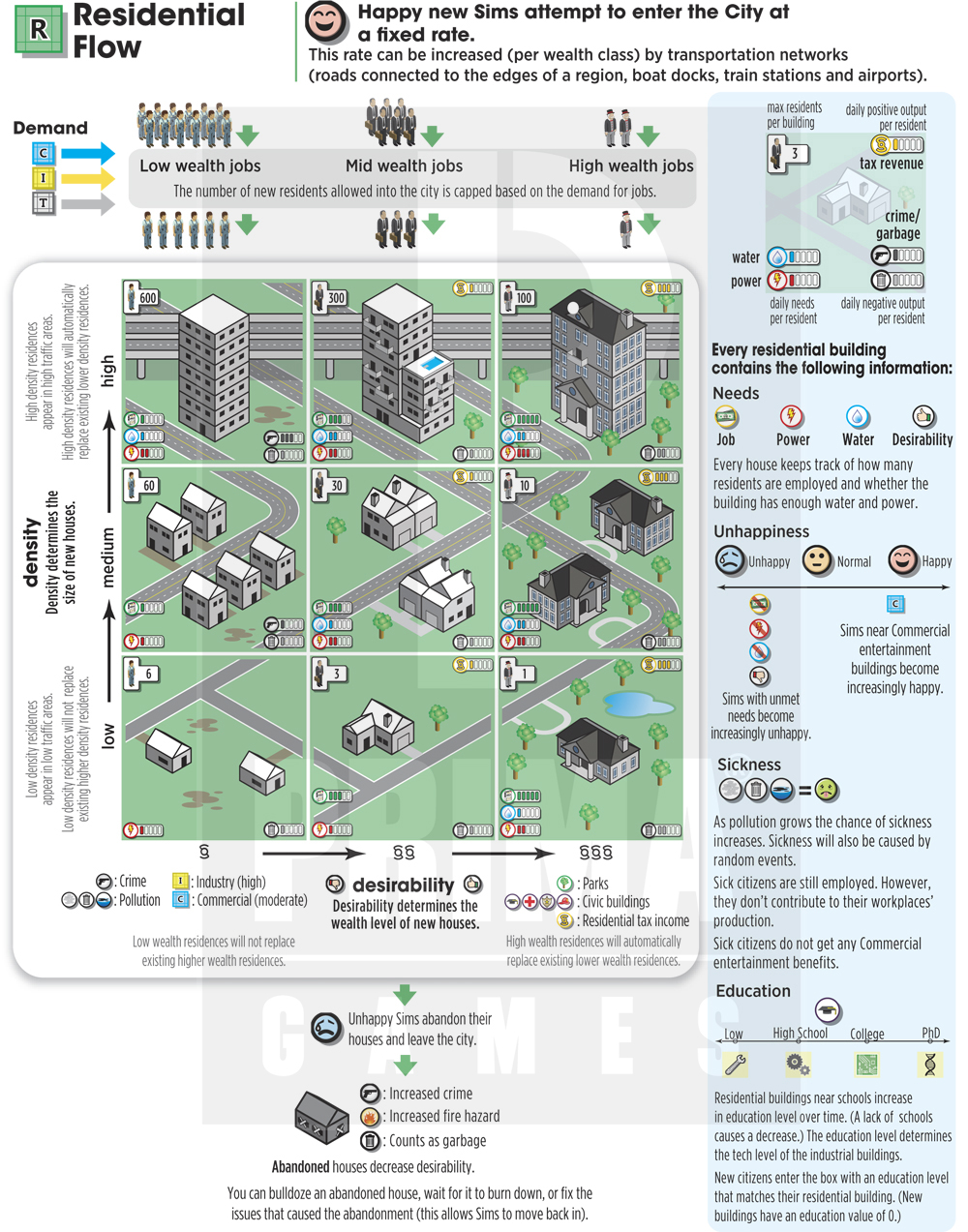
Lead Designer Stone Librande designed this diagram to help explain the flow of activity in the residential zones. Think of the diagram as a Pachinko machine, with Sims entering through the top and filtering down into various residences. As the diagram illustrates, Sims enter your city based on the number of available jobs in your city and region’s commercial and industrial zones.
They will then occupy an available residence based on their wealth—low wealth Sims seek low wealth (
 ) residences, medium wealth Sims live in medium wealth (
) residences, and high wealth Sims move into high wealth (
) residences.
) residences, medium wealth Sims live in medium wealth (
) residences, and high wealth Sims move into high wealth (
) residences.
The type of residences available is based on land value. Density is then governed by happiness and access to roads with differing densities. By clicking on individual residential buildings you can determine the current needs/concerns of the Sims occupying it. A quick glance at a few residential buildings can reveal problems you can address to increase each Sim’s happiness.
Residential: Points to Remember
- Zone residential to attract houses.
- Residents (workers, shoppers, kids) live in houses.
- Workers earn money at factories and shops.
- Shoppers spend money at shops to buy happiness.
- Build parks and services to attract wealthy houses.
- If a building can’t pay rent it will go abandoned.
- When low wealth Sims have no money to pay rent, they abandon their houses and become homeless.
- Medium and high wealth Sims leave town when they abandon their homes.
Commercial Flow
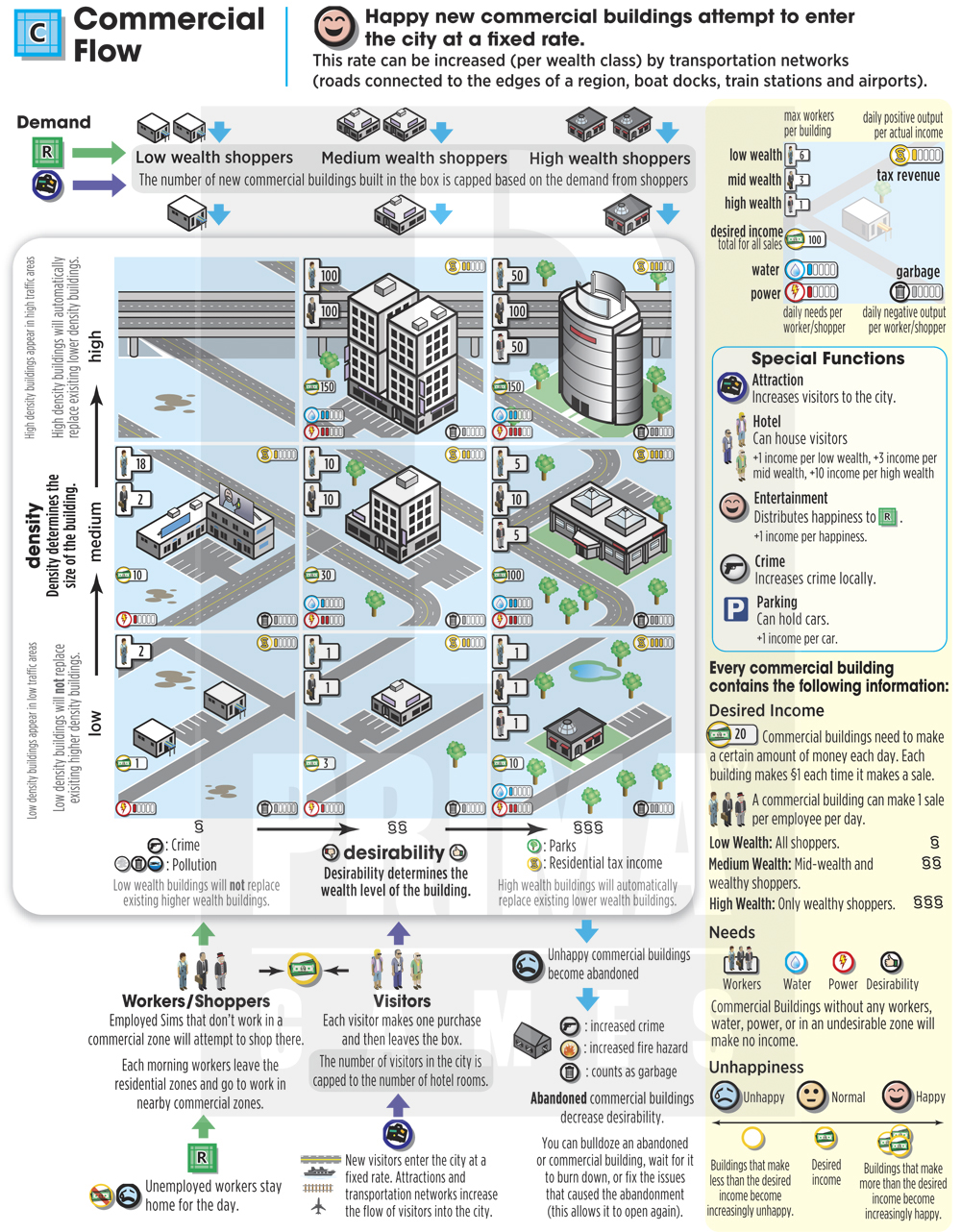
The demand for commercial buildings is driven by shoppers. Shoppers are comprised of Sims living in a city as well as tourists visiting a city. Shops open throughout the city based on the demand (and wealth) of shoppers—low wealth shops (
) open to cater to low wealth shoppers, and so on.
The land value and tax revenue of nearby residential buildings also influence the types of shops opening in an area—high-end shops will not open in areas with low land value, low tax revenue, or high crime and pollution. So if you’re having trouble attracting shops catering to high wealth Sims, consider building parks nearby to increase land value (and decrease pollution) while expanding police services to deal with crime.
Shops also have specific needs to stay in business, including workers, water, power, and most importantly, profit. Click on any commercial building to see if its needs are being met. Happy, profitable shops will increase in density when adjacent roads are upgraded to accommodate higher density buildings.
Commercial: Points to Remember
- Zone commercial to attract shops.
- Shops create jobs.
- Shops sell goods to shoppers and tourists.
- Higher wealth shops serve higher wealth customers.
- If a shop can’t sell enough goods it will go abandoned.
Industrial Flow
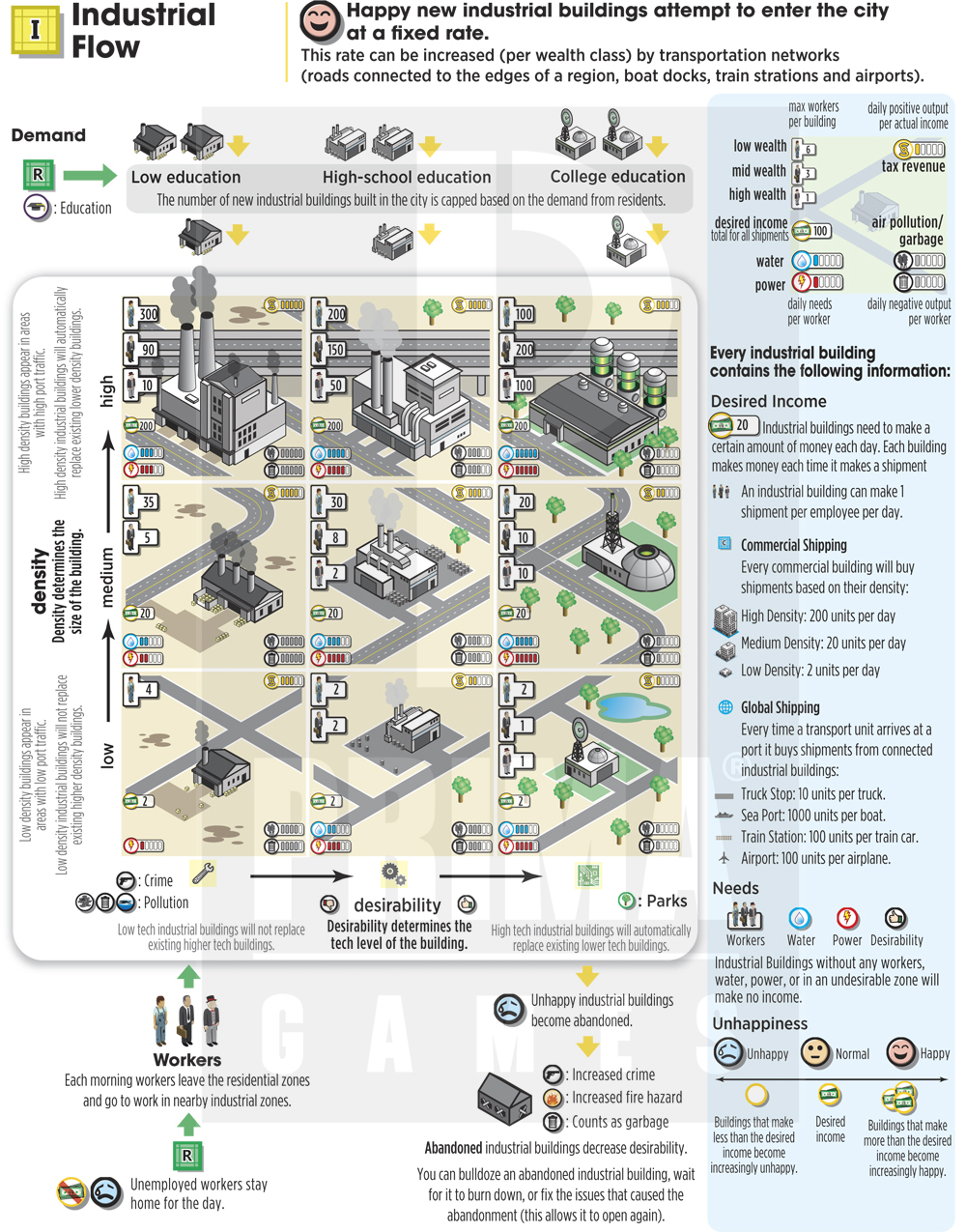
Industrial zones are responsible for generating the bulk of jobs in a city and throughout the region. There are three tech levels of industry available based on the education level of the available workforce.
Dirty industry is most common in areas with little or no education, resulting in factories that belch pollution into the air. Clean industry appears when an adequate number of Sims have a Community College education. High tech industry is only available after a University has been built.
The growth and success of industry can be affected by other factors too, such as crime and pollution. So use parks to scrub out pollution and maintain a robust police presence to discourage criminals. Like their residential and commercial counterparts, industrial buildings have specific needs to maintain happiness and profitability.
Basic needs include workers, water, and power. In addition, industry accrues profit by shipping freight to commercial shops—if there aren’t enough shops to ship to, profits will decrease. Freight can also be shipped to the global market through Trade Depots, Trade Ports, and Cargo Terminals at Municipal Airports, serving as a secondary outlet when freight output exceeds local demand. Click on any industrial building to view its density, tech level, and needs.
Industrial: Points to Remember
- Zone industrial to attract factories.
- Factories provide jobs and make goods.
- Factories ship freight to shops, Trade Depots, Trade Ports, and Cargo Terminals at Municipal Airports.
- If a factory can’t ship enough goods it will go abandoned.