
SimCity Guide Essentials City Specialization
Electronics
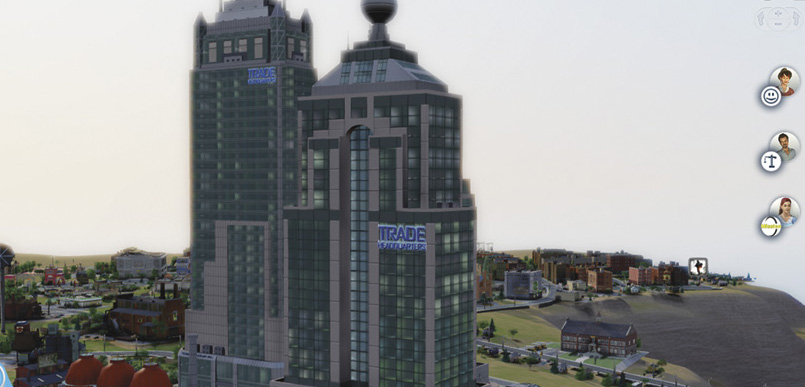
You can begin dabbling in the electronics specialization before you even build a Processor Factory. The Electronics Division at the Trade HQ allows you to import and export processors, TVs, and computers from a Trade Depot.
Surely all those Sims graduating from the Community College and University are looking for better jobs than those offered by your dirty factories and mines. (Not that there’s anything wrong with working in a factory or mine.) Maximize the potential of your city’s exceptional brainpower by pursuing the lucrative electronics specialization.
By utilizing two basic resources—alloy and plastic—you can foster a high tech empire through the production of processors, TVs, and computers. But fair warning, the electronics specialization isn’t cheap and it can’t be initiated early on.
Instead, you must slowly mold your city into a gadget-producing powerhouse, establishing higher institutions of learning to assemble an educated workforce. It’s equally important to secure a steady supply chain, ensuring your city has access to plentiful volumes of alloy and plastic.
These can be generated locally, imported from the global market, or gifted by neighboring cities. If you think your city is up for the challenge, set your sights on the electronics biz and become the envy of all mayors in the region.
Processor Factory
-
Cost:
 160,000
-
Operational Cost:
700 per hour
- Production Rate: 2,400 crates/day
- Prerequisites:
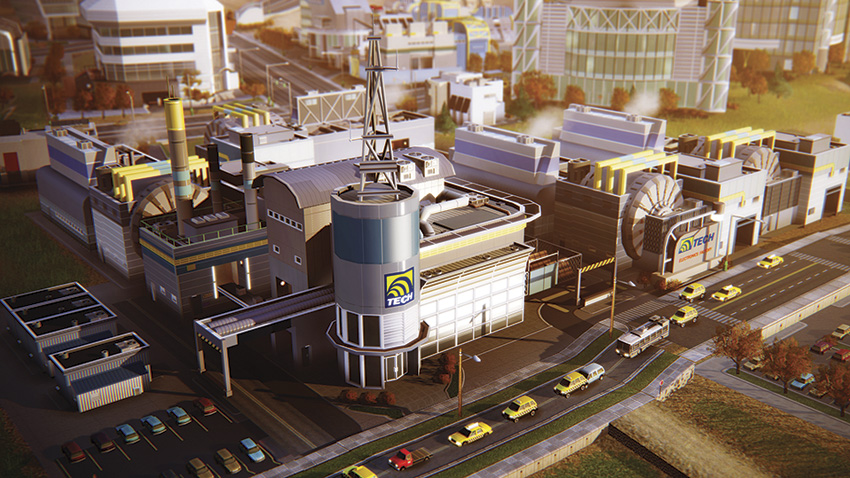
- Description: These days, it seems there are processors in everything. Those should be your processors! Use alloy and plastic to create processors to sell on the global market via a Trade Depot. You can import alloy and plastic from the global market if you need to. Educated workers will increase the factory’s efficiency.
If you’ve managed to nurture a city where education is a priority, you stand a good chance of gaining access to the Processor Factory. To unlock this facility you need a minimum of five clean industrial (tech level 2) buildings in your city.
The only way to encourage the appearance of these buildings is through an educated workforce produced by a Community College or University. But having an educated workforce is much more than a prerequisite—it’s an absolute necessity to run a successful Processor Factory.
So even after you have five clean industrial buildings, keep investing in higher education to supply this factory with more skilled workers. Next, you need access to plastic and alloy to create processors. If you have a Smelting Factory and Oil Refinery in your city, supplying the Processor Factory with enough raw material should be no problem.
However, if you’re missing one or both of these elements, you’ll need to either import it from the global market (significantly adding to production costs), receive it from another city as a gift, or acquire it through recycling. Once the facility is up and running, invest in additional Processor Assembly Line modules to increase production.
Just make sure you have enough trucks to move out all those processors the factory is cranking out. If the product storage lot reaches capacity, the factory will temporarily shut down. To avoid interruptions, add more Delivery Truck Garages and ship these processors out to Trade Depots for export onto the global market.
Or, consider storing all these processors at a Trade Port, using its massive Processors Storage Lot to warehouse up to 1,000,000 crates. Eventually you can use these processors to supply the Consumer Electronics Factory, producing computers and TVs. But you’ll need to sell off some of those processors if you want to unlock the Consumer Electronics Division at the Electronics HQ, necessary to unlock the Consumer Electronics Factory.
Modules
Processor Factory Sign
-
Cost:
200
- Operational Cost: None
- Maximum Modules: 1
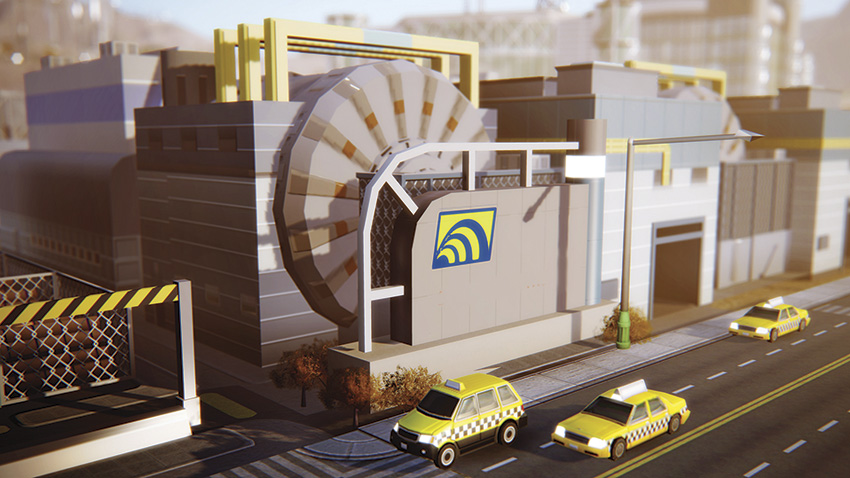
- Description: This way, the future!
Delivery Truck Garage
-
Cost:
10,000
-
Operational Cost:
50 per hour
- Truck Capacity: 200 crates
- Maximum Modules: 4
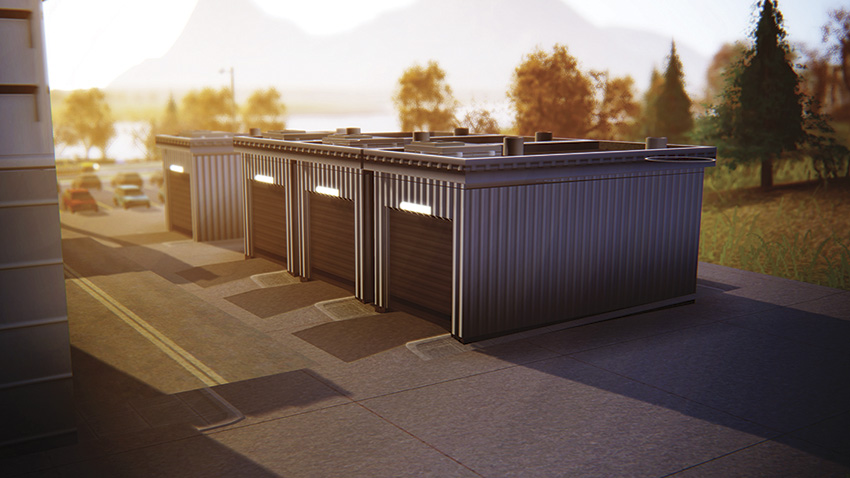
- Description: Within this garage are trucks that deliver your processors around town to the industry that uses them, Trade Depots, and Trade Ports. Under the hood of those trucks…you guessed it: more processors.
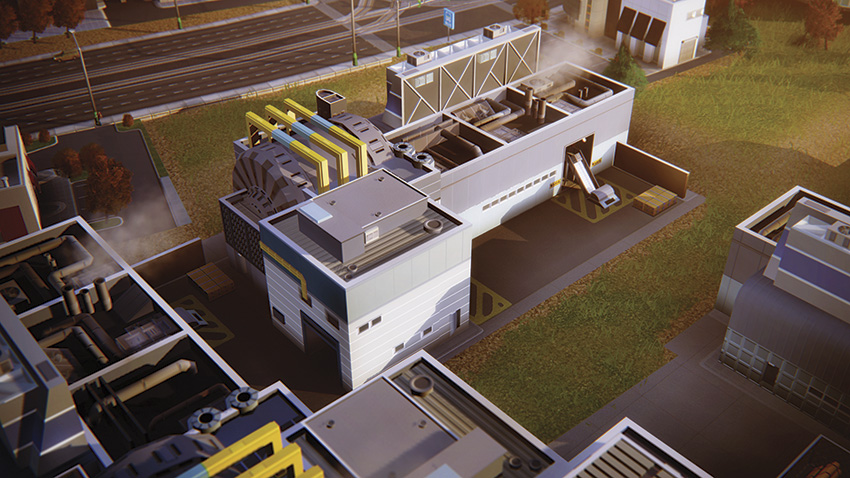
Processor Assembly Line
-
Cost:
50,000
-
Operational Cost:
350 per hour
- Production Rate: 2,400 processors/day
- Maximum Modules: 4
- Description: At the digital computing heart of all technology lies the humble processor! Amass even more processors in your factory with this additional assembly line.
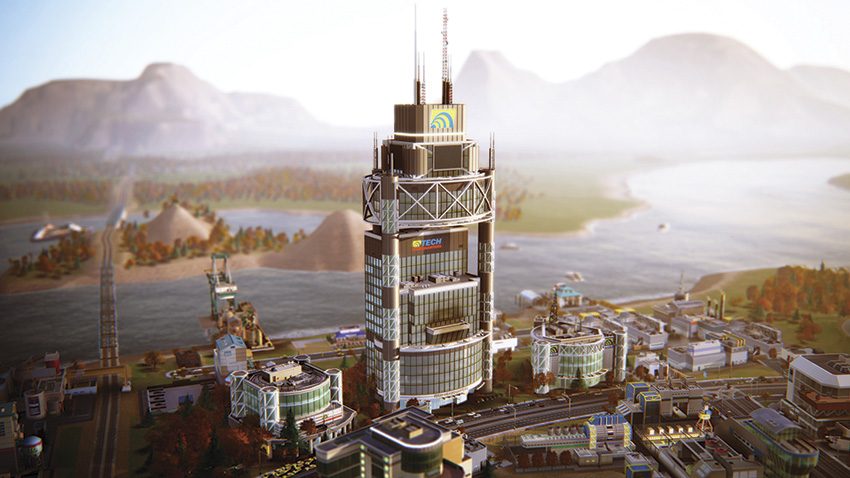
Electronics HQ
-
Cost:
37,500
-
Operational Cost:
450 per hour
- Prerequisites:
- Manufacture 500,000 processors in a day
- Description: Embrace technology and prepare for our eventual robot overlords! Crank out processors to upgrade and improve your HQ. Research new technological innovations in consumer electronics. Upgrades available based on electronics daily profit.
Electronics HQ Upgrades
| Level | Name | Criteria | Unlock |
|---|---|---|---|
| 1 | Electronics HQ | Manufacture 7,200 crates of processors in a day. | One division of your choice. |
| 2 | Electronics, Co. |
Earn
1,500,000 in electronics daily profit.
|
One division of your choice. |
| 3 | Electronics, Inc. |
Earn
5,000,000 in electronics daily profit.
|
One division of your choice. |
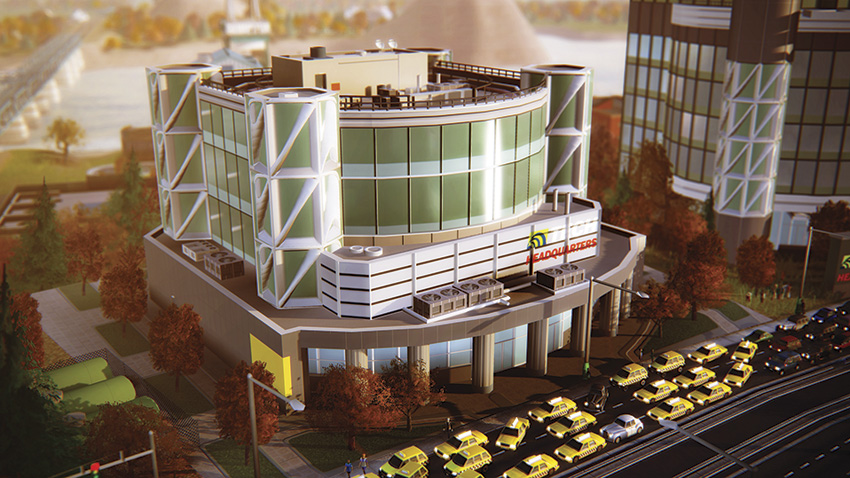
As your Processor Factory ramps up production with additional Processor Assembly Lines, you’ll eventually unlock access to the Electronics HQ. This is another modern, glass-skinned office building, making a classy high tech addition to your city’s skyline.
Like the other city specialization HQs, this building can be upgraded by reaching specific sales goals—this means you’re going to need to sell off some of those processors at the Trade Depot or Trade Port. With each upgrade, the HQ becomes taller and you gain access to one division of your choice.
There are only two divisions available at the Electronics HQ: the Consumer Electronics Division and the Commerce Division. Which division you build first depends on your situation. If you have ample supply of plastic and alloy within your city, go for the Consumer Electronics Division so you can build a Consumer Electronics Factory and begin cranking out TVs and computers.
However, if you have no local access to plastic or alloy, consider choosing the Commerce Division first. This division unlocks the Plastic and Alloy Storage Lots at the Trade Port, ideal for importing large volumes of all the materials you need. But when possible, avoid importing alloy or plastic—it’s much cheaper to produce it yourself at your own Smelting Factory and Oil Refinery.
Modules
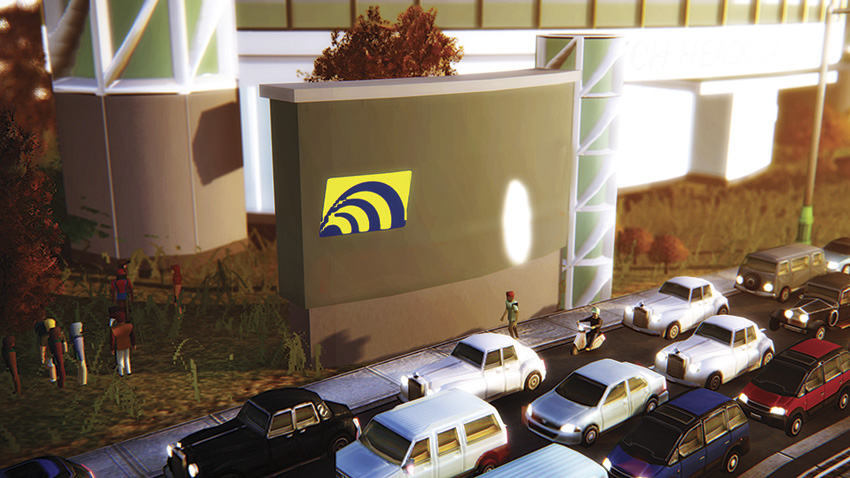
Electronics HQ Sign
-
Cost:
200
- Operational Cost: None
- Maximum Modules: 1
- Description: The address is given as “1337 Haxorz Ave.”, which doesn’t seem correct…
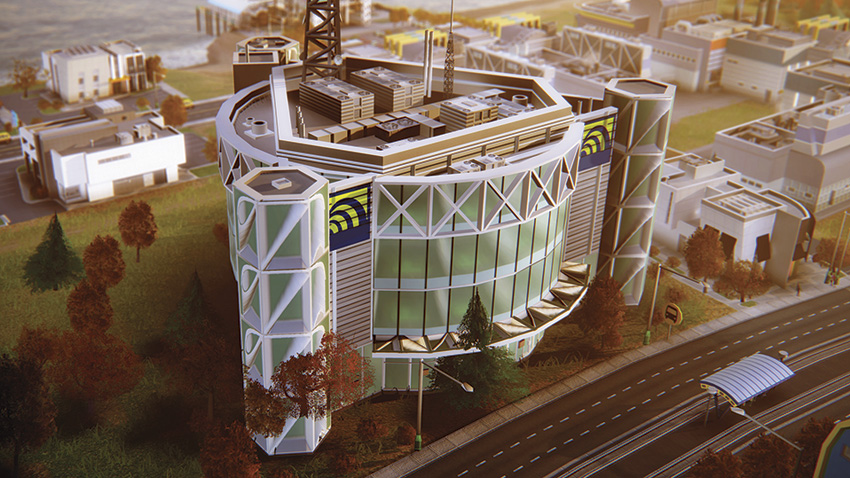
Consumer Electronics Division
-
Cost:
500,000
-
Operational Cost:
400 per hour
- Local Access Granted: Consumer Electronics Factory
- Maximum Modules: 1
- Description: Put your processors to practical use! The Consumer Electronics Division wants your processors in consumers’ homes, inside of TVs and computers.
Commerce Division
-
Cost:
500,000
-
Operational Cost:
400 per hour
- Local Access Granted: Processor, Alloy, and Plastic Storage Lots at the Trade Port
- Maximum Modules: 1
- Description: What use are all those processors if you can’t get them to market? The Commerce Division seeks to solve this problem.
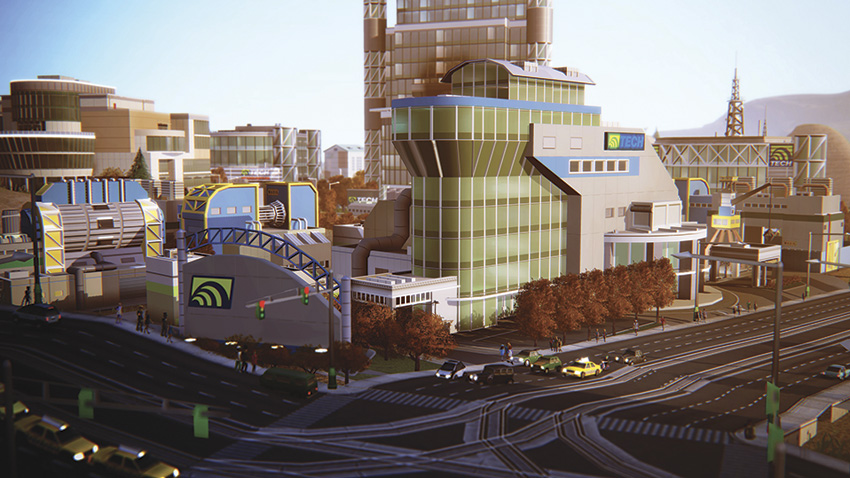
Consumer Electronics Factory
-
Cost:
360,000
-
Operational Cost:
1,200 per hour
- Production Rate: 3,600 crates/day
- Prerequisites:
- Consumer Electronics Division at Electronics HQ
- Description: Take your very useful, high tech processors and put them in TVs, so Sims can fall asleep watching videos of people getting hit in the gut. Sell your TVs for profit on the global market via a Trade Depot. Educated workers will increase the factory’s efficiency.
Immediately after building a Consumer Electronics Division at your Electronics HQ, you gain access to the Consumer Electronics Factory. This is the single most expensive building in the game, so make sure you’re ready for it before you decide to plop it. Otherwise, it will sit idle, draining your treasury while producing nothing.
First off, make sure you have an adequate supply of educated workers in your city produced by a Community College or University. Next, ensure you have a surplus supply of plastic and alloy, taking into account the materials consumed by the Processor Factory. If you have the workforce and raw materials in place, plop the factory and start making TVs from processors and plastic.
The facility comes equipped with one TV Assembly Line—you can add up to two more to ramp up production. Or, if you have access to surplus alloy and processors, plop a Computer Assembly to begin outputting computers.
Click on the factory to monitor its material and product storage lots—you want to keep the material lots full and the product lots empty. If the TV and computer product lots reach capacity, the factory will temporarily shut down. To prevent this, add more Delivery Truck Garages to ship TVs and computers out of the factory at a steady rate.
Transport TVs and computers to a Trade Port where you can either sell them on the global market or stockpile them for a Great Works project—you need TVs for the Arcology and computers for the Space Center.
Modules
Consumer Electronics Factory Sign

-
Cost:
200
- Operational Cost: None
- Maximum Modules: 1
- Description: Shows the way to the Consumer Electronics Factory. Mostly for delivery trucks. It’s frowned upon for consumers to visit the factory themselves.
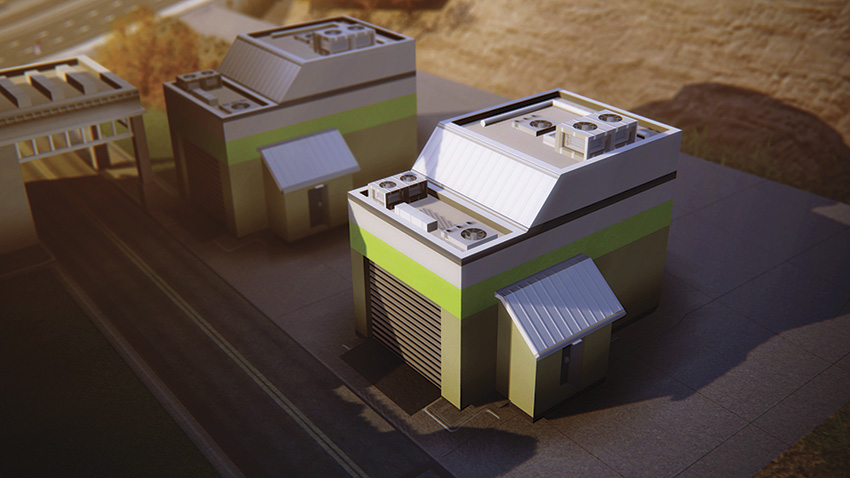
Delivery Truck Garage
-
Cost:
10,000
-
Operational Cost:
50 per hour
- Truck Capacity: 200 crates
- Maximum Modules: 4
- Description: This well-padded truck delivers your TVs and computers to Trade Depots, Trade Ports, or Great Works.
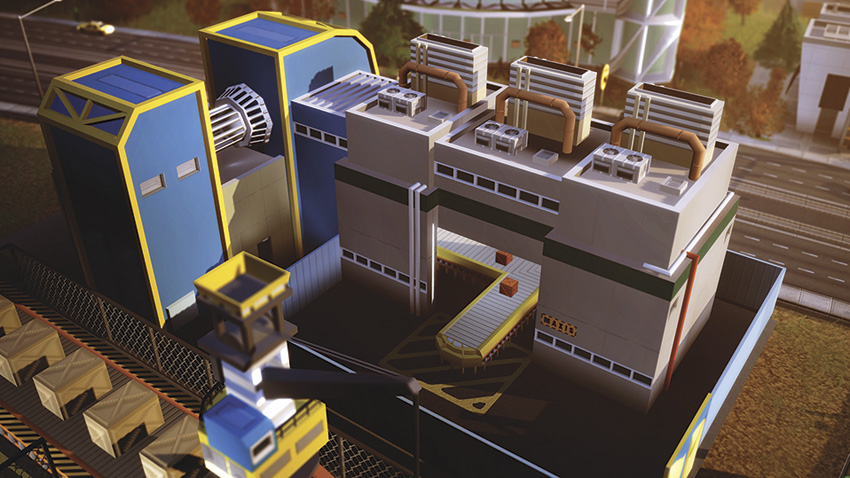
TV Assembly Line
-
Cost:
100,000
-
Operational Cost:
750 per hour
- Production Rate: 3,600 crates/day
- Maximum Modules: 4 (one comes with base)
- Description: How will people watch Action Team 5 on SimNews 5 at 11 without TVs? Create TVs from processors and plastic to sell on the global market. You can import plastic or processors from the global market if you need to.
Computer Assembly Line
-
Cost:
200,000
-
Operational Cost:
850 per hour
- Production Rate: 3,600 crates/day
- Maximum Modules: 4 (one comes with base)
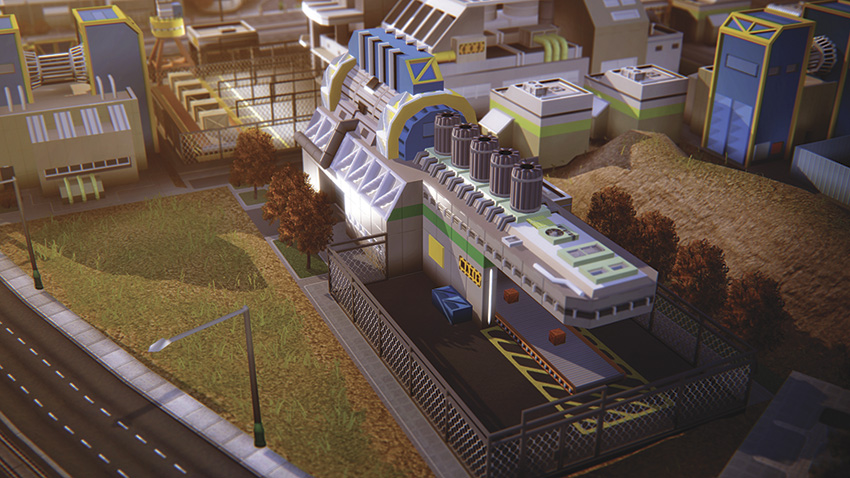
- Description: Sims around the world are desperate to play SimCity ! Use processors and alloy to create computers to sell on the global market via a Trade Depot. You can import alloy or processors from the global market if you need to.
Managing the Electronics Specialization
Of all the city specializations, electronics is by far the most difficult and expensive to get underway, requiring long-term planning and multi-stage development with a heavy emphasis on education. Furthermore, gaining access to the required materials (plastic and alloy) can lead to a cumbersome and costly supply chain.
But if you’re willing to put in the time and effort, producing processors, TVs, and computers is very profitable, more than offsetting all the expenses your city has incurred by investing in education and supporting industries.
Education First
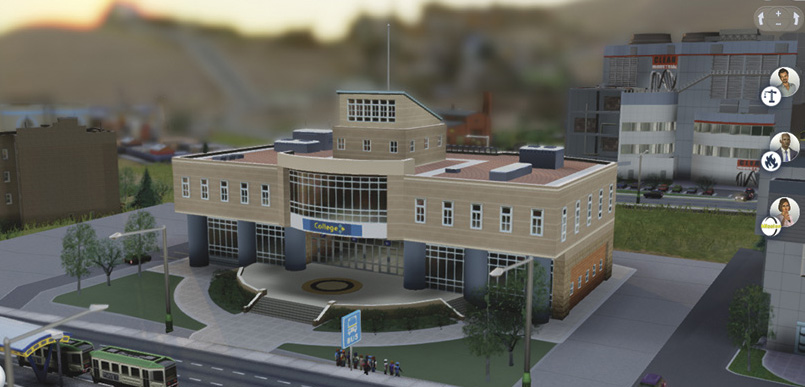
The Community College is the gateway to the electronics specialization, providing access to clean industry as well as a steady supply of skilled workers.
No matter how bad you want to start cranking out processors, TVs, and computers, you can’t just jump into the electronics business from the start. Instead, you need to focus on building a city with a strong emphasis on education. Without a large educated workforce, your Processor and Consumer Electronics Factories will be worthless.
Start off with a relatively balanced RCI city to ensure you have an adequate tax base to afford the various education buildings. Schools generate no income, making them a huge drain on your city’s budget. If taxes aren’t enough, consider turning to other city specializations such as metals or petroleum to help offset the expenses—alloy and plastic produced by these businesses will come in handy later too!
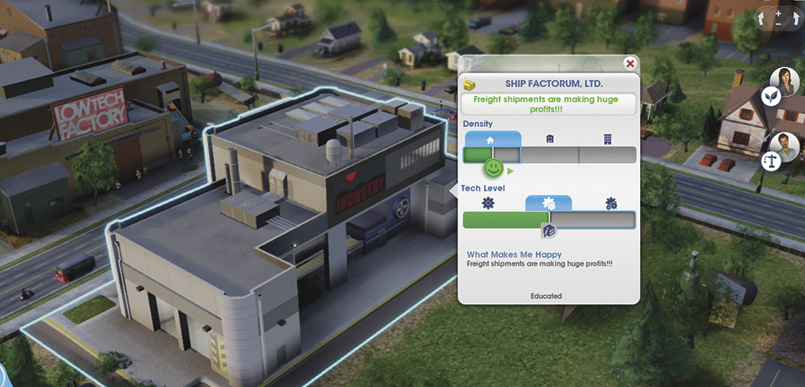
You’ll need at least five clean industrial buildings before you can build the Processor Factory. Build a Community College and zone industrial around it to promote the growth of clean industry.
When you’ve unlocked the Community College, place it in an open area of your city or make room by bulldozing buildings. As students begin enrolling, zone industrial close to the Community College. Initially, dirty (tech level 1) factories will appear.
However, as the education level increases, new clean (tech level 2) factories will appear, attracted by all the educated Sims flowing out of the nearby Community College—yes, proximity makes a difference. Once you have at least five clean industrial buildings, you can begin your electronics business with the Processor Factory.
But never let up on education. If you can afford it, consider placing a University near your Processor and Consumer Electronics Factories to create even more highly educated workers. Once the University is up and running, consider bulldozing your Community College to save money.
One University can supply your electronics buildings with all the educated workers they need. Now you can finally shift your attention to producing processors, TVs, and computers for export or use in a regional Great Works project.
Self-Sufficient Supply Chain
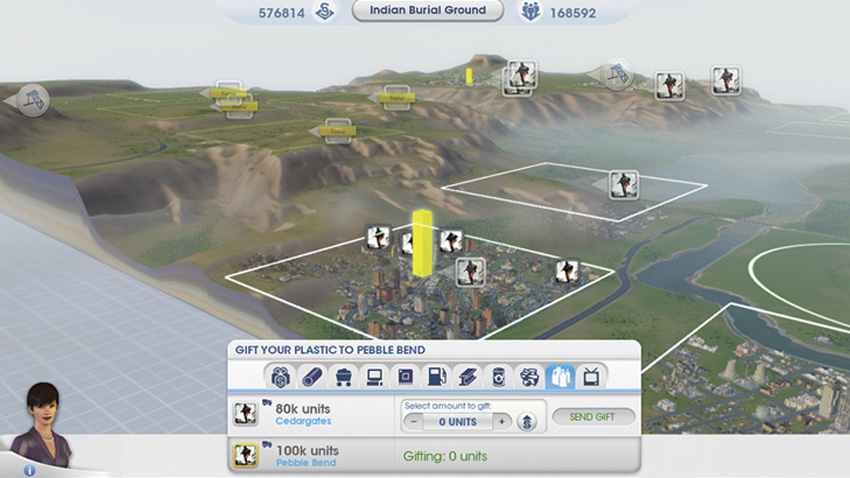
Consider spreading your city specializations across two or three connected cities and use gifting to supply your electronics city with the plastic and alloy it needs to produce processors, TVs, and computers.
Acquiring the plastic and alloy required to produce electronic products can be rather problematic, especially if you’ve selected a city site with no natural deposits of raw ore, coal, or crude oil. Sure, you can purchase alloy and plastic directly from the global market, but doing so is very expensive and may even be cost prohibitive depending on the current market prices.
Therefore, if you’re really intent on pursuing success in the electronics business, do your best to supply your own plastic and alloy—even producing one of these ingredients can make a big difference in your profit margins.
Planning for an electronics business should begin at the very start, before you even choose a city site. Look for a city site with an ample supply of raw ore, coal, and crude oil. City sites with all three natural resources may be difficult to find in an already crowded region, so consider creating a new game in a new region, giving you the first pick.
Alternatively, spread production across two or three cities and then gift alloy and plastic to the city where you intend to start your electronics business—as long as you’re the mayor of each city, you can easily manage the flow of resources free of charge.
This is preferable to cramming metals, petroleum, and the electronics businesses into one city, while still trying to fulfill the education needs of your Processor and Consumer Electronics Factories. The pollution inherent to the metals and petroleum businesses aren’t necessarily the best fit for your smarty pants education city anyway.
Electronics: Points to Remember
- Electronics factories convert simple resources into complex electronics.
- Electronics can be sold to the global market or used in Great Works.
- A Trade Depot or Trade Port is the only way to sell electronics.
- Electronics require various materials (plastic, alloy, processors) to operate.
- It’s cheaper to create your own materials than to purchase them.
- Local industry can ship resources to electronics factories.
City Specialization Achievements
| Icon | Name | Criteria |
|---|---|---|

|
A Lot of Lots | Place 6 unique storage lot types on any Trade Depot or Trade Port. |

|
All Oiled Up | Pump 10,000 barrels of crude oil in a day. |

|
Blast Furnace | Smelt a total of 100 tons of metal. |

|
Dug Too Greedily and Too Deep (Secret) | Mine 100 tons of coal or raw ore in your city to gain access to the Earthquake disaster. |

|
Electrical Magic | Assemble 4,000 crates of processors in a day. |

|
King Coal | Extract a total of 100 tons of coal. |

|
Moving Pictures | Assemble 100 crates of TVs in one day in a single city. |

|
Refined Tastes | Refine 40 barrels of fuel and 40 crates of plastic in a single city in one hour. |

|
To Be, Ore Not To Be | Extract a total of 100 tons of raw ore. |

|
Specialist First Class | Select “Guide Me” for any city specialization. |

|
Trading Empire | Ship 250,000 Global Market export shipments. |

|
You Mean Business! | Plop every City Specialization HQ in the game. |