
SimCity Guide Essentials Education
Education
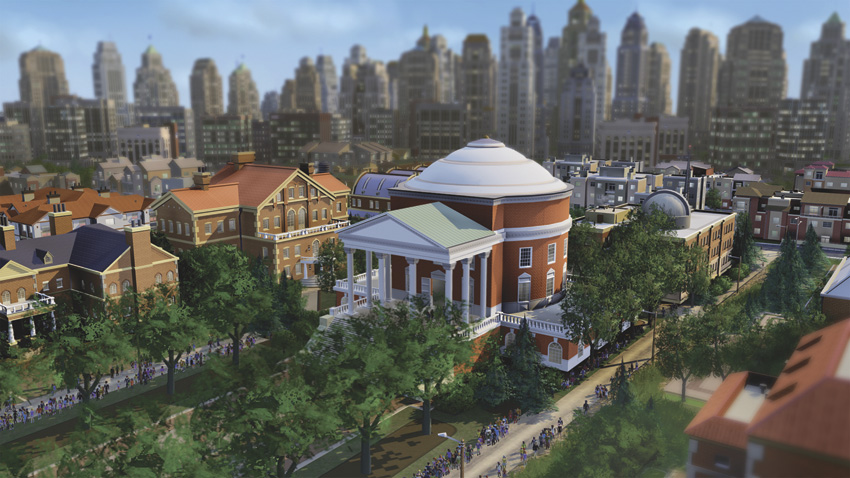
Have you been listening to the protestors gathered outside City Hall?
Sooner or later, medium and high wealth Sims will demand access to education. Providing an educational system will do a lot more for your city than simply appease a few exasperated parents. An educated population benefits the entire city, reducing crime, fire risk, pollution, garbage, and sickness.
Educated Sims also recycle more and consume less power and water, essentials for promoting an environmentally friendly community. But don’t pass the granola yet. Like utilities and city services, schools generate no income, meaning you’ll need to find other ways to fund your educational system.
But if you stay the course and gain access to a Community College or University, you can encourage the creation of clean and high tech industry, resulting in greater tax revenue and far less pollution. So look over the budget and work your fiscal magic to carve out enough funding for at least one school in your city. Do it for the children. They’re the future.
Education Buildings
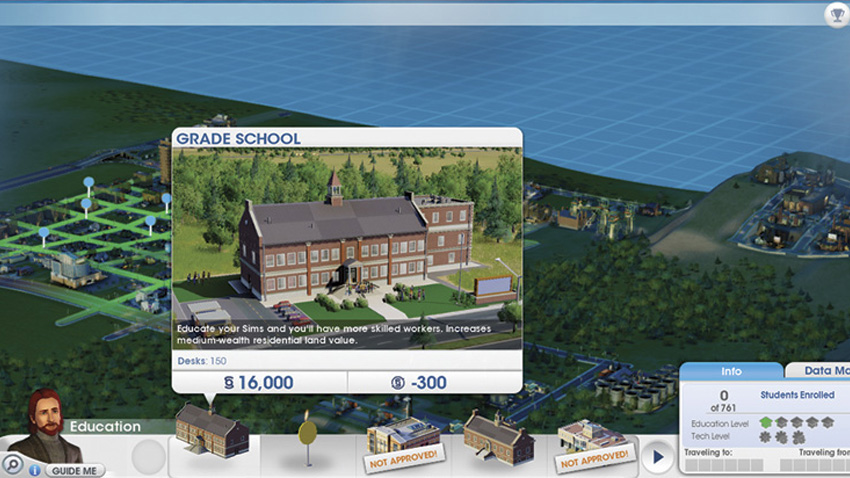
Build a Grade School as soon as you can afford it. Your city’s education level is shown in the Education menu’s info tab, along with current enrollment.
The kids in your city have been idle far too long. It’s time to send them to school…or at least a library. Open the Education menu and browse through the selection of buildings. Initially you can only select the Public Library and Grade School.
But as school attendance increases (and a Department of Education exists in the region) you’ll gradually gain access to the High School, Community College, and University. When it comes to attending a school, Sims aren’t picky—they’ll attend the school closest to their residence.
It’s not uncommon for kids to walk to a Community College or University instead of taking a bus to the nearest Grade School or High School. So don’t feel like you need to provide one type of each school—that would be very expensive.
Public Library
-
Cost:
 10,000
-
Operational Cost:
100 per hour
- Capacity: 200 Sims
- Prerequisites:
- Town Hall
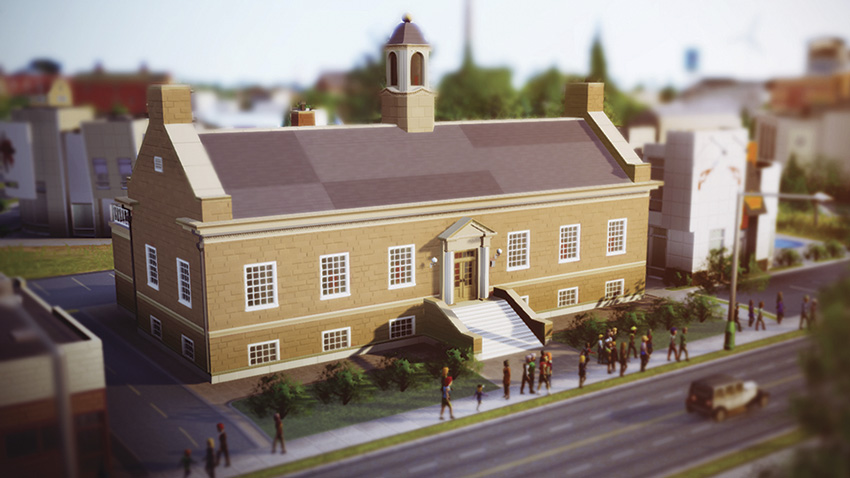
- Description: There is no Sim as loyal as a book. Sims visit the Public Library when they can’t afford to go shopping. As Sims visit the Public Library, your city will gradually become more educated.
Look at all these books! And any Sim can come here for free? What a deal! The Public Library is a cheap way to give your city’s education level the slightest boost. It won’t have the same impact as a Grade School or High School, but it at least gives Sims with no money a place to go and gain happiness, similar to a park.
And unlike the Grade School or High School, the Public Library is open to all Sims, not just kids. It even increases the city’s attraction rating by a small amount, potentially drawing more tourists. Plop the Public Library in a residential area and take note of nearby houses as they light up with green happy face icons. Who wouldn’t want a library in their neighborhood?
Grade School
-
Cost:
16,000
-
Operational Cost:
400 per hour
- Desks: 150
- Prerequisites:
- Town Hall
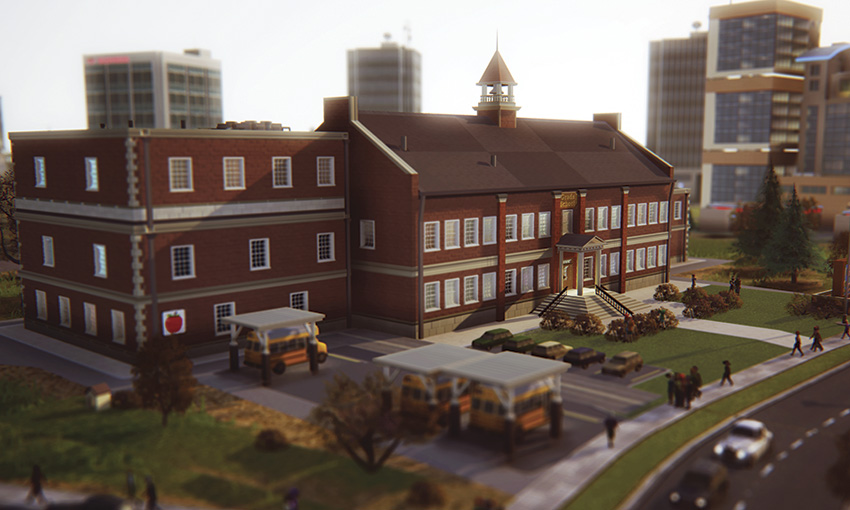
- Description: Educate your Sims and you’ll have more skilled workers. Increases medium wealth residential land value.
Want to get kids off the streets? Then build a Grade School as soon as your city can afford it. Who knows, they might learn something too. This facility is the first step to creating a skilled, educated workforce, helping fill various jobs. But the amount of skilled workers produced by a Grade School is very small when compared to the High School or Community College.
Still, educating kids has numerous benefits, including a reduction in crime by minimizing the chances of a criminal being created. Build the Grade School in a residential neighborhood—it will encourage the construction of medium wealth houses nearby. But not all kids live within walking distance, so provide buses and School Bus Stops to transport all kids in the city to the school.
As enrollment increases, add additional Classrooms to increase the number of available desks, ensuring every kid in the city has the opportunity for an education.
Modules
Grade School Sign
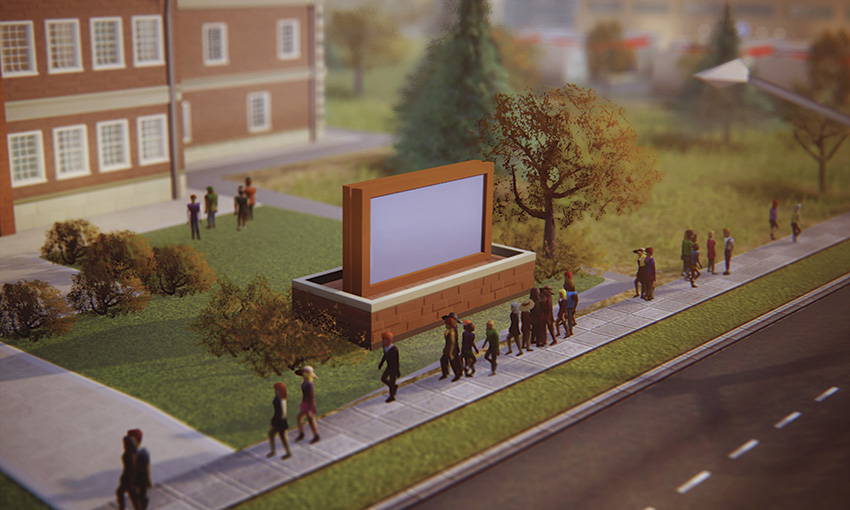
-
Cost:
200
- Operational Cost: None
- Maximum Modules: 1
- Description: Shows students the current events of the week.
Flagpole
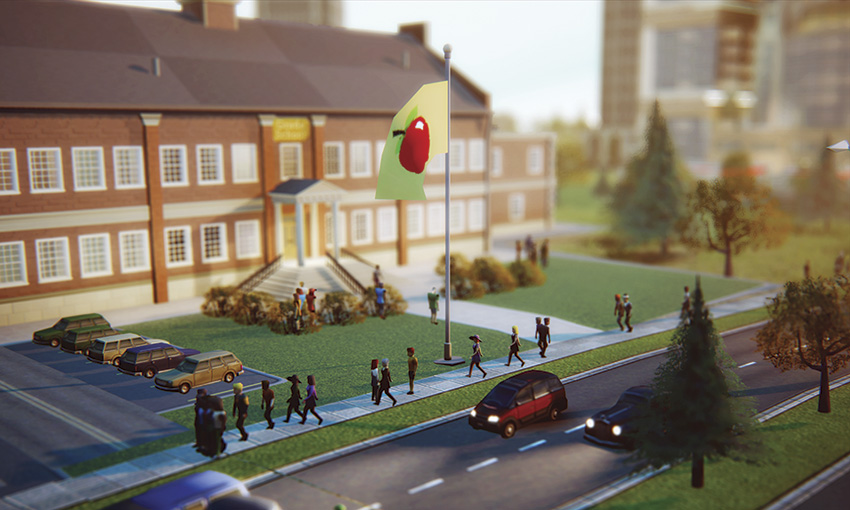
-
Cost:
100
- Operational Cost: None
- Maximum Modules: 1
- Description: Just don’t stick your tongue to it when it’s snowing!
School Bus Lot
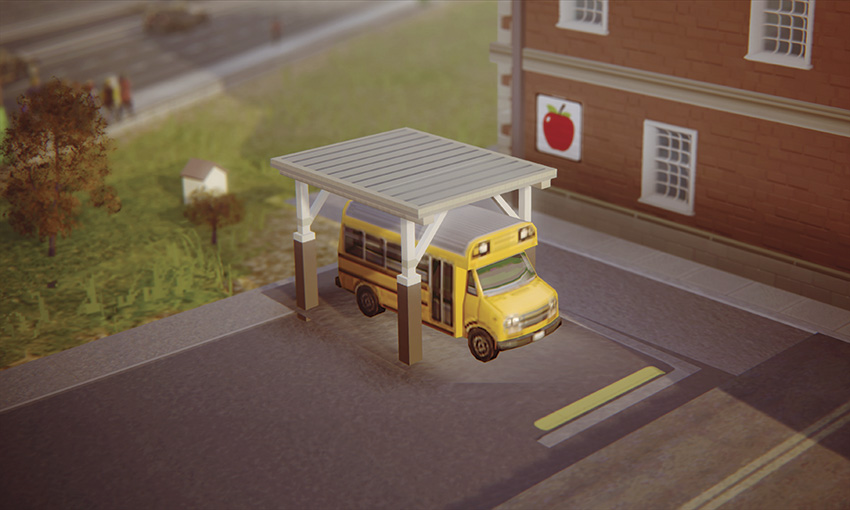
-
Cost:
3,000
-
Operational Cost:
100 per hour
- Buses: 2
- Bus Capacity: 20 Students
- Maximum Modules: 4
- Description: The School Bus Lot adds extra school buses that can be used to pick up more kids around the city.
Classrooms
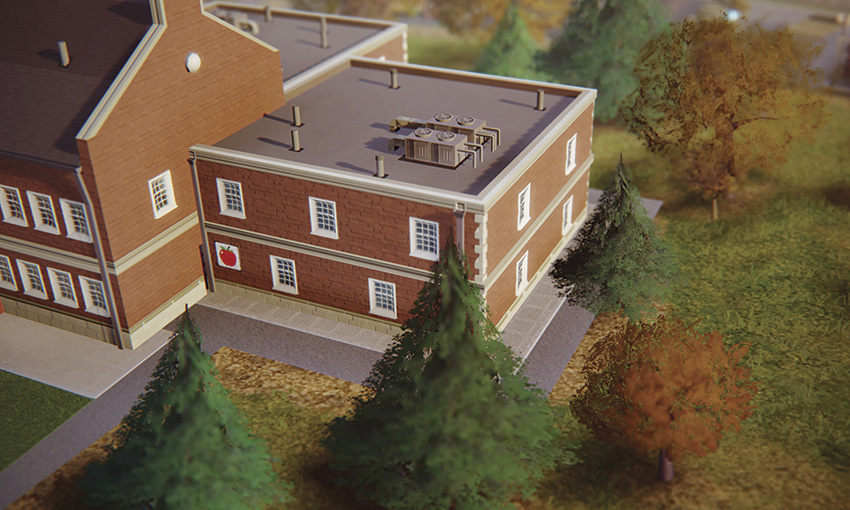
-
Cost:
10,000
-
Operational Cost:
200 per hour
- Desks: 200
- Maximum Modules: 4
- Description: Requires more teachers and staff, but lets you teach more students each day.
Top Floor Classrooms
-
Cost:
10,000
-
Operational Cost:
200 per hour
- Desks: 200
- Maximum Modules: 4
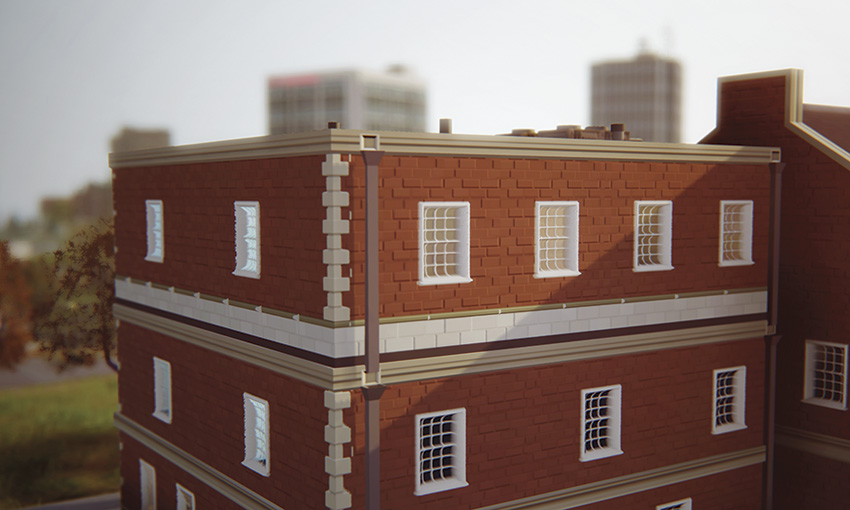
- Description: Even more classrooms and education jobs, but these must go on the topmost floor of the school.
School Bus Stop
-
Cost:
200
-
Operational Cost:
10 per hour
- Bus Stop Capacity: 100 Students
- Prerequisites:
- Grade School or High School in city or region
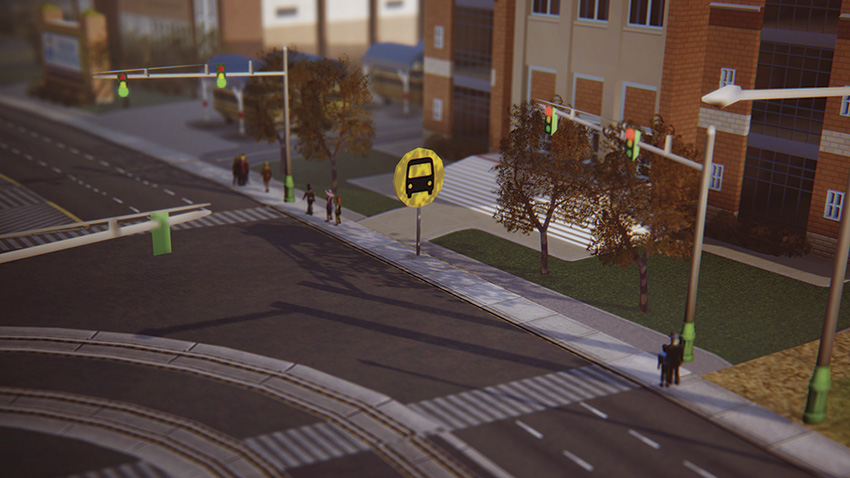
- Description: Your school buses will stop here to pick up kids and take them to school each day. Yes, even weekends.
Not everyone is lucky enough to live across the street from a school, so immediately after building a Grade School or High School, start placing these School Bus Stops along roads throughout your city. Select the School Bus Stop from the Education menu and notice how the roads closest to your schools are green, indicating areas within walking distance of the campus.
Roads further from a school turn orange and red in color—these are areas where kids can’t get to school without taking a bus. Add a School Bus Stop along these roads and notice how the red and orange colors turn green, indicating school bus service for the area, leading to a widespread outbreak of happiness of nearby residential buildings.
Continue placing School Bus Stops along your road system until the roads adjacent to each residential building are green—there’s no need to extend school bus service into industrial and commercial areas because kids don’t live there. All School Bus Stops serve both Grade School and High School students.
Every morning students will gather at each stop to await being picked up by a bus. After school, the students are dropped off at the same stop. If some students are left behind due to overcrowded buses, you’ll need to increase your bus coverage by adding the School Bus Lot module to your Grade School or High School. If the info tab in the Education menu shows 100% enrollment, your schools and buses are getting the job done.
High School
-
Cost:
60,000
-
Operational Cost:
1,100 per hour
- Desks: 800
- Prerequisites:
- City Hall
- Department of Education in region
- Educate 500 students in a day
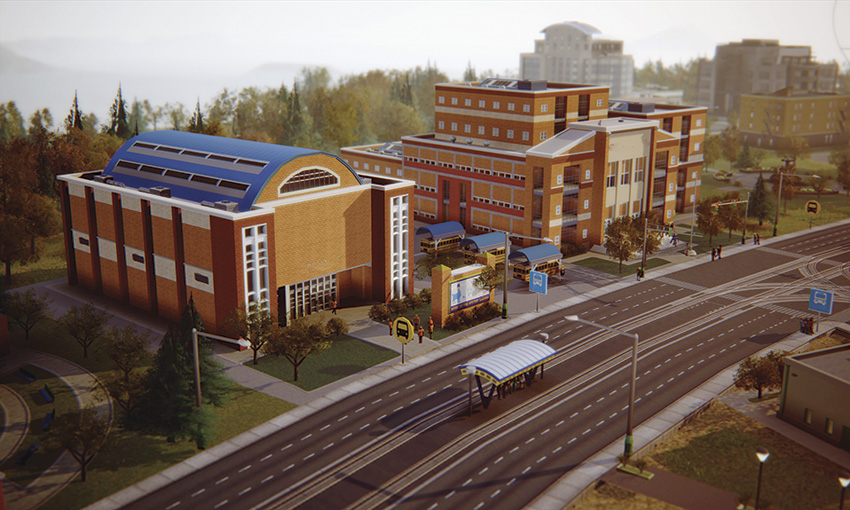
- Description: High Schools help kids stay off the streets, keep them out of trouble, and educate them. Educated Sims recycle more, pollute less, and cause fewer fires.
Do the Sims in your city crave more education? Then consider building a High School…if you can afford it. The High School functions much like the Grade School, albeit with more desks and a higher price tag. In addition to educating local Sims within your city, the High School can also accept students from connected cities in the region—if your neighbors add School Bus Stops in their city, your buses will transport visiting students to your High School.
Students attending the High School learn to consume less power and water. An increase in recycling also means less garbage in your city. While the High School comes with 800 desks, those spots can fill up fast, especially if busing kids in from other cities. Be ready to expand capacity with additional Classrooms. Or plop a Gymnasium to increase tourism and allow student athletes to compete in regional sports—local sports stories occasionally appear on the SimCity wire at the top of the HUD.
Modules
High School Sign
-
Cost:
200
- Operational Cost: None
- Maximum Modules: 1
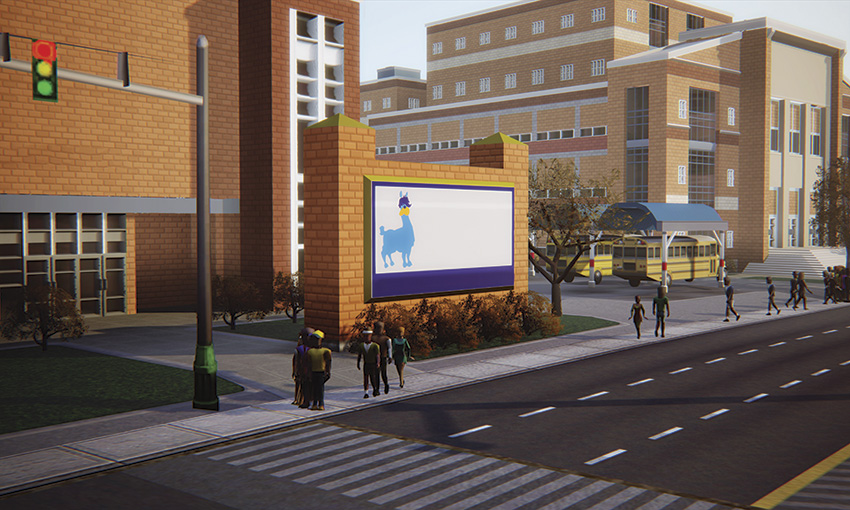
- Description: Somehow this sign has managed to remain graffiti-free despite being surrounded by teenagers.
Flagpole
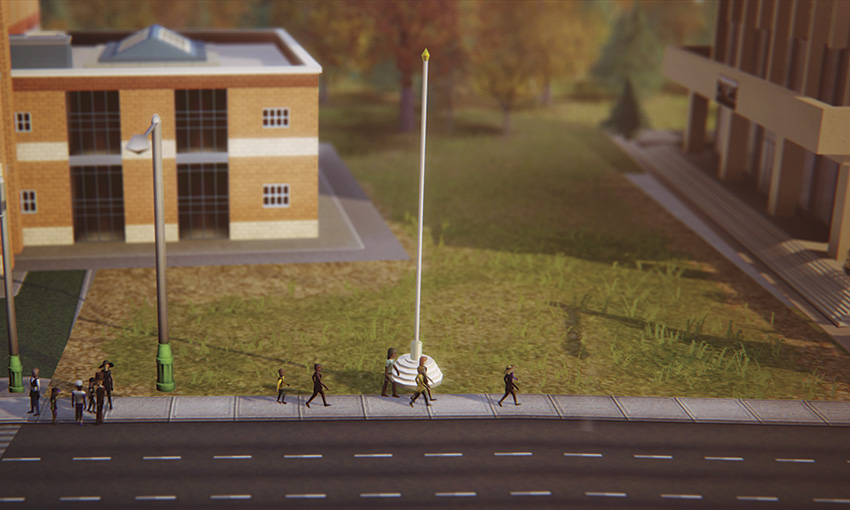
-
Cost:
100
- Operational Cost: None
- Maximum Modules: 1
- Description: Show your pride—add a pole that totally holds a flag!
School Bus Lot
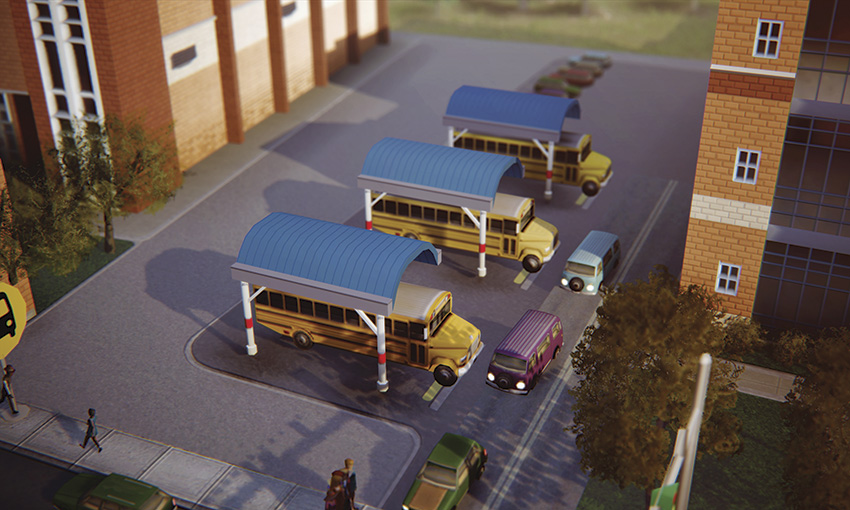
-
Cost:
10,000
-
Operational Cost:
100 per hour
- Buses: 2
- Bus Capacity: 80 Students
- Maximum Modules: 4
- Description: Adds a school bus to pick up students when used in conjunction with bus stops.
Classrooms
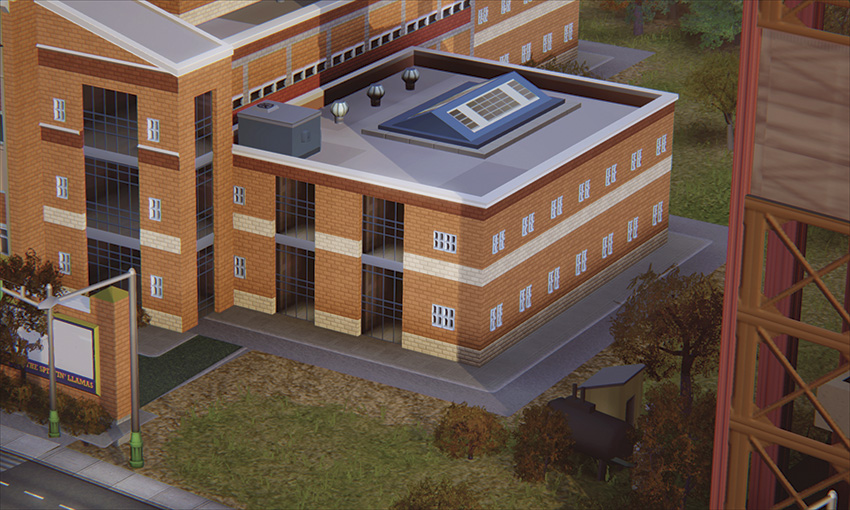
-
Cost:
17,000
-
Operational Cost:
500 per hour
- Desks: 1,000
- Maximum Modules: 4
- Description: Educate even more sullen, sulky kids each day. You’ll need more teachers and staff to handle the moody handfuls, of course.
Gymnasium
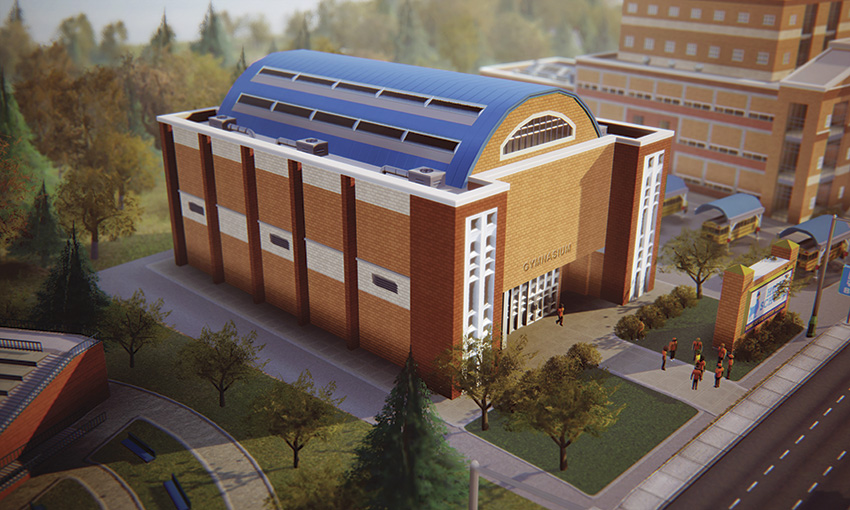
-
Cost:
10,000
-
Operational Cost:
250 per hour
- Capacity: 500 Sims
- Maximum Modules: 1
- Description: Home to the triumph of the human spirit and misery of the nerds. Boosts tourist attraction in the city. Increases medium wealth residential land value.
Community College
-
Cost:
42,000
-
Operational Cost:
500 per hour
- Desks: 500
- Prerequisites:
- City Hall
- Department of Education in region
- Educate 800 students in a day
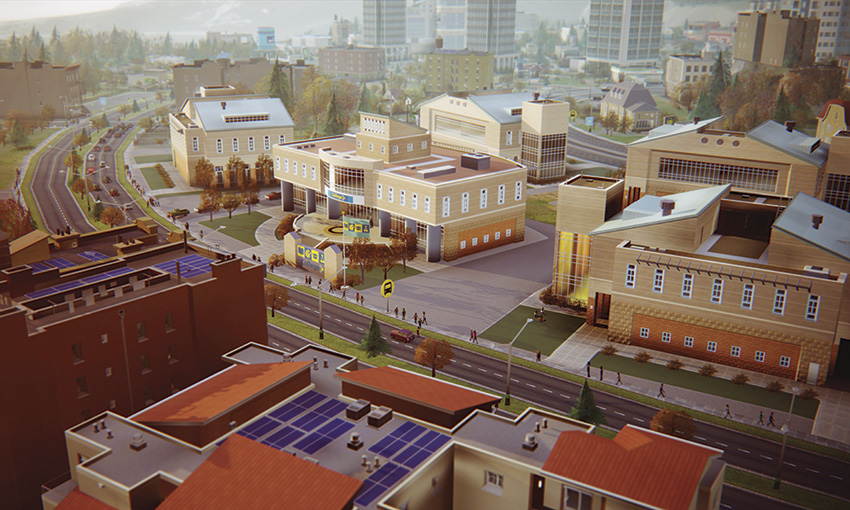
- Description: Sure, it’s not accredited, but it’s a lot cheaper and smaller than a University. Adds to medium wealth residential land value. Increases tech level of nearby industrial buildings.
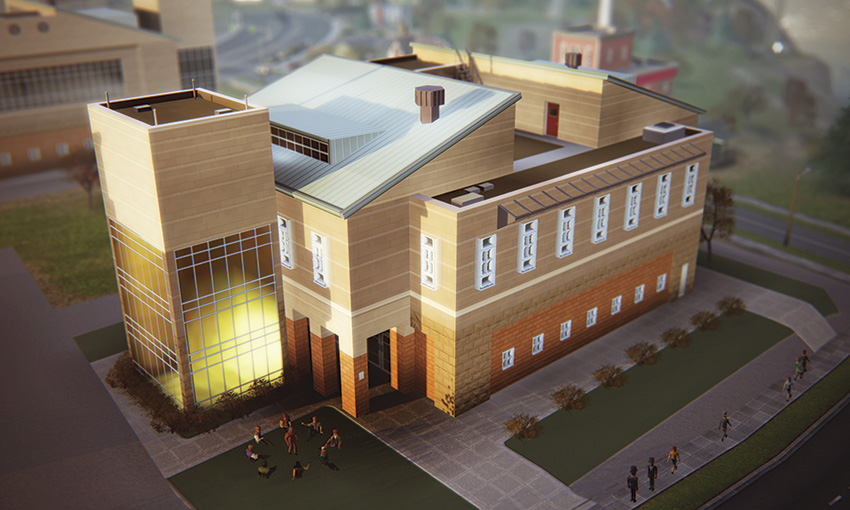
Do you have an interest in clean industry? Then build a Community College as soon as possible. This facility is the catalyst required to promote the appearance of tech level 2 buildings within industrial zones throughout the city and region. Why would you want clean industry? For one, these industrial buildings provide a lot of jobs, like factories. But unlike factories, they don’t belch out heavy air pollution. Clean industrial buildings also produce more tax revenue than the factories associated with dirty industrial. Students attending a Community College are responsible for their own transportation. By default they will walk or drive to the campus, but they can also take mass transit. Given the regional appeal of a Community College, expect plenty of visiting students and work to accommodate them by placing bus or streetcar stops next to the campus. This will help cut down on commuter traffic around the Community College. As more and more students enroll, be ready to increase capacity with an Extension Wing module.
Modules
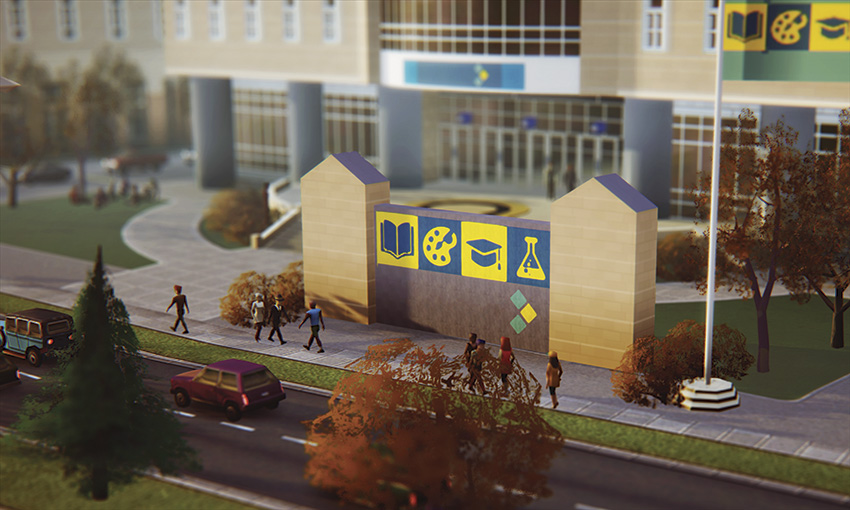
College Sign
-
Cost:
200
- Operational Cost: None
- Maximum Modules: 1
- Description: A large sturdy sign generously donated by the Spline Foundation.
Flagpole
-
Cost:
100
- Operational Cost: None
- Maximum Modules: 1
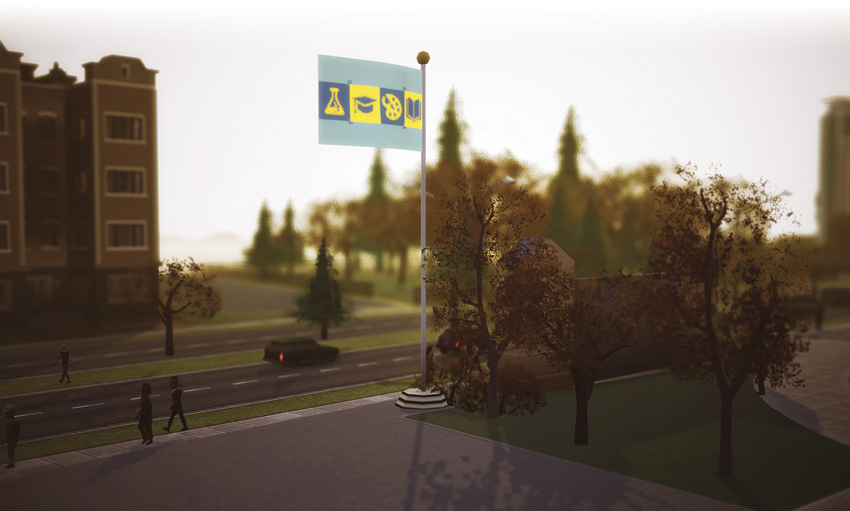
- Description: Conforms to ANSI/NAAMM FP-1001-97 specifications for metallic flagpole safety.
Extension Wing
-
Cost:
12,000
-
Operational Cost:
375 per hour
- Desks: 500
- Maximum Modules: 4
- Description: Adds more classrooms and teaching jobs. Generously donated by Anon Y. Mous.
University
-
Cost:
88,000
-
Operational Cost:
1,600 per hour
- Desks: 800
- Prerequisites:
- City Hall
- Department of Education in region
- Educate 1,200 students in a day
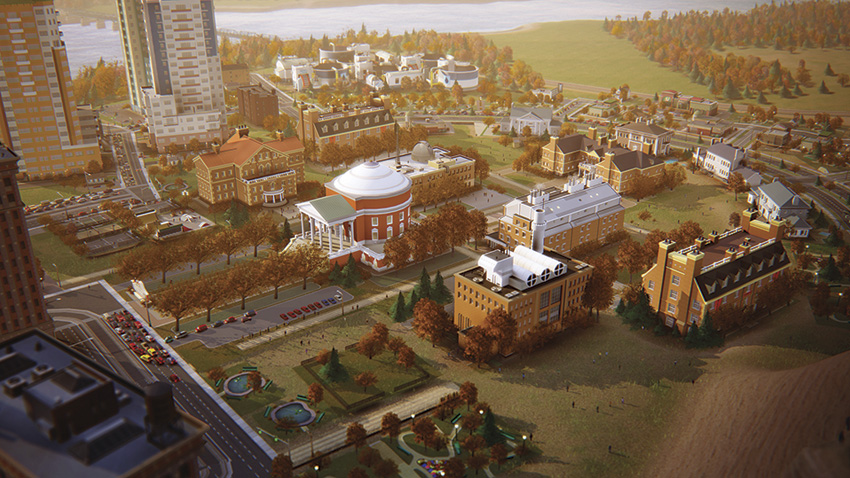
- Description: The University provides the highest grade of education to your population. Research advanced technologies at the various schools of higher learning. Increases tech level of nearby industrial buildings.
The University is the pinnacle of the education system, producing the highest level of educated Sims. Build the University to trigger the creation of tech level 3 industrial buildings. High tech industrial buildings require a steady supply of workers with Community College and University educations, so it’s important to keep enrollment high if you want to sustain these industrial businesses.
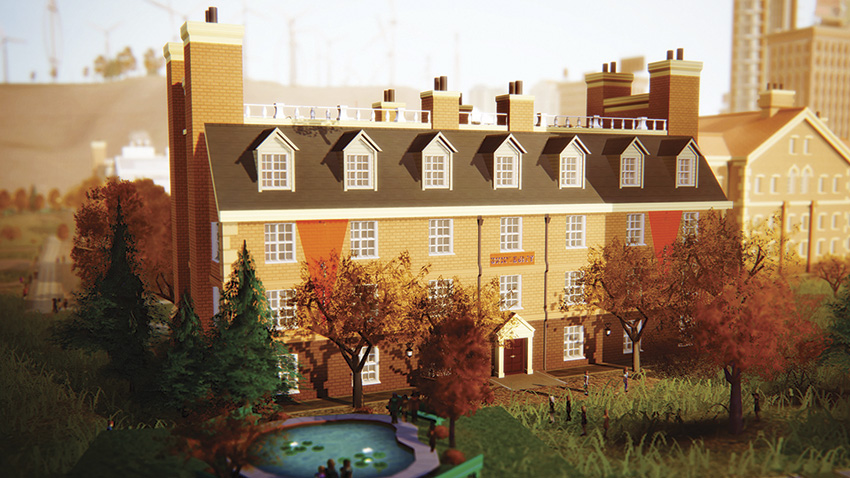
Early on, construct a Dormitory to keep a large number of students on campus—this helps reduce traffic around the University while keeping desks filled without the need for creating residential units nearby. Like the City Hall, the University can also be upgraded based on the number of students it has educated.
With each upgrade, a new school module can be added, increasing the number of desks as well as unlocking special perks, including modules for other buildings and research projects. There are ten different research projects that can be initiated at the University, unlocking new technologies for power plants, Great Works, the Hospital, and Police Precinct. The more students enrolled, the faster research projects are completed.
University Upgrades
| Level | Students Educated | Unlock |
|---|---|---|
| 1 | 1,600 | School of choice. |
| 2 | 2,600 | School of choice. |
| 3 | 3,600 | School of choice. |
| 4 | 4,600 | School of choice. |
| 5 | 5,600 | School of choice. |
University Research Projects
| Project | Cost | Prerequisite | Description |
|---|---|---|---|
| Concentrated Solar Array |
40,000
|
School of Science | Grants approval for the Concentrated Solar Array module for the Solar Power Plant. |
| Solar Farm Great Work |
100,000
|
School of Science | Grants approval for the Solar Farm Great Work for the region to build. |
| Vertical Turbine |
20,000
|
School of Engineering | Grants approval for the Vertical Turbine module for the Wind Power Plant. |
| Gen II Thermal Reactor |
75,000
|
School of Science | Grants approval for the Gen II Thermal Reactor module for the Nuclear Power Plant. |
| Fast Neutron Reactor |
130,000
|
Gen II Thermal Reactor Research | Grants approval for the Fast Neutron Reactor module for the Nuclear Power Plant. |
| Clean Coal Generator |
20,000
|
School of Engineering | Grants approval for the Clean Coal Generator module for the Coal Power Plant. |
| Clean Oil Generator |
27,000
|
School of Engineering | Grants approval for the Clean Oil Generator module for the Oil Power Plant. |
| Surgical Center |
80,000
|
School of Medicine | Grants approval for the Surgical Center module for the Hospital. |
| Detective Wing |
60,000
|
School of Law | Grants approval for the Detective Wing module for the Police Precinct. |
| Space Center Great Work |
120,000
|
School of Engineering | Grants approval for the Space Center Great Work for the region to build. |
Modules
University Sign
-
Cost:
200
- Operational Cost: None
- Maximum Modules: 1
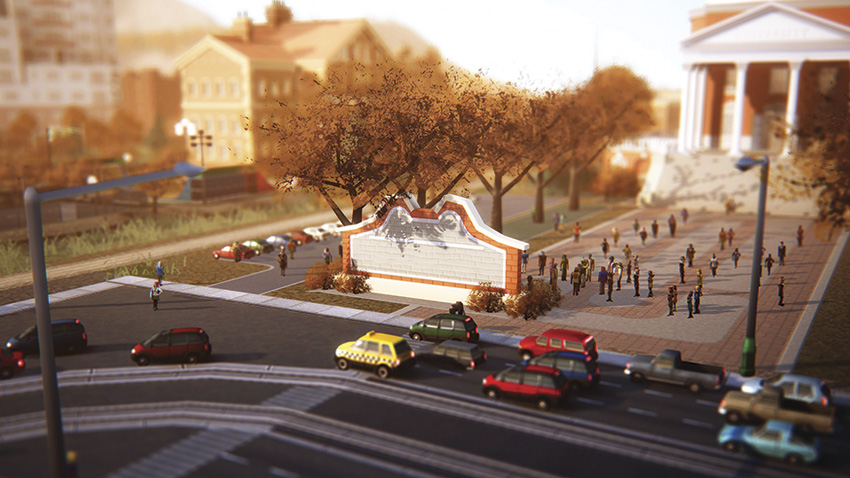
- Description: Directs students to the University when they stumble back home late at night.
Pedestrian Path

- Cost: Free
- Operational Cost: None
- Description: Pedestrian only pathway. Insert “pathway to education” metaphor here.
Dormitory
-
Cost:
40,000
-
Operational Cost:
500 per hour
- Capacity: 500 Students
- Maximum Modules: 3
- Description: Adds additional students to your population without having to build additional housing.
School of Business
-
Cost:
40,000
-
Operational Cost:
1,000 per hour
- Desks: 500
- Maximum Modules: 1
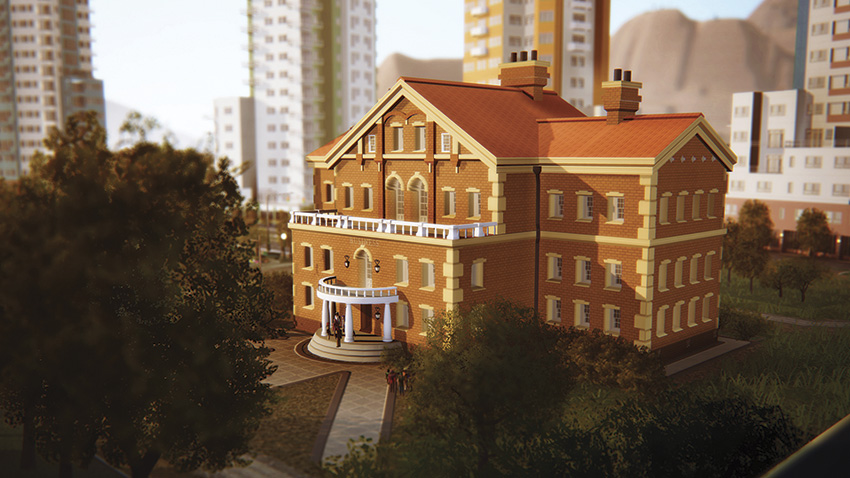
- Description: Get your students down to business! When attended by students, increases commercial profit across the region.
School of Engineering
-
Cost:
40,000
-
Operational Cost:
1,000 per hour
- Desks: 500
- Maximum Modules: 1
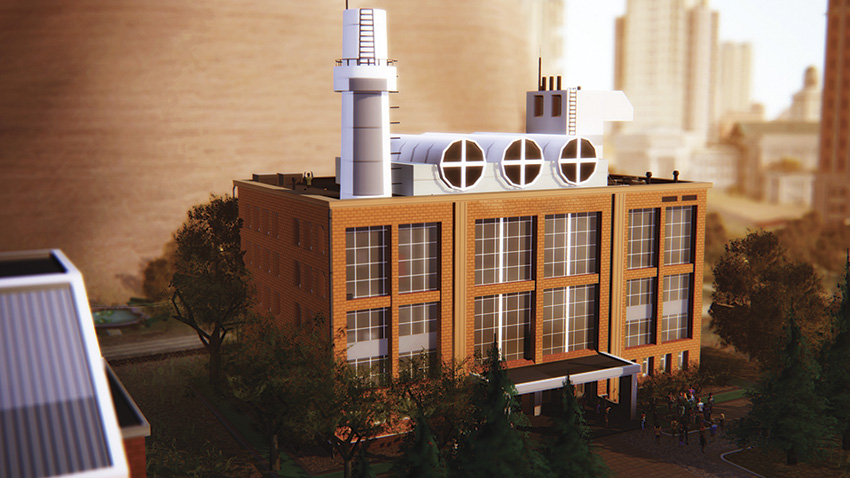
- Description: This is where you put those nerds. When attended by students, increases low and medium wealth industrial profit across the region. Unlocks Hazmat Garage at Large Fire Station and access to Vertical Turbine, Clean Coal Generator, Clean Oil Generator, and Space Center research projects.
School of Law
-
Cost:
40,000
-
Operational Cost:
1,000 per hour
- Desks: 500
- Maximum Modules: 1
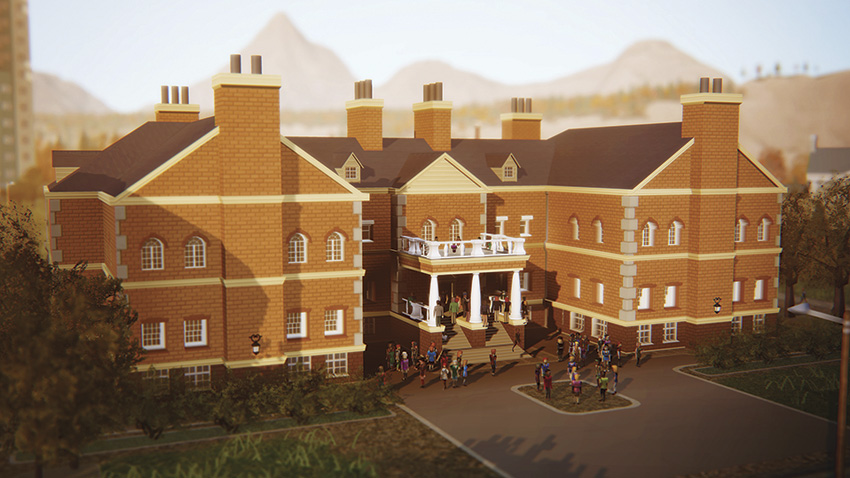
- Description: Crack down on crime. When attended by students, lowers rehabilitation time of incarcerated criminals in the region. Unlocks Detective Wing research project.
School of Medicine
-
Cost:
40,000
-
Operational Cost:
1,000 per hour
- Desks: 500
- Maximum Modules: 1
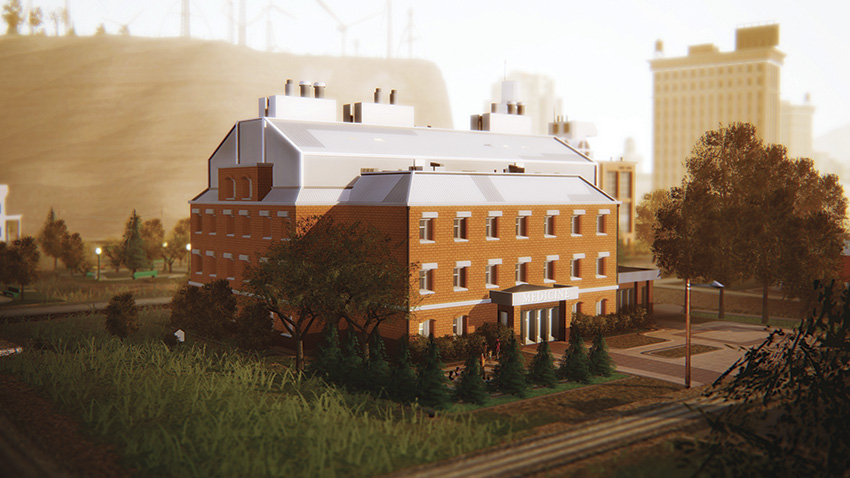
- Description: When attended by students, reduces the chance Sims in the region will get sick. Unlocks access to Surgical Center research project.
School of Science
-
Cost:
40,000
-
Operational Cost:
1,000 per hour
- Desks: 500
- Maximum Modules: 1
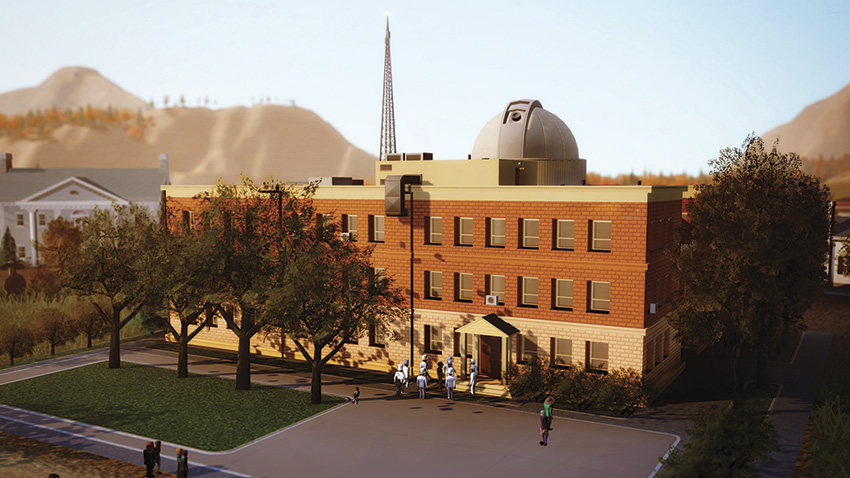
- Description: Teach science, don’t get blinded by it! When attended by students, increases high tech industrial profit in the region. Unlocks Diagnostic Lab at Hospital and access to Concentrated Solar Array, Solar Farm, and Gen II Thermal Reactor research projects.