
SimCity Guide Essentials Utilities
Power
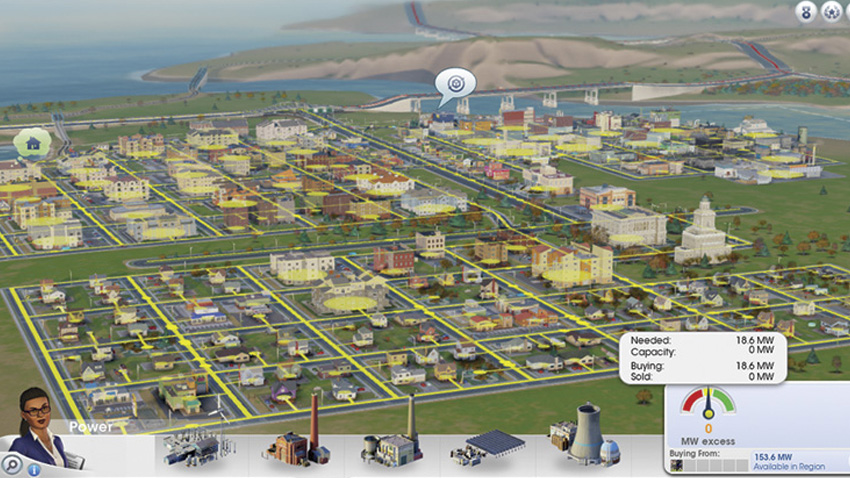
The Power menu shows the flow of power beneath your city’s road network. Study the info tab to determine current power production and consumption.
As the sun sets and the Sims in your city settle down for the evening, they’ll expect the lights to turn on. As mayor, it’s your responsibility to make this happen. Power is an essential utility for all cities. In fact, most buildings require power to function, including all Government buildings.
You can supply your city with power by plopping a power plant adjacent to one of your existing roads. Alternatively, you can buy surplus power from neighboring cities, completely bypassing the challenges associated with power generation.
Regardless of how you get power, you need to constantly monitor the city’s production and consumption rates, visible in the Power menu’s info tab on the right. The analog gauge in this tab shows the surplus amount of power generated, measured in megawatts (MW) or, if facing a minor surplus or deficit, shown in kilowatts (kW).
As long as the needle in this gauge stays within the green zone, you’re doing okay. But if the needle dips into yellow or red territory, you need to address the power shortage immediately. To get a more precise reading of the city’s power consumption, mouse over the gauge to trigger the appearance of a small blue window showing the exact numerical values of power needed and power produced, as well as any power bought or sold. Obviously, if your city needs more power than it’s producing, you need to take action.
While the Power menu is open you can also see a graphical representation of power flowing throughout your city. Power is represented by yellow lines, branching off your roads and entering adjacent buildings. The yellow circles beneath each building represent its power consumption—the larger the circle, the greater the consumption rate.
If at any point the yellow lines become red, it indicates a power outage due to insufficient production. Even without viewing the gauge and numbers in the info tab, this is a quick way to diagnose problems with power production and transmission.
Wind Power Plant
-
Cost:
 8,000
8,000
-
Operational Cost:
80 per hour
- Power Production Rate: 3 MW in 10 mph winds
- Air Pollution Rate: None
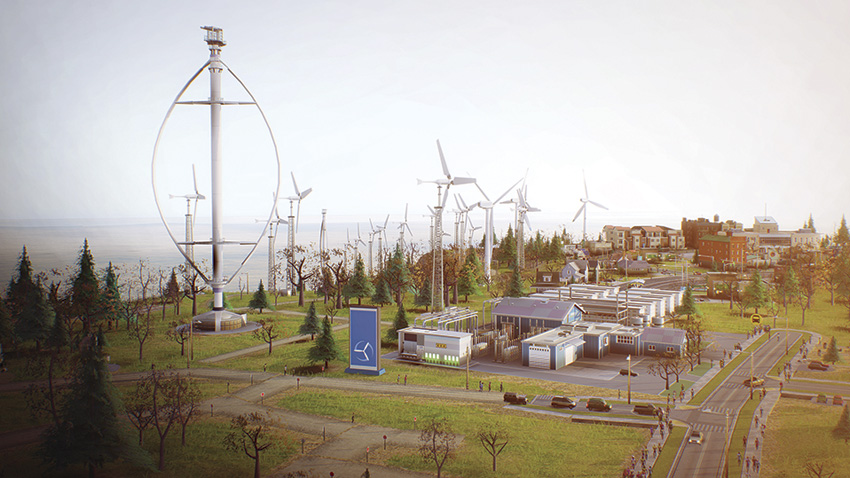
- Description: Harness the green energy of the wind by building a sprawling wind farm.
When starting a new city, the Wind Power Plant is the perfect solution. Not only is this power plant relatively cheap, it produces clean power, meaning you won’t have to worry about the negative consequences of air pollution.
The power plant is also expandable through the addition of turbines built along the Service Road—this road can be lengthened free of charge to increase the footprint of your wind farm. To get the most out of your Wind Power Plant, construct it in areas with high wind speeds, usually along high elevations with wind speeds greater than 10 mph.
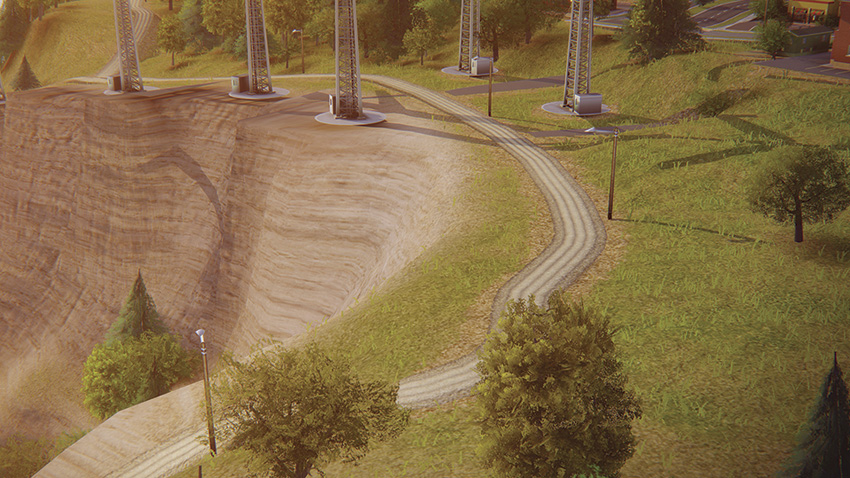
By expanding the Service Road, you can scatter turbines over a wide area. Consider building turbines along slopes or other difficult terrain where it’s impossible to zone or place other buildings. But a sprawling wind farm can eat up a lot of space, so place those turbines as close together as possible, ensuring they’re each exposed to high wind speeds.
But even when expanded to its maximum potential, the Wind Power Plant isn’t a big power producer. So as a city increases in density, you’ll need to look for other solutions to feed the increasing demand for power—consider augmenting your system by building a second power plant or buying power from a neighboring city.
Modules
Wind Power Sign
-
Cost:
200
- Operational Cost: None
- Maximum Modules: 1
- Description: Put down a sign so all the pizza delivery drivers stop going past you.
Service Road
- Cost: Free
- Operational Cost: None
- Description: Allows workers to get out to the windmills. Has underground lines for power transmission. Extend the Service Road to fit more turbines if you need to.
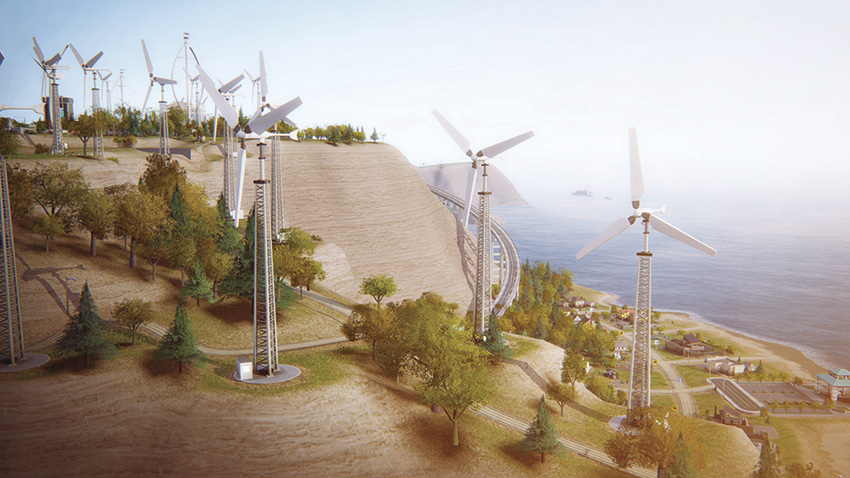
Small Horizontal Turbine
-
Cost:
5,000
-
Operational Cost:
40 per hour
- Power Production Rate: 3 MW in 10 mph winds
- Air Pollution Rate: None
- Maximum Modules: 24
- Description: The Small Horizontal-Axis Wind Turbine produces a small amount of electricity. Must be built along a Service Road.
Large Horizontal Turbine
-
Cost:
10,000
-
Operational Cost:
60 per hour
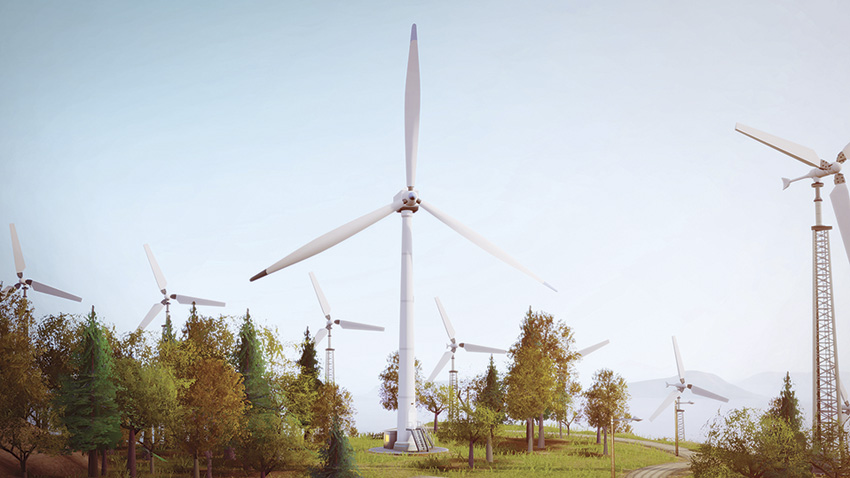
- Power Production Rate: 5.1 MW in 10 mph winds
- Air Pollution Rate: None
- Maximum Modules: 24
- Description: The Large Horizontal-Axis Wind Turbine produces a moderate amount of electricity. Must be built along a Service Road.
Vertical Turbine
-
Cost:
20,000
-
Operational Cost:
170 per hour
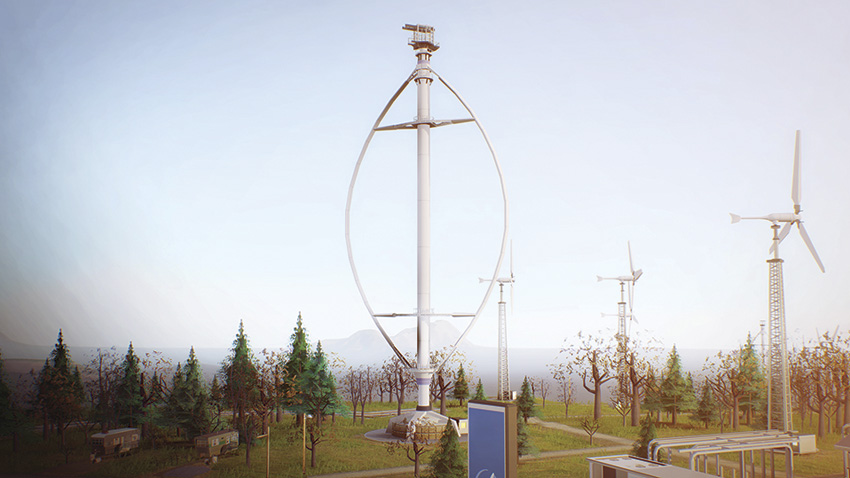
- Power Production Rate: 15 MW in 10 mph winds
- Air Pollution Rate: None
- Maximum Modules: 1
- Prerequisites:
- University in the region.
- University with School of Engineering in the region.
- Complete research project at a University in the region.
- Description: It looks crazy! It also produces huge amounts of power. Service Roads only please!
Coal Power Plant
-
Cost:
17,000
-
Operational Cost:
450 per hour
- Power Production Rate: 75 MW
- Coal Burn Rate: 4.32 tons/day
- Air Pollution Rate: High
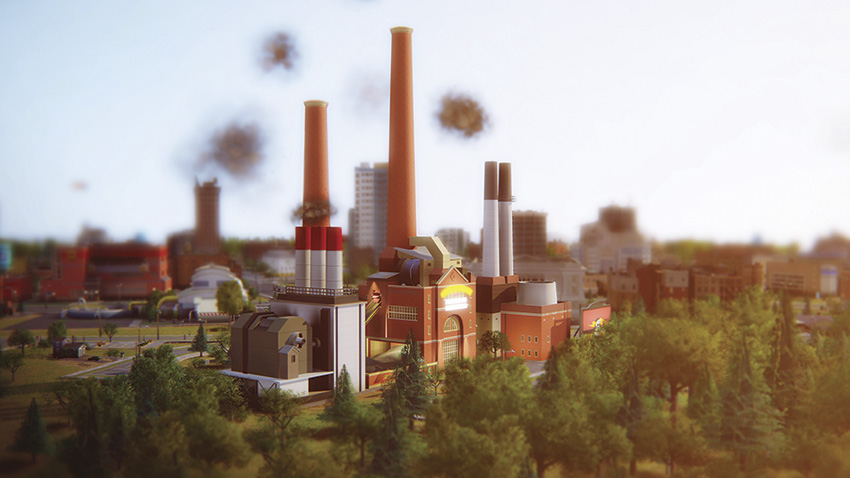
- Description: Imports coal directly from the global market to generate enough power for even a large city. It also generates pollution. A lot of pollution.
When it comes to producing power, the Coal Power Plant offers a lot of bang for the buck. Even before placing any modules, this power plant cranks out a whopping 75 MW, enough to power most moderately sized cities. By adding additional generator modules this bad boy can produce more power than a stock Nuclear Power Plant.
But few structures produce a higher volume of air pollution than the Coal Power Plant. If you choose to build it, make sure it’s far from populated areas. Pay close attention to wind direction too, as you don’t want the toxic smoke to blow across your city or neighboring cities in the region. To reduce air pollution consider building the Advanced or Clean Coal Generators.
These costly modules significantly reduce the amount of pollution spewed into the air. If your city has a Coal Mine, make sure the power plant is open to local coal deliveries. It’s much cheaper to use coal mined locally than to purchase it on the global market.
Modules
Coal Power Plant Sign

-
Cost:
200
- Operational Cost: None
- Maximum Modules: 1
- Description: Someone has smeared “Clean coal my foot!” onto this sign.
Dirty Coal Generator
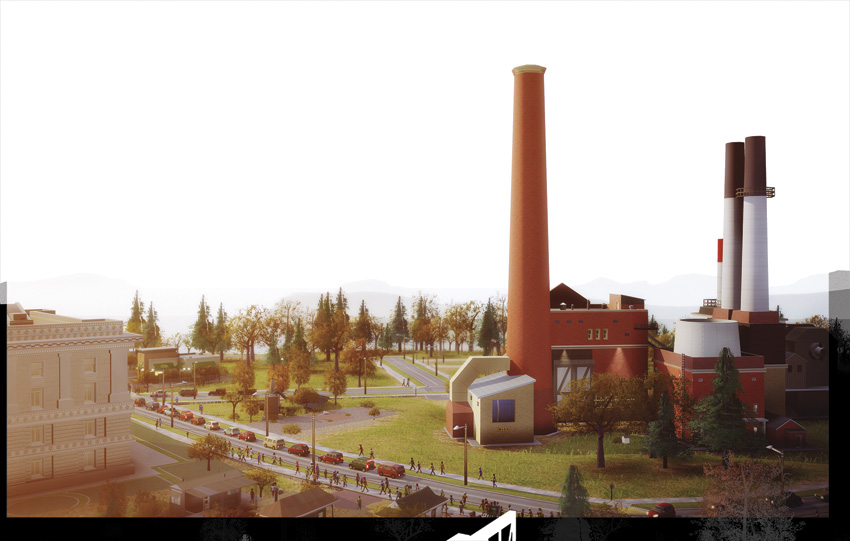
-
Cost:
5,000
-
Operational Cost:
425 per hour
- Power Production Rate: 75 MW
- Coal Burn Rate: 4.32 tons/day
- Air Pollution Rate: High
- Maximum Modules: 3
- Description: For when all other considerations are secondary to cost. Requires a decent amount of coal to operate and pollutes a lot.
Advanced Coal Generator
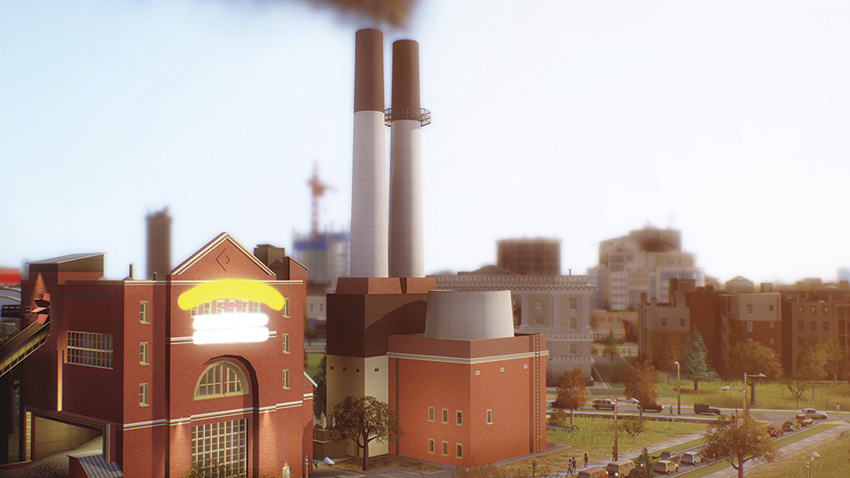
-
Cost:
15,000
-
Operational Cost:
375 per hour
- Power Production Rate: 75 MW
- Coal Burn Rate: 8.64 tons/day
- Air Pollution Rate: Medium
- Maximum Modules: 3
- Description: Costs more but produces less pollution as well as making decent levels of power. Y’know, for when you care about the environment a tiny bit.
Clean Coal Generator
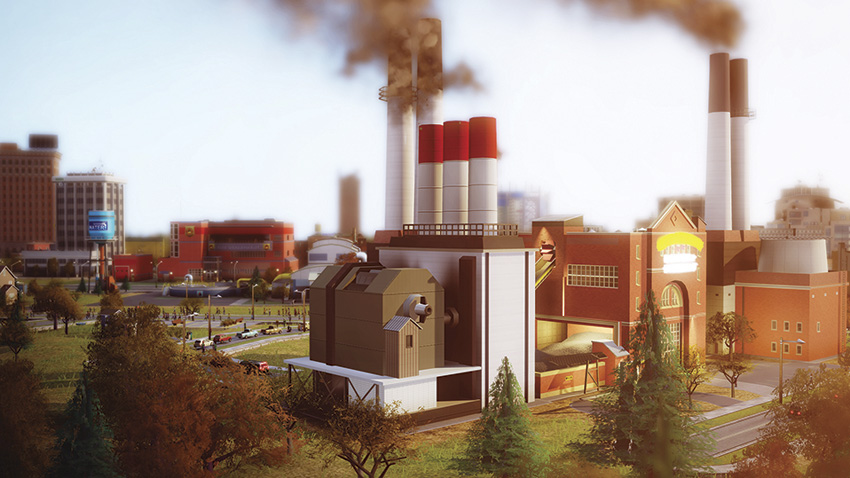
-
Cost:
20,000
-
Operational Cost:
600 per hour
- Power Production Rate: 75 MW
- Coal Burn Rate: 5.76 tons/day
- Air Pollution Rate: Low
- Maximum Modules: 1
- Prerequisites:
- University in the region.
- University with School of Engineering in the region.
- Complete research project at a University in the region.
- Description: This is as “clean” is it’s going to get, bub. This is coal, after all.
Oil Power Plant
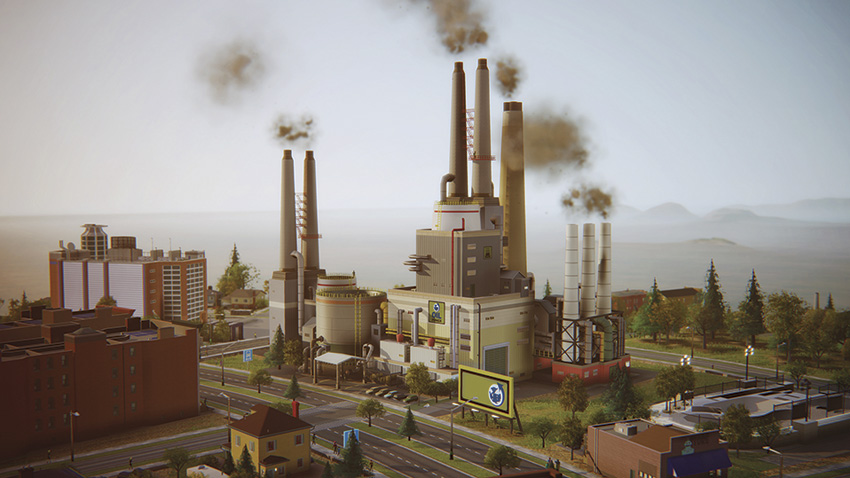
-
Cost:
27,500
-
Operational Cost:
856 per hour
- Power Production Rate: 150 MW
- Oil Burn Rate: 864K BPD
- Air Pollution Rate: High
- Description: Everything runs on oil, right? Imports crude oil directly from the global market. Converts crude oil into power…and pollution.
The Oil Power Plant performs much like the Coal Power Plant, albeit with a bigger price tag and greater hourly operational costs. However, in its stock state, this power plant also generates twice as much power as the Coal Power Plant, making it a serious contender, only outperformed by the Nuclear Power Plant.
But like the Coal Power Plant, this facility pumps out a tremendous amount of air pollution, so keep it far away from major population centers and make sure the wind carries air pollution away from your city. Construction of the Combustion Turbine Generator or Clean Oil Generator modules help reduce air pollution output, but they don’t completely eliminate it.
If you have an Oil Well in your city, make sure the power plant is open to local crude oil deliveries. This helps keep operational costs down by consuming barrels of oil produced in your city instead of buying them on the global market. So if your city can tolerate the pollution, the Oil Power Plant is by far one of the most cost-effective solutions to meet your power demands.
Modules
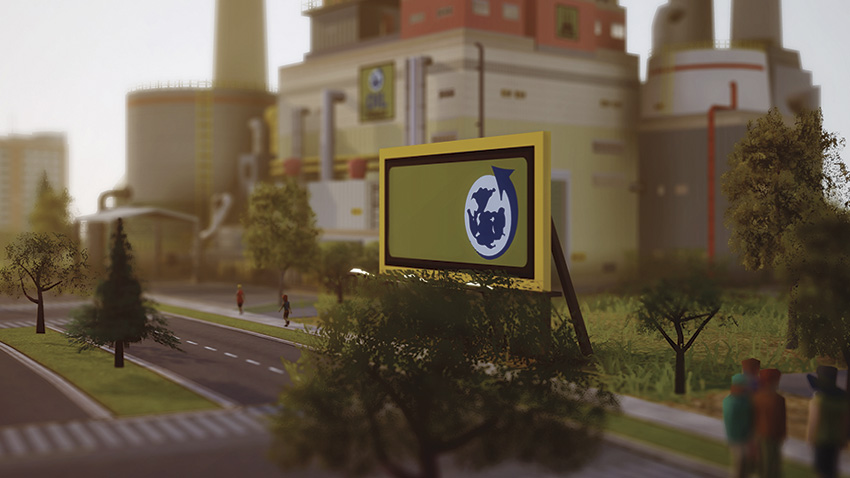
Oil Power Plant Sign
-
Cost:
200
- Operational Cost: None
- Maximum Modules: 1
- Description: This *cough* sign says *cough* “Dedicated to the Environment” *cough* *cough*.
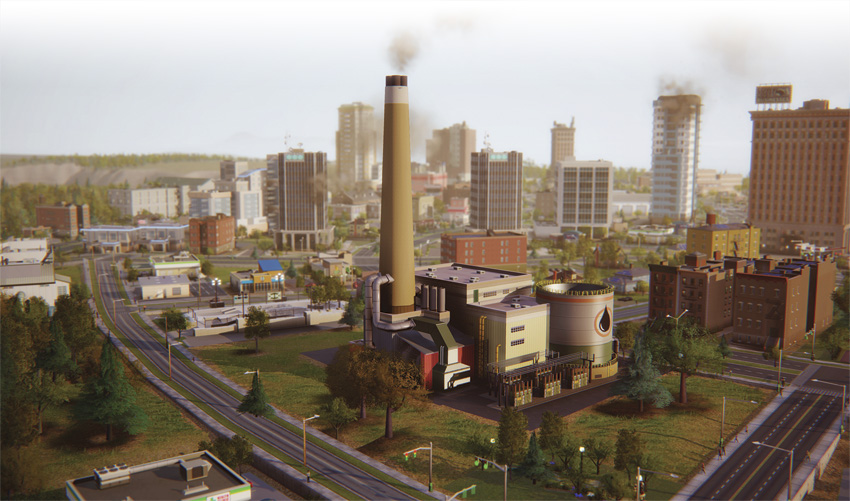
Conventional Oil Generator
-
Cost:
7,500
-
Operational Cost:
756 per hour
- Power Production Rate: 150 MW
- Oil Burn Rate: 36K BPD
- Air Pollution Rate: High
- Maximum Modules: 3
- Description: Crude oil is used to convert water into steam to produce power.
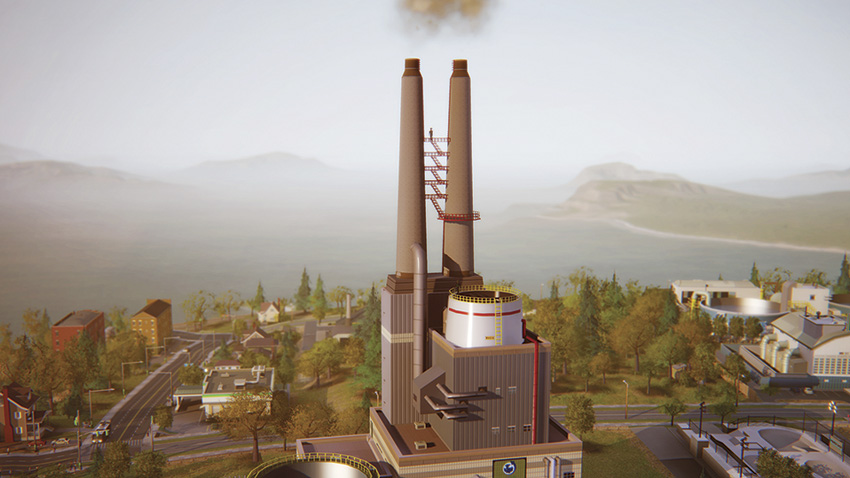
Combustion Turbine Generator
-
Cost:
20,000
-
Operational Cost:
1,185 per hour
- Power Production Rate: 150 MW
- Oil Burn Rate: 12K BPD
- Air Pollution Rate: Medium
- Maximum Modules: 3
- Description: Crude oil is burned under pressure to produce power.
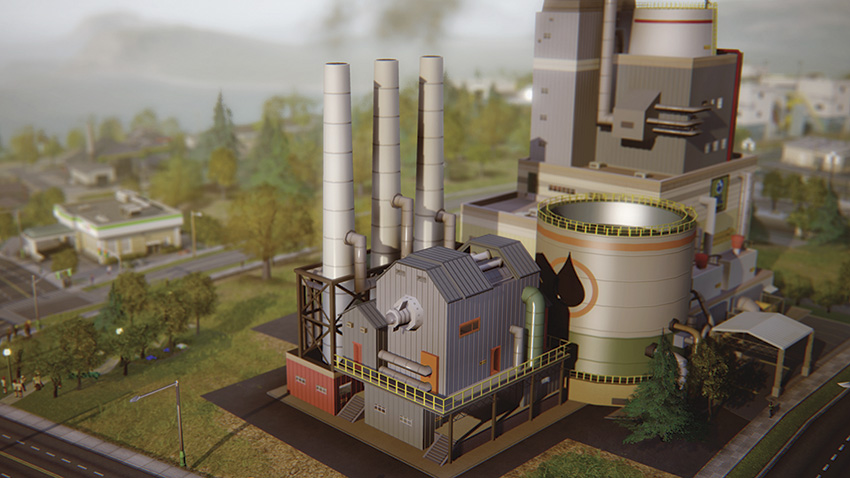
Clean Oil Generator
-
Cost:
27,000
-
Operational Cost:
1,295 per hour
- Power Production Rate: 150 MW
- Oil Burn Rate: 24K BPD
- Air Pollution Rate: Low
- Maximum Modules: 3
- Prerequisites:
- University in the region.
- University with School of Engineering in the region.
- Complete research project at a University in the region.
- Description: After crude oil is used in a combustion turbine generator, excess exhaust is used to convert water into steam.
Solar Power Plant
-
Cost:
33,000
-
Operational Cost:
145 per hour
- Power Production Rate: 8 MW during peak hours
- Air Pollution Rate: None
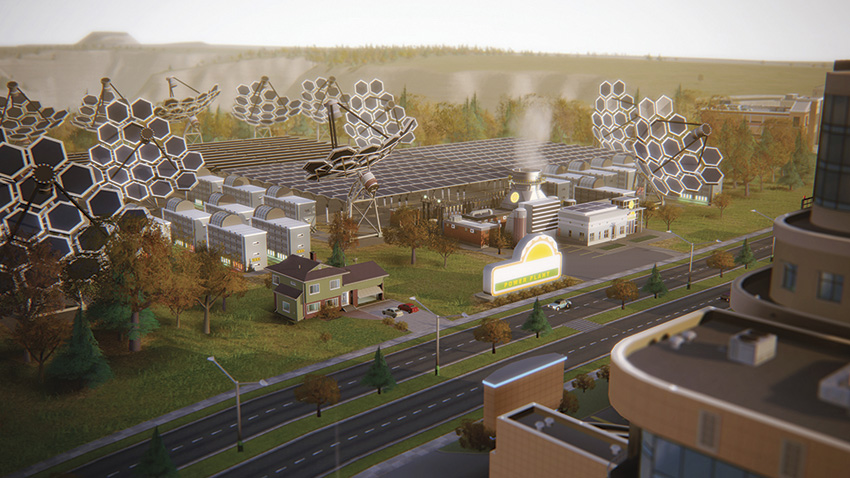
- Description: Collect the power of the sun itself to give your city clean energy. By day, solar panels absorb power. At night, they use power stored in batteries.
The idea of harnessing the power of the sun to generate clean electricity is extremely compelling. But in practice, running a Solar Power Plant can become extremely frustrating, particularly for a growing city. The initial cost of this power plant is quite high, particularly when compared to the cheaper and more efficient Wind Power Plant.
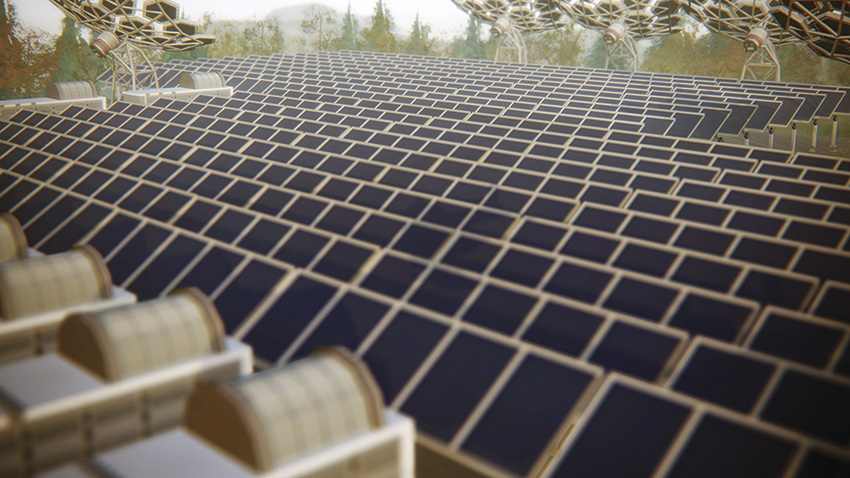
And since the facility requires sunlight to function, it can only collect solar energy from 5AM to 8PM. As darkness falls, the power plant relies on power stored in batteries to light the city at night. You can increase the facility’s power output by adding additional Fixed Solar Array modules.
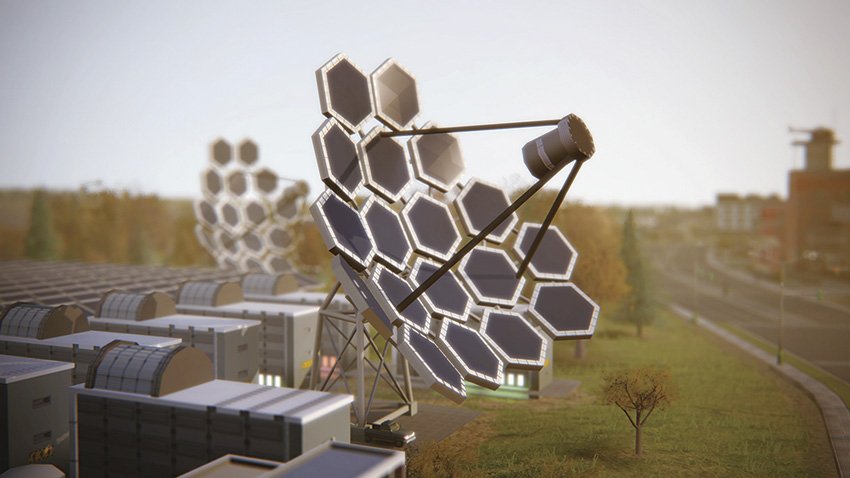
But the Fixed Solar Arrays are massive, quickly eating up precious space. If you’re set on solar, hold off until you can build the smaller and more efficient Concentrated Solar Array. But to gain access to this advanced technology, you must first complete the associated research project at a University in the region.
When operating at peak efficiency, the Solar Power Plant is still a low power producer when compared with the Coal, Oil, and Nuclear Power Plants. However, if you’re only using it to power a small city with low power demands and strict growth limitations, it can certainly get the job done.
Modules
Solar Power Sign
-
Cost:
200
- Operational Cost: None
- Maximum Modules: 1
- Description: They’ll see the sign. It’ll open up their eyes. They’ll see the sign.
Fixed Solar Array
-
Cost:
16,000
-
Operational Cost:
105 per hour
- Power Production Rate: 12.1 MW during peak hours
- Air Pollution Rate: None
- Maximum Modules: 16
- Description: Bulky but cheap, these panels are the bread and butter of solar power.
Concentrated Solar Array
-
Cost:
40,000
-
Operational Cost:
320 per hour
- Power Production Rate: 37.5 MW during peak hours
- Air Pollution Rate: None
- Maximum Modules: 16
- Prerequisites:
- University in the region.
- University with School of Science in the region.
- Complete research project at a University in the region.
- Description: These futuristic dishes are small, efficient, and expensive. They provide much more power than the basic panel, but take up much less space.
Nuclear Power Plant
-
Cost:
145,000
-
Operational Cost:
1,300 per hour
- Power Production Rate: 200 MW
- Air Pollution Rate: None
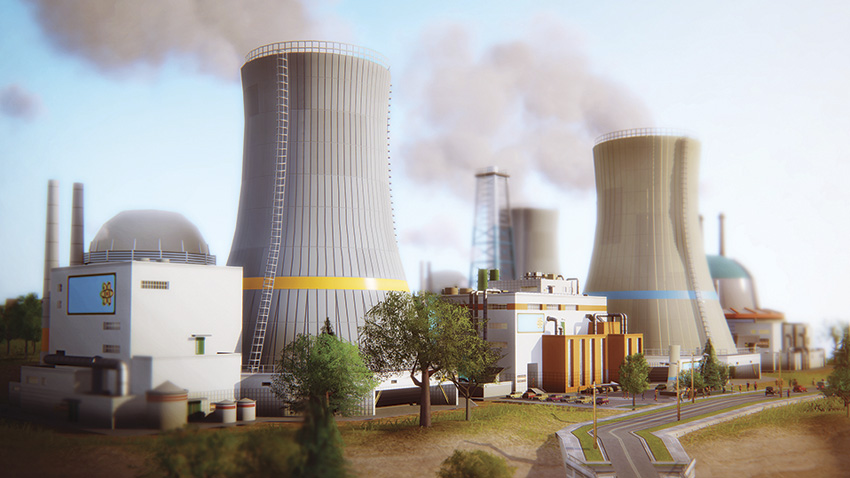
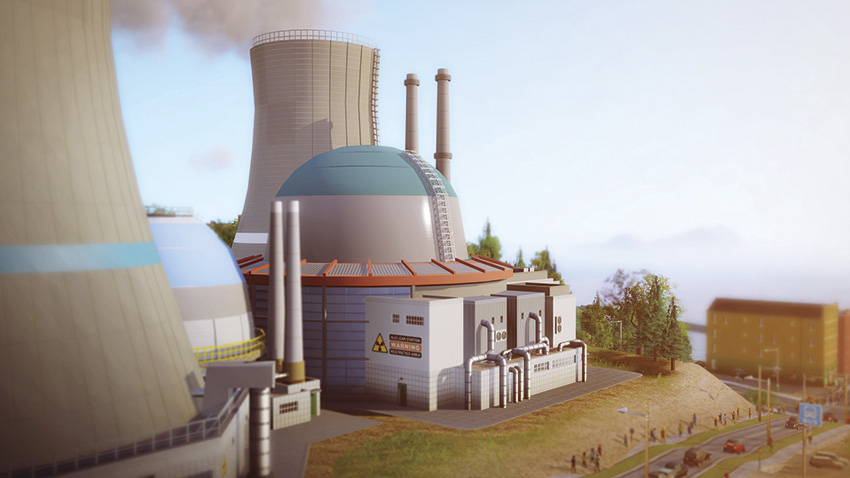
- Description: Educated Sims and large amounts of water can create free, albeit radioactive, power. Careful! If this power plant is staffed with unskilled workers it may emit variable amounts of radiation.
If you’re interested in building a city specializing in power production, the Nuclear Power Plant is the single best way to generate enormous amounts of power, capable of supplying multiple cities. However, the staggering costs and resources associated with generating safe nuclear power can be prohibitive.
So even if you can afford it, never build a Nuclear Power Plant until you have the proper infrastructure in place. For one, these power plants require high volumes of water, serving as coolant. Those quaint Water Towers probably won’t be able to keep up with the demand, so build a Water Pumping Station.
Don’t rely on other cities to supply water—a sudden and prolonged disruption in water supply can lead to the plant being shutdown. Secondly, these power plants require many educated, skilled workers, produced by Community Colleges and Universities. If the education level in your city is low or nonexistent, don’t build this power plant.
While the Nuclear Power Plant can function with unskilled workers, radioactive pollution will slowly spread along the ground, eventually seeping into the water table. There is also an increased chance of triggering a meltdown. But as long as you have enough money, water, and educated workers, nuclear power is completely safe and pollution-free.
Modules
Nuclear Power Plant Sign
-
Cost:
200
- Operational Cost: None
- Maximum Modules: 1
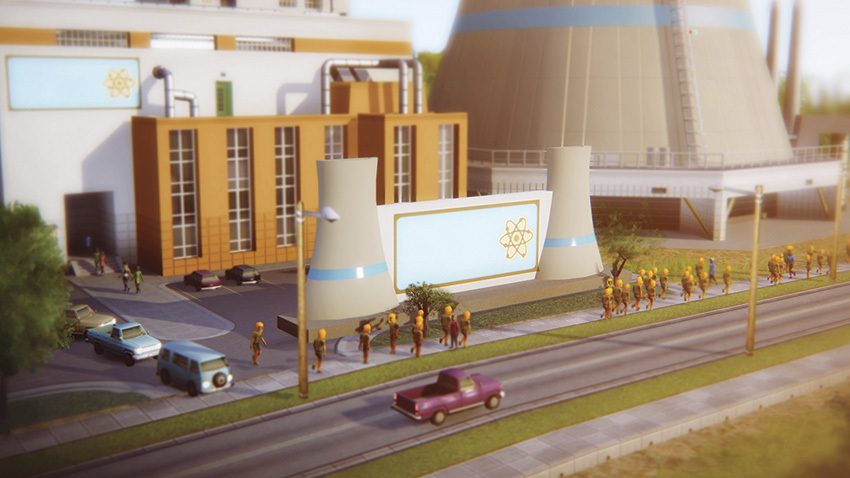
- Description: When headless fish start showing up in the daily catch, this will show people where to go.
Gen I Thermal Reactor
-
Cost:
45,000
-
Operational Cost:
1,200 per hour
- Power Production Rate: 200 MW
- Air Pollution Rate: None
- Maximum Modules: 3
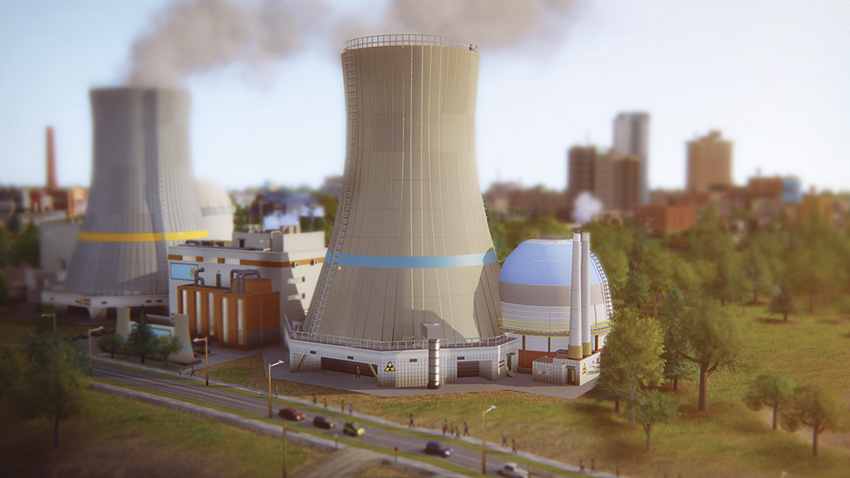
- Description: This standard reactor requires more water for coolant, but adds jobs and produces power that’s almost problem free. Almost.
Gen II Thermal Reactor
-
Cost:
75,000
-
Operational Cost:
2,300 per hour
- Power Production Rate: 400 MW
- Air Pollution Rate: None
- Maximum Modules: 3
- Prerequisites:
- University in the region.
- University with School of Science in the region.
- Complete research project at a University in the region.
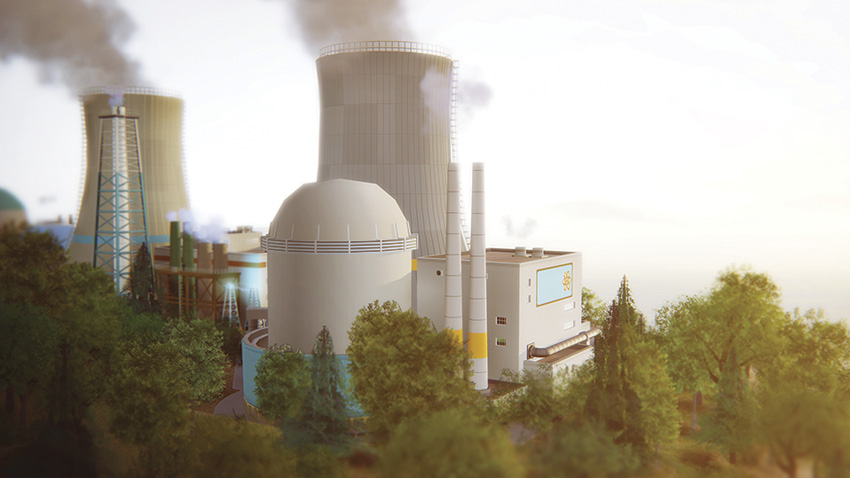
- Description: This mid-sized generator uses slightly more water and skilled workers, but produces slightly more power than the Gen I Thermal Reactor.
Fast Neutron Reactor
-
Cost:
130,000
-
Operational Cost:
3,200 per hour
- Power Production Rate: 600 MW
- Air Pollution Rate: None
- Maximum Modules: 3
- Prerequisites:
- University in the region.
- University with School of Science in the region.
- Complete research project at a University in the region.
- Description: Uses more water and skilled workers, but produces more power and three-eyed llamas.
Nissan Leaf Charging Station
-
Cost:
5,000
-
Operational Cost:
40 per hour
- Maximum Modules: 5
- Prerequisites:
- Have a residential building.
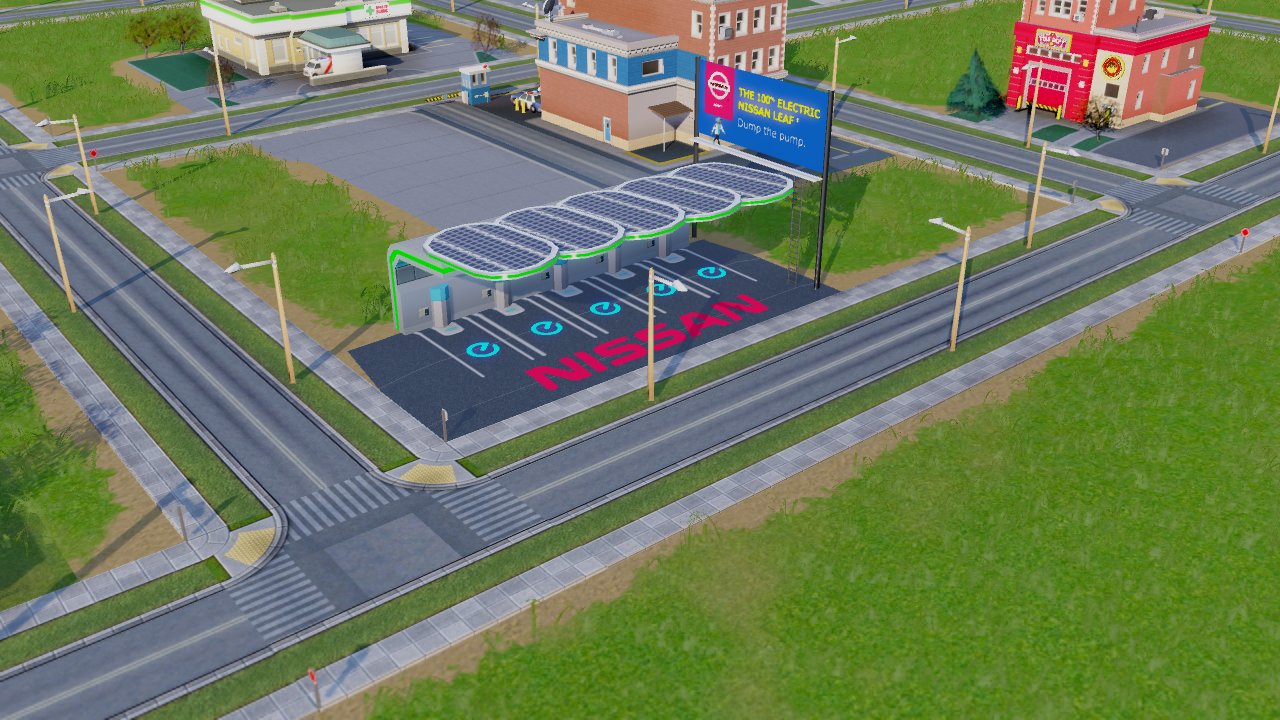
- Description: Your charging station is ready to go! Add it to your city and watch as your Sims begin driving around in the 100% electric Nissan LEAF.