
SimCity Guide Essentials Utilities
Water
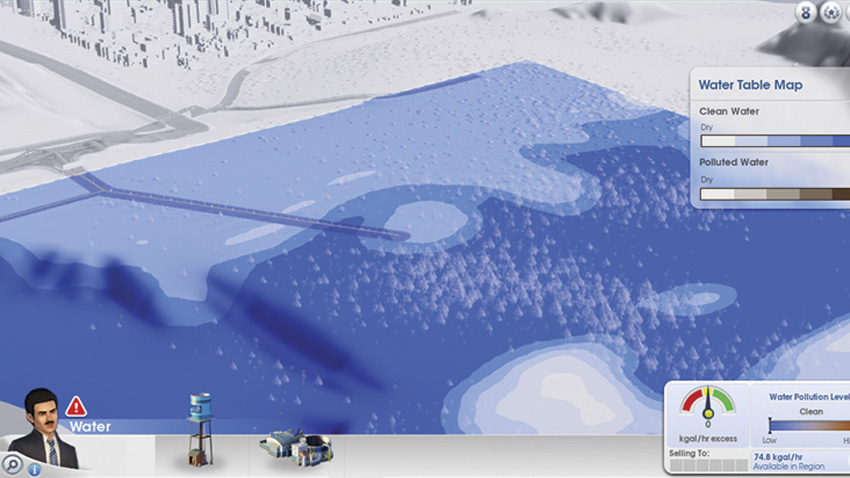
The Water menu shows the flow of water circulating throughout your city while the Water data map shows the water table beneath your city.
Sims aren’t the only ones who get thirsty. Without a constant and dependable water supply, many buildings will cease to function. You can pump water directly from the water table beneath your city—access the Water data map to see underground aquifers. Most city sites have plenty of water just beneath the surface. By placing a Water Tower or Water Pumping Station over an aquifer, you can supply your city with a steady supply of refreshing water.
All data relating to water production and availability is visible within the Water info tab, on the right side of the Water menu. The analog gauge here represents the surplus amount of water flowing through your system, measured in kilogallons (kgal). As long as the needle on this gauge stays within the green area, you have more than enough water. But if the needle moves into the yellow or red zones, you may be facing a water shortage. Build another Water Tower or purchase water from a neighboring city in the region—the amount of surplus water available in the region is also shown.
Water is susceptible to contamination, originating from ground pollution. The info tab also keeps track of how much pollution is in the water. If pollution gets high, you may see an increase in sick Sims due to germs in the water. Address pollution by keeping your water pumping facilities far from sources of ground pollution, like the Garbage Dump or Sewage Outflow Pipe. Pollution can also be filtered out of the system by constructing the Water Filtration module at a Water Pumping Station. Deal with polluted water as quickly as possible to avoid a massive germ outbreak.
While the water menu is open you can also view the water flowing beneath your city’s streets. Water is represented by blue lines, with small branches entering buildings along each road. The blue circles beneath each building represent water demand—the larger the blue circle, the greater the demand. With a simple glance at your city you can quickly view usage and identify outages. If there’s enough water in the system, all buildings are served. However, if there’s a shortage, buildings farthest from your water source will be the first to suffer shortages. Act quickly to address deficits in your water system to prevent buildings from becoming abandoned due to lack of water.
Water Tower
-
Cost:
 3,500
3,500
-
Operational Cost:
100 per hour
- Average Water Pump Rate: 6 kgal/hr
- Description: Pumps a decent amount of water from the water table to your city. Beware of ground pollution, which can carry sickness-transmitting germs.
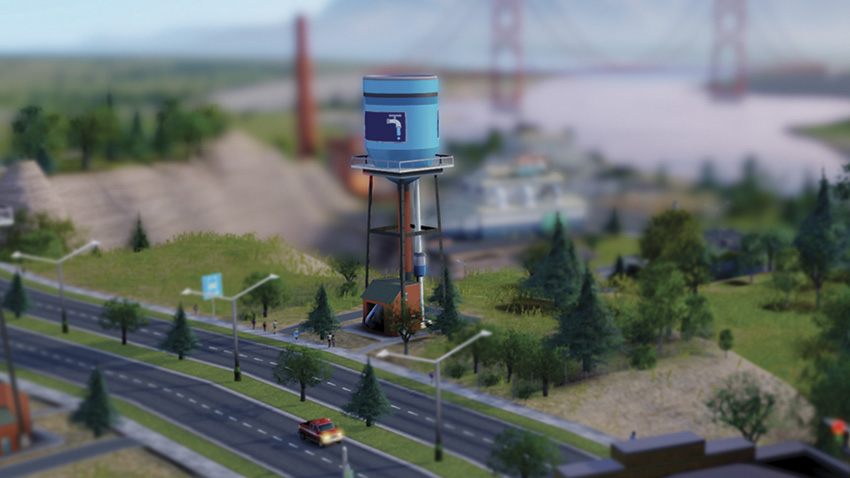
The Water Tower is a simple, no-frills solution to your city’s water needs. These structures are cheap and small, making it easy to expand your water coverage with the construction of additional Water Towers.
When a Water Tower is selected from the Water menu, the Water data map is automatically activated, showing all aquifers beneath your city, appearing as blue pools—the darker the blue, the more water available. Before plopping a Water Tower, make sure you place it directly over a dark blue aquifer.
Also, avoid placing the Water Tower anywhere near sources of ground pollution. This means keeping it far away from your Garbage Dump and Sewage Outflow Pipe. If placed in an area of high ground pollution, the water pumped is contaminated, spreading germs to all Sims who drink it. This can cause a massive public health crisis, leading to overfilled Clinics and Hospitals as sick Sims seek treatment for sickness.
Water Pumping Station
-
Cost:
44,000
-
Operational Cost:
400 per hour
- Average Water Pump Rate: 80 kgal/hr
- Prerequisites:
- Town Hall in the region.
- Town Hall upgraded to a City Hall in the region.
- Department of Utilities in the region.
- Description: Thirsty? Quench it with this large, expandable water production facility. With all the extra water, you could make a bit of extra income selling water to neighboring cities.
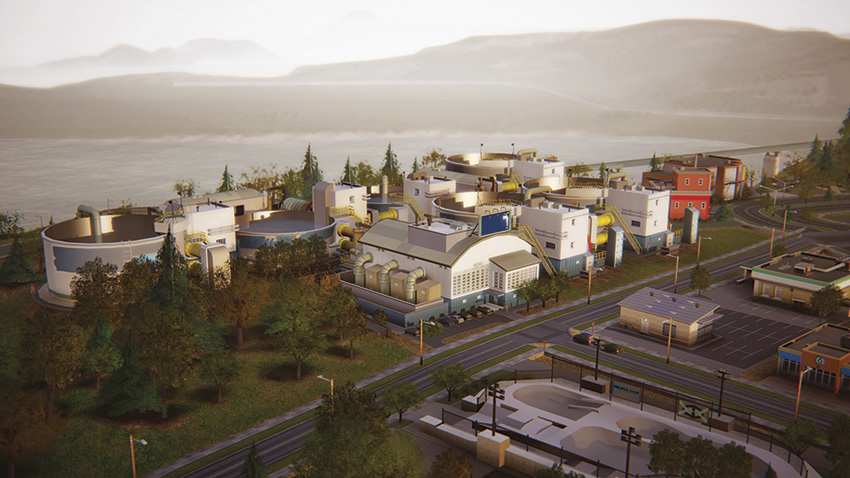
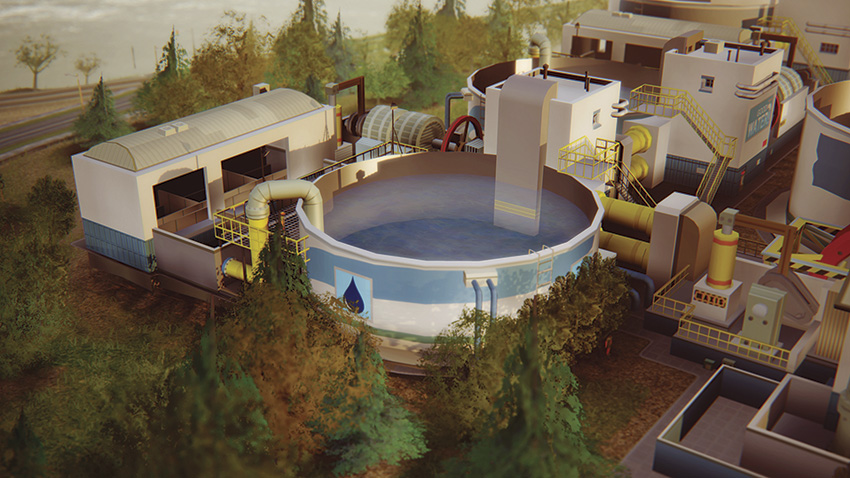
If your network of Water Towers isn’t cutting it, consider upgrading to the far more efficient Water Pumping Station—you’ll need a Department of Utilities in the region first. Although this facility is much larger than a Water Tower, it produces high volumes of water, capable of quenching the thirst of any sized city.
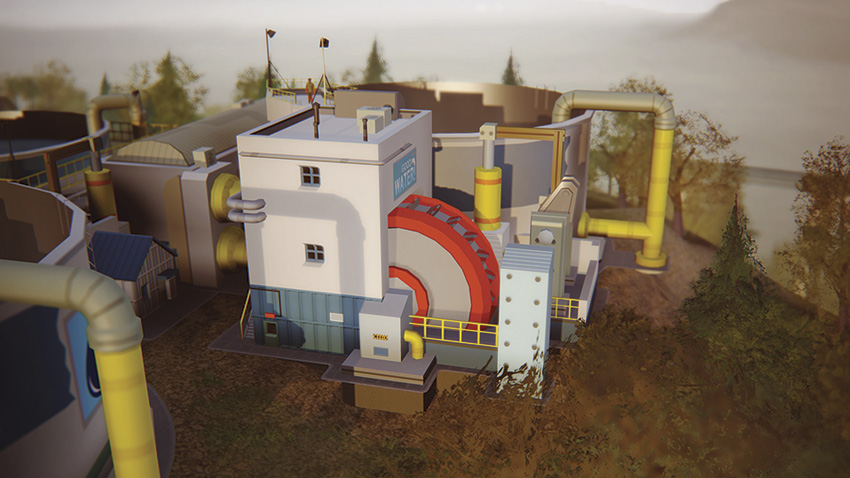
Capacity can even be increased by adding extra Basic Water Pump modules. The Filtration Pump module can also be added to remove any contaminants caused by ground pollution. But don’t bulldoze those old Water Towers just yet. It may take a while for the Water Pumping Station to reach peak efficiency.
If you suspect ground pollution may contaminate your water supply, build the Water Pumping Station with a Filtration Pump module at the outset, removing the existing Basic Water Pump at the same time. The Filtration Pump filters out 100% of all contaminants, ensuring your city’s water supply is safe. But if you’re running a Basic Water Pump as well, contaminants may get through. So make sure you replace all Basic Water Pumps with Filtration Pumps.
Modules
Basic Water Pump
-
Cost:
30,000
-
Operational Cost:
200 per hour
- Average Water Pump Rate: 80 kgal/hr
- Maximum Modules: 6 (one comes with base)
- Description: If there’s still water in the water table, add another Basic Water Pump to extract more to meet your city’s needs or sell it to the region.
Filtration Pump
-
Cost:
60,000
-
Operational Cost:
400 per hour
- Average Water Pump Rate: 80 kgal/hr
- Maximum Modules: 6 (one comes with base)
- Description: Everyone needs water, but if your ground is polluted, you don’t want to drink germs! This filters out all contaminants as it pumps, sending mostly clean water to your city.
Water: Points to Remember
- Place Water Towers to provide water.
- RCI buildings that don’t get enough water will go abandoned.
- If a building doesn’t get water it will stop providing services.
- Dark blue areas of the Water map hold the most water.
- Rain will replenish the water table.
- Rivers and lakes supply unlimited water.
- Water Towers on polluted ground will make many Sims sick.
- A city creating water makes its excess water available to its neighbors.
- Purchase water with the Buy button in Region View.
- Cities pay a fee to their neighbors for water they purchase.
- Cities only buy the amount of water they need.
- Cities automatically increase the amount of water they buy as needs increase.