
SimCity Guide Essentials City Services
Police
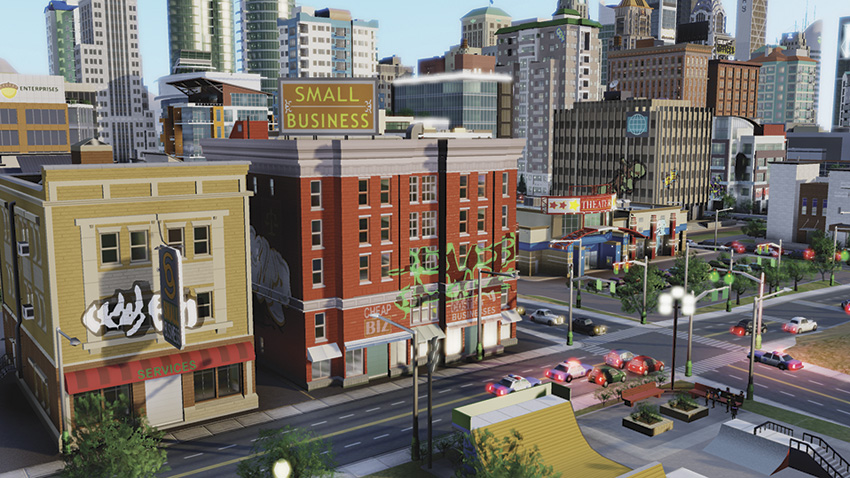
Buildings tagged with graffiti are the early signs of a growing crime problem. Expand police coverage before crime takes over the city.
Do you love the sound of police sirens echoing through the night air? Or maybe you’re just tired of criminals setting fires, robbing shops, and embezzling funds from your treasury. In any case, your city needs a police force.
No matter how perfect you think your city is, criminals will take up residence or visit from neighboring cities in the region. What the criminals do when they reach your city depends on your police presence.
A robust police force can suppress crime, discouraging criminals from going through with their devious plans. But criminals are persistent, and will eventually find weaknesses in your police coverage. When this occurs, your police must respond to the crime and apprehend the criminal before the criminal can get away, otherwise a criminal will level up and unleash more severe crimes on your city. Is your city’s police force up to the challenge?
Police Station
-
Cost:
 30,000
-
Operational Cost:
400 per hour
- Jail Cells: 10
- Patrol Cars: 2
- Patrol Rate: Every 60 minutes
- Prerequisites:
- Town Hall
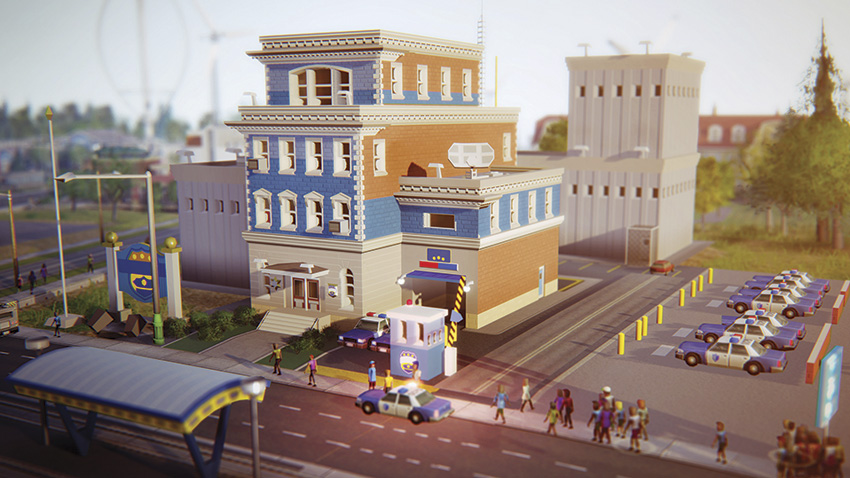
- Description: Patrol cars respond to crimes in progress and arrest the criminals—if they can catch them! Police bring arrested criminals to the station to be rehabilitated in jail cells. The Police Station suppresses crime nearby.
Building a Police Station is a good first step to suppressing crime in your city. The station comes with two patrol cars that conduct regular patrols and respond to crimes in progress. If a patrol car responds to a crime before a criminal can escape, the police officer within the patrol will apprehend the suspect and haul them off to the Police Station’s jail, capable of holding 10 criminals at a time.
Add more Patrol Car Lots to increase the number of patrol cars available and expand the jail capacity with additional ground or top floor Jail Cells. Since patrol cars from the Police Station can only respond to crimes in progress, criminals have more time to get away, especially if your city is experiencing traffic congestion.
Therefore the Police Station isn’t the most effective tool for apprehending criminals, but its mere presence, and that of its patrol cars, may be enough to make criminals think twice before breaking the law.
Modules
Police Station Sign
-
Cost:
200
- Operational Cost: None
- Maximum Modules: 1
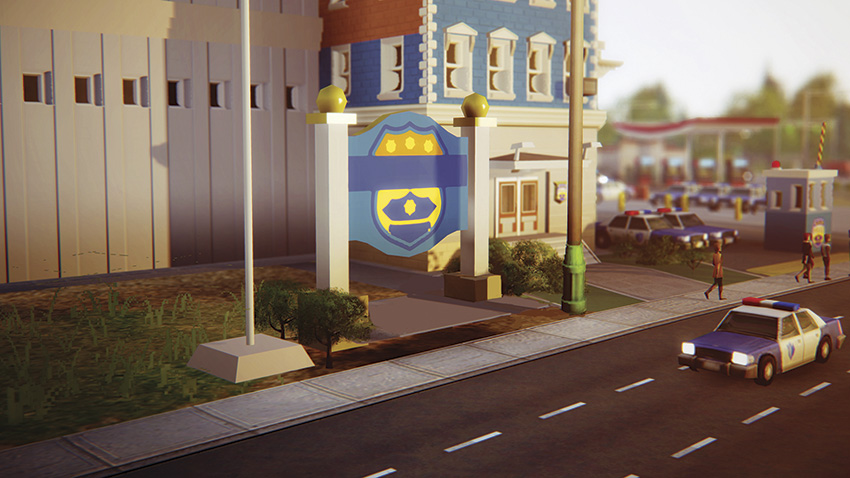
- Description: Criminals are a superstitious, cowardly lot. Strike fear into their hearts.
Police Station Flagpole
-
Cost:
20
- Operational Cost: None
- Maximum Modules: 1
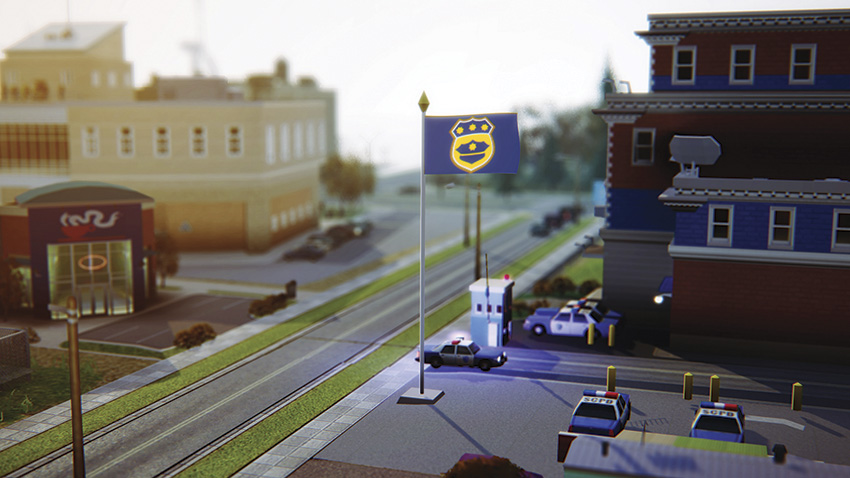
- Description: Every police station needs this to show their patriotism!
Patrol Car Lot
-
Cost:
10,000
-
Operational Cost:
225 per hour
- Patrol Cars: 2
- Patrol Rate: Every 60 minutes
- Maximum Modules: 4
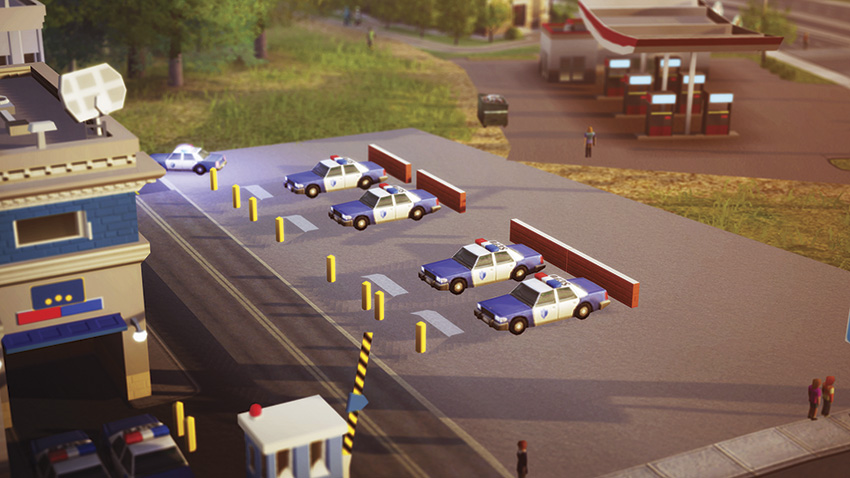
- Description: Increase your police presence with extra patrol cars.
Jail Cells (Ground Floor)
-
Cost:
15,000
-
Operational Cost:
300 per hour
- Jail Cells: 15
- Maximum Modules: 4
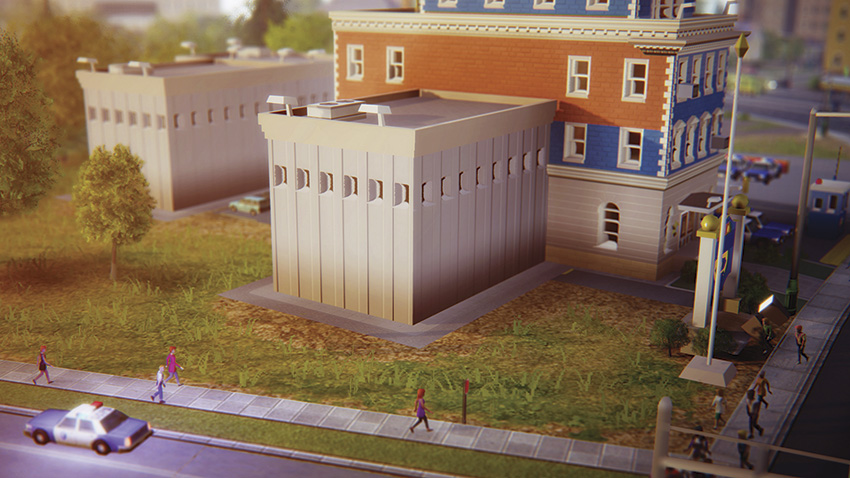
- Description: Meager accommodations for criminals. Criminals are rehabilitated after several days. Must be built on the ground.
Jail Cells (Top Floor)
-
Cost:
15,000
-
Operational Cost:
300 per hour
- Jail Cells: 15
- Maximum Modules: 4
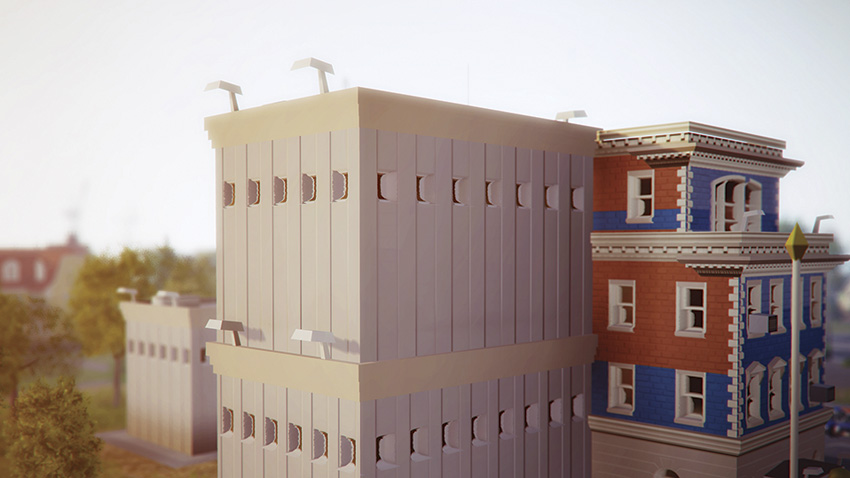
- Description: Meager accommodations for criminals. Criminals are rehabilitated after several days. Cannot be built directly on the ground.
Police Precinct

-
Cost:
95,000
-
Operational Cost:
1,700 per hour
- Jail Cells: 50
- Patrol Cars: 4
- Patrol Rate: Every 30 minutes
- Prerequisites:
- City Hall
- Department of Safety in the region
- Description: If “Police State” were an amusement park, the Police Precinct would be the fun house. More than just a big police station, the precinct has more jail cells and more patrol cars, and can be outfitted with advanced crime-fighting modules.
When it comes to fighting crime, no facility is better equipped than the Police Precinct. While this building has the same suppression and incarceration capabilities as the smaller Police Station, the addition of new modules gives the Police Precinct the ability to hunt down criminals wherever they’re hiding.
When plopping this building, immediately add the Police Dispatch Tower. This module instantly routes patrolling units to crimes in progress, increasing the chances of catching criminals in the act. The Detective Wing gives police detectives the ability to analyze evidence and arrest criminals at large while they’re at home—a must for identifying and arresting white collar tax evaders and embezzlers.
Add a Police Helipad to track and arrest criminals from the air, ideal during hot pursuits when your patrol cars are stuck in traffic. You can also address crime before it takes root through the Crime Prevention Center, dispatching a crime prevention van to discourage kids from becoming criminals. The Police Precinct’s capabilities and capacity can also be expanded, dispatching up to 28 patrols cars and jailing more than 300 criminals.
What more could you want? Get out there and start rounding up criminals! They’re certainly not going to turn themselves in.
Modules
Police Precinct Sign

-
Cost:
200
- Operational Cost: None
- Maximum Modules: 1
- Description: If you miss the search light and huge antenna, this helps you find the Police Precinct.
Patrol Car Lot
-
Cost:
15,000
-
Operational Cost:
600 per hour
- Patrol Cars: 6
- Patrol Rate: Every 30 minutes
- Maximum Modules: 4
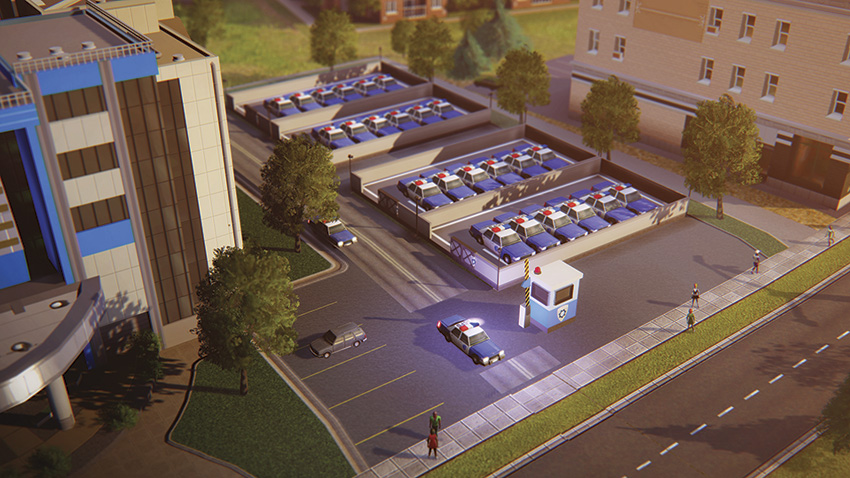
- Description: Beef up your police force with more patrol cars. Getting more cops on the beat will help prevent more crimes and help arrest more criminals.
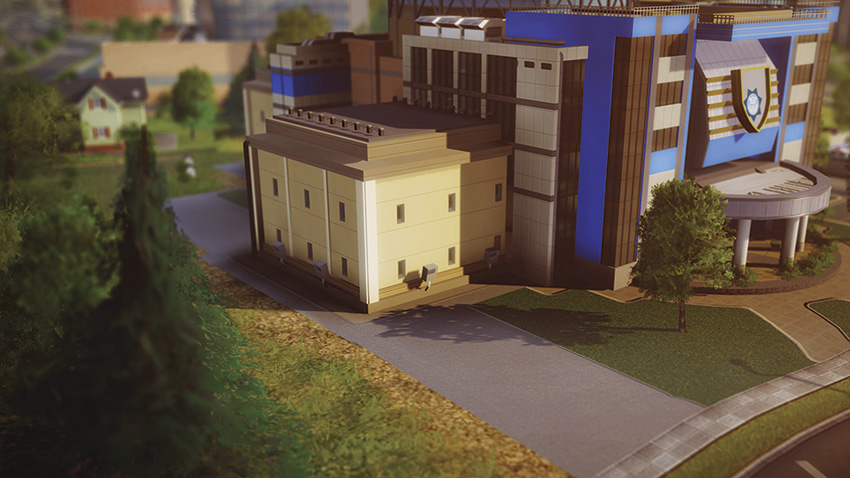
Jail Cells (Ground Floor)
-
Cost:
22,000
-
Operational Cost:
700 per hour
- Jail Cells: 70
- Maximum Modules: 4
- Description: This top-of-the-line cell block has electric locking doors, security cameras, and room for more hardened criminals. Welcome to the future! Must be built on the ground.
Jail Cells (Top Floor)

-
Cost:
22,000
-
Operational Cost:
700 per hour
- Jail Cells: 70
- Maximum Modules: 4
- Description: This top-of-the-line cell block has electric locking doors, security cameras, and room for more hardened criminals. Welcome to the future! Cannot be built directly on the ground.
Police Dispatch Tower

-
Cost:
10,000
-
Operational Cost:
525 per hour
- Response Time: Instant!
- Maximum Modules: 1
- Description: The farther your signal goes, the better. Use the Dispatch Tower to help your patrol cars respond to crimes in progress instantly.
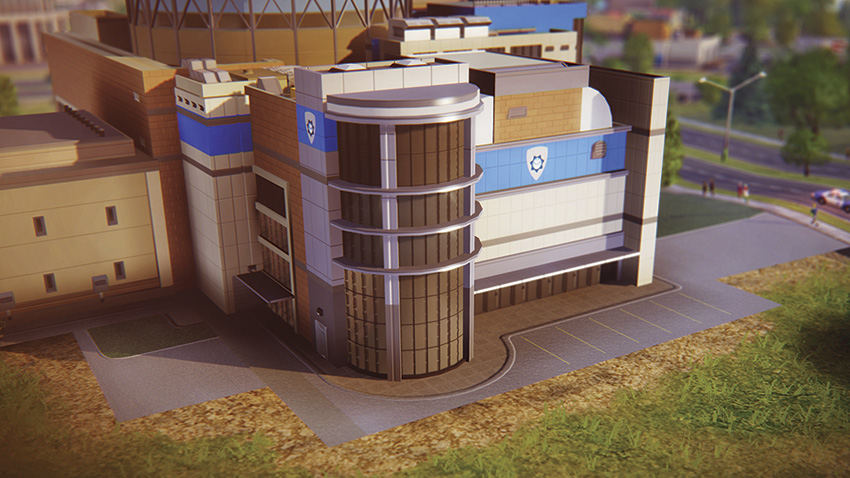
Detective Wing
-
Cost:
60,000
-
Operational Cost:
750 per hour
- Detective Cars: 1
- Prerequisites:
- University in the region
- University with School of Law in the region
- Complete research project at University in the region
- Maximum Modules: 4
- Description: While patrol cars can arrest criminals committing crimes, you need detectives to investigate criminals at large. Detectives will park their detective car outside the homes of criminals at large and arrest them.
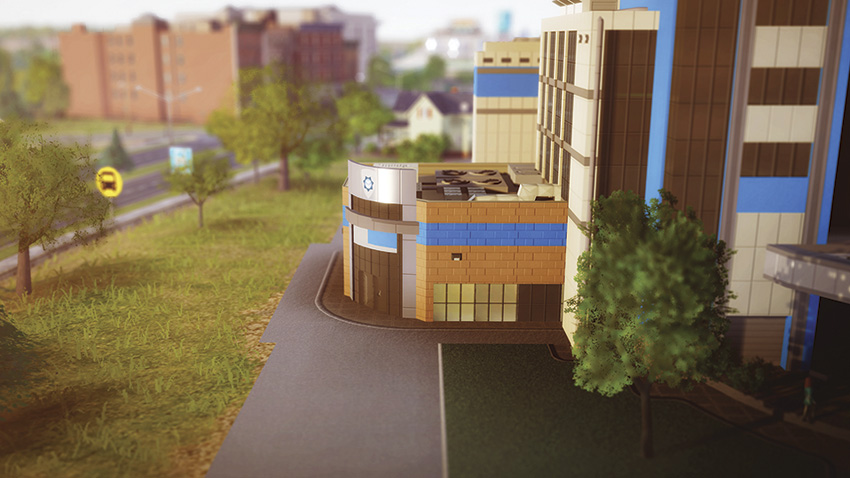
Crime Prevention Center
-
Cost:
30,000
-
Operational Cost:
400 per hour
- Crime Prevention Vans: 1
- Maximum Modules: 4
- Description: Take a pro-active approach to crime fighting by sending officers to schools, parks, and more to teach kids the value of taking the fight out of crime.
Police Helipad

-
Cost:
20,000
-
Operational Cost:
750 per hour
- Police Helicopter: 1
- Prerequisites:
- Municipal Airport in the city or International Airport in the region
- Maximum Modules: 4
- Description: We can keep our authoritative eye in the sky on these do-bad criminals.
Police Management
Apprehending and throwing criminals in jail is relatively simple. But unless you know how crime operates, and address its root causes, the fight against crime will never subside. New criminals will continually appear, potentially overburdening your police force and city’s budget.
But what can you do to prevent crime? In this section we’ll take a look at the inner-workings of the crime system as well as offer some pro-active solutions to suppressing and reducing crime within your city and region.
Understanding Crime
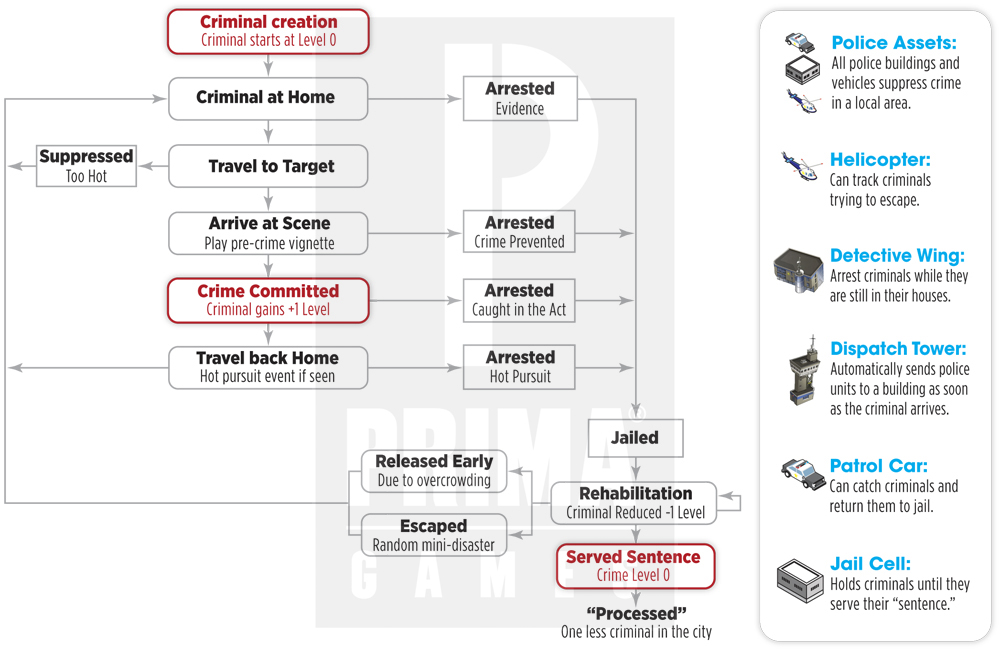
So exactly how does crime work? The accompanying diagram illustrates the general flow of criminal activity within your city. Criminals start their day at home, like every other Sim. But instead of going to work, they’ll look for a target based on their preferred criminal specialty—arsonists will look for buildings to set on fire, shoplifters will look for shops to steal from, and so on.
But if their target is located in an area with a high police presence, they’ll turn around and go home. In this sense, suppression through the placement of Police Stations and Police Precincts as well as frequent patrol car drive-bys can prevent crimes from even taking place.
But what if there isn’t enough of a police presence to deter a crime? In that case, the crime is committed and the criminal begins traveling back home. Police have a limited amount of time to catch the criminal as the perp travels from the scene of the crime to home.
If criminals reach their homes before the police can apprehend them, they get away with their crimes. However, if a Detective Wing is present at a Police Precinct, there’s a chance the criminal can be caught at the target area, before the crime is even committed.
Or if the criminal makes it home following a crime, a detective can use evidence gathered from the crime scene to identify and arrest the criminal at home. But with only one detective car per Detective Wing, a backlog of unsolved crimes can become overwhelming.
When a criminal is arrested, the criminal is put in the jail of a Police Station or Police Precinct. Criminals spend approximately 3-4 days in jail where they’re rehabilitated. Once a criminal served the time, the criminal is essentially erased from the simulation—the criminal doesn’t reenter society.
However, if a criminal is released early, due to overflowing jails or escape, rehabilitation is interrupted and the criminal returns home, resuming the same criminal behavior. So make sure you have plenty of room in your jails, otherwise the revolving door brand of criminal justice will come back to bite you.
Criminal Behavior
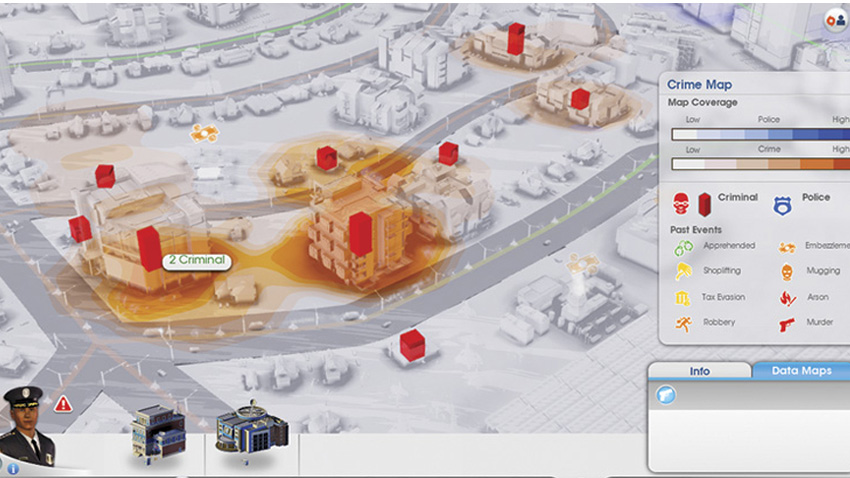
Access the Crime map to identify high-crime neighborhoods. Criminals living in high and medium wealth buildings commit white collar crimes, including tax evasion and embezzlement.
Criminals
| Level | Criminal | Description |
|---|---|---|
| Arson | ||
| 1 | Light Arsonist | Only targets abandoned buildings. |
| 2 | Heavy Arsonist | Targets any building. |
| Petty Theft/Violent Crime | ||
| 1 | Shoplifter | Merchandise stolen from shops during business hours. |
| 2 | Robber | Shop is robbed while closed, usually at night. |
| 3 | Mugger | Targeted Sim is injured, requiring ambulance. |
| 4 | Murderer | Targeted Sim is killed. |
| White Collar Crime | ||
| 1 | Tax Evader | Targeted building pays no taxes. |
| 2 | Embezzler | Buildings with operational costs are targeted. Hourly costs are doubled. |
Criminals aren’t part of your normal worker, shopper, happiness-seeking population. They’re a different element, attracted by opportunities to commit crimes. Your city is populated by criminals at regular intervals, and different types of buildings create criminals. For instance, arsonists are created at abandoned buildings.
Petty theft and violent criminals are generated by residential buildings with no or low education. White collar criminals are created by medium and high wealth residential buildings with no money/jobs—they need to find some way to pay for that fancy mansion!
Every time a criminal gets away with a crime, the criminal is emboldened, and levels up. After successfully burning down an abandoned building, a light arsonist will become a heavy arsonist and target any building in the city. In the petty theft and violent crime category, criminals start out as shoplifters before leveling up to become robbers, muggers, and murderers. Educated white collar criminals begin as a tax evader before graduating to embezzler.
As you can see, the longer criminals operate unchallenged, the more severe their crimes become. It’s important to catch these criminals early on, before their crimes endanger the lives of the city’s law-abiding citizens.
Crime Prevention
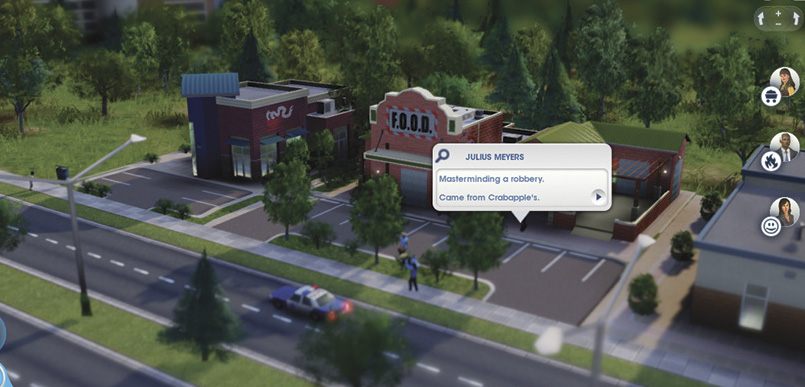
The jig is up for these failed bank robbers—they’re cornered with nowhere to hide. Perhaps if they had access to education they would have chosen a different lifestyle?
Police don’t prevent the creation of criminals—they merely deal with them. The best way to discourage criminals from taking root in your city is through education. Sending kids to school not only gives them an education, but it also keeps them off the streets and out of trouble.
For example, a low wealth residential building with kids and no educational opportunities or parks has a high chance of producing a criminal. A similar low wealth residential building with access to schools, parks, and other kid-friendly activities has a reduced chance of producing a criminal.
Providing jobs is also a critical portion of your crime prevention strategy. Study the Population panel to make sure there are enough jobs to go around for each of the three wealth classes. If there’s a shortage of jobs, criminals may appear.
White collar criminals run amok in cities with medium and high wealth residential buildings, but few medium and high wealth jobs in the city or region to support them. You can further discourage the creation of criminals with the Crime Prevention Center module at the Police Precinct. This dispatches a crime prevention van, teaching kids the benefits of an education over a life of crime.
Expansion of Service
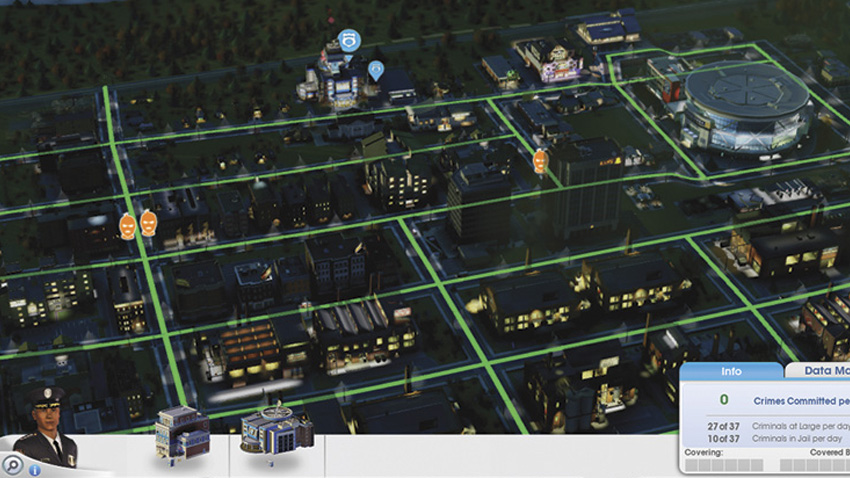
Open the Police menu to watch criminals move throughout the city, as indicated by colored icons. The presence of this Police Precinct and frequent patrols in the surrounding area help suppress crime, discouraging these criminals from breaking the law.
Just like fire and health services, establishing and maintaining a police presence isn’t cheap, but it’s a service vital to keeping the criminal element from running rampant. Start small and expand as demand for greater police coverage increases.
Open the Police menu to review the data in the info tab. Here you can see the number of crimes committed per day as well as the number of criminals at large and in jail. If there are numerous criminals at large, it’s time to expand the police force, preferably with the addition of a Detective Wing.
You can also access the Crime map to see the types of crime committed throughout the city as well as high concentrations of criminals—if there’s more orange (crime) than blue (police) on the map, consider building additional Police Stations or Police Precincts.
Unfortunately, you only have a finite amount of resources in your fight against crime, determined by the treasury and city budget, so place your police buildings in high-crime neighborhoods to get the biggest bang for your buck. Even if you don’t catch all the criminals living in each neighborhood, the police presence may discourage criminals from acting out on their sociopathic impulses.
Volunteering Police Resources
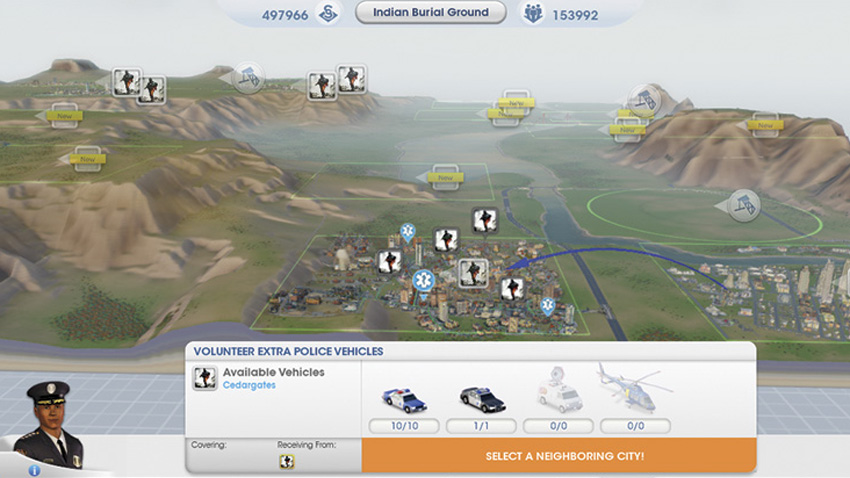
Do your neighboring cities have crime problems? Volunteer police vehicles to help prevent their criminals from spilling into your city.
Crime isn’t contained within individual cities. Like air pollution, it can spill out into the region, as criminals travel to neighboring cities to commit their crimes. Even if your city is relatively crime-free, with few or no resident criminals, your city may still attract criminals from nearby cities with crime problems.
Since crime is a regional problem, all mayors should cooperate to fight it by volunteering their police vehicles. Any time you build a Police Station or Police Precinct, you’ll have patrol cars you can share with neighboring cities.
Open the Region View, then access the Police menu to begin allocating your police vehicles to nearby cities. In addition to patrol cars, you can also volunteer detective cars, crime prevention vans, and police helicopters.
As with fire and health vehicles, volunteering a police vehicle doesn’t leave your city unprotected—each vehicle you volunteer can cover both cities simultaneously. As a bonus, your police vehicles also receive a fee for each criminal they catch in a neighboring city—these fees appear in the Budget panel’s Recent Transactions window.
Beyond earning fees, fighting crime in neighboring cities will help keep your city safe by removing criminals from the region.
Police: Points to Remember
- Police Stations and patrol cars prevent crimes and arrest criminals.
- Criminals start as uneducated kids.
- A lack of jobs can lead to a rise in crime.
- If criminals are successful they commit worse crimes.
- Police take criminals to holding cells.
- Once criminals serve their time they are rehabilitated and released.
- If holding cells are full, criminals are released early.
- Criminal activity is most common at night.
- Criminals can travel from neighboring cities that have high crime.
- The Detective Wing allows police to arrest criminals in their homes.
- Criminals are attracted to casinos and commercial areas.
- Police helicopters can track and arrest criminals in their homes.
- The Police Station and Police Precinct increase land values.
- Cities can extend their police coverage to their neighbors.
- Any police vehicle can be offered to any connected city.
- The city receiving police coverage gets free police coverage.
- The city providing the police coverage receives income for criminals they catch.