
SimCity Guide Essentials City Services
Fire
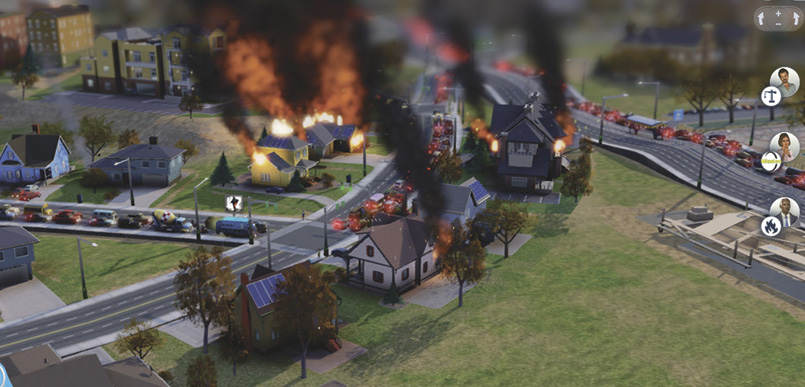
A lack of fire coverage can lead to large fires that spread from one building to the next, potentially reducing a large portion of your city to ash and rubble.
Uh oh. Do you smell smoke? Maybe it’s time to build that Fire Station after all. Providing fire coverage for your city is one of the most important aspects of establishing a safe living, working, and shopping environment for residents and visitors alike.
It’s impossible to determine when and where your city’s first fire will break out, so once you have the money, plop a Fire Station in a central location. At the very least, ask a neighboring city to provide fire coverage until you can establish adequate fire protection for your city.
Fire Station
-
Cost:
 20,000
-
Operational Cost:
400 per hour
- Response Time: 12 minutes
- Prerequisites:
- Town Hall
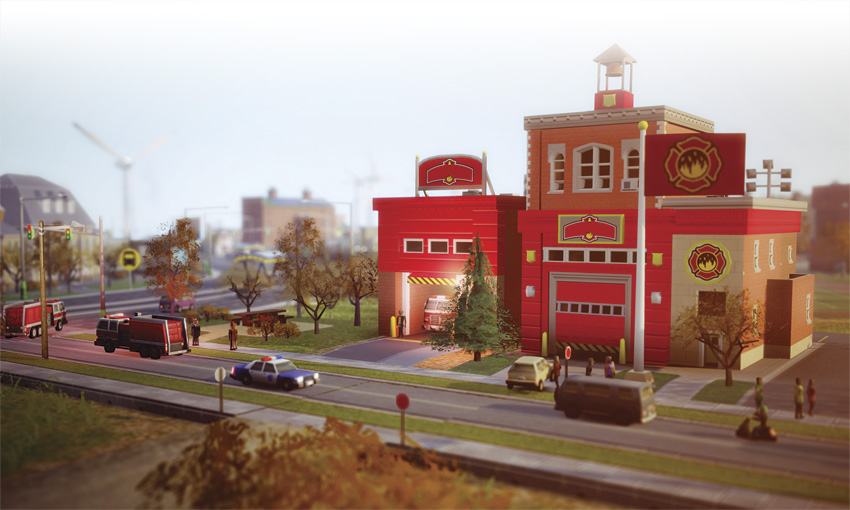
- Description: Stop the spread of fire across your city. Improve coverage by adding more fire trucks.
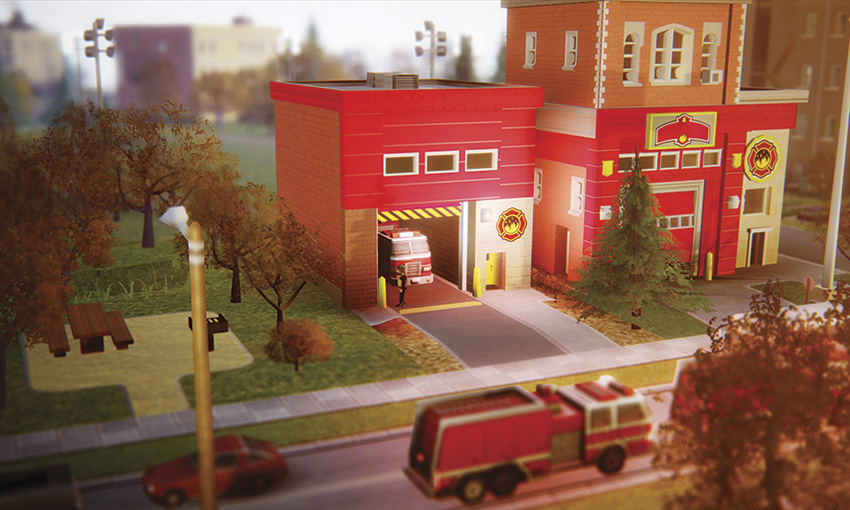
It may not look like much, but this little Fire Station is quite capable of serving the fire suppression needs of a small or moderately sized city. When you first build the Fire Station, immediately add the Fire Alarm module.
This cuts the station’s response time from 12 minutes down to 6 minutes, getting firefighters out the door and to the location of a fire before it can turn into a dangerous multi-structure blaze. The Fire Station comes with one garage and one fire truck, but the station can be expanded through the addition of up to three more Fire Station Garages, giving the building the ability to house a total of four fire trucks.
The expandability and relative low cost of the Fire Station makes it an attractive alternative to the Large Fire Station—you can build three fully expanded Fire Stations, supporting 12 fire trucks, for less than one Large Fire Station, supporting only four fire trucks. So take into account the needs of your city and consider plopping multiple Fire Stations before dropping a lot of money on a Large Fire Station.
Modules
Fire Station Sign
-
Cost:
200
- Operational Cost: None
- Maximum Modules: 1
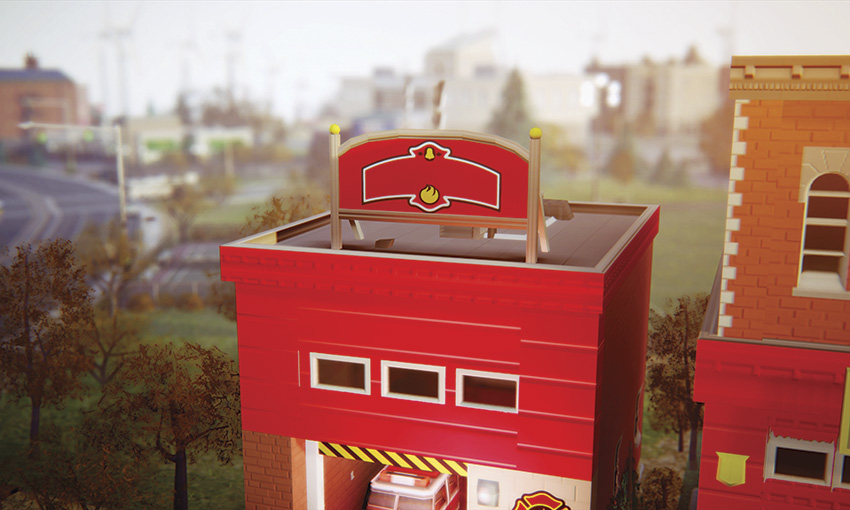
- Description: It’s nice to have a sign, for when you’re running around in a panic looking for the Fire Station.
Fire Station Flagpole
-
Cost:
100
- Operational Cost: None
- Maximum Modules: 1
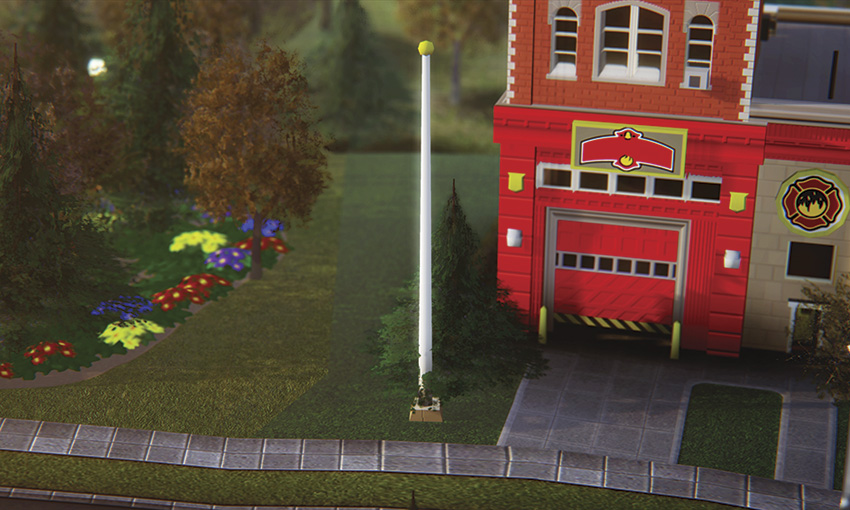
- Description: Wouldn’t be a Fire Station without a flagpole, right? Hopefully the pole doesn’t confuse any of the firefighters into sliding down it…
Fire Alarm

-
Cost:
3,000
-
Operational Cost:
75 per hour
- Response Time Modifier: 1/2 the previous response time
- Maximum Modules: 1
- Description: Wake those sleepy firefighters from dreams of Dalmatians jumping over fences. Fire trucks are dispatched twice as fast.
Fire Station Garage
-
Cost:
15,000
-
Operational Cost:
200 per hour
- Maximum Modules: 4
- Description: Attach this garage to your Fire Station and gain an additional fire truck. And maybe your firemen can start a garage band during their time off?
Large Fire Station
-
Cost:
85,000
-
Operational Cost:
1,700 per hour
- Response Time: 6 minutes
- Prerequisites:
- City Hall
- Department of Safety in the region
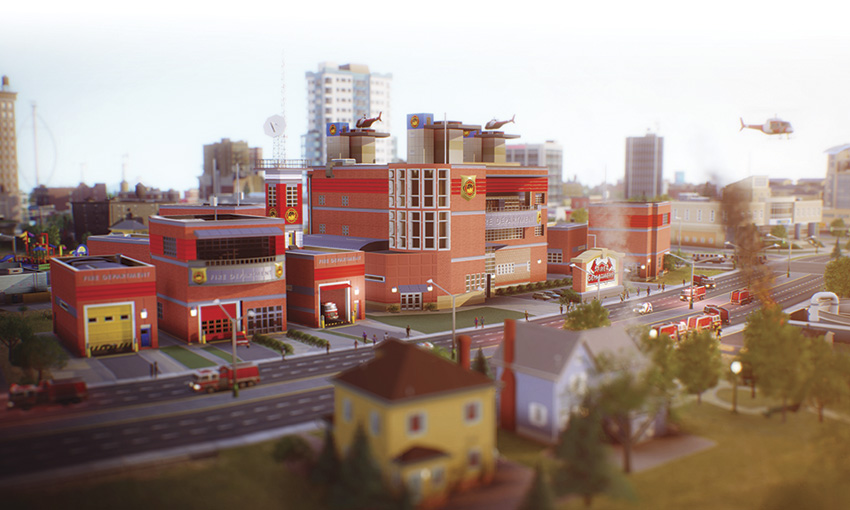
- Description: This Fire Station is hot stuff! Go all out with better trucks, larger fire coverage, the addition of Hazmat for those stubborn industrial fires, and a fire helicopter! That’s right, we said helicopter.
Is your city experiencing more than its fair share of fires? Then consider building the Large Fire Station. This is a highly specialized facility capable of handling the most dangerous fires your city will face—it already comes equipped with two hook & ladder trucks.
Soon after building the Large Fire Station, build the Fire Dispatch Tower module to decrease response time from 6 minutes down to 3 minutes. If you have the money, add on a Fire Marshal Office to prompt random visits by the fire marshal to various buildings—a visit from the fire marshal makes the building immune to fire for several days.
If you have numerous mines or industrial buildings in your city, it’s strongly advised to add at least one Hazmat Garage. Hazmat fire trucks are the only way to put out hazmat fires, caused by the combustion of toxic materials found in industrial buildings.
Add more hook & ladder trucks to your fleet by building additional Fire Truck Garages—hook & ladder trucks can extinguish fires faster than their smaller fire truck cousins. Or take the fight to the skies by adding a Fire Helipad. The Large Fire Station is a very expensive facility to place and run on an hourly basis.
Before building and expanding, make sure your city’s budget can handle the burden of running a top-notch facility. Otherwise, stick with the smaller and more economical Fire Stations.
Modules
Large Fire Station Sign
-
Cost:
200
- Operational Cost: None
- Maximum Modules: 1
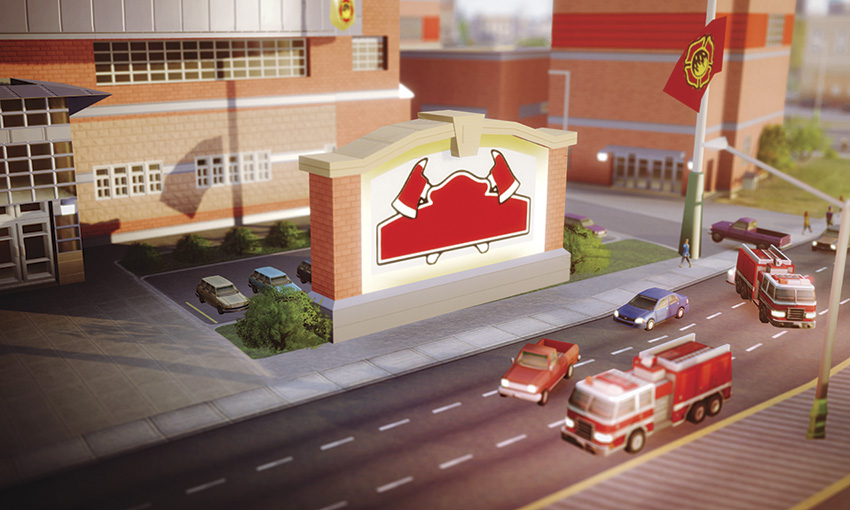
- Description: It should be pretty obvious from the sirens where the Large Fire Station is, but the sign makes it more official!
Fire Station Flagpole
-
Cost:
100
- Operational Cost: None
- Maximum Modules: 1
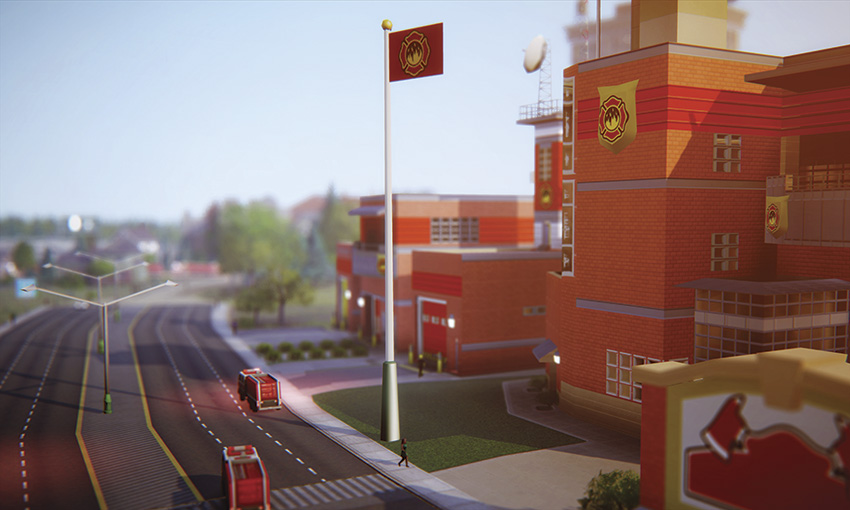
- Description: Wouldn’t be a Fire Station without a flagpole, right? Hopefully the pole doesn’t confuse any of the firefighters into sliding down it…
Fire Dispatch Tower
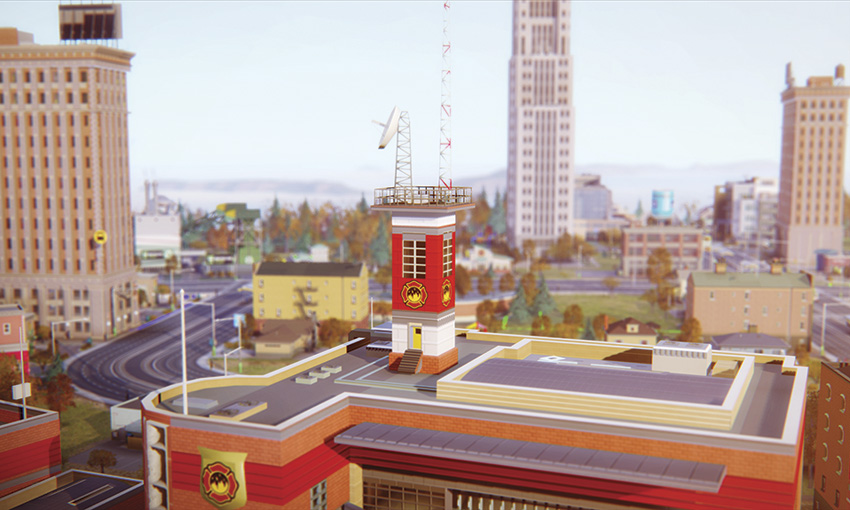
-
Cost:
10,000
-
Operational Cost:
525 per hour
- Response Time Modifier: 1/2 the previous response time
- Maximum Modules: 1
- Description: This state-of-the-art dispatch tower communicates over satellite. Speeds up response time of all your fire vehicles. Fire trucks are dispatched twice as fast.
Fire Truck Garage
-
Cost:
15,000
-
Operational Cost:
400 per hour
- Maximum Modules: 4 (one comes with base)
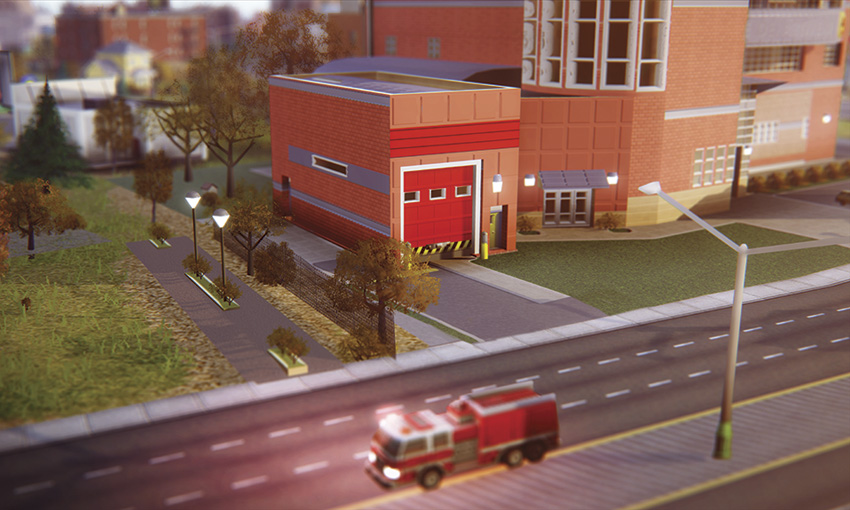
- Description: With all the capabilities of a regular fire truck, the hook & ladder that comes with this one extends its coverage by quite a bit.
Fire Marshal Office
-
Cost:
20,000
-
Operational Cost:
500 per hour
- Fire Retardant: Adds 10 per house
- Maximum Modules: 4
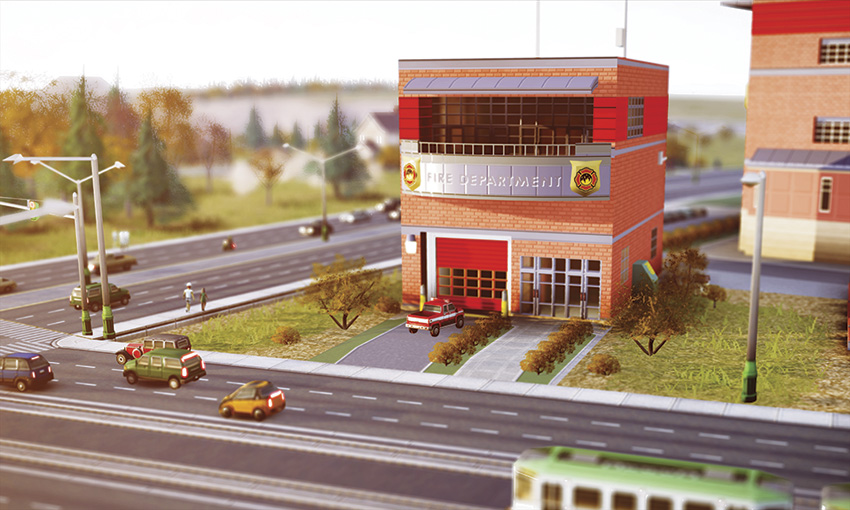
- Description: The fire marshal drives around the city, visiting houses, factories, and shops. Places the fire marshal visits are immune to fire for several days.
Hazmat Garage
-
Cost:
40,000
-
Operational Cost:
250 per hour
- Fire Retardant: Adds 10 per house
- Maximum Modules: 4
- Prerequisites:
- University in the region
- University with School of Engineering in the region
- Complete research project at University in the region
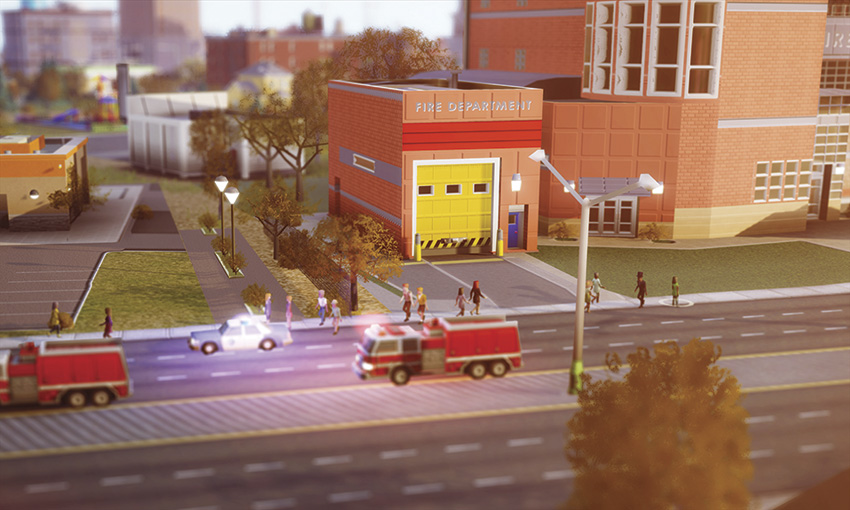
- Description: This hazmat truck puts out heavy industrial fires caused by hazardous materials. Without it, hazmat fires will burn unchecked!
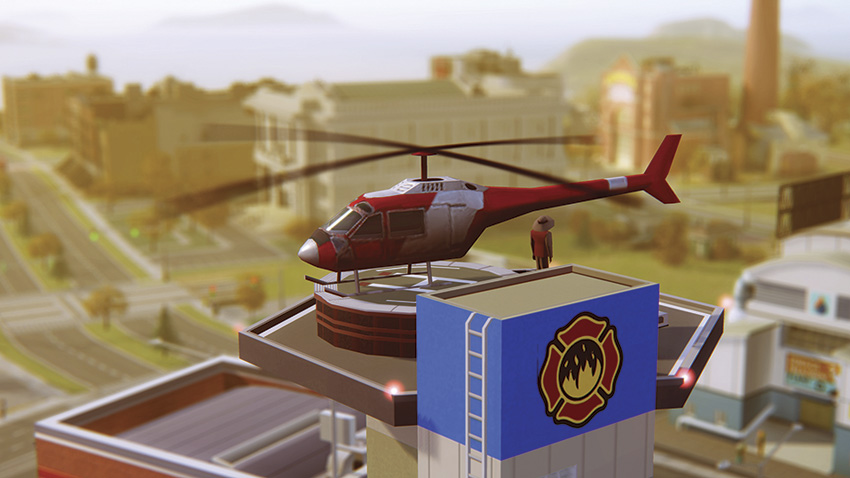
Fire Helipad
-
Cost:
60,000
-
Operational Cost:
1,400 per hour
- Fire Retardant: Adds 10 per house
- Maximum Modules: 4
- Prerequisites:
- Municipal Airport in the city or International Airport in the region
- Description: Put out fires in a blink of a helicopter blade. Make sure you have enough water towers, because this one uses a lot of water!
Fire Management
Building a Fire Station may not be enough to address all the fires breaking out across your city. Before investing a small fortune on fire services, it’s important to understand how fires function and how they can be prevented.
Once you’ve got a handle on the basics, gradually expand services as needed through the construction of additional modules or the Large Fire Station. But if you’re not careful, the natural urge to provide fire protection could bankrupt your city.
Understanding Fire
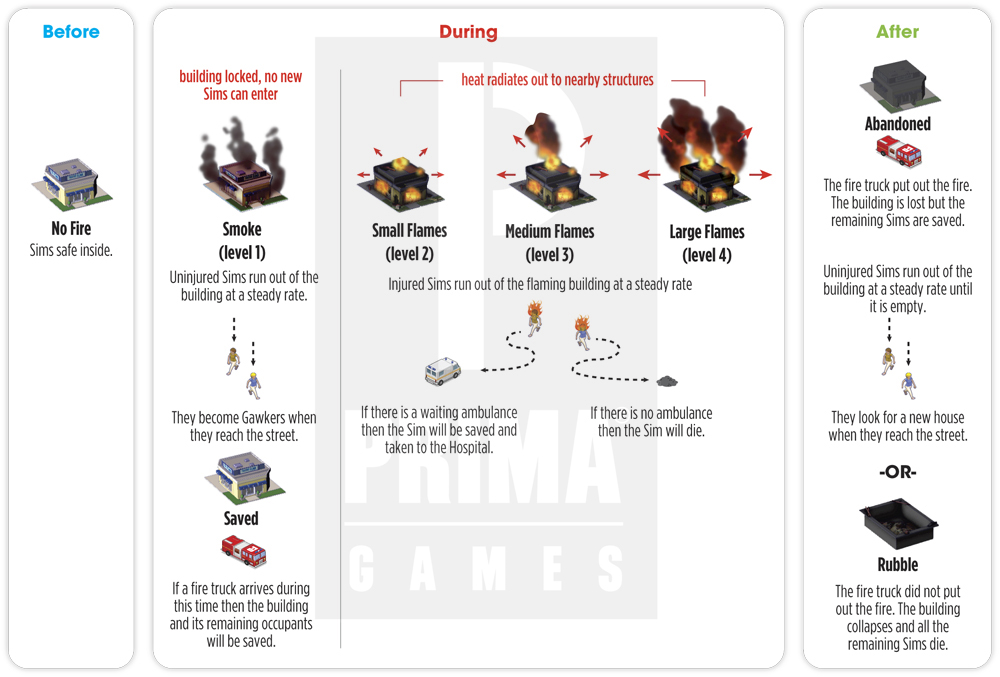
Where there’s smoke, there’s fire. At least there will be if your fire trucks don’t get there in time. As the diagram illustrates, fires don’t just burst out without warning. Fires go through four stages of increasing intensity, beginning with smoke.
When a building begins emitting smoke, an alarm is sounded and your fire trucks begin rolling out. While a building is emitting smoke, Sims can still escape without suffering injuries. However, as flames become visible, the risk for Sims trapped inside increases.
Any Sim escaping a building in flames will be injured, requiring medical assistance from an ambulance—if no ambulance arrives, they will die. Meanwhile, your fire trucks are tasked with extinguishing the flames. As the fire consumes more fuel, it becomes larger, radiating heat to nearby buildings.
As neighboring buildings absorb heat from the fire, they run the risk of catching on fire too. But as the fire truck pours water on the fire, the heat radiated drops significantly, reducing the risk of the fire spreading to other buildings.
But when dealing with fires, every minute counts. So make sure your Fire Station is equipped with a Fire Alarm and that your Large Fire Station has a Fire Dispatch Tower—both modules reduce the response time. Secondly, ensure your roads are free of traffic, otherwise your vehicles may not make it to the fire before it spreads over wide area.
If traffic is a problem in your city, consider adding a Fire Helipad to your Large Fire Station and attack the flames from the air, bypassing traffic altogether.
Fire Prevention
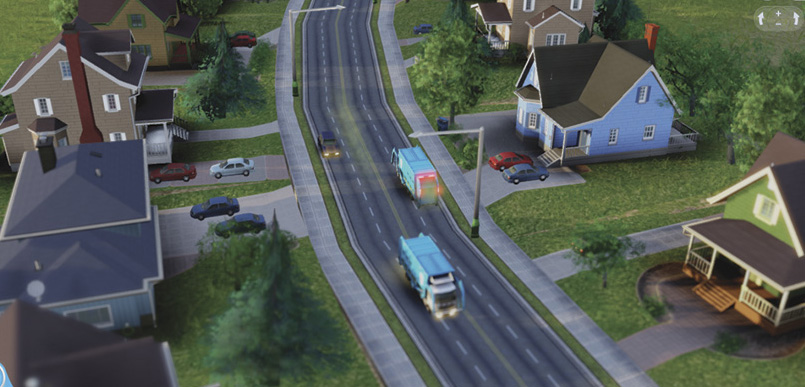
In addition to reducing germs caused from ground pollution, collecting garbage significantly reduces a city’s fire risk.
While you can rely on your fire trucks to extinguish fires, it’s best if there are no fires in the first place. There are multiple steps you can take to reduce the risk of fires breaking out in your city. First, access the Waste Disposal menu and ensure all garbage cans are collected each day.
Trash piling up in your streets significantly increases the chance of a fire breaking out, so address this issue by adding more garbage trucks to deal with the garbage problem. Next, access the Bulldoze menu and demolish any abandoned buildings or rubble—these eyesores also increase fire risk.
Now open the Education menu and ensure that every kid in your city is enrolled in school. Educated Sims are far less likely to cause fires than uneducated Sims, so to prevent your Sims from doing stupid things, consider plopping a Grade School or Public Library to increase the education level of your population.
Crime can also increase the risk of fire, particularly if you have an arsonist on the loose. Open the Police menu and consider expanding police services if there are multiple criminals operating freely within your city. As a final step to reduce fire risk, add at least one Fire Marshal Office module to your Large Fire Station.
The fire marshal randomly inspects multiple buildings throughout the city on a daily basis. Buildings that have been visited by a fire marshal are completely immune to fires for several days.
As you can see, there is not a one-step solution to preventing fires, but by addressing garbage, abandoned buildings, education, and crime and adding fire marshals, you can significantly reduce your city’s risk for fires, allowing you to maintain a smaller and more cost-effective fire service.
Expansion of Service
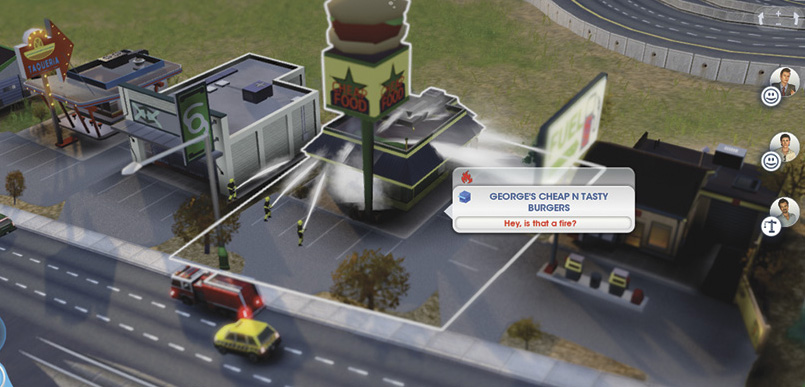
The Fire Alarm and Fire Dispatch Tower reduce response time, helping your fire trucks reach fires in their early smoldering stage, before flames are even visible.
Like all city services, providing fire protection isn’t cheap, so it’s important to keep the size of your fire services in line with the current risk. Open the Fire menu and study the numbers in the info tab. Here you can see the number of buildings burned down each day as well as the numbers of fires and hazmat fires extinguished on a daily basis.
Obviously, if any buildings have burned down, you have a problem. But why are buildings burning down? Is it because you don’t have enough fire trucks? Or is it because the fire trucks couldn’t reach the fire due to traffic? To uncover the answer, monitor your fire trucks as they respond to a fire.
A fire truck can respond to one fire at a time, so if there’s multiple fires and only one truck, consider adding a garage or two. The standard Fire Station is cheap and easily expandable, making it the most economical solution for fighting fires.
If fires continue breaking out and your standard fire trucks aren’t cutting it, consider building a Large Fire Station for increased response time and specialty vehicles like the hook & ladder truck, hazmat truck, and fire helicopter.
But always take into account the hourly cost of operating each additional building and module. A top-of-the-line, fully equipped Large Fire Station can cost more than
3,000 to operate every hour!
Volunteering Fire Resources
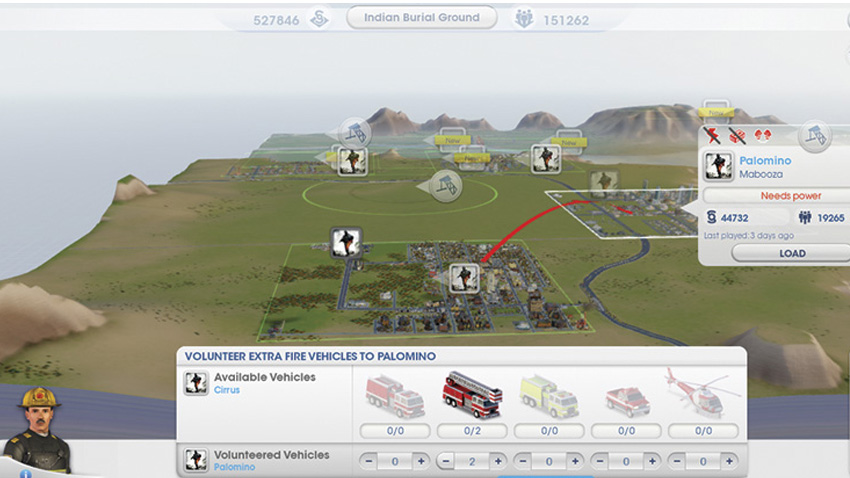
Sharing fire vehicles with the region is the right thing to do—plus you earn a
200 fee each time one of your vehicles extinguishes a fire in a neighboring city.
Just like garbage and recycling collection trucks, your fire service vehicles can be shared with neighboring cities in the region. Open the Region View, then access the Fire menu to begin allocation of vehicles to other cities.
Don’t worry, sharing fire trucks and vehicles does not reduce your own city’s fire coverage—technically these vehicles can respond to fires simultaneously in both cities. Furthermore, any fires your vehicles extinguish in a neighboring city nets your city a small fee, appearing within the Recent Transactions window of the Budget panel.
Don’t have any fire services in your city? Then consider asking the mayor of a neighboring city for a little help. Since there is no down side to extending fire services to a nearby city, the mayor will probably be more than happy to oblige unless that city’s fire resources are tied up assisting another city.
Fire: Points to Remember
- All buildings have a chance to catch on fire.
- Buildings on terrain with lots of water have lower fire risk.
- Buildings with educated Sims have lower fire risk.
- Overflowing garbage and abandoned buildings are a fire risk.
- Educated Sims are less likely to start fires.
- The Fire Station and Large Fire Station increase land value.
- Add fire trucks to put out more fires.
- Hazmat trucks from the Large Fire Station must put out hazmat fires.
- Industrial buildings have a greater chance to catch fire.
- Fires have a chance to spread to surrounding buildings.
- The fire marshal lowers the chance of fires.
- Some criminals start fires.
- Fire helicopters can avoid traffic on the way to put out a fire.
- Cities can extend their fire coverage to their neighbors.
- Any fire vehicle can be offered to any connected city.
- The city receiving fire coverage gets free fire coverage.
- The city providing fire coverage receives income for fires extinguished.