Dragon Quest Builders Guide Builder Basics
Additional Activities
Completing Challenges
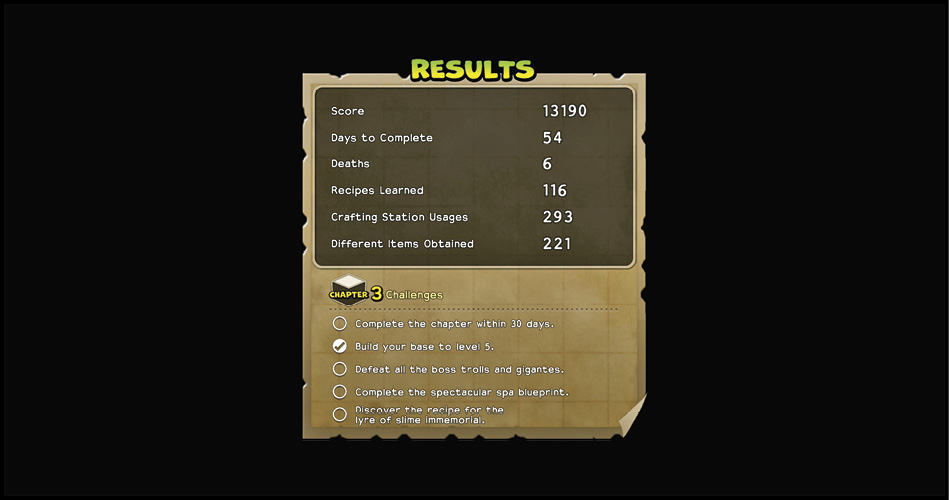
Each chapter of Story Mode includes five challenges that unlock additional recipes and items for Free Play. Three of the five challenges are unique to each chapter. The first two challenges are the same: complete the chapter within a given number of in-game days, and improve your base to maximum level.
Completing Chapters Quickly
This challenge requires familiarity with each chapter, because there’s no time to waste hunting for materials or enemies. That means you should act like this challenge doesn’t exist the first time you play a chapter. Focus on completing the remaining challenges so they won’t become a distraction for your speed run.
First, do everything possible to cut down the amount of time you need to travel. Carry crafting stations, or keep them in a colossal coffer so you can pull them out wherever they’re needed. Use chimaera wings instead of running back to your base. Gather the materials you’ll need in the future when you’re out completing other quests.
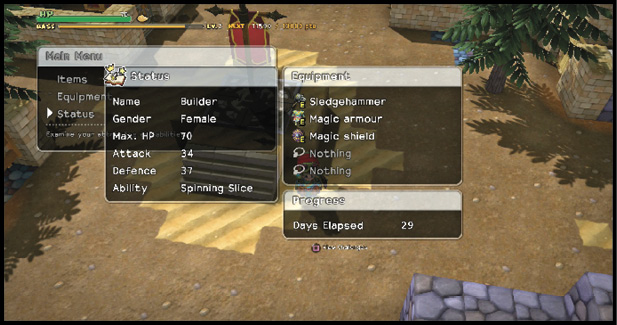
Second, save often. Use the Status sub-menu to check how many days have elapsed. If a task took too long to complete (for example, you lose all your health far from the base, or monsters are being stingy with an item you need), reload and try again.
Finally, ignore everything that isn’t essential to advancing the story. Rooms that provide bonuses are great, but your only concern is building a base that reaches lv. 4. Placing a tea service in a bedroom, for example, is worth more points than upgrading a barbecue kitchen to a barbecue bistro, and takes far less time.
Creating a Max-Level Base
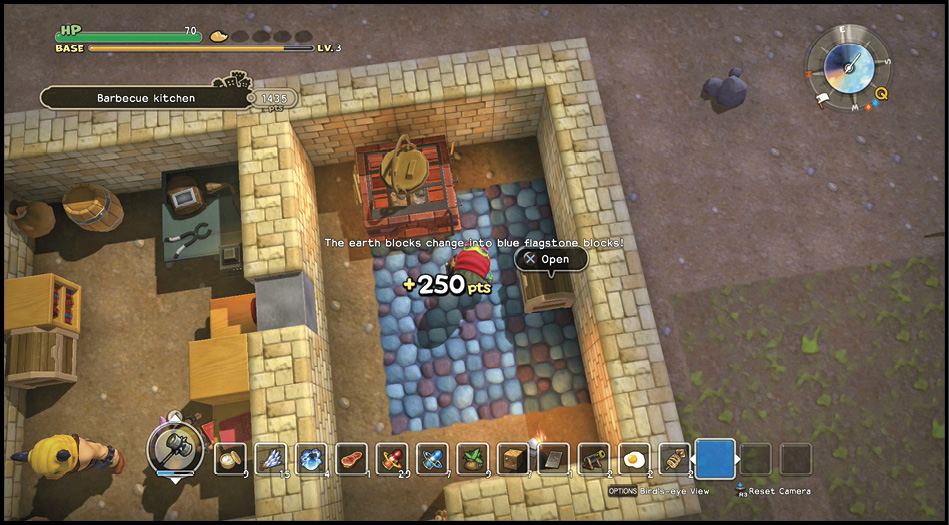
The easiest way to boost your score is to always upgrade your walls and floors from earth to blocks that have value. Stone, wood, brick, and even straw provide points, while earth does not. If you already built with earth, use cladding and flooring to change the earth into something more valuable.
Refer to Appendix V often. Build what decorations you can, and gather interesting objects while you’re exploring and questing. The items you find don’t belong to anyone else, so you should put them to use in your base. The materials you find in this way are often things you can’t build and allow you to construct rooms that are otherwise unavailable in the current chapter.
Farming
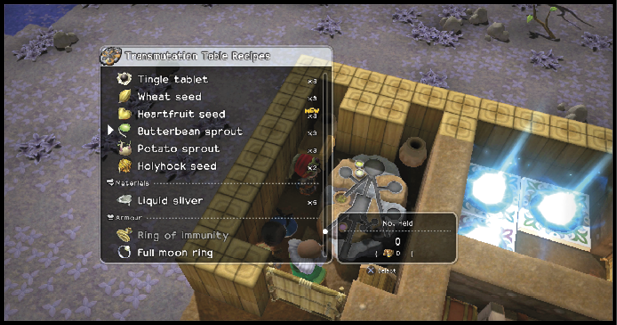
Farming is introduced during Chapter 2: Rimuldar and returns for Free Play on Terra Incognita. There are three requirements for farming: crops, a transmutation table, and a rake. Farming can only be done inside your base.
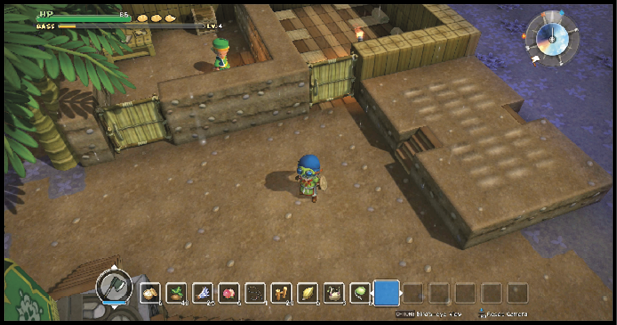
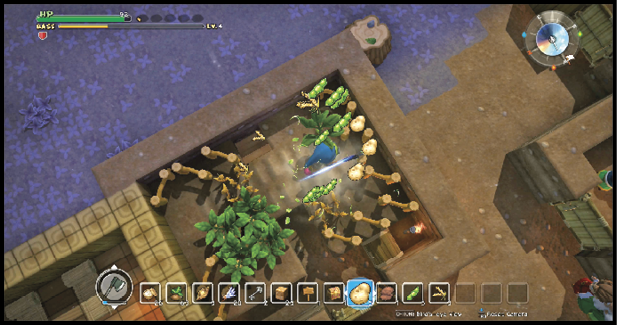
Use a rake on earth blocks to prepare them for planting. For heartfruit, the earth blocks must be underwater. Next, take one of the six plants you can grow (butterbeans, heartfruit, holyhock, potato, sugar cane, or wheat) to a transmutation table to create seeds and sprouts. Plant the seeds and sprouts in the prepared earth blocks. Attacking sprouts destroys them, except for holyhock sprouts. If you hit freshly planted holyhock, your seed is returned to you.
What you must do next depends on whether you’re in Rimuldar or Terra Incognita. In Rimuldar, the plants grow for two days. The first day after planting, you can harvest a single item. For the second day and beyond, harvesting the plant yields five items. In Terra Incognita, time doesn’t factor into farming. Instead, stand in the middle of the planted crops and use faerie fertiliser. The plants touched by fertiliser mature instantly.
Fishing
Fishing is introduced in Chapter 2: Rimuldar. Fishing requires a fishing rod (an item with a different recipe in almost every chapter) and enough water to cast a line into.
Watch your line where it touches the water. It periodically bobs, but as soon as you see a small splash, press the Use X button to reel in whatever is on the line. Sometimes you catch an item, such as fish, and other times you reel in a monster that attacks you. Turn to Appendix VII to learn what you can catch, and where you can catch it.