Dissidia Final Fantasy NT Guide Characters
Garland
Vanguard
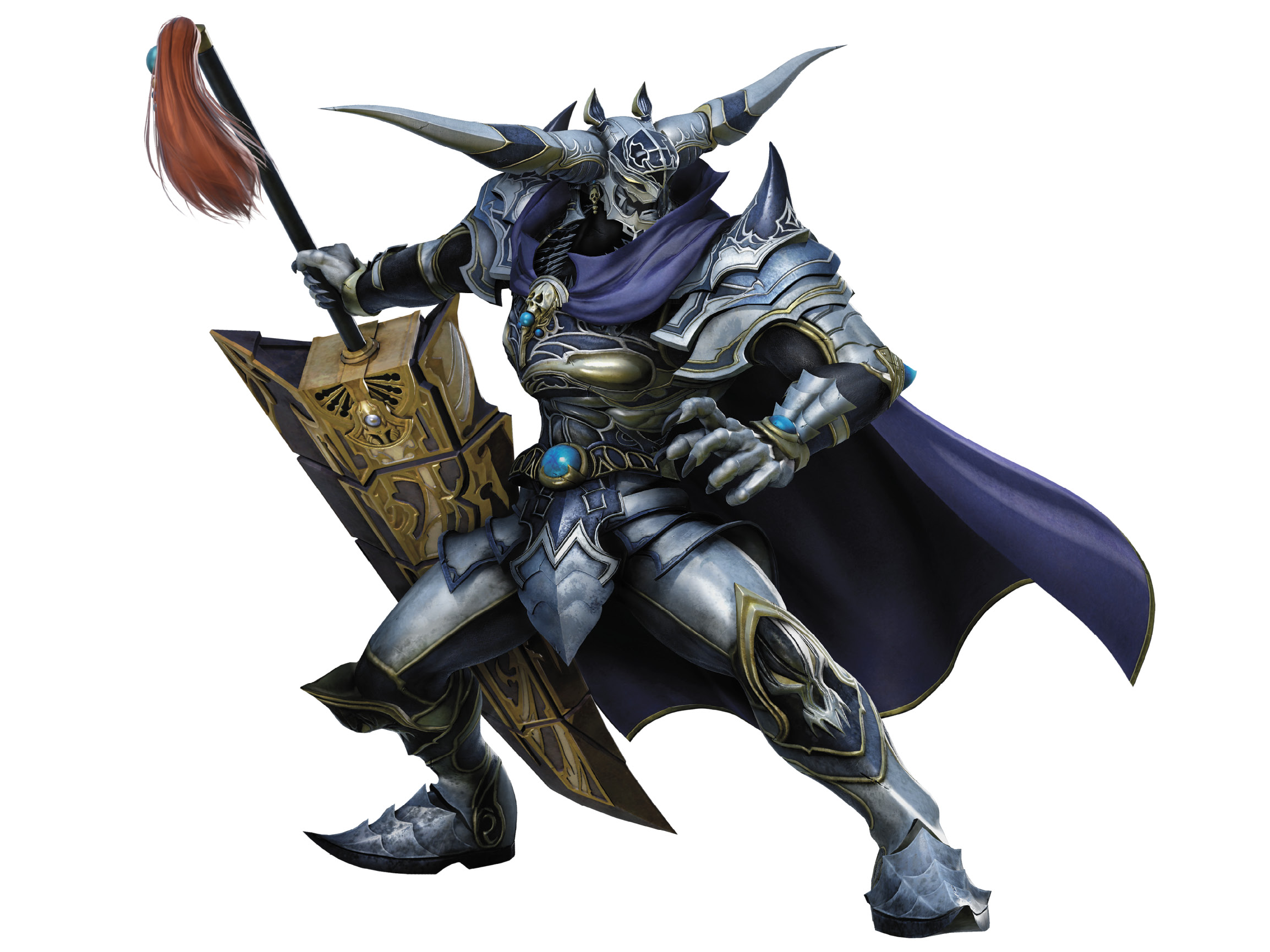
The more this knight-errant attacks, the stronger he becomes. He can quickly fell those who come near with his mutable sword, and also hound faraway foes with HP Attacks that run the gamut of natural disasters. His place in battle is squarely on the front line.

Original Appearance: FINAL FANTASY
Year: 1987
Role: This fallen Cornelian knight started the FINAL FANTASY mythos with a bang all those years ago by kidnapping the kingdom’s princess, kicking off a wide-ranging (and, eventually, time-looping) story involving series mainstays like globetrotting, fiend-defeating, and crystal-seeking.
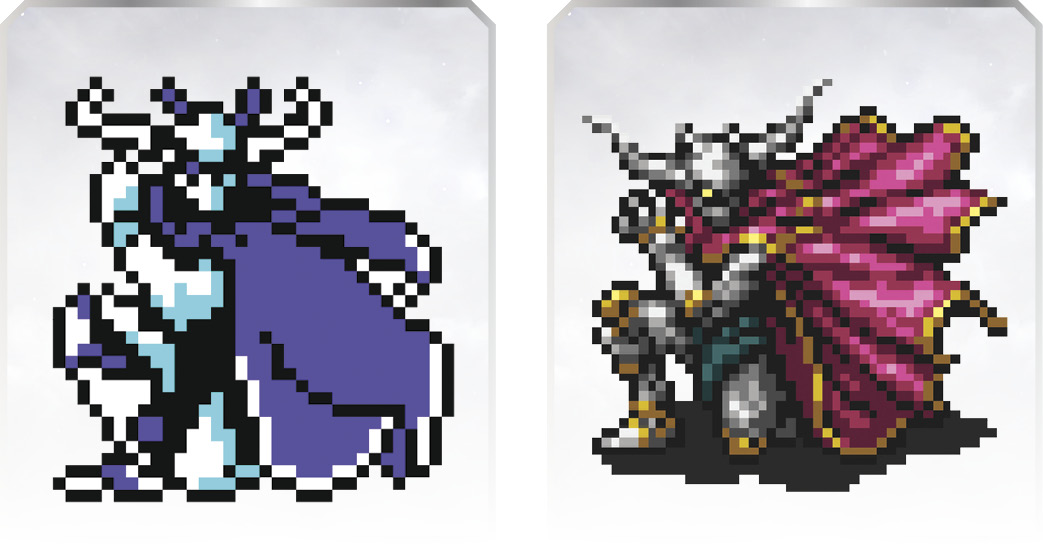
Other Noteworthy Appearances: DISSIDIA FINAL FANTASY (2009), DISSIDIA 012 FINAL FANTASY (2011)
Arsenal
Bravery Attacks
| Name | State | Command | Bravery Damage (normal / DSI / DSII) | Bravery Damage (normal / DSI / DSII) | Capsule Description |
|---|---|---|---|---|---|
|
Round Edge |
Grounded |
|
512 / 560 / 592 |
1 / 1.5 / 1.5 |
Move in with a spinning multi-hit broadsword slash in all directions, followed by an upward swing that flings the target away. |
|
Reel |
Grounded |
|
496 / 544 / 576 |
1 / 1.5 / 1.5 |
Extend sword’s tip on a chain to pull in the target, hitting them hard once they’re pulled in. |
|
Thundaga |
Grounded |
|
384 / 432 / 480 |
1.5 / 1.5 / 2 |
Slam the enormous sword to the ground, generating a huge electric pillar that homes in on the target. |
|
Twin Swords |
Airborne |
|
512 / 560 / 592 |
1.5 |
Spinning multi-hit aerial attack that ends with a downward slam to the ground. |
|
Chain Cast |
Airborne |
|
496 / 544 / 576 |
1 / 1.5 / 1.5 |
Bring the extended chain tip downward in a hammerblow that drags in prey, in position for Garland to smash them away. |
|
Flare |
Airborne |
|
384 / 432 / 480 |
3 / 3.5 / 4 |
Explosive fire energy builds up along Garland’s blade, flying off ahead as a forceful projectile. |
|
Lance Drill |
Dashing (Grounded & Airborne) |
|
376~472 / 376~544 / 376~616 |
1.5~2.5 2~3 2~3.5 |
Rush in rapidly with a multi-hit drilling attack before the finishing blow. |
 +
+  +
+  +
+  +
+ HP Attacks
| Name | State | Command | Bravery Damage | Range | Capsule Description |
|---|---|---|---|---|---|
|
Earthquake |
Anytime |
|
— |
1 |
Smash foes into the earth from above in this mid-range attack. |
|
Tsunami |
Anytime |
|
— |
2 |
Call forth a column of water that pursues the enemy. |
|
Blaze |
Anytime |
|
24x1~10 |
0.5 (Draw-in: 1.5) |
Engulf all nearby enemies in a conflagration. |
|
Cyclone |
Anytime |
|
— |
4 |
Manifest a cyclone that pursues distant enemies. |


EX Skill
| Name | State | Command | Bravery Damage | Range | Capsule Description |
|---|---|---|---|---|---|
|
Deranged Soul (Attack) |
Anytime |
|
80, 32x0~9, 160 (240~528) |
1 |
Dash forward with a grab attack that allows for many hits, if no one disturbs Garland. |
|
Deranged Soul I |
Anytime |
Quickly land two spells/three sword attacks/six whip attacks.* |
— |
— |
Increases Bravery Attack range and damage. |
|
Deranged Soul II |
Anytime |
Quickly land two spells/three sword attacks/six whip attacks.* |
— |
— |
Further increases Bravery Attack range and damage. |

Bravery Attack Breakdown
Round Edge
| Command | Bravery Damage | Note |
|---|---|---|
|
Grounded |
Normal: 128, 128, 256 DSI: 128, 80x2, 272 DSII: 128, 48, 64x2, 288 |
2/2.5/3 spins during first attack depending on Deranged Soul level. |
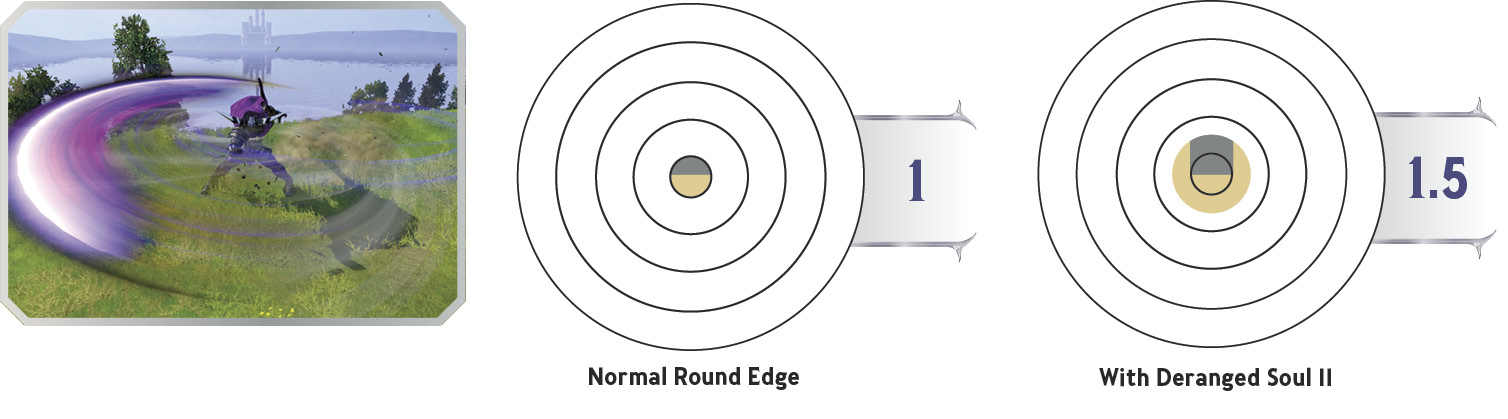
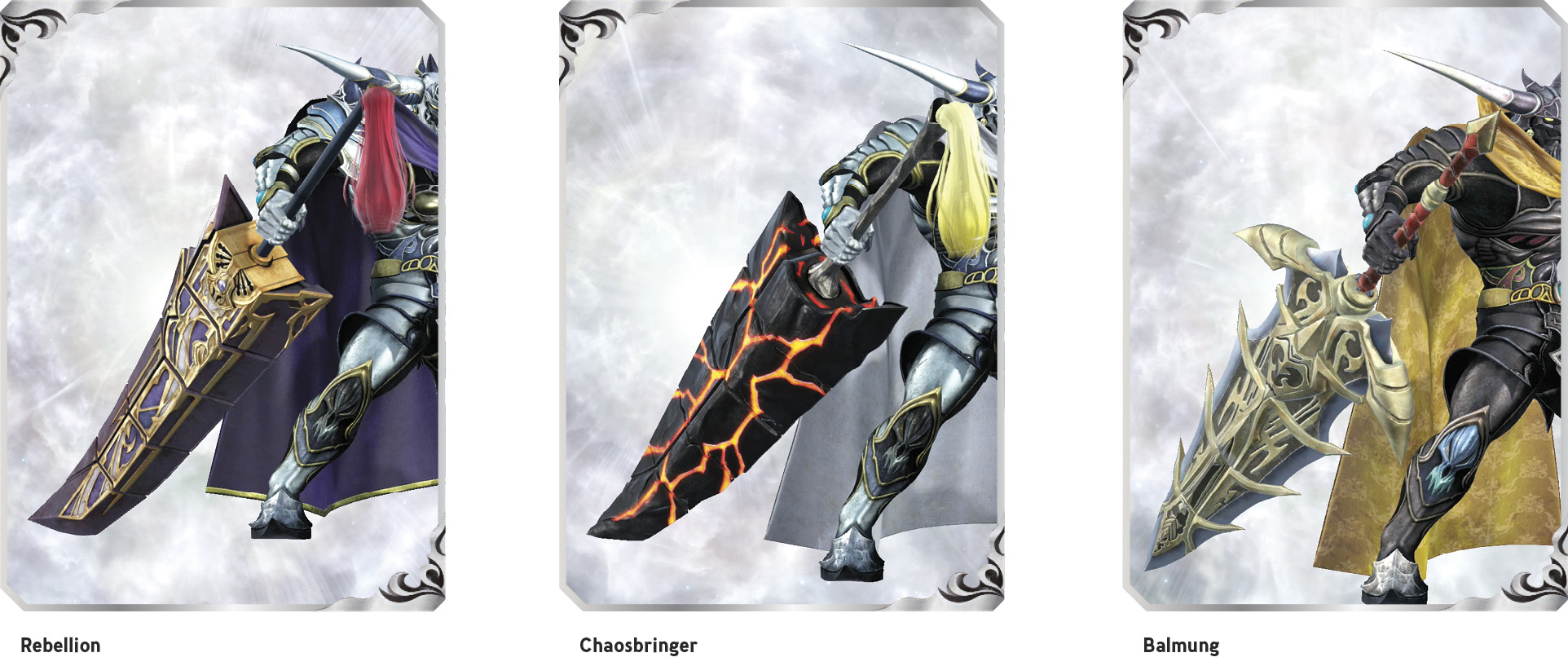
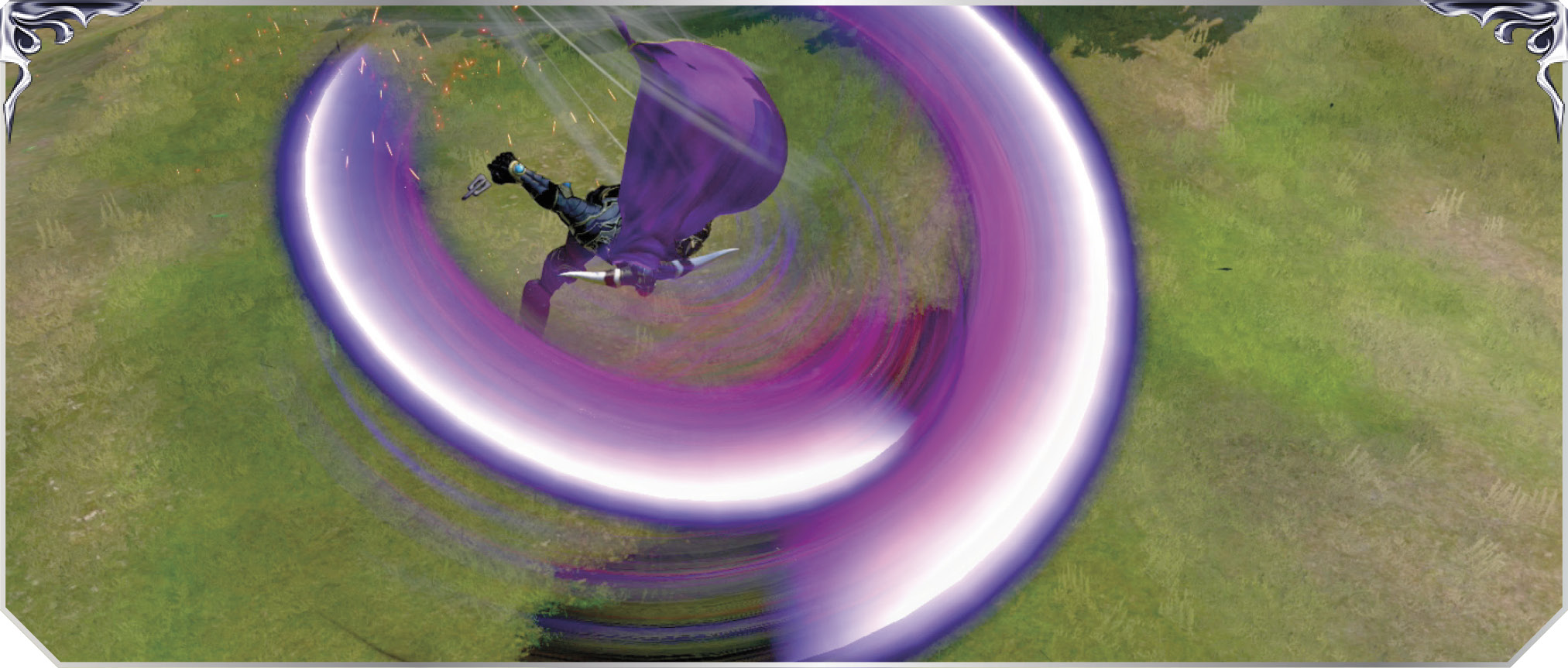
Garland spins forward, whirling the enormous bulk of his combination sword around him multiple times. After Garland comes to a stop, he transfers the momentum of the sword spin into a grand upward slam, pitching the victim away to long range.
The sword-spinning portion is fast and covers Garland in all directions. It’s the perfect attack to unleash against one or more attackers on the ground, since everyone must respect it even if they’re flanking Garland or behind him.
Deranged Soul I adds a half-spin to the first button press, gaining a bit of extra range and more damage. Deranged Soul II adds an entire extra spin, providing yet more reach and damage.
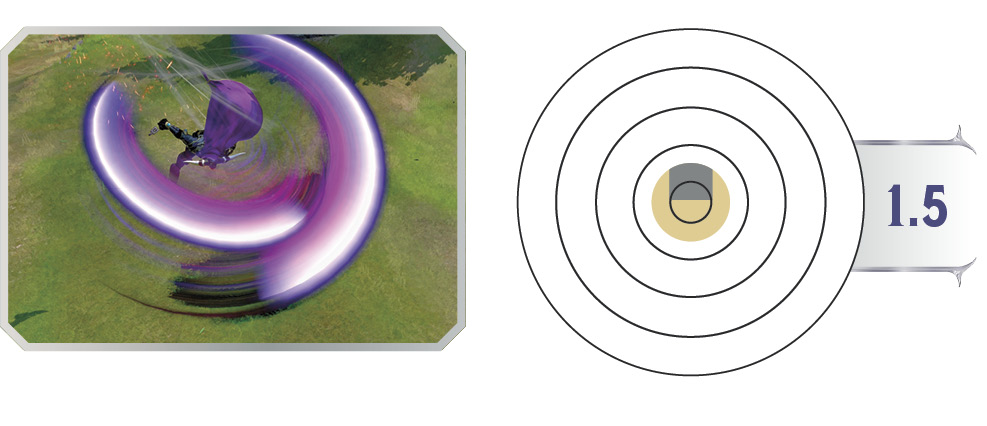
The range depicted here is for the wind-down of the last sword spin and illustrates that this can be used against foes a sidestep or two away. Ideally, though, it’s a point-blank attack, so it’ll carry them through the spin, hitting multiple times. This gives you a chance to decide whether to evasion cancel in case of a whiff; cap the spins off with the launching attack (which requires another  press during the final spin); or forgo it so an ally can tack on their move, or so you get another crack at hitting them if they react poorly when they recover from the sword spin.
Reel
| Command | Bravery Damage | Note |
|---|---|---|
|
Grounded |
Normal: 192, 64, 240 DSI: 208, 80, 256 DSII: 224, 80, 272 |
Noticeably weaker building Deranged Soul energy than other Bravery Attacks. |
 +
+ 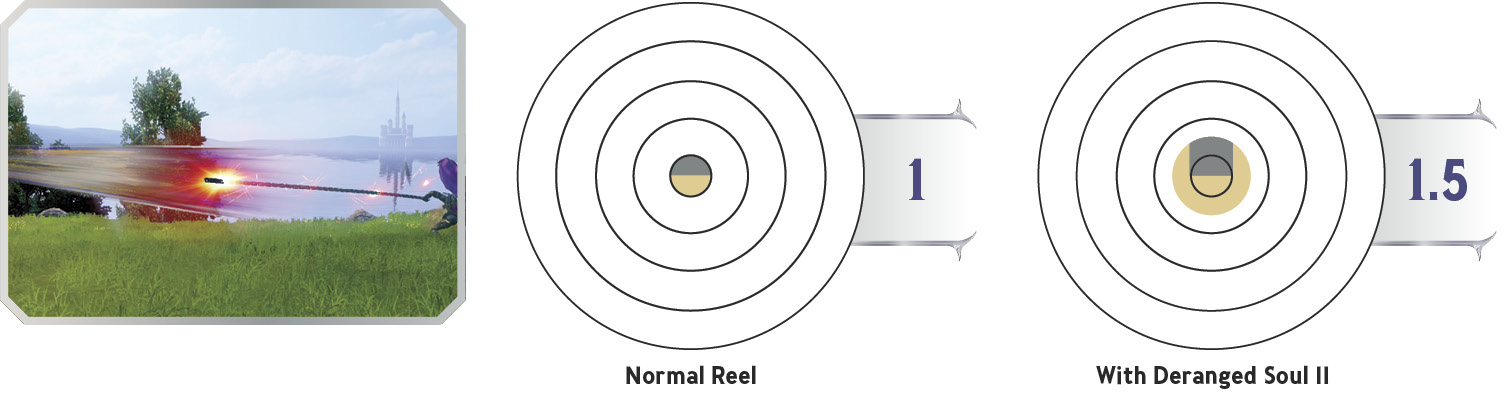
Garland sticks out his sword suddenly, detaching the tip as a chain-linked spear that can reel in targets it hits. After the reel-in, Garland bashes the target into the distance.
This opener is a little less gung ho but just as far-reaching as Round Edge. The initial hit and the reel-in both inflict damage, along with the optional follow-up catapult bash. The initial chain-sword poke has terrific range, especially powered up with Deranged Soul I or II, both of which increase the reach and damage. The only downside is that it’s a bit slow to retract when missed, so Garland is a sitting duck on whiff until he can evasion cancel.
Thundaga
| Command | Bravery Damage | Note |
|---|---|---|
|
Grounded |
384/432/480 |
Initial axe hit deals 32/48/64 Bravery damage depending on Deranged Soul level. |
 +
+ 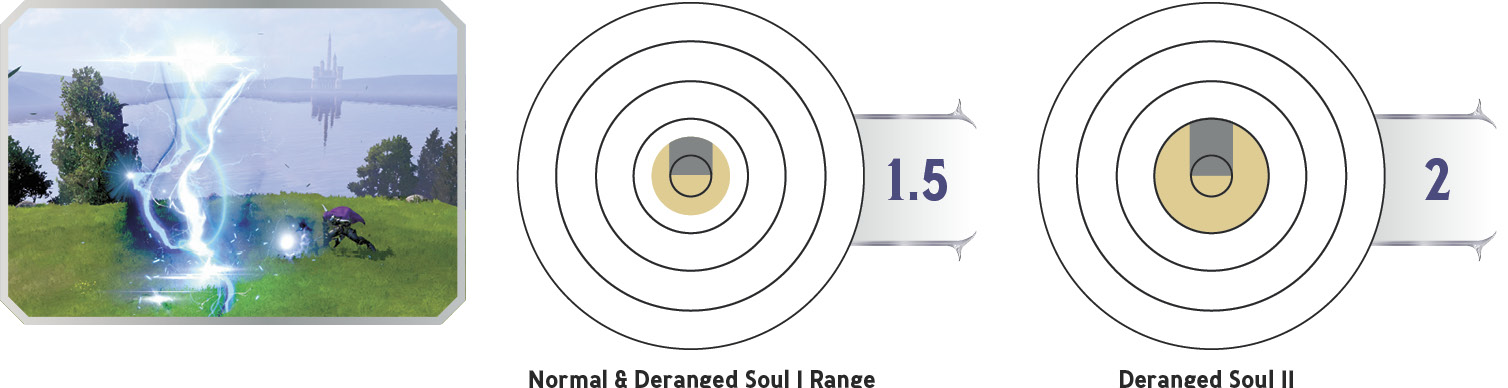
Thundaga is one of Garland’s spells, alongside Flare. Garland smashes his weapon down in hybrid axe form, sparking a gigantic thunder pillar that slowly tracks the target for just under three seconds before dissipating. The initial hammer smackdown is a weak attack, though Thundaga should not be thought of as a melee swing.
The large surface of the lightning pillar and its slow movement speed make it an excellent disruption projectile, forcing foes to deal with a big moving obstacle instead of whatever else they wanted to be doing. If Garland hits directly with the axe smash that sparks the projectile, he gets a little more damage, as the axe swing to start Thundaga isn’t just for show.
Aside from Thundaga’s slow speed and space dominance, there are two other crucial tidbits to consider: it doesn’t evaporate when it nails foes, and it doesn’t knock them very far away. So it’s possible for a Thundaga bolt to hit a foe on the way to the target, then the target, then yet another victim afterward, before it’s gone. It’s even possible (if rare, unlikely, and entirely dependent on corner-positioning) to hit the same target twice with one meandering Thundaga bolt! (That old saying doesn’t apply in DISSIDIA.) The point is, most projectiles don’t work this way, so keep it in mind.
And because it doesn’t knock the victims far away like most Bravery Attacks, Thundaga can easily lead to immediate combo follow-ups. This can be pulled off mid-field, but it’s especially relevant near corners and walls. When casting Thundaga, evasion or dash cancel toward the foe right after releasing the thunderbolt. Depending on how far away they are, and where the lightning throws them on hit, there are several attacks you might be able to immediately catch them with. Reel and Chain Cast tend to work best. Finish the Reel/Chain Cast combo and you’ll have an automatic Deranged Soul level-up from three moves so quickly chained together…and the poor sap might be susceptible to yet more hits, if they get flattened against a nearby wall.
Immediate Flare after dash canceling out of Thundaga also covers just about anywhere the opponent could be tossed toward, but it’s a bit slow, unless they’re extremely slow to air-recover from the lightning hit. Thundaga juggled right after Thundaga can work, if the opponent was nailed by the hammer hit of the first one.
Thundaga doesn’t disappear when it shocks adversaries, but it does vanish if you cast it again while it’s in progress.
Twin Swords
| Command | Bravery Damage | Note |
|---|---|---|
|
Airborne |
Normal: 96, 80, 96, 240 DSI: 112, 80, 112, 256 DSII: 112, 96, 112, 272 |
Charging increases range and Bravery damage. |
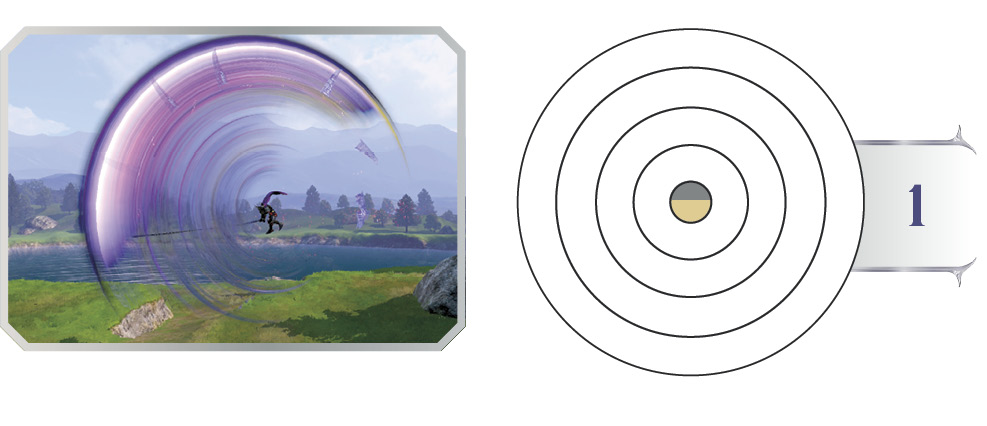
Garland splits his great sword and goes to work in mid-air with twin blades, surging forward with three scissoring slices. On a successful catch, Garland can finish off with a ferocious downward spike, melding the twin blades into a hammer for the finish.
Like with Round Edge on the ground, Twin Swords has great travel distance for the first three hits (though Twin Swords just covers the air in front of Garland, while Round Edge covers all directions on the ground). Also like Round Edge, hit-checking with airborne (without the follow-up ) can work well for two reasons: one, if you’ve caught a weak defensive character, like a marksman type, you might be able to bully them with unfinished combos while they try to get away; and two, if a friend (or a friendly summon) is nearby, they might pile on and add their own hits, enhancing the punishment and further draining enemy Bravery. It can be counterproductive to blast victims away—unless, of course, there’s a wall behind them to splat them on!
Twin Swords is a high-commitment attack (again like Round Edge). Whiffing it badly means watching Garland do three strikes in mid-air, without being able to evasion cancel out till the third one.
With Deranged Soul I or II active, Twin Swords gains damage and a tiny bit more range per level-up, though the range increase is not as substantial as with his other Bravery Attacks.
Chain Cast
| Command | Bravery Damage | Note |
|---|---|---|
|
Airborne |
Normal: 224, 272 DSI: 240, 304 DSII: 256, 320 |
Noticeably weaker building Deranged Soul energy than other Bravery Attacks. |
 +
+ 
In mid-air, Garland splits the sword into chain form and whips it up over his head, then brings it down in an arc before him, cutting a vertical swath from straight above to straight below. At the bottom of the chain’s traversal, as his quarry reels from the downward swipe, he snaps the chain right back up, scooping them tumbling off into long range.
Like Reel on the ground, this is a great far-reaching poke that lets Garland engage mid-range foes without throwing his whole body into the fray. Chain Cast also offers him coverage directly above (for fliers) or directly below (if he’s attacking straight down after double-jumping).
Chain Cast is quick off the first hit, offering meager team synergy potential, so there’s no reason not to follow through and fling the target off with the follow-up. At least that might score a wall hit. If the first swing comes up empty, evasion cancel out of the recovery to dodge retaliation and/or to keep after your prey.
Flare
| Command | Bravery Damage | Note |
|---|---|---|
|
Airborne |
384/432/480 |
— |
 +
+ 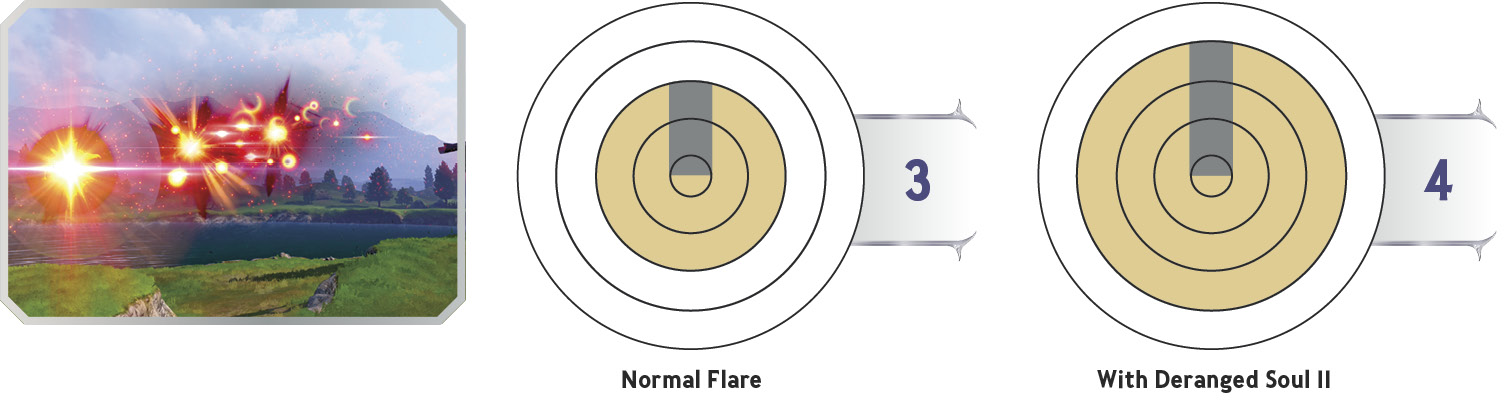
Garland lowers his sword, pointing it out from his midsection, and braces himself for a second as nuclear energy travels up the broadsword’s length toward the tip. At the end it gathers and explodes forth from the blade as a dense, sizzling fireball. This scorching projectile tracks the target till it fizzles, after just over another second.
Flare takes a second for Garland to launch, but once it gets going, it’s his longest-range attack. It travels quickly and blasts victims in the way into a brief tumble, opening them to other attacks. Flare works well with Thundaga when you want to harass the opposing team but feel too cautious to move in yet. Garland is no marksman, but Thundaga is slow, tall, and wide, while Flare is quick and direct, so there are at least a couple different ranged looks he can show the other team.
Deranged Soul buffs increase both the range and damage of Flare. Not only is Deranged Soul II Flare a tremendously long-reaching attack, but it’s also the attack that builds up the most energy toward another Deranged Soul buff refill. Shoot two Flares in a row that both connect, and voilà, Deranged Soul level-up.
Lance Drill
| Command | Bravery Damage | Note |
|---|---|---|
|
Dashing (Grounded & Airborne) |
Normal: 24x1~5, 352 DSI: 24x1~8, 352 DSII: 24x1~11, 352 |
Charging increases number of hits. |
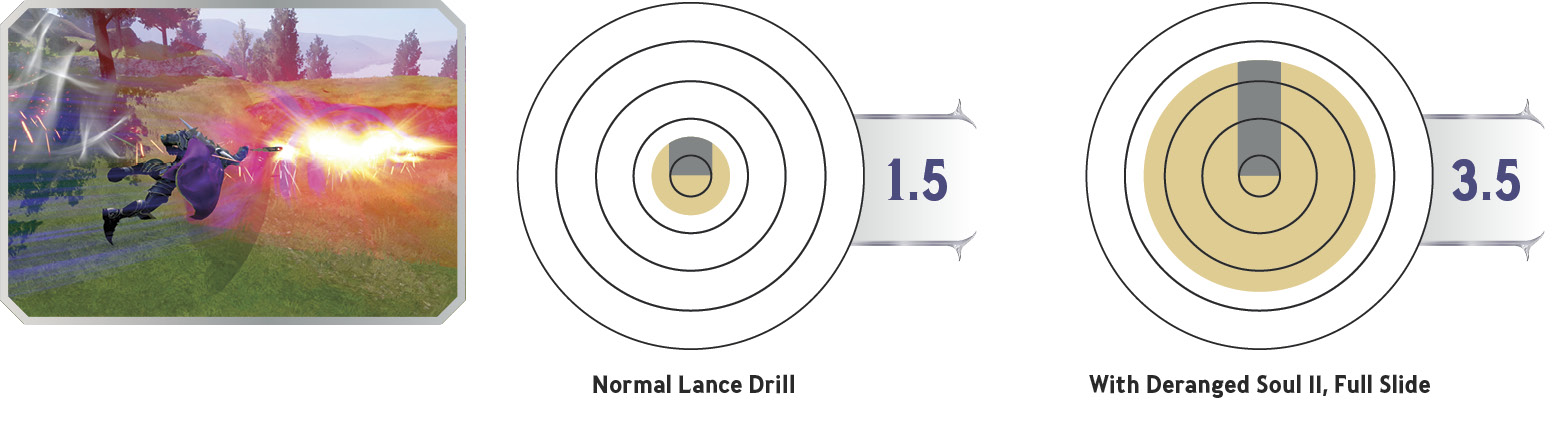
Garland’s dashing attack reconfigures his broadsword as a cross between a jousting spear and an enormous drill bit. After sliding in with a screwing slide capable of multiple hits, Garland ends with a fierce midsection blow with the weapon, knocking away the target.
The range (and multi-hit) potential increases with Deranged Soul I/II. Holding down the command causes Garland to slide farther during the drilling portion, scoring more hits and increasing the ultimate range of the post-drilling stab.
This is Garland’s farthest-reaching melee attack by far, which is the attack’s defining strength. It even competes with Flare for range. And Garland needs it too, since his biggest weakness is his difficulty chasing down more agile fighters (which is pretty much everyone).
HP Attack Breakdown
Earthquake
| Command | Bravery Damage | Note |
|---|---|---|
|
|
— |
Drops to ground. Does bonus damage based on altitude. |

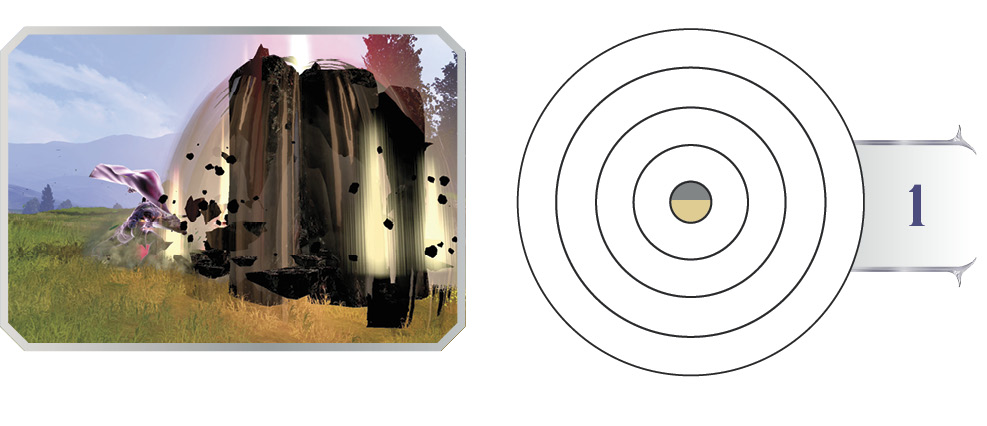
Garland flips forward with the great sword configured in hammer mode, bringing the strange weapon down with such force that the earth is split apart, spurting dislodged rocks up from the ground. Who knows whether it’s the hammer or the quaked earth that’s more damaging to anyone caught in between. Either way, they’re knocked away, freed of a big chunk of HP.
The most interesting (and useful) trait of Earthquake is that no matter where Garland starts it from, he plunges clear to the ground for the hammerblow, dragging anyone he catches with the hammer down along the way. Attacking from above is one of the best ways to catch players by surprise—it’s naturally harder to keep track of fliers hovering above you. Garland can dash in at double-jump height above enemies preoccupied with other things, searching for a straggler to crush from overhead.
Tsunami
| Command | Bravery Damage | Note |
|---|---|---|
|
|
— |
— |

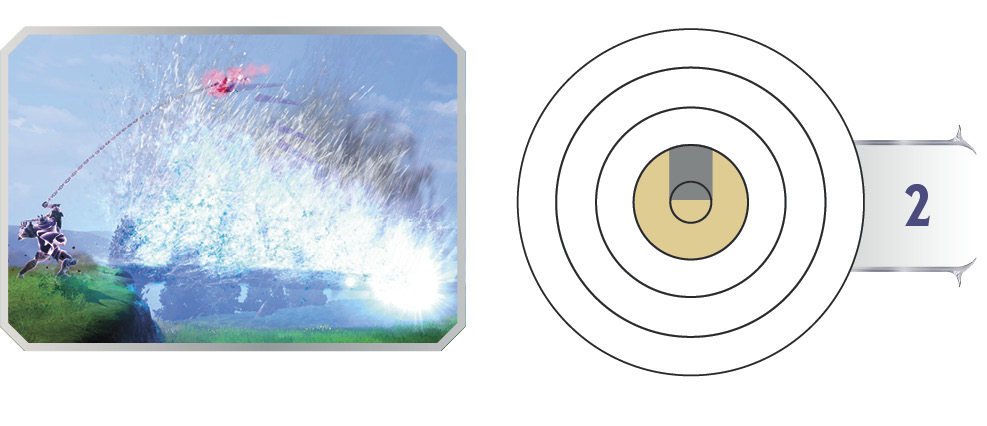
Garland rears back, then sweeps his sword upward along the ground, calling forth a series of forceful water geysers. One after another, geysers erupt in a line toward the target. Any that hit bowl over the receiver, washing away their HP.
Seven geysers explode ahead of Garland one after another, pouring a decent way into mid-range. This is like many shockwave-style HP Attacks. Tsunami is easy to use, allowing Garland to spout straight at the enemy, forcing them to sidestep, or neutralizing their own incoming projectiles and shockwaves. As another projectile attack, it syncs well with his use of Thundaga and Flare.
Blaze
| Command | Bravery Damage | Note |
|---|---|---|
|
|
24x1~10 |
Draw-in range: 1.5. |

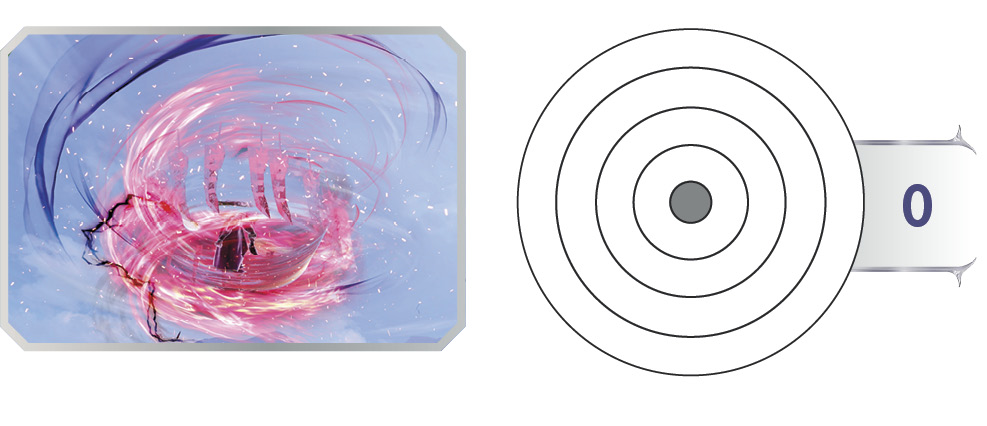
In the most dramatic exhibition of the power of his unique transforming weapon, Garland goes telekinetic and splits the blade in two, spinning the pieces rapidly in a sphere around himself. After just over half a second, a globe of flames erupts around Garland, as the furious spinning of his blades through mid-air begins drawing in nearby foes. Anyone pulled into the flames is softened up by multiple flaps of fire before the finishing explosion.
Though the draw-in effect is nice, with decent range, anyone who realizes Garland is charging an HP Attack is unlikely to stick around. This HP Attack is more useful for nailing reeling enemies off wall hits or tumbling off a Bravery Attack; Blaze is the only HP Attack Garland has that pushes the Bravery total even higher before driving home the damage. As a bonus, its area-of-effect explosion may wrap up multiple enemies in one attack.
Ensnaring multiple foes in Blaze will build up that much more Bravery before the final hit, increasing the damage dealt to everyone; scoop up two foes for 480 bonus Bravery, or the entire other team for 720! With the ability to catch multiple foes, the bonus Bravery, and the short AOE range, Blaze pairs well with common EX Skills Vacuum, for drawing foes toward Garland, and Bravery Conduit, for building up Garland’s Bravery before dishing it all out.
Cyclone
| Command | Bravery Damage | Note |
|---|---|---|
|
|
— |
— |

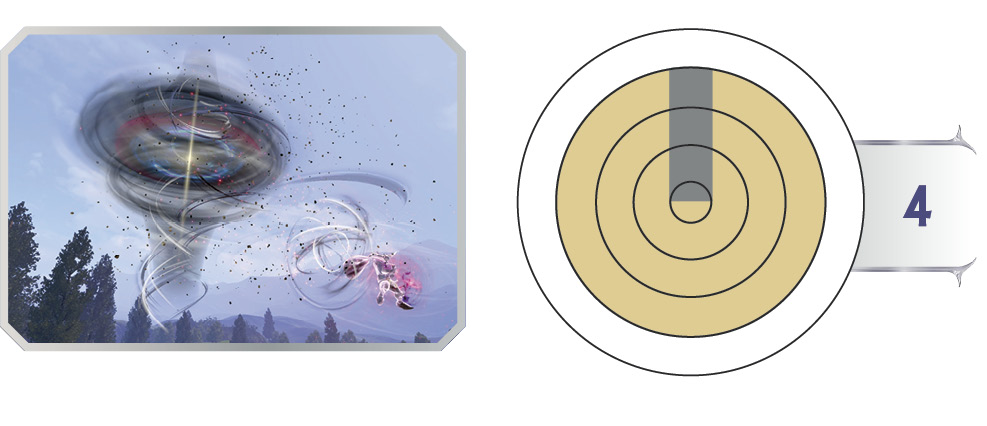
Holding the sword aloft behind him, Garland spends a second charging up wind energy, as every portion of the weapon spins furiously in place. Finally, just after a second, he whips the weapon around him, unleashing a huge wind ball that whorls toward the target.
The Cyclone reaches a huge range, traveling almost to the edge of the minimap’s radius in about a second and a half. If you’re looking for a ranged complement to Flare, Thundaga, and Lance Drill, Cyclone can’t be beat.
Garland is slow, and most of his attacks are telegraphed, so he can find himself in an odd position for a vanguard, trying to keep up with group fights that erupt, rather than being the star of the show. Cyclone also provides him a longer-range option for saving backline teammates. If he sees a marksman in trouble, he might not be close enough to swat directly at their assailant, but he’ll be close enough to quickly target that foe and send a Cyclone after them (before charging in after it, naturally).
EX Skill Breakdown
Deranged Soul: EX Skill Attack
| Command | Bravery Damage | Note |
|---|---|---|
|
|
80, 32x0~9, 160 (240~528) |
Can be held for more hits. |

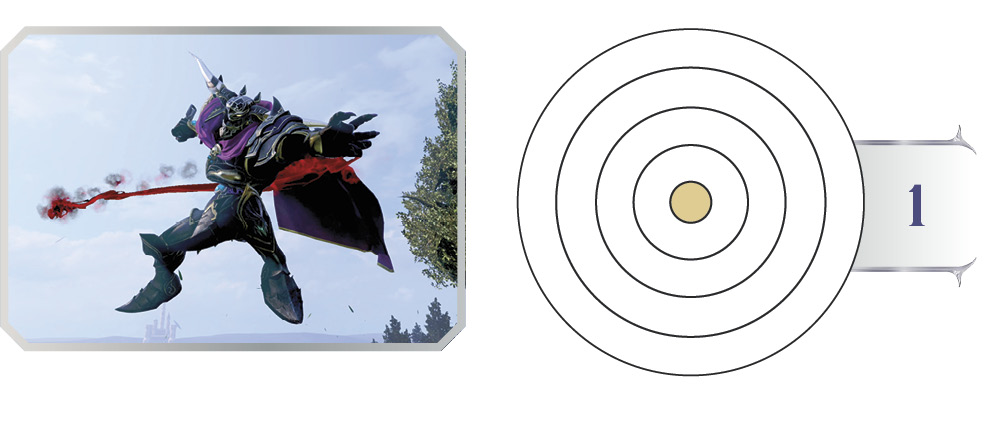
Garland dashes toward his target with a grab attack reminiscent of many other fighting games. Simply tap the command, and he chokes and releases his opponent(s) for two hits, blasting them backward. Hold the command down, and he tacks on as many as nine more hits while strangling them in a dark spell grip, before ultimately blasting them backward just the same.
In close- to mid-range, the Deranged Soul EX Skill is Garland’s fastest attack by far—nothing else comes close. The caveat is that the cooldown is a full minute, so he won’t get very many of these surprise grabs per match.
If possible, hold down  throughout the attack for max hits and damage. Manage to squeeze in at least three multi-hit strikes, and you’ll assure a Deranged Soul buff upon release, with the final strike. And if the target guards in time but you hold down all Deranged Soul’s multi-hits anyway, forcing them to block them all, this will go most of the way toward pushing their guard stamina into the red, nearly breaking their guard.
The multi-hits take time either way, so you’ll have to keep an eye out and see if any of your victim’s friends notice what’s going on. Letting the target go early and forgoing extra hits out of caution is better than getting greedy and ultimately coughing a point because you let enemy teammates pry you off their ally with an HP Attack.
Deranged Soul: Attack Buff
| Command | Bravery Damage | Note |
|---|---|---|
|
Two spells, three bladed attacks, or six chain attacks hitting in quick succession. |
— |
25-second buff duration. Fulfill conditions again to level up/refill buff timer. |
Garland is a whirling dervish, constantly throwing his weight behind varied attacks of his convertible weapon. When he lands several attacks close together (not necessarily combos, just continued successful strikes), his passion for battle fills him with rage, amplifying his Bravery Attack power and range.
Garland doesn’t have to do anything; this buff takes care of itself. Land lots of attacks close together, and you’ll activate it. An icon appears under Garland’s HP gauge, and the timer begins. Endure long, fallow periods where you can’t get any offense going, and it’ll simply disappear. But it’s easy to get going again with another solid attack salvo.
When building toward Deranged Soul, Flare and Thundaga are most valuable; two of them close together will engage the buff.
Next are his multi-hitting sword combos, Round Edge and Twin Swords: three stages from these attacks will do it, close together. (Stages, not hits: aerial may be a three-hit attack, but it’s just one stage; three of these back-to-back will trigger Deranged Soul.)
The weakest attacks when building Deranged Soul are the longer chain strikes, Reel and Chain Cast. They basically require twice as many hits in a brief period as the sword-centric attacks, which is not realistic. They’re great attacks, but they’re not going to keep Deranged Soul active on their own like the other Bravery Attacks tend to.
Deranged Soul I lasts for 25 seconds. Fulfill the conditions again while Deranged Soul I is active to begin Deranged Soul II and another 25 second timer. When Deranged Soul II expires, it simply degrades to Deranged Soul I. So activating DSII ensures you’ll be buffed for at least 50 seconds, even if you don’t get any other strings of attacks together.
Battle Plan
Garland may be a heavily armored brawler, but he’s not really a tank or defensive character. In practice, he’s more like a methodical assassin. When he does attack, he’s much sturdier than the average assassin, with wider-reaching attacks. This comes at a cost, which is that Garland is one of the slowest characters. His movement speed and air mobility are nothing to write home about, so good situational and positional awareness are key.
Garland’s ideal approach involves forcing team fights. He excels in tight groups because his attacks hit multiple targets, and he can gain an extremely high amount of Bravery with even a basic attack like Round Edge or Twin Swords.
When contacting enemy groups from max range, his Flare and Thundaga spells shine. Cast one, evasion cancel, then launch the other (changing targets between, if a couple of foes are in range). At this distance, it doesn’t make sense for Garland to overextend and rush in, trying to force the issue. It’s better to coax enemies to come to Garland. These projectiles help him split up enemy plans and score glancing hits when they mess up or don’t notice. You may even begin building up his important power buff, Deranged Soul, if a Flare or two hit, or if a Thundaga bolt zaps a couple foes rushing in.
When enemies are closing in, the earliest-contact pokes are his chain-sword moves, Reel and Chain Cast, both done with  + . Swing from the tip of the chain’s reach, and be ready to evasion or guard cancel on whiff, taking a brief defensive action before trying to reclaim momentum with an attack. Aerial
  + is important to note as a space-check against sneaky triple-jumping assassins and their ilk, moving around overhead. The neutral attacks don’t hit right above, so keep it in mind.
Inside the chain-whip radius, his neutral combos (Round Edge and Twin Swords) are great attacks, as close as Garland gets to a good hit-check option for handing off openings to allies, and they both get much better as his Deranged Soul level rises. But they can be costly if whiffed, since he can’t guard/evasion cancel till the third swing on both. If his Deranged Soul EX Skill is available, it’s his best close-range attack by far, and the only time he could be confused for a swift fighter. You’ll get that once a minute max, so be sure to use it whenever there’s a decent close-range opening.
When you’re getting good hits in, Garland’s Bravery chains aren’t as suited to purposely unfinished sequences as those of some characters. With some melee fighters, delaying or intentionally dropping combos gives allies their own combo/HP Attack openings, or even leads to “reset” opportunities for aggressors. Garland, however, wants to pound in every hit opportunity he gets in order to maximize gains from Deranged Soul. Besides, compared to other brawling characters, Garland’s finished combos don’t launch the victim as far away on the final hits. The flopping foes stay kind of nearby. Of course, they still slam into any vertical surfaces in the way, scoring combo chances off wall hits. But thrown into free space, they stay closer, which is suited to Garland, who wants to keep in the thick of it and isn’t good at chasing targets hurled far away.
This is even true of his nukes, Thundaga and Flare—both Garland and his friends should be attentive when these are on-screen, since they’ll pop up anyone they hit, and a fighter ready for this can time a follow-up attack to catch them right as they bounce off the projectile.
Stick with teammates whenever possible; try to keep up with them. This provides more chances for you to save them if they get in trouble, and also naturally leads to more opportunities for Garland, since he can’t do as well freelancing around the edges of the fight as some quick assassins.
For chasing down individual enemies outside of groups, when cohesion splits up a bit and characters are fighting one-on-one fights, his dashing attack (Lance Drill) outstrips any other option he has, especially if you hold down the command for max sliding range.
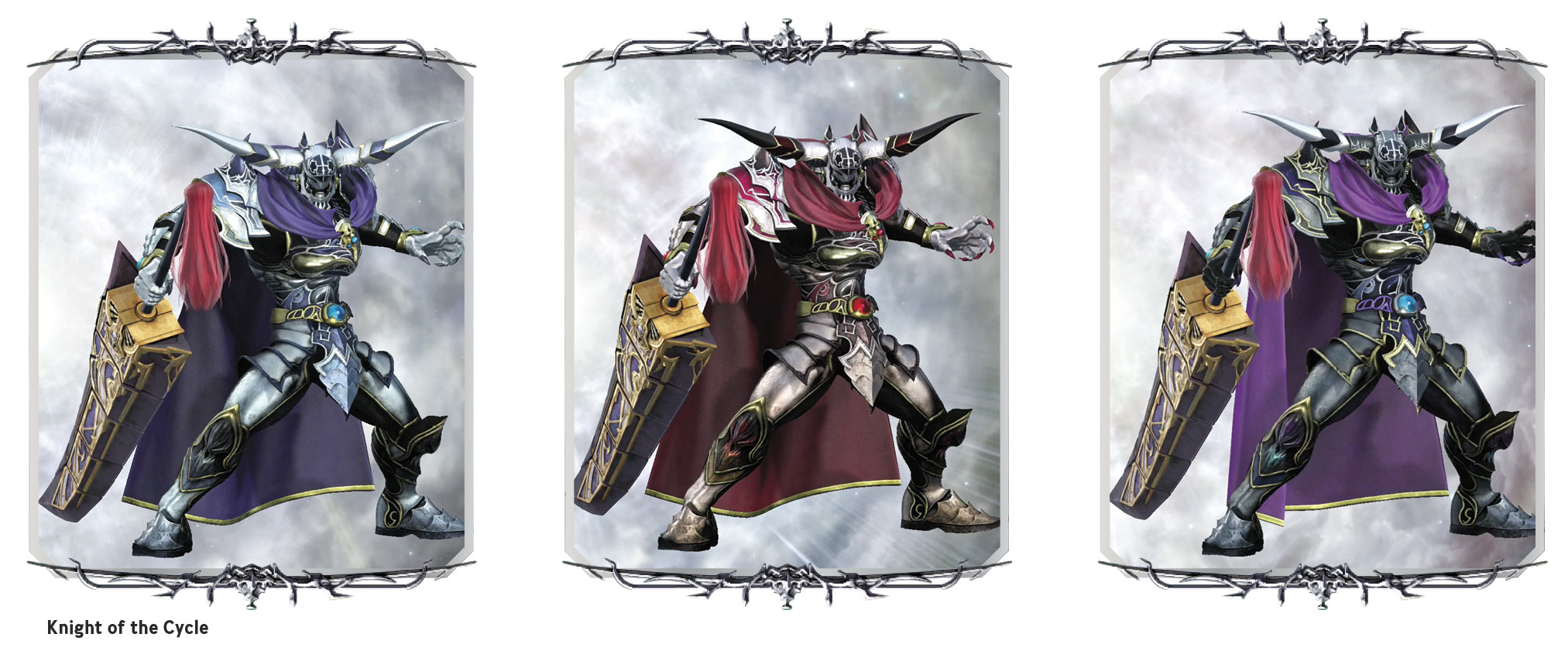
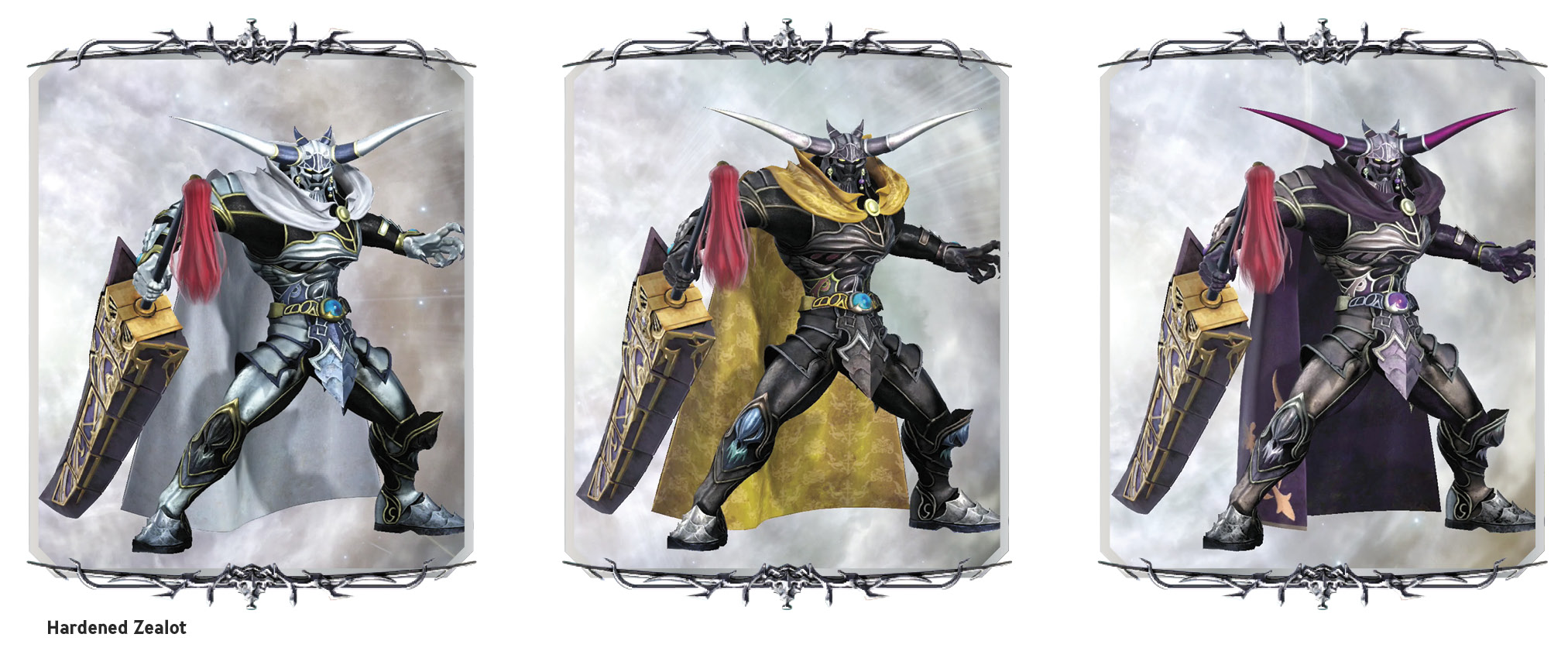
Gallery
Appearance
Weapons