
Assassin's Creed Unity Guide Extras
Story Recap & Analysis
In this spoiler-heavy section, we look back over key moments and assorted points of interest in the Assassin’s Creed Unity storyline. You may find it useful to read “The Story So Far” before you begin, which offers a brief primer on major developments in the Assassin’s Creed series to date.
Prologue
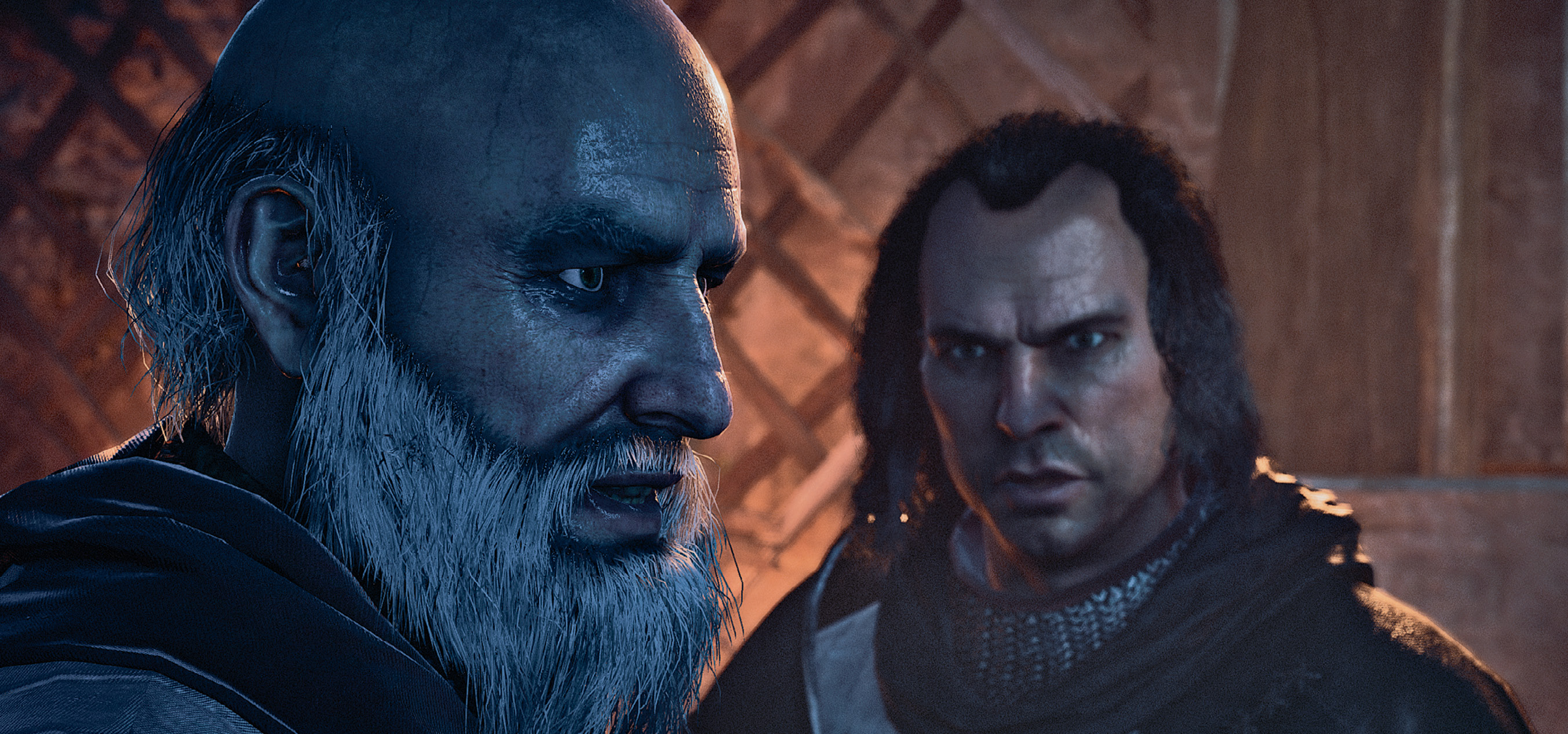
After a brief introduction to the Helix entertainment system, the story begins with a “memory sequence” experienced by an associate of Jacques de Molay, a famous Templar. We see de Molay in Paris, 1307, as he is taken into custody by men loyal to King Philip who – we are led to understand – is receptive to the counsel of the Assassin Brotherhood. The scene then shifts to de Molay’s execution by fire as King Philip and the Pope watch on. As this “movie” ends, we are presented with a range of different (yet decidedly familiar) memory sequences, with the interface redolent of video streaming services. Tellingly, famous Templar figures are clearly presented as heroes, with famous Assassin figures depicted as lunatics or brigands.
However, we then learn that this system has been hacked by present-day Assassins. The “enabler” who speaks, who introduces herself as Bishop, explains that the Templars are searching for rare genetic material inherited from unique ancient DNA, and that a bank of unsequenced memories – recently appropriated from Abstergo servers – may lead to its discovery and acquisition. These life experiences are from an individual named Arno Dorian: a man who lived through the French Revolution and may have come into contact with the relevant genetic carrier.
Assassins & Templars
The Assassin Brotherhood and the Templar Order have been at war for thousands of years.
Agents of the Assassin Brotherhood are sworn to preserve free will, and to defend this liberty with their very lives. The core message of their creed – “Nothing is forbidden” –advocates the right of every individual to act of their own volition. Operating in the shadows, the modern-day Brotherhood employs the cell structure of underground resistance groups. Such tactics are essential to avoid the evolved tracking and surveillance techniques provided to the contemporary Templar Order by the Abstergo corporation.
The Templars fight for peace and stability through political and social machinations. Their ultimate goal is to control the masses – even if this requires the enforced surrender of true self-determination. Though individual agents may be corrupt, cruel or venal, it would be simplistic (indeed, erroneous) to characterize the Order as necessarily “evil”. They aspire to act as the custodians of humanity, and believe that the sacrifice of a little liberty could enable them to preside over a world without war or want. Abstergo Industries embodies the modern identity of the Templar Order. This corporate front is a worldwide operation that provides access to the finest scientific minds, bleeding-edge technology, finance and political influence.
Helix & Animus Technology

Recent episodes of the series have shown how the Abstergo modern-day Templars have launched a bowdlerized version of the Animus as mass-market consumer system. This streaming service that runs on new-generation consoles enables users to play full-immersion video games that are patched together from real lives via genetic memories, carefully edited and processed for popular consumption.
The consumer Helix system itself can most likely be seen as a Trojan horse, its apparent function – entertainment – concealing a more directly insidious purpose. For the Templars, mass-market penetration of the service presents a number of intriguing opportunities. On a basic level, the monitoring of users is a plausible (indeed, elementary) application. Propaganda is another possibility. If common-or-garden television is powerfully influential, just imagine the persuasive power of a full-immersion video game experience that explores real-life history. With the right kind of material, a little subtlety could go a long way.
Naturally, the launch of such staggering system has to be a global sensation, generating a quite colossal revenue stream. Even as a video game experience, the consumer Animus tech offered to the general public via Helix facilitates sensations and and experiences that are derived from history itself, making contemporary forms of entertainment seem akin to a ball and cup. The modern Templar Order is, unmistakably, an incredibly wealthy organization – but world domination (though some, naturally, would argue “salvation”) is an expensive line of business.

The First Civilization
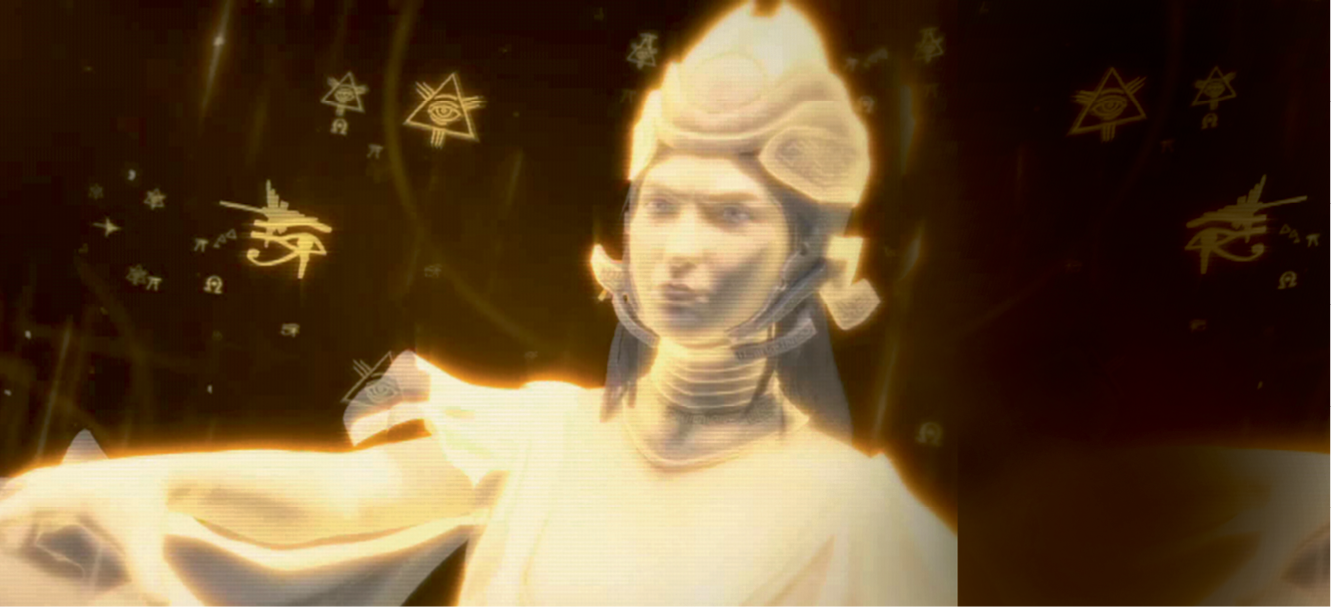
The “ancient DNA” mentioned by Bishop in the game’s prologue actually refers to an advanced race that inhabited the Earth prior to mankind. Also described as “Precursors” and “Those Who Came Before”, they remolded a primitive indigenous species into slaves and workers that would later be known as humans. The sophistication of these Precursors made them appear godlike to early mankind and they were long worshipped as divine saviors. These beings walked among us and gave rise to the many different pantheons and gods of the cultures over which they ruled. Nevertheless, a war eventually broke out between the First Civilization and the human race, looking to win their freedom. In their weakened state, the overlords were unable to prevent the Catastrophe, a global extinction event that would destroy their society and enable mankind to supplant them.
Assassins & Templars Everywhere
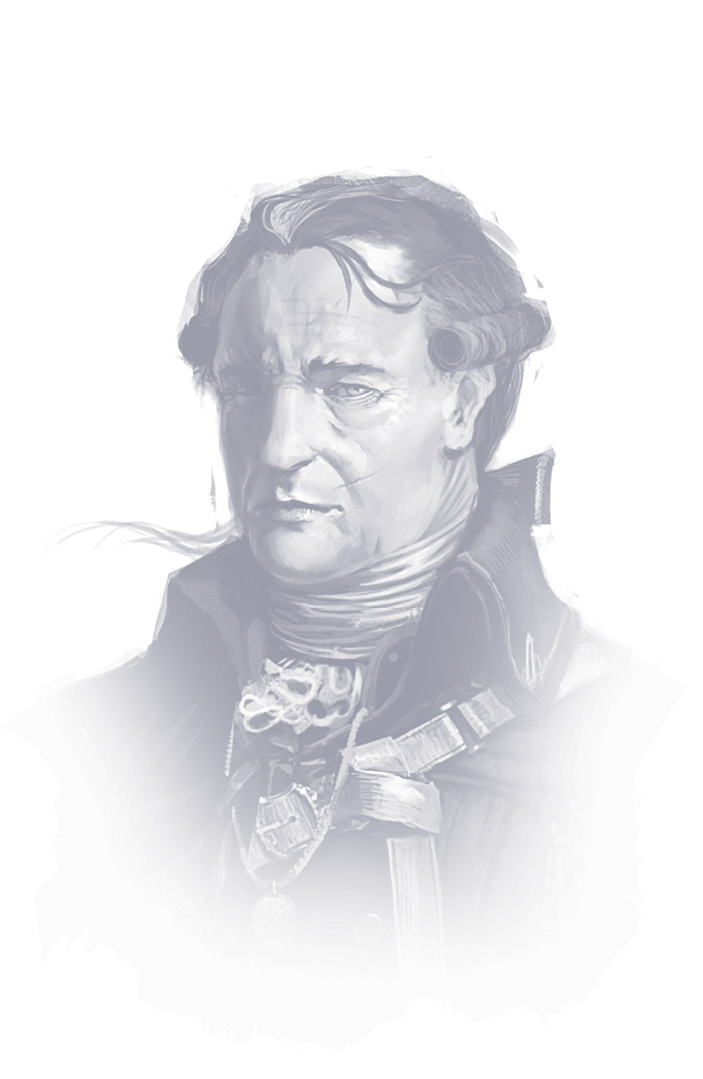
Though Arno does not know it yet, he is in fact surrounded by (and even born among) Assassins and Templars. His own father, Charles Dorian, was an Assassin who was murdered by Templars, and Élise’s father, François De La Serre, was the Grand Master of the Templar Order. During the scene at the Estates General, we briefly witness the latter speaking with Mirabeau, Mentor of the Assassins. The two leaders are actually discussing the possibility of a truce between the factions, an agreement whereby neither side will seek to exploit or profit from the instability surrounding the imminent Revolution.
Sequence 01: Arno’s Youth
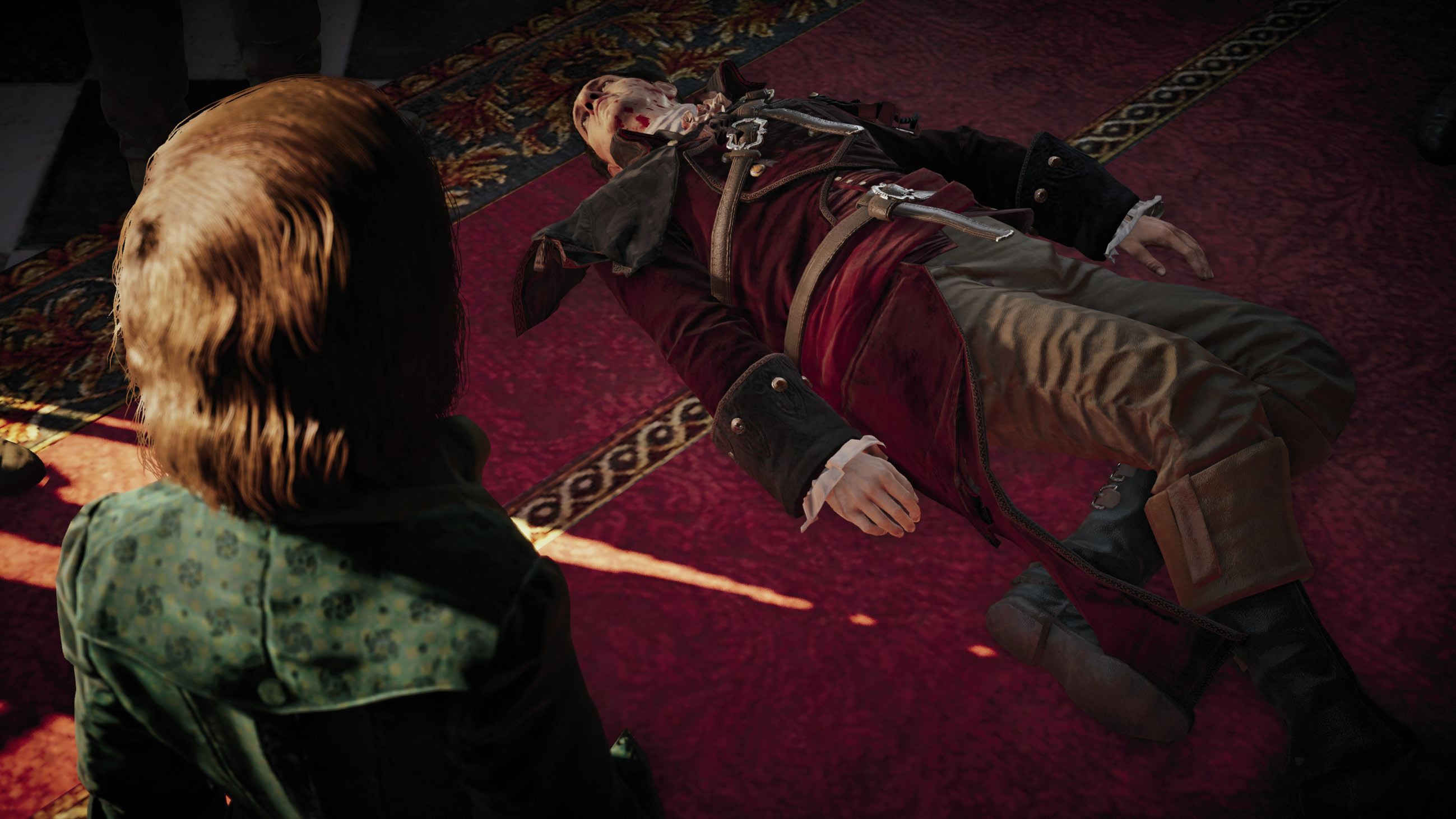
Arno, aged eight, is instructed by his father, Charles Dorian, to wait for him in the Palace at Versailles. The young boy cannot resist the temptation to follow a young friend, Élise, and neglects to meet his father at the arranged time – only to discover a little later that his father was murdered. We are led to understand that Arno’s tarrying may have cost Charles his life. Shocked and distraught, Arno has no other option than to accept the guardianship of Élise’s father, François De La Serre.
Fifteen years later, Arno, now aged 23, still lives at the De La Serre estate, sharing a close relationship with François De La Serre and his daughter Élise. One day, a courier arrives in a hurry, carrying an urgent letter intended for De La Serre. Arno takes the message and attempts to catch up with his adoptive father, who had just departed in a carriage to the Estates General. After failing to deliver the letter, he heads home and decides to wait there for the return of De La Serre. However, Arno soon becomes listless and succumbs to the temptation to instead visit a ball to see Élise. He slides the letter beneath the door of De La Serre’s bedroom and leaves for the party.
As he is later leaving the ball, Arno is a witness to the murder of François De La Serre by (at this point, unidentified) Templar conspirators Sivert and Roi des Thunes, but it is actually Arno who is found with the body in his arms. Assumed to be the killer, Arno is sent to the Bastille prison.
Sequence 02: Arno’s Introduction to the Assassins
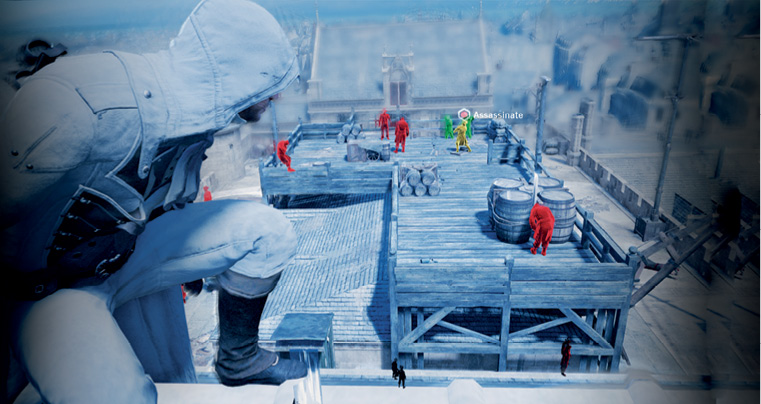
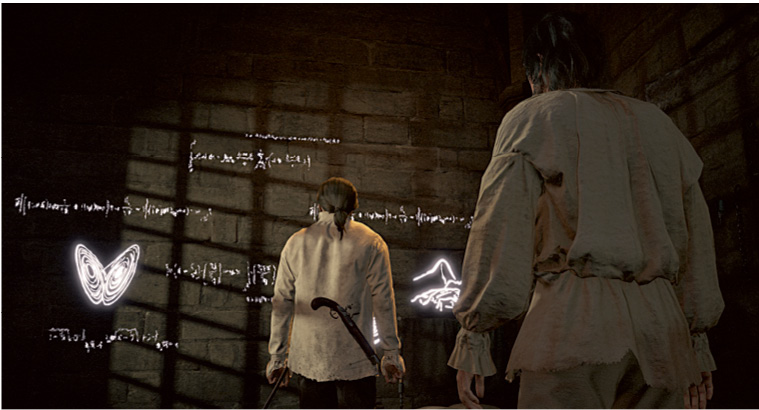
While imprisoned in the Bastille, Arno meets an Assassin named Bellec who takes special interest in Arno once he realizes that the young man can perceive visual information that is invisible to others (a skill which we know from previous Assassin’s Creed episodes as “Eagle Vision”). Bellec explains to Arno that his father was an Assassin, and advises Arno to join the Brotherhood. After two months of imprisonment for Arno, the Bastille is attacked by revolutionaries, providing a timely opportunity for Arno and Bellec to escape.
Arno chooses to return to the De La Serre estate, where he encounters Élise, who accuses him of being responsible for her father’s death. Arno swears he had nothing to do with the murder, but comprehends her grief and anger when he finally reads the letter he was supposed to deliver to De La Serre: the message warned the Templar of an imminent attempt on his life. Had Arno delivered the urgent communication to his guardian, De La Serre could have almost certainly taken steps to thwart the attack.
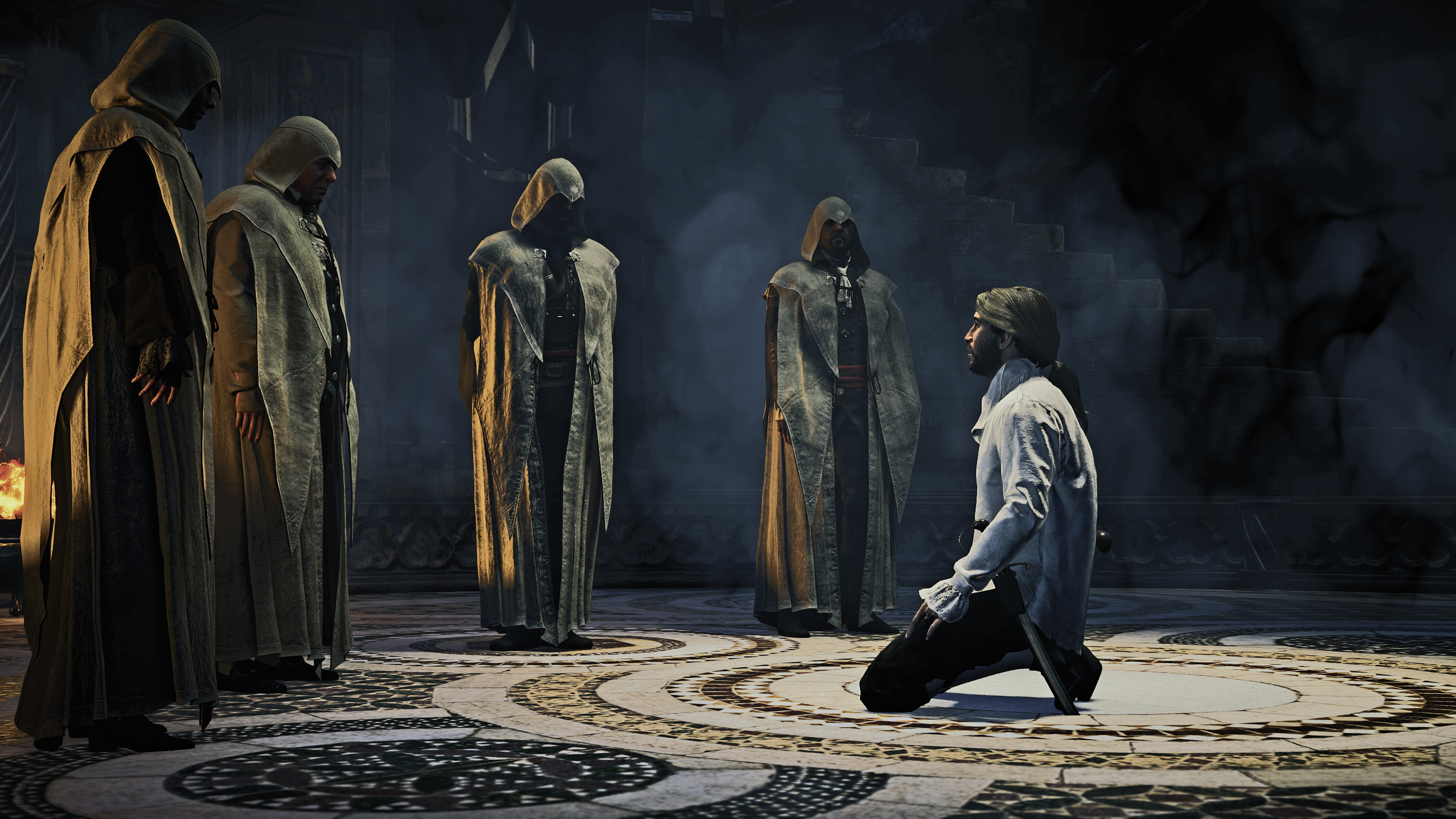
Alone, utterly crushed by the guilt of his most profound failures, Arno sees no other alternative than to accept a future among the Assassins. After an initiation ritual in the presence of Bellec, Mirabeau and the Assassin Council, Arno commits himself to their cause. His first task is to locate and sanction the murderers of De La Serre.
Eagle Vision
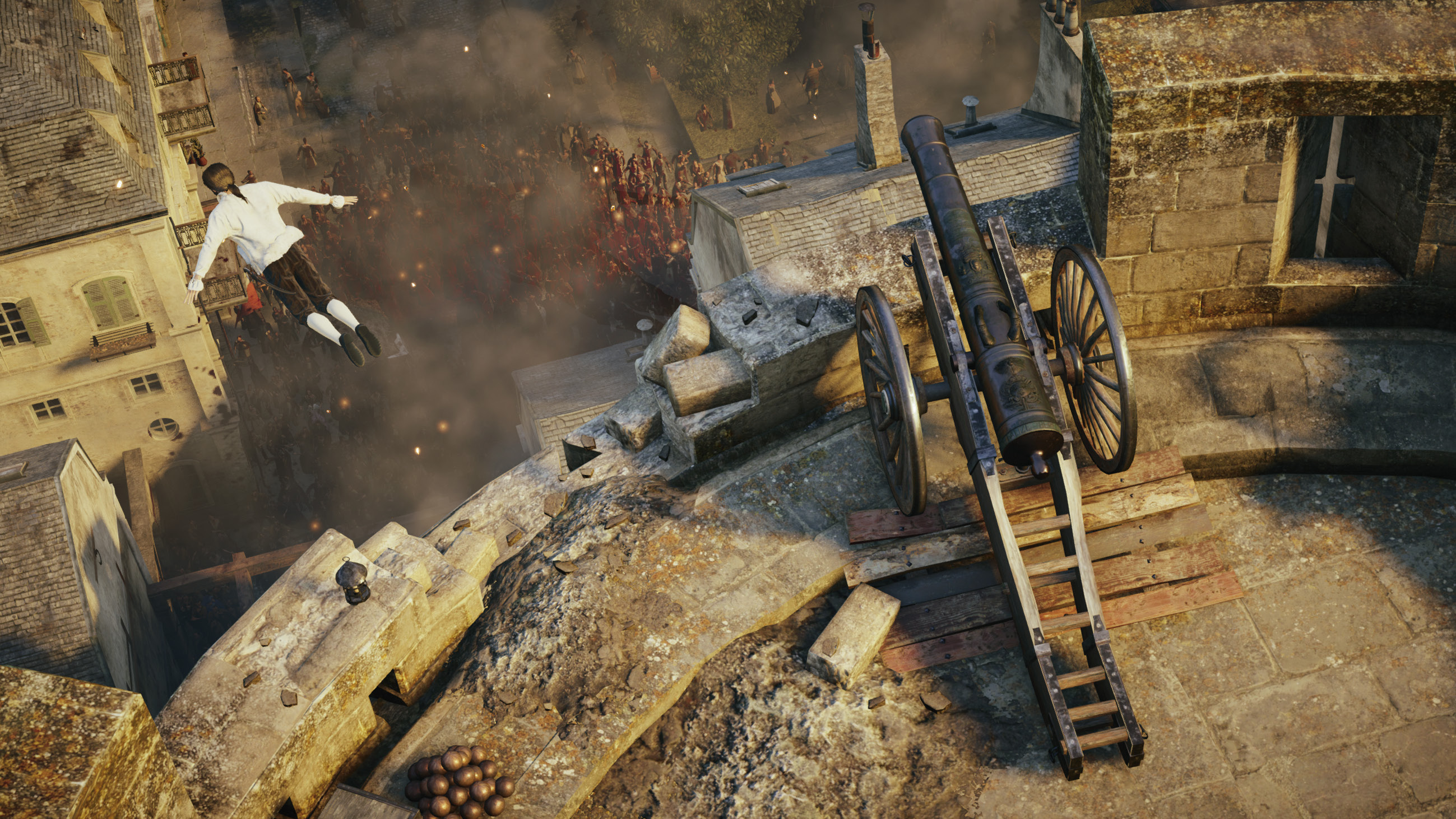
Eagle Vision is a potential talent locked away in most humans, but innate to certain gifted individuals. It grants the facility to discern and interpret signs and details that are invisible to others. This enables Arno to follow trails left by other people, to notice even the most subtle clues, or to infer the path that an individual has taken with a glance.
Glyphs
Glyphs are symbols or other mystical signs that are visible to those who have the capacity for Eagle Vision. Many glyphs are related to First Civilization languages or technology, though Assassins or Templars can also use them as clues or messages for their peers – for example to pinpoint the location of a switch that will open the door to a secret room. Assassins and Templars usually show a very special interest in those glyphs, hoping to find critical information regarding the First Civilization and its technology. During Sequence 02, Bellec reveals that he deliberately engineered his imprisonment with a view to finding the glyphs hidden in the Bastille.
The Phoenix Project
Following Arno’s initiation, the present-day Assassin hackers share a video file that reveals the true intentions of Abstergo and the modern-day Templars. They are attempting to locate genetic material that will enable the Order to sequence a full First Civilization triple-helix genome (as opposed to the standard double-helix DNA found in humans). With this, they hope to unlock the Precursors’ secrets: a process that would begin with the translation of their languages, and eventually lead to the reverse-engineering and reproduction of their technology. One day, the Templars believe, they will be able to manufacture the so-called Pieces of Eden.
This breakthrough is possible thanks to a “donor”, though the term is strictly a euphemism: John was killed by Abstergo security guards during the events of Assassin’s Creed IV Black Flag. John’s body contained an unprecedented quantity of special triple-helix First Civilization DNA because he was a “Sage” – rare individuals that share a unique link with the First Civilization. The project to sequence and understand the First Civilization genome is known as the Phoenix Project.
The reason why the modern-day Assassins ask the player to explore Arno’s life is because they have established that Arno encountered a Sage at some point, and they hope to identify this person in the past. If they can win the race against their Abstergo rivals, they may be able to locate his remains before the Templars do.
Pieces of Eden
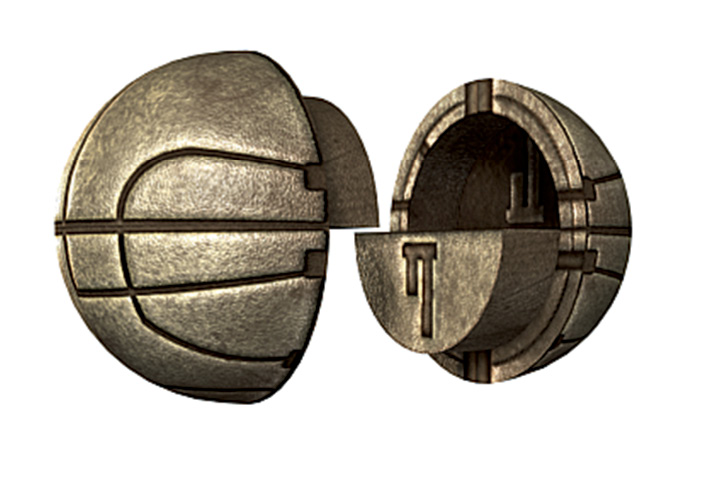
Pieces of Eden are ancient technological artefacts that were created by the First Civilization. Secret history holds that the Templars have possessed many Pieces of Eden through the centuries, enabling them to influence world events. As such, Pieces of Eden are one of the most recurring subjects of conflict between Templars and Assassins; the former trying to obtain and exploit them, whereas the latter seek to hide or destroy them to safeguard free will.
Pieces of Eden can take various forms, including powerful weapons, but the most powerful are the Apples of Eden: devices capable of interfering with human cognitive functions, used by the First Civilization to maintain the obedience of their slave race.
Juno

Juno was a prominent figure of the First Civilization at the time of the catastrophe that led to the extinction of the Precursor race. Researching ways to perpetuate her race, she and some of her few surviving peers attempted to interbreed with mankind, or at least splice their own genetic code into human DNA. This explains Arno’s incredible abilities, such as Eagle Vision: his remarkable lineage has caused him to possess an unusually high concentration of First Civilization genes. It is during the process of this bioengineering project that Juno duplicated and “planted” her husband Aita – in the form of data that contained his memories – into human DNA. Ever since then, when certain conditions are met, which will statistically happen at semi-regular intervals, Aita is born again as a Sage. He is a cuckoo’s egg placed in the human genetic nest – a remarkable feat of brood parasitism by his long-lost wife.
Juno has existed for approximately 80,000 years as a digital being, her body long decayed but her consciousness maintained inside First Civilization computers. Her subtle influence on events in human history, exerted whenever or wherever appropriate First Civilization technology is circulated, has shaped the events of the Assassin’s Creed story. Juno regards contemporary humans as being fit only to resume their existence as the slaves they were originally designed to be. Having managed to transfer herself from Precursor computers to the global telecommunication networks, she lies in wait, ready to pick up potentially any event that happens in the digital world – including, of course, communications and operations led by Assassins and Templars alike.
Sages
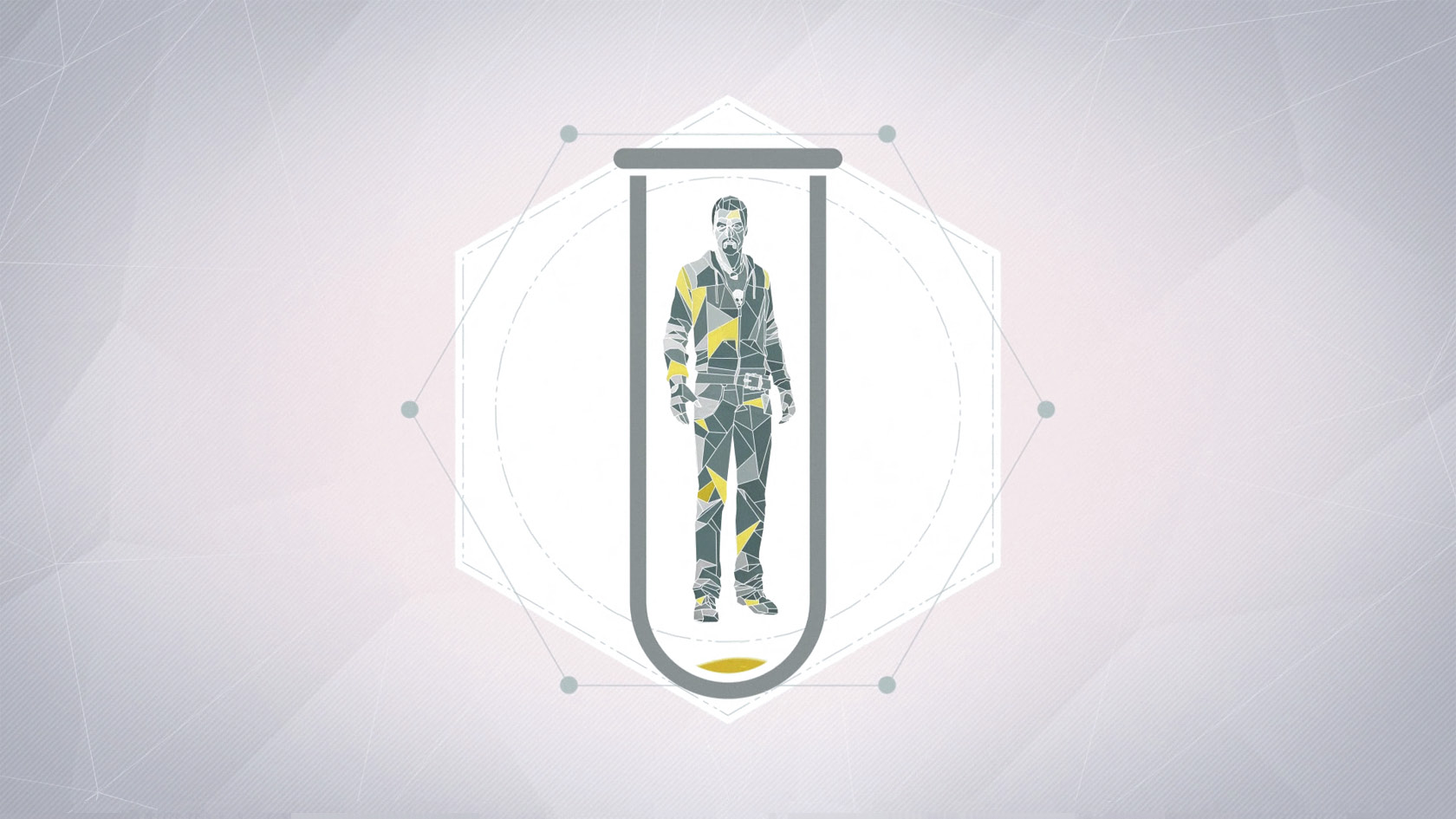
Each Sage is a recurring partial incarnation of a First Civilization notable called Aita, husband of Juno, who was “planted” in the human genome tens of thousands of years ago. Each Sage can be seen as a vessel inside which, broadly speaking, two personalities and two sets of memories cohabit:
 the actual man whose body acts as a vessel, with memories of his parents, childhood and events within his own actual lifespan;
 and aspects of Aita, with fragmented recollections of his personality and life in the First Civilization era, before he was planted in the human genome in the form of data that contained his memories. The characteristics of Aita that manifest themselves in each Sage appear to vary, as each one may possess a different portion of his genetic legacy.
From this perspective, each Sage is (at least in part) a First Civilization mind trapped in what, to him, is an alien mind and body, surrounded by a civilization founded by creatures that his kind created as slaves. This explains why Sages can appear as conflicted, confused or even insane to the other men and women of their time: they are haunted by recollections of an exotic and incomprehensible former life. Regardless of his background, the act of seeking, discussing or researching anything relating to the First Civilization has clearly brought many Sages into contact with Assassins and Templars. They are, after all, moths drawn to the same flame.
Multiple recurrences of the Sage have been identified throughout history, but one of the most important figures is John, a character that appeared in Assassin’s Creed IV Black Flag. John was a Sage who infiltrated Abstergo Entertainment, where he was in charge of the company’s IT department. Rather than sabotage Templar research into a previous Sage encountered by Edward Kenway in Black Flag, he instead chose to leak that information (and more besides) to the Assassins. Most important of all, he then revealed himself as a Sage and, by provoking his death by armed security guards, enabled the Templars to secure his body. It seems incontrovertible that he intended to be caught. Templar possession of John’s body is obviously of huge significance. If his genetic data is successfully sequenced – as is the purpose of the Phoenix Project – what might Abstergo researchers find? And, given the voluntary nature of his death, what might Aita (and, therefore, Juno) secretly intend for them to find?
It seems highly likely that John – working for and at the behest of Juno – actively surrendered his life to deliberately instigate what is now known as the Phoenix Project.
Sequence 03: Assassination of Sivert
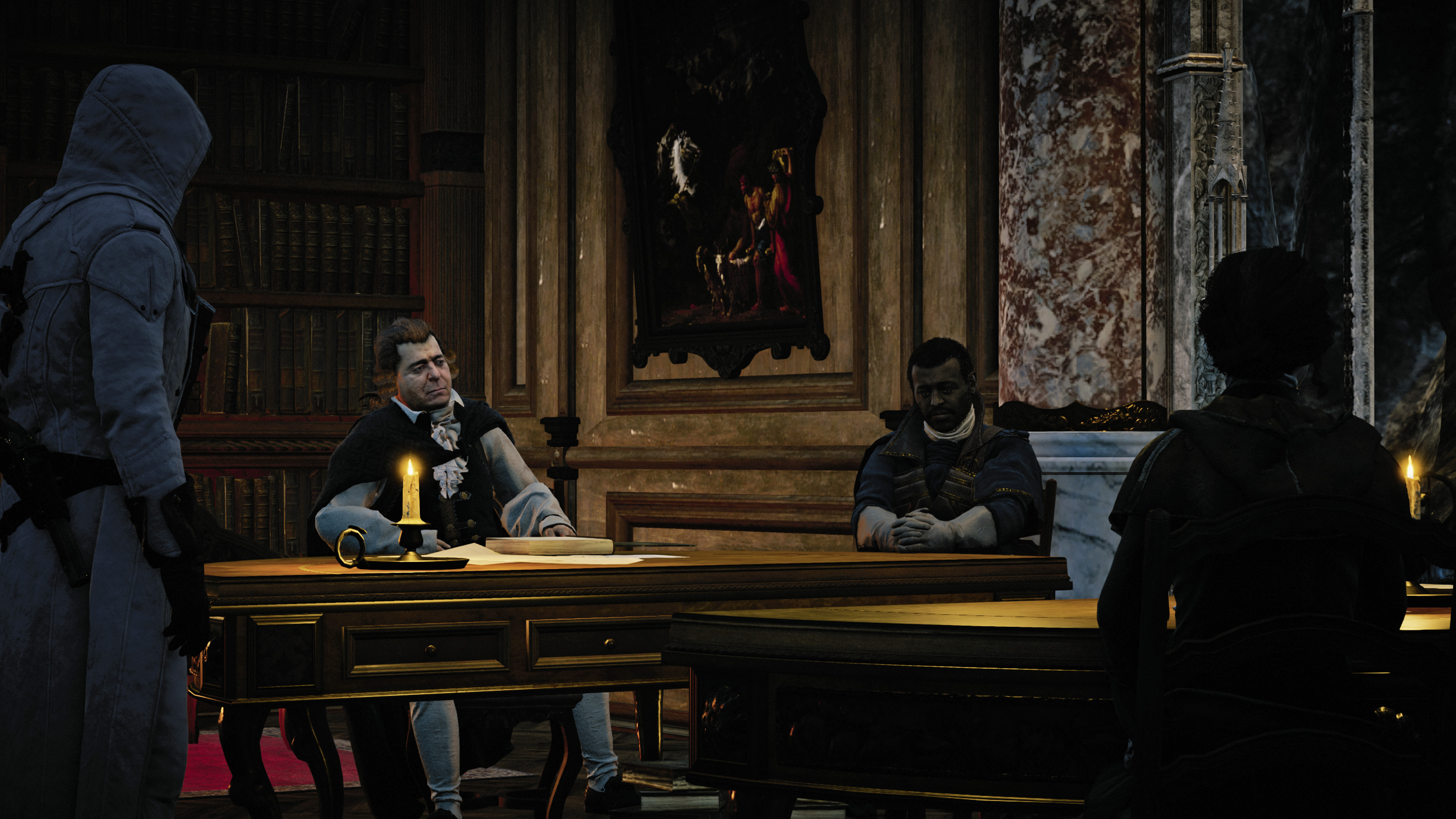
Working together, Arno and Bellec assassinate a Templar thug called Arpinion, and secure in the process a ledger full of Templar records containing details on meetings involving a Templar called Sivert. Mirabeau, the leader of the Assassins, seems convinced that he can bring the war between the Templars and Assassins to an end by securing a truce and ultimately striking a balance that will lead to a temporary but meaningful peace. The rest of the Council, however, is concerned that the French chapter of the Templars, weakened since the execution of Jacques de Molay centuries previously, are secretly attempting to restore the Order to its former level of political dominance. Nevertheless, the Assassins task Arno with his first assignment: to eliminate Sivert, one of the men behind the murder of De La Serre.

Arno employs the information in the ledger to find Sivert at Notre Dame. By killing and impersonating his target’s bodyguard, Duchesneau, Arno meets with Sivert in the cathedral’s confessional. Arno kills Sivert after discovering that the Templars were trying to levy funds from the clergy in exchange for their protection against the revolutionaries.
As Arno stabs Sivert, he experiences flashes of his victim’s memories, which reveal that Sivert did not kill De La Serre alone, but was helped in this task by another man: Roi des Thunes, the “King of Beggars”. Mirabeau and the Council of the Assassins agree with Arno that Roi des Thunes must also be killed.
Sequence 04: Assassination of Roi de Thunes
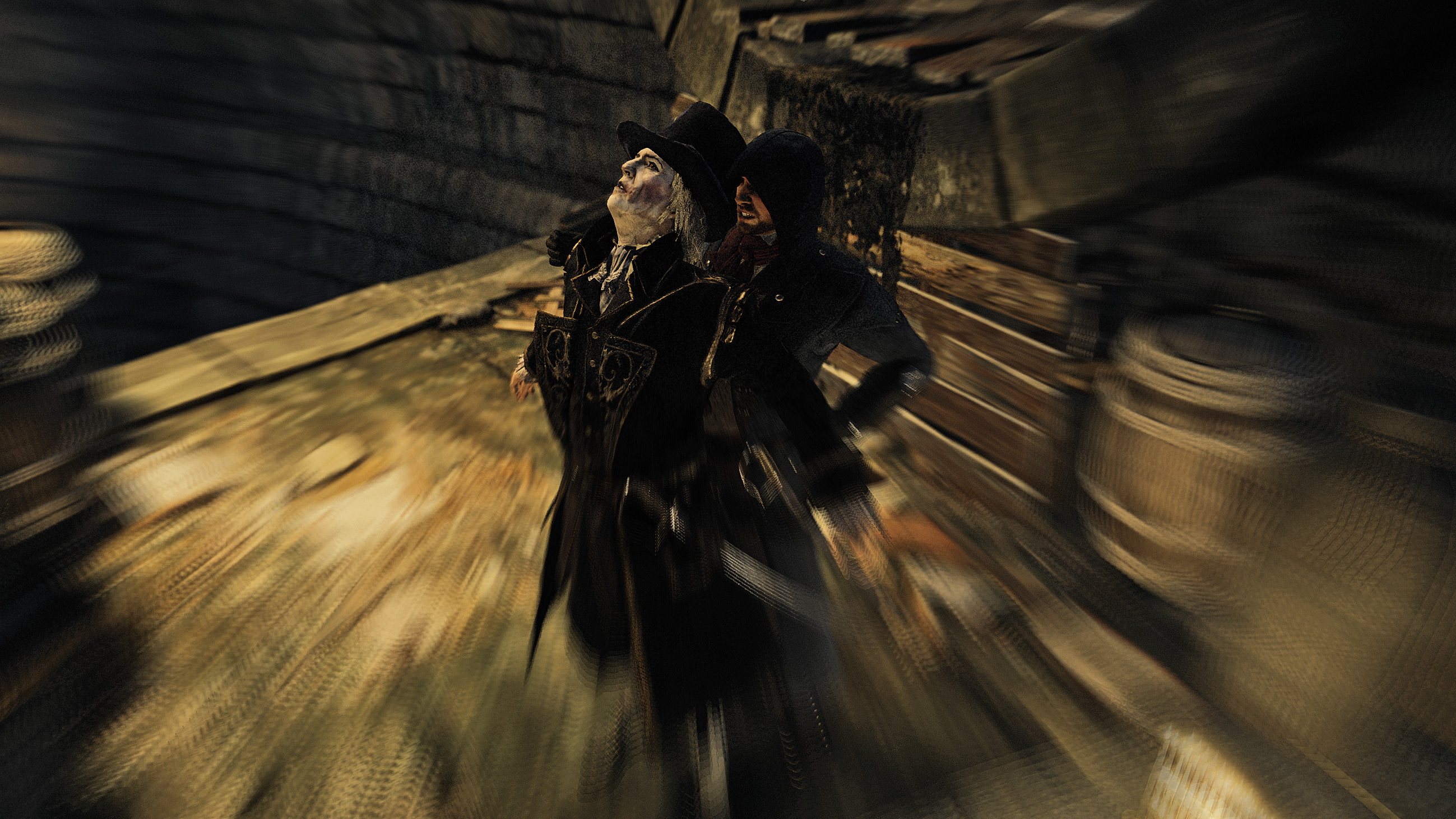
Arno endeavors to assassinate Roi des Thunes, Sivert’s accomplice in the murder of his adoptive father. Roi des Thunes is a cruel man who levies money from Parisian beggars, and orders enforced mutilation for those who do not earn sufficient coin to increase their potential profitability. As Arno visits the Cour des Miracles for the first time and witnesses a beggar being subjected to this monstrous treatment, the Marquis de Sade prevents Arno from intervening and revealing his intentions.

De Sade, who was imprisoned with Arno in the Bastille, suggests that the Assassin follow Roi des Thunes’ men. This first leads Arno to Roi des Thunes’ assistant, La Touche, who reveals where his master is hiding: in the catacombs beneath an old church. Though his quarry is well guarded by Templar thugs, Arno manages to kill the beggar king after a challenging confrontation. The Marquis de Sade, who appoints himself as the successor to Roi des Thunes, subsequently reveals to Arno the identity of the only blacksmith who could have forged the Templar pin that was used to murder De La Serre – a man by the name of Germain.
Sequence 05: Assassination of Lafrenière
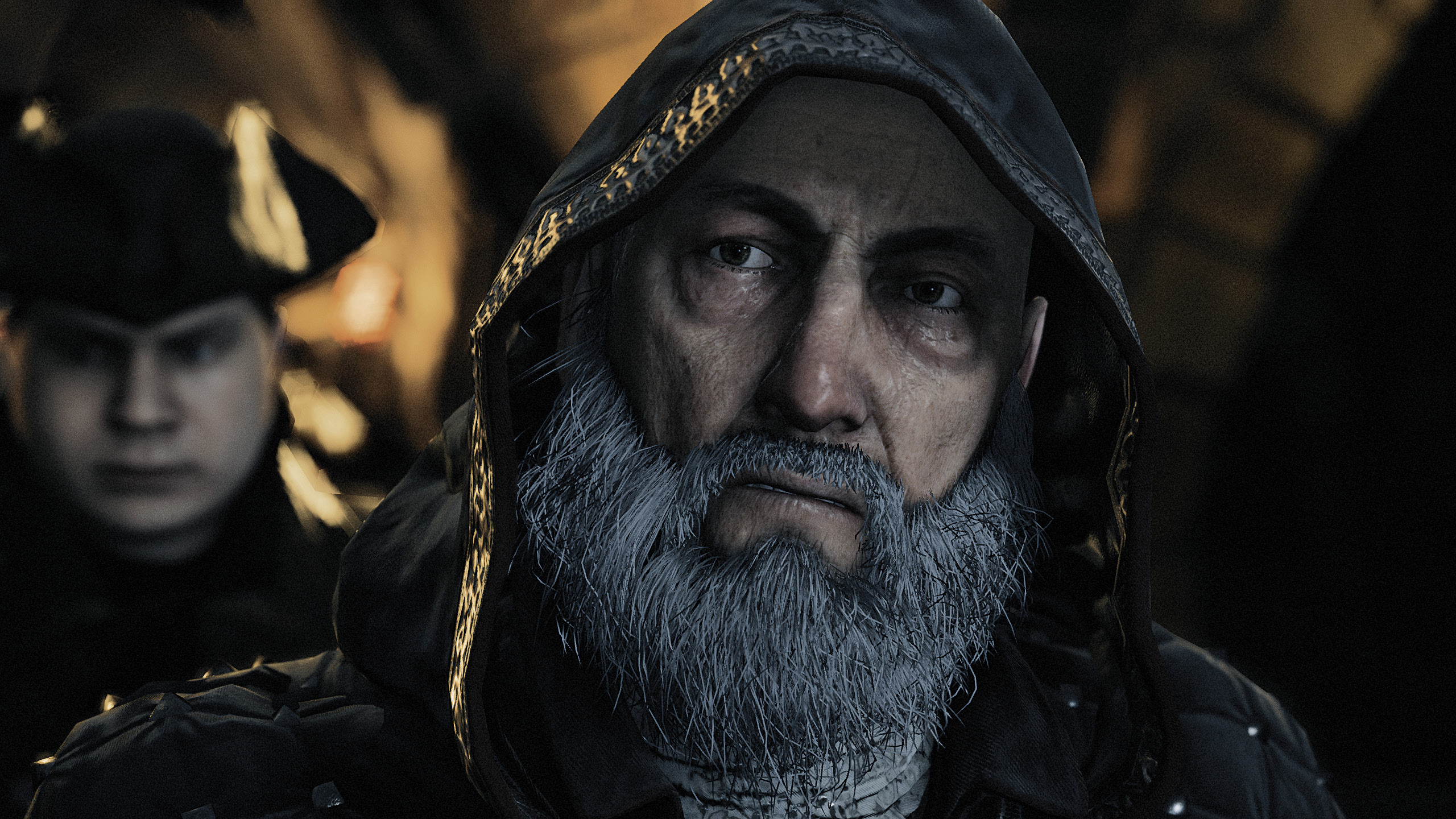
When Arno finds Germain at his workshop, the silversmith claims to be held prisoner and requests that Arno help him to escape. He says he has been detained and forced under duress to craft weapons for a Templar named Lafrenière.
Following Germain’s lead, Arno searches for Lafrenière in the Halle aux Blés. While inspecting the foreman’s office, Arno finds a ledger detailing weapon shipments arriving from central Europe, with one delivery due imminently at the Cimetière des Innocents graveyard. There, Arno surmises that the Templars have been buying weapons in preparation for an assault, which Arno supposes will target the Assassins. Arno assassinates Lafrenière before he orders the attack to begin.
As Arno takes the life of the Templar, he once again experiences flashes from the memories of his victim, which reveal two essential pieces of information: firstly, that Lafrenière was the man who wrote the letter warning De La Serre of his imminent murder. Lafrenière, therefore, was not the man who instigated De La Serre’s death. Secondly, the attack planned by Lafrenière was not targeted at an Assassin safehouse, but instead at a club hosted at l’Hôtel de Beauvais.
Sequence 06: The Templar Meeting
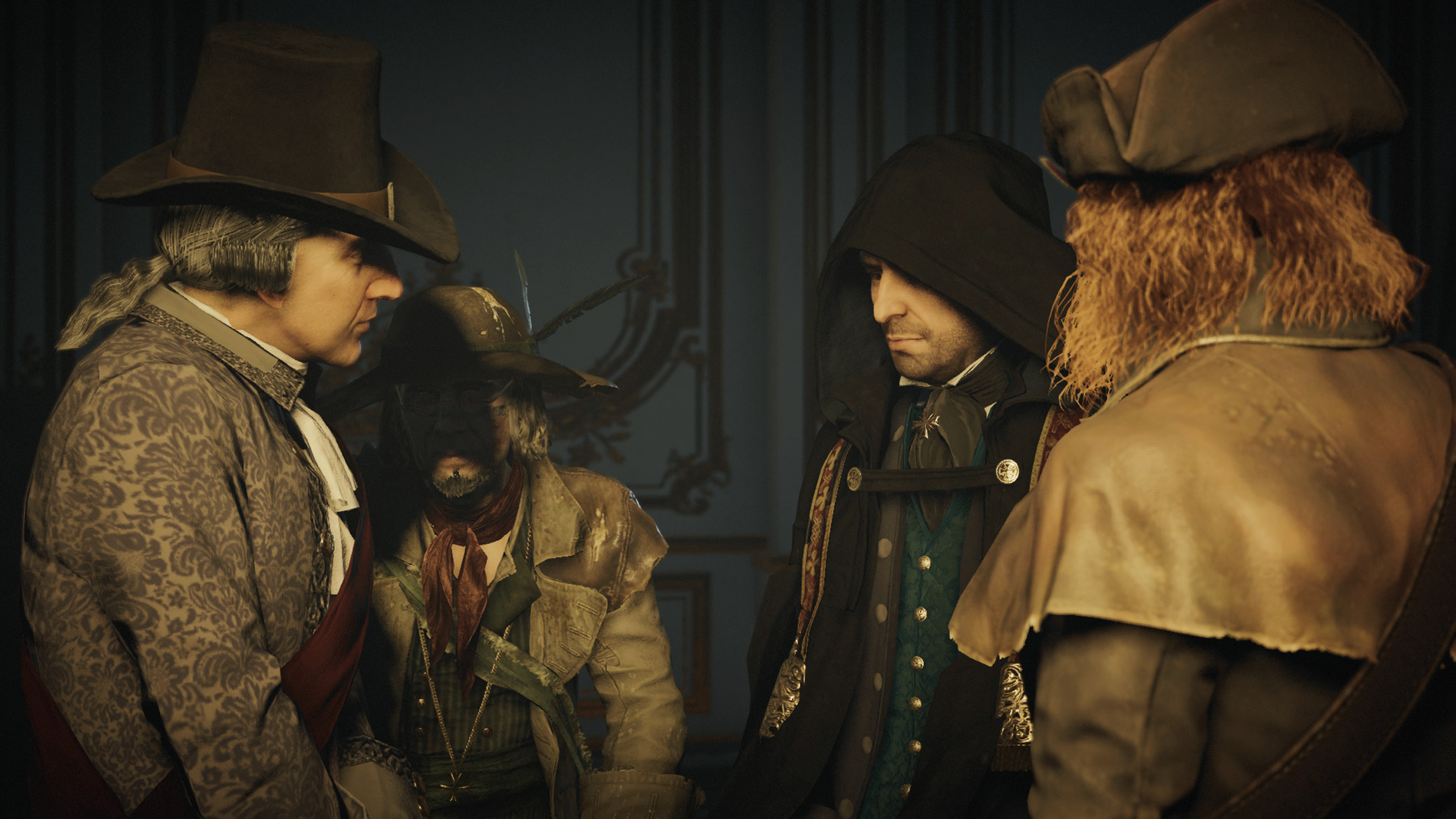
After reporting to the Assassin Council, Arno is tasked to investigate the club that Lafrenière was intending to attack. Once on site, he learns that this is the Jacobin Club, and witnesses Robespierre delivering a (now famous) speech against the death penalty. Spying on Templars gathered there for a secret meeting, Arno obtains glimpses of their new Grand Master – though his identity is concealed by a cloak. He also witnesses several other key Templar figures: Marie Levesque, Rouille, Le Peletier, and La Touche (former assistant of Roi des Thunes). There, he learns of their plan to starve France to fuel the Revolution.
When Arno hears mention of Élise’s name during the secret meeting and understands that the Grand Master has sanctioned an attempt on her life, he rushes to intervene and saves her in the nick of time from Templar hitmen. The two estranged friends separate to escape their pursuers in the melee that ensues, but agree to meet up in a café the next day.
Sequence 07: Betrayal
Arno the Assassin and Élise the Templar agree that they have a common enemy: the new Grand Master of the Templars, who killed Élise’s father to seize control of the Order. They decide that they should unite their efforts, enabling the Assassins to eliminate a dangerous Templar threat, and Élise and her allies to remove a dangerous faction corrupting the Order from within. To that end, Arno presents Élise to the Assassin Council. With most of the Assassins (with the exception of the sympathetic Mirabeau) reluctant to join efforts with the enemy, Arno and Élise are left by themselves to plan their next move.
During a conversation where Arno mentions Germain, Élise reacts, explaining that Germain, allegedly dead, used to be her father’s lieutenant. He was cast out of the Order for “heretical notions” and an unseemly obsession with Jacques de Molay. After a visit to Germain’s workshop, Arno and Élise quickly realize that Germain is the new Grand Master of the Templars. After separating to survive a Templar ambush, the two friends meet up at Mirabeau’s estate to inform the Mentor of their discovery.
To their shock, they find Mirabeau dead, and realize that his murder has been expertly choreographed to implicate Élise. Clues in proximity to the corpse, including a Templar pin and the use of poison favored by Templars, clearly indicate that someone is trying to frame her. Arno and Élise have no choice but to find the real killer before the Assassins learn of Mirabeau’s death and intuit, as intended, that Élise is the prime suspect.
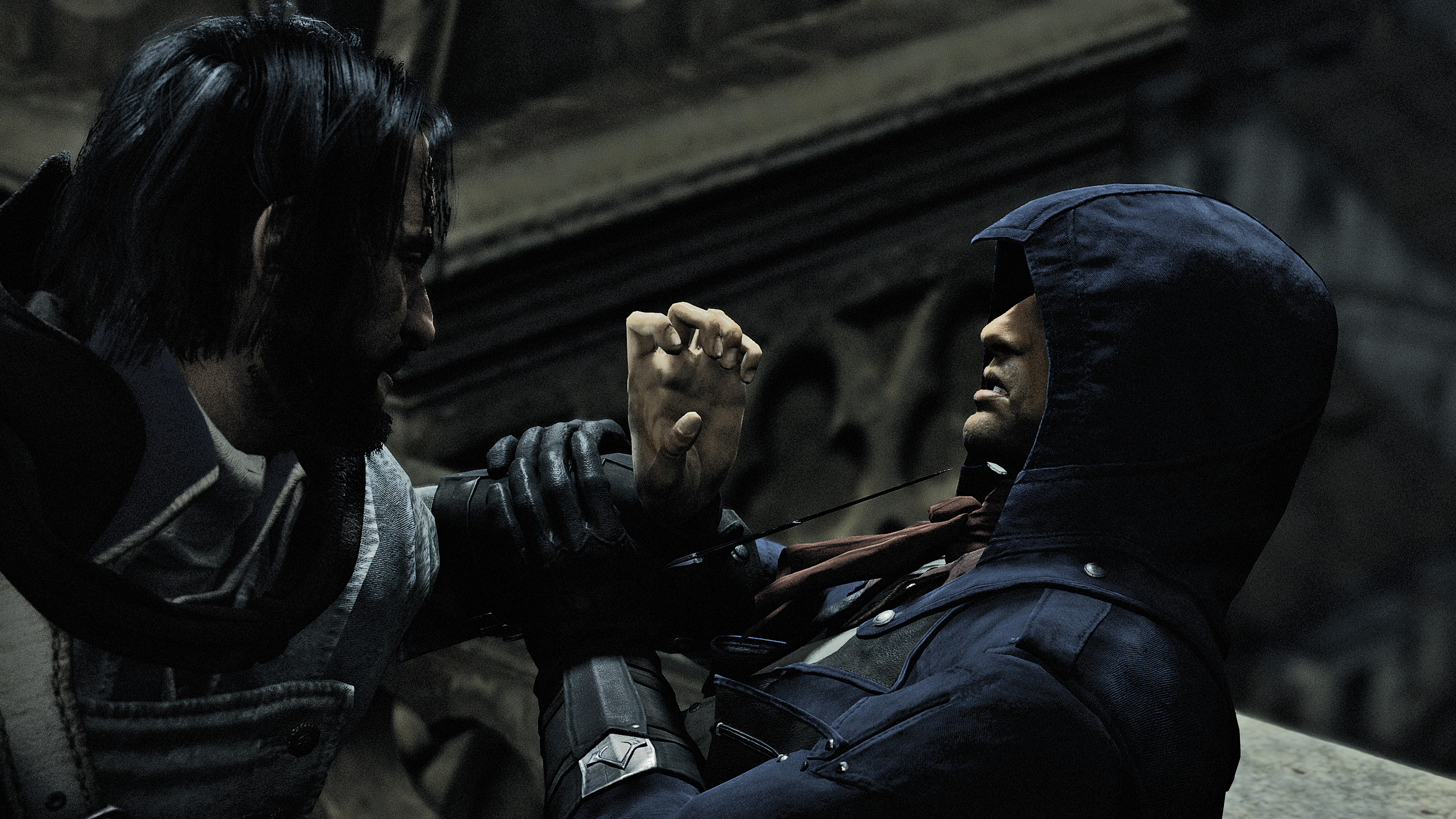
After a thorough investigation, Arno finds the true killer: his Assassin brother Bellec, who saw in Mirabeau’s desire to make peace with the Templars a clear sign of weakness. After a protracted fight, Arno kills Bellec, with flashes of memories from Bellec’s life confirming that he poisoned Mirabeau once he realized that he could not change the Mentor’s mind.
The Grand Master’s Deception
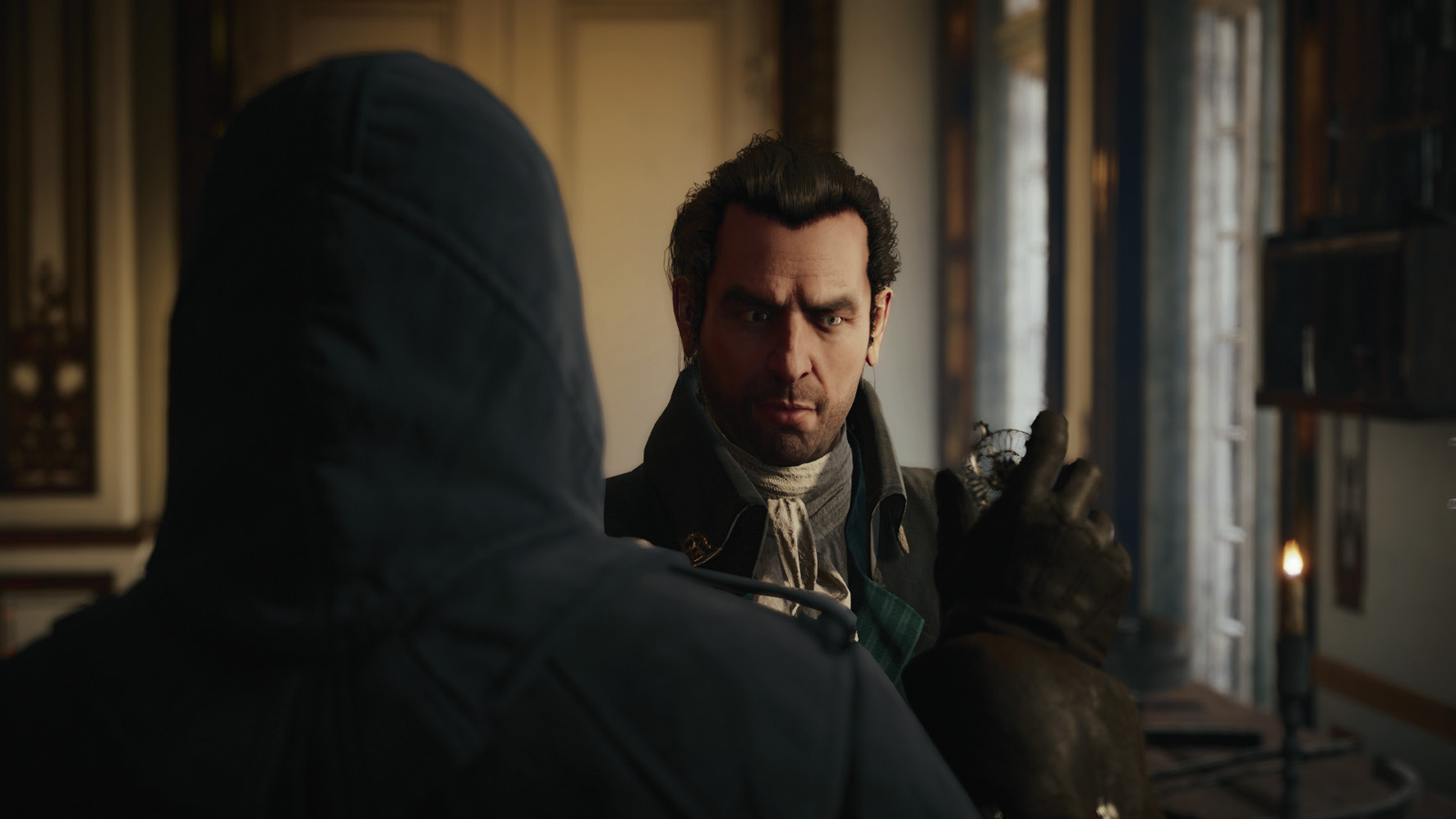
Germain ordered De La Serre’s murder both to supplant him and prevent his intended truce with the Brotherhood. With his rival dead, Germain still needed to eliminate all the Templars who remained loyal to De La Serre. And, ironically, this is where Arno came in – as an Assassin pawn used to settle the Order’s civil war.
Indeed, when Arno encountered Germain for the first time during Sequence 05, he had no idea that the man was actually the new Grand Master of the Templar Order. Germain himself is confused and terrified at the beginning of that scene: he imagines the Assassin has been sent to kill him. When he realizes that Arno does not know his identity, however, Germain sees the perfect opportunity to use this situation to his own advantage. Germain cleverly improvises and sends Arno to intercept Lafrenière. Lafrenière is gathering weapons and preparing an assault against Germain’s faction, but Arno has no way of knowing about this Templar internal conflict. Arno immediately assumes that the attack is intended against the Assassins, and therefore kills Lafrenière.
It is only thanks to the flashes of Lafrenière’s memories and the revelations made during the Templar meeting that we can make sense of this ingenious piece of improvisation: Arno has been used by the Grand Master to reinforce his position as the new Templar leader.
Sequence 08:
Assassination of Rouille

After a year of being restricted to low-profile engagements by the Assassin Council, Arno is tasked to retrieve letters that Mirabeau had sent to King Louis XVI prior to his death. These letters could prove compromising if they were to fall into the hands of revolutionaries. Arno heads to the King’s palace, the Tuileries, to find it under imminent threat of attack by sans-culottes, radical lower-class partisans, who are led by a familiar Templar face: Rouille. Arno infiltrates the building as their assault begins.
As Arno reaches the King’s private quarters, he meets a man, soon revealed to be Napoleon Bonaparte, who is also searching for something. Arno locates a hidden iron cabinet – the Armoire de Fer – within which the King hid his most sensitive correspondence, and finds the letters he was looking for. Having also concluded his search within the Armoire de Fer, Napoleon returns the favor by agreeing to help Arno intercept Rouille. When Arno kills the Templar, he experiences the usual flashes from his victim’s life. From this, he learns of Germain’s plan to instigate the revolution by diverting grain shipments. By increasing the price of grain to starve the people, he believes he can accelerate the process by which they violently turn against the ruling classes.
Napoleon’s Secret
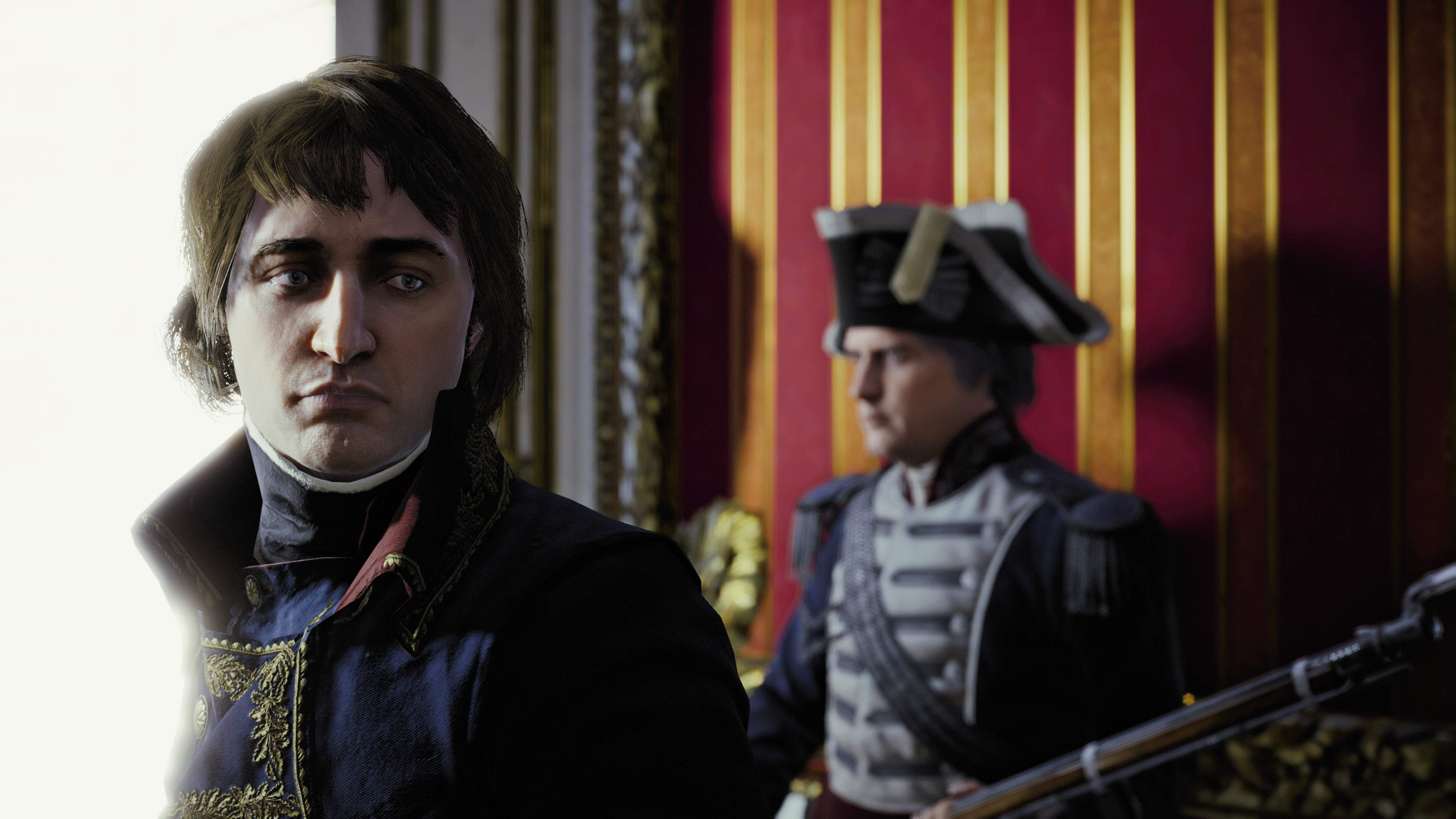
When Napoleon and Arno open the Armoire de Fer, we – but not Arno – witness Napoleon retrieving a special object from the King’s iron cabinet. The distinctive glow that this emits leaves little doubt: it is a Piece of Eden, and most likely one of the more powerful Apple artifacts. This might explain how Napoleon became one of the most powerful men in history within such a short span of time. (Assassin’s Creed experts might recall that Napoleon’s use of a Piece of Eden was actually revealed in one of Assassin’s Creed II’s “Glyph Puzzles”.)
Sequence 09:
Assassination of Marie Levesque


Arno now turns his attention to Marie Levesque, whom he suspects is responsible for diverting the food shipments to cause widespread starvation. He confirms that barges carrying grain are being diverted by following one, discovering that Templar hirelings are redirecting them to the Palais Luxembourg. Marie Levesque’s plan is to foment widespread discontent by leading people to believe that the royal family is hoarding food while the wider population starves. As Arno assassinates Marie Levesque, he experiences visions from her life that illustrate her unfailing loyalty to Germain, and how Le Peletier is another key lieutenant in Germain’s Templar hierarchy.

The Sage Connection
The flashes of Marie Levesque’s memories just before she dies in Sequence 09 give new hints about Germain’s past. Of special interest, we see De La Serre casting him out of the Templar Order for heresy, and we hear Germain insist that the long-dead Jacques de Molay speaks to him.
As we now know that both Jacques de Molay and Germain were Sages, we understand that there was nothing heretical in Germain’s intentions: he simply shared common First Civilization memories with De Molay, and felt a powerful kinship with the long-dead Templar.
Sequence 10: Assassination of Le Peletier
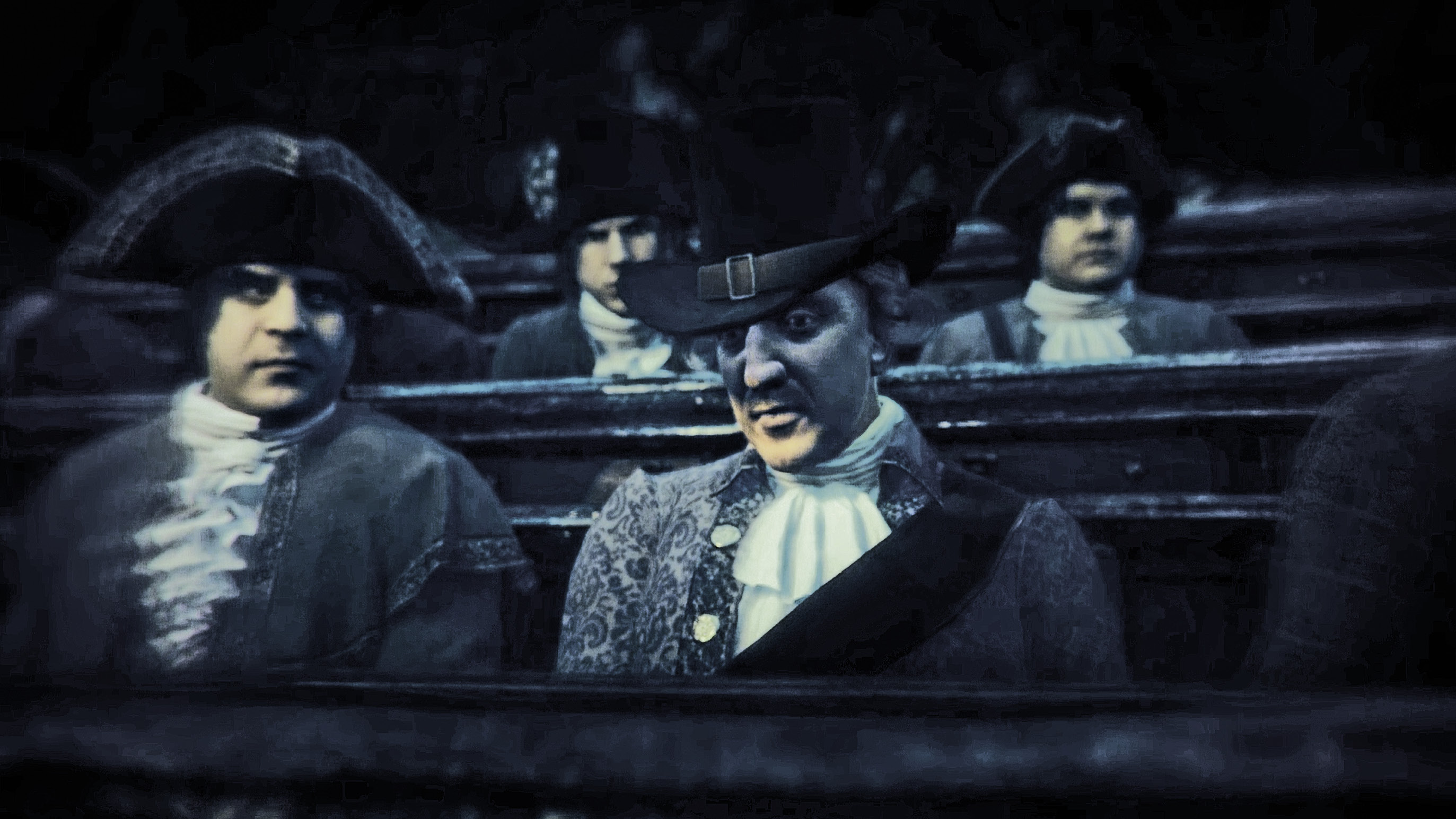
Having identified Le Peletier as a senior figure in Germain’s Templar organization, Arno locates and assassinates him. Flashes from his life reveal that the man voted for the execution of the king, but did so believing that this was for the good of France and the liberty of the people, and not merely at the behest of Germain. The final flash also reveals that Germain intends to witness the beheading of the despised monarch with his own eyes.
Expecting to find Germain there, Arno and Élise attend the execution of Louis XVI. Arno is able to exchange words with Germain, but the Templar escapes as the Assassin and Élise fight his guards. Élise blames Arno for allowing the Grandmaster to evade their blades.
On his return to the Assassin sanctuary, Arno is expelled from the Brotherhood for his flagrant disregard for the Council’s wishes and orders.
Sequence 11: Assassination of La Touche
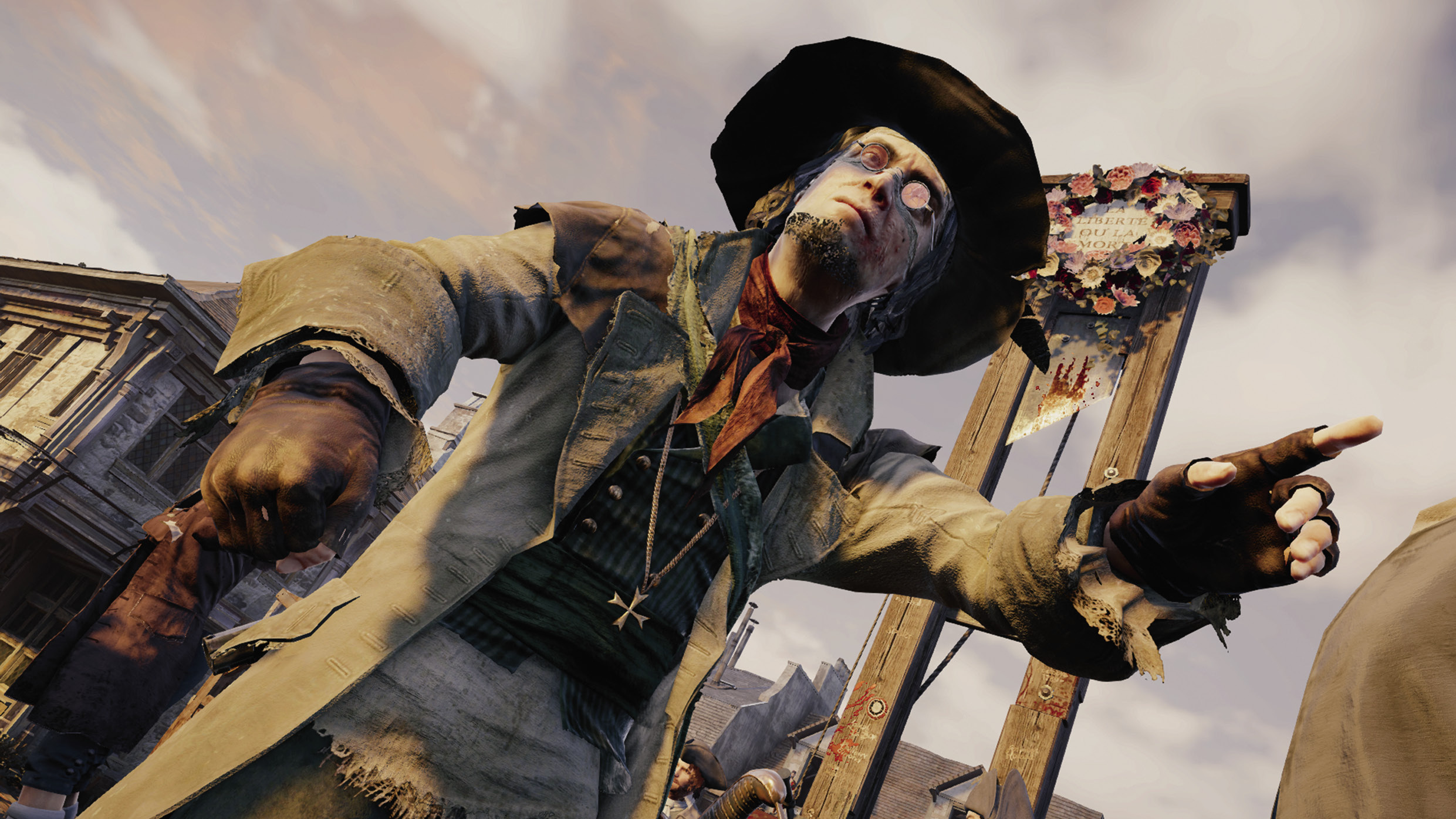
Élise finds Arno at the De La Serre estate and insists that he return with her to Paris, where Germain’s machinations are causing the Reign of Terror to reach new heights of brutality. Arno agrees, but chooses to eliminate La Touche first, Germain’s final lieutenant, who is collecting enormous financial levies from the people in Versailles; those who will not or cannot pay are all sent to the guillotines. Once Arno reaches La Touche and assassinates him, he learns that La Touche was working under the supervision of another key figure in the government: Robespierre. Arno reconvenes with Élise armed with the name of the man who will lead them to Germain.
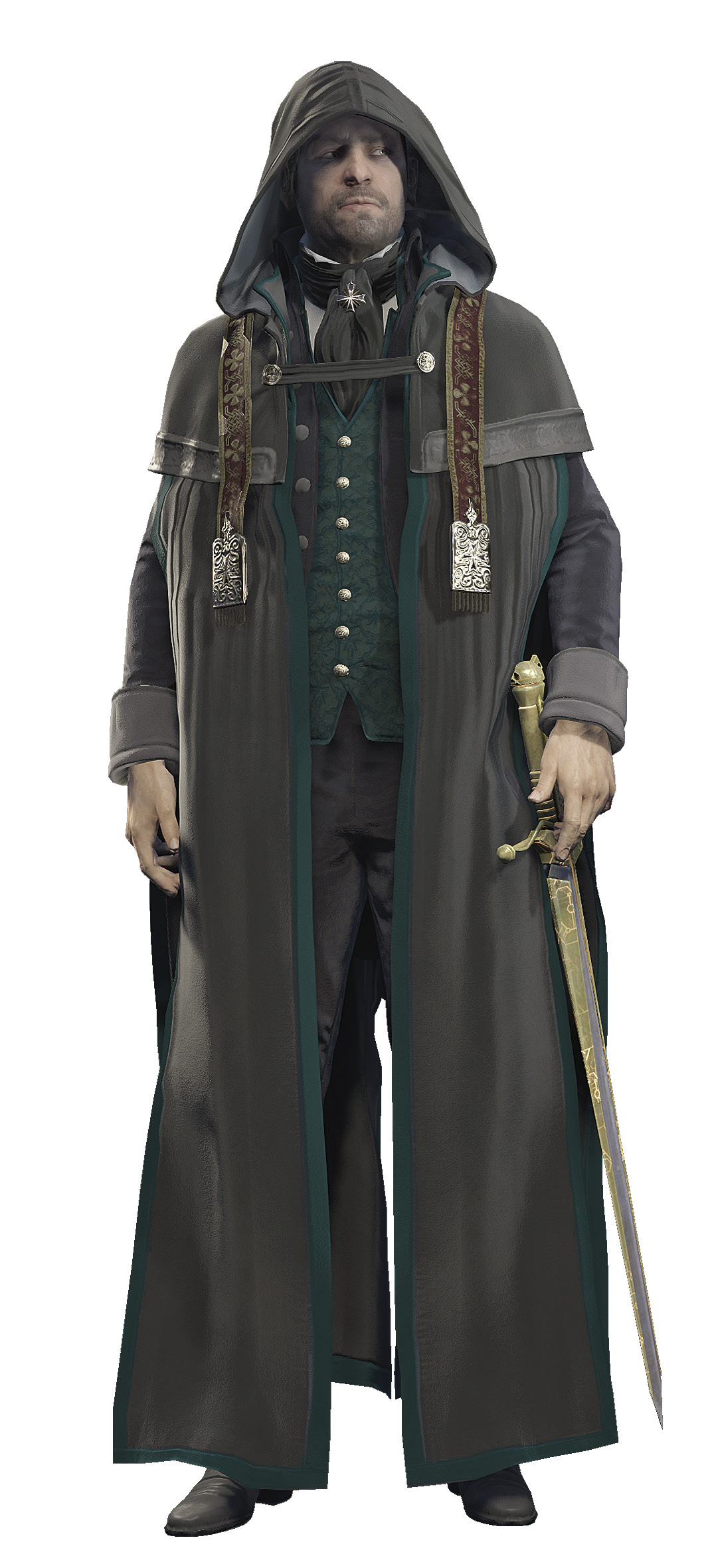
Sequence 12: Assassination of Germain
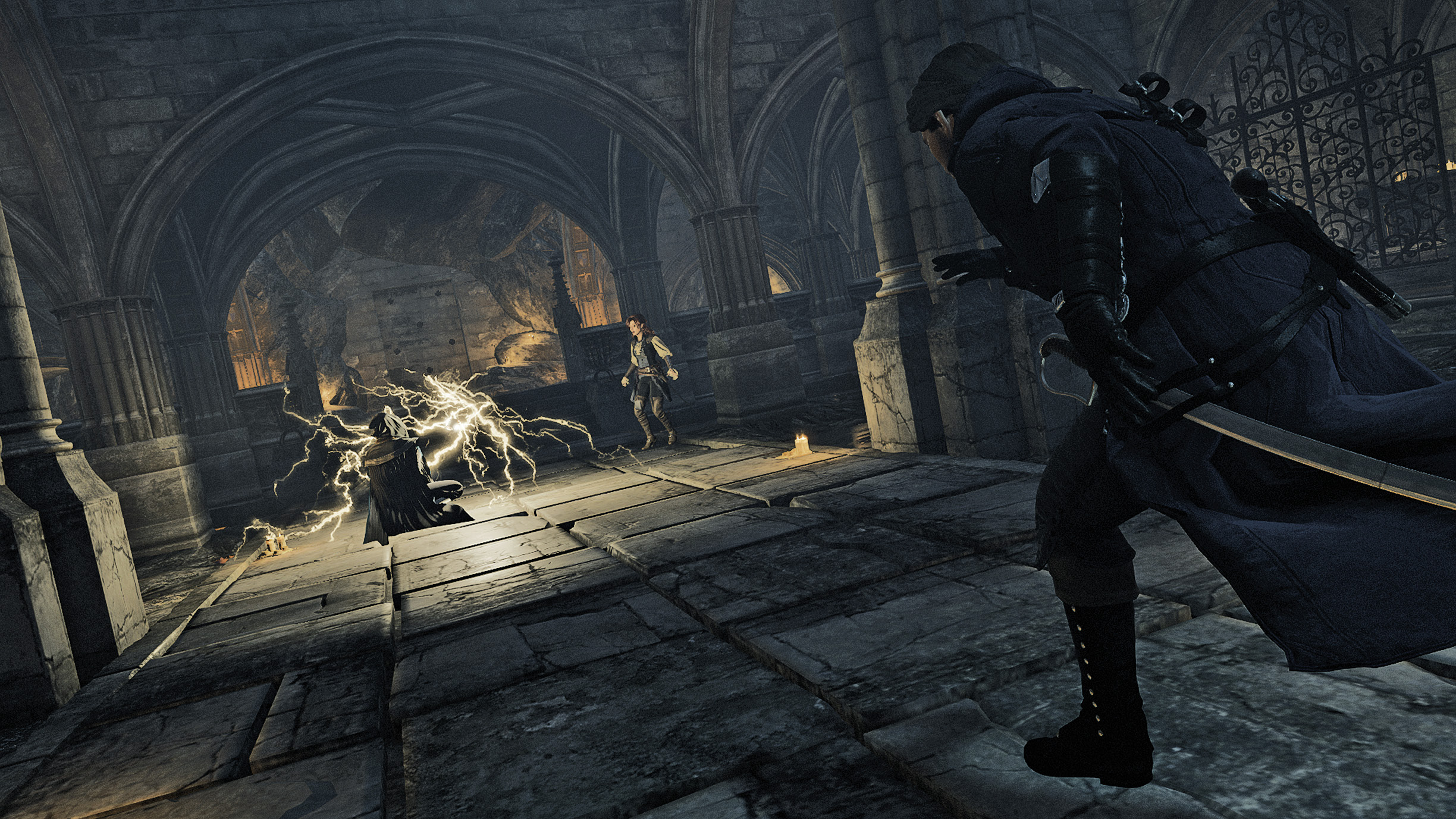
Élise and Arno meet up during the Festival of the Supreme Being, hoping to find a way to reach their target. As the number of men guarding him is substantial, they decide that the most adroit and practical way to make Robespierre vulnerable to their enquiries will be to discredit him. Sneaking into his base of operations during the festival, Arno obtains a list of men written in the recognizable hand of Germain’s ally. The named individuals are deputies of the National Convention opposed to Robespierre; to the politically discerning eye, it reads like a future itinerary for a busy Parisian guillotine. Élise and Arno also adulterate Robespierre’s wine with powdered ergot, a substance that, in small doses, will cause mania, slurred speech, even hallucinations: enough to make Robespierre appear awkward or unhinged during his scheduled speech. Finally, Élise and Arno anonymously deliver the compromising list of names to the men who it references, causing no small measure of alarm.
Élise and Arno’s plan is a success: the National Convention turns against Robespierre, and their soldiers clash with those of the Paris Commune (who defend Robespierre). Élise and Arno later meet with the disgraced and discredited Templar ally to learn the whereabouts of Germain, mere moments before the Convention troops arrive to take him into custody.
Arno encounters Germain first, but struggles to defeat him as the Grand Master wields a sword that is in fact a Piece of Eden with phenomenal powers. Arno and Élise together eventually manage to break the sword, but Élise is killed in the explosion that ensues.
As Arno approaches the mortally wounded Grand Master he experiences flashes of memories from Germain’s life. Among many other things, we see that Germain found the vault of Jacques de Molay, who was himself a Sage, and how de Molay’s writings helped Germain to make sense of his own inherent strangeness. It also inspired his desire to finish de Molay’s work, striving to purge the Templar Order of its weakness and decadence.
Later, we see Arno moving Germain’s remains to the catacombs, leaving him among thousands of other skeletons. This not only marks the end of another pivotal clash in the eonian struggle between the Assassins and Templars, but also has repercussions in a future conflict.
Epilogue
In the present, the Assassins view Arno’s actions with delight, commenting that Abstergo could not possibly hope to locate Germain’s bones or retrieve a viable genetic sample, as his remains are lost among thousands of others in the Parisian catacombs.
Story Secrets & Hidden Files
In this final section, we take a look at critical plot developments that are only revealed through the completion of optional objectives – the Temporal Rift Missions in particular – and that are therefore very easy to overlook. We also tie up some loose ends from the prior episode in the Assassin’s Creed series, Black Flag.

SPOILER WARNING! In addition to presuming a high level of Assassin’s Creed knowledge, the following contains brutal spoilers.
Melanie Lemay

The main contact of the player character during the events of Assassin’s Creed IV Black Flag, we learn that Melanie Lemay has been appointed as the new CCO of Abstergo Entertainment, and is now based in the large office that belonged to Olivier Garneau. She is in regular contact with Dr. Alvero Gramática, a high-ranked Templar in the Abstergo hierarchy. It is worth noting that the player character in Black Flag, who exhibited extraordinary skill while exploring the memories of Edward Kenway, seems to have left the company after John Standish’s death.
John from IT
The present-day Sage featured in Assassin’s Creed IV Black Flag, “John from IT”, is revealed to be called John Standish. Reports from Melanie Lemay imply that John was in direct contact with Juno. He was even witnessed as having a video- or voice-chat exchange with what we can presume was her. Since it is revealed in Unity that Juno is capable of hacking and exploring even the most secure servers at Abstergo Entertainment, it is safe to assume that Juno’s free access to their hardware may be courtesy of John in his position as a senior member of the company’s IT department. With this achieved, we can infer that he probably had no other practical purpose other than to deliver his DNA to Abstergo to advance Juno’s plans.
Alan Rikkin & Templar Organization Chart
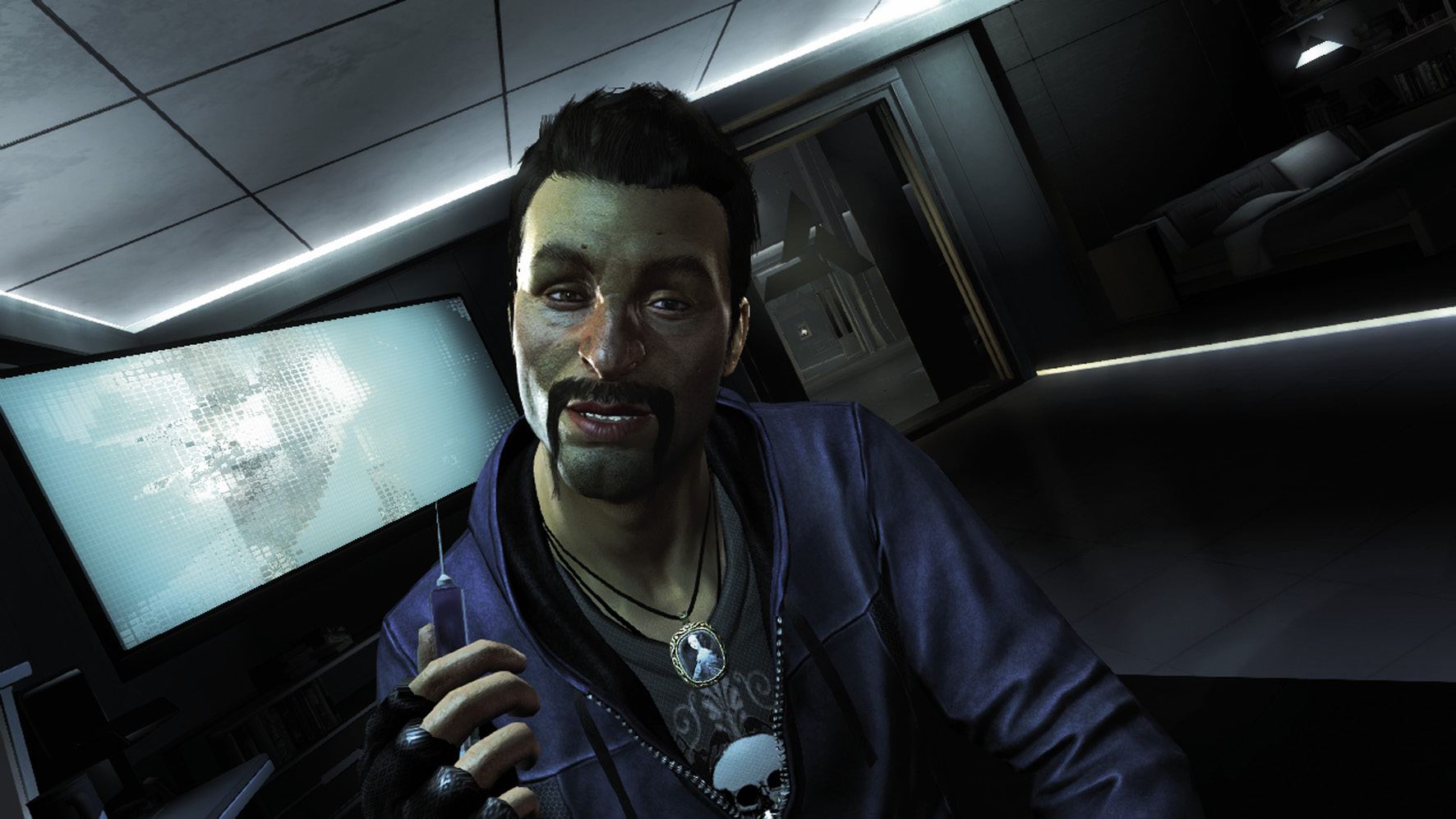
A key Templar figure mentioned in earlier episodes, as far back as the original Assassin’s Creed, Alan Rikkin is the CEO of the entire Abstergo Industries group. Rikkin is one of the main leaders of the present-day Templar organization, sometimes called “the Inner Sanctum of the Templar Order”, in which he is secretly referred to as the “Guardian”. As the Guardian, he coordinates operations with the “Doctor” (almost undoubtedly Dr. Alvero Gramática). Rikkin has two colleagues of equivalent rank to his, and they all report to the “General of the Cross”, whose identity is unknown – but may well be the current Grand Master of the Order.
Abstergo’s Domination
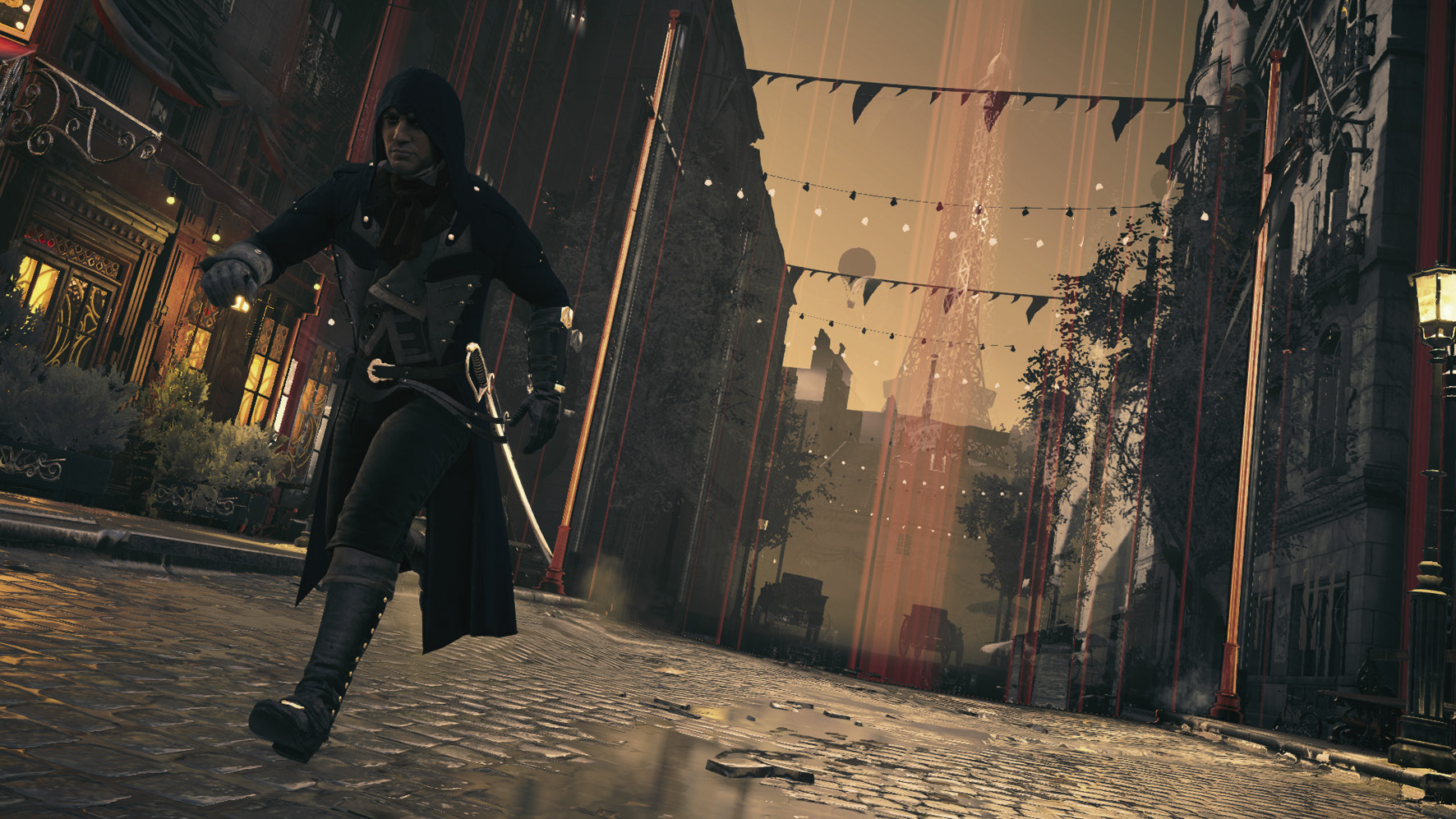
The modern-day Templars have made significant progress and breakthroughs in their research and understanding of the First Civilization. With Assassins unable to recreate the surrogate technology that facilitates the exploration of memories by non-descendants, Abstergo is the only group capable of conducting intensive research into genetic memories. The only option left to the Assassins is to hack Abstergo servers to identify promising leads, as explained during Unity’s early Sequences. Abstergo fights back by attempting to find the hackers and forcibly sever their connection to the simulation, a process that can cause irreparable brain damage. We witness this on three occasions during the “Server Bridge” events. These are engineered when Abstergo security agents (and, presumably, digital routines) are poised to locate Brotherhood interlopers, providing an escape route to another section of the simulation.
Abstergo’s Current Knowledge
The success of Abstergo Industries has enabled the Templars to make great strides in their understanding of the First Civilization, which they now refer to as Homo Sapiens Divinius (H.S.D.). Their ultimate goal is to sequence the Precursor genome by the year 2018. They have currently sequenced a total of 4%, with Sages (also referred to as “Hyper-Hominids”) being the most effective and reliable source of First Civilization genetic material. Precursor triple-helix DNA makes up 5% to 6% of a Sage’s total genome, which is why Abstergo agents are now focusing all of their efforts to locate living Sages or the remains of those long deceased. From that perspective, the capture (though, as we understand it, surrender) of John Standish has been extremely helpful to the Templar cause.
Rare human beings who exist at the convergence of important bloodlines also contain an unusually high concentration of First Civilization DNA, making them similarly precious in Abstergo’s research. This was the case with Desmond Miles, the main protagonist in the early Assassin’s Creed episodes. Average traces of First Civilization DNA in normal humans typically ranges from 0.0002% to 0.0005% of the total genome, while the proportion of H.S.D. DNA acquired from Desmond was an extraordinary 0.952%. All Abstergo teams are currently focusing on tracking Sages, rare humans and the First Civilization blood vials seen during the events of Black Flag to complete the sequencing. They hope to eventually fully understand and manufacture Precursor technology, the Pieces of Eden in particular. This process is known as the Phoenix Project.
Additional research has established that other hominids, such as humans and Neanderthals, owe their existence to the Precursor H.S.D. species. The Neanderthal genome, for example, bears unmistakable signs of deliberate craftsmanship. Further archeological evidence indicates that Neanderthals may have been explicitly designed and built as a military or expeditionary force.
The Observatory’s Blood Vials
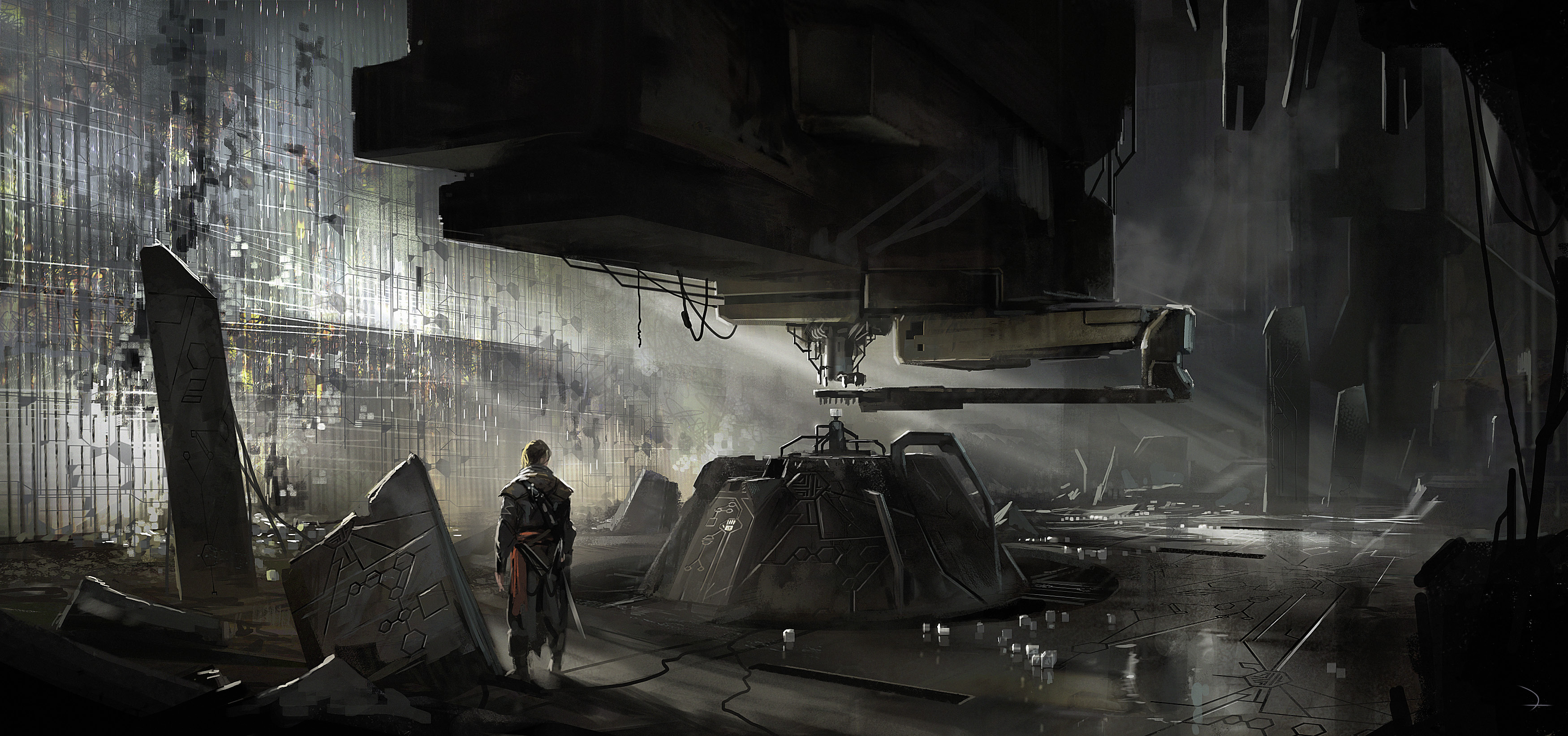
Players familiar with Assassin’s Creed IV Black Flag will remember that dozens of blood vials that were stored in the Observatory had disappeared toward the end of the storyline – presumably stolen by the Sage known as John “Bartholomew” Roberts. As these vials contained blood from members of the First Civilization, it is clear that retrieving them would be a groundbreaking step. An expedition by Abstergo agents in the present attempted to excavate the Observatory, but established that the structure suffered a catastrophic collapse at some point during the 18th century. It is therefore unlikely that the Observatory will ever yield any of its former secrets, and the blood vials spirited away by Roberts in the 18th century are still hidden somewhere in the world.
Abstergo’s Sage List
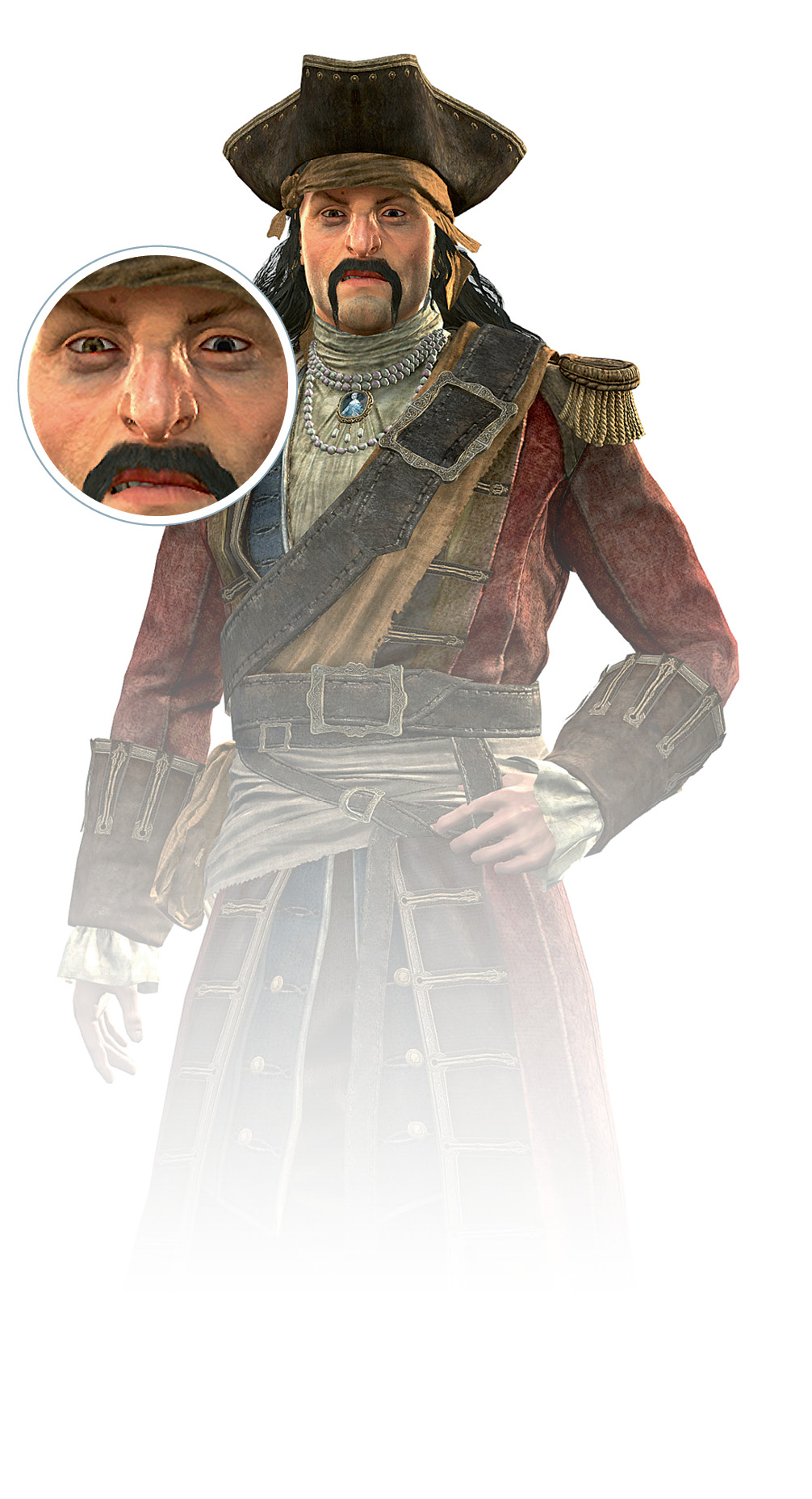
Each Sage is recognizable by his facial features alone, but even more clearly marked by the rare and distinct heterochromia of his eyes. As of today, Abstergo’s research has identified the following list of Sages throughout history, in reverse chronological order:
John Standish
Born: 16 August 1975. Status: Subject DECEASED. Samples extracted, body preserved.
“David Jones”
Nationality: Possibly English. Born: Mid 20th century. Status: Unknown. In the 1970s and 1980s a few scattered reports of a man resembling a Sage surfaced. He was said to be “otherworldly,” “extraterrestrial,” and “possessed by multiple personalities.” So far these reports have proved inconclusive.
Name Unknown
Nationality: Indian. Born: ~1885, India. Status: We have a lengthy series of memories that take place during the creation of the Indian National Congress in which a Sage is reported to appear. As yet, however, we have had no direct confirmation. Our search is ongoing.
Name Unknown
Nationality: French. Born: Early 18th century, France. Status: We currently have enough genetic material extracted from Samples 123355, 422356, and 777561 to adequately investigate this lead. Our search is about to ramp up.
John “Bartholomew” Roberts
Born: 1682, Wales. Status: Killed and disposed of by the Assassin Edward Kenway in 1722 off the coast of Africa. His body was never recovered. We are currently searching for genetic memories belonging to members of his crew and those who knew him well.
Thomas Kavanagh
Born: 1652, Boston. Status: Our knowledge of Mr. Kavanagh comes from our research into the life of Edward Kenway, gleaned from a series of letters collected over an eight-year period in the early 1700s. It is believed Mr. Kavanagh passed away somewhere on the northern shores of Jamaica at some point around 1706, but no intact genetic material has ever been recovered from this Sage or from people who knew him.
Name Unknown
Born: Late 14th century, China, Hongwu Emperor’s reign. Status: Multiple references taken from three separate text sources contain descriptions of a probable Sage living in the early period of the Ming dynasty. All three sources refer to this Sage as a “Confucian scholar” and member of the Emperor’s court.
Name Unknown
Born: Sixth century Byzantium, during Justinian’s reign. Status: A fragmented series of memories from a Christian Bishop point to the possibility that a member of his congregation was a Sage. We are currently mining for further memories from this period.
“The Wanderer”
Born: Judea. Status: Believed to have encountered Christ en route to Golgotha. All references to this Sage are anecdotal however. Awaiting further information.
Juno

Having transferred her consciousness to global communication networks at the conclusion of Assassin’s Creed III, Juno is no longer subject to the constraints that limited her ability to interact with mankind. It also seems that she has decided that human minds and bodies are too fragile to act as a vessel for her consciousness. This is confirmed in an exchange that Juno presumably had with her Instrument Initiates, or perhaps with John Standish prior to his death, a conversation that has been intercepted by Abstergo’s security team:
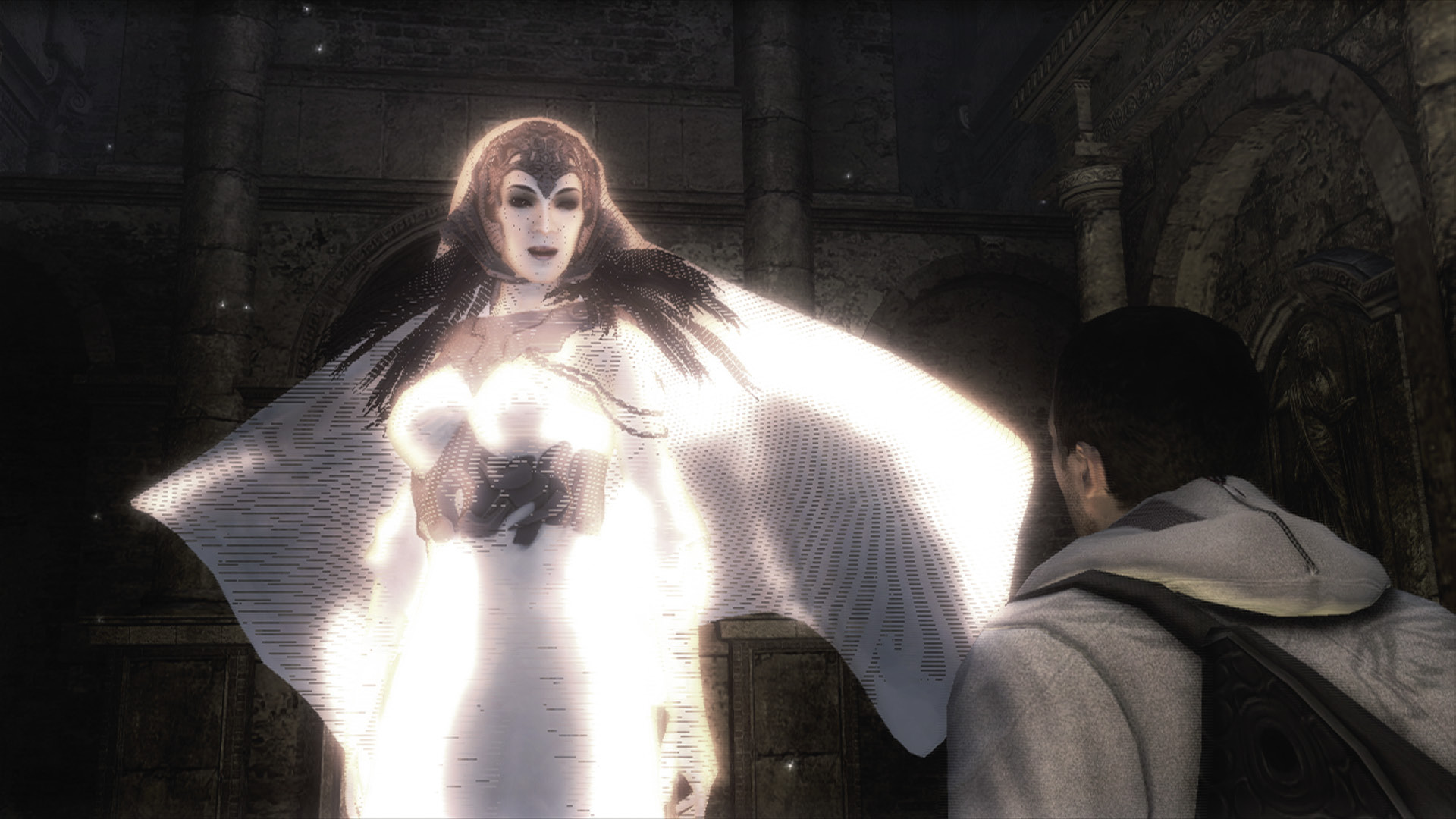
“Host Cipher Not Feasible At Present. Parietal And Temporal Inadequacies Abound. As I May Not Live In A Human Host The World Must Come To Me. Open The Gates. Lead The People. Enter The Grey. The World Of Flesh Will Soon Decay. The World Of Matter Is Done. Plug In And Ascend. (…) Coercion. Humans Dream Of A Future In The Stars. But Their Actions Befit A Race Of Sniffing Dogs. They Have No Future. No Hope. No Vision. Imminent Self Destruction. They Yearn For Other Planets But Inch Closer To The Grey Eyes On Their Feet Hands On Their Bellies Dreaming Of Escape. They Will Not Survive Off This Earth But Live Hidden Within It. (…) The World Is Tending Thus. Be Patient. In Due Time All Will Plug In. None Will Leave. Not One. Not Clay Not Desmond Not. All Are Here With Me. All Live In Bliss. So Must You Do As Well. So Must You All. Samples Collect. Data Provide. To Revive My Race. The Hidden Twelve. To Remake My World.”
Resigned to remain a digital entity for the present time, she has decided that humanity will join her in what she calls “the Grey”. In practical terms, this means that her goals are now broadly aligned with those of Abstergo. It is in her interests for humans to connect to Abstergo Entertainment’s Helix service. She has also taken steps to ensure that the Templars make rapid progress in the sequencing of the First Civilization genome, as this will ultimately enable them to manufacture Precursor technology – which she might subvert to fully enslave mankind again and revive her own species.
This explains the various hacking attacks on Abstergo servers. Many of these security breaches have nothing to do with activist groups such as Erudito or even the Assassins. They were in fact executed by Juno herself, which Abstergo agents are beginning to understand: as surmised by one Abstergo employee, “some sort of rogue bot or AI program is actually ‘living’ in the network”.
Juno’s objective with these attacks is, at least in part, to scan Abstergo’s records of potential Sages and ensure that her Instruments retrieve genetic material before the Assassins can locate and destroy them. This explains why nothing is stolen or even damaged on the servers – Juno is only looking for information.
The Instruments of the First Will
The secret organization known (albeit to few) as the Instruments of the First Will is made up of individuals who dedicate their existence to helping Juno to restore the supremacy of the First Civilization. They are the expeditors of Juno’s designs, enabling her to accomplish her goals in the physical world.
It seems clear that Juno’s “initiates” have infiltrated the Abstergo corporation. We also know from Black Flag that they have spread copies of their Manifesto, and may have secured new recruits from among Abstergo Entertainment’s employees. Ultimately, the Instruments of the First Will aspire to achieve immortality by transferring their minds to global networks, just as Juno did.
Abstergo agents intercepted a cryptic conversation that, when viewed in the correct context with all available facts, gives an illuminating insight into the motivations of Juno and her Instruments:
UNKNOWN (Juno)
Impossible... all is impossible... for too long was I locked away. So much has changed. Your human genome, warped beyond all service to me. Your hollow bodies will not do.
UNIDENTIFIED FEMALE (Instrument of the First Will)
I would give myself to you, Beloved. For anything.
UNIDENTIFIED MALE (Instrument of the First Will)
All would!
UNKNOWN (Juno)
Useless ephemeral things. Fragile shells. No matter. All with bodies lose them in time. All will die, to rot and fade away. Yet I mean to live. Your people are, sick so why become one? Your planet is poisoned, so why breathe upon it?
UNIDENTIFIED FEMALE (Instrument of the First Will)
What must we do, Beloved? Only tell us and we’ll see it through.
UNKNOWN (Juno)
The future is singularity, children. All must enter the Grey or risk a permanent night. Lead them here through the Animus. Enter and never leave. Not for my sake but for yours.
UNIDENTIFIED MALE (Instrument of the First Will)
We are very close. More and more people every day, plugged in. They never want to leave.
UNKNOWN (Juno)
In time, yes. In time your kind will understand their annihilation is close at hand. They will panic and scan the stars, yearning for a way out. But they will find it down here, with me. Not upwards, but inwards... into the Grey.
UNIDENTIFIED MALE (Instrument of the First Will)
Yes. Yes, they put me in an Animus once. I tripped around Paris for a time. Belle Époque. And London, too. Oh, I never wanted to leave. It was all so perfect!
UNKNOWN (Juno)
They know it not, but the Templars have built us a gate. A portal into a new age. Let them work. Let them build their Animus. Let them coil their Helix. Let them dream of a world under their yoke. It will not last. They have split another atom, and soon it will explode.
UNIDENTIFIED FEMALE (Instrument of the First Will)
O yes. O yes!
UNIDENTIFIED MALE (Instrument of the First Will)
What of the Assassins?
UNKNOWN (Juno)
Corrupted. Short-sighted. Their purpose is fulfilled. The Assassins must die. Before they find my Others...
Into the Grey

Juno frequently uses the expression “Into the Grey”. It is found, for example, in the “Manifesto of the Instruments of the First Will”, and Juno’s disciples appear to use it regularly.
“Into the Grey – the digital frontier, the singularity – the space in which she dwells being both made of light and the embodiment of darkness. This we call the Grey.”
According to this definition, written by Juno’s disciples, the Grey is the digital realm where Juno lingers, awaiting her rebirth – a space between dark (death) and white (life), and a necessary transition in Juno’s existence. It is a space where Juno is virtually omnipotent and omniscient, where she effectively merges with humanity’s memories and knowledge. For her disciples, the Grey is an ideal, an objective: moving into the Grey would mean transferring one’s soul to the global networks, merging with their Maker, and as such becoming immortal.
For Juno herself, however, the Grey is most likely not an ideal. From previous Assassin’s Creed episodes, we know of Juno’s contempt for humanity – and enduring fury at its role in the destruction of the First Civilization. No matter the circumstances, Juno is resolutely unsentimental – indeed, actively resentful – in her assessment of the species created by her erstwhile ilk. For her, humans are mere “tools” that exist only to submit to the Precursors who created them.