
Syndicate Guide Essentials Behind the Scenes
Behind the Scenes
An Interview with the Syndicate development team:
Mattias Snygg, Viljar Sommerbakk, and Rickard Johansson
1. What challenges did you face in updating Syndicate to a next gen console while retaining the feel/theme of the original?
VILJAR/RICKARD: The Persuadertron ended up causing some serious head scratching. In a first-person game you canít have 20 NPCs milling around you, like you could in the isometric version. Instead, we ended up being able to persuade a maximum of two NPCs (depending on how fast the player manages the energy gain in combat).
Another issue relating to the Persuadertron was what to do with civilians. Civilians were expendable in the old Syndicate, but they also served a purpose. In our game, they are expendable, but donít serve a gameplay purpose per se. However, it is interesting to see how players deal with civilians, if they try to avoid shooting them or if they donít care and write them off as collateral damage. These choices have some impact on the Trophy and Achievement unlocks within the game.
Another challenge was to portray the mayhem of combat that initially came out of the isometric gameplay. The tactical choices given to the player by customizing each of the four Agents now had to be incorporated in a single player-controlled character. This new tactical layer consists of the expanding set of applications, the environment breaches and the Dart overlay mode.
It was important to make these features easy enough to use, so they could help turn the combat and allow the player to make split-second decisions. We wanted all of these to be integral lifesavers, available when the player needed them the most.
2. Why did you decide to go with a single-player campaign and a co-op campaign?
VILJAR/RICKARD : The single-player campaign gave us the means to better provide depth to a story. It also allowed us to get into the head of an Agent and teach the player a new type of FPS gameplay, working within a controlled environment. In the four-player campaign, the story instead becomes the teamís collective moments and experiences from each mission instance.
It is derived from the mechanics and upgrades, creating a more systematic approach to storytelling than what we have in single-player. Co-op is our take on original Syndicate missions, and is an important bridge between the original and our updated Syndicate.
The player is taught the new type of FPS balance in single-player, and can then use that in the much harder co-op campaign. The co-op is thereby a great game in its own right, building upon the original storyline (and something that the team really wanted to do).
3. What influences were included in the design for the world of 2069—movies, books, art?
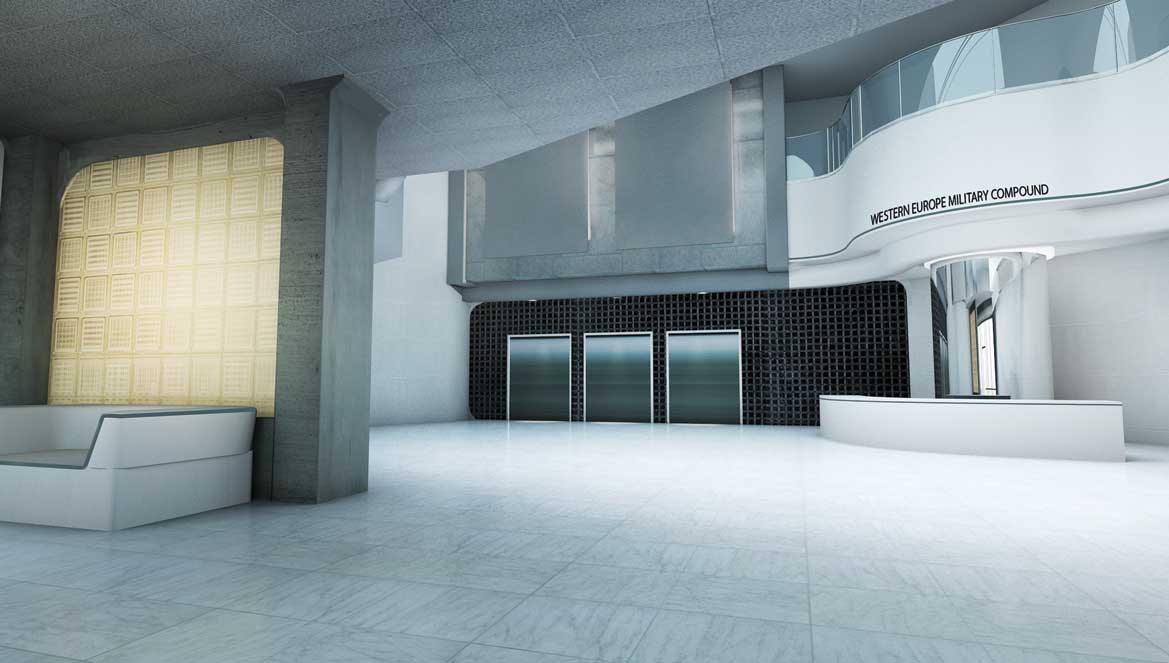
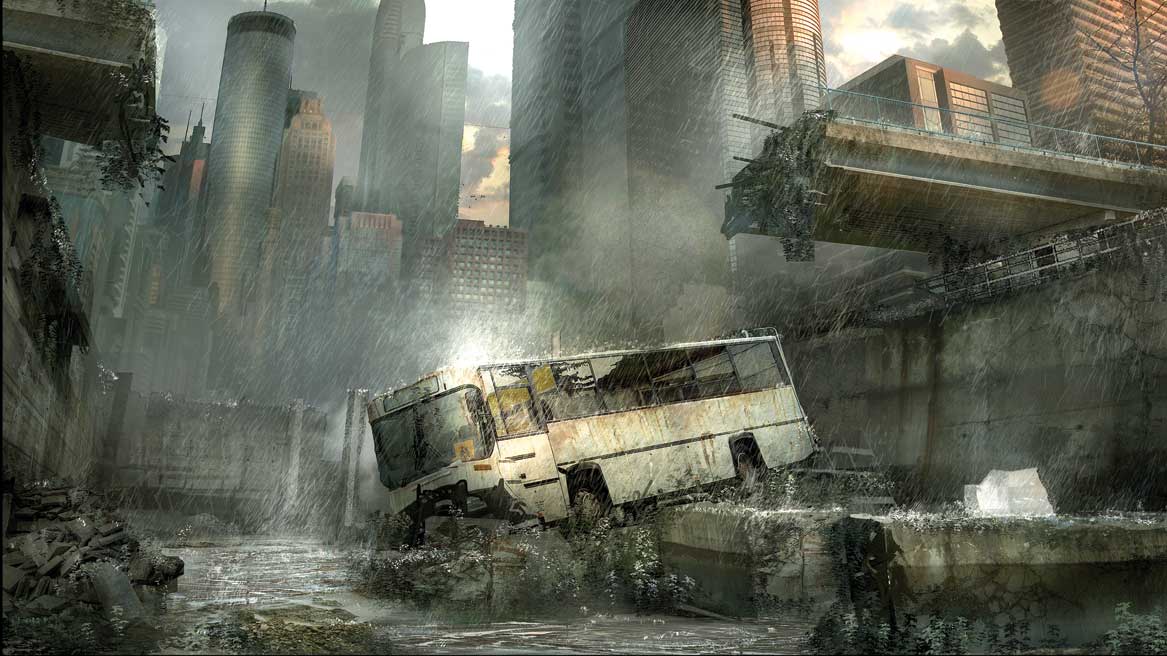
MATTIAS: The starting point for us was always to find a look that felt fresh, dramatic, and spectacular, but with a strong connection to the real world. Essentially we wanted to create a believable 2069, looking at trends and developments we see around us in our world today and extrapolating them sixty years into the future.
While building the look for this world we looked in many different places for inspiration and reference. Blade Runner and Minority Report were two movies we used early on to emphasize the difference between the posh, nice-looking areas of Uptown and the decaying urban sprawl that is the Downzone.
With an established general direction and framework like that it was then time for the concept artists to carve out something that became uniquely our own. It is from that work that we then started to see the look that really defined the finished product.
RICKARD: For the worldís backstory, we looked at the sarcastic and twisted nature of the original games, mixed with dystopian literature like A Brave New World and Jennifer Government. We anchored it in a more realistic real-world corporate future, while using humor to make the messages more accessible to the players. Corporate progress and economic gain gradually deteriorate the freedom and privacy of the individual in todayís society, and by using these elements we could connect in an efficient way.
4. What factors do you consider when designing a level?
VILJAR/RICKARD: First you have to consider where in the progression of the game the level is located; is it a combat level, an exploration level, a level that needs to provide some variation to the regular gameplay in order to break things up a bit? We needed to define a story and gameplay theme together with a map of the emotional journey for each level.
This helped us define the social atmosphere and the stunning visuals expected from this type of game. If itís a combat level, then you need some arenas, and all combat arenas then need spots where enemies can spawn without being seen. These arenas have to be varied enough and present unique gems of gameplay and situations, fitting with the overarching nature of the level.
In between the combat, each level needs places where collectables can be found, encouraging exploration, as well as events/ambient story beats and navigation guidance.
5. Is there a favorite level among the designers/testers?
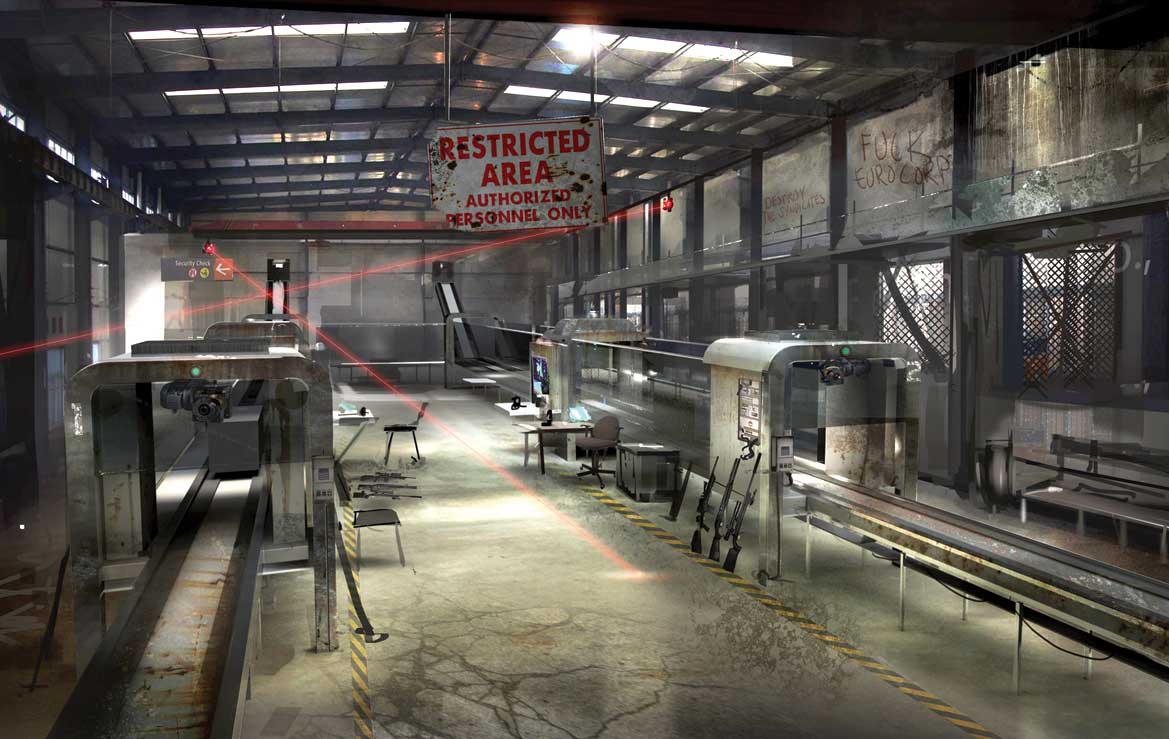
VILJAR: For combat, a favorite is one of the EuroCorp levels at the end, Burning Tower. It has the biggest arena fight in the game (the main hangar), with many interesting elements to it, like enemies spawning from dropships, and two turrets that can be breached to help you out. Later in the level we have one of the best showcases of our AI, where EuroCorp fights the attacking Cayman Global.
The NPCs use their basic combat behaviors, making them look awesome and believable in fighting each other, without requiring any situation-unique scripting. Also, the little UAV helper drone you get at the end of the level provides a welcome change, just as you move through the last stretch to the final showdown.
RICKARD: From a more general gameplay perspective, the first and second Downzone levels at the middle of the game also stand out. We were allowed to first relax from the intense fighting in La Ballena with a more social snapshot of the less favored, and then in the following level we then ramp up the combat again, but now with a severe blocker to the playerís abilities while presenting enemies with a very different, more desperate behavior set.
Coming out of that and regaining the full set of abilities is a reminder to the player of what he or she has taken for granted.
6. Which weapons are your favorites in the game?
VILJAR: One of them is definitely the thermite gun. Not just because itís powerful and has nice flame FX, but it almost got cut from the single-player campaign. We had some tough choices to make about what to do in the last section of The Wall level. The thermite gun hadnít been used properly yet, and was on the chopping board.
We decided to try out a few different things, and the approach we were happiest with was the thermite. After some effort, we managed to give the player a powerful weapon, with lots of explosions and burning enemies, while still providing a challenge.
RICKARD: Two other hidden gems are the secondary fire of the TAR-39 and the COIL. When the TAR-39 on-impact grenades are used effectively, the player will get enemies being blown over cover, flying up into the air toward the camera. It is a very common weapon in the game that can give the player many memorable moments.
For the COIL, the secondary fire sniper mode is so precise and powerful that you instantly kill almost all enemies. If handled correctly, it can help the player through some really tough fights, where the aim assist makes for very visual close-range ìgibbingî and long-range kills. It is a rare weapon, mainly carried by EuroCorpís electro armor enemy throughout the last three levels of the game.
7. How does the game encourage players to use the technology such as breaches rather than just shoot their way through?
VILJAR: The game is balanced in such a way that you need to use all the tools at your disposal. If you try to play it as a regular shooter and rely on weapons only, then it will be very, very hard. Just using guns doesnít feel right, either. You need to use breaches together with weapons for the optimal experience, and even if many players start by playing Syndicate as a regular shooter, as they get into trouble, we see them start experimenting with the tools we provide them with, and they start having more fun.
8. What do you want gamers to get out of this game?
VILJAR: We hope the players who remember the old games will see the kinship with our version of Syndicate, but most of all we want players to experience an intense shooter that provides a different challenge than a lot of current FPS games.
RICKARD: The goal for us is that when players have played Syndicate and then experience another FPS, they will miss our tactical use of unique features. If their Dart overlay finger will twitch when they experience a tough situation in another game, then we have succeeded.
9. Are there any Easter Eggs in the game or other secrets?
VILJAR: There are a few references that very few people in the world will get. People have written to Starbreeze during development of the game, and for various reasons we thought some of them deserved mentions in the game.
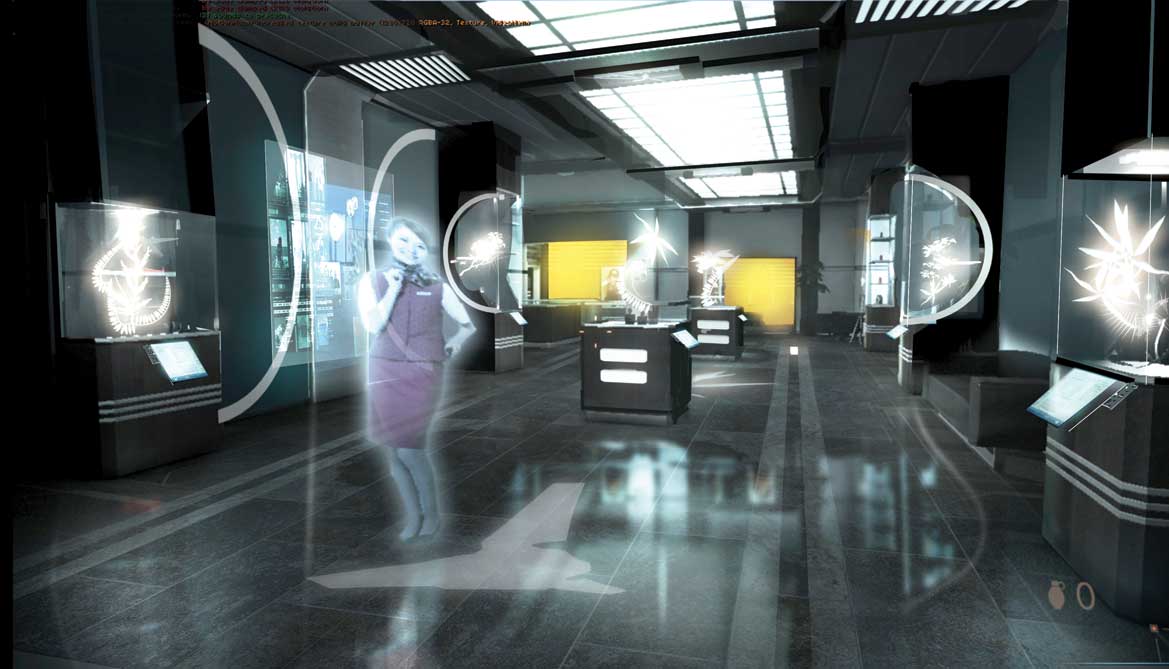
RICKARD: We also recommend reading the Infobank, and more specifically the Business card collectables. These contain intertwined mini-stories, giving the player multiple points of view of related events and they connect the different levels beyond the playerís direct story. Sometimes they are also used to add flavor to the specific location where they were found.
We have also worked with organizations and locations in the Infobank to give those who want it a delicate portrait of international politics in the world of Syndicate.
10. Are there any tactics or tricks players may not realize or pick up easily that could help them during the game?
VILJAR/RICKARD: The liquid armor enemy can be killed by a melee blow after his liquid armor has been breached and disposed of (which is approximately at half of his normal health).
In the UAV launch area, where you use the SWARM, it is possible to shoot out the UAV reload magazines at the bottom of the UAV towers before they activate (making the encounter far easier).
Also, once you have reached the top floor in the UAV room, itís often more effective to just sprint to the control room, blowing up all remaining UAVs at the remote self-destruct trigger.
Liquid armor and reactive soldiers can be quite aggressive in their attacks. Persuading a regular soldier nearby that ally will both draw fire and the attention of the mini-boss, allowing you to find good flanking positions.
In the heat of battle, you might find yourself out of ammo or in an untimely reload situation. Instead of backing off, it is often more effective to just get into direct melee with any nearby enemies (a tactic that becomes even more effective if you buy the upgrade giving you health from melee kills).
Make sure you bring a fully loaded COIL to the final boss fight. The twins can easily be managed using a TAR-39 or a CQC shotgun, but once you fight Merit himself, the COIL sniper shot is one of the most effective ways to win.
Merit will try to do backfire breaches on your carried weapon, removing half of the ammo. You can save the precious COIL ammo by switching to a secondary weapon as the hostile breach appears.
As a general rule, environment breaches are always advantageous. Be on the lookout for environment breaches that have to be timed to affect enemies.
11. How is it different to design a level for single-player compared to four-player co-op? Is it just more enemies or do you design it to encourage players to work together?
VILJAR: Co-op missions need to take into account that there can be four players simultaneously, and they all need their space, so these levels are naturally more spacious, with broader corridors, etc. Many of the co-op enemies have been designed to be extremely hard to take out on your own, usually requiring players to coordinate their attacks. There are also usually more enemies and continuous respawns in a co-op combat encounter compared to single-player.
12. Why did you not choose to include a competitive multiplayer segment to the game?
VILJAR: We thought that the areas where we could stand out most from other games were with our single-player campaign and co-op. There are games out there that do competitive multiplayer really well, and for us to go up against those games would take a lot of resources, probably to the detriment of the rest of the game, a risk we were not willing to take.