
Plants vs Zombies Garden Warfare Guide Behind the Scenes Plants vs. Zombies
Interview
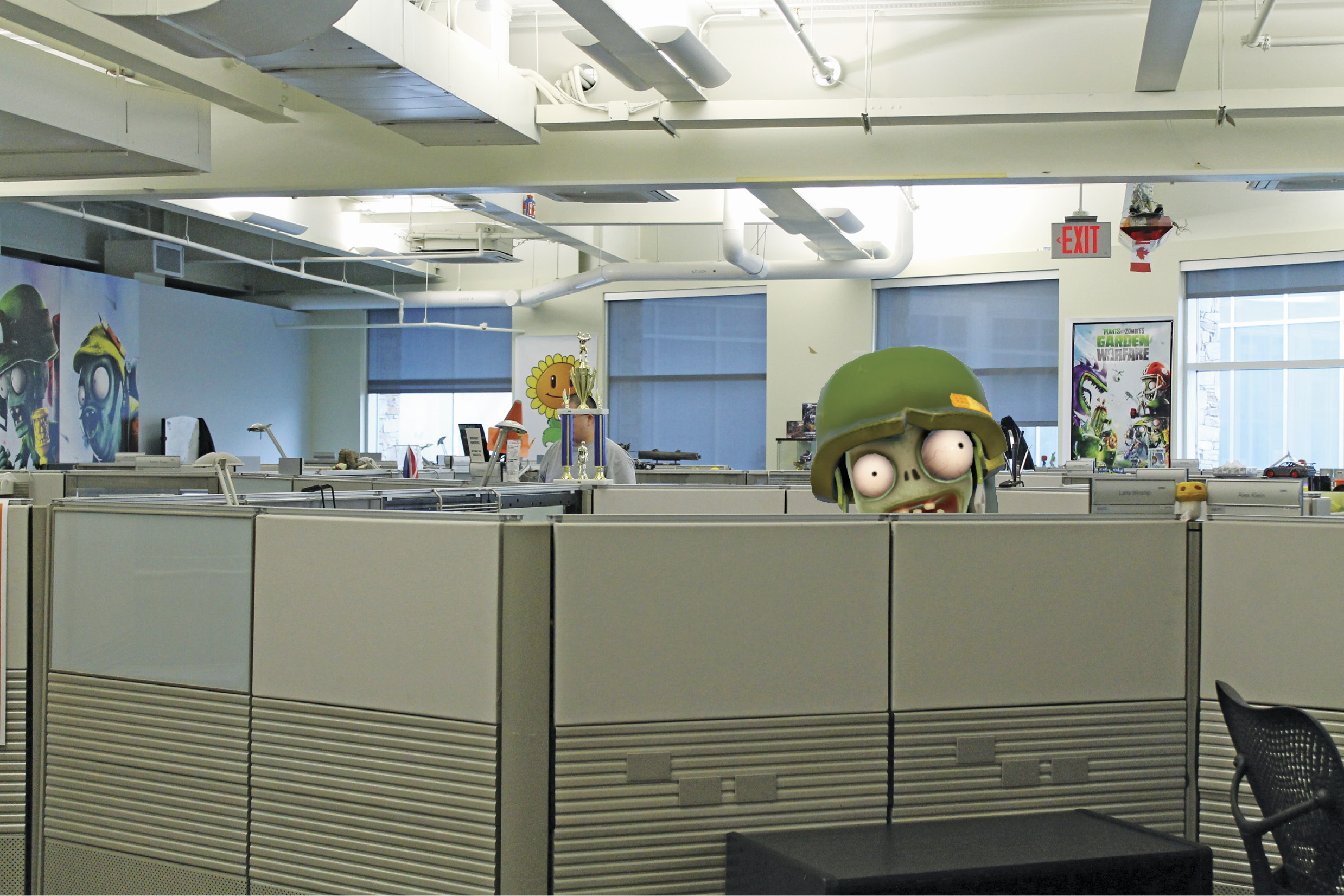
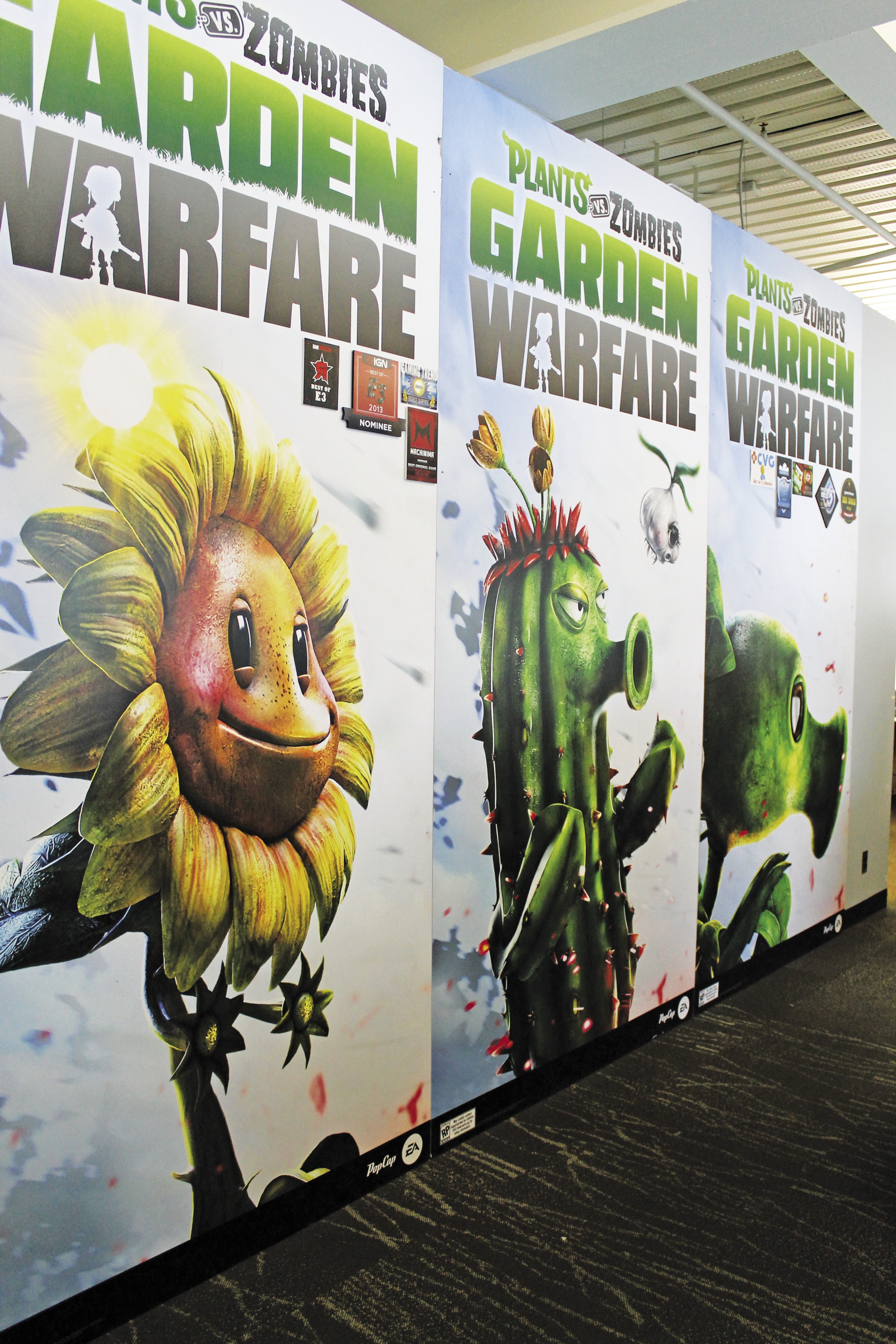
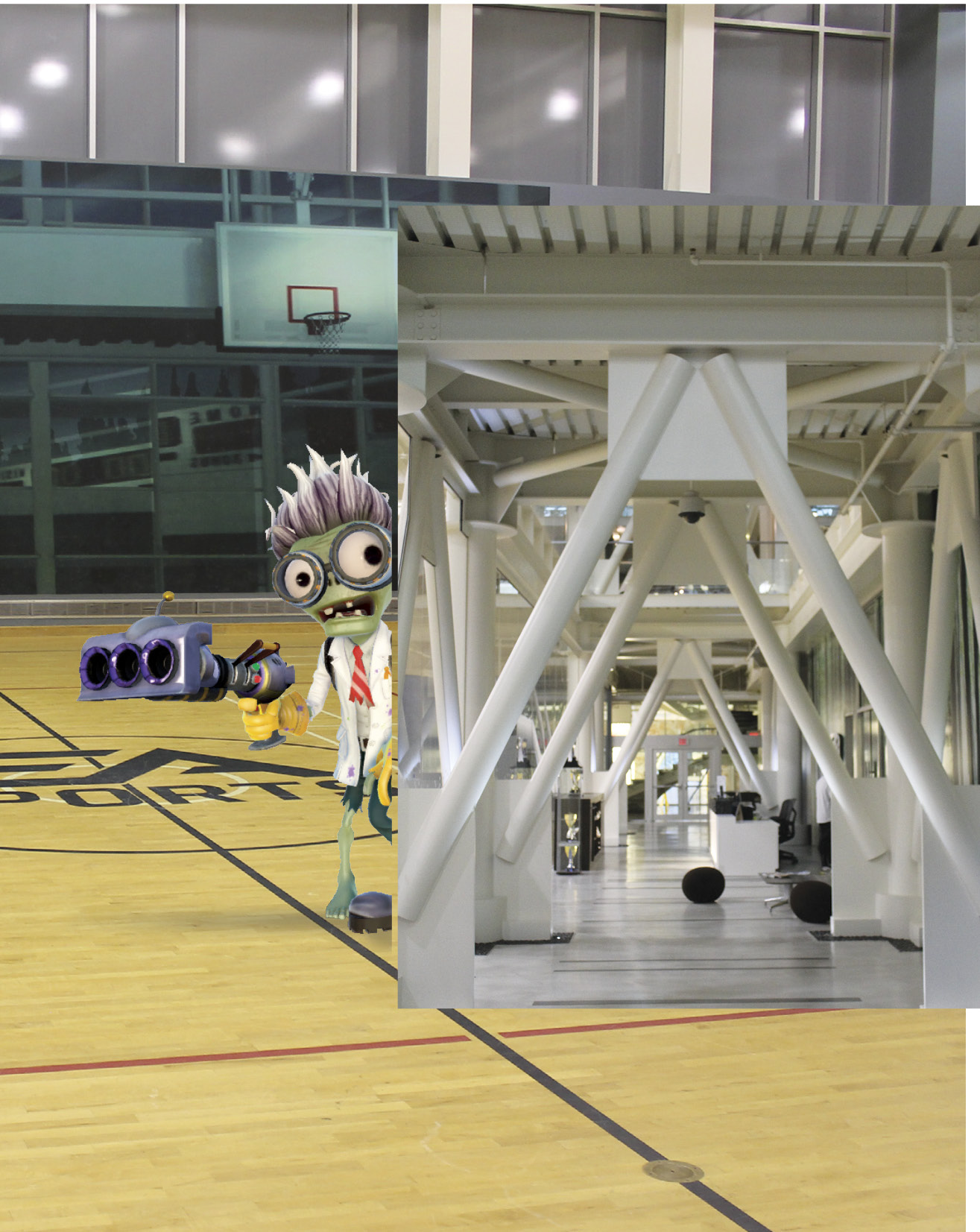
Prima had a chance to visit EA Canada, take some pictures of the awesome campus and chat with some of the minds behind the creation of Plants vs. ZombiesTM Garden Warfare.

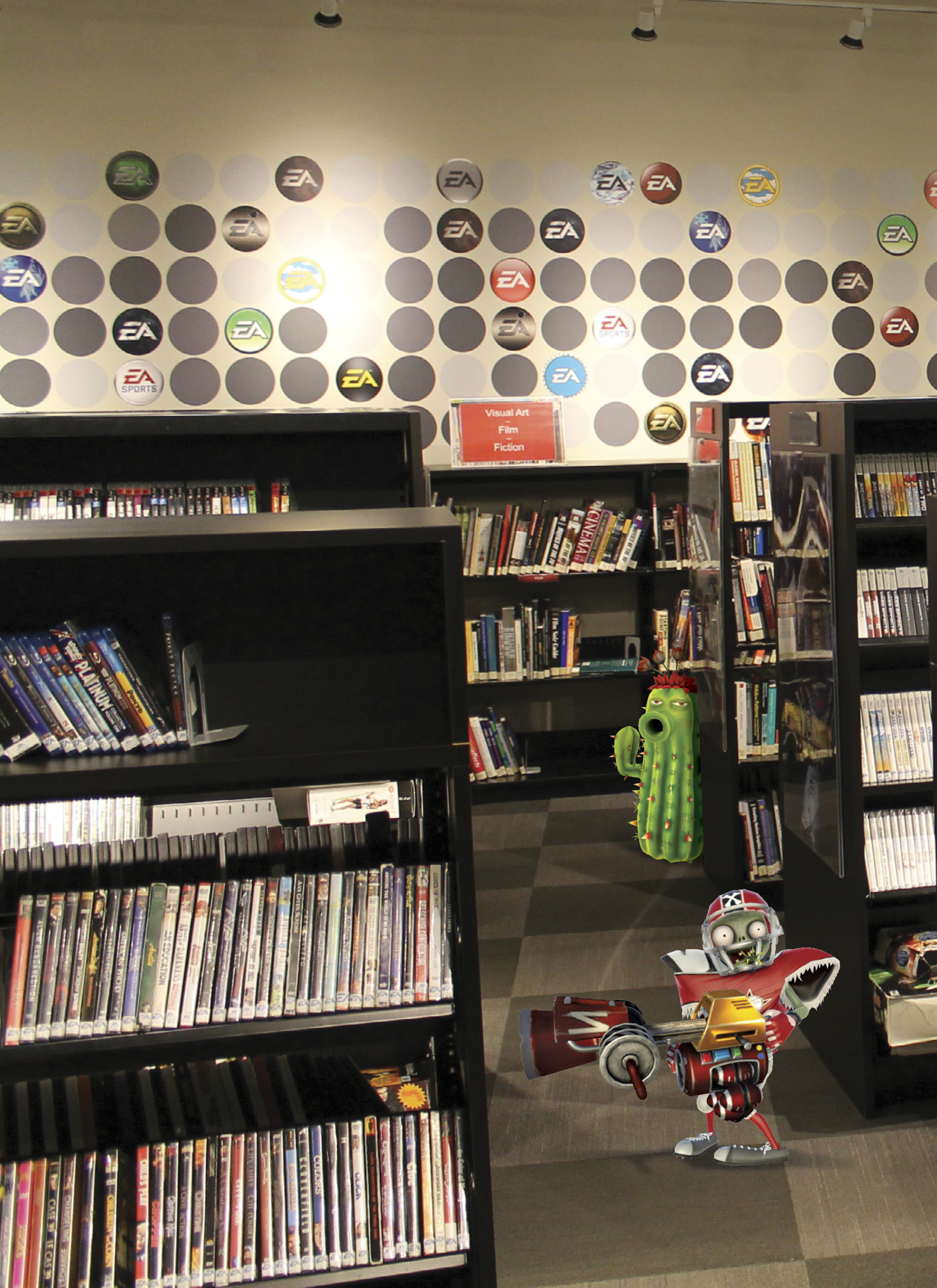
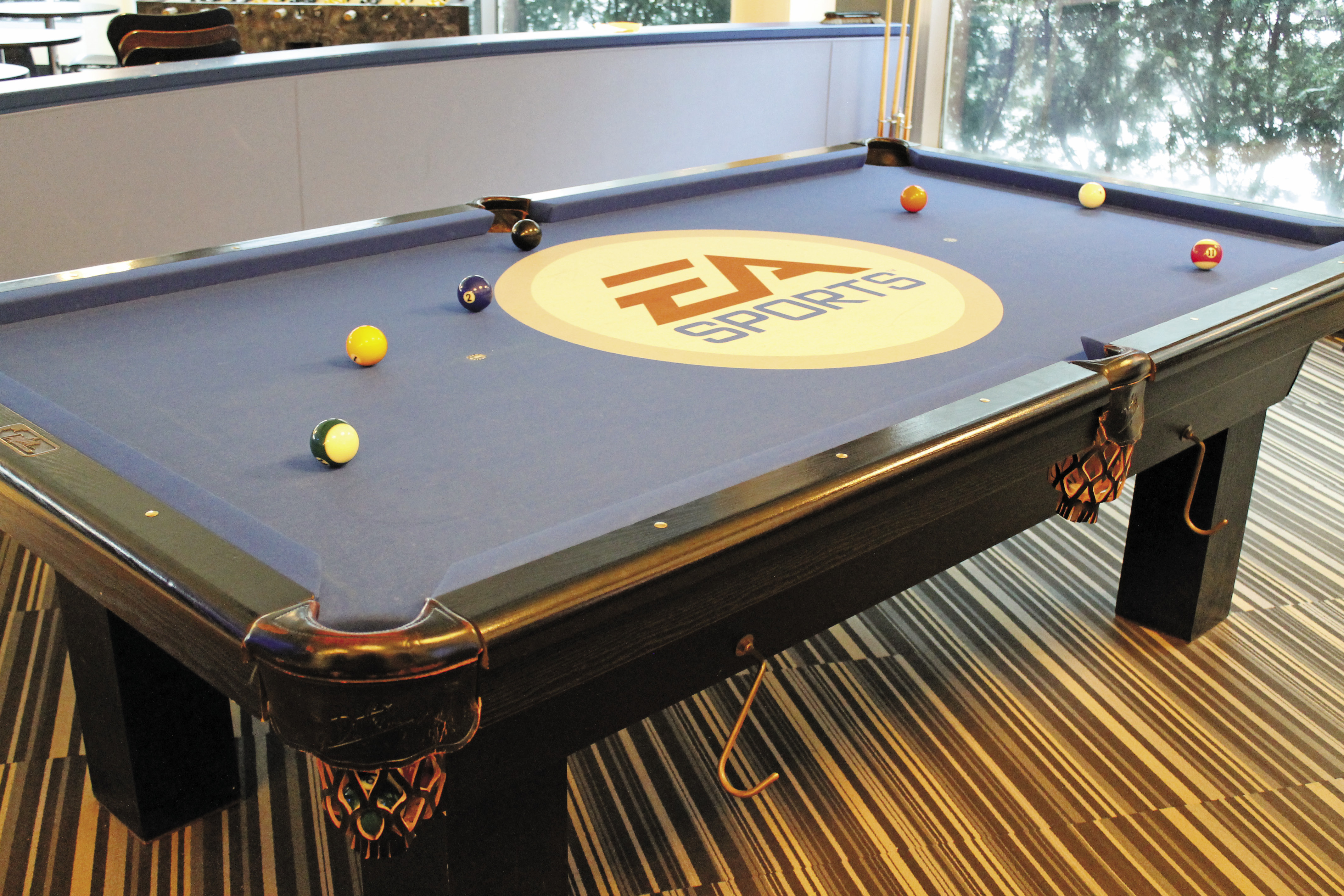
How did the idea to make Plants vs. Zombies into a third-person shooter even get started? It’s such a vastly different genre!
Brian Lindley (Plants vs. ZombiesGarden Warfare Executive Producer): When the original Plants vs. Zombies released on mobile devices a few years back, there was huge growth in popularity of the game, characters, and world of PvZ. PopCap recognized that there was potential for PvZ beyond tower defense, so they started investigating other types of games. From that process of discovery, Plants vs. Zombies Garden Warfare was born.
How did the game evolve over the course of the project? Was it always at its current scale? What concessions had to be made over time?
Brian Lindley: Most games change drastically over the course of a project. We knew from early on we wanted to focus our efforts on creating a fun multiplayer experience at its core, then build the rest of our game on top of that foundation. We never really strayed from this primary goal, but our journey to achieve it meant a ton of prototyping, concepting, designing, and redesigning major elements along the way. I think one of the most interesting evolutions was in our character abilities—at one point we had an ability mapped to every button, but it really made it a complicated game to play, so we drastically simplified down to a few core abilities per character and never looked back.
Were vehicles ever considered?
Justin Wiebe (Plants vs. ZombiesGarden Warfare Creative Director): Since the game is built on Frostbite, we did have vehicles in our early prototypes, and while they added an element of fun and chaos to the experience, we decided to focus the majority of our energy toward creating great core character gameplay and worlds to support that gameplay, and leave vehicles for future consideration.
The Variants of the various Plant and Zombie Classes have very distinct changes from what they were originally based off of. What were some of the ideas that didn’t make it into the final game?
Justin Wiebe: We had a ton of crazy character ideas throughout development, almost too many to mention. [One] of the memorable ones for me was the playable Disco Zombie Class we had in early prototypes, and some of the crazy weapon ideas we discussed but never made it in, things like earthquake and gopher guns.
Some of the Class Variants appear to have been inspired heavily from other forms of media, such as the Commando Zombie. What were some of the inspirations behind the character designs?
Chris Fox (Plants vs. ZombiesGarden Warfare Game Designer): We draw inspiration from wherever we can find it, whether it is from pop culture, movies, or other PvZ games. Since humor is a huge part of the PvZ universe, generally if a character made us smile or just bust out laughing, it would make the cut.
We found some great, subtle references to old-school games in Plants vs. Zombies Garden Warfare (which we won’t spoil). Can you oust any of the culprits responsible?
Chris Fox: I’m afraid not, and if we did, the names would be changed to protect the innocent…and the guilty!
There is, of course, a built-in audience for this game’s genre, but Plants vs. Zombies—and PopCap games in general—tend to be built with all ages in mind. Do you see younger children or even moms and older people enjoying Plants vs. Zombies Garden Warfare?
Gary Clay (HD Product Marketing Lead): Our first priority was to build a game that would appeal to fans of action and shooting games, but being a PvZ game, there are already millions of fans that will be drawn to it. We’re still waiting to see what happens at launch, but I think that we’ll see a lot of fans of the previous PvZ games giving Plants vs. Zombies Garden Warfare a go.
In terms of mechanics, there are a lot of parallels to the Battlefield series, but are there any others that inspired you? What about other forms of media?
Justin Wiebe: If players are looking closely, I think they will notice influences from other multiplayer games ranging from shooters to strategy to RPGs in Plants vs. Zombies Garden Warfare. Outside of that, anything that makes us laugh, looks cool, or makes us nostalgic for the pop culture and movies of our younger days has also inspired us.
Plants vs. Zombies, as well as other PopCap games, are known for their pick-up-and-play nature, and their ability to whittle away entire hours of a day in an eyeblink. Do you feel that Plants vs. Zombies Garden Warfare shares these qualities?
Jeremy VanHoozer (Plants vs. Zombies Creative Director): Definitely, we’ve tried to capture that “PopCap magic” by creating a game with approachable gameplay, but with enough depth to keep players coming back for more. Our goal is for players to fall in love with the characters and spend the time to master all of them.
Were there any other game genres considered for this game before settling on the ones you did? Are there other genres you’d like to see the Plants and Zombies invade?
Jeremy VanHoozer: We considered a number of different ideas, but our initial idea for a shooter is the one that stuck. The world of PvZ is surprisingly versatile, it wouldn’t surprise me to see PopCap push PvZ into even more genres in the future.
Do you see this game serving as a stepping stone to any sort of greater Plants vs. Zombies “canon” or “universe”?
Jeremy VanHoozer: While it wasn’t our intention, it is certainly a possibility. We’ve tried to design the world and characters to feel like they are part of the larger whole of the PvZ universe, which could give us room to expand the narrative of the game at some point in the future.
The maps in this game are of course far more detailed and feature-rich than those in the original Plants vs. Zombies games. Is there any underlying theme or purpose joining them together?
Gordon Wang (Plants vs. ZombiesGarden Warfare Lead World Builder): For Gardens and Graveyards, we’ve created a theme of progression within the maps, with the landmarks and objectives getting crazier the further into the map you go. For Co-op and Team Vanquish maps, there are more common visual themes ranging from a regular suburban neighborhood, to a village shopping area, to a seaside town with nautically inspired landmarks.
If you were putting together your own superhero team, which of the Classes (Variants are allowed) would you recruit and why?
Brian Lindley: For the Zombie team, I would probably pick the following:
Tank Commander (Soldier)—Very powerful at range with his tank shot.
Welder (Engineer)—Really strong primary weapon that does fire damage over time.
Marine Biologist (Scientist)—Healer Class but with a devastating short-range, rapid-fire dolphin attack.
Goalie Star (All-Star)—His frozen puck launcher can slow and freeze enemies, setting up his other Zombie teammates for easy vanquishes.
On the Plants’ side, I like the following combinations:
Ice Pea (Peashooter)—The Ice Pea’s Snow Pea attack is really useful for immobilizing Zombies and leaving them open to attack.
Hot Rod Chomper (Chomper)—The Hot Rod Chomper’s speed boost opens up opportunities for fast-chaining chomp attacks on Zombies.
Power Flower (Sunflower)—The electrified pulse attack of the Power Flower will damage multiple enemies in a group, making her a good complement for the Ice Pea’s freezing ability.
Future Cactus (Cactus)—The three-stage needle charge attack means that the Future Cactus can do a lot of damage in a single shot, even easier on enemies that have been frozen by the Ice Pea, or Gooped by the Chomper.