
Battlefield Bad Company 2 Guide Essentials Basic Training
Tactics
Tactics is the combining of maneuvers and firepower to achieve an objective. Both movement and weapons have already been covered, so this section focuses on using the two together.
Plan Ahead
There is an old saying that those who fail to plan, plan to fail. No matter whether you are playing the single-player campaign or multiplayer matches, you need to come up with a plan before the bullets start flying. The best place to start is to look at your objectives, since those determine victory or defeat.
While killing the enemy is always a goal, it is often a means to an end. Instead, focus on the objectives. Do you have to destroy a target, defend a position, or just get to a certain point on the map.
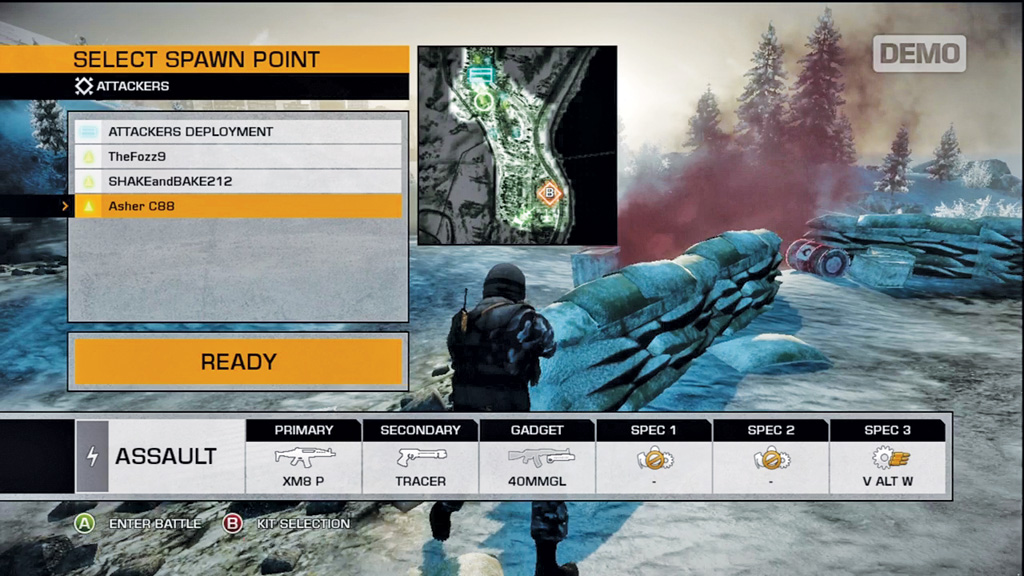
Once you know what you must do, look at the map and examine the terrain. Where are you located? Where is the objective? How will you get there? Are there any vehicles you can use?
These are all questions you need to ask yourself. Once you have determined how to get to the target, you must then consider how to accomplish your orders.
If you need to destroy something, what weapons will you use? Will you need to get in close to plant an explosive charge on the target, or can you stay back and fire rockets at it?
Finally, you need to take into account your opposition. What does the enemy have and where are they located? Usually you will not know that type of information until you get in close to the target and can see the enemy with your own eyes.
Therefore, planning continues on the fly as you learn new information about enemy positions and actions.
Cover
Combat is very dangerous. Bullets and other deadly projectiles fly through the air and can cause a lot of damage when they hit you.
The concept of cover is to place something solid between you and the enemy that will stop those projectiles and keep you safe.
The battlefields are filled with objects that you can use as cover—buildings, walls, trees, rocks, earthen mounds, and so on. Some types of cover will stop small arms fire such as rifle bullets, but not stop the heavier machine gun fire.
Walls of buildings will stop machine gun fire, but not rockets or tank rounds. Therefore, pick cover that will protect you from the current threat.
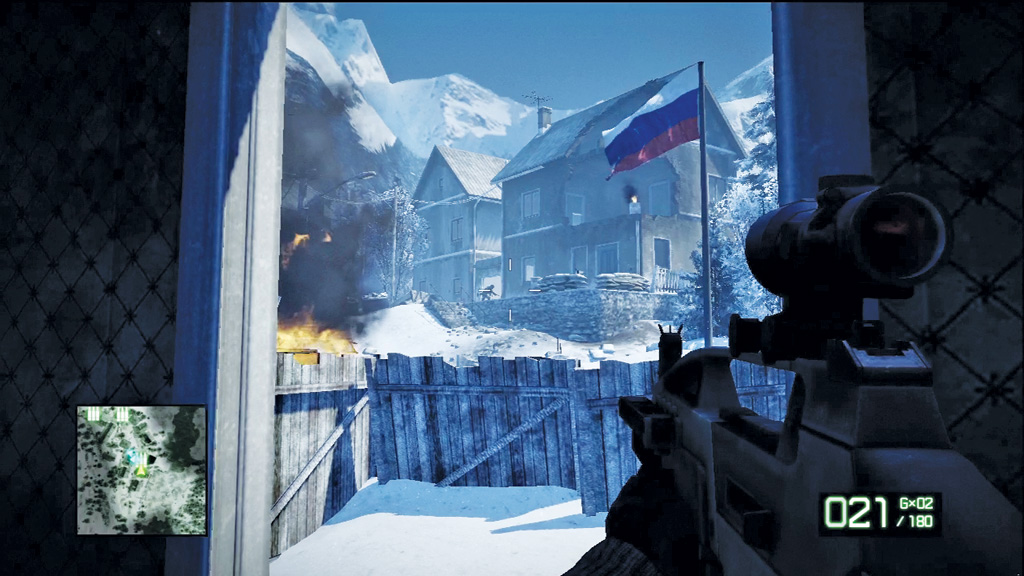
Cover should become ingrained in your combat thinking. In addition to looking for enemies, you also need to be looking for cover.
During a fire fight, always stay behind cover. The only reason you leave cover is to move to another position with cover. If the cover is low, you may need to crouch down behind it, standing only to fire over it. When moving from cover to cover, sprint to get there quicker.
While you want to stay behind cover, you also want to try to deny the benefit of cover to your enemies. Destroying their cover is a way to do that.
Another way is to reduce the effect of their cover by moving to hit them from a direction for which they have no cover. This is called flanking. For example, if an enemy is taking cover behind a wall, move around to the side of the wall so that the wall is no longer between you and your target.
In the single-player campaign, your squad is great at holding an enemy’s attention, giving you the chance to flank, surprising threats from the side or rear.
Destructible Environments
The topic of cover leads nicely into destructible environments. One of the awesome features in Battlefield: Bad Company 2 is that many of the structures and objects can be damaged or outright destroyed.
This presents a large range of possibilities and opportunities that will affect the tactics you use. There are two basic types of destruction in the game: micro-destruction and what the developers refer to as Destruction 2.0.
Micro-destruction allows you to eliminate pieces of cover, blowing away corners of buildings, fences, or walls. Playing with these tactics in mind gives you a huge advantage when an opponent is hiding behind a wall or other piece of cover. Simply blow away their cover and shoot them.
In urban settings, structures can often funnel you into a kill zone the enemy has set up, so blast your way through walls or other objects and flank the enemies from different directions that they might not expect. While this may seem to favor the attacker, the defender can also use this as an advantage.
Destroy potential cover the attacker may use to approach your position. Call in mortar strikes on groves of trees or shoot out fences to deny the enemy a place to hide.
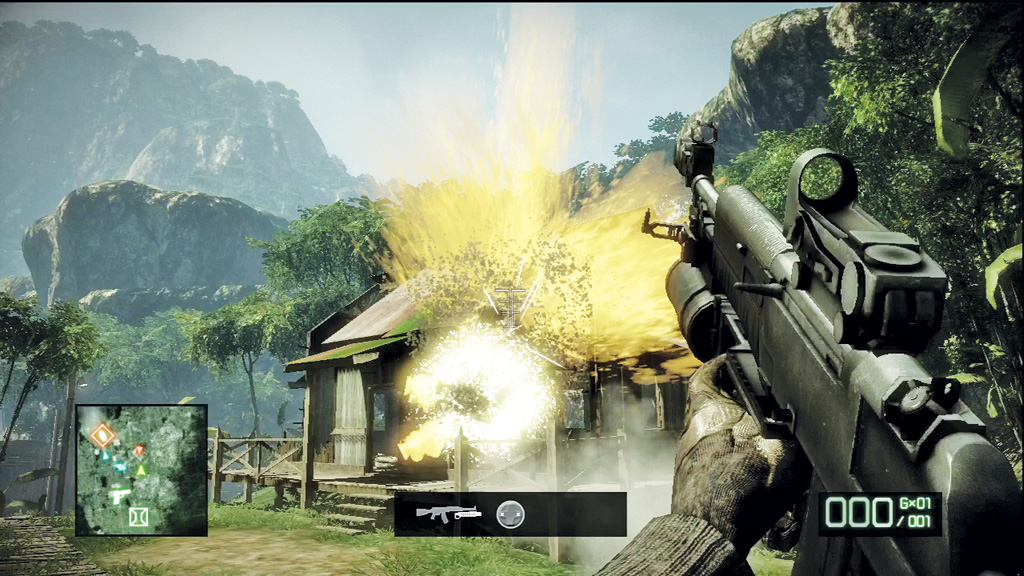
As a result, you can create your own kill zones of open land which the enemy must traverse—all the while under the fire of your weapons.
Destruction 2.0 takes devastation to a whole new level, altering the battlefield drastically through the complete demolition of structures.
Buildings that take heavy damage can completely collapse, killing everyone inside. Collapsed structures can also destroy M-COM stations, a useful tactic during Rush and Squad Rush multiplayer matches.
To destroy a building, target its exterior walls until you hear a series of creaking and moaning sounds, indicating an imminent collapse.
This can be a fun (yet inefficient) way to take out a pesky sniper hiding in an attic or upper floor. Obviously, if you find yourself in a creaking and moaning building, get out fast! Removing structures from the battlefield also alters the sightlines, offering snipers more unobstructed views.
Long-Range Combat
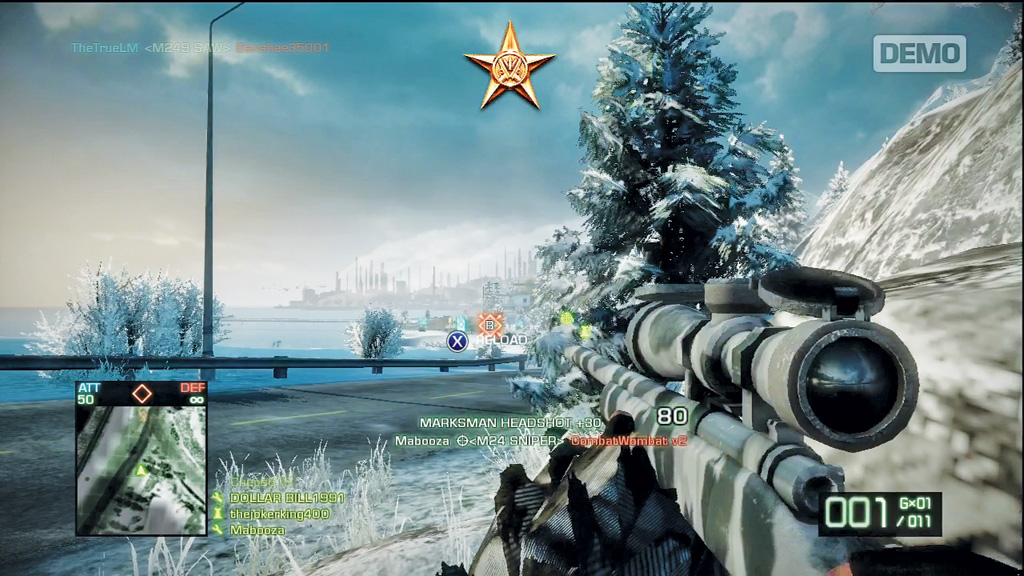
If possible, it is best to try to attack the enemy at long range before they’re even aware of your presence. While sniper rifles work great for this type of combat, you can even use assault rifles, light machine guns, or rocket launchers to hit targets at long range.
The key to winning at long range is to take your time. Crouch down, stay still, and use iron sights or scopes to increase your accuracy.
As always, make sure you have some good cover in case the enemy decides to shoot back. Also remember to fire in short bursts to ensure that more of your bullets hit the target.
Close-Quarters Combat
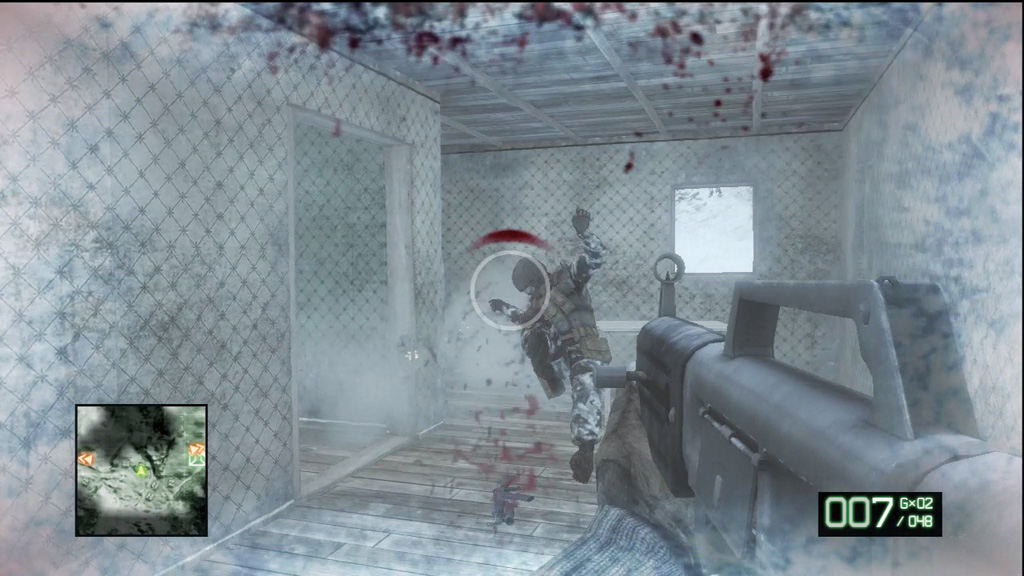
This type of combat is the exact opposite of long-range combat. In close quarters, such as in a town or even within a building, you don’t have a lot of time to aim before shooting.
However, at such short ranges, accuracy is not really a factor. Instead, you need a weapon that puts out a lot of firepower with some spread so you are more likely to get a hit while moving. Shotguns and submachine guns are great for close-quarters combat.
Your minimap is also an important tool, since you can see where enemies are located and set up shots for strafing arround a corner.
Your weapon will already be aimed at the target as it appears on the minimap, which saves you just enough time to have the advantage and make the kill rather than be killed. Don’t foget to use grenades, which can be thrown around corners or over walls to hit enemies who think they are safe behind cover.
Engaging Fixed Weapons Positions
There are three types of fixed weapons positions—machine guns, grenade launchers, and anti-tank missile launchers. Each must be manned by a soldier in order to be used.
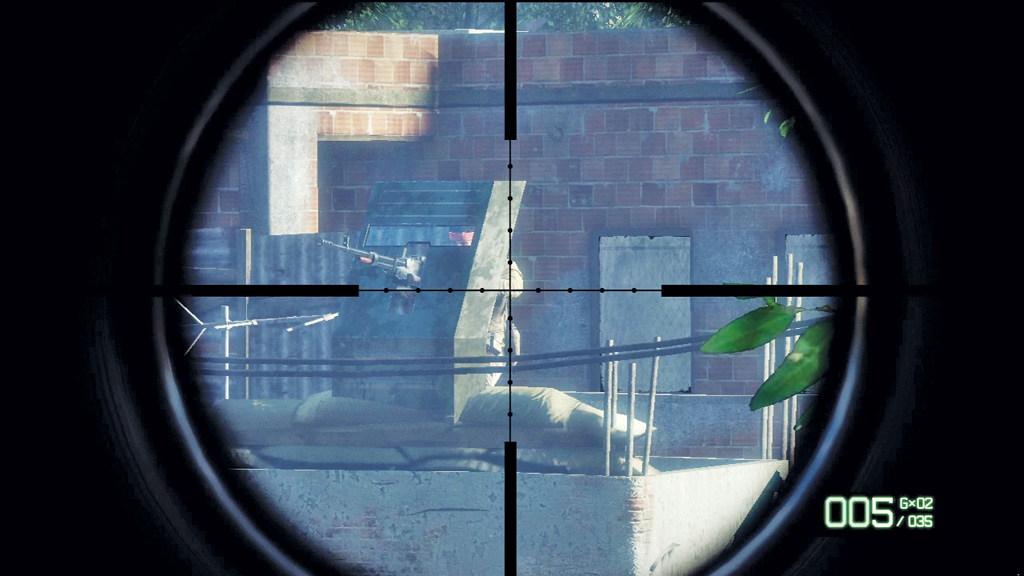
These weapons can be extremely deadly during combat, so it is usually a top priority to silence these weapons either by destroying them outright or at least killing the soldiers firing them.
Some machine guns have a shield to protect the gunner. However, if you take careful aim, you can often hit the gunner in the side or shoulder.
Other options include using grenades or rockets to wipe out the weapon along with the gunner. Some of these weapons also have limited firing arcs and can’t turn to fire at targets in all directions.
If you can attack these guns from the flanks or sides, you can not only avoid being fired on by that weapon, but also possibly prevent the shield from protecting the gunner
Engaging Vehicles
Vehicles can be daunting during combat—especially when you are an infantryman on foot. However, modern soldiers have a lot of firepower they can use to destroy vehicles.
This role usually falls to the engineer kit, which carries anti-tank rocket launchers. It takes only a single rocket to destroy light vehicles. However, tanks and IFVs require at least two rocket hits for a kill.
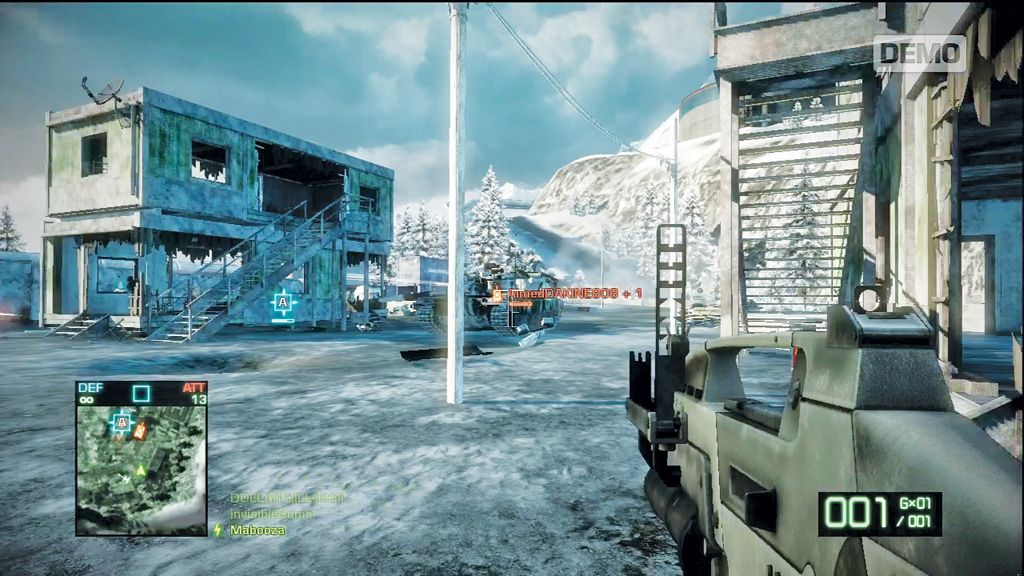
C4 (carried by the recon kit) is also very effective against vehicles, but you have to get very close to slap on a charge.
Even if you don’t have those powerful weapons or gadgets, you can still stop light vehicles with small arms fire. The gunners on each of these vehicles are exposed.
Shoot them and the vehicles lose their firepower. For those who are really daring, engineers can place mines in the path of moving vehicles.