
Harvest Moon: Light of Hope A 20th Anniversary Celebration Guide Twenty Years of Harvest Moon
Harvest Moon: Grand Bazaar
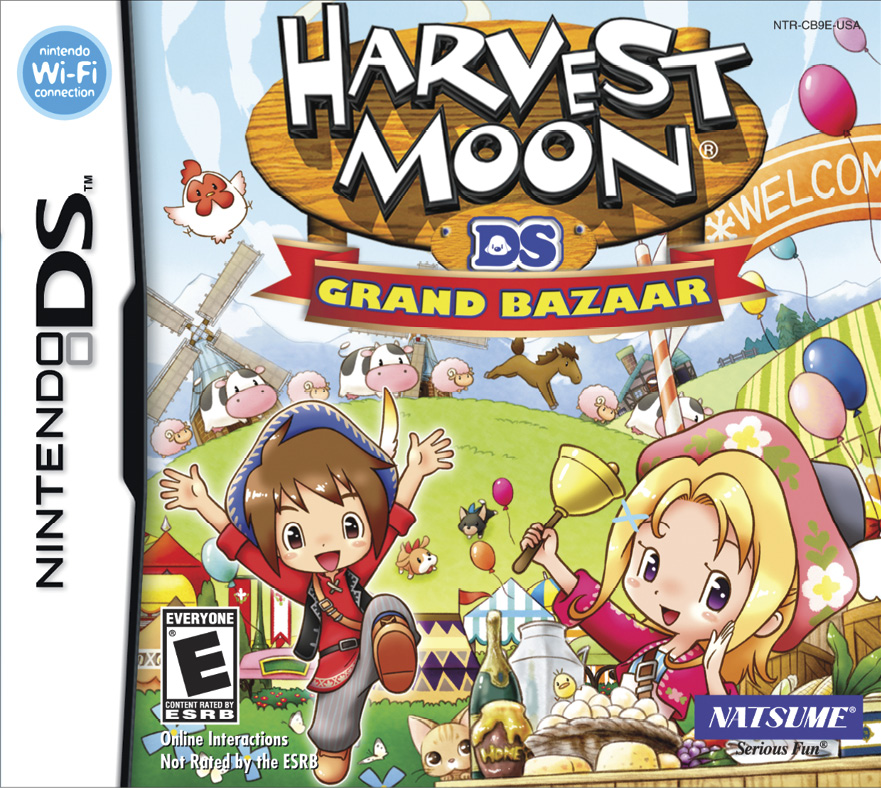
Release Dates
| Platform | North America | Europe |
|---|---|---|
|
DS |
August 24, 2010 |
September 2011 |
Harvest Moon: Grand Bazaar was yet another example of the series branching out in a new direction. Rather than resurrect a forlorn farm, the player was tasked with revitalizing Zephyr Town’s weekly bazaar. The only way to accomplish this was by selling an assortment of worldly delicacies, animal products, and other items. In effect, the game took the franchise’s ranching simulation and added a farmer’s market on top of it.


At first, the weekly bazaar attracted only local visitors, but as the player’s profits soared, the bazaar expanded, and other merchants opened stores at the bazaar. This not only attracted additional faraway shoppers, but also gave the player a chance to buy exotic items, upgraded tools, and obtain other useful goods. Running a stand at the bazaar was hard work, though. Players had to entice customers to shop, haggle to ensure a profit, and compete against the other hawkers to have the highest customer-satisfaction rating.

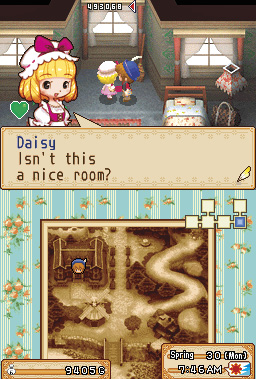
Unlike prior games in the series, where harvested items were always a Shipping Bin away from being converted to money, Harvest Moon: Grand Bazaar forced players to plan their week around the market, ensure the freshness of the items they wished to sell, and take into account growth rates, animal condition, and other variables. All so the best goods would be ready to sell on the weekend. The game also incorporated an expansive fermenting feature, which enabled players to concoct a multitude of never-before-seen recipes.
Fun Facts
- For the first time, the player character was able to climb onto barrels and other objects and jump into the water. But care had to be taken around crops, as jumping or running through crops damaged them.
- There wasn’t any traditional mining in this game, but players were given a net to catch bugs and frogs instead!
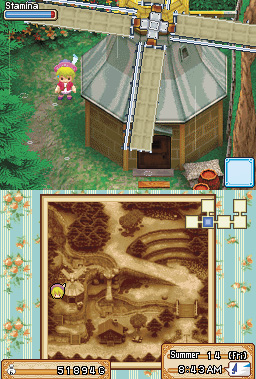
- Players could blow into the microphone on the Nintendo DS to turn the Windmill blades faster. Windmills were used to ferment, grind, and manufacture goods.
- Those who unlocked the horse track in the second year could find a character named Wada, a not-so-subtle homage to the series creator.
- A lottery became available when the bazaar reached a certain completion. There, players could test their luck and try to win all manner of gems and other prizes, including Magic Water, which yielded a permanent Stamina increase.