
Harvest Moon: Light of Hope A 20th Anniversary Celebration Guide Farmer’s Handbook
Crop Mutations
As you progress in your new life as Beacon Town’s sole farmer, expect to be asked to provide a variety of exotic crops. The only way to accomplish this is by cultivating specific mutations. Crops mutate only under ideal conditions—and even then, there’s a chance the mutation won’t occur.
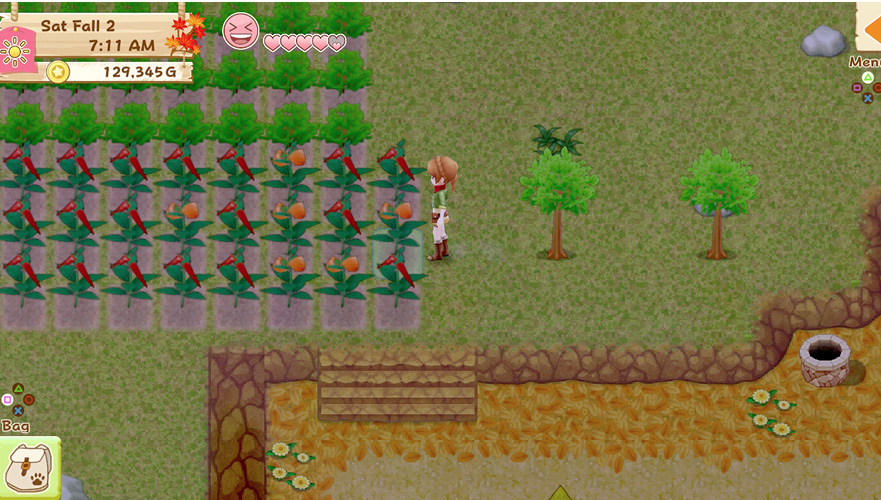
There are basically two types of mutations. First, there are the mutations that yield “Great”-quality crops. Though these resemble the base crops from the seeds you planted, they’re much higher in quality, sell for more money, and cannot be purchased as seeds. The other type is an entirely new species of vegetable/fruit.
As the following tables show, each family of vegetable or fruit has a suite of mutations that can occur if seeds are planted in the right combination of soil condition and season. Many mutations can yield further mutations if you provide ample water, crop-specific Fertilizer, and meet the other mutation conditions.
Generally speaking, following the strict planting requirements and providing adequate water and Fertilizer is all you need to do to encourage crop mutation, but sometimes that isn’t enough. Some crops, such as the ever-challenging Snowman variety of Melon and the Goldberry strain of Berry, require specific planting patterns in order to mutate. Whereas the bulk of the crops have a “companion plant” that encourages growth and mutation when planted alongside (celery is a common companion plant), these plants wilt when grown in clusters.
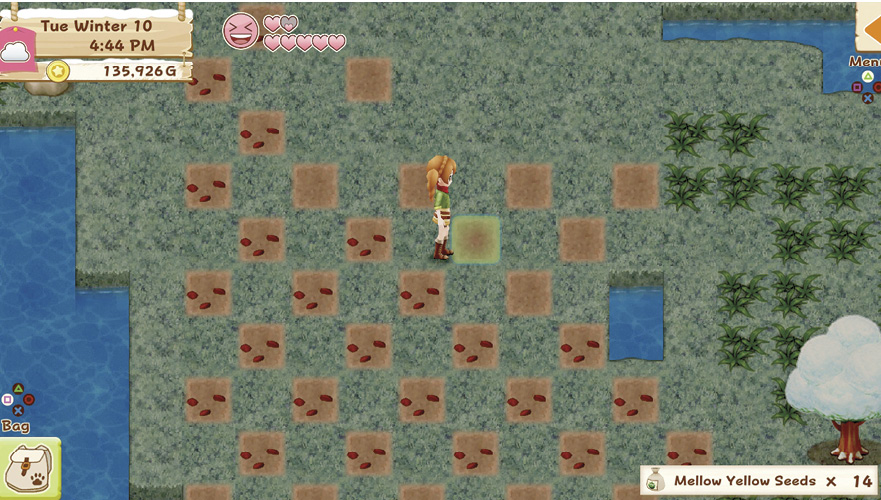
Thanks to the range of the tools you can upgrade to, it’s common to plant crops in thick fields, or at least strips three rows wide. This is usually a good idea, as running through crops doesn’t damage them. However, pay attention to crops that die shortly after being planted surrounded by other crops. This is your cue to plant them in a different pattern. Ultimately, you need only concern yourself with this when trying to get Cranberries to mutate into Goldberries and Mellow Yellow Melons to mutate into Snowman Melons. Plant the Cranberries in separate rows and the Snowman in a checkerboard pattern.
Accessing Mutated Seeds
Sam eventually stocks all of the basic crop seeds without any input from you. To unlock the seeds for a given mutation, you must sell him a set number of crops first. This number varies depending on the complexity of the mutation and whether it’s a second- or third-generation mutation. Selling “Great” versions of a mutated crop counts toward your tally for unlocking the seeds, but selling the seeds (acquired through a request, for example) does not help unlock the seeds from Sam. Consult the following tables to see how many crops must be grown and sold in order to unlock the seeds.