Civilization Beyond Earth Guide Wonders, National Wonders, & Projects
Overview
Wonders and projects are massive undertakings that dramatically influence your civilization. These exciting tasks provide bonuses that help you overpower your enemies and complete the game. This chapter lets you know the risks and rewards for these major game elements.
Types of Wonders and Projects
Great wonders offer the biggest bonuses, the highest construction costs, and the most risk of all these undertakings. There can only be one great wonder of each specific type in the entire world. That means that the first nation to construct a great wonder is the only one that gets to benefit from it, unless another nation takes over their city with the wonder.
Great wonders provide a major boost to your in-game points, and they have a variety of effects on your civilization's statistics. Figure out which great wonders you're mostly likely to succeed in building, and go after those in your cities with the highest Production.
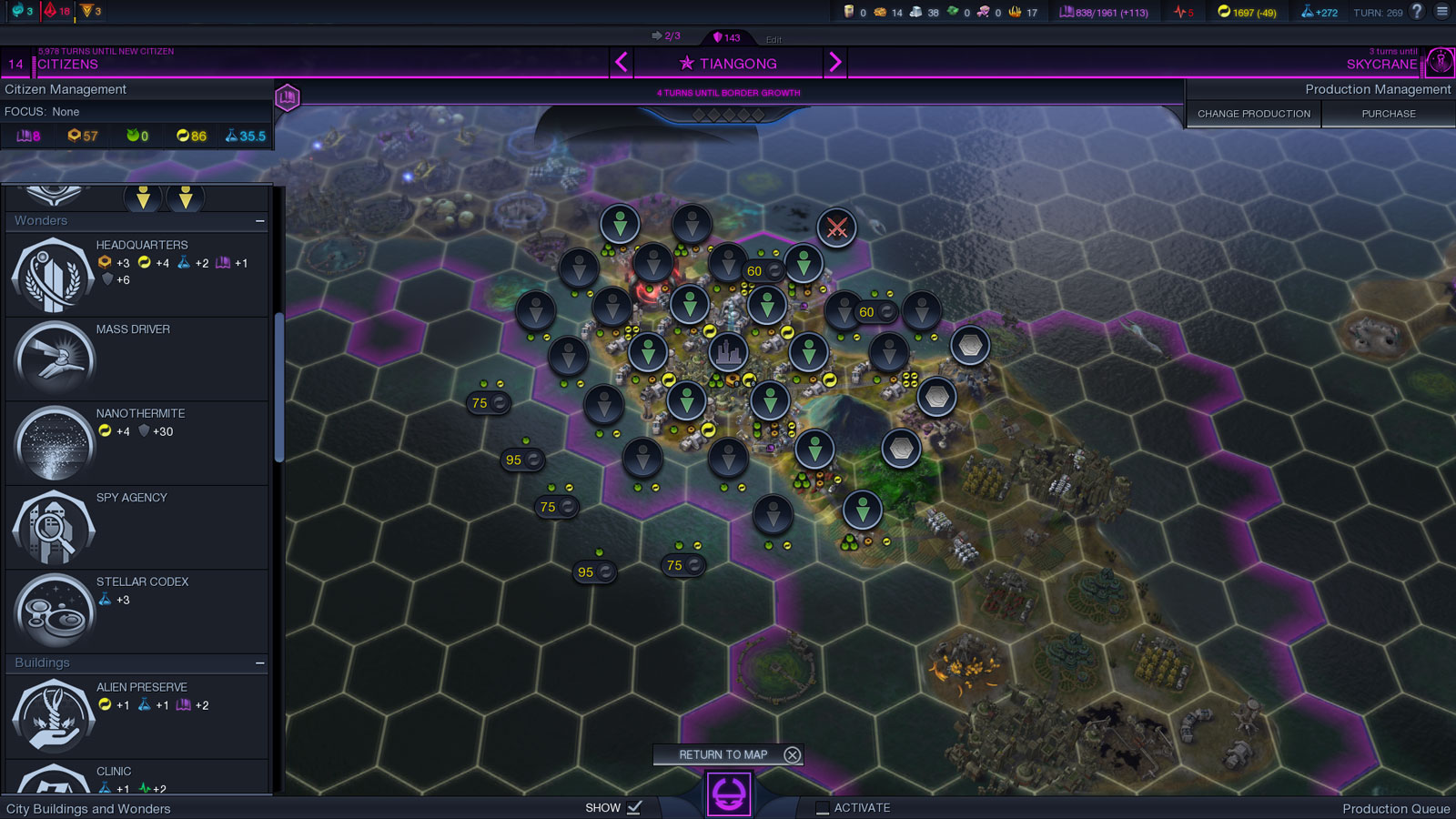
If you're slow to research Technology that grants access to a great wonder, you're unlikely to finish constructing that wonder before your opponents. Figure out the wonders you like the most during the early games of Civilization: Beyond Earth, and note the Technologies that you need for these wonders. Hurry to get those techs sooner in future playthroughs, and rush to get your best wonders done before other people even have a chance to compete with you.
When someone else completes a great wonder before your city can finish it, the Production you've invested is converted into Energy. That's nice and all, but it's not a great conversion. You don't want to lose the construction race, so think carefully before you begin each great wonder.
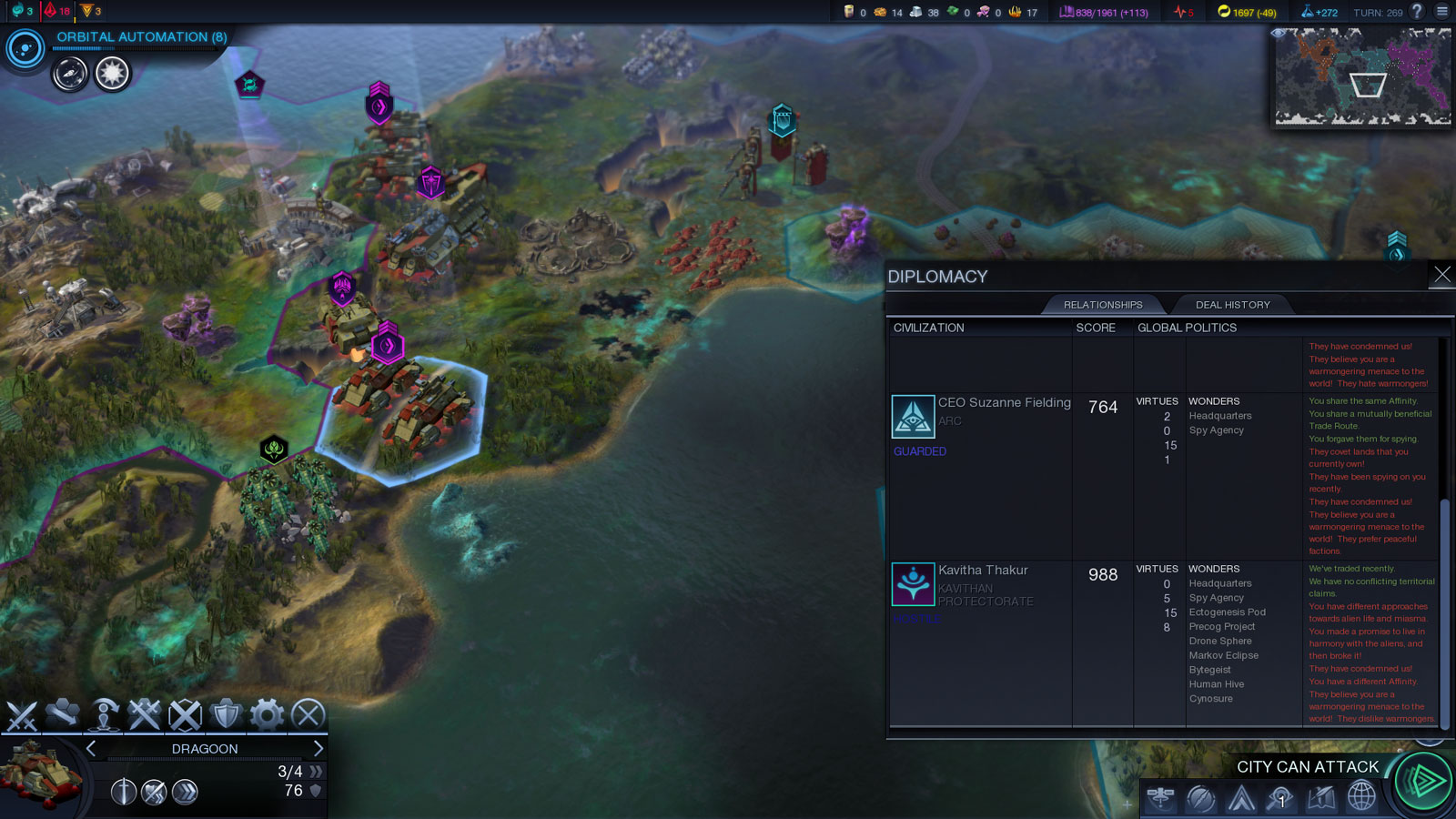
National wonders are a different animal altogether, as you aren't competing with other people to get these done. Every nation can have a single version of each national wonder; you just need to decide which city to put your national wonders in. For now, there aren't many national wonders. You start with Headquarters in your capital city. The Spy Agency and Culper Lodge develop as you make progress through the tech web, and they give you access to spies and covert operations. The Spy Agency doesn't even take long to construct, so put it anywhere that can get the building up and running quickly.
Projects are like national wonders that focus on victory conditions. Work on these to advance your nation toward one type of victory or another. All civilizations can work on their own versions of these, so you can't cut anyone else off from a victory by beating them to project completion. Instead, you must get the entire victory condition done before anyone else does.
Working on a Project
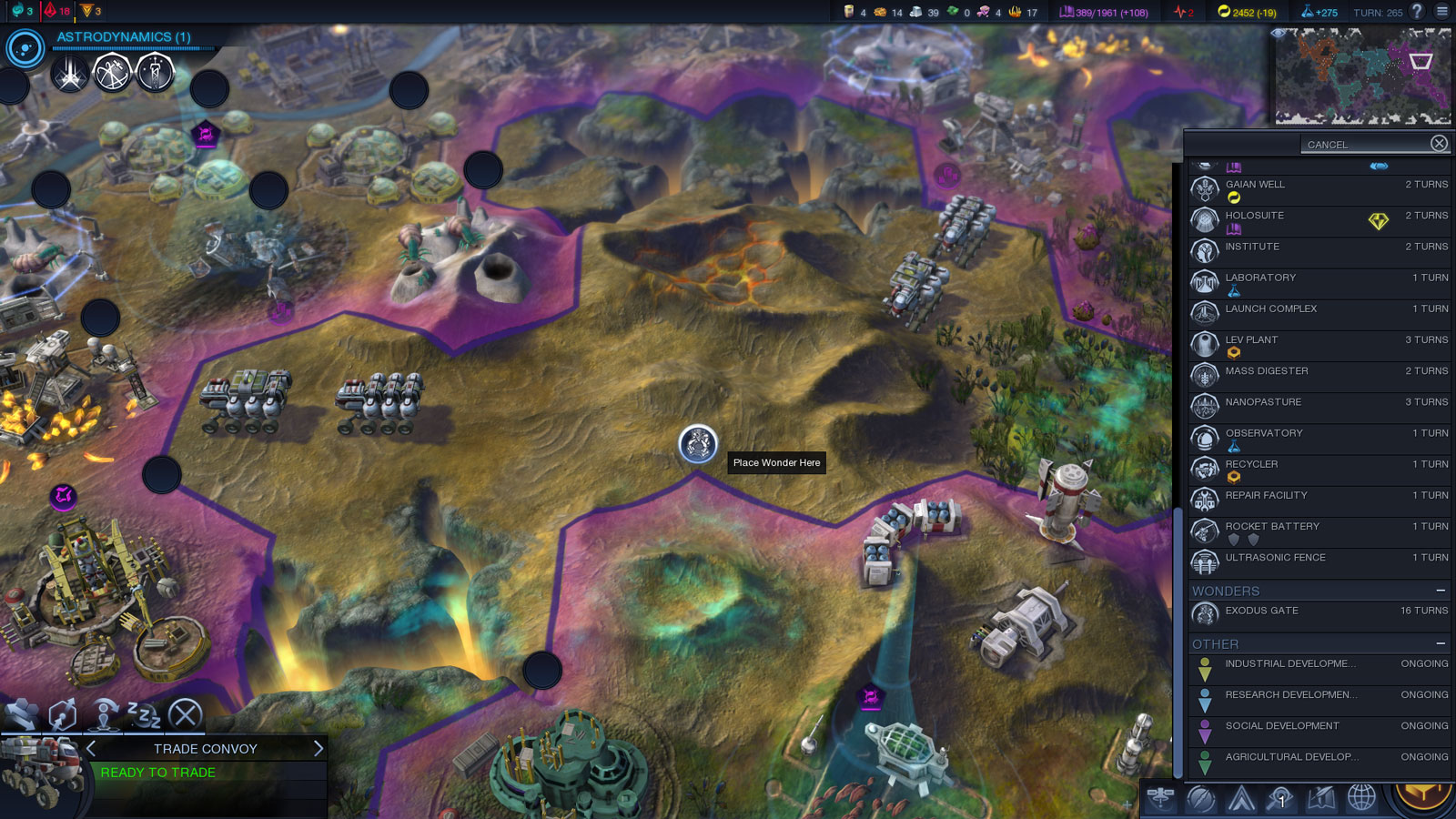
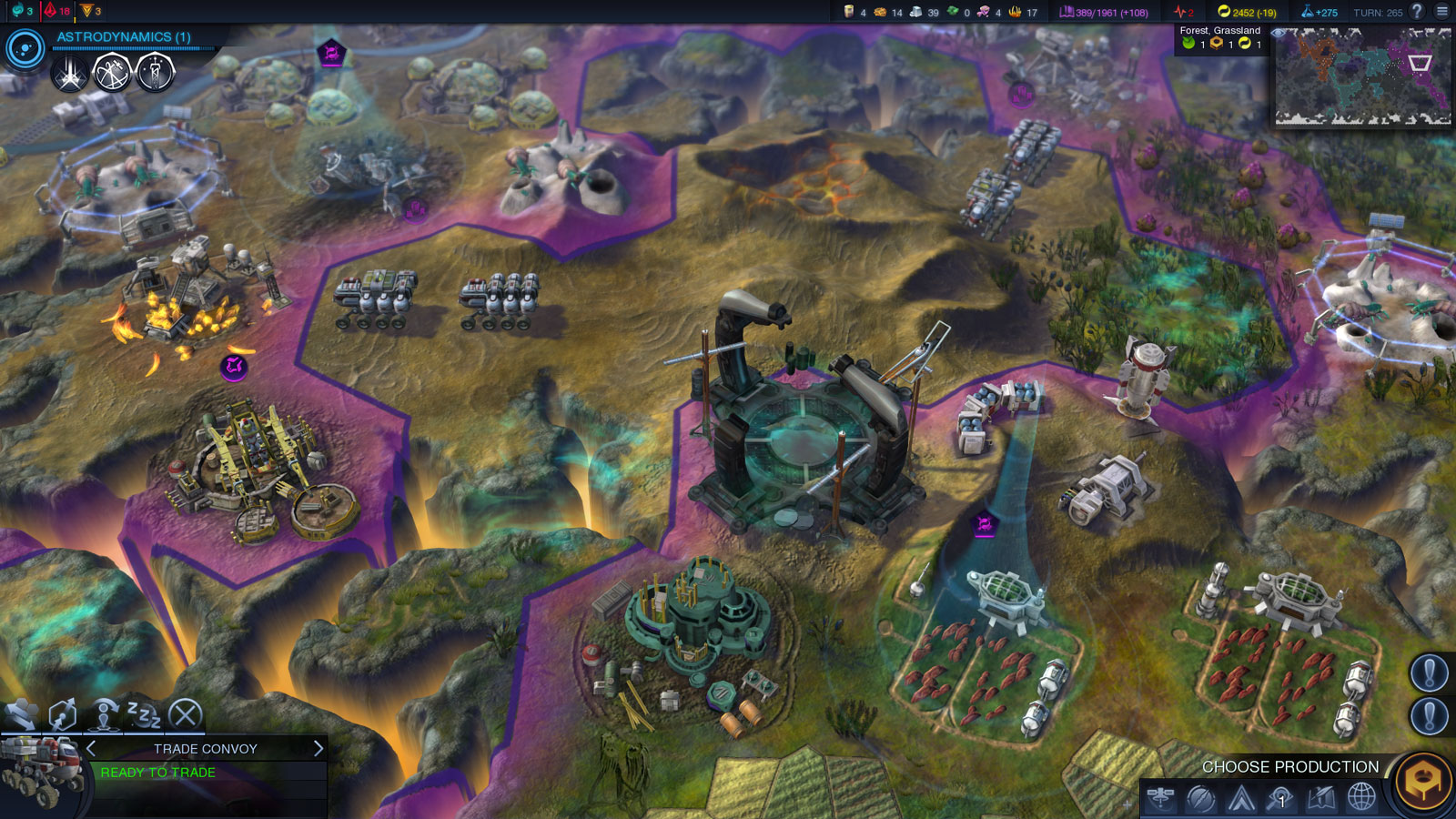
In addition to high Production costs, projects occupy a plot within the home city's radius. Selecting this plot is a secondary step of choosing the project. Make sure to use a tile that isn't well developed or important to your city (anything on that tile gets destroyed when you start the project there). You can't get any resources from a project tile; even the base value of the terrain won't count for generating resources.
You can cancel a project and revert your tile back to its base version, but at that point, you've wasted quite a bit of work on the tile and destroyed its improvements. You should only do this as a last resort if you realize that a city is unfit to get the project done compared with another one of your cities. This could be due to defensive concerns, lack of Production, or some other unforeseen variable.
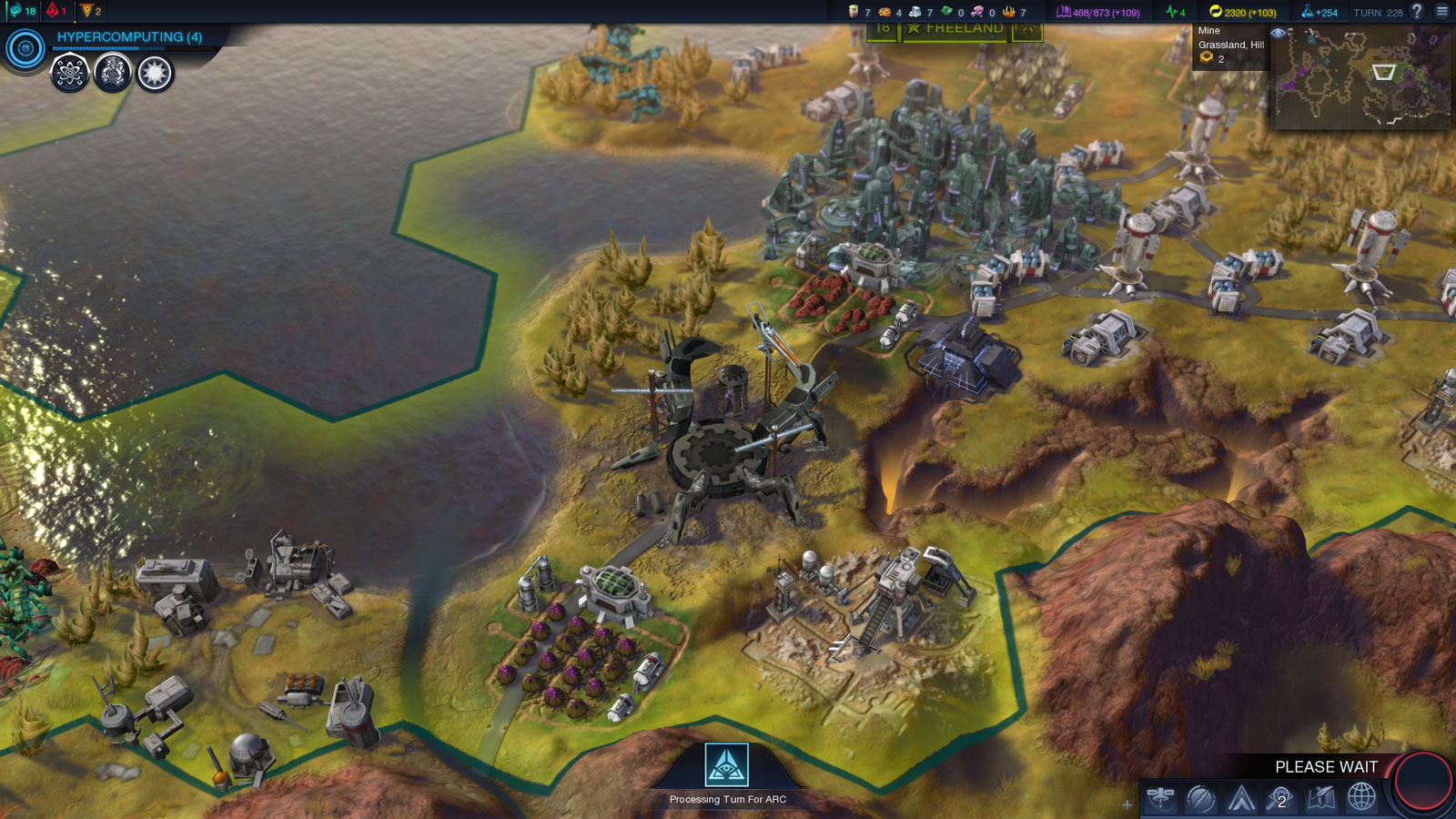
It's possible for enemies to occupy your project tile and pillage it. This removes your work on the project, possibly wasting many turns of progress. When you complete a project, the area becomes harder to destroy. Opponents must attack it directly at that point instead of pillaging the tile. Defend your project as well as possible so that you can continue toward victory!
Consider building your projects on hills or other rough terrain so that your defenders gain bonuses while protecting the project from enemy forces. Leaving projects out on open ground is a good way to encourage sieging adversaries to go after your projects aggressively.