
Civilization Beyond Earth Guide Terrain, Features, Resources, and Artifacts
Terrain (Tiles)
This chapter explains everything about the types of tiles that make up the game's map and all of the various things that appear on those tiles to modify their values and functionality.
Terrain (Tiles)
The game board is broken up into hex tiles that cover everything and everywhere. If you look carefully, you can see the differences between all types of tiles just with a visual scan. These areas look different and have varying statistics in regard to resources they generate and how units move through them.
City Yield is the resource capability of a tile. Does that tile generate Food, Production, Energy, or additional resources of any type? To determine this, use your mouse to highlight a tile and see the tip that pops up. When you're looking to develop an area, see how many tiles are worth developing. Too many desert or tundra tiles make for a weak city that won't thrive. It won't have the Food to grow or the Production to complete its buildings and units.
Movement Cost is the price for moving through an area. Many tiles cost one movement to get through, but others cost more because of their rough terrain. Several tiles may even be unpassable unless you're in a levitating craft (and those are later-game units).
Combat Modifier is a bonus to Combat Strength that is given for units that are attacked in that area. The rougher the terrain, the better these bonuses often are.
Canyon
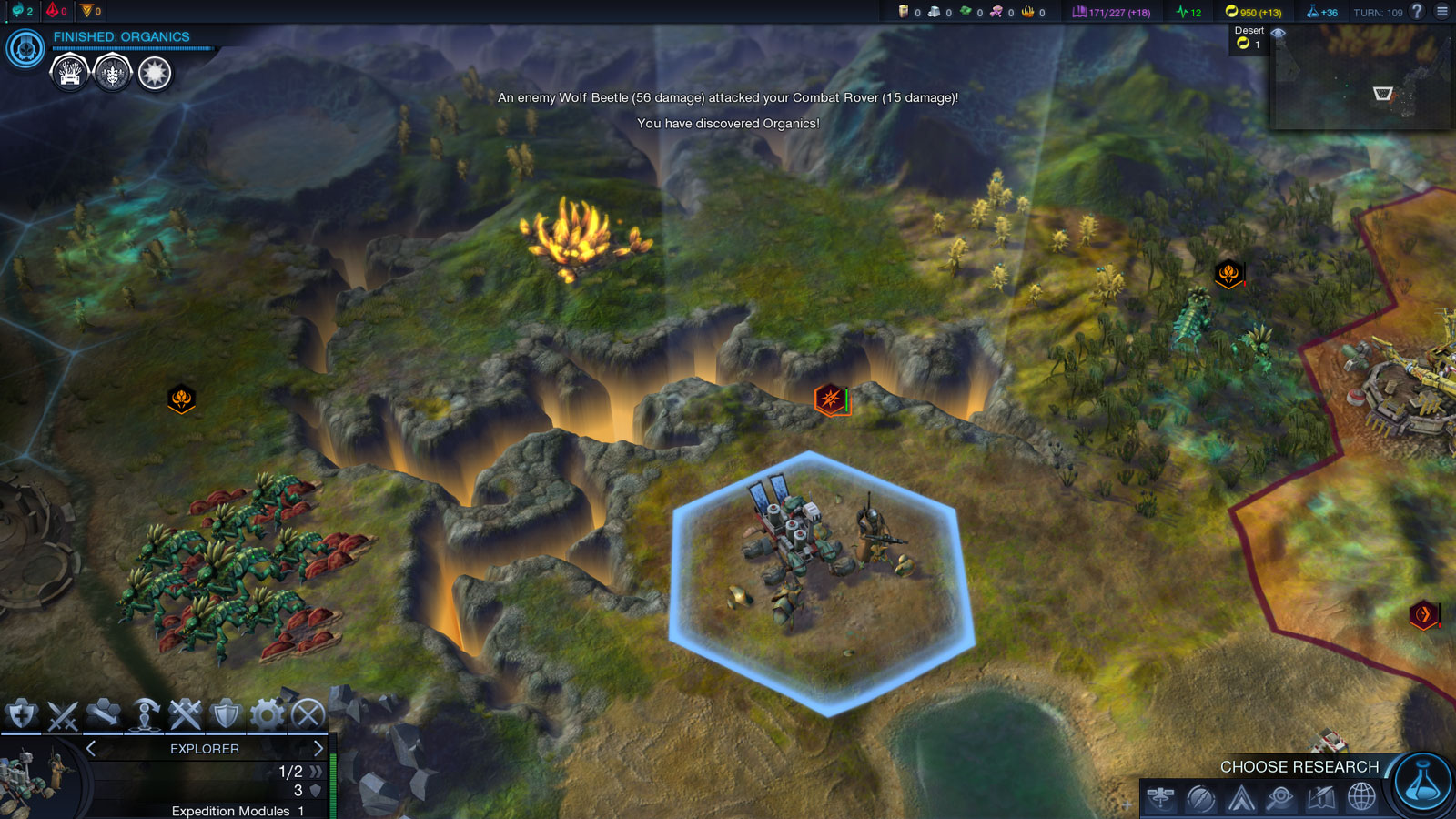
Canyons are deep chasms in the surface of this alien planet, impossible for non-flying units to move across. They're not particularly helpful to a city, except as barriers to approach.
Settle near canyons if you're close to a border with a more aggressive militarist. This limits the number of ways that your opponent can approach your city during a siege. That leads to a bottleneck, where even a superior force won't be able to use all of their best units. Defenders gain a humungous advantage if they bottleneck their opponents because there is more time to bombard them from the safety of their cities.
- Food: 0
- Production: 0
- Energy: 0
- Combat Modifiers: None
- Movement Cost: Food 0
- Canyons are impassable except to air and hover units.
Coast
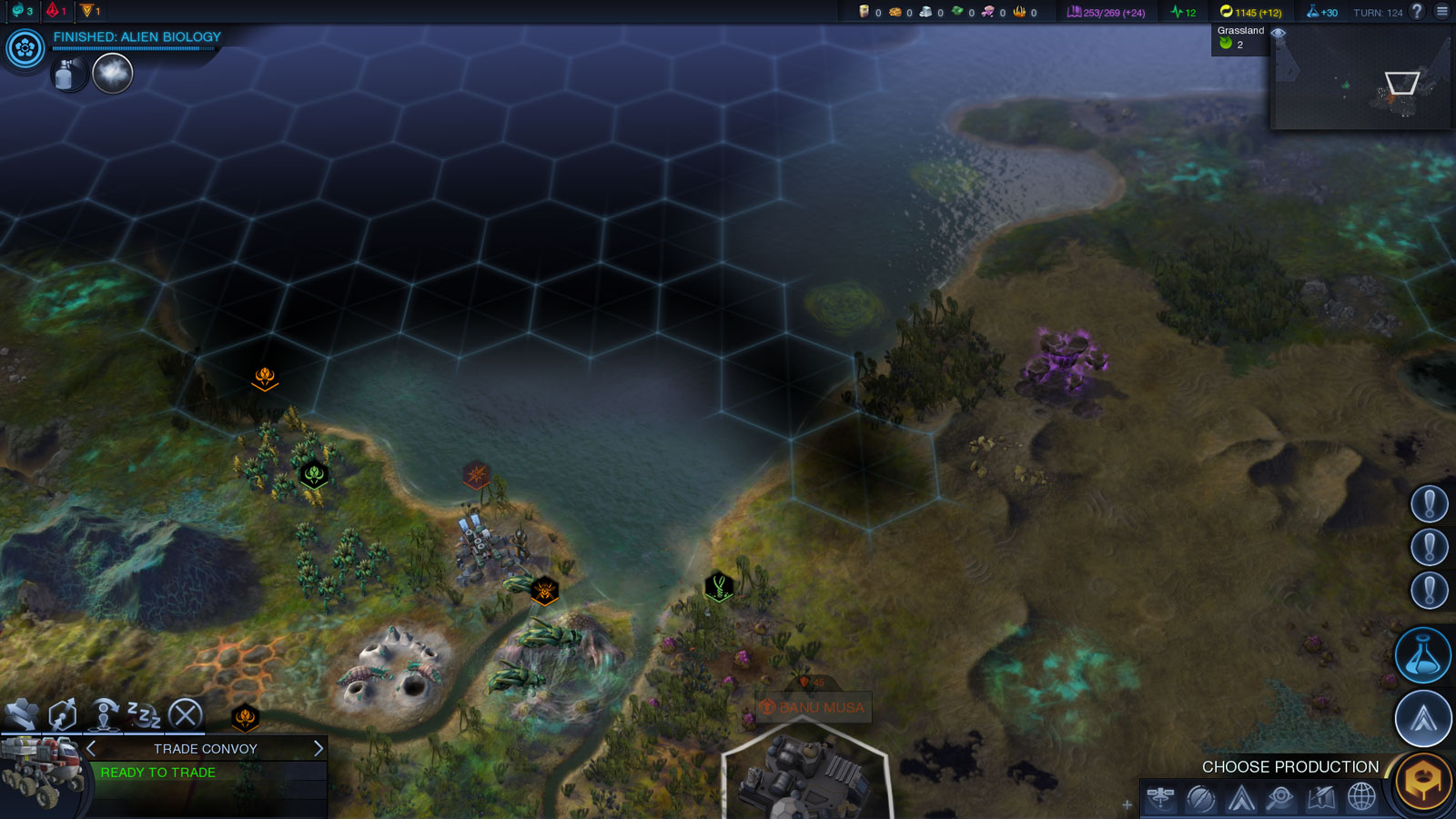
Coast hexes are the ocean hexes directly adjacent to land. They provide Food and Energy to nearby cities. Only naval units, air and hover units, and "embarked" land units may enter coastal hexes.
Your workers now improve water tiles differently than they used to. Before, cities constructed work boats and used them up when producing water improvements. Now, you simply embark your worker, improve the tiles just like the ones on land, and disembark whenever you're done. That's sure a nice perk! Don't forget to improve coastal tiles as soon as you can to get those bonuses.
Coastal areas get a moderate amount of alien traffic. Keep these waterways clear if you're fighting alien influence. It's easiest to do that by placing ranged units inside your coastal cities. Whenever anything gets too close, wake up the ranged units, and fire away (using the city's own defenses to augment your damage output). This helps get Experience for your younger military units, so there are multiple advantages here.
If you're playing peacefully with the aliens, let them swim by and have their fun.
- Food: 1
- Production: 0
- Energy: 1
- Combat Modifiers: None
- Movement Cost: Food 0
- Cannot build cities on coasts; only naval, air, hover, or embarked units may enter this kind of tile.
Desert
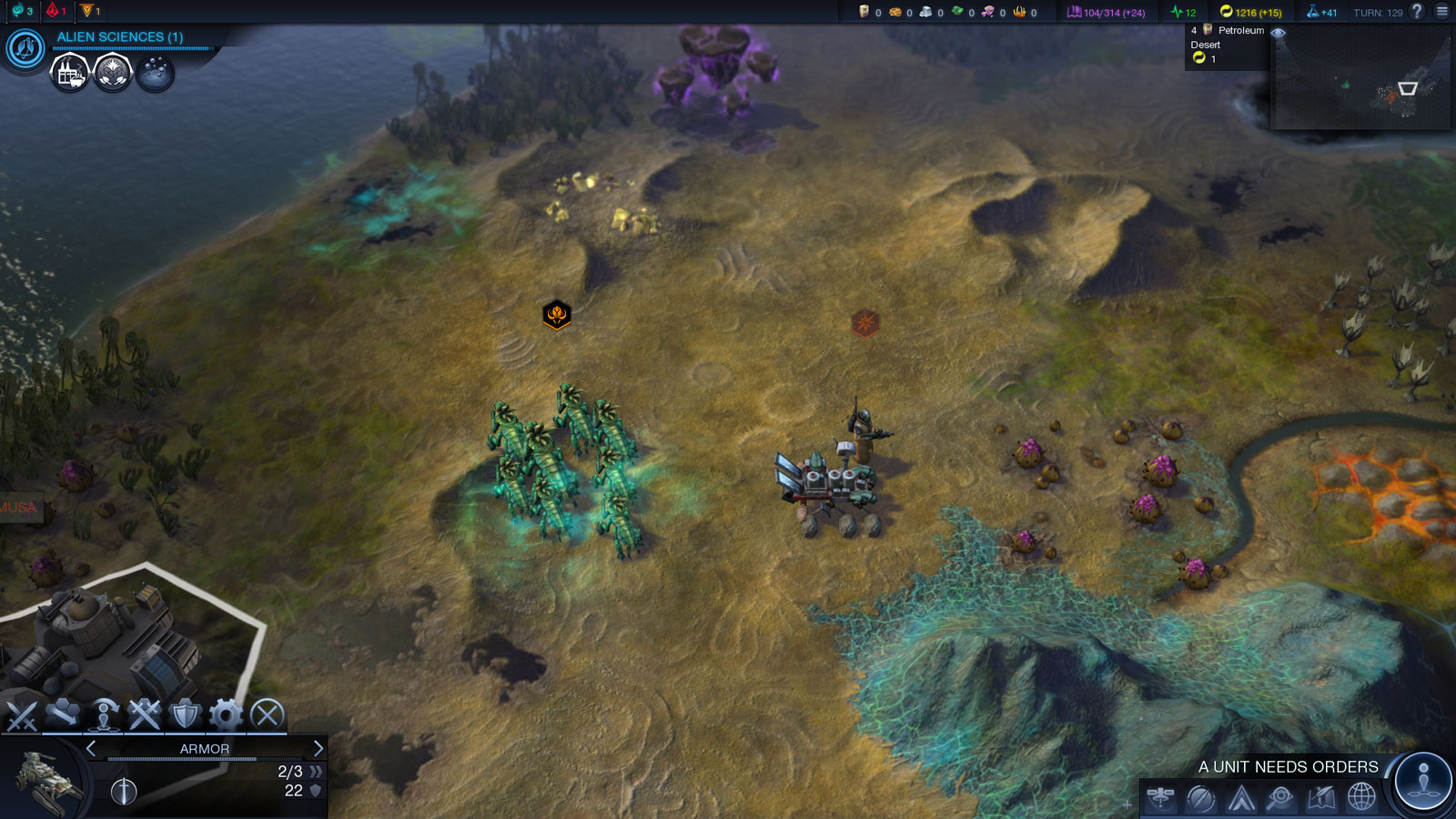
In general, desert hexes are remarkably barren. They provide almost no benefits to nearby cities (unless the desert contains a river or resource, of course), and units occupying them receive a defensive penalty in combat.
Try to avoid settling in heavy desert areas because of these downsides. In Civilization V, you had access to wonders that made deserts potentially rather useful, but in this game, you must rely on later-game tile improvements instead. Workers eventually get good options for this, but it's costly in terms of upkeep and an investment of worker turns.
If you do settle a city near a desert, make sure to get a vivarium in that city as soon as you can (purchase one outright, if possible).
- Food: 0
- Production: 0
- Energy: 1
- Combat Modifiers: None
- Movement Cost: Food 0
Grassland
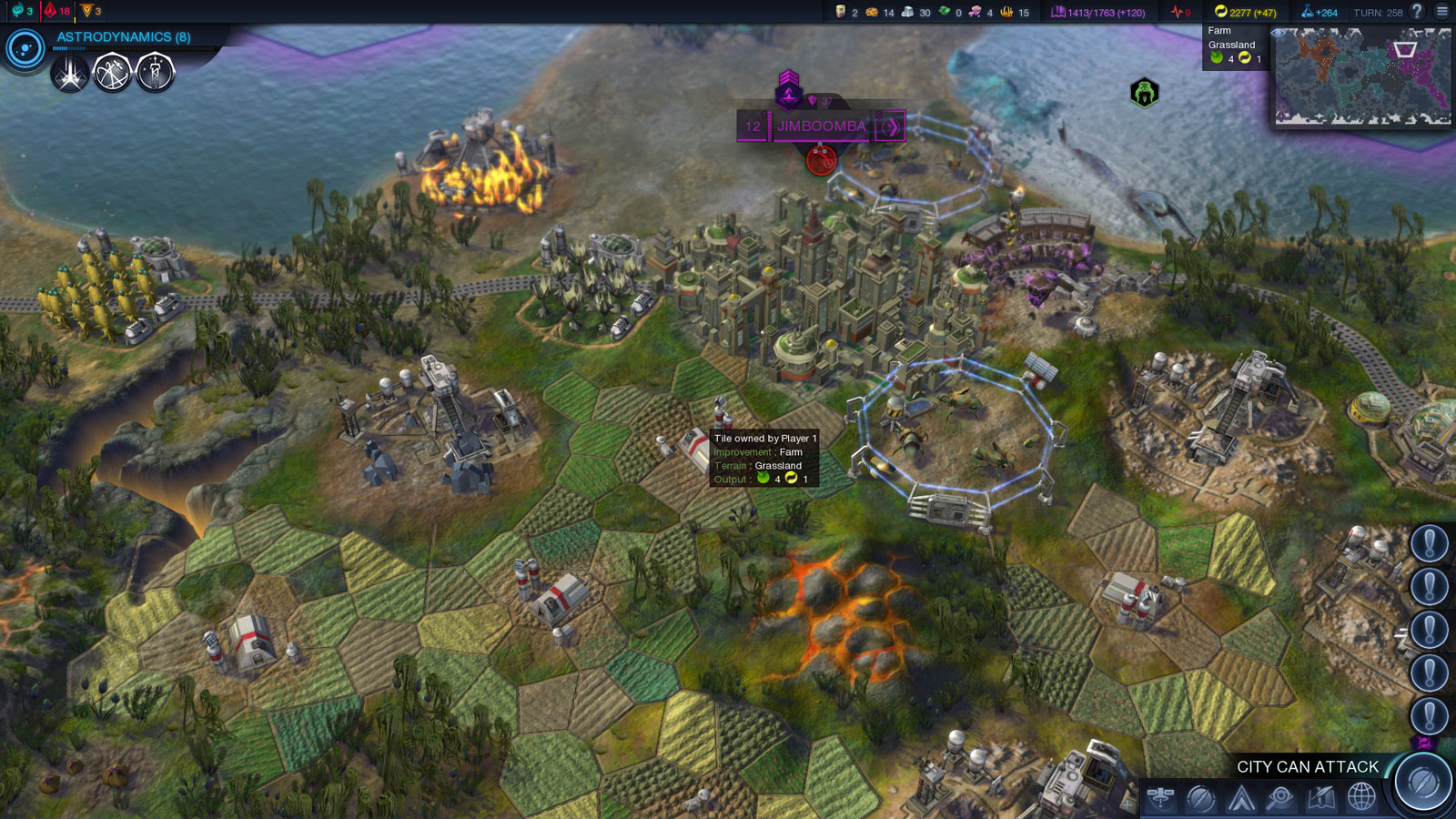
Generally, grassland produces the most Food of any terrain type. Cities constructed near grasslands tend to grow faster than cities built elsewhere.
Grasslands aren't great for defense because they're easy to sweep across with large military forces. They don't have defensive bonuses, so you're going to grow well but be exposed during warfare. Try to block off open grasslands with defensive units or entire cities elsewhere that prevent easy access to your heartland.
- Food: 2
- Production: 0
- Energy: 0
- Combat Modifiers: None
- Movement Cost: Food 0
Hills
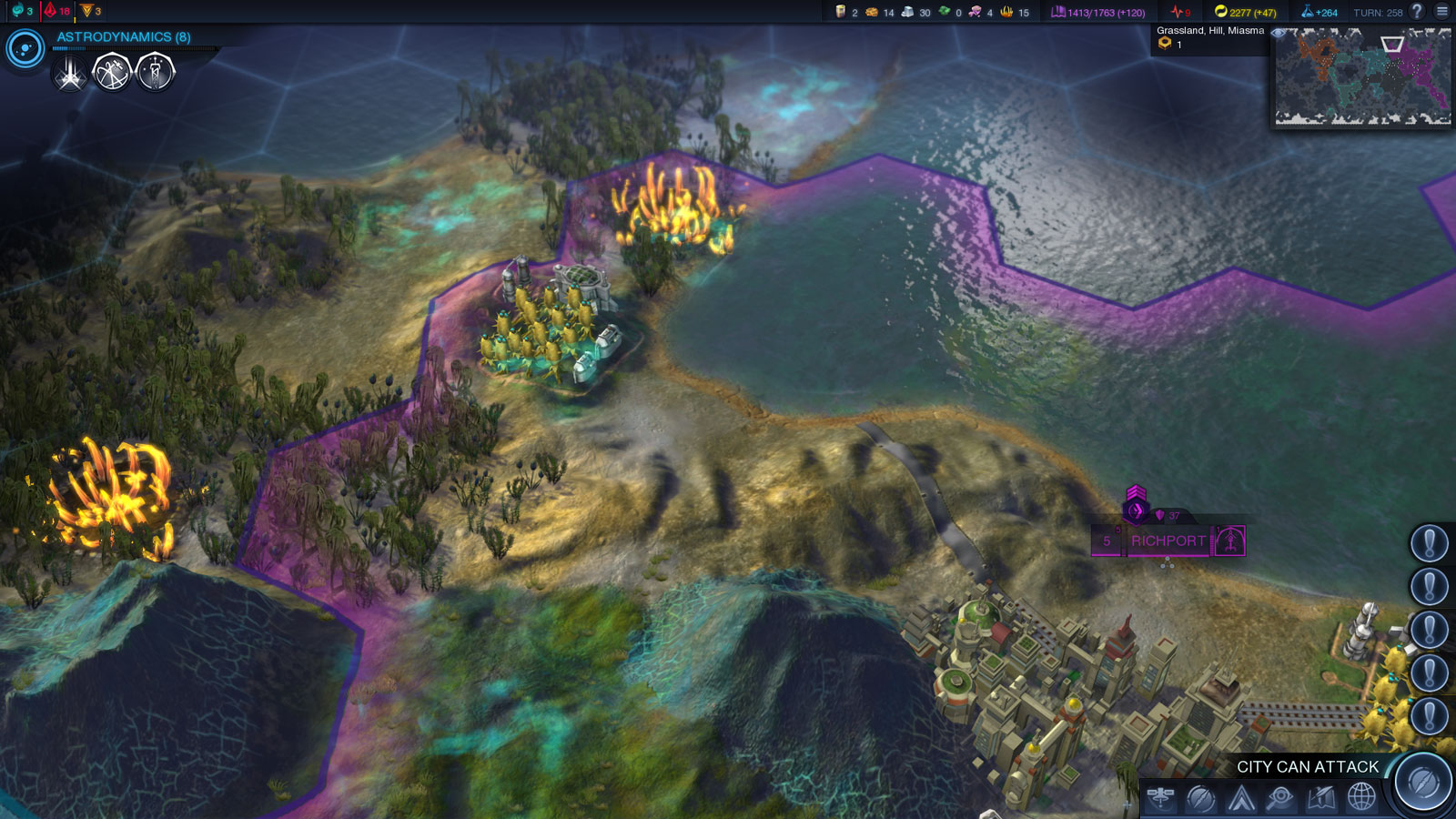
Hills are difficult to improve and hard to move through, but they provide good defensive bonuses, and you can find many different resources there. Additionally, units atop hills can see over "blocking terrain." Hills provide increased productivity to a nearby city, as well as important combat bonuses.
Station ranged units on hills, especially if there is additional rough terrain nearby. This prevents enemies from approaching quickly and killing your ranged buddies, and it gives them time to fire, hassle enemy troops, and even escape if they don't have enough firepower to get the job done before reinforcements arrive.
Fortified melee troops are also wonderful when they're deployed on hills. The cumulative bonuses from fortification and rough terrain make them murderously annoying to kill.
- Food: 0
- Production: 1
- Energy: 0
- Combat Modifiers: +25%
- Movement Cost: Food 0
Lake
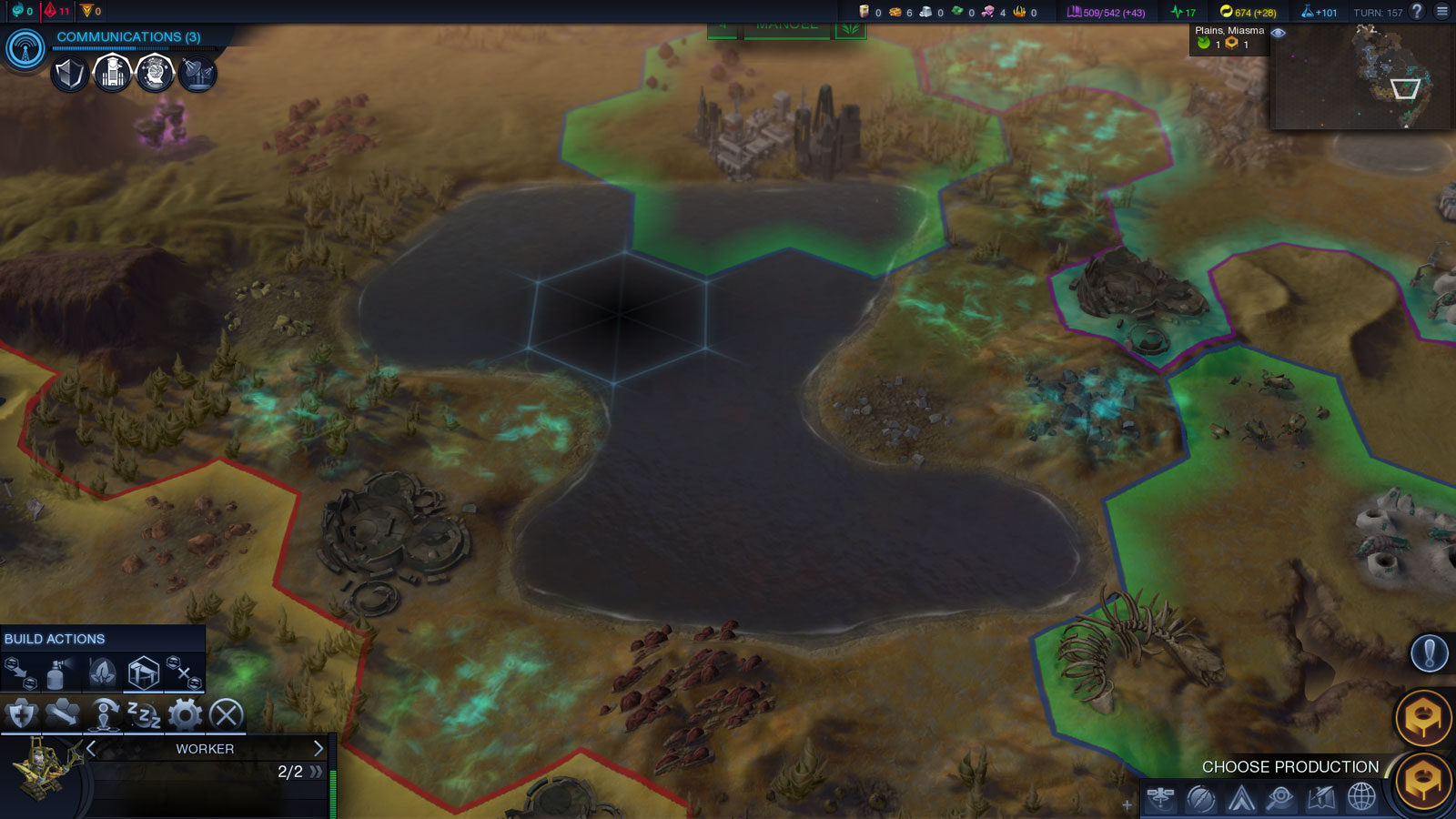
A lake is any body of water 10 tiles or smaller in size that is completely surrounded by land tiles. Lakes are easier to develop cities near than ocean territory, which demands that you have water refineries to get the most out of them. When you find lakes in the early game, settle around them aggressively for cities that grow quickly and have strong economies.
If enemies have constructed cities on the other side of a lake, it's worth investing in a small navy to harass them during upcoming warfare. Otherwise, don't put many naval units into lakes. They won't be able to cover much territory, and that's a waste of your resources.
- Food: 2
- Production: 0
- Energy: 1
- Combat Modifiers: None
- Movement Cost: Food 0
- Only naval, air, hover, or embarked units may enter a lake tile.
Mountain/Crater
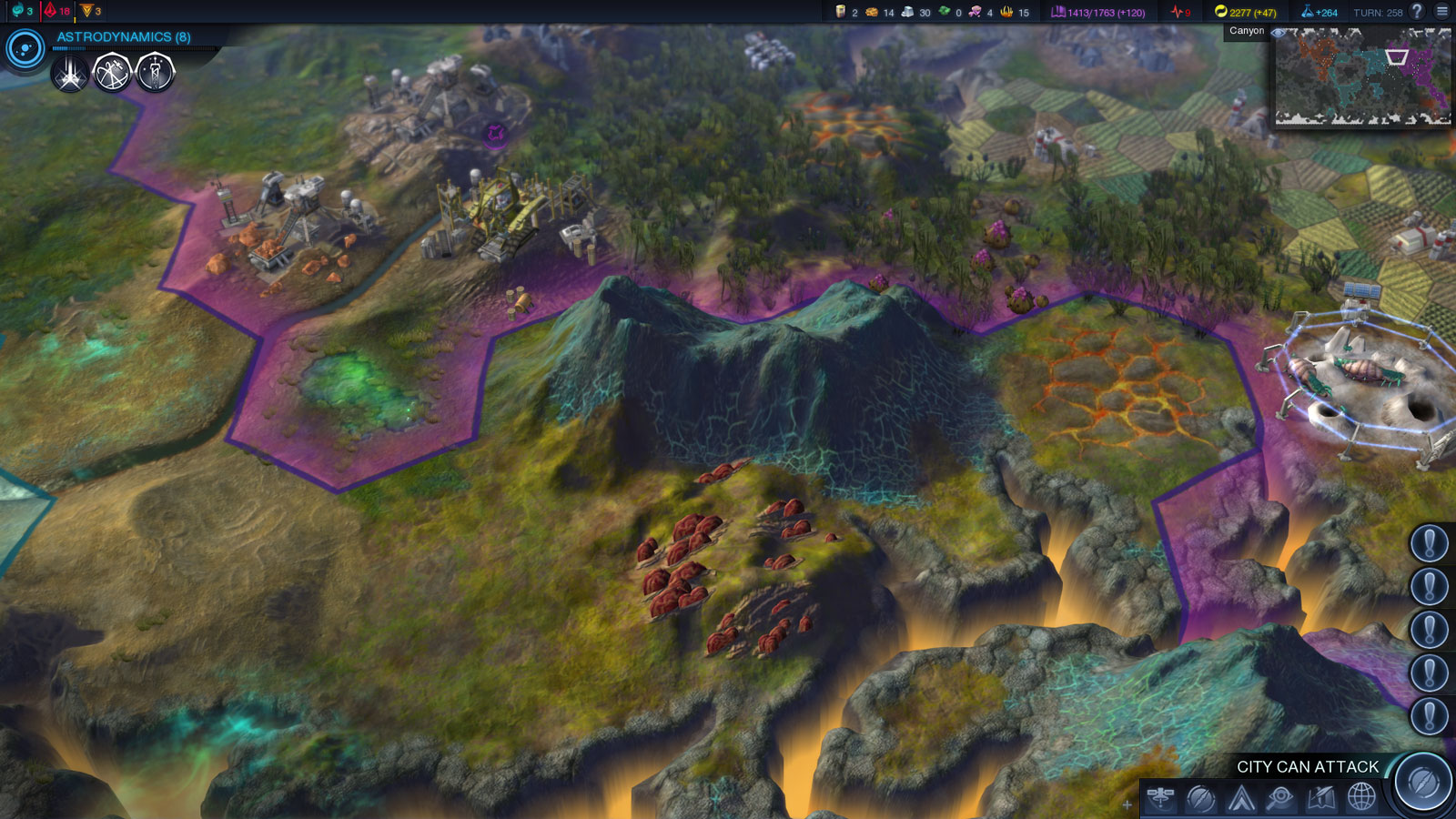
Mountains are upthrusts of terrain, impossible for non-flying units to move through. Craters are the result of meteor strikes on the surface of the planet. Neither is particularly helpful for your colony, save as a barrier to movement by enemy units.
As with canyons, you should eye difficult terrain like this as an opportunity. Your cities near mountains and craters won't develop as well (because these tiles have little resource value), but you can wall off areas of ingress into your empire by settling and defending these awkward spots.
For maximum defensive power, settle on the far side of a river while geographical barriers like mountains prevent access to your city from one or more directions. Enemies will hate you and have a miserable time pounding through your defenses.
- Food: 0
- Production: 0
- Energy: 0
- Combat Modifiers: +25%
- Movement Cost: Food 0
- Mountains and craters are impassable except to air units.
Ocean
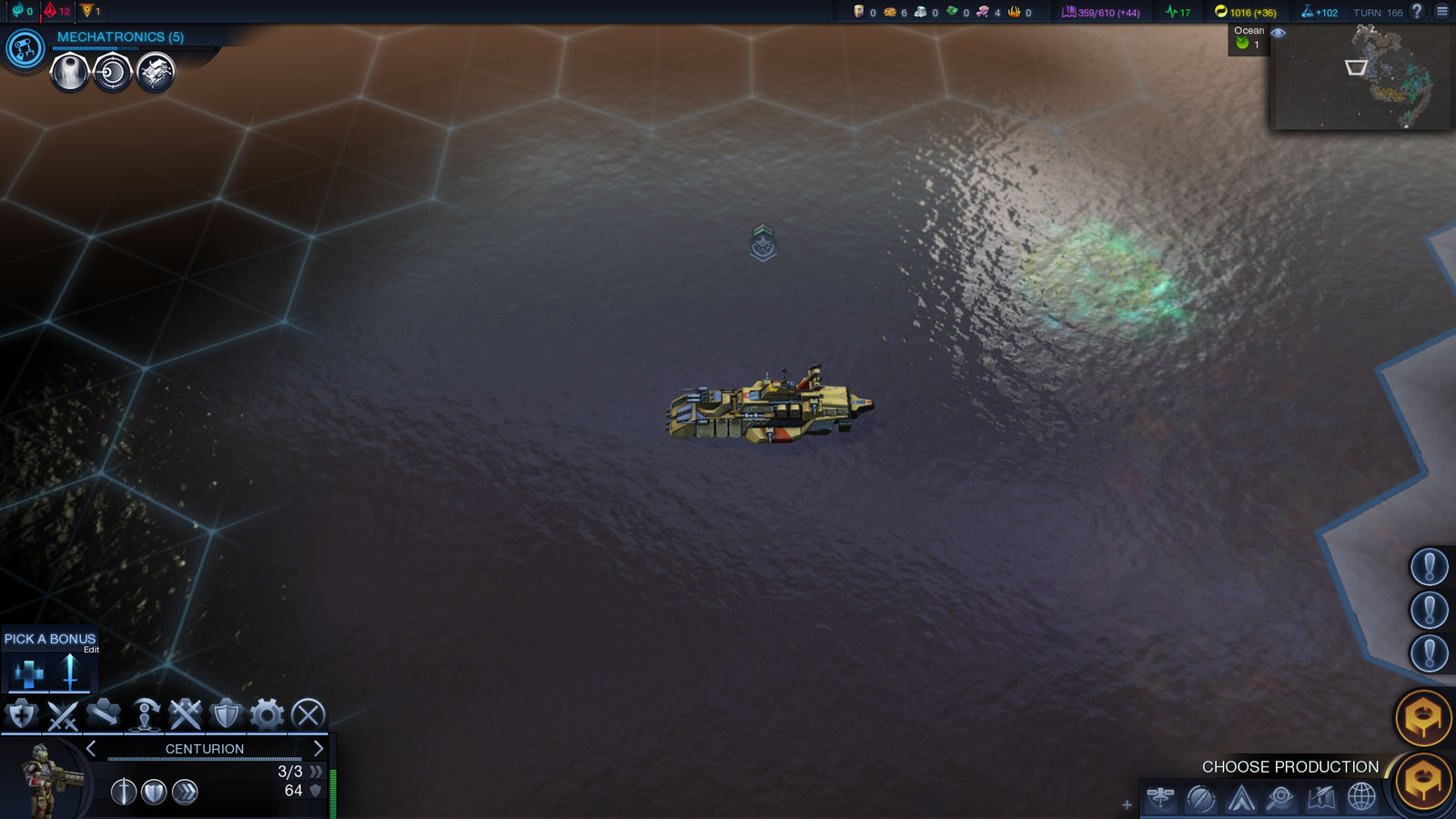
Ocean hexes are deep-water hexes. They provide Food to a city. Construct a water refinery as soon as you can if your city is heavily surrounded by ocean tiles. These buildings raise the resource value of such tiles by a huge factor and allow coastal cities to thrive much sooner than they would otherwise.
- Food: 1
- Production: 0
- Energy: 0
- Combat Modifiers: None
- Movement Cost: Food 0
- Oceans are only useful for Food and Energy once the nearby city has the proper Technologies to access them. Only naval, air, hover, or embarked units may enter this kind of tile.
Plains
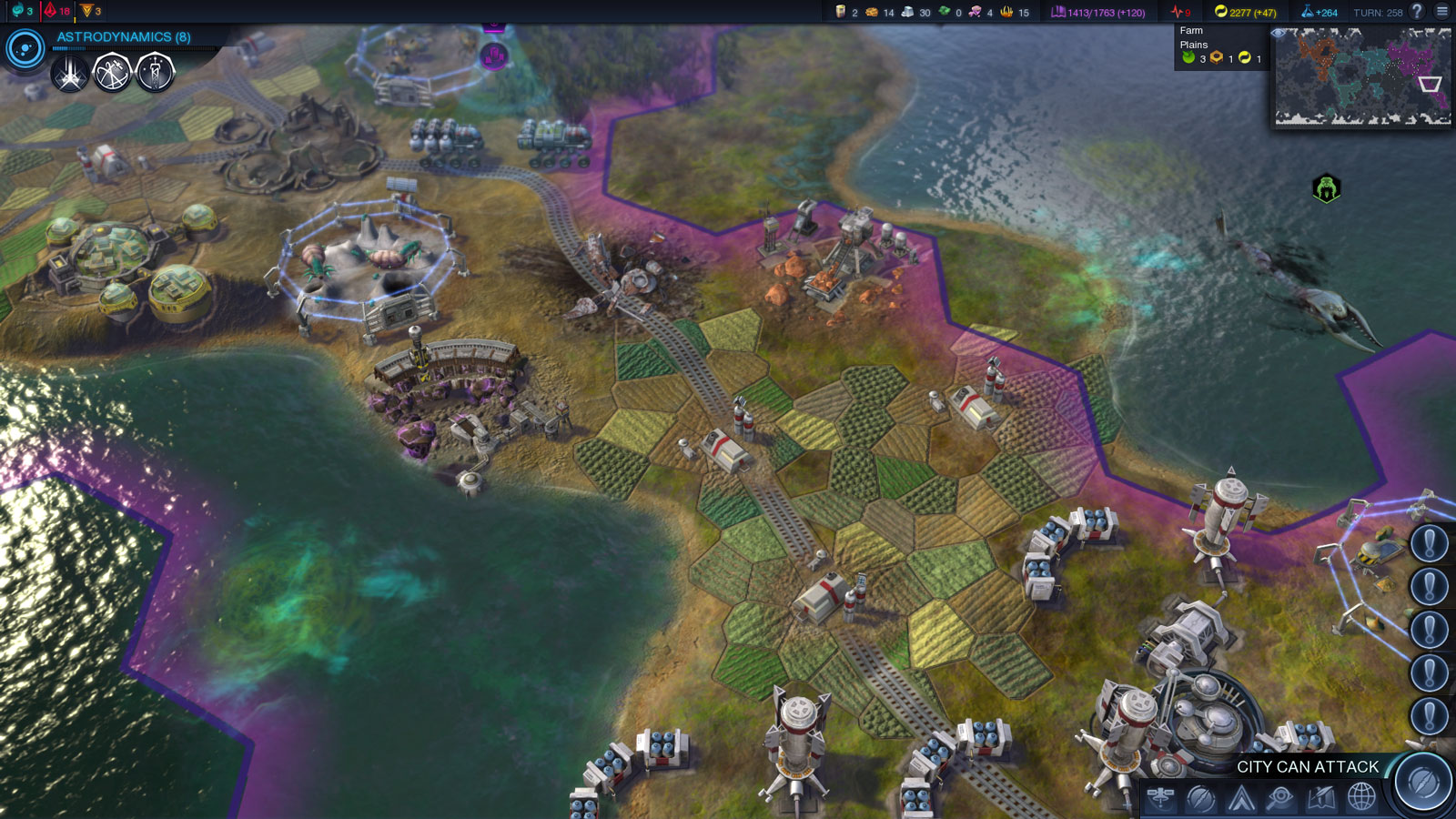
Plains provide a mix of Food and Production to a nearby city. A city surrounded by plains grows more slowly than one in grassland, but it will be more productive.
As with all easy terrain, you must defend yourself carefully when you settle out in the plains. Enemies can sweep through quickly and comfortably with their armies. Stop them at range when the territory is harsher, or keep a strong military near your city so that they can defend it with their lives.
- Food: 1
- Production: 1
- Energy: 0
- Combat Modifiers: None
- Movement Cost: Food 0
Snow
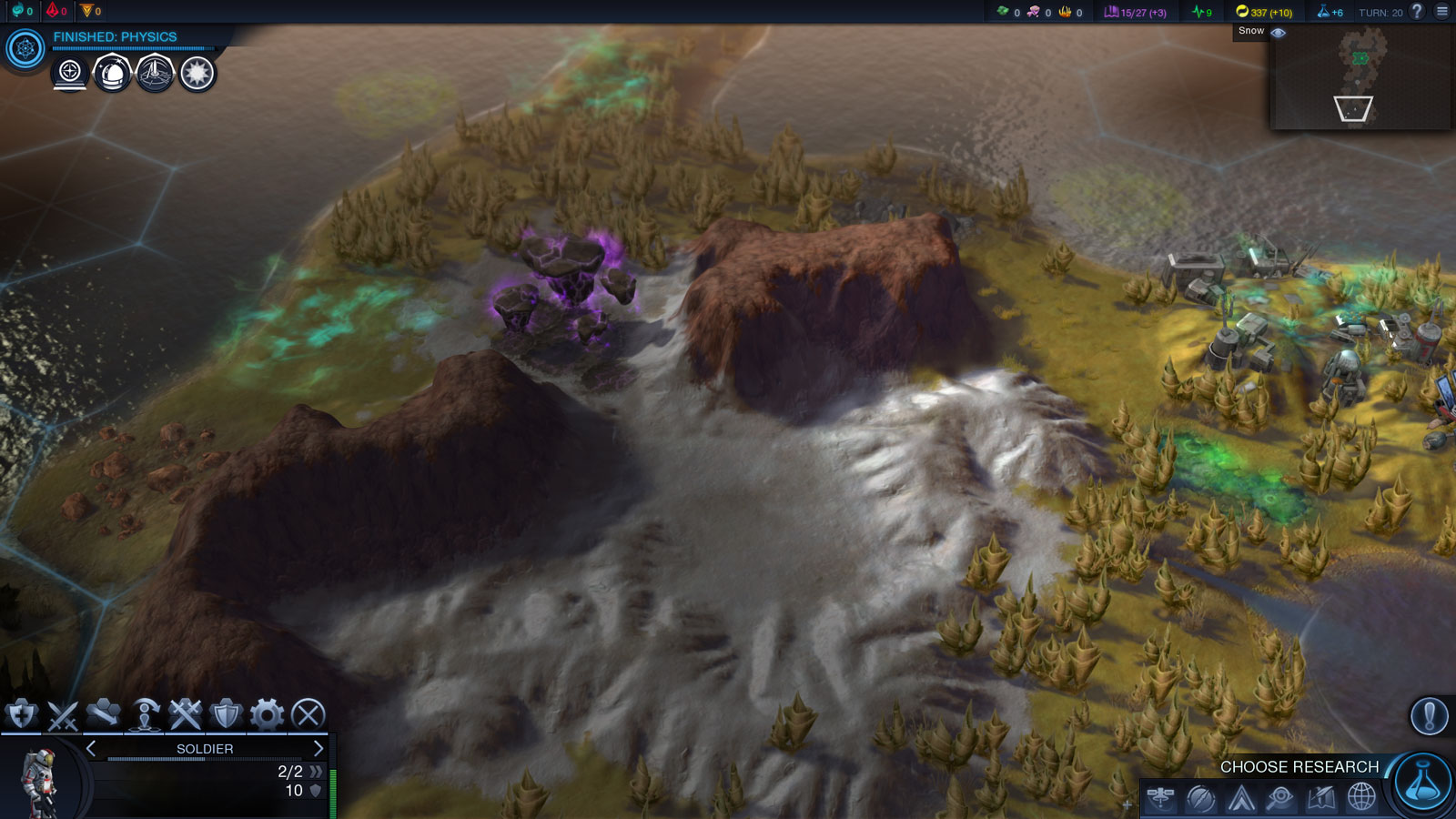
Like desert, snow is relative unproductive, with no Food or Production benefit to a nearby city. Of course, a snow hex might contain a useful resource, but otherwise, it is just cold and barren.
- Food: 0
- Production: 0
- Energy: 0
- Combat Modifiers: None
- Movement Cost: Food 0
Tundra
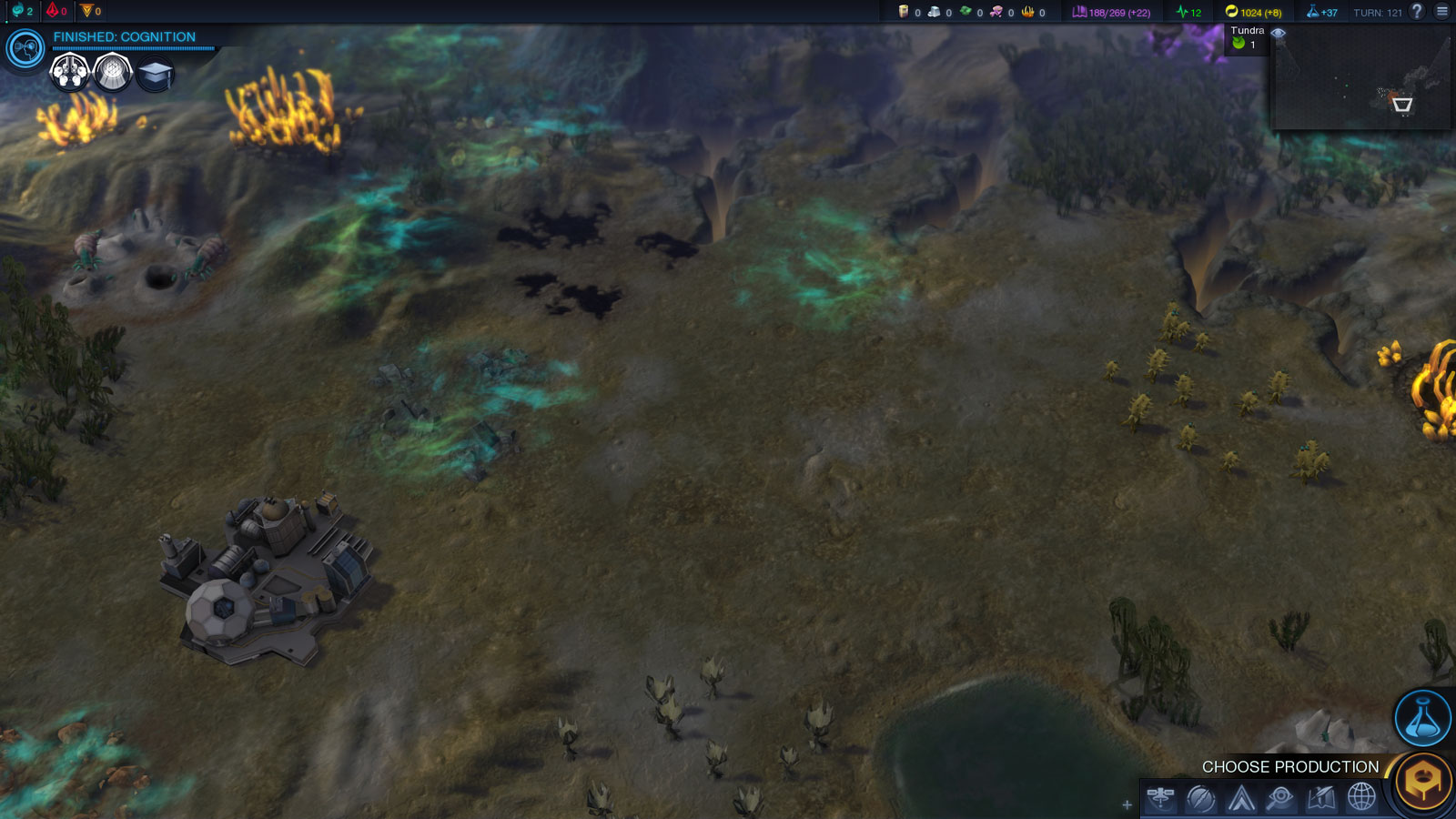
Tundra is the semi-frozen land found in the planet's colder climates. It's less useful than plains or grassland but slightly better than desert and snow. Nobody will build cities in the tundra unless they're desperate for resources[md]or they've got nowhere else to go.
Later in the game, when you discover mass digesters, you begin to get more benefits from tundra. These buildings help you use tundra tiles effectively, so a nation that is close to large stretches of tundra should beeline toward organic Technology.
- Food: 1
- Production: 0
- Energy: 0
- Combat Modifiers: None
- Movement Cost: Food 0